Axewelledge, a leading exporter from India, specializes in high-quality Bentonite. With a commitment to excellence, we supply premium Bentonite to the Middle East and Southeast Asia markets.


North Angle Complex, 304,
150 Feet Ring Rd, Opposite Ambedkar Nagar BRTS Stop,
Madhav Park, Punit Nagar,
Mavdi, Rajkot, Gujarat 360004
© Axewelledge 2026, All Rights Reserved.
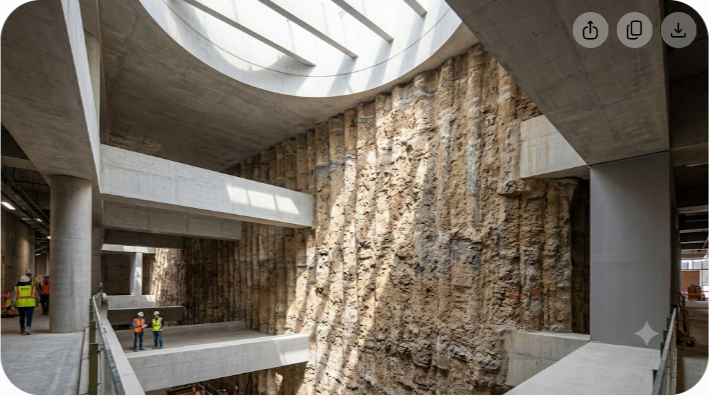
Bentonite is used in construction mainly because it can control water movement, form stable slurries, and swell when hydrated. In civil engineering, those properties make it useful for diaphragm walls, bored piles, microtunnelling, geosynthetic clay liners, cut-off walls, waterproofing systems, and earthwork sealing.
The important point is that not all bentonite performs the same way. Mineralogy, exchangeable cations, particle size, purity, water chemistry, concentration, hydration time, and site conditions all affect performance. A mix that works well for a bored pile may not be appropriate for a GCL or a canal-sealing project.
This guide covers seven major bentonite uses in construction and civil engineering, along with the underlying mechanics, typical practices, quality-control considerations, common mistakes, and practical selection guidance.
Bentonite is a clay dominated by smectite minerals, particularly montmorillonite. Its 2:1 layer structure allows water to enter between clay layers, while the mineral's surface charge and exchangeable cations influence how strongly the particles disperse, swell, and interact with water.
When sodium is the dominant exchangeable cation, the clay generally develops greater swelling capacity and better slurry-forming characteristics than untreated calcium-dominated bentonite. That's why sodium bentonite is widely used where engineers need a low-permeability clay barrier or a stable drilling and excavation slurry.
The same swelling behavior that makes bentonite valuable can also create problems if it isn't properly confined. In a slurry trench, the clay must form a stable filter cake and maintain sufficient hydrostatic support. In a GCL or waterproofing system, confinement is important for developing the intended sealing performance.
The distinction between sodium and calcium bentonite is primarily related to the dominant exchangeable cation, although the actual performance of a commercial product also depends on its mineral composition, processing, particle-size distribution, and other properties.
| Property | Sodium-Dominant Bentonite | Calcium-Dominant Bentonite |
|---|---|---|
| Swelling tendency | Generally high | Generally lower |
| Slurry-forming ability | Generally strong | Generally lower without treatment |
| Common civil applications | Slurries, GCLs, waterproofing, sealing | Selected construction and industrial applications |
| Sensitivity to water chemistry | Can be significant | Can also be significant |
| Hydraulic performance | Depends on grade and chemistry | Depends on grade and chemistry |
| Product selection | Based on project specifications and test data | Based on project specifications and test data |
Free-swell values, hydraulic conductivity, viscosity, fluid loss, and other properties vary considerably between products. Engineers should use the supplier's technical data and the project's specified test method rather than treating one generic value as universal.
The seven applications below cover some of the most important ways bentonite is used on construction and infrastructure projects.
Diaphragm walls are reinforced concrete walls constructed in deep, narrow trenches. They're commonly used for basements, underground stations, retaining systems, and other projects where excavation support and groundwater control are required.
The excavation itself is the difficult part. A narrow trench can become unstable when the surrounding soil is loose, saturated, or subjected to groundwater pressure. Bentonite slurry helps maintain the excavation until reinforcement and concrete can be installed.
A properly prepared bentonite slurry provides several functions at the same time:
Typical slurry concentrations vary by clay grade and site conditions. A broad starting range such as 4% to 7% by mass may be encountered, but the correct concentration should be established through laboratory testing and field trials rather than selected solely from a generic rule.
After excavation reaches the required depth, the reinforcement cage is lowered into the slurry-filled panel. Concrete is then placed through a tremie pipe, with the pipe outlet kept embedded in the fresh concrete.
Because concrete is substantially denser than bentonite slurry, the concrete progressively displaces the slurry upward. Recovered slurry can be passed through desanding equipment and, when its properties remain within specification, reused in subsequent excavation panels.
The quality of the recovered slurry matters. Excessive sand content, contamination by cement, poor density control, or degraded rheological properties can interfere with concrete placement and final wall quality.
Bentonite also plays an important role in trenchless construction. Microtunnelling and pipe jacking allow utilities to be installed beneath roads, railways, buildings, and other obstacles without opening a conventional trench along the entire route.
One of the main challenges is friction between the pipe string and the surrounding ground. As the drive becomes longer, that friction can increase the required jacking force significantly.
Bentonite slurry can be injected through lubrication ports around the pipe. The objective is to create and maintain a lubricating annulus between the pipe and surrounding soil.
A well-designed lubrication system can:
Claims about a fixed percentage reduction in friction should be treated cautiously. Results depend on soil type, pipe diameter, overcut, slurry formulation, injection rate, lubrication-port spacing, drive length, groundwater, and operating practice. Project teams should monitor actual jacking forces and adjust the lubrication program accordingly.
Slurry shield tunnel boring machines use pressurized slurry at the tunnel face to help balance groundwater pressure and, depending on the ground and operating method, earth pressure. Excavated material is mixed with slurry and transported through pipelines to a surface treatment plant.
At the plant, separation equipment removes excavated solids. The treated slurry can then be conditioned and returned to the tunnel circuit.
The bentonite grade must be selected for the geology and slurry system. A formulation suitable for one tunnel may behave poorly in another because clay content, salinity, temperature, fines concentration, and groundwater chemistry can all change slurry performance.
Geosynthetic clay liners, or GCLs, are factory-manufactured hydraulic barriers that contain bentonite between geotextile layers. They're used in applications such as landfills, waste containment, mining facilities, ponds, and other structures where limiting water or leachate movement is important.
A typical GCL contains a layer of sodium bentonite held between geotextiles. The components may be mechanically bonded through needle-punching or joined using another manufacturer-specific process.
When hydrated under suitable confinement, the bentonite swells and forms a low-permeability layer. The resulting hydraulic conductivity can be very low, but the actual value depends on the bentonite, GCL construction, hydration conditions, confining stress, and permeant chemistry.
A commonly cited design value of around 1 x 10^-9 m/s is associated with many GCL specifications and test conditions, but it should not be treated as a universal performance guarantee. The project specification and manufacturer's certified test results should control.
Bentonite needs appropriate confinement to develop the intended barrier performance. If a GCL is exposed to flowing water before it has sufficient cover or restraint, the bentonite can hydrate and migrate from the intended location.
Installation therefore matters just as much as material quality. Sharp aggregate, wrinkles, poor overlaps, excessive trafficking, inadequate cover, and unsuitable subgrade conditions can all compromise a GCL system.
GCLs can seal small defects under suitable conditions because hydrated bentonite can swell into a localized void. This is one of their useful characteristics, but it shouldn't be confused with unlimited self-repair.
A GCL cannot be assumed to repair every puncture, large tear, installation defect, or chemically incompatible condition. Proper inspection, overlap treatment, repair procedures, cover placement, and project-specific quality control remain essential.
Bored piles and drilled shafts are often constructed through soils that can't safely stand unsupported. Loose sand, soft silt, and water-bearing strata can cause the borehole to collapse before reinforcement and concrete are placed.
Bentonite drilling slurry provides temporary support while the shaft is excavated.
The slurry fills the borehole and provides hydrostatic pressure against the surrounding formation. At the same time, bentonite can form a filter cake that reduces fluid penetration into permeable soil.
The drilling fluid must be managed throughout the operation. A typical sequence is:
Excessive sand and sediment at the base of a bored pile can create a weak layer beneath the concrete. Poor slurry quality can also interfere with the concrete-slurry interface during tremie placement.
For that reason, engineers normally check slurry density, viscosity, sand content, fluid loss, and other relevant properties at defined stages of the pile construction process. There is no single set of acceptable limits for every foundation project; the governing specification and local standard should be followed.
Bentonite is widely used to reduce groundwater movement through soil and to create low-permeability barriers. Soil-bentonite cut-off walls are one established approach, particularly where a flexible hydraulic barrier is preferred.
In a soil-bentonite wall, the trench is excavated under bentonite slurry. Suitable excavated soil is then processed and blended with bentonite to create a low-permeability backfill.
The final backfill must be engineered for the project. Important factors include soil gradation, bentonite content, moisture, density, permeability, compatibility with groundwater, and the required shear strength.
Typical bentonite addition rates are sometimes given as a percentage of dry soil mass, but there is no universal percentage that guarantees a particular permeability. Laboratory mix testing is needed to establish an appropriate formulation.
Cement-bentonite systems use cementitious material together with bentonite slurry to create a low-permeability barrier that gains strength after placement. They can be useful where a controlled, pumpable material is needed and where the project requires a cementitious cut-off system.
The mix design must balance workability, setting time, permeability, and strength. Cement content, bentonite type, water chemistry, temperature, and curing conditions all affect the final properties.
Bentonite-containing grout can also be used in selected sealing and ground-improvement applications. In practice, pure bentonite suspensions, cement-bentonite grouts, and other engineered grout formulations are chosen according to the soil structure and the purpose of treatment.
Permeation grouting is especially dependent on pore size. Very fine clay particles may not penetrate some soils effectively, so the assumption that bentonite grout can simply be injected into any sand or gravel is incorrect. Laboratory testing and groutability assessment are important before field injection.
Bentonite waterproofing systems are used for foundations, basements, retaining structures, tunnels, and other below-grade concrete construction. They rely on the swelling and sealing behavior of bentonite rather than only on a passive physical membrane.
Bentonite waterproofing products may contain granular bentonite between geotextiles or within other carrier materials. The product is installed against the substrate or integrated into a construction system according to the manufacturer's requirements.
When water reaches the bentonite, it hydrates and swells. If the material is properly confined, the resulting clay gel can fill small voids and restrict water migration.
The system still needs correct detailing. Construction joints, penetrations, tie-rod locations, corners, transitions, and changes in substrate condition are common areas where waterproofing systems require additional treatment.
Hydrophilic bentonite waterstops are used at selected concrete construction joints. The strip is installed according to the manufacturer's instructions and held securely in position before the next concrete pour.
When exposed to water, the bentonite expands within the joint and helps create a compression seal. The expansion percentage varies by product and test method, so a generic figure such as 400% shouldn't be used as a universal design value.
Bentonite waterstops also have limitations. They aren't a substitute for proper joint preparation, reinforcement detailing, concrete placement, curing, and crack control. They should be selected for the expected water chemistry and hydrostatic conditions.
Bentonite can reduce seepage in ponds, canals, reservoirs, and selected earth structures where the native soil doesn't provide adequate hydraulic resistance.
The most suitable treatment depends on the soil. Sandy soils, silty soils, gravelly formations, fractured rock, and highly permeable fills require different approaches.
For soil blending applications, a typical construction sequence is:
Application rates can vary widely. A rate such as 15 to 30 kg/m2 may be suitable for some projects, but it shouldn't be presented as a universal requirement. Soil gradation, plasticity, thickness, permeability, bentonite grade, and target seepage performance should determine the final dosage through testing and design.
A bentonite blanket or compacted clay-bentonite layer can provide another form of hydraulic sealing. The design thickness and bentonite content depend on the site conditions and required permeability.
Cover is particularly important where the bentonite system could otherwise be exposed to erosion, desiccation, or mechanical disturbance. The finished barrier must remain protected throughout construction and service.
Bentonite slurry should be tested throughout excavation and foundation work rather than judged by appearance alone. A slurry that looks thick may still have unsuitable density, fluid loss, sand content, or chemical properties.
Project specifications commonly define the testing frequency and acceptance limits. Methods may be based on standards such as API RP 13B-1 or applicable geotechnical and foundation standards, depending on the application.
The Marsh funnel provides a quick field indication of slurry flow behavior. A standard 1-quart sample is timed as it flows through the funnel.
Marsh funnel time is useful for field trending, but it isn't a complete description of slurry rheology. Two slurries with similar funnel times can behave differently under other test conditions.
Target values should therefore come from the project specification, slurry design, and equipment requirements rather than from one universal range.
Slurry density is measured using a mud balance or another calibrated method. Density affects hydrostatic support and is also a useful indicator of contamination by excavated solids.
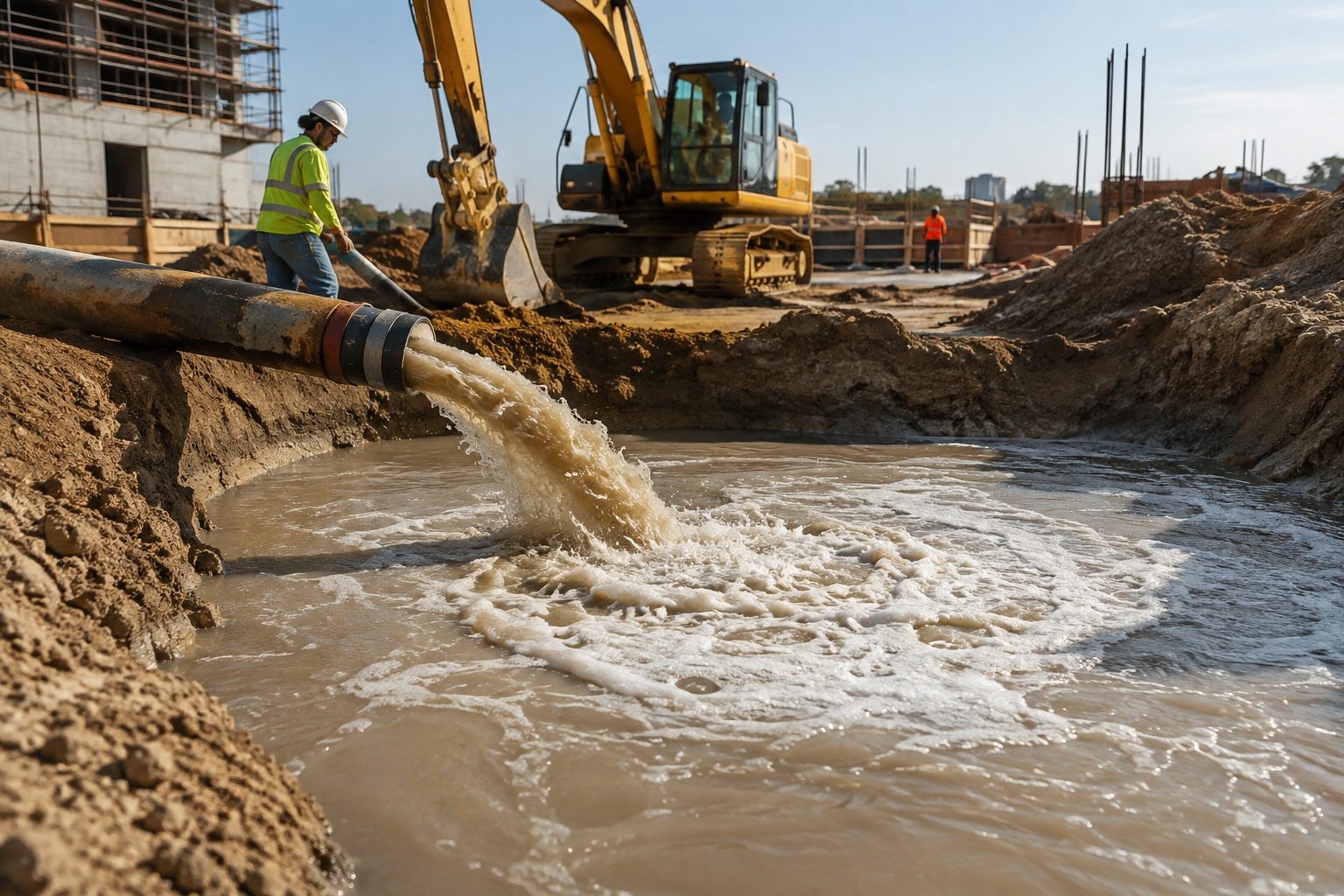
A fresh slurry may have a density only slightly above that of water, while contaminated or heavily sanded slurry can become significantly denser. The allowable range depends on the excavation method and project requirements.
Fluid-loss testing helps assess how readily water separates from the slurry under pressure. Filter-cake thickness and quality provide information about the slurry's ability to limit fluid loss into permeable ground.
Lower fluid loss and a controlled filter cake are often desirable, but acceptance limits should be based on the relevant application and standard. A value such as 15 to 20 mL should not be treated as a universal specification for every civil engineering slurry.
Sand content measures the amount of coarse material carried by the slurry. High sand content can increase density and affect concrete displacement during tremie placement.
Field teams commonly use a sand-content kit or screen-based test. The maximum acceptable value should be taken from the foundation or diaphragm-wall specification and checked at the required stages before concreting.
Water chemistry can have a major effect on bentonite performance. Calcium, magnesium, dissolved salts, and other contaminants can change clay dispersion and rheology.
Checking the mix water before large-scale slurry preparation can prevent avoidable problems. The required pH range also depends on the product and application, so pH should be monitored as one part of the overall quality-control program rather than treated as a stand-alone performance guarantee.
Good bentonite can perform poorly when the mixing process, water chemistry, storage, or field handling is wrong. Four problems appear repeatedly.
Hard or saline water can reduce the swelling and dispersion of sodium bentonite. Calcium and magnesium ions can promote flocculation and alter slurry viscosity and filtration behavior.
Better practice: Test the proposed mix water before production. If the chemistry is unsuitable, treat the water only according to a verified mix design. Sodium carbonate is sometimes used to reduce the effect of calcium hardness, but the dosage should be established by testing rather than applied as a fixed field recipe.
Bentonite doesn't reach its final performance immediately after powder and water are combined. Particle dispersion, hydration, and aging can take time, and the required period varies with the clay grade, mixing energy, water chemistry, and temperature.
Better practice: Use appropriate high-shear mixing and follow the supplier's recommended hydration and aging procedure. Test the slurry before sending it into the active excavation.
Hydrated bentonite needs suitable confinement to maintain a stable low-permeability barrier. If a GCL or bentonite waterproofing product is exposed to uncontrolled water before it has adequate cover, the clay can hydrate and migrate.
Better practice: Follow the manufacturer's installation sequence and ensure the specified cover or structural restraint is in place before the system is exposed to service conditions.
Excavation continually introduces soil particles into slurry. If these solids aren't removed, density and sand content increase and the slurry becomes harder to manage.
Better practice: Establish a desanding and recycling plan before excavation begins. Monitor density, viscosity, sand content, and other required properties at defined intervals, especially before tremie concreting.
The cheapest bentonite isn't necessarily the most economical choice. A product that needs excessive dosage, performs poorly in the available water, or requires frequent slurry replacement can increase total project cost.
Start with the application, then work backward to the material specification.
Decide whether bentonite is being used for excavation support, drilling, lubrication, hydraulic containment, waterproofing, grouting, or soil sealing. Each application places different demands on the clay.
Review soil gradation, groundwater level, groundwater chemistry, salinity, temperature, permeability, and expected excavation depth. These factors can change the required bentonite concentration and slurry properties.
Instead of ordering only by the words "high-quality sodium bentonite," define measurable requirements such as swelling capacity, fluid loss, viscosity, residue, moisture, particle size, or API-related properties where appropriate.
A small-scale mix test can reveal problems before they become expensive site failures. For slurry applications, test the proposed clay with the actual project water where possible.
Keep powdered bentonite dry and protected from contamination. Bulk handling systems should prevent moisture ingress and segregation. Bags should remain intact and stored in conditions recommended by the supplier.
Material certification is only one part of quality assurance. Field testing confirms whether the delivered product, actual mix water, equipment, and operating procedure are producing the required slurry or sealing performance.
| Application | Main purpose | Key performance concerns | Typical quality checks |
|---|---|---|---|
| Diaphragm walls | Excavation support | Density, rheology, filter cake, sand content | Density, Marsh funnel, fluid loss, sand content |
| Bored piles | Borehole stability | Suspension, filtration, cleanliness before concreting | Density, viscosity, sand content, fluid loss |
| Microtunnelling | Lubrication and face support | Rheology, filtration, soil interaction | Density, viscosity, solids content |
| GCLs | Hydraulic containment | Swelling, permeability, chemical compatibility | Hydraulic conductivity and product-specific tests |
| Cut-off walls | Groundwater control | Permeability, workability, strength | Permeability, density, mix properties |
| Waterproofing | Water exclusion | Swelling, confinement, detailing | Product certification and installation inspection |
| Canal and pond sealing | Seepage reduction | Soil compatibility, dosage, compaction | Permeability and field density |
Bentonite is valuable in construction because its mineral structure gives it a combination of swelling, dispersion, filtration, and rheological properties that are difficult to reproduce with ordinary soils alone.
The best results come from treating bentonite as an engineered construction material, not simply as a powder added to water.
Consistent mineral quality matters when bentonite is part of a critical excavation-support or hydraulic-containment system. Axewelledge supplies sodium bentonite for international industrial and construction markets and can support buyers evaluating material for slurry, sealing, waterproofing, and other civil engineering applications.
For large projects, procurement teams should request technical specifications, test certificates, recommended application procedures, packaging or bulk-delivery options, and samples for project-specific evaluation before committing to a large shipment.
If you're sourcing sodium bentonite for a civil engineering project, discuss the required application, water chemistry, target slurry properties, and delivery requirements with the supplier's technical team before finalizing the grade.
The main bentonite uses in construction include diaphragm-wall slurry, bored-pile drilling fluid, microtunnelling lubrication, geosynthetic clay liners, cut-off walls, below-grade waterproofing, waterstops, and soil or canal sealing. The correct grade and formulation depend on the project's ground conditions, water chemistry, required permeability, slurry properties, and applicable construction standards.
Sodium bentonite generally has higher swelling capacity and stronger slurry-forming behavior than untreated calcium bentonite. Those properties make it useful for excavation support, hydraulic barriers, GCLs, waterproofing, and sealing. However, mineral composition and processing vary between products, so engineers should compare certified test data rather than selecting a material based only on its sodium-bentonite label.
Bentonite slurry is primarily used to stabilize excavations and boreholes, control fluid loss, suspend excavated particles, and support selected trenchless tunnelling operations. It forms a filter cake against permeable soil while providing hydrostatic pressure. Diaphragm walls, slurry trenches, bored piles, slurry-shield TBMs, and some microtunnelling systems all use engineered bentonite slurries.
There is no single concentration suitable for every slurry wall. Sodium bentonite concentrations in the general range of several percent by mass are common starting points, but the required dosage depends on clay grade, soil permeability, groundwater chemistry, excavation depth, and target slurry properties. Laboratory trials and field testing should establish the final mix rather than relying on a fixed percentage.
Common field checks include slurry density, Marsh funnel viscosity, sand content, pH, and visual condition. Fluid loss and filter-cake performance may also be tested using an appropriate filter-press method. The exact tests, frequency, and acceptance limits depend on the application and governing specification. Results should be recorded throughout excavation and checked before critical operations such as tremie concreting.
Bentonite waterproofing can provide durable water resistance when the product is correctly selected, installed, confined, and detailed. Its performance depends on concrete quality, joint design, water chemistry, confinement, installation conditions, and protection from damage. Bentonite isn't a substitute for proper structural waterproofing design, and large defects or unsuitable installation conditions cannot be assumed to self-heal.
Viscosity can fall when bentonite is poorly hydrated, under-dosed, contaminated by salts or hard water, exposed to excessive solids, or chemically altered by cement and other materials. Temperature and clay quality can also affect performance. The best response is to identify the cause through slurry and water testing before changing the mix, rather than simply adding more bentonite.
Yes, bentonite can reduce seepage in suitable canal, pond, reservoir, and earthwork conditions. Performance depends heavily on the native soil, bentonite grade, application rate, treatment depth, moisture, compaction, and protection of the finished layer. A permeability test or field trial is preferable to using a generic application rate, particularly where groundwater conditions or long-term seepage requirements are critical.













Have questions about our products? We're here to help!