Axewelledge, a leading exporter from India, specializes in high-quality Bentonite. With a commitment to excellence, we supply premium Bentonite to the Middle East and Southeast Asia markets.


North Angle Complex, 304,
150 Feet Ring Rd, Opposite Ambedkar Nagar BRTS Stop,
Madhav Park, Punit Nagar,
Mavdi, Rajkot, Gujarat 360004
© Axewelledge 2026, All Rights Reserved.
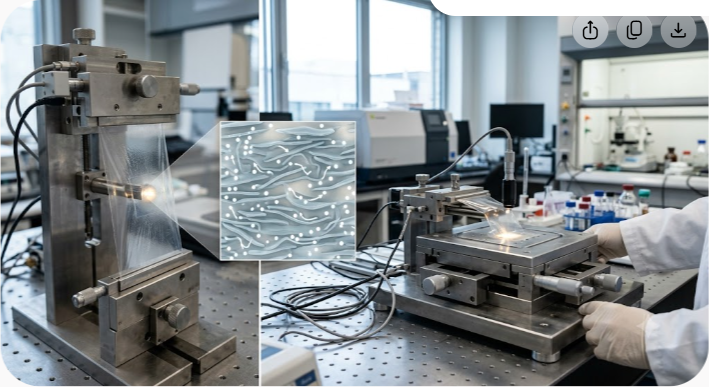
Yes, bentonite can improve the barrier performance of some food-packaging coatings, but the result depends on the clay grade, polymer chemistry, dispersion quality, clay loading, coating thickness, humidity, and the way the finished package is tested. It isn't enough to add a few percent of clay and expect the same result in every formulation.
The reason bentonite attracts attention is its montmorillonite content. Montmorillonite is built from extremely thin silicate layers with a high aspect ratio. When those layers are well dispersed through a suitable polymer or water-borne binder, they can make oxygen and other small molecules follow a longer, more complicated diffusion route through the coating. This is commonly called the tortuous path effect.
That mechanism can be useful when packaging engineers are trying to improve a paper coating, bio-based film, or polymer layer without simply making the barrier layer thicker. It can also provide reinforcement and modify coating rheology. The trade-off is that poor dispersion can do the opposite: clay agglomerates create defects, increase haze, raise viscosity, and sometimes reduce rather than improve barrier performance.
This guide explains how bentonite works in barrier coatings, which grades are relevant, how water-borne and polymer systems differ, what to measure in the laboratory, where the technology fits commercially, and which claims should be treated cautiously when evaluating food-contact packaging.
A food package has a demanding job. It must control the movement of oxygen, water vapor, carbon dioxide, aromas, oils, and other substances while also surviving converting, filling, sealing, storage, transportation, and handling.
The required barrier depends heavily on the product. A dry cracker needs protection against moisture pickup. A roasted nut needs oxygen control to slow oxidation. Fresh meat packaged under a modified atmosphere has a different gas-management requirement again. A coating that performs well for one application may be unsuitable for another.
Packaging engineers therefore evaluate barrier performance rather than simply asking whether a material is naturally impermeable. Two properties appear repeatedly in development work:
Lower OTR and WVTR generally indicate stronger barriers, but the test conditions matter. Temperature, relative humidity, pressure difference, film thickness, coating weight, and test method can all change the measured result.
High-performance food packaging has often depended on multilayer structures. Different layers provide sealing, mechanical strength, printability, oxygen resistance, moisture resistance, or protection from light. A structure might combine polyolefins with a dedicated barrier polymer, adhesive tie layers, metallized film, or aluminum foil.
These constructions can be technically effective, but recycling becomes more complicated when multiple materials are permanently bonded together. A package can be technically recyclable in a particular system and still be difficult to collect, sort, process, or economically recycle at scale.
That has increased interest in monomaterial packaging, coated paper and paperboard, water-borne coatings, and bio-based barrier systems. The challenge is straightforward: removing a barrier layer from a package can make recycling easier, but removing that layer can also reduce shelf-life performance.
Paper and paperboard are made from a network of cellulose fibers with interconnected pores. This structure provides useful stiffness and printability, but untreated fiber-based packaging can allow relatively rapid movement of air, water vapor, oils, and other substances.
A coating can close or reduce those pathways. The coating itself, however, must have the right combination of film formation, adhesion, flexibility, water resistance, and gas-barrier performance.
Bentonite can contribute to that formulation when the clay is compatible with the binder and dispersed sufficiently well. It should be viewed as a functional additive, not as a universal replacement for every conventional barrier layer.
Bentonite is a naturally occurring clay material containing varying proportions of clay minerals and other minerals. Montmorillonite, a smectite clay mineral, is often the component of greatest interest for nanocomposite barrier applications.
Montmorillonite has a layered structure. Each platelet consists of very thin silicate sheets separated by interlayer regions containing exchangeable cations and, depending on the environment, water or other species.
When the clay is properly dispersed, the individual or partially separated platelets present a large surface area and a high aspect ratio. Their geometry is central to the barrier mechanism.
Consider a coating made only from a polymer. A gas molecule moving through that film encounters polymer chains and free-volume regions, but its overall route across the coating can remain comparatively direct.
Now add well-dispersed, impermeable clay platelets. The gas molecule cannot travel straight through a platelet. It has to move around the platelet edges before continuing through the polymer phase. With enough platelets, the effective diffusion path becomes longer and less direct.
That is the tortuous path effect.
The concept is commonly associated with models developed for platelet-filled polymer systems, including the classic Nielsen treatment. In simplified terms, increasing platelet aspect ratio, improving dispersion, and increasing the effective alignment of platelets across the direction of permeation can increase tortuosity and reduce permeability.
The practical implication is important: more clay is not automatically better. A small amount of well-dispersed high-aspect-ratio clay can be more useful than a large amount of poorly dispersed material.
For a film or coating applied to a substrate, platelets that become oriented roughly parallel to the surface can create a particularly effective obstacle to through-thickness transport.
During coating and drying, shear, evaporation, binder movement, and particle interactions can influence orientation. The final microstructure depends on the complete formulation and process. It should not be assumed that every bentonite coating will naturally produce the same alignment.
Researchers and formulators therefore look at both dispersion and morphology. Techniques such as X-ray diffraction, electron microscopy, rheology, and permeability testing can help connect the microscopic structure to the finished barrier result.
The clay can also influence the surrounding polymer matrix. Depending on the formulation, well-dispersed platelets may restrict polymer-chain movement and increase stiffness or modulus. They can also change thermal behavior, surface properties, rheology, and dimensional stability.
Those secondary effects can be useful, but they need to be evaluated separately from gas-barrier performance. A coating can become stiffer while becoming less flexible, for example. A highly structured water-borne dispersion may resist settling but become difficult to pump or coat at high speed.
One of the most common mistakes in packaging discussions is treating oxygen and moisture resistance as interchangeable properties. They aren't.
A formulation can provide excellent oxygen resistance under dry conditions and perform much worse at high relative humidity. This is especially important for hydrophilic binders such as polyvinyl alcohol and some starch-based systems.
Montmorillonite-rich nanocomposites can reduce oxygen permeability when platelets are well dispersed and the polymer matrix provides a continuous phase around them. The improvement depends on platelet aspect ratio, orientation, loading, polymer-clay compatibility, film thickness, temperature, and relative humidity.
Published laboratory results vary widely because researchers use different materials, clay modifications, test conditions, and definitions of loading. For that reason, a fixed statement such as “2% bentonite always reduces OTR by 80%” is not a reliable specification.
A better approach is to establish a baseline OTR for the unfilled coating and compare it with the clay-containing formulation under identical conditions.
Water vapor behaves differently because water can interact strongly with hydrophilic materials. Natural bentonite itself can hydrate and swell, particularly when it contains a high proportion of swelling smectite and exchangeable sodium.
That doesn't mean bentonite automatically creates a strong moisture barrier. In a water-sensitive coating, adding hydrophilic clay can increase water uptake or alter the coating's response to humidity.
Moisture performance therefore depends strongly on the binder and the clay surface chemistry. Hydrophobic matrices may require surface-modified clay, while water-borne systems need careful control of swelling, rheology, and film formation.
For packaging development, WVTR should be measured directly rather than inferred from the clay's swelling behavior.
The word “bentonite” covers a family of mineral materials rather than one chemically identical product. Mineral composition, montmorillonite content, exchangeable cations, particle-size distribution, impurities, moisture, and processing history can all affect performance.
For a packaging formulation, mineral selection should begin with the required application and regulatory status rather than with a generic bentonite specification.
Sodium-dominant bentonite generally has stronger swelling and dispersion behavior in water than calcium-dominant bentonite. That can make sodium bentonite useful for water-borne formulations where controlled hydration and platelet separation are desired.
However, high swelling can become a processing problem. A grade that disperses beautifully at low concentration may produce excessive viscosity at a higher concentration. The formulation must balance delamination, rheology, coatability, and final film properties.
Calcium-dominant bentonite generally swells less than sodium-dominant material. Its behavior can make it useful in applications where high water swelling isn't required, but it isn't automatically the best choice for nanocomposite barrier coatings.
Ion exchange or chemical activation can modify bentonite behavior, but any treatment must be evaluated for its effect on dispersion, purity, migration, and regulatory compliance.
Packaging applications demand tighter control over contaminants than many bulk industrial applications. A bentonite grade intended for drilling fluids, foundry use, construction, or absorbents should not automatically be considered suitable for food-contact packaging.
Depending on the intended use, developers may specify low grit, controlled particle size, consistent mineral composition, low levels of undesirable trace elements, and a documented quality system. The exact specification should come from the packaging application and applicable regulations rather than from a universal “food grade” label.
Natural bentonite is hydrophilic. That makes it compatible with many aqueous systems but can create poor compatibility with non-polar polymers such as polyethylene and polypropylene.
For these matrices, organophilic clays can be produced by exchanging the interlayer cations with suitable organic cations. The treatment changes the interlayer environment and can improve compatibility with hydrophobic polymer chains.
Organoclay is not automatically preferable. The modifier itself becomes part of the regulatory and migration assessment. For direct food-contact applications, the complete formulation, processing conditions, intended food type, and applicable regulatory requirements must be considered.
A barrier coating can have an excellent clay grade on paper and still fail in practice because the particles weren't dispersed properly.
Large clay aggregates reduce the effective aspect ratio, create optical defects, increase the risk of coating imperfections, and may provide relatively easy pathways for gas or moisture movement around the particles.
The goal isn't simply to make a suspension that looks uniform in a mixing tank. The goal is to create the right microstructure in the dried coating.
Clay layers remain stacked in relatively thick bundles. The available platelet surface and aspect ratio are much lower than they would be after effective delamination. These aggregates can also behave as defects within the coating.
Polymer or other molecules enter the clay galleries and increase the spacing between layers, but the layers remain associated in an ordered stack. This can improve dispersion compared with an untreated aggregate, although it doesn't provide the same morphology as complete exfoliation.
Individual clay platelets or very small stacks become distributed through the continuous matrix. This structure can provide a high effective aspect ratio and a strong tortuous-path contribution when platelet orientation and loading are favorable.
The terms are useful, but real formulations can contain a mixture of these structures rather than fitting neatly into one category.
For a water-borne coating, a development sequence can look like this:
There is no universal mixing speed or processing time. Equipment geometry matters, and rpm by itself doesn't describe the shear environment well enough to transfer a laboratory recipe directly to an industrial mixer.
Fiber-based packaging is one of the areas where clay-containing coatings can be particularly interesting because the coating serves two jobs: it helps cover the porous substrate and can add functional barrier properties.
Possible binders include starch, modified starch, cellulose derivatives, polyvinyl alcohol, acrylic dispersions, polyurethane dispersions, and other water-borne systems. The appropriate chemistry depends on the food, required barrier level, coating equipment, drying capacity, and recycling requirements.
A properly designed coating can reduce penetration of water, oils, and grease into paper fibers. Bentonite may contribute to the coating's structure and rheology, but it shouldn't be assumed to provide all of the resistance on its own.
For high-moisture foods, the binder and coating morphology often have a larger influence on water resistance than the clay itself. In practice, clay and binder need to be designed as one system.
It is tempting to describe mineral-filled paper coatings as automatically recyclable. That's too broad.
Whether a coated paper package is accepted and performs well in a recycling process depends on the complete construction, coating weight, binder chemistry, repulpability, fiber recovery, screening behavior, and the requirements of the relevant recycling system.
Bentonite is an inorganic mineral, and mineral particles can be compatible with papermaking processes, but that doesn't prove that every bentonite-containing packaging coating is repulpable. The finished construction should be evaluated using appropriate laboratory or mill-scale recycling tests.
Polymer nanocomposites take a different approach from paper coatings. Here, clay is incorporated into a polymer matrix to modify the film itself.
Potential matrices include polyethylene, polypropylene, polyurethane, polylactic acid, polyhydroxyalkanoates, starch-based polymers, and other materials. Compatibility varies substantially among these systems.
For non-polar polymers, untreated bentonite usually has limited compatibility. Surface modification or compatibilizers may be necessary to achieve good interfacial adhesion and platelet dispersion.
Processing can involve melt compounding, extrusion, solution mixing, or other methods. Temperature, residence time, screw configuration, shear, and moisture control all influence the final morphology.
Bio-based polymers are often discussed alongside bentonite because developers are looking for ways to improve their barrier properties without abandoning the sustainability goals of the package.
The important distinction is that bio-based does not automatically mean biodegradable or compostable, and adding a mineral does not change those classifications by itself. Similarly, improved oxygen resistance doesn't guarantee commercial shelf-life equivalence to a multilayer petroleum-based package.
For a genuine sustainability assessment, developers should consider the complete package, including feedstocks, additives, manufacturing energy, converting, collection, recycling or composting infrastructure, and end-of-life behavior.
Bentonite is one option among many. The right choice depends on the target barrier, package format, processing equipment, cost, regulatory requirements, and end-of-life pathway.
| Material / Additive | Main Barrier Mechanism | Typical Role | Key Advantage | Main Limitation |
|---|---|---|---|---|
| Montmorillonite-rich bentonite | Tortuous diffusion path and platelet reinforcement | Nanocomposite or coating additive | Abundant mineral with high aspect-ratio platelets when well dispersed | Dispersion and moisture sensitivity can limit performance |
| EVOH | Dense, strongly cohesive polymer structure | Dedicated oxygen-barrier layer | Excellent oxygen barrier under dry conditions | Oxygen barrier decreases as humidity rises; multilayer structures may complicate recycling |
| PVDC | Dense polymer structure with strong barrier properties | High-barrier coating or layer | Strong oxygen and moisture barrier | Chlorinated chemistry can create end-of-life and regulatory concerns |
| Talc | Platelet-filled tortuous path | Filler and reinforcement | Low-cost mineral with useful stiffness effects | Lower aspect ratio and generally weaker nanocomposite barrier effect |
| Silica | Particle packing and matrix modification | Filler, rheology modifier, functional additive | Broad industrial availability | Particle geometry is less suited to a classic platelet tortuous-path mechanism |
| Graphene-based materials | Highly impermeable nanosheets | Advanced nanocomposite additive | Very high theoretical barrier potential | Cost, dispersion, safety, and regulatory considerations remain important |
The comparison shouldn't be reduced to a single “best” material. A low-cost additive with moderate barrier improvement may be more useful commercially than a high-performance material that is difficult to process or incompatible with the recycling route.
A useful formulation program starts with the target package rather than a predetermined clay percentage.
Establish the required OTR and WVTR under realistic temperature and humidity conditions. If the product is oxygen-sensitive, identify the maximum acceptable oxygen exposure over the intended shelf life. If moisture is the primary concern, determine the water-vapor conditions that the package will actually encounter.
Also define mechanical, optical, adhesion, heat-sealing, printability, and food-contact requirements.
Choose the polymer or bio-based binder according to the package and process. A water-borne paper coating and a polyethylene nanocomposite film will require very different clay strategies.
The binder determines how clay surfaces interact with the matrix, how the coating dries, and how the final film responds to humidity.
Compare more than one mineral grade where possible. Useful variables may include montmorillonite content, cation type, particle-size distribution, surface treatment, moisture content, and impurity profile.
Avoid selecting a grade solely because it has the highest swelling value. High swelling is valuable in some water-based applications but isn't a direct measure of gas-barrier performance.
Instead of testing only one concentration, prepare a series across a practical range. For example, a development program might screen low, medium, and higher clay concentrations and then narrow the range after measuring viscosity, OTR, WVTR, haze, adhesion, and mechanical performance.
The optimum often occurs before the highest loading. Once particles begin to agglomerate or the coating becomes too viscous, additional clay can hurt processability without delivering proportional barrier improvement.
Use microscopy and other appropriate analytical methods to determine whether increased barrier performance corresponds to better platelet separation. Rheology can also reveal whether the clay has created excessive structure in the wet formulation.
This is particularly important for hydrophilic systems. A formulation that performs impressively at low relative humidity may lose much of that advantage at high humidity.
Testing at more than one humidity level gives a more realistic picture of packaging performance.
The final package should be tested after coating, drying, printing if applicable, converting, and sealing. A laboratory film coupon can behave differently from a converted pouch or coated paperboard carton.
Barrier development should combine performance testing with structural analysis.
OTR testing quantifies oxygen transport through the film or coating under defined conditions. The test temperature and humidity should be reported because oxygen permeability can change significantly with environmental conditions.
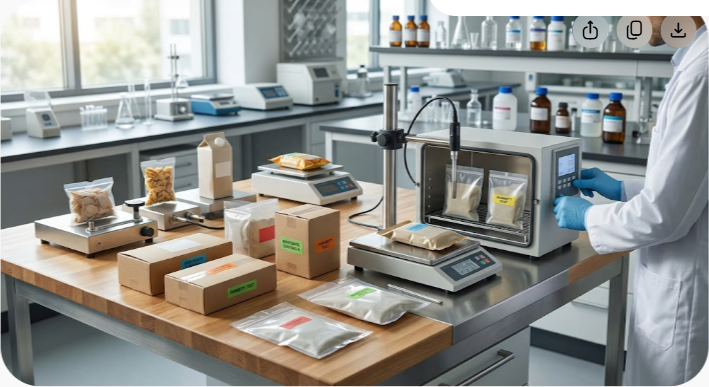
WVTR measures water-vapor transport. As with OTR, the exact test conditions are essential when comparing results between formulations or suppliers.
A barrier result is difficult to interpret without knowing the coating thickness or dry coat weight. A thicker coating may naturally reduce transmission, so comparisons should distinguish the effect of formulation from the effect of simply adding more material.
Viscosity and flow behavior determine whether a formulation can actually run on the intended equipment. Measure the formulation at relevant shear rates rather than relying only on a single low-shear viscosity value.
Optical microscopy can reveal large defects and agglomerates. Electron microscopy can provide more detailed information about platelet distribution. X-ray diffraction can help investigate interlayer spacing and changes in clay structure, although XRD results should be interpreted carefully rather than treating the disappearance of one peak as automatic proof of complete exfoliation.
For clear packaging, measure haze and transparency. Clay aggregates large enough to scatter visible light can make a film cloudy even when the formulation has good mechanical or barrier properties.
A barrier coating must survive the package's real handling conditions. Measure tensile behavior, elongation, flex-crack resistance, adhesion, coefficient of friction, and heat-seal behavior when relevant.
Bentonite used for drilling, construction, foundry, absorbents, or other industrial applications may not meet the purity and regulatory requirements for food packaging.
Better approach: specify the mineral and chemical requirements for the intended packaging application and obtain appropriate documentation from the supplier.
A higher clay percentage doesn't guarantee a lower OTR. Excessive loading can increase viscosity and agglomeration while reducing flexibility.
Better approach: optimize loading together with dispersion, binder chemistry, coating thickness, and process conditions.
A dry oxygen-barrier test can make a hydrophilic coating look much better than it will perform in humid storage.
Better approach: test at humidity conditions representative of the product's actual distribution and storage environment.
Sodium bentonite generally offers strong swelling and dispersion in water, but that doesn't make it the best material for every binder or package.
Better approach: choose the clay according to the formulation chemistry and target morphology.
Natural origin is not a regulatory approval. A mineral can be naturally occurring and still require purification, specification, migration assessment, or other controls before it can be used in a particular food-contact application.
Better approach: assess the complete formulation against the regulations that apply in the target market.
A mineral additive may be compatible with a recycling process while the binder, coating weight, adhesive, ink, or other package components create the actual problem.
Better approach: evaluate the finished packaging structure using relevant recycling or repulpability protocols.
Mixing time, shear, temperature, drying rate, and coating equipment can change dramatically between a laboratory coater and an industrial line.
Better approach: establish scale-up parameters based on mixing energy, shear environment, residence time, solids content, and drying capacity rather than copying rpm and minutes from the laboratory recipe.
Food packaging requires a different level of scrutiny from general industrial coatings. The fact that bentonite is a natural clay does not by itself establish that a particular grade, formulation, coating weight, or use condition is authorized for direct food contact.
Regulatory requirements vary by market and by the specific application. In the United States, relevant food-contact requirements may fall under FDA regulations and applicable food-contact notifications or exemptions. In Europe, the applicable framework can involve EU food-contact legislation, material-specific rules, and national requirements depending on the substance and application.
The clay should be characterized for relevant mineral impurities and trace elements. Depending on the source, bentonite can contain accessory minerals that aren't desirable in a food-contact formulation.
The assessment must cover the entire formulation, not just the clay mineral. Dispersants, surfactants, defoamers, polymer modifiers, organoclay treatments, and other additives may affect migration and regulatory status.
Where required, migration testing should be performed using the appropriate food simulants, contact conditions, time, and temperature. Fatty foods, aqueous foods, acidic foods, and dry foods can present different migration scenarios.
A serious packaging development program should request relevant technical specifications, safety documentation, composition information, quality certificates, contaminant data, and regulatory statements from the mineral supplier. The exact documents required will depend on the destination market and application.
The strongest commercial opportunities are applications where a moderate or substantial improvement in barrier performance can be achieved without introducing a construction that undermines the package's intended end-of-life route.
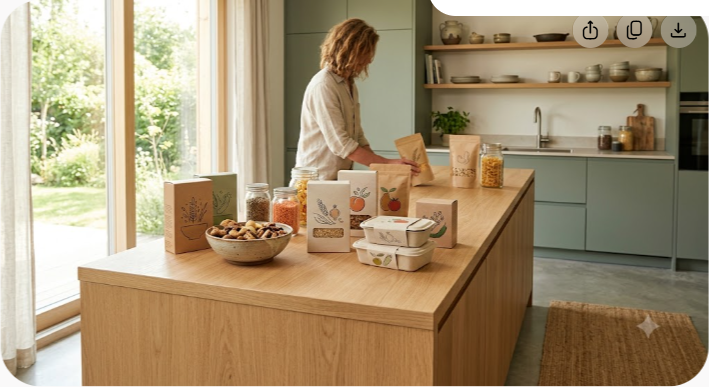
Crackers, cereals, nuts, powdered foods, dried fruit, and snack products often need protection against oxygen, moisture, or both. Clay-containing coatings can be investigated as part of a broader barrier system for these products.
The correct formulation depends on whether oxygen pickup, moisture pickup, aroma loss, grease resistance, or seal integrity is the dominant shelf-life limitation.
Coated paperboard is another promising area because a functional coating can reduce the permeability of the porous fiber substrate while adding grease or moisture resistance.
The commercial target should not simply be “replace plastic.” The better question is whether the finished package provides the required product protection while meeting the relevant converting and end-of-life requirements.
Bentonite can also be evaluated in bio-based polymer systems where improved barrier performance is needed. The clay may reinforce the polymer while increasing the effective diffusion path for gases.
However, a nanocomposite containing a bio-based polymer is not automatically compostable, recyclable, or environmentally preferable. Those claims require assessment of the entire material system and its intended waste-management pathway.
Some packaging applications may benefit from a multilayer or hybrid approach in which bentonite complements another barrier mechanism. In these cases, the clay doesn't have to replace the entire barrier layer to create value.
Bentonite is an abundant mineral material, and its inorganic nature can make it attractive for formulations seeking to reduce reliance on certain synthetic additives. But sustainability claims should be based on the complete package rather than the presence of one mineral.
A bentonite-containing coating can still contain fossil-derived polymers, organic modifiers, or additives. Mining and mineral processing also consume energy and generate environmental impacts.
The strongest sustainability assessment therefore considers:
Reducing food waste can also be an important part of the assessment. A package that uses slightly more material but substantially extends shelf life may have a different overall environmental profile from a lightweight package that allows significant product loss.
Research into clay-polymer nanocomposites continues because the underlying concept is versatile. Several areas are particularly relevant to future packaging development.
Researchers continue to investigate combinations of montmorillonite with starches, cellulose derivatives, polylactic acid, polyhydroxyalkanoates, and other bio-based matrices. The goal is usually to improve barrier or mechanical properties while maintaining a viable processing and end-of-life profile.
The key challenge is balancing incompatible requirements. A material may need to be strong, flexible, moisture-resistant, oxygen-resistant, heat-sealable, transparent, recyclable, and cost-effective at the same time. Clay can help with some of these properties, but it doesn't solve every requirement by itself.
Montmorillonite's ion-exchange properties have also made clay materials interesting for controlled-release and adsorption research. Potential applications include carrying antimicrobial or antioxidant compounds and interacting with gases associated with food deterioration.
These systems require considerably more regulatory and migration work than passive barrier coatings. An active package must demonstrate not only barrier performance but also controlled behavior of the active substance under the intended food-contact conditions.
Water-borne coatings remain important for paper and board because they can reduce reliance on solvent-based processing. Development work is focused on higher solids content, faster drying, improved rheology control, and better resistance to moisture.
For industrial scale-up, the challenge is to maintain a stable dispersion at production solids content while keeping the formulation pumpable and coatable at high line speeds.
The future may not belong to a single additive. Hybrid systems can combine platelet-filled coatings with bio-based polymers, cellulose-derived materials, surface treatments, or other barrier technologies.
The commercial advantage of a hybrid system is that each component can perform a specific job. The design challenge is ensuring that the complete structure remains practical to manufacture and compatible with its intended end of life.
Before moving a bentonite barrier coating from laboratory trials toward commercial production, confirm the following:
Bentonite can improve food packaging barrier coatings when its platelet structure, surface chemistry, dispersion, and orientation are matched to the polymer or binder system. The main mechanism is the tortuous path created by well-dispersed montmorillonite platelets, which can make oxygen and other molecules travel farther through the coating.
But the mineral isn't a plug-and-play barrier additive. Moisture sensitivity, agglomeration, rheology, optical haze, mechanical properties, coating weight, and regulatory requirements all affect whether a formulation succeeds.
For packaging engineers, the most reliable development strategy is to start with the required OTR and WVTR, choose a compatible clay and binder, optimize dispersion, and then validate the complete package under realistic conditions. A successful laboratory result is only the first step. The finished package must still survive converting, storage, distribution, food contact, and its intended end-of-life process.
For mineral suppliers, that makes consistency just as important as headline swelling or mineral content. A packaging developer needs a controlled raw material, dependable particle characteristics, technical documentation, and batch-to-batch reproducibility.
When evaluating bentonite for a food-packaging coating, ask for the complete technical specification rather than relying on a generic grade description. The right material is the one that performs consistently in the target formulation and satisfies the applicable safety, processing, and end-of-life requirements.













Have questions about our products? We're here to help!