Axewelledge, a leading exporter from India, specializes in high-quality Bentonite. With a commitment to excellence, we supply premium Bentonite to the Middle East and Southeast Asia markets.


North Angle Complex, 304,
150 Feet Ring Rd, Opposite Ambedkar Nagar BRTS Stop,
Madhav Park, Punit Nagar,
Mavdi, Rajkot, Gujarat 360004
© Axewelledge 2026, All Rights Reserved.
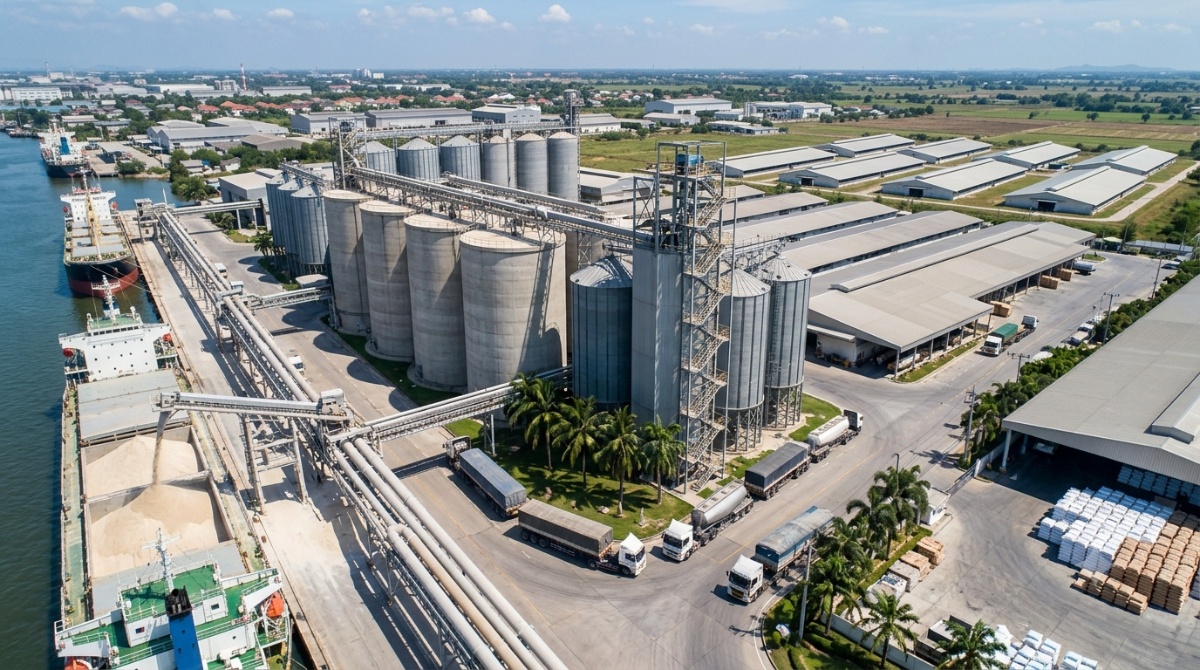
Thailand’s livestock and aquaculture industries are among the most sophisticated in Southeast Asia. Driven by surging global export demands for poultry, pork, and shrimp, Thai feed mills operate under intense pressure to maintain high feed conversion ratios, optimal animal health, and strict chemical safety standards.
Among the foundational tools keeping these intensive farming systems efficient is Bentonite Clay.
As a versatile mineral additive, bentonite serves multiple roles: it acts as a dynamic pellet binder, an indispensable mycotoxin binder, and a digestive stabilizer. For commercial feed mills, livestock producers, and purchasing managers across Thailand, sourcing the right grade of bentonite requires balancing physical properties, chemical purity, and shipping reliability.
This comprehensive guide breaks down everything a professional buyer needs to know about purchasing bentonite for the Thai animal feed market.
Thailand's tropical climate—characterized by high humidity and prolonged monsoon seasons—creates an ideal breeding ground for agricultural molds. When feed raw materials such as corn, cassava, soybean meal, and rice bran are stored in these environments, they are vulnerable to fungal proliferation.
Molds produce toxic secondary metabolites known as mycotoxins.
[High Humidity / Heat] âž” [Mold Growth on Feed Stored in Thailand] âž” [Mycotoxin Production] âž” [Livestock Illness / Low FCR]
To shield animals from these hidden killers, Thai feed formulators depend heavily on anti-caking agents and toxin binders.
Furthermore, Thailand’s livestock industry is highly consolidated, led by major agro-industrial conglomerates with strict quality control protocols. To qualify as an approved vendor for these feed mills, the mineral additives must comply with rigorous safety specifications regarding heavy metals (like lead, arsenic, and cadmium) and dioxins.
Geologically, bentonite is an absorbent aluminum phyllosilicate clay formed from aged volcanic ash. The commercial value of bentonite stems from its primary mineral component: montmorillonite.
Depending on the dominant exchangeable cation within the crystalline structure, bentonite is broadly categorized into two types:
Calcium bentonite contains calcium ($Ca^{2+}$) as its primary exchangeable cation. When exposed to water, it exhibits low swelling properties. However, its complex layer charge gives it exceptional adsorption properties. It is highly efficient at pulling toxins, polar molecules, and impurities out of liquids, making it a stellar candidate for targeted mycotoxin binding in the gastrointestinal tracts of livestock.
Sodium bentonite features sodium ($Na^+$) as its dominant cation. This specific atomic layout allows it to absorb massive volumes of water, swelling up to 15 to 20 times its original dry volume. When hydrated, it turns into a thick, sticky gel. In feed manufacturing, this high-viscosity profile makes it an outstanding pellet binder, ensuring that steam-pelleted animal feed doesn’t crumble during transport or storage.
Most top-tier feed manufacturers in Thailand utilize a blend of both properties, or source highly pure, natural calcium or sodium grades tailored to their specific pain point. If your primary goal is pellet integrity in high-vibration shipping setups, look toward sodium-dominant profiles. If your primary issue is regional mold contamination, a highly porous calcium bentonite optimized for toxin retention is ideal.
Integrating premium bentonite into your feed mill’s raw material matrix offers a multi-tier return on investment.
The crystalline sheets of montmorillonite carry a strong negative electrical charge, while many prominent mycotoxins—particularly Aflatoxin B1—possess polar, positively charged structures. When an animal consumes contaminated feed treated with bentonite, the clay acts as a chemical magnet.
It attracts and traps the aflatoxins within its interlayer spaces before they can be absorbed into the animal's bloodstream through the intestinal wall. The bound toxin safely passes through the digestive tract and is excreted.
Feed mills face constant financial loss from "fines"—the broken, powdered remnants of pellets that animals refuse to eat. Adding 0.5% to 2.0% bentonite to the mixer before the conditioning phase improves the plasticizing effect of steam. The clay acts as a matrix glue, boosting the Pellet Durability Index (PDI). This is particularly crucial for aquaculture feeds, which require high water stability so the pellet remains intact long enough for shrimp or fish to consume it.
Bentonite alters the viscosity of the digesta within the animal's gut. By slightly slowing down the passage rate of feed through the intestines, it gives endogenous digestive enzymes more time to break down and assimilate nutrients. For poultry and swine, this translates directly to improved feed conversion ratios (FCR) and better body weight gain.
Bentonite can bind ammonium ions ($NH_4^+$) in the intestinal tract. This reduction in systemic ammonia leads to lower ammonia gas emissions in the manure. For indoor broiler and swine facilities in Thailand, keeping ambient ammonia low reduces respiratory diseases and footpad dermatitis, greatly improving overall animal welfare.
When evaluating specifications from a global mineral exporter, a purchasing manager must look past the price tag and scrutinize the laboratory data sheet. If you want to dive deeper into how international suppliers maintain these parameters across industries, check out this guide on the top bentonite exporter from India.
When buying specifically for animal feed, look for the following core metrics:
| Technical Parameter | Ideal Specification Range | Industrial Importance |
| Montmorillonite Content | $ge 75\%$ to $85\%$ | Determines the functional capacity for binding and absorption. |
| Moisture Content | $8\% - 12\%$ | High moisture invites microbial growth; too low indicates over-drying, which ruins clay structure. |
| Particle Size (Mesh) | $90\%$ passing through $200 ext{ mesh}$ | Finer powder offers greater surface area for uniform mixing in feed. |
| Aflatoxin Binding Capacity | $ge 90\%$ in vitro (at pH 3.0 to 6.8) | Ensures the clay stays bound to the toxin across varying stomach acidities. |
| Heavy Metals (Pb, As, Cd) | Lead $< 10 ext{ ppm}$, Arsenic $< 2 ext{ ppm}$ | Strict safety thresholds to prevent toxic residues in meat and eggs. |
| Dioxins | Compulsory negative / Below global limits | Essential for meeting Thailand's Department of Livestock Development (DLD) rules. |
Thailand produces some domestic clays, but the sheer volume and specialized purity required for modern, large-scale feed manufacturing often necessitates importing from major global hubs. India is one of the premier sourcing destinations for Thai buyers due to its vast, world-class reserves and strategic geographical proximity.
When importing bentonite from India to Thai ports like Laem Chabang or Bangkok, logistics managers should expect several operational advantages:
Transit Times: Shipping from western Indian ports (like Mundra or Kandla) to Thailand generally takes between 14 to 21 days, allowing for agile inventory management.
Packaging Options: For feed mills, bentonite is typically ordered in 25 kg multi-wall paper bags (for manual dumping stations) or 1.0 to 1.25 metric ton Jumbo Bulk Bags (FIBC) featuring bottom spouts for automated batching systems.
Regulatory Documentation: Ensure your Indian supplier provides a clean Certificate of Analysis (CoA), Phytosanitary certificate, Free Sale Certificate, and complete material traceability documentation to guarantee a smooth customs clearance process with Thai authorities.
For insights into how Indian mineral suppliers serve dynamic Southeast Asian hubs, read about the nuances of bentonite export to Singapore, which highlights the advanced infrastructure and shipping logistics utilized across the region.
To secure a reliable, long-term supply of bentonite clay that will protect your formulations and keep your production lines moving, follow this step-by-step buyer's checklist:
Define Your Primary Target: Are you solving an issue with pellet crumble (requiring high-swelling sodium bentonite) or prioritizing a defense strategy against mold and toxic grains (requiring high-adsorption calcium bentonite)?
Request Full Chemical Profiling: Ensure the supplier provides an X-Ray Diffraction (XRD) analysis verifying high montmorillonite content, alongside an ICP-MS report detailing heavy metal levels.
Run In-Vitro Binding Trials: Ask for certified laboratory data demonstrating the material's binding efficiency against Aflatoxin B1 at both low pH (simulating the gastric environment) and neutral pH (simulating the intestinal tract).
Confirm Feed-Grade Certification: Verify that the processing facility follows international safety protocols such as ISO 9001, GMP+, or FAMI-QS to prevent cross-contamination.
Evaluate Supply Chain Resilience: Ensure your partner owns or directly controls extensive mining reserves. This guarantees that your third or fourth shipment next year will have the exact same mineral composition and physical behavior as the initial sample you approved.
Bentonite clay is far more than a simple mineral filler; it is an essential ingredient for risk mitigation and cost optimization within Thailand's modern feed sector. By understanding the functional differences between calcium and sodium variants, enforcing rigid chemical purity metrics, and partnering with verified global mine owners, Thai purchasing teams can protect their livestock herds, improve feed mill efficiency, and confidently supply high-quality protein to the global market.













Have questions about our products? We're here to help!