Axewelledge, a leading exporter from India, specializes in high-quality Bentonite. With a commitment to excellence, we supply premium Bentonite to the Middle East and Southeast Asia markets.


North Angle Complex, 304,
150 Feet Ring Rd, Opposite Ambedkar Nagar BRTS Stop,
Madhav Park, Punit Nagar,
Mavdi, Rajkot, Gujarat 360004
© Axewelledge 2026, All Rights Reserved.
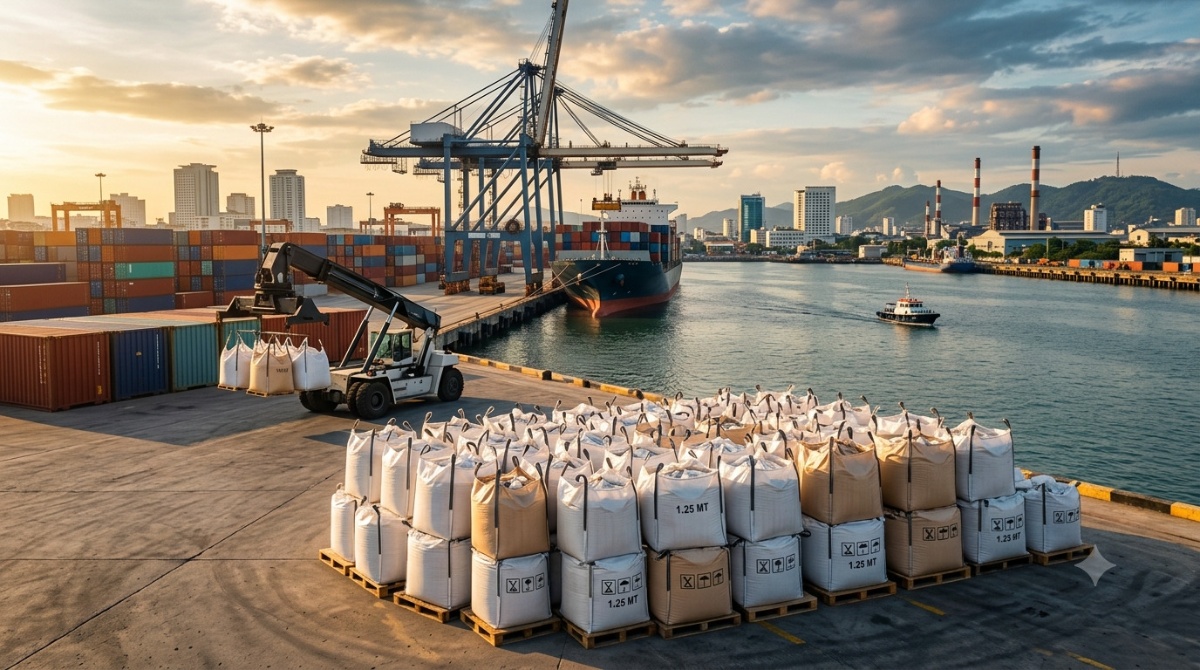
Vietnam’s industrial landscape is accelerating at an unprecedented pace. From the bustling construction sites in Ho Chi Minh City to the advanced metallurgical foundries in Hanoi, and the expanding agricultural zones in the Mekong Delta, the demand for high-quality raw materials has never been higher.
Among these critical raw materials, bentonite clay stands out as an unsung hero.
As a versatile volcanic ash residue rich in clay minerals, bentonite is a cornerstone material across multiple sectors. However, for Vietnamese importers, sourcing managers, and industrial engineers, navigating the global market isn't just about buying "bentonite"—it is about choosing the exact right mineralogical grade.
The choice between Sodium Bentonite and Calcium Bentonite can mean the difference between a highly successful industrial operation and a costly logistical failure.
This comprehensive guide breaks down everything you need to know about exporting bentonite to Vietnam, contrasting sodium and calcium grades, exploring their industry-specific applications, and detailing how to choose the right partner for your supply chain.
At its molecular level, bentonite is an absorbent aluminum phyllosilicate clay consisting mostly of the mineral montmorillonite. Formed millions of years ago from the chemical weathering of volcanic ash in the presence of water, this clay possesses unique physical and chemical properties:
High Surface Area: Gives it immense absorption capabilities.
Cation Exchange Capacity (CEC): Allows the clay to swap ions with its environment, making it highly reactive and adaptable.
Thixotropy: The ability to become fluid when agitated and set into a gel when at rest—a property highly prized in drilling and civil engineering.
The specific type of metal ion present between the crystal layers of the montmorillonite determines whether the clay is classified as Sodium Bentonite or Calcium Bentonite. This seemingly minor chemical variance fundamentally alters how the clay behaves when mixed with water.
Sodium bentonite features sodium ions ($Na^+$) as the dominant exchangeable cation within its crystalline structure. Because sodium ions have a relatively small charge-to-size ratio and a high hydration energy, they allow vast amounts of water molecules to penetrate the clay layers.
When exposed to moisture, sodium bentonite can swell up to 15 to 20 times its dry volume. As it absorbs water, it transforms into a thick, viscous, and nearly impermeable gel barrier. This incredible swelling capacity makes it an excellent sealant and binding agent.
Vietnam is currently investing heavily in urban subway systems, deep foundation buildings, and maritime port expansions.
Diaphragm Walls & Piling: Sodium bentonite is used to create stabilizing slurries. The slurry exerts hydrostatic pressure against trench walls, preventing collapse during excavation.
Tunneling (TBM): It acts as a lubricant for Tunnel Boring Machines, reducing friction and transporting excavated soil to the surface.
Geosynthetic Clay Liners (GCLs): Used to line canals, reservoirs, and transportation tunnels to prevent water ingress or loss.
The offshore oil fields in the South China Sea and onshore water well drilling across Vietnam rely heavily on premium drilling muds. Sodium bentonite is the primary additive used to:
Suspend and lift drill cuttings out of the borehole.
Cool and lubricate the drill bit.
Form a thin, low-permeability filter cake on the borehole wall to prevent fluid loss into surrounding formations.
Vietnam's manufacturing sector produces automotive parts, machinery, and heavy industrial equipment. In green sand casting foundries, sodium bentonite is utilized as a high-strength binder for molding sand. Its thermal stability ensures that the sand mold holds its shape against the extreme heat of molten iron, steel, or brass, resulting in smooth castings with minimal defects.
Calcium bentonite contains calcium ions ($Ca^{2+}$) as its dominant exchangeable cation. Because calcium ions carry a higher positive charge than sodium ions, they hold the clay platelets tightly together, preventing water molecules from easily forcing the layers apart.
Unlike its sodium counterpart, calcium bentonite is low-swelling, typically expanding to only 2 to 3 times its dry volume. However, what it lacks in swelling, it makes up for in adsorption. It acts like a powerful molecular sponge, drawing toxins, heavy metals, fats, and organic impurities into its internal porous structure without changing its physical shape.
Agriculture remains a vital pillar of the Vietnamese economy, especially in regions facing soil degradation and saline intrusion.
Soil Amendment: Adding calcium bentonite improves the water-retention capacity of sandy or degraded soils without waterlogging them. It holds onto vital nutrients, preventing them from washing away during heavy monsoon rains.
Animal Feed Binder: In poultry, aquaculture, and livestock farming, calcium bentonite is mixed into feed pellets. It binds harmful mycotoxins (moulds) within the animal's digestive tract, ensuring better nutrient absorption and livestock health.
Vietnam is a major consumer and exporter of refined vegetable oils, including palm oil, coconut oil, and rice bran oil. Calcium bentonite is processed into activated bleaching earth. In this state, it acts as a clarifying agent that removes dark chlorophyll pigments, carotenes, gums, and residual impurities from crude oil, delivering a crystal-clear, shelf-stable product.
With Vietnam tightening its environmental regulations for industrial parks (IZs), factories must treat their effluents rigorously. Calcium bentonite is used as a flocculant and adsorbent in wastewater treatment plants to bind heavy metals, dyes, surfactant chemicals, and emulsified oils, allowing them to be easily filtered out of the water system.
To help procurement managers make informed decisions, here is a direct comparison of how these two grades stack up across critical metrics:
| Property / Feature | Sodium Bentonite (Na+) | Calcium Bentonite (Ca2+) |
| Swelling Capacity | High (15x to 20x dry volume) | Low (2x to 3x dry volume) |
| Primary Mechanism | Absorption & Gelation | Adsorption & Ion Binding |
| Viscosity in Water | Extremely high; forms thixotropic gels | Low; remains a fluid suspension |
| Main Industrial Use | Drilling mud, civil engineering, foundries | Agriculture, oil refining, water treatment |
| Moisture Barrier | Excellent (Creates impermeable seals) | Poor (Allows water passage over time) |
| Activation Potential | Naturally highly active | Can be chemically activated via soda ash |
Vietnam's domestic bentonite reserves are limited in both volume and mineralogical purity. To sustain its massive industrial growth, the country relies significantly on imports from global mining hubs known for high-grade deposits, such as India, China, and Wyoming (USA).
The Construction Boom: Mega infrastructure projects, including the Long Thanh International Airport, expanding highway networks, and deep-water port upgrades, drive a consistent demand for civil engineering grade sodium bentonite.
Strict Environmental Compliance: As the Vietnamese government enforces stricter environmental mandates, industries are turning to calcium bentonite for localized water purification and safer agricultural practices.
Surging Aquaculture Requirements: The Mekong Delta's shrimp and fish farming sectors increasingly require premium toxin binders to safeguard aquaculture yields against disease and environmental toxins.
When exporting bentonite to major Vietnamese ports like Hai Phong (North), Da Nang (Central), or Cat Lai / Ho Chi Minh City (South), international suppliers must adhere to precise compliance standards:
Quality Certification: Shipments often require Material Safety Data Sheets (MSDS), Certificates of Analysis (COA) specifying montmorillonite content, particle size distribution (mesh size), and moisture levels.
Packaging Preferences: Depending on the end-user's setup, bentonite is typically shipped in 25 kg multi-wall paper/plastic bags for manual handling or 1.0 to 1.25 metric ton Jumbo bags (FIBC) for automated industrial feeding systems.
Moisture Control: Because bentonite is highly sensitive to environmental moisture, containers must be outfitted with industrial-grade desiccants to prevent premature clumping or activation during ocean transit through humid tropical waters.
Choosing the correct grade of bentonite requires a deep understanding of geological purity, processing consistency, and international logistics. Partnering with a reliable global supplier ensures that your manufacturing or construction processes face zero downtime.
For industrial operations looking to source premium-grade minerals, exploring a dedicated bentonite supplier can streamline your procurement. A trusted partner will provide access to rigorous quality testing, customized mesh sizes, and tailored packaging solutions built to survive long-ocean transits.
Whether your project requires high-yield drilling muds or highly adsorbent clarifying agents, aligning with an expert exporter ensures that your material meets international ASTM and API standards before it ever reaches Vietnamese customs.
To truly appreciate why selecting the precise grade matters, let's explore how these minerals perform under specific, demanding industrial conditions within the Vietnamese market.
In Vietnamese metallurgy, foundries use a mixture of sand, water, and clay to create molds for molten metal. Sodium bentonite is preferred here due to its high green compression strength and dry shear strength.
When the molten iron (at temperatures exceeding $1500^circ ext{C}$) hits the mold, the clay must hold the sand grains together against the intense thermal shock and the erosive force of the liquid metal liquid flow. If the clay lacks sufficient thermal resilience, the mold walls flake off, leading to sand inclusions and surface pitting on the finished metal components.
Crude vegetable oils contain trace elements like chlorophyll (which gives the oil an unappealing green hue) and carotenoids (red/yellow hues), alongside oxidative byproducts that ruin the oil's flavor and shelf life.
To clean this, refiners use calcium bentonite that has undergone acid activation. Treating the clay with hydrochloric or sulfuric acid washes out impurities from the clay's structural channels, greatly expanding its surface area and leaving behind a highly porous framework. When mixed with crude oil, this activated earth acts as a chemical magnet, pulling the unwanted color bodies out of the oil matrix.
In deep-foundation engineering—such as building high-rise basements in the soft, alluvial soils of Ho Chi Minh City—contractors excavate deep trenches. Without support, these muddy walls would instantly cave in.
By pumping a 4% to 6% sodium bentonite slurry into the trench as it is being dug, the clay platelets build a "filter cake" on the dirt walls. This cake stops water from leaking through and exerts continuous outward pressure, keeping the deep trench perfectly stable until workers can pour the concrete structural support.
If you are a procurement manager or an industrial engineer in Vietnam, selecting the incorrect grade can result in ruined product batches, compromised structural integrity, or clogged machinery. Follow this structured decision framework to ensure you select the proper mineral grade:
If you need sealing, swelling, water retention, high viscosity, or structural binding, your default choice should be Sodium Bentonite.
If you need filtration, clarifying, decoloring, toxin binding, or moisture absorption without expanding, your default choice should be Calcium Bentonite.
High Heat Operations: Foundries and heavy manufacturing environments demand the thermal endurance of high-grade sodium bentonite.
Saline Environments: Natural sodium bentonite can lose its swelling capacity in highly saline waters (such as coastal drilling operations). In these specific scenarios, specialized polymer-extended or modified bentonite clays are required.
Bentonite is processed into various forms depending on how it will be deployed:
Granular Bentonite (1-5mm): Ideal for agricultural soil application or environmental pond sealing where slow, controlled hydration is preferred.
Powdered Bentonite (200-325 Mesh): The standard choice for drilling fluids, foundry sand mixtures, and industrial manufacturing, where rapid dispersion and instant hydration are required.
Sourcing raw materials internationally involves balancing cost against mineralogical consistency. A variation of even 5% in montmorillonite content can cause a drilling slurry to lose its viscosity or an animal feed batch to fall short on toxin binding.
To mitigate these operational risks, it is highly recommended to read through an industrial bentonite blog to stay updated on global mining trends, shipping cost fluctuations, and modern industrial testing methodologies.
Montmorillonite Content: Should ideally be above 75-80% for high-performance applications.
Free Swell Index: For sodium grades, a minimum free swell of 20 ml/2g is generally required for heavy industrial applications.
Moisture Content: Must be strictly controlled between 8% and 12%. If it is too dry, the clay can lose its structure; if it is too damp, the product can cake up inside the shipping bags during transport.
pH Levels: Natural sodium bentonite usually maintains an alkaline pH between 8.5 and 10.0, which is critical for preventing corrosion in drilling rigs and industrial machinery.
Exporting bulk minerals across oceans requires meticulous logistical planning. Because bentonite is a dense, heavy commodity, shipping costs represent a substantial portion of the total Landed Cost (CIF) at Vietnamese ports.
[Mining & Crushing] âž” [Milling & Sizing] âž” [Moisture Control & Packing] âž” [Container Loading with Desiccants] âž” [Ocean Freight] âž” [Vietnam Customs Clearance]
Because bentonite is highly hydrophilic (water-loving), standard packaging is vulnerable to damage in humid marine environments. Premium exporters utilize multi-wall bags incorporating an internal polyethylene plastic liner. This barrier prevents ambient humidity from entering the bag during ocean transit, ensuring the clay arrives at your facility completely free-flowing and ready for immediate deployment.
To avoid costly container demurrage fees at major terminals like Cat Lai or Hai Phong, ensure your exporter prepares the following documentation flawlessly:
Bill of Lading (B/L): Clearly specifying the industrial description.
Certificate of Analysis (COA): Detailing the exact chemical composition and physical properties of the specific batch.
Phytosanitary Certification: Occasionally required for agricultural or animal-feed grade entries to prove the mineral is free from biological contaminants.
Commercial Invoice & Detailed Packing List: Matching all weights and container seals exactly.
As Vietnam continues its ascent as a global manufacturing and infrastructure powerhouse, the reliance on top-tier industrial minerals will only grow. Understanding the profound chemical and practical differences between Sodium Bentonite and Calcium Bentonite ensures that businesses can optimize their production lines, minimize material waste, and safeguard project timelines.
By matching your specific operational goals—whether it’s stabilizing a subway tunnel excavation in Hanoi, clarifying a batch of cooking oil, or improving crop yields in the Mekong Delta—with the correct mineral grade, you unlock the true value of this remarkable volcanic clay.
Prioritize suppliers who emphasize chemical consistency, robust export packaging, and transparent quality certifications. With the right grade in your mixers, your operations can confidently meet the demands of Vietnam’s fast-moving industrial future.













Have questions about our products? We're here to help!