Axewelledge, a leading exporter from India, specializes in high-quality Bentonite. With a commitment to excellence, we supply premium Bentonite to the Middle East and Southeast Asia markets.


North Angle Complex, 304,
150 Feet Ring Rd, Opposite Ambedkar Nagar BRTS Stop,
Madhav Park, Punit Nagar,
Mavdi, Rajkot, Gujarat 360004
© Axewelledge 2026, All Rights Reserved.
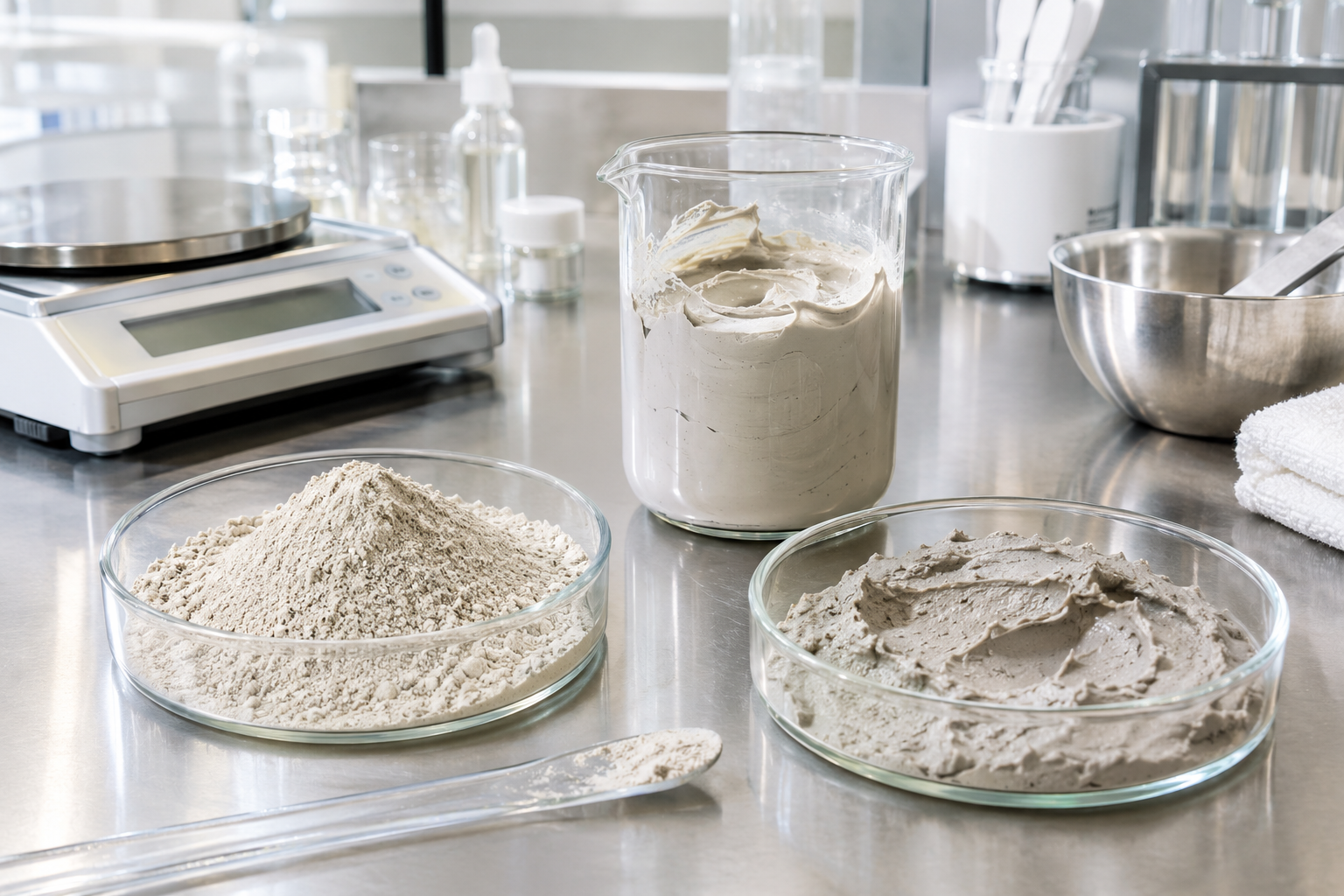
Bentonite is best known for its swelling and absorbent properties, but those aren't its only useful characteristics in cosmetic formulations. When the right grade is properly dispersed, bentonite can help manage surface oil, build viscosity, support suspension and give masks and cleansers the dense, smooth texture associated with clay-based products.
The key is choosing and using the material for a defined formulation purpose. Bentonite isn't a universal substitute for every cosmetic thickener, absorbent or rheology modifier. Mineral type, particle size, purity, concentration, hydration, water chemistry, processing and the rest of the formula can all change its behavior.
For manufacturers, that means a promising dry powder sample isn't enough. The bentonite has to perform consistently in the finished formula, under the same processing and storage conditions used for production.
Bentonite is a naturally occurring clay in which smectite minerals, particularly montmorillonite, are important components. Its layered structure and interaction with water give it properties that can be useful in several types of personal-care products.
In cosmetic formulation, bentonite is generally considered for four main functions:
These functions often occur together, but they shouldn't be treated as the same thing. A manufacturer may select bentonite mainly for oil-control performance while also benefiting from its ability to increase viscosity. Another formula may need the rheological effect more than the absorbency.
That distinction becomes important when setting dosage. Increasing the bentonite level can improve structure up to a point, but it can also make a product harder to spread, more difficult to rinse and less comfortable on the skin.
Cosmetic descriptions often use the term "oil absorption," although the underlying behavior is more accurately described in terms of adsorption and physical removal.
Bentonite has very fine particles and a large effective surface area. Its mineral surfaces can interact with substances present in a formulation or on the skin. In a rinse-off clay mask, the mineral can help capture some surface oils and other materials that are removed when the mask is washed away.
This isn't the same as chemically destroying oil. The clay acts primarily as a mineral adsorbent and rheology-modifying material within the product.
The drying stage of a clay mask changes the way the product feels. As water leaves the applied layer, the concentration of clay increases and the mask becomes firmer. When the product is removed, some of the material present on the skin surface can leave with it.
The practical outcome is familiar: skin may feel cleaner and less oily after a bentonite-containing rinse-off product.
However, maximum oil removal isn't automatically the desired result. Removing too much surface oil can produce an uncomfortable tight or dry after-feel, especially when a clay product is used frequently or combined with strong surfactants and other potentially drying ingredients.
For that reason, formulators should define the desired skin feel first and then select the bentonite concentration and supporting ingredients around that target.
Bentonite's contribution to texture is often just as important as its absorbent behavior.
Once adequately dispersed and hydrated, bentonite can increase viscosity and provide structure in water-based systems. In a face mask, this can help the product remain where it is applied instead of flowing immediately across the skin.
A workable cosmetic texture has several requirements. The product should be thick enough to stay in place but still spread without excessive drag. It should feel reasonably smooth, remain stable during storage and rinse away without requiring aggressive scrubbing.
Bentonite can help with several of these requirements, but its effect depends heavily on the grade and processing conditions.
Particle size is one important factor. Coarse particles can produce a gritty sensation, while a finely processed cosmetic-appropriate material can give a smoother application. Hydration is equally important. Poorly dispersed clay may form small lumps, and those lumps can remain noticeable even after the rest of the formula looks uniform.
The target, therefore, isn't simply maximum thickness. A well-formulated product needs the right balance of viscosity, spreadability, suspension, drying behavior and skin feel.
Face masks are one of the more straightforward applications for bentonite because the product can use both its mineral absorbency and its ability to build structure.
A rinse-off mask may contain bentonite with water, humectants, other clays, botanical materials, preservatives and ingredients selected for a particular sensory profile. There is no single formula that represents every clay mask.
For products aimed at oily or combination skin, bentonite may be included to create a more absorbent feel while giving the mask enough body to form an even layer. A gentler formula may use less bentonite and combine it with ingredients that soften the overall sensory effect.
There is no universal bentonite percentage for a face mask. A useful formulation-development approach is to begin with a low single-digit screening range and then compare higher and lower levels under controlled conditions. Some clay-heavy products can contain substantially more mineral material, but increasing the clay concentration changes several properties at once.
As the level rises, the formula may become thicker, dry faster, develop more drag and become harder to rinse. The correct question is therefore not how much bentonite can be added. It is how much is needed to achieve the required oil-control and texture performance without compromising the user experience.
There isn't one correct dosage for every cosmetic product. A face mask, clay cleanser, emulsion and other skincare product can have very different water phases, oil phases, surfactant systems, polymers and humectant levels.
For formulation work, controlled concentration screening is more reliable than copying a percentage from another product.
A practical laboratory screen can begin with the following sequence:
These figures are formulation trial ranges, not universal safety limits or recommended finished-product concentrations. The appropriate level depends on the formula, intended use, exposure, applicable requirements and the specifications of the selected raw material.
A useful development program should also compare batches after consistent hydration and processing. Bentonite behavior can change when mixing conditions, water quality or order of addition changes.
Sodium bentonite and calcium bentonite describe different exchangeable-cation characteristics and can show meaningful differences in swelling and hydration behavior.
Sodium bentonite generally swells more strongly in water than calcium bentonite. That difference can affect viscosity, suspension and the overall structure of a cosmetic formula. Calcium bentonite generally produces less swelling and may be useful where a less strongly swelling clay is preferred.
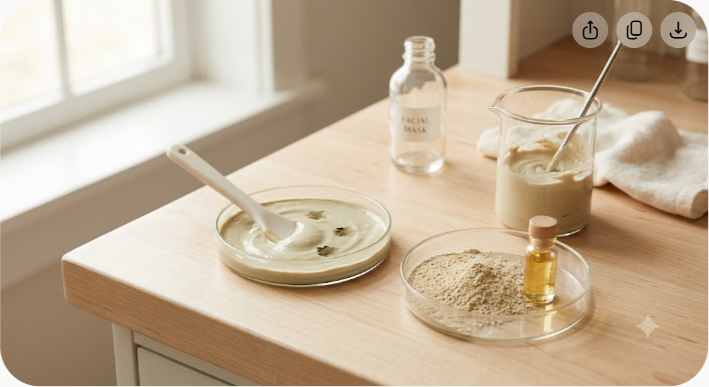
The mineral classification alone, however, doesn't determine whether a material is appropriate for a particular cosmetic application. Source characteristics, processing, particle size, purity and quality controls can all influence the finished material.
| Feature | Sodium bentonite | Calcium bentonite |
|---|---|---|
| Water swelling | Generally higher | Generally lower |
| Hydration behavior | Often develops strong structure after proper dispersion | Typically develops more moderate swelling |
| Texture contribution | Can provide substantial body | Can provide a lighter clay structure depending on grade |
| Formulation consideration | Useful when swelling and structure are desired | Useful when lower swelling is preferred |
| Main development concern | Avoid excessive viscosity or drag | Confirm sufficient structure for the intended product |
For a cosmetic manufacturer, the better choice is the grade that produces the required result in the complete formula. A label such as "sodium bentonite" or "calcium bentonite" is only one part of that decision.
Two powders can both be described as bentonite and still behave differently in a cosmetic formulation.
Particle-size distribution affects wetting, dispersion, hydration, texture and the sensory experience of the finished product. Finer material generally has advantages when a smooth application is required, while coarse particles can introduce an unwanted gritty feel.
This is particularly important in facial products. A mask intended to spread smoothly shouldn't contain unexpected coarse fractions that make application uncomfortable.
A supplier should be able to provide a relevant fineness or particle-size specification for the grade being supplied. Depending on the material and manufacturing process, particle size can be evaluated using sieve analysis, laser diffraction or another suitable analytical method.
Finer isn't automatically better, either. Very fine powders can present handling, dust and dispersion challenges. The useful target is a controlled, consistent particle-size distribution that matches the formulation rather than the smallest possible particle size.
For commercial production, consistency matters as much as the nominal specification. If the particle distribution changes between batches, the formula may show differences in viscosity, dispersion or skin feel even when the ingredient is technically still the same clay.
Oil control is only one reason a formulator may choose bentonite.
Properly hydrated bentonite can increase the apparent viscosity of a water-containing system. In a mask, that helps the product maintain a coherent layer during application instead of running too easily.
The rheological contribution of bentonite can help keep certain dispersed materials suspended. This can be useful when a product contains insoluble particles or other ingredients that would otherwise settle during storage.
Suspension performance is formulation-dependent, though. Bentonite shouldn't be assumed to replace a dedicated suspending system without testing the complete formula.
The selected grade can contribute to a creamy, dense or smooth clay sensation. An unsuitable grade or poorly dispersed powder can have the opposite effect, producing drag, clumping or an overly dry feel.
As water evaporates from a clay mask, the mineral concentration in the remaining film increases and the product becomes firmer. The rate of drying depends on the entire formula and application conditions.
Fast drying isn't necessarily a sign of better performance. If the product becomes uncomfortable before the intended contact time is reached, the formulation may need adjustment.
Bentonite can give a product the natural mineral appearance expected from many clay masks and cleansing products. That visual quality can support the product concept, but appearance should never replace performance, quality or safety evaluation.
Bentonite can also be used in cleansing products, but the formulation becomes more complex as the product moves away from a simple rinse-off mask.
In a cleanser, clay can interact with surfactants, oils, polymers, salts and other dispersed ingredients. Adding more bentonite can increase viscosity, but it can also make the product heavy, difficult to spread or harder to rinse. The effect may not be obvious from a small raw-material test.
A cleanser designed for oily skin may therefore use bentonite as one part of a broader cleansing system rather than treating the clay as the sole oil-control ingredient.
Leave-on products require an even more careful assessment. Residue, sensory performance, particle characteristics, stability and skin compatibility all become important considerations. A grade that performs well in a five-minute rinse-off mask shouldn't automatically be transferred to a leave-on formulation.
The same principle applies to emulsions and other complex systems. Clay can interact with emulsifiers, polymers and electrolytes in ways that alter the rheology of the entire product. Small laboratory trials are essential before making assumptions about production behavior.
When evaluating a new cosmetic bentonite, don't judge it from the dry powder alone. Build a small and repeatable test program so that material differences can be separated from process differences.
Start with the technical specification and safety documentation for the exact grade under consideration. Confirm that the material is intended and suitable for the proposed cosmetic application and that relevant impurity and contaminant information is available.
Depending on the application, useful parameters can include mineral characteristics, moisture, particle size, pH of a defined dispersion, swelling or viscosity behavior, microbiological quality where applicable, and limits for heavy metals or other relevant contaminants.
Don't rely on a generic specification for "bentonite." The grade being tested should match the grade intended for commercial supply.
Water quality can affect clay behavior. Use the same water source and quality for comparative trials. Changes in hardness, dissolved salts or other ionic conditions can alter hydration and rheology.
If one sample is tested in purified water and another in harder process water, the resulting viscosity difference may have more to do with the water than the bentonite.
Add the powder gradually rather than dumping a large quantity into water at once. Depending on the formulation, high-shear mixing may be useful during development, while other systems may require gentler processing.
Record mixing speed, mixing time, temperature and order of addition. These details should be kept consistent across comparative trials.
Bentonite hydration is a process, not just an ingredient addition. A change in how the powder is incorporated can change the result.
Evaluate samples after a defined hydration period. A dispersion that appears relatively thin immediately after mixing can develop considerably more structure as the clay hydrates.
The important point is consistency. If one sample is evaluated immediately and another after several hours, the comparison doesn't provide a reliable picture of the raw materials.
Measure the properties that actually matter to the finished product. Depending on the application, these can include viscosity, spreadability, appearance, settling, syneresis, drying time, rinse-off behavior and sensory feel.
For a product aimed at oily skin, assess the perceived clean feel after rinsing as well. Instrumental measurements are useful, but they shouldn't be the only basis for a cosmetic texture decision.
A formula that looks good on the first day hasn't finished its development process. Run appropriate accelerated and real-time stability studies for the product and packaging system.
Monitor changes in viscosity, separation, odor, color, microbial quality, appearance and packaging compatibility. If the clay is contributing strongly to rheology, even a modest shift in its behavior can affect the finished product.
Most formulation problems don't come from bentonite being inherently difficult to use. They come from treating all bentonite grades as interchangeable or judging the raw material without considering the complete formula.
A material can be correctly identified as bentonite and still be unsuitable for cosmetic use. Cosmetic applications require appropriate specifications, quality controls and documentation for the intended application.
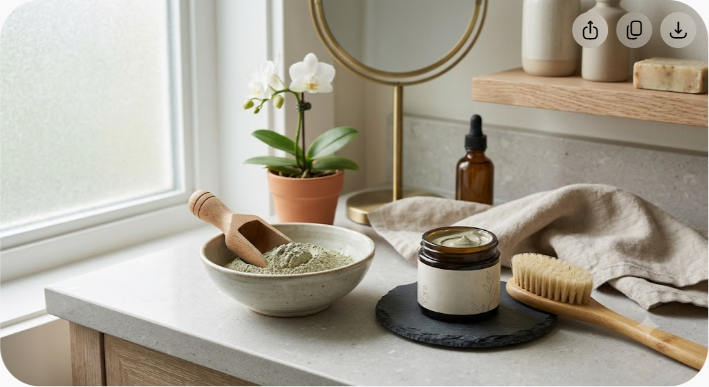
Ask the supplier for documentation covering the exact grade being purchased, including relevant safety, purity and contaminant information.
A higher clay concentration can increase the absorbent character of a product, but it can also increase drag, drying and difficulty during rinse-off.
Instead of choosing the highest practical loading, compare several concentrations and select the one that provides the required performance with an acceptable sensory profile.
A clay mask should feel like a controlled cosmetic product. Unexpected coarse particles can make application unpleasant and may undermine an otherwise well-designed formula.
Particle-size control should therefore be part of raw-material qualification, particularly for facial products.
Bentonite can hydrate unevenly and form lumps when it is added too rapidly or without adequate dispersion. Once poorly hydrated agglomerates develop, simply increasing mixing time may not fully restore the intended texture.
Controlled addition and a consistent dispersion method are easier to manage than trying to correct lumps later.
A comparison is only useful when the process is comparable. If one batch receives longer mixing, a different temperature or a different hydration period, the observed difference may reflect processing rather than raw-material performance.
Keep the test conditions consistent before drawing conclusions about which clay performs better.
Dissolved minerals and electrolytes can influence clay hydration and rheology. If laboratory water differs substantially from production water, the final product may not behave in the same way.
Use representative process water during later-stage development and confirm performance at scale.
Natural origin doesn't remove the need for quality control. Cosmetic raw materials should be evaluated for relevant contaminants, microbiological suitability, trace elements and other application-specific risks.
The right question isn't simply whether the material is natural. It is whether the material is appropriately specified and suitable for its intended cosmetic use.
For cosmetic manufacturing, supplier qualification should go beyond the price per kilogram.
Start by requesting a representative technical specification and safety documentation for the exact grade you intend to evaluate. If the supplier offers multiple bentonite grades, ask what distinguishes them and which properties are controlled from batch to batch.
Useful questions include:
Batch consistency deserves particular attention. A cosmetic formula can respond to changes in raw-material behavior even when the nominal ingredient name remains unchanged. If viscosity or dispersion changes from one shipment to another, production teams may have to compensate with other ingredients or processing adjustments.
That creates avoidable complexity. A supplier who can provide a controlled specification and consistent commercial material is usually more valuable than one offering only a lower initial purchase price.
Bentonite isn't the only mineral clay used in cosmetic products. Kaolin, for example, is widely used in masks and cleansers but generally has different swelling and rheological characteristics.
The useful comparison isn't which clay is universally superior. It's which material fits the formulation objective.
| Property | Bentonite | Kaolin |
|---|---|---|
| Water swelling | Typically stronger, especially for sodium-rich grades | Relatively low |
| Rheology contribution | Often substantial | Generally more limited |
| Oil-control role | Useful in absorbent rinse-off products | Widely used in oil-control masks |
| Suspension support | Can be significant depending on grade and system | Generally more modest |
| Texture | Can produce a dense, structured feel | Often produces a lighter clay texture depending on grade |
| Best selection approach | Match grade to viscosity, absorption and sensory target | Match grade to absorption and desired sensory profile |
Many formulas can benefit from combining clays rather than forcing one mineral to perform every job. A blend may provide a useful balance between absorption, structure, spreadability and skin feel.
The right combination should be established through controlled formulation trials rather than assumed from the raw-material name.
Bentonite can contribute to a dry or tight after-feel, but that outcome depends on the complete formula and how the product is used.
A mask with a high mineral load may remove a significant amount of surface oil. If the product is left on for too long, applied too frequently or combined with other strongly cleansing ingredients, some users may find the result uncomfortable.
Formulators can influence the overall experience through clay concentration, humectants, emollients, other clays and the instructions provided for application and removal.
For an oily-skin product, the goal shouldn't be to remove every trace of surface oil. The formula needs to deliver the intended cleansing or absorbent effect while maintaining a comfortable skin feel.
This is another reason why concentration should be selected through finished-product testing rather than by treating a higher clay percentage as inherently better.
Bentonite is a naturally occurring mineral, which makes it attractive for products positioned around mineral or naturally derived ingredients. However, "natural" isn't a single technical or regulatory specification.
If a product is marketed according to a particular natural, organic or clean-beauty standard, the finished formulation and each relevant raw material should be checked against the requirements of the applicable standard or certification.
Processing also matters. A mined mineral can undergo drying, milling, classification and other processing steps before it becomes a cosmetic raw material. Those steps should be understood when assessing the ingredient and its documentation.
International brands should also review the requirements that apply in each target market rather than assuming that a claim or specification accepted in one market automatically applies everywhere.
A good purchasing specification should describe the material clearly enough that incoming shipments can be compared objectively.
Depending on the application, consider specifying:
The more important a raw material is to product rheology, the more useful it is to define measurable acceptance criteria.
This matters particularly at scale. A laboratory formula can accommodate experimentation and adjustment. A commercial filling line has less flexibility when a raw material behaves differently from the material used during development.
A clear specification also gives purchasing, quality and production teams the same reference point when evaluating a new shipment.
For manufacturers evaluating bentonite for masks, cleansers and related cosmetic applications, the raw material should be treated as a controlled mineral ingredient rather than as generic clay.
Axewelledge supplies bentonite for multiple industrial applications and can support buyers evaluating mineral specifications, processing requirements and international supply. For a cosmetic project, the practical starting point is to define the formulation objective, identify the required material characteristics and then validate the selected grade through laboratory testing.
That approach is more dependable than selecting a material based only on descriptions such as "high swelling" or "high absorption." Those terms can be useful indicators, but they don't describe how a particular grade will behave in a complete cosmetic formula.
The better material is the one that consistently delivers the required dispersion, texture, rheology and sensory performance while meeting the applicable quality requirements.
Before moving from laboratory trials to commercial production, confirm the following:
If any of these questions remains unanswered, the material or formula needs further qualification before scale-up.
Bentonite can be a useful cosmetic ingredient because it combines absorbent behavior with strong hydration and rheological properties. In the right formulation, that combination can support oil control, body, suspension and the characteristic texture of clay-based products.
But the mineral itself isn't the whole story. Bentonite type, particle size, purity, hydration behavior, water chemistry, processing and batch consistency all affect performance. Concentration matters as well because changing the clay level can alter viscosity, spreadability, drying behavior, rinse-off and skin feel at the same time.
For cosmetic manufacturers, the most reliable approach is straightforward: define the performance you need, select a grade against measurable specifications, run controlled formulation trials and validate the finished product before scaling up.
If you're sourcing bentonite for cosmetic masks, cleansers or related applications, Axewelledge can help you evaluate the material against your technical and supply requirements. The right grade should fit the formula first and the product positioning second.













Have questions about our products? We're here to help!