Axewelledge, a leading exporter from India, specializes in high-quality Bentonite. With a commitment to excellence, we supply premium Bentonite to the Middle East and Southeast Asia markets.


North Angle Complex, 304,
150 Feet Ring Rd, Opposite Ambedkar Nagar BRTS Stop,
Madhav Park, Punit Nagar,
Mavdi, Rajkot, Gujarat 360004
© Axewelledge 2026, All Rights Reserved.
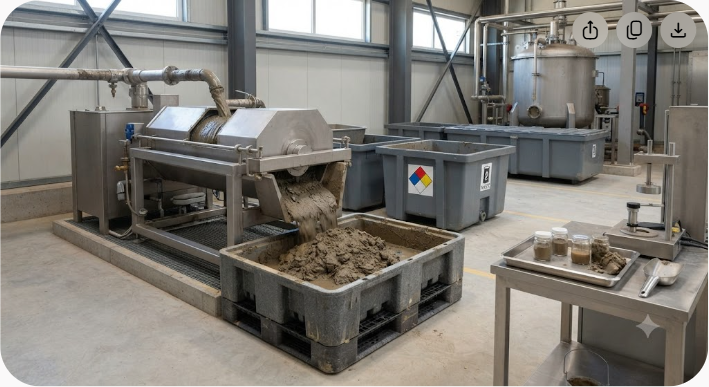
Bentonite itself usually isn't the main disposal concern. The bigger question is what the drilling fluid has picked up during circulation: water, formation solids, salts, hydrocarbons, metals, treatment chemicals, and fine drill cuttings. A disposal method that works for a relatively clean water-based mud may be unsuitable for a contaminated or high-salinity waste stream.
For most drilling operations, the sensible starting point is to characterize the spent fluid and cuttings before choosing a treatment or disposal route. Depending on the waste composition, possible options include fluid recovery and reuse, dewatering, landfarming or other land treatment where authorized, stabilization and solidification, permitted burial, injection, or transport to an approved treatment or disposal facility. In the United States, many oil and gas exploration, development, and production wastes fall under a federal RCRA Subtitle C exemption, but that exemption does not remove state requirements or make unrestricted disposal acceptable. State and local requirements can still apply.
That distinction matters. Bentonite is a naturally occurring clay, but spent bentonite drilling mud isn't simply the same mineral in wet form. Once the mud has circulated through a well, its composition reflects the drilling-fluid formulation, the formation, the additives used, and the solids and fluids encountered underground.
Bentonite drilling waste is the solid, liquid, or semi-solid material left after a bentonite-containing drilling fluid has done its job and can no longer be economically or technically reused in the active mud system. Depending on the operation, it may include spent mud, separated drill cuttings, excess drilling fluid, formation water, treatment chemicals, and sediment collected from tanks, pits, or other containment systems.
Bentonite is widely used in water-based drilling fluids because its swelling and colloidal properties help build viscosity, suspend solids, and reduce fluid loss. During drilling, however, the fluid becomes loaded with cuttings and formation fines. It can also acquire dissolved salts, hydrocarbons, metals, or other constituents from the well and surrounding formation.
That is why the term "bentonite waste" can be misleading. Two batches of spent mud may look almost identical while requiring completely different management.
One batch might contain mainly water, bentonite, barite, and relatively clean formation solids. Another could contain elevated chloride, hydrocarbons, metals, or other constituents that make land application or simple burial inappropriate.
The composition varies with the well, geology, drilling-fluid formulation, additives, and operating history. A spent water-based mud can contain:
The fluid can change considerably as drilling continues. Solids loading may increase, rheology can shift, and dissolved constituents can accumulate. For that reason, waste should be assessed as an actual waste stream rather than judged from the original drilling-fluid recipe alone.
Not automatically. Using bentonite in a drilling fluid doesn't by itself turn the resulting waste into hazardous waste. The relevant questions are how the waste was generated, what it contains, how it is regulated, and which disposal route is being considered.
For U.S. oil and gas exploration, development, and production activities, many qualifying exploration and production wastes are excluded from regulation as hazardous waste under RCRA Subtitle C. That federal exclusion has important limits, however. Other federal requirements can still apply, and state and local rules may impose additional requirements. The exclusion also doesn't mean that an E&P waste stream is environmentally harmless.
The federal treatment of qualifying E&P wastes should not be applied automatically to every drilling-related waste. Similar material generated outside the activities covered by the exclusion may be regulated differently.
So don't use "bentonite" as a shortcut for deciding that a waste is safe to dispose of. Instead, establish:
Bentonite has a strong influence on the physical behavior of drilling waste because it hydrates and forms a fine, cohesive clay-rich suspension.
That behavior is valuable in the well. It can be less convenient once the mud becomes waste. Bentonite-rich slurry may settle slowly, retain substantial water, resist simple filtration, or produce a sticky cake during mechanical separation. Waiting for a tank of spent mud to dry naturally isn't always an efficient waste-management strategy.
The same water-retention and binding characteristics can also play a role in treatment. Bentonite can influence moisture retention and solids structure, while engineered stabilization systems may use other binders to reduce the mobility of selected contaminants. The appropriate treatment depends on the waste chemistry and the performance requirements of the final disposal route.
The practical point is straightforward: the properties that make bentonite useful in drilling can also affect how spent mud needs to be separated, transported, treated, and disposed of.
Characterization should come before the disposal decision, not after the waste has been spread, buried, or transported.
A practical characterization program may include:
The exact analytical panel should be based on the waste stream and the applicable regulations. Copying a laboratory test list from another well can miss the constituents that actually matter at your site.
Historical regulatory guidance on reserve-pit closure illustrates the importance of testing parameters such as pH, oil and grease, metals, and salinity before certain closure or disposal practices. Older federal guidance can still be useful for understanding disposal technologies and environmental considerations, but it shouldn't be treated as a current permit or as a substitute for state-specific requirements.
Chloride is a practical screening parameter for many land-based disposal decisions because high salt concentrations can affect soil quality, vegetation, and groundwater protection.
A waste stream can have relatively low concentrations of some metals and still be unsuitable for land application because its salt load is too high for the site or the applicable limits.
That is one reason the statement "water-based bentonite mud is environmentally safe" is too broad. Water-based describes the base fluid. It says little about everything that fluid encountered underground.
A sound waste-management program starts with segregation and characterization. Choosing a disposal technology should come later.
Keep spent mud, drill cuttings, contaminated wash water, recoverable drilling fluid, and unrelated wastes separate whenever practical.
Mixing different streams can increase the total volume that needs treatment and may turn a relatively manageable material into a more complicated waste. It can also make later characterization harder because the combined material no longer represents the original streams.
For example, recoverable drilling fluid shouldn't automatically be mixed with heavily contaminated solids simply because both materials are generated at the same rig.
Disposal is often the last step, not the first.
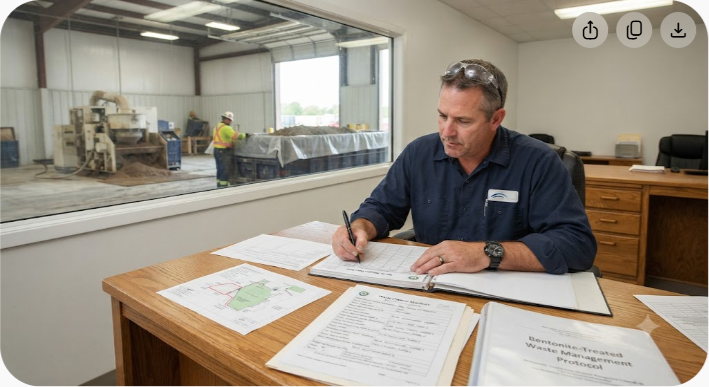
If the fluid still meets the requirements of the drilling program, solids-control equipment and appropriate treatment may allow some of the liquid phase or drilling-fluid components to be recovered. Depending on the operation, recovery can reduce fresh-material consumption as well as the volume of waste requiring final management.
The economics depend on mud chemistry, solids loading, transport costs, equipment availability, and the value of the recovered fluid. Reuse also requires quality control. Recycled mud should still meet the specifications needed for the next drilling interval.
Dewatering separates free liquid from a more concentrated solids fraction. Depending on the material, the process may involve settling, centrifugation, filtration, vacuum systems, or other solids-control equipment.
The objective isn't simply to make the waste look dry. A useful dewatering process produces fractions that can be stored, transported, treated, or disposed of more efficiently.
A liquid-rich stream may need tank-based treatment, while a dewatered solids fraction may follow a different permitted route. The best equipment depends on the mud's rheology, solids content, particle-size distribution, and chemistry.
Don't assume that the composition of the original mud represents the composition of the dewatered cake or separated liquid.
Some constituents can concentrate in particular fractions. Fine solids may carry metals or hydrocarbons, while the liquid fraction can retain dissolved salts and other mobile constituents.
Where the final disposal decision depends on analytical limits, test the material that will actually be treated or disposed of. If both fractions are being managed separately, characterize each one as required.
If the main issue is excess free water, dewatering may make the next management step much more practical. If contaminant mobility is the concern, stabilization or solidification may warrant evaluation. If the fluid still has useful properties, recovery and reuse may be preferable to disposal.
There isn't a universal "bentonite disposal chemical" that makes every drilling waste stream suitable for unrestricted disposal.
Treatment should address the actual problem. Adding a material simply because it makes the waste thicker or more solid doesn't prove that the resulting material meets a disposal criterion.
Before loading trucks, confirm exactly what the receiving facility accepts.
Ask about:
This check can prevent an expensive operational problem: transporting waste to a facility only to discover that the facility can't accept it.
Keep records of the waste origin, volume, characterization, treatment, transport, receiving facility, and final disposition.
Good records become particularly useful when several wells, contractors, or waste streams feed into the same management system. A traceable record also makes it easier to investigate unexpected analytical results and demonstrate that the waste was handled according to the approved plan.
There is no single disposal method for every bentonite-containing drilling waste. The appropriate route depends on the waste characteristics, site conditions, regulatory requirements, and receiving facility.
| Disposal or treatment method | Best suited to | Main consideration |
|---|---|---|
| Fluid recovery and reuse | Recoverable drilling fluids | Requires suitable fluid quality and effective solids control |
| Dewatering | Liquid-rich mud and slurry | Produces separate liquid and solids streams that may need different management |
| Landfarming or land treatment | Certain low-toxicity wastes where authorized | Soil, salt, hydrocarbon, groundwater, and regulatory limits matter |
| Stabilization or solidification | Wastes where contaminant mobility must be reduced | Treatment formulation should be validated for the actual waste |
| Permitted landfill | Suitable treated or classified solids | Acceptance criteria, transportation, and documentation apply |
| Injection | Eligible pumpable wastes where authorized | Requires a suitable well, formation, containment, and regulatory approval |
| Offsite treatment facility | Complex or difficult waste streams | Can provide controlled treatment but adds logistics and disposal costs |
| Onsite burial | Only where specifically permitted | Waste characteristics, site conditions, closure rules, and approvals matter |
Land treatment, solidification, burial, injection, and offsite disposal have all been used for different categories of drilling and E&P waste. Their suitability depends on the waste and the rules governing the site. A disposal technology should therefore be treated as an option to evaluate, not a default answer.
Landfarming involves applying an appropriate waste to a controlled land area and incorporating or otherwise treating it in soil under defined conditions. Depending on the waste, the objective may include biological degradation of suitable organic constituents and controlled treatment or attenuation within a managed soil environment.
It is not simply a matter of spreading drilling mud over open ground.
Requirements vary significantly between jurisdictions. Some state programs have provisions for specific water-based drilling fluids and associated cuttings under defined conditions, while other waste streams may require a permit, treatment, or an entirely different disposal route.
Historical regulatory material has also discussed landfarming for certain bentonite- and barite-rich water-based wastes while noting the limitations imposed by salts, metals, soil capacity, and groundwater protection. Those older materials are useful background, but the current requirements for a specific site must come from the applicable regulatory authority and permit conditions.
Before choosing landfarming, check:
If the waste has a high salt load or contains constituents outside the permitted acceptance range, land application may be unsuitable even when bentonite is the primary solid component.
Stabilization and solidification are related, but they aren't identical treatment objectives.
Solidification generally focuses on changing the physical form of a waste, often producing a more cohesive matrix that is easier to handle and less likely to release liquid. Stabilization focuses more directly on reducing the mobility or availability of contaminants through chemical or physical mechanisms.
Cementitious materials, lime-based materials, kiln dusts, or other engineered binders may be used depending on the waste and treatment objective. The appropriate formulation should be established through testing rather than selected by trial and error.
Stabilization and solidification have been used to produce treated drilling waste that meets the requirements of an intended disposal route. The treatment has to be evaluated against those requirements. Simply producing a harder material isn't enough if contaminants can still leach at unacceptable levels.
Bentonite is highly effective at swelling and interacting with water, but those properties don't make it a complete stabilization system for contaminated drilling waste.
Adding more clay may increase water retention or change the physical structure of the material. It doesn't guarantee that metals, salts, hydrocarbons, or other constituents will meet the acceptance criteria for disposal.
If stabilization is required, evaluate the complete treatment mixture using appropriate performance testing. The objective isn't to make a wet waste look solid. The treated material must perform as required for its intended disposal route.
Sometimes, but only where the applicable rules specifically permit it.
Onsite burial has historically been used for certain drilling wastes, sometimes following dewatering, treatment, or closure of a reserve pit. Burial can create long-term management concerns, however, particularly where contaminants remain mobile or where groundwater and soil conditions make containment difficult.
Historical regulatory material describes backfilling and burial among onsite disposal practices and discusses concerns such as leaching from closed pits, particularly in highly permeable soils. Current requirements can differ substantially by jurisdiction and site.
A buried waste mass should therefore be viewed as a long-term environmental system, not simply a hole that has been filled.
Before onsite burial, verify:
Never rely on a burial practice from another state, operator, or older project without confirming that it is permitted for the current site.
Injection can be an option for suitable pumpable drilling wastes where the applicable regulatory program allows it and the receiving formation and well are appropriate.
Annular disposal involves placing certain drilling wastes into a well annulus under controlled conditions. Other injection approaches may involve permitted disposal into appropriate subsurface formations. These methods have different technical and regulatory requirements.
Neither should be treated as a general-purpose solution for spent bentonite mud. Injection requires consideration of well construction, formation characteristics, pressure, fluid compatibility, containment, potential migration pathways, and regulatory authorization.
Historical regulatory material identifies annular injection as one route used for some pumpable drilling wastes, while state programs may impose specific requirements or restrictions.
For operators, the practical lesson is simple: don't assume a waste is injectable just because it is liquid. Pumpability is only one part of the decision.
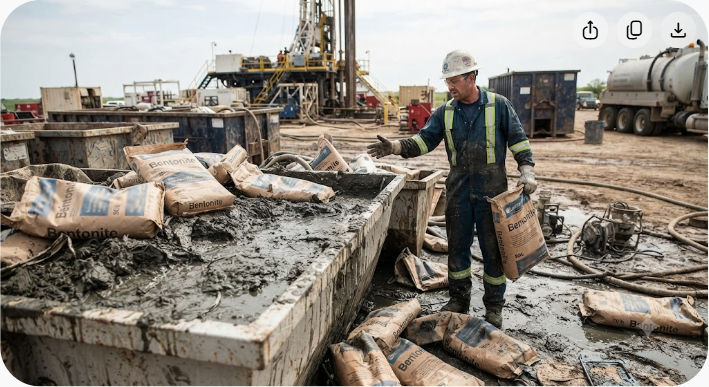
For a complex waste stream, sending material to a permitted commercial treatment or disposal facility may be more practical than building an onsite treatment system.
This can be particularly relevant when the operation has:
The trade-off is cost. Transportation, testing, treatment, and disposal fees can add up quickly, especially when the waste has high moisture content or requires special handling.
The advantage is controlled infrastructure. A specialist facility may already have the containment, treatment equipment, permits, laboratory controls, and trained personnel required for the waste stream.
Before selecting an offsite facility, confirm that its permit and acceptance criteria cover the actual material you plan to send. Don't assume that a facility accepting one type of drilling waste will accept every bentonite-based mud or cutting.
Before choosing a disposal route, ask whether the material really needs to be disposed of at all.
| Question | If yes | Likely direction |
|---|---|---|
| Can the drilling fluid still meet operational specifications? | Yes | Consider recovery and reuse |
| Is the main problem excess water? | Yes | Evaluate dewatering |
| Are contaminants concentrated in the solids? | Yes | Separate and characterize the fractions |
| Is contaminant mobility the primary concern? | Yes | Evaluate stabilization or solidification |
| Is the waste low in contaminants and legally eligible for land treatment? | Yes | Evaluate permitted landfarming or land application |
| Is the waste unsuitable for onsite treatment? | Yes | Consider an approved offsite facility |
| Is the waste injectable and is injection permitted? | Yes | Evaluate permitted injection |
This sequence helps avoid an expensive mistake: choosing a disposal technology before understanding what is actually in the waste.
Fresh drilling-grade bentonite and spent drilling mud are completely different management questions.
Fresh bentonite has a defined product specification. Spent mud has a history. That history includes the formation drilled, chemicals added, fluid losses, contamination events, solids accumulation, and treatments performed at the rig.
Two waste batches made from the same bentonite product can therefore have very different disposal requirements.
Calling a fluid "water-based" doesn't establish that it is suitable for land application, burial, or any other disposal method.
Water-based fluids can still contain substantial salts, metals, hydrocarbons, or additives. The waste needs to be evaluated on its actual characteristics rather than on the label used for the original drilling fluid.
More bentonite isn't automatically better.
Additional clay can change viscosity, moisture retention, solids behavior, and handling characteristics. If the real issue is chloride, hydrocarbons, or a leachable metal, increasing the clay concentration may not address it at all.
Treat the contaminant or physical problem that has actually been identified. Don't use additional bentonite as a substitute for characterization and treatment design.
Operators naturally focus on the solids because they're visible. The liquid fraction can be just as important.
Dissolved salts and other mobile constituents can remain in separated liquid even after much of the solid material has been removed. Dewatering should therefore be followed by appropriate characterization of both fractions when required by the selected management route.
Historical EPA documents are useful for understanding established disposal technologies and environmental considerations, but regulations and permit conditions change.
A disposal method described in an older technical report may now be restricted, permitted only under specific conditions, or prohibited in a particular jurisdiction. Current requirements should always be verified with the relevant authority and permit.
Combining relatively clean drilling fluid with contaminated wash water or a high-salt waste can increase treatment requirements and disposal costs.
Segregation at the source is often one of the simplest ways to preserve recovery options and avoid unnecessarily increasing the volume of difficult waste.
A disposal plan isn't complete until the material has an approved destination.
Confirm acceptance criteria before transport. A rejected waste profile can mean additional storage, sampling, transport, and handling costs, particularly if the original site has limited temporary storage capacity.
Waste management starts before waste is generated.
A consistent drilling-grade bentonite can help operators maintain more predictable fluid properties. Consistent swelling behavior, moisture, particle size, and purity can make fluid preparation and solids control easier to manage.
That doesn't eliminate drilling waste. It can, however, reduce variability in the drilling-fluid system and make it easier to identify when performance has changed for a reason unrelated to the base bentonite.
For industrial buyers, useful quality-control parameters may include:
The exact specification should follow the drilling-fluid design and applicable industry requirements rather than a generic bentonite specification.
For buyers sourcing sodium bentonite for drilling applications, Axewelledge supplies material intended for applications where consistent swelling and sealing performance are important. The more useful purchasing question isn't simply, "How much bentonite do we need?" It is, "Which material specification gives us predictable performance in our fluid system?"
If you're responsible for a drilling-waste program, keep the following checklist with the waste-management plan.
The most effective disposal strategy is often to reduce the amount requiring disposal in the first place.
Start with drilling-fluid management. Keep the mud within its useful operating range, remove unwanted solids efficiently, and recover usable fluid when practical.
Use solids-control equipment appropriately. Excessive low-gravity solids can alter fluid behavior and increase the amount of material that eventually leaves the active system.
Avoid unnecessary dilution. Adding water may temporarily change fluid properties, but it also increases the volume that may later require treatment or disposal.
Keep clean water separate from contaminated waste. Once clean water is mixed with a waste stream, the combined volume may need to be managed as waste.
Finally, monitor losses. Lost circulation, spills, poorly managed pits, and unnecessary fluid replacement can all increase waste generation.
Source reduction and recycling are established elements of sound E&P waste management where they are technically and economically practicable. Reducing waste upstream can lower the treatment and disposal burden downstream.
A useful plan should be specific enough for an operator or contractor to follow during an actual drilling campaign.
At minimum, document:
The plan should also state what happens if test results fall outside the expected range. That contingency matters because drilling conditions can change quickly, and a waste stream that looked routine at the start of a campaign can require a different management route later.
A good plan should be reviewed after significant changes in drilling-fluid chemistry, formation conditions, contamination events, waste volumes, or regulatory requirements.
Bentonite-rich drilling waste isn't automatically hazardous, but it isn't automatically safe for unrestricted disposal either. Bentonite is only one part of the waste. What matters is what the drilling fluid has accumulated, how those constituents are distributed between liquid and solid fractions, and how the resulting material behaves under the proposed disposal conditions.
The practical sequence is to segregate the waste, characterize it, recover what can still be reused, dewater or treat it where appropriate, and send the remaining material through a disposal route that is legally permitted for that specific waste.
Landfarming, stabilization, solidification, burial, injection, and offsite disposal can all have legitimate applications, but none is universally suitable. In the United States, requirements also vary by state, and the federal treatment of qualifying E&P wastes under RCRA does not remove other applicable environmental or state requirements.
For drilling-fluid manufacturers and operators, the process starts even earlier. Use a consistent bentonite specification, monitor mud performance, control solids, minimize unnecessary dilution, recover usable fluid where practical, and keep waste streams separated. Those upstream decisions can make the downstream disposal problem considerably easier to manage.
If you're sourcing sodium bentonite for drilling applications, Axewelledge can help you evaluate material requirements around swelling, consistency, processing, and supply rather than treating bentonite as a one-specification product. The right grade should be matched to the drilling-fluid system and the operating conditions in which it will be used.













Have questions about our products? We're here to help!