Axewelledge, a leading exporter from India, specializes in high-quality Bentonite. With a commitment to excellence, we supply premium Bentonite to the Middle East and Southeast Asia markets.


North Angle Complex, 304,
150 Feet Ring Rd, Opposite Ambedkar Nagar BRTS Stop,
Madhav Park, Punit Nagar,
Mavdi, Rajkot, Gujarat 360004
© Axewelledge 2026, All Rights Reserved.
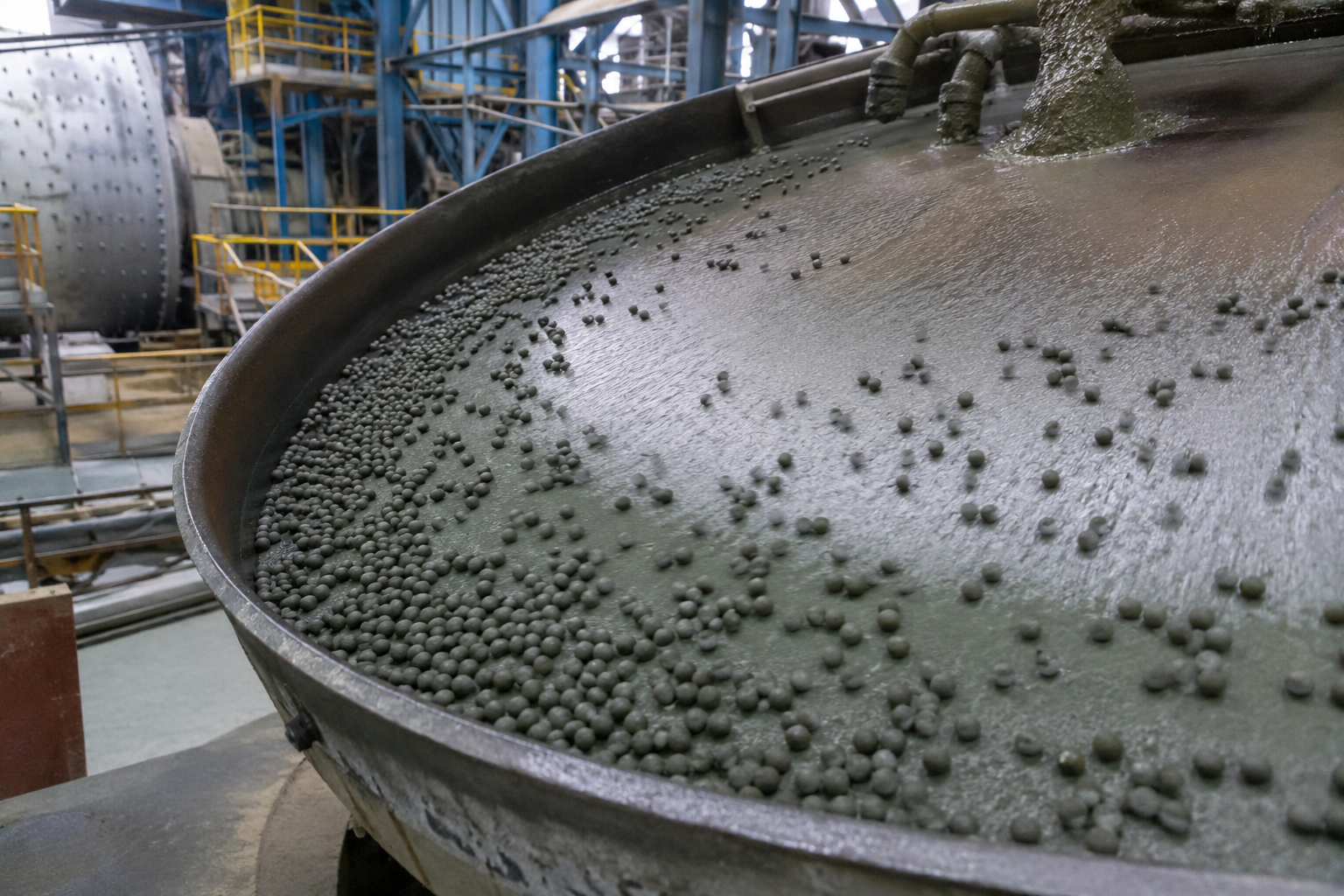
Bentonite is usually added in small quantities to iron ore concentrate, but that small addition can have a large effect on pellet quality. The right grade helps green pellets survive handling, supports adequate dry strength, and can reduce the amount of binder needed to meet plant targets. The wrong grade can increase dosage, dilute iron grade, disrupt balling, or create inconsistent furnace performance.
So, how do you choose bentonite for iron ore pelletizing? Start with the concentrate rather than the supplier's product sheet. Compare swelling behavior, active clay content, water compatibility, fineness, moisture, chemistry, and actual pellet performance at several dosage levels. Then confirm the best candidate in a controlled plant trial.
There is no universal bentonite specification that works for every pelletizing operation. Magnetite and hematite concentrates can respond differently, and factors such as Blaine fineness, concentrate moisture, process-water chemistry, balling equipment, pellet size, and induration conditions all matter. A useful buying decision therefore combines laboratory data with pelletizing trials and delivered cost.
Iron ore pelletizing converts finely ground concentrate into green pellets that can be handled and subsequently indurated into a strong product. During balling, the concentrate contains enough moisture for particles to come together, while the binder helps the newly formed pellets retain their shape and resist handling stresses.
Bentonite is widely used as an inorganic binder because its smectite minerals interact strongly with water. Montmorillonite, the principal smectite in many bentonites, can hydrate and swell, helping form a cohesive structure between mineral particles. The effectiveness of that structure depends on the bentonite's mineralogy, chemistry, particle size, dosage, and interaction with the particular concentrate and process water.
A binder that looks excellent in a standard swelling test may still underperform in a pelletizing circuit. That is why plant trials matter. The objective is not to buy the bentonite with the highest headline swelling number; it is to find the grade that reaches the required pellet properties at a practical dosage while remaining consistent from shipment to shipment.
Poor binder selection can show up in several ways:
The commercial question is therefore broader than price per tonne. A slightly more expensive bentonite may be the better purchase if it performs at a lower dosage and gives the plant a wider operating window.
Bentonite is not a single mineral with a single performance profile. Its properties depend on mineral composition and on the exchangeable cations associated with the clay structure. Sodium- and calcium-dominant bentonites behave differently when they encounter water, although actual performance also depends on the quality and processing history of the material.
Natural sodium bentonite is dominated by sodium as an exchangeable cation and is generally known for strong hydration and swelling. High-quality sodium bentonite can form a cohesive gel when hydrated, making it useful as a binder where strong green pellets are required at relatively low additions.
However, the phrase "sodium bentonite" is not enough to predict pelletizing performance. Two products sold under the same broad description can have different montmorillonite contents, impurities, particle-size distributions, moisture levels, and rheological behavior. Those differences can matter at the pelletizer.
Natural sodium bentonite is often associated with deposits in regions where sodium-rich bentonite occurs naturally. Transport costs can therefore become an important part of the purchase decision, especially for pelletizing plants located far from the source.
Calcium-dominant bentonite generally has lower swelling capacity than high-quality sodium bentonite. The divalent calcium ion holds clay layers more strongly than sodium, limiting the degree of expansion when the material is hydrated.
That does not make every calcium bentonite unsuitable for industrial use, but untreated calcium bentonite is usually less attractive when the main requirement is high binding efficiency at a low dosage. Its actual suitability should be established through pelletizing tests rather than inferred from the mineral name alone.
Calcium bentonite can be chemically treated with sodium carbonate, commonly called soda ash, to exchange some of the calcium ions for sodium ions. The resulting sodium-activated material can show substantially improved swelling and rheological behavior.
Activation quality matters. The treatment must be controlled, and the finished product must be evaluated after processing rather than judged only from the raw clay. Activation can improve performance, but it does not turn every calcium-rich deposit into a direct equivalent of a high-quality natural sodium bentonite.
For buyers, the useful comparison is not simply natural sodium versus calcium. It is the performance of the actual commercial grades at the dosage and process conditions used by the plant.
| Property | Natural Sodium Bentonite | Sodium-Activated Bentonite | Calcium-Dominant Bentonite |
|---|---|---|---|
| General swelling tendency | High | Moderate to high, depending on activation | Lower |
| Hydration behavior | Usually strong | Depends on activation quality and water chemistry | Generally lower |
| Pelletizing potential | Often suitable for low-dose binding | Can be suitable when properly processed | Often requires higher dosage or further treatment |
| Supply considerations | Deposit and freight dependent | Processing quality is important | Often more widely available |
| Buying priority | Consistency and active clay content | Activation quality and consistency | Demonstrated pellet performance |
These categories are useful for screening, but they should not replace a side-by-side pelletizing trial.
A supplier data sheet is a starting point, not a purchasing decision. Ask for the test method, specification limits, typical values, and batch-to-batch variation for each important parameter. Where possible, test retained samples independently.
Montmorillonite is one of the main active clay minerals responsible for bentonite's swelling and binding behavior. A higher proportion of active smectite can be beneficial, but mineralogical quality is more complicated than a single percentage figure.
Methylene Blue Value, or MBV, is widely used as an indicator of the clay's cation-exchange and adsorption capacity. It can be useful for comparing bentonite grades, but MBV should not automatically be converted into an exact montmorillonite percentage unless the test method and mineralogical basis are clearly established.
What to ask for:
A high MBV is useful, but the real test is whether that property translates into lower dosage and acceptable pellet strength with your concentrate.
Swelling tests indicate how strongly bentonite interacts with water under a defined laboratory procedure. They are useful for screening grades and detecting obvious differences between samples.
Do not compare swelling numbers from different laboratories without checking the test method. Results can vary with sample preparation, water quality, particle size, concentration, and measurement procedure.
A high swelling index is generally desirable for sodium-rich bentonite, but maximum swelling is not the sole objective. A binder must also distribute properly through the concentrate and perform under the water chemistry and moisture conditions of the pelletizing circuit.
Buying practice: Specify the test method alongside any minimum swelling requirement and verify the supplier's result with your own laboratory.
Liquid limit is an Atterberg limit that describes the transition between plastic and liquid behavior under a standardized test. It can provide useful information about the water interaction and plasticity of clay, but it should not be treated as a direct measure of pelletizing performance.
A high liquid limit may be associated with strong water-holding capacity, yet too much water retention can also affect mixing and balling behavior. The useful question is whether the bentonite works within the moisture window of your concentrate.
Buying practice: Compare liquid limit and, where relevant, plasticity data across candidate grades, then verify the result through actual balling tests.
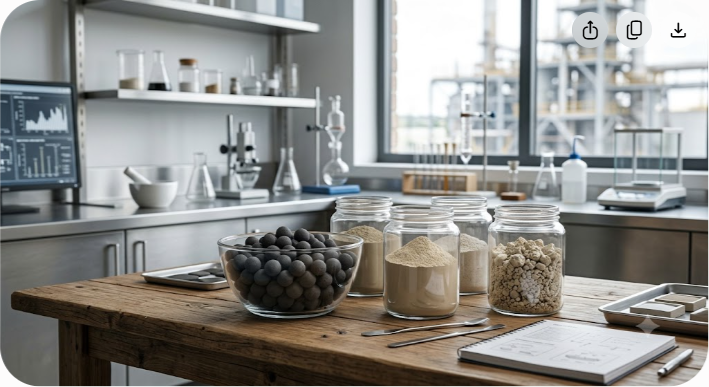
Bentonite must hydrate effectively in the time available during mixing and ball formation. The rate of water uptake can therefore matter as much as the ultimate swelling capacity.
Tests such as Enslin-Neff water absorption can provide useful comparative information, but the result depends on the test procedure. A laboratory value should not be treated as a direct prediction of how quickly a binder will hydrate in a high-throughput industrial mixer.
For a plant trial, check how quickly each candidate disperses, whether it forms lumps, how much mixing time it needs, and whether the moisture window for stable balling changes.
Fineness affects how evenly the binder can be distributed through the concentrate. Coarse particles can take longer to hydrate and may distribute less uniformly, while an appropriately milled product can disperse more consistently at low dosage.
Rather than accepting a generic statement such as "fine powder," ask for a particle-size distribution and the test method used. Passing percentages at 200 mesh or 325 mesh can be useful specifications, but they are only meaningful when the test method is defined.
Fineness should also be balanced against handling. Extremely fine powders may create dust or behave differently in feeding systems. The best product is fine enough for effective dispersion without creating unnecessary handling problems.
Bentonite is not an iron-bearing feed material, so its gangue contribution matters when the finished pellet has a strict chemistry specification. Silica and alumina introduced with the binder become part of the pellet chemistry and can influence downstream slag requirements.
Do not use a single universal silica limit as the entire purchasing specification. The acceptable level depends on the concentrate chemistry, pellet chemistry target, blast furnace or direct-reduction route, flux balance, and binder dosage.
What to compare:
A lower-impurity binder becomes particularly valuable when the plant is already close to its gangue or alkali limits.
Bentonite can take up moisture from humid air, and storage conditions can affect its flowability. Excessive moisture can promote caking and make screw or belt feeding less consistent.
At the same time, moisture specifications should not be copied from another supplier without considering the plant's storage and dosing system. The right as-received range depends on packaging, climate, transport, storage duration, and the feeder design.
Ask suppliers for both nominal moisture and acceptable batch variation. Check whether bags arrive with lumps, whether bulk material bridges in bins, and whether the product remains free-flowing after realistic storage exposure.
The binder should ultimately be judged by the pellets it produces. Several tests are especially useful during laboratory and plant evaluation.
Green drop testing measures the resistance of freshly formed wet pellets to impact. The exact drop height, surface, pellet size, conditioning time, and reporting method should be standardized because results from different procedures are not directly interchangeable.
A higher drop number generally indicates better green handling strength, but chasing the highest possible number is not necessarily the goal. The target should reflect the actual transfer points and handling stresses in the plant.
During trials, record:
Using these results together gives a better picture than relying on drop number alone.
Green compressive strength measures the load a wet pellet can withstand under a defined compression test. It is useful for assessing whether pellets can tolerate handling and bed loading before drying.
There is no single green-strength value that fits every plant. Pellet size, moisture, concentrate properties, balling conditions, and equipment all influence the required target.
A good trial compares strength against dosage. If two bentonites produce similar green strength but one reaches that performance at a lower addition rate, the lower-dose product may have the stronger commercial case.
Dry CCS measures the crushing resistance of pellets after drying under a defined laboratory procedure. It helps identify whether the pellet structure remains intact after free moisture has been removed.
The test temperature, drying time, pellet size, number of pellets tested, and reporting method should be standardized. A CCS value without its test conditions is difficult to use for supplier comparisons.
The important point is that green strength and dry CCS are different properties. A binder can produce excellent wet pellets but fail to deliver the dry strength needed for stable movement into the preheating and induration stages.
Pellets are particularly vulnerable during drying because water must leave the pellet without creating damaging internal pressure gradients. If the drying conditions are too aggressive for the pellet's pore structure, cracking or explosive failure can occur.
Bentonite influences pellet structure and water retention, but thermal shock resistance is not a property of bentonite alone. Pellet porosity, moisture distribution, concentrate mineralogy, green pellet structure, drying rate, gas temperature, and bed conditions all contribute.
For this reason, a supplier's claim about "thermal stability" should be verified under the plant's actual or simulated induration profile rather than accepted as a stand-alone specification.
The same bentonite can behave differently when used with different concentrates. Before changing suppliers, characterize the feed as carefully as the binder.
Magnetite concentrates are commonly produced through magnetic separation and can have different surface characteristics and balling behavior from hematite concentrates. During induration, magnetite oxidation to hematite is exothermic and contributes heat to the process.
That does not mean magnetite automatically needs less bentonite. Binder demand still depends on particle size, specific surface area, moisture, concentrate chemistry, balling conditions, and the required green and dry pellet properties.
For magnetite, compare candidate binders across a realistic dosage range rather than adopting a fixed percentage simply because the feed is magnetite.
Hematite concentrates can require fine grinding and may present different surface-area and moisture-management challenges. Some hematite pellet feeds therefore respond differently to binder addition than magnetite feeds.
Again, there is no universal dosage rule. A higher addition may be needed in one hematite circuit, while another plant may achieve its target with a lower dosage because of differences in concentrate characteristics and balling conditions.
The practical approach is to establish a plant-specific dosage curve. Measure green strength, drop number, dry CCS, pellet size distribution, and moisture response at several binder levels.
A disciplined qualification program prevents a promising laboratory number from turning into a poor plant result.
Record the concentrate's chemistry, particle-size distribution, Blaine fineness, moisture, mineralogy, and baseline balling behavior. Document the process-water chemistry as well, particularly dissolved calcium and magnesium when recycled water is used.
This baseline becomes the reference point for comparing binders.
Request representative samples from each supplier and record the production batch or lot number. Test properties such as MBV, swelling, moisture, particle size, and chemical composition using consistent methods.
Do not compare a supplier's best-case sample with another supplier's routine production sample. Ask for representative material and retain a portion of every trial sample.
Use the actual plant concentrate whenever possible. Test several binder dosages rather than one recommended addition rate. For example, a laboratory program might compare 0.4%, 0.6%, 0.8%, and 1.0% by dry concentrate weight, provided those levels are appropriate for the operation.
Keep mixing time, moisture addition, pelletizer settings, pellet size, and residence time consistent. Otherwise, process variation can hide the real difference between binders.
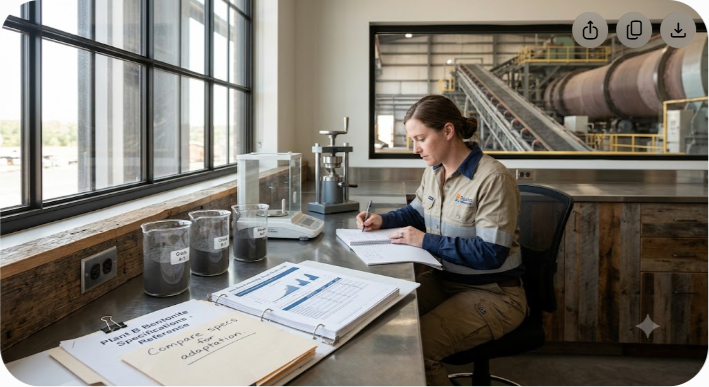
Test green drop number and green compressive strength promptly after ball formation. Produce a separate set for controlled drying and measure dry CCS after a standardized drying procedure.
Record pellet size and moisture alongside every result. A strength number without those conditions is difficult to interpret.
Where available, use pot-grate or other pilot-scale testing to compare the best formulations under a representative thermal cycle. Evaluate drying behavior, cracking, permeability, fired pellet strength, and relevant chemistry.
Pilot testing should reproduce the important features of the plant process rather than simply exposing pellets to an arbitrary heating schedule.
Once a candidate has demonstrated acceptable performance, conduct a monitored production trial. The duration should be long enough to capture normal process variation rather than being chosen simply because a particular number of hours is customary.
Track bentonite consumption, green pellet properties, pellet size distribution, moisture, feeder performance, furnace or grate pressure behavior, fired pellet quality, and product chemistry. Compare the results with a baseline period using the incumbent binder.
A supplier qualification should cover more than one delivery. Ask how the mine is blended, how activation is controlled, how fineness is monitored, and what quality controls are applied before shipment.
The best supplier is one that can repeatedly deliver a product within the agreed specification, not one that produces an exceptional laboratory sample once.
Price per tonne is one of the easiest numbers to compare and one of the least useful by itself. The better calculation is the binder cost required to produce a tonne of acceptable pellets.
Use this basic relationship:
Binder cost per tonne of pellets = delivered bentonite price per tonne × bentonite addition rate
For example, if bentonite costs $120 per tonne delivered and the plant uses 0.5% bentonite, the binder component is approximately $0.60 per tonne of concentrate before accounting for differences in yield, moisture, or other process effects.
A product costing $90 per tonne but requiring 0.9% addition costs approximately $0.81 per tonne at the same calculation basis. That does not automatically make the first product better, because the full comparison should also include pellet quality, throughput, handling, chemistry, and any effect on downstream processing.
For each candidate, calculate:
This approach often changes the ranking of suppliers. The cheapest material at the warehouse can be the most expensive material at the furnace.
Bentonite is sensitive to moisture, so logistics deserve attention during supplier qualification. A material that performs well in the laboratory can become difficult to feed if it arrives damp and cakes during storage.
For bagged material, evaluate liner quality, bag integrity, pallet or stacking requirements, and unloading time. For bulk deliveries, check tanker compatibility, silo design, filtration, conveying, and the supplier's ability to maintain consistent moisture.
Do not specify an arbitrary moisture value simply because another supplier uses it. Instead, define an acceptable range that works with the plant's storage and dosing system.
Run a practical storage test when caking has been a recurring problem. Observe the material after realistic transport and storage conditions and record whether it remains free-flowing.
Bentonite deposits can vary between seams, benches, and mining areas. A supplier should therefore be able to explain how it controls geological variability.
Ask about:
A long-term supply agreement should define measurable acceptance criteria rather than relying on a general promise of consistent quality.
A low purchase price is meaningless if the product requires a much higher addition rate or creates unstable pellet quality. Compare cost at the dosage required to meet your plant's specifications.
High swelling is useful, but it does not guarantee the best pelletizing performance. MBV, mineralogy, fineness, water chemistry, moisture, rheology, and actual pellet tests also matter.
A bentonite specification that works for one concentrate may fail on another. Feed mineralogy, Blaine fineness, moisture, process water, balling equipment, and induration conditions all affect binder demand.
Standard laboratory tests often use controlled water so that materials can be compared consistently. Plant performance may differ when recycled process water contains dissolved salts and multivalent ions. Use actual process water in application testing when water chemistry is known to influence performance.
A chemically attractive product can still cause problems if it does not disperse well or feeds inconsistently. Evaluate the actual material in the plant's storage, conveying, and dosing system.
Rules such as "magnetite always needs less" or "hematite always needs more" are too broad for purchasing decisions. Use them only as starting hypotheses and establish the optimum dosage experimentally.
A single sample can hide natural variation. Test representative lots and monitor performance during the supply relationship.
Organic binders can be attractive where reducing gangue addition or increasing pellet iron grade is a priority. They can also have different effects on green strength, dry strength, thermal behavior, and process emissions.
However, organic binders are not automatically a drop-in replacement for bentonite. Their performance depends strongly on chemistry, dosage, molecular structure, concentrate characteristics, and induration conditions. Some plants may use organic binders alone, while others use combinations of organic and inorganic binders.
The right comparison is therefore not "organic versus bentonite" in isolation. Compare the complete pellet formulation against the same production targets: green strength, dry CCS, fired strength, permeability, chemistry, cost, and operating stability.
A useful purchasing specification should define both laboratory properties and application performance. The exact limits should be established from the plant's own trials rather than copied from a generic industry table.
| Specification Area | What to Define | Why It Matters |
|---|---|---|
| Active clay | MBV and/or defined mineralogical method | Indicates potential binding and hydration behavior |
| Swelling | Test method and minimum value | Helps screen hydration and swelling performance |
| Particle size | Defined sieve or particle-size method | Affects dispersion and hydration |
| Moisture | As-received range | Influences storage and dosing |
| Chemistry | SiO2, Al2O3, Fe, CaO, MgO, Na2O and other relevant oxides | Controls gangue and process chemistry |
| Pellet performance | Green strength, drop number, dry CCS and fired properties | Confirms application performance |
| Water compatibility | Standard and plant process-water testing | Identifies sensitivity to dissolved ions |
| Consistency | Batch-to-batch limits and sampling procedure | Protects plant stability |
| Packaging | Bulk or bag requirements | Prevents moisture and handling problems |
| Traceability | Lot identification and retained samples | Supports investigation of quality changes |
This type of specification gives procurement, quality control, process engineering, and the supplier a common basis for evaluating performance.
Before approving a supplier, ask practical questions that reveal how well the product is controlled:
The answers are often more valuable than a glossy product brochure. A technically capable supplier should be comfortable discussing test methods, variability, sampling, and application trials.
The best bentonite for iron ore pelletizing is not necessarily the one with the highest swelling value or the lowest purchase price. It is the product that consistently delivers the required pellet properties at the lowest practical total cost.
Start with your concentrate and process conditions. Screen candidate grades using defined laboratory methods, then test them in your own pellet formulation. Compare dosage against green strength, drop number, dry CCS, fired quality, chemistry, and process stability.
Pay close attention to water chemistry and fineness. Check how the material behaves in storage and feeding equipment. Finally, qualify suppliers for consistency, not just for one successful sample.
For operations looking to reduce bentonite consumption, preserve pellet Fe grade, or stabilize pelletizing performance, a structured binder trial is usually more valuable than changing suppliers based on a single specification-sheet number.
Once the technical requirements are clear, supplier selection becomes much easier. Look for a producer that can provide consistent mineral quality, defined test methods, traceable batches, appropriate milling, reliable logistics, and technical support during qualification trials.
Axewelledge supplies bentonite products for industrial applications and provides technical information and samples through its website. Buyers should evaluate any supplier, including Axewelledge, against their own concentrate, process-water chemistry, pellet specifications, and plant trial results rather than relying solely on published product claims.
For a new supplier qualification, request a representative sample, technical specification, certificate of analysis, and proposed trial protocol. The goal is simple: prove that the bentonite performs consistently in the process where it will actually be used.













Have questions about our products? We're here to help!