Axewelledge, a leading exporter from India, specializes in high-quality Bentonite. With a commitment to excellence, we supply premium Bentonite to the Middle East and Southeast Asia markets.


North Angle Complex, 304,
150 Feet Ring Rd, Opposite Ambedkar Nagar BRTS Stop,
Madhav Park, Punit Nagar,
Mavdi, Rajkot, Gujarat 360004
© Axewelledge 2026, All Rights Reserved.
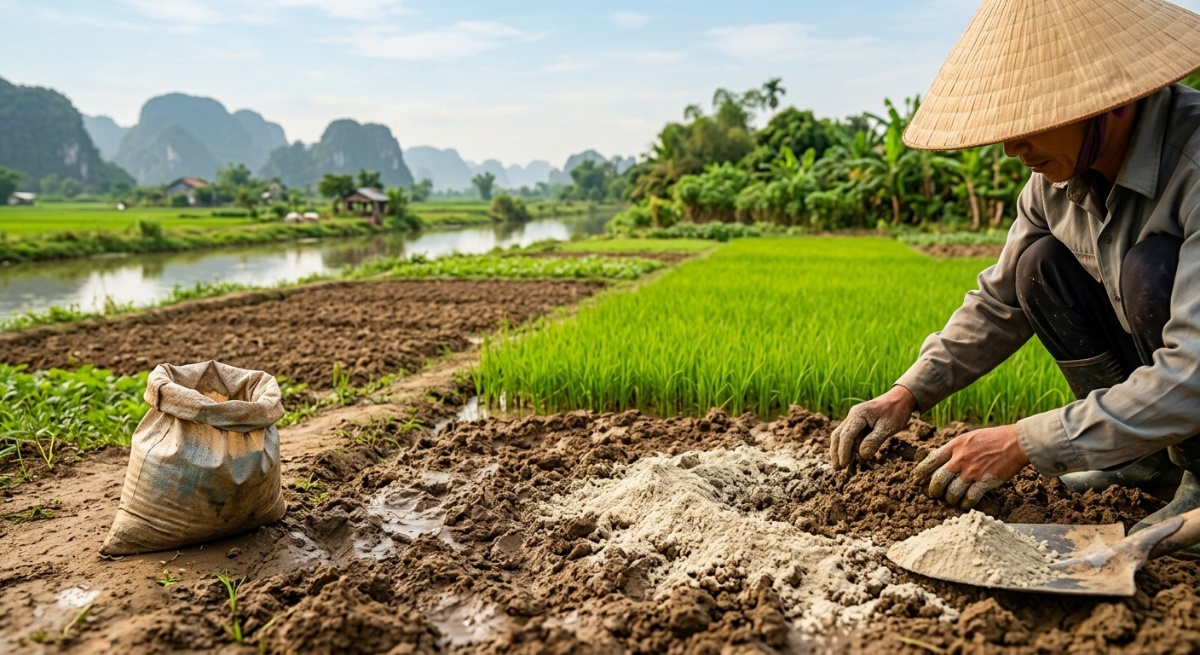
Vietnam’s agricultural sector is undergoing a massive transformation. As one of the world's leading exporters of rice, coffee, black pepper, and cashew nuts, the nation’s economy heavily relies on the fertility of its soil. However, decades of intensive farming, coupled with climate-change-induced droughts and saltwater intrusion in regions like the Mekong Delta, have left much of Vietnam’s agricultural land degraded, acidic, and nutrient-depleted.
To maintain high yields and transition toward sustainable farming, Vietnamese farmers and agribusinesses are turning to innovative soil conditioners. Among these, bentonite clay has emerged as a game-changing, eco-friendly solution. When used as a soil amendment and a fertilizer binder, bentonite revitalizes degraded soils, optimizes water usage, and significantly boosts crop productivity.
Bentonite is a natural, soft clay formed primarily from the weathering of volcanic ash in the presence of water. It is largely composed of montmorillonite, a smectite-group mineral characterized by a 2:1 expanding crystal lattice structure. This unique molecular architecture gives bentonite two extraordinary properties: a high specific surface area and an exceptional Cation Exchange Capacity (CEC).
There are two primary types of bentonite used globally, depending on the dominant element in its crystal structure:
Sodium Bentonite: Known for its high swelling capacity, it can absorb water up to several times its dry weight, forming a thick, gelatinous barrier.
Calcium Bentonite: Exhibiting lower swelling but superior adsorption qualities, it is highly effective in structural soil conditioning and nutrient delivery.
For agricultural applications, both types offer distinct advantages, transforming loose, sandy soils or heavily leached soils into highly productive, nutrient-rich mediums.
Before diving into how bentonite works, it is crucial to understand the specific soil crises currently facing Vietnamese agriculture:
Sandy and Leached Soils in Coastal Regions: The Central Coast of Vietnam is dominated by sandy soils (Arenosols) that possess virtually no water or nutrient retention capacity. Fertilizers applied here simply wash away into the groundwater, costing farmers money and polluting local ecosystems.
Soil Acidification in the Mekong Delta: Intensive rice monoculture, combined with the presence of acid sulfate soils, has led to severe soil acidification. Acidic soils lock away vital plant nutrients like phosphorus, rendering them unavailable to crops.
Drought and Salinity Stress: Climate change has intensified the dry season, leading to severe freshwater shortages. In the Mekong Delta, saltwater intrusion forces farmers to manage crops with limited, low-quality water.
Over-reliance on Chemical Fertilizers: To compensate for declining soil fertility, many farmers over-apply chemical fertilizers. This creates a vicious cycle that destroys the natural soil microbiome, hardens the soil, and reduces long-term productivity.
When incorporated into agricultural fields, bentonite permanently alters the physical and chemical structure of the soil for the better. Here is a breakdown of how it addresses Vietnam's primary agricultural pain points:
In sandy soils, pore spaces are too large to hold water against the pull of gravity. When mixed into the topsoil, bentonite particles fill these macro-pores. Because of its swelling nature, the clay absorbs water during rains or irrigation and holds onto it tightly, releasing it slowly as the plant roots require it. This creates a reliable water reservoir directly in the root zone, reducing irrigation frequency by up to 30% to 40%—a massive benefit for drought-prone regions in Vietnam.
Nutrients like potassium ($K^+$), calcium ($Ca^{2+}$), magnesium ($Mg^{2+}$), and ammonium ($NH_4^+$) carry positive charges. Sandy and degraded soils carry very little surface charge, meaning they cannot hold these nutrients. Bentonite, however, possesses a massive net negative surface charge.
$$CEC ext{ measures the soil's ability to hold and exchange these vital nutrients.}$$
By dramatically increasing the soil's CEC, bentonite acts like a chemical magnet, holding onto applied fertilizers and preventing them from leaching away during heavy tropical downpours.
In heavy, compacted clay soils or degraded silts, bentonite helps promote flocculation—the clumping together of fine soil particles into stable aggregates. This improves macro-porosity, allowing plant roots to breathe, enhancing water infiltration, and preventing the surface crusting that often chokes emerging seedlings.
Beyond direct soil application, bentonite plays an indispensable role in the manufacturing of advanced agricultural fertilizers. Global mineral innovators, such as those providing premium industrial minerals at Axelwedge, supply specialized bentonite grades tailored specifically for fertilizer formulation.
[Raw Fertilizer Materials] + [Bentonite Binder] âž” [Controlled-Release Granules] âž” [Sustained Plant Nutrition]
One of the greatest inefficiencies in modern farming is nutrient volatility and leaching. When nitrogen fertilizers like urea are applied to warm, wet Vietnamese soils, much of the nitrogen gasifies into the atmosphere or leaches into waterways.
By blending fertilizer components with bentonite clay, manufacturers can create granulated, controlled-release fertilizers. The bentonite forms a porous matrix around the nutrients, slowing down their dissolution rate. This ensures a steady, long-term supply of nutrients that matches the plant's growth cycle, reducing the number of required fertilizer applications.
In fertilizer pelletizing plants, bentonite serves as an exceptional binding agent. Its natural plasticity and adhesiveness help form uniform, durable granules that do not crumble into dust during transport and mechanical spreading. Dust-free fertilizers mean safer handling for workers and more uniform distribution in the field.
With Vietnam pushing heavily toward organic agriculture, bio-fertilizers containing beneficial soil microbes (like Rhizobium or Azotobacter) are gaining popularity. Bentonite serves as an ideal carrier matrix for these living microorganisms, protecting them from desiccation and UV radiation, and extending the shelf-life of the bio-fertilizer products.
The application of bentonite yields specific, high-value outcomes across Vietnam's diverse crop portfolio:
Rice requires continuous or highly managed flooding. In porous soils, water percolation rates are too high, leading to water wastage. Mixing bentonite into the plow layer creates a semi-permeable hardpan that reduces deep percolation losses. Furthermore, bentonite provides a natural source of soluble silicon, which strengthens rice stalks, making them resistant to lodging (falling over) and less susceptible to fungal pests like rice blast.
The basaltic soils of the Central Highlands are highly prone to nutrient leaching due to intense seasonal rains. Coffee and black pepper plants require steady potassium and magnesium levels. Bentonite amendments lock these vital cations in place. Additionally, during the intense dry season, bentonite-treated soils retain residual moisture longer, preventing drought-induced flower drop in coffee plants.
For high-value fruit crops, fruit quality, sweetness (Brix levels), and shelf-life are directly tied to balanced calcium and potassium uptake. By optimizing the soil's root-zone moisture and nutrient availability, bentonite ensures uniform fruit development and reduces physiological disorders like fruit cracking.
Investing in soil amendments must make environmental and financial sense. Bentonite provides a clear return on investment (ROI) through several mechanisms:
| Feature | Direct Economic/Environmental Benefit |
| Fertilizer Saving | Cuts mineral fertilizer requirements by 20-30% by eliminating leaching losses. |
| Water Conservation | Lowers pumping electricity and fuel costs by extending irrigation intervals. |
| Yield Enhancement | Increases overall crop yields by maintaining optimal root-zone conditions throughout the season. |
| Eco-Protection | Minimizes groundwater contamination from nitrate and phosphate runoff, preserving local aquatic life. |
To get the most out of bentonite, it must be applied correctly based on soil type and crop layout:
For highly degraded, sandy, or acidic fields, bentonite should be broadcast uniformly across the surface at a rate of 1 to 3 tons per hectare, depending on the severity of the soil degradation. Following broadcasting, the field must be disked or tilled to incorporate the clay thoroughly into the top 15–20 cm of the root zone.
For established perennial crops like coffee, tea, or fruit trees, bentonite can be applied more economically via banding. Dig a shallow trench around the drip line of the tree, mix 0.5 to 2 kg of bentonite with the excavated soil and organic compost, and return it to the trench.
Bentonite works synergistically with organic manures and composts. While organic matter provides immediate nutrients and microbial stimulation, bentonite provides long-term structural stability and prevents the rapid decomposition of organic carbon. Mixing them together creates a synthetic "topsoil" layer with unmatched fertility.
Not all bentonite products are created equal. Low-grade clays with high heavy metal content or poor expansion indices can cause more harm than good to delicate agricultural ecosystems. For commercial farms, fertilizer manufacturers, and agricultural distributors in Vietnam, partnering with a reliable international supplier is paramount.
For those looking to procure premium, multi-industrial grade clay minerals engineered for agricultural optimization, exploring the specialized bentonite product portfolio provides access to high-CEC, ultra-pure mineral solutions. Additionally, keeping up with agricultural innovations and industrial mineral trends through dedicated industry insights, such as the Axelwedge blog, ensures that agricultural businesses stay ahead of sustainable farming practices.
As Vietnam marches toward its goals of high-tech, sustainable, and climate-resilient agriculture, traditional farming methods must evolve. Soil health is the foundational pillar of this evolution.
Bentonite clay offers a natural, permanent, and highly cost-effective solution to the dual crises of soil degradation and water scarcity. By transforming sandy wastes into fertile fields, boosting the efficiency of commercial fertilizers, and safeguarding the environment against chemical runoff, bentonite is not just a soil additive—it is an investment in the long-term food security and economic prosperity of Vietnam.













Have questions about our products? We're here to help!