Axewelledge, a leading exporter from India, specializes in high-quality Bentonite. With a commitment to excellence, we supply premium Bentonite to the Middle East and Southeast Asia markets.


North Angle Complex, 304,
150 Feet Ring Rd, Opposite Ambedkar Nagar BRTS Stop,
Madhav Park, Punit Nagar,
Mavdi, Rajkot, Gujarat 360004
© Axewelledge 2026, All Rights Reserved.
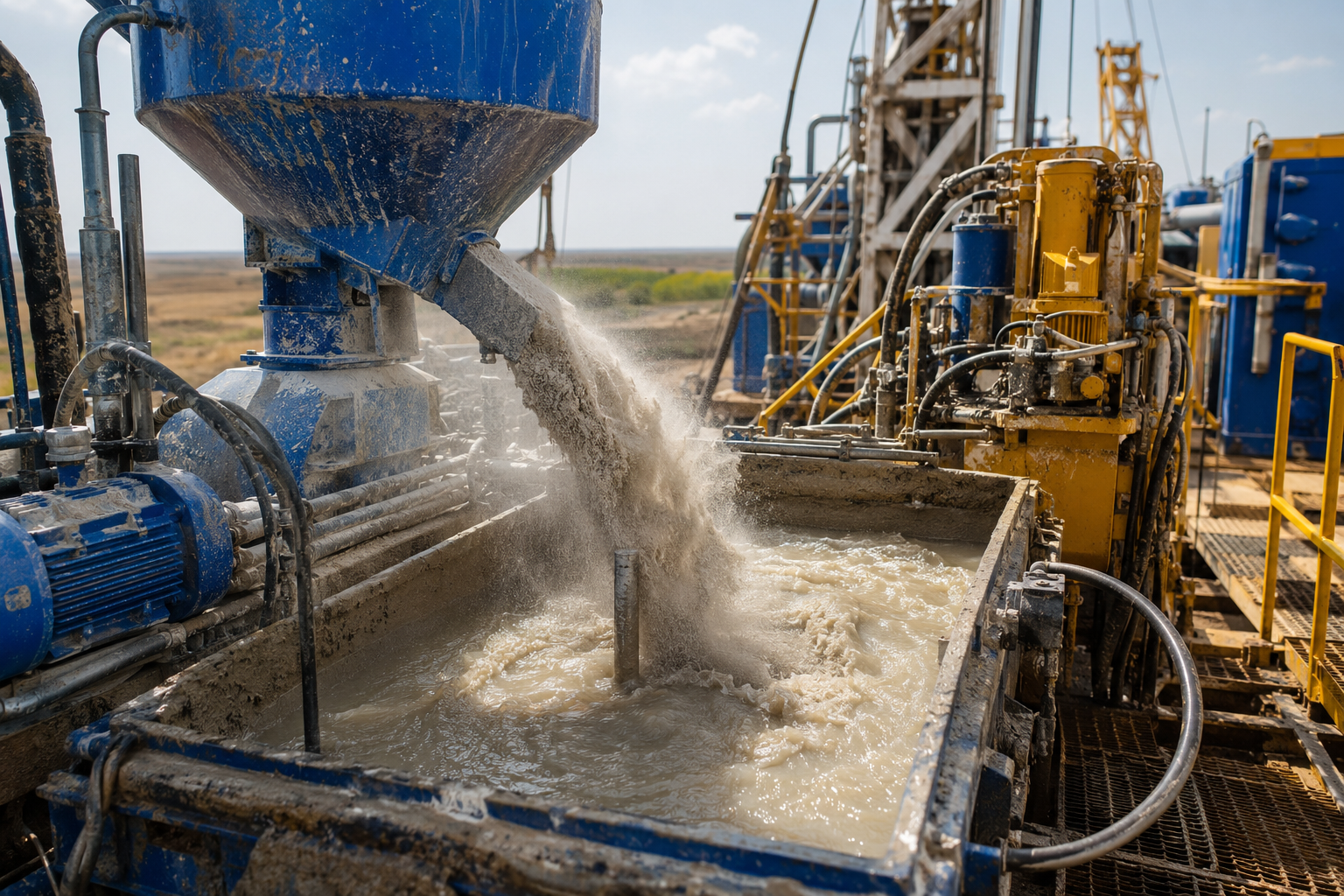
Bentonite slurry yield depends on much more than the grade of clay in the sack. Water chemistry, mixing energy, addition rate, hydration time, temperature, and the condition of the mixing equipment all affect how much usable viscosity a given amount of bentonite can develop.
If a drilling fluid is underperforming, adding more powder isn't always the answer. Poor hydration can leave bentonite trapped in partially hydrated lumps, while calcium-rich water can suppress swelling before the clay has a chance to develop its full rheological contribution. The result is higher material consumption without a proportional improvement in mud performance.
For most field operations, the practical goal is straightforward: get as much useful rheology as possible from each unit of bentonite while keeping the fluid stable and easy to circulate. That starts with testing the makeup water, selecting an appropriate sodium bentonite, introducing the powder at a controlled rate, applying enough shear, and allowing adequate hydration before the fluid is relied on for demanding downhole work.
Bentonite slurry yield describes the volume of drilling fluid that a defined quantity of dry bentonite can produce while meeting a specified viscosity or rheological criterion. In oilfield and other drilling-fluid applications, yield is commonly expressed in barrels per short ton at a defined test condition. The exact specification depends on the bentonite standard, product grade, and testing method being used.
That distinction matters. A higher-quality bentonite isn't simply a powder that makes a slurry look thick. A useful drilling-grade bentonite should develop predictable viscosity and suspension properties under the conditions for which it is specified.
Sodium bentonite is particularly valuable because its dominant clay mineral, montmorillonite, can absorb water between its layers and expand substantially. The extent of that swelling depends on the clay's mineralogy, exchangeable cations, particle characteristics, water chemistry, and mixing conditions.
Montmorillonite consists of very fine layered clay particles with a large effective surface area. When sodium-dominant bentonite contacts suitable water, water enters the spaces associated with the clay layers and allows the particles to disperse. The dispersed particles then interact to create the structure responsible for viscosity, suspension, filtration control, and gel behavior.
The process isn't simply a matter of adding water. The clay has to be dispersed sufficiently for hydration to occur throughout the material. If dry powder enters water too quickly, the outside of a particle can hydrate and form a gel around relatively dry material inside. These partially hydrated lumps are commonly called fish-eyes. They look like bentonite has been added to the system, but much of the trapped clay isn't contributing effectively to the fluid.
These terms are related, but they shouldn't be used interchangeably.
Slurry yield describes how much fluid can be produced from a defined quantity of dry bentonite at a specified test condition.
Viscosity describes a fluid's resistance to flow. Field measurements such as Marsh funnel time can provide a quick indication of fluid consistency, but a Marsh funnel does not provide a complete rheological profile.
Yield point is a rheological parameter used in models such as the Bingham plastic model. It indicates the stress associated with initiating and maintaining flow within that model and is useful for evaluating carrying capacity and suspension behavior.
A slurry can therefore have a respectable Marsh funnel reading while still having an undesirable low-shear rheological profile. For critical drilling applications, use the test method and rheological measurements specified for the particular fluid program rather than relying on one field number.
Improving yield is best treated as a process-control problem. Start with the water, then control how the bentonite enters the system, how much mechanical energy it receives, and how long it has to hydrate.
Don't assume the nearest water source is suitable simply because previous batches were mixed successfully with it. Water sources can change seasonally, after rainfall, or when operations switch wells or storage tanks.
At a minimum, check the water for hardness and other characteristics that could interfere with bentonite performance. Calcium and magnesium are especially important because divalent cations can reduce clay dispersion and alter the rheology of bentonite-based fluids.
Chloride and overall salinity also deserve attention. Freshwater sodium bentonite systems generally develop their best swelling and viscosity in lower-salinity water than they would in highly saline conditions. If the drilling program requires saltwater or another challenging water chemistry, select and formulate the bentonite system for those conditions rather than expecting a freshwater-grade product to behave identically.
Soda ash is commonly used in drilling-fluid systems to reduce the effect of calcium hardness. It works by converting soluble calcium into a less soluble form that can be removed or controlled before bentonite is added.
The treatment should be based on a water test and the requirements of the fluid program. A fixed soda ash dose shouldn't be treated as a universal recipe because water chemistry varies considerably.
A useful field sequence is simple: test the water, calculate the treatment requirement, add the treatment chemical, mix thoroughly, allow the reaction to occur, and verify the result before adding bentonite. This prevents the clay from being exposed unnecessarily to problematic calcium concentrations.
Bentonite drilling fluids are commonly maintained in a mildly alkaline range, but the appropriate pH depends on the bentonite grade, water chemistry, additives, and overall drilling-fluid formulation.
A pH around 8.5 to 9.5 is often a useful operating range for freshwater bentonite systems, but it should be treated as a practical starting point rather than a universal specification. Check the product's technical data and the drilling-fluid program before making chemical adjustments.
Avoid adding caustic soda simply because the mud appears thin. Raising pH can change the behavior of the entire fluid system, and excessive alkalinity can create new problems. Measure first, adjust deliberately, and retest.
Addition rate has a direct effect on hydration quality. Feed dry bentonite into a high-shear hopper or another properly designed mixing system at a rate the equipment can disperse effectively.
Dumping several sacks directly into a relatively stagnant pit is one of the easiest ways to create fish-eyes and settle-out. The powder may disappear from view, but that doesn't mean it has hydrated.
A controlled feed gives each particle access to water and allows the mixing equipment to break apart agglomerates before they become persistent lumps. It also makes chemical treatment and concentration control easier.
Mechanical shear helps disperse bentonite and break apart agglomerated material. A venturi-style jet hopper, centrifugal shear pump, or properly designed inline mixing system can provide much better dispersion than passive tank circulation alone.
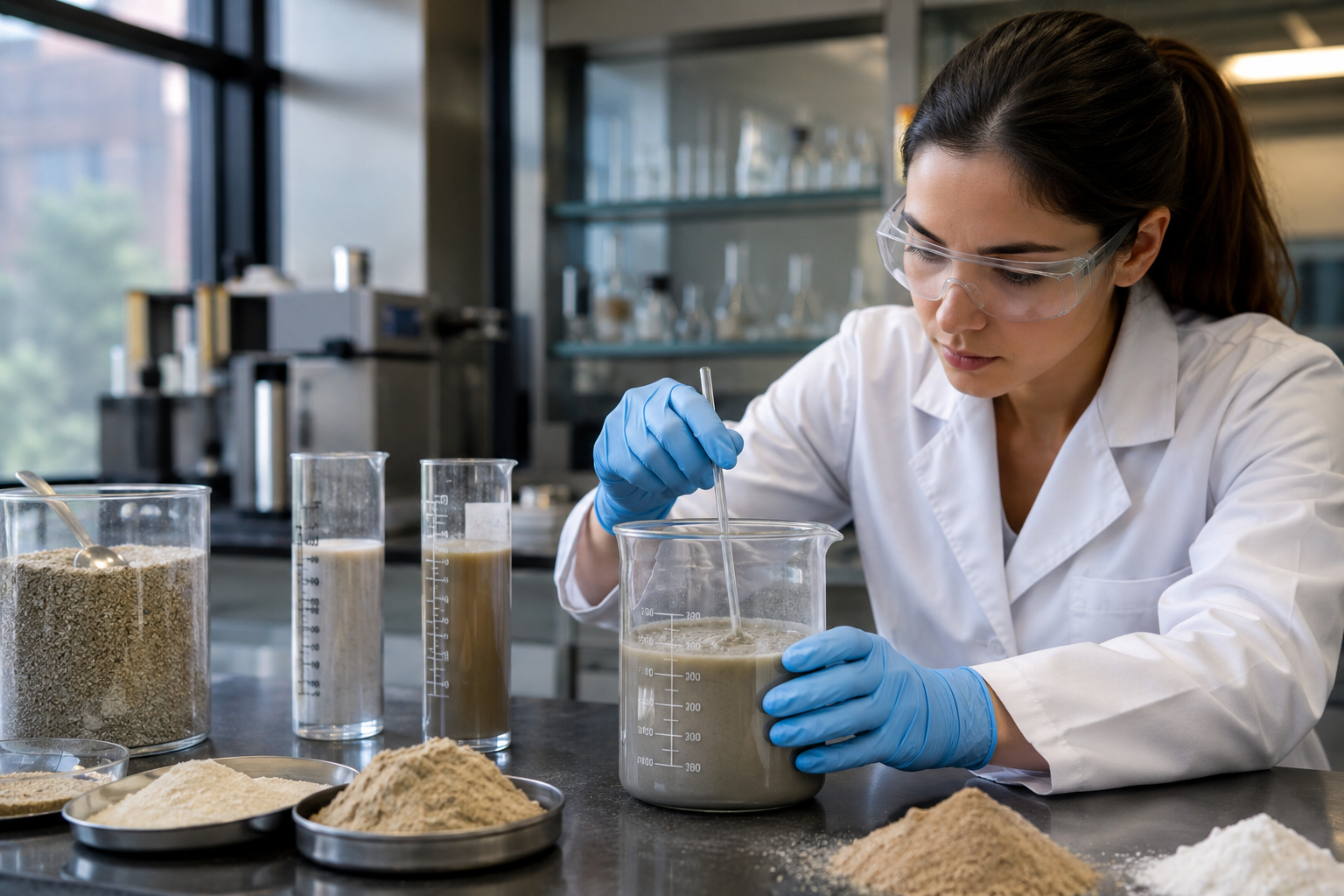
The goal isn't simply to use the largest pump available. Excessive energy can waste power and increase equipment wear, while insufficient energy leaves the clay poorly dispersed. The right setup depends on the bentonite concentration, equipment design, flow rate, nozzle condition, and overall fluid formulation.
Bentonite hydration takes time, and the required time varies with the product, particle size, water chemistry, temperature, concentration, and mixing conditions.
Some systems develop useful viscosity relatively quickly, while others benefit from substantially longer aging. A blanket rule such as "15 minutes is enough" can therefore be misleading.
If a freshly mixed slurry is significantly thinner than the same formulation after an appropriate aging period, the problem may not be bentonite quality at all. The fluid simply hasn't had enough time to develop its full rheological properties.
Where the drilling program allows it, prepare and circulate the slurry early enough to give the clay time to hydrate before it is needed for critical downhole work.
Temperature affects hydration and fluid rheology. Colder water generally slows hydration and can change measured viscosity, while higher temperatures can accelerate some processes and also affect additive stability.
Don't correct a temperature-related viscosity change by automatically adding more bentonite. Record the temperature alongside your field measurements and compare results under consistent test conditions whenever possible.
For operations in cold environments, allow additional hydration time and verify the fluid's performance at the actual operating temperature.
The mixing method determines how effectively dry bentonite is dispersed into the water. The following comparison is a practical field guide rather than a universal ranking, because actual performance depends on equipment design, operating conditions, and maintenance.
| Mixing Method | Typical Dispersion Capability | Hydration Result | Common Field Issue |
|---|---|---|---|
| Direct dumping into an open pit | Low | Often inconsistent | Fish-eyes, settling, and poor dispersion |
| Mud guns and tank circulation | Low to moderate | Variable | Can leave poorly hydrated material in dead zones |
| Venturi jet hopper | Moderate to high | Generally good when correctly operated | Feed rate or nozzle problems can reduce performance |
| High-shear centrifugal mixing | High | Generally very good | Higher power demand and equipment wear |
| Inline shear or dedicated mixing system | High | Consistent when correctly sized | Requires suitable flow control and maintenance |
A jet hopper can be highly effective because the venturi effect pulls water and powder together under strong local turbulence. The important point is that equipment only performs as designed when it is operated correctly. A worn nozzle, restricted suction line, incorrect pump pressure, or excessive powder feed rate can undermine an otherwise capable system.
Direct dumping is attractive because it looks fast. In practice, it can create more work later. Large quantities of dry powder can accumulate in localized areas, form partially hydrated masses, and settle before the fluid is properly dispersed.
If the system already contains hydrated mud, adding more powder directly into the active pit can also make concentration control difficult. A controlled hopper is usually a better approach when consistent slurry properties matter.
Water chemistry is one of the first things to investigate when a familiar bentonite suddenly performs differently.
Freshwater sodium bentonite generally performs best when the water contains relatively low concentrations of interfering ions. Calcium and magnesium are particularly important because their divalent charge can reduce the repulsive forces that help clay particles disperse. High salinity can also suppress the swelling behavior of many freshwater bentonites.
Calcium contamination can enter a drilling-fluid system from makeup water, formation water, cement contamination, or other sources encountered during drilling. Its effect can become more noticeable as the fluid is circulated and reused.
If viscosity drops unexpectedly, don't assume that the original bentonite has stopped working. Test the fluid for changes in hardness or other contamination indicators. A chemical treatment may address the problem more effectively than simply adding more clay.
A simple water-quality check can prevent an expensive mixing problem. Establish a baseline for the normal makeup-water source and retest whenever the source changes.
For larger operations, maintain a written water-quality record alongside mud properties. Tracking hardness, pH, salinity, temperature, and key treatment additions makes it much easier to identify why two apparently identical batches behave differently.
Not all bentonite products are interchangeable. Mineralogy and processing determine how readily a product develops viscosity and swelling under a given set of conditions.
A high-yield sodium bentonite can reduce the amount of dry material needed to reach a target slurry property, but product selection should always match the drilling application. A bentonite designed for one fluid system may not be the best choice for another, particularly where salinity, temperature, filtration control, or specific rheological requirements differ.
When comparing suppliers, look beyond the headline claim of "high yield." Review the relevant specification, test method, particle-size distribution, moisture content, viscosity characteristics, and consistency from batch to batch.
For operations that purchase bentonite in significant volumes, consistency can be as important as peak laboratory performance. A product that produces predictable results across shipments makes field formulation much easier to control.
Bentonite is often only one component of a drilling-fluid system. Polymers, weighting agents, filtration-control additives, lubricants, and other chemicals may be added depending on the application.
That makes troubleshooting more complicated. A change in viscosity may come from the bentonite, an additive interaction, water chemistry, temperature, solids loading, or mechanical degradation of the fluid.
Polymers can improve fluid properties such as filtration control, encapsulation, lubricity, or rheology, depending on the chemistry used. They don't automatically increase bentonite yield, however.
Adding a polymer to compensate for poorly hydrated bentonite can mask the original problem rather than solve it. Establish good bentonite dispersion first, then optimize the rest of the formulation around the required drilling performance.
Barite is primarily used as a weighting material in drilling fluids. It serves a different function from bentonite and shouldn't be treated as a substitute for clay hydration.
If barite is added to a bentonite system, evaluate the complete fluid rheology rather than looking only at bentonite concentration. Increasing solids loading can affect viscosity, gel strength, settling behavior, and pumpability.
A well-designed system balances these components instead of maximizing any single property.
Field measurements are valuable because they show how the actual fluid is behaving, but each test has limits.
A Marsh funnel provides a quick comparative indication of fluid flow behavior. It is useful for routine field checks when the test is performed consistently, but it isn't a full rheological measurement and shouldn't be used as the sole basis for diagnosing a complex drilling-fluid problem.
Keep the funnel clean, use the correct test procedure, and record the fluid temperature. Compare measurements taken under similar conditions rather than treating every funnel reading as directly comparable across different fluids and temperatures.
For more detailed drilling-fluid control, a rotational viscometer or rheometer can provide additional information about plastic viscosity, yield point, gel strengths, and shear-dependent behavior, depending on the instrument and test model.
These measurements can reveal problems that a single funnel reading won't show. For example, two fluids may have similar apparent flow times while behaving differently under low-shear conditions that matter for cuttings suspension.
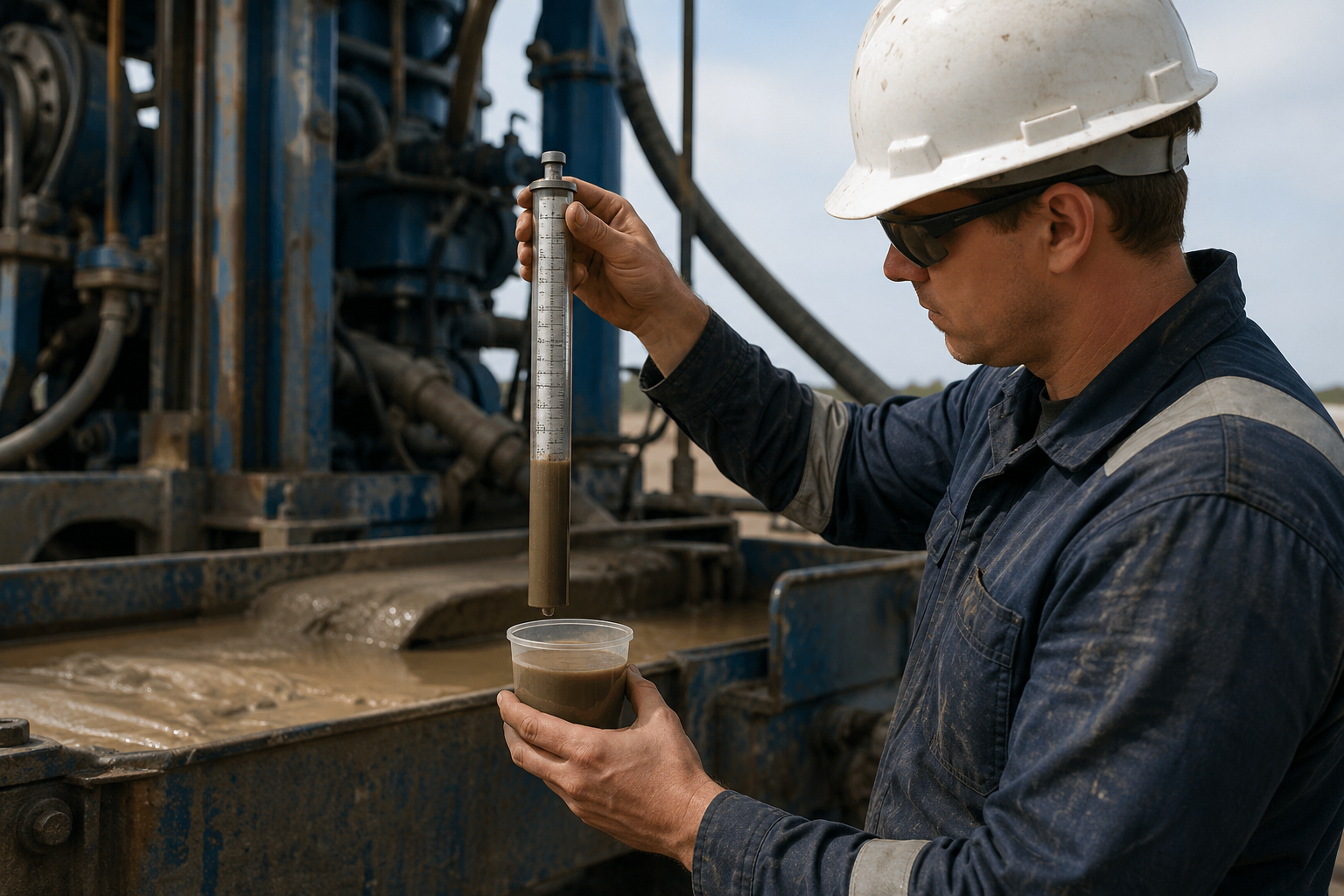
One measurement is a snapshot. A trend is much more useful.
Record bentonite concentration, water source, pH, temperature, funnel viscosity, relevant rheological parameters, chemical additions, and mixing conditions. If viscosity falls steadily over several checks, you can investigate the change before it becomes a major operational problem.
When a slurry develops less viscosity than expected, work through the variables systematically rather than adding more bentonite immediately.
Check the bentonite addition rate, hopper performance, pump pressure, nozzle condition, and mixing time. Look for visible fish-eyes or undispersed powder. If the clay has not been dispersed properly, additional hydration time may solve part of the problem.
Test the water and finished slurry for hardness, salinity, and other contamination. Confirm that the bentonite grade is appropriate for the water chemistry and application. Review the actual concentration rather than relying on the number of sacks added.
Treat the water source as a prime suspect. Compare the new water with the previous source, particularly for hardness, calcium, magnesium, and salinity. If the new source is chemically different, adjust the treatment program or select a formulation designed for those conditions.
Inspect the hopper nozzle, shear pump, impeller, suction line, and other components that influence dispersion. Mechanical wear can gradually reduce mixing effectiveness without producing an obvious equipment failure.
More viscosity isn't automatically better. Excessive solids concentration, poor dispersion, high gel strength, or additive interactions can make the fluid harder to circulate.
The target should be a balanced rheological profile suited to the drilling operation, not the highest possible funnel viscosity.
This is one of the most expensive shortcuts. If calcium contamination or poor mixing is suppressing hydration, adding additional clay may increase material consumption without fixing the underlying issue.
Water chemistry changes. A treatment program that worked with one source may be unnecessary or inadequate with another. Test first.
A fast feed rate can look efficient while creating poorly hydrated material. Match the addition rate to the mixing system's actual capacity.
Jet nozzles, impellers, pumps, valves, and suction lines all influence mixing performance. Preventive inspection is often cheaper than discovering a dispersion problem after several batches have already been consumed.
A Marsh funnel is useful, but it can't describe every aspect of a drilling fluid. Use the measurements required by the application and specification.
A low pH reading may justify treatment, but blindly adding caustic soda can create a different formulation problem. Make measured, incremental adjustments and retest.
Before mixing a new batch, verify the following:
Reducing consumption doesn't mean using less clay than the drilling fluid requires. It means avoiding material that never contributes effectively to the fluid.
Start with product selection. A suitable high-yield sodium bentonite can provide strong viscosity development at an efficient concentration. Next, protect that performance through water treatment and proper dispersion.
The biggest savings often come from preventing avoidable losses. Fish-eyes, settled clay, poorly treated water, excessive dilution, and unnecessary re-treatment can all increase consumption.
It is also useful to separate routine maintenance from formulation changes. If a worn shear pump is causing poor hydration, replacing the equipment component may be more cost-effective than changing the entire mud recipe.
Suppose a crew normally obtains the expected viscosity from a particular bentonite concentration but a new batch comes out significantly thinner. The first response shouldn't be to add another full sack.
Check the water source. If the water hardness has increased, treat the water and retest. If water chemistry is normal, inspect the mixing system and look for fish-eyes. If dispersion appears good, allow additional hydration and measure again under the same temperature conditions.
If the slurry still underperforms, compare the product batch against its specification and previous deliveries. This sequence narrows the problem without wasting material on blind adjustments.
Consistency comes from controlling the variables that can be controlled.
Use the same basic mixing sequence for routine batches. Keep water testing procedures consistent. Record the bentonite concentration and actual water volume instead of estimating from tank levels alone. Maintain mixing equipment according to the manufacturer's requirements and document major changes in water source or additives.
For larger drilling programs, establish a simple batch record. It doesn't need to be complicated. The objective is to make it possible to answer a practical question: what changed between the batch that worked and the batch that didn't?
That information becomes particularly valuable when drilling conditions change. A fluid that performs well in clean freshwater may behave very differently when exposed to formation water, salts, calcium, elevated temperature, or additional drilled solids.
When sourcing bentonite, ask suppliers for technical information that relates directly to your application. Useful information can include the product grade, mineralogical characteristics, relevant yield or viscosity test results, moisture content, particle-size distribution, packaging options, and recommended mixing conditions.
A supplier should also be able to explain which water chemistry and drilling conditions the product is intended to handle. This is more useful than choosing a product based solely on a generic high-yield claim.
For demanding projects, evaluate samples under representative conditions before committing to a large volume. Laboratory testing won't reproduce every field variable, but it can help establish whether a product is suitable for the intended formulation.
Axewelledge supplies natural sodium bentonite for industrial and drilling applications. For buyers evaluating bentonite for a specific drilling-fluid system, the most useful conversation is about the required specification, water chemistry, application, and expected performance rather than simply the lowest price per ton.
Bentonite slurry yield improves when the clay is given the conditions it needs to hydrate and disperse effectively.
The most important practices are straightforward:
The goal isn't maximum viscosity at any cost. The goal is a stable, predictable drilling fluid that delivers the required suspension, filtration, flow, and borehole-support properties with an efficient amount of bentonite.
When water quality, mixing, hydration, and product selection are controlled together, operators can make much better use of every ton of bentonite entering the mud system.













Have questions about our products? We're here to help!