Axewelledge, a leading exporter from India, specializes in high-quality Bentonite. With a commitment to excellence, we supply premium Bentonite to the Middle East and Southeast Asia markets.


North Angle Complex, 304,
150 Feet Ring Rd, Opposite Ambedkar Nagar BRTS Stop,
Madhav Park, Punit Nagar,
Mavdi, Rajkot, Gujarat 360004
© Axewelledge 2026, All Rights Reserved.
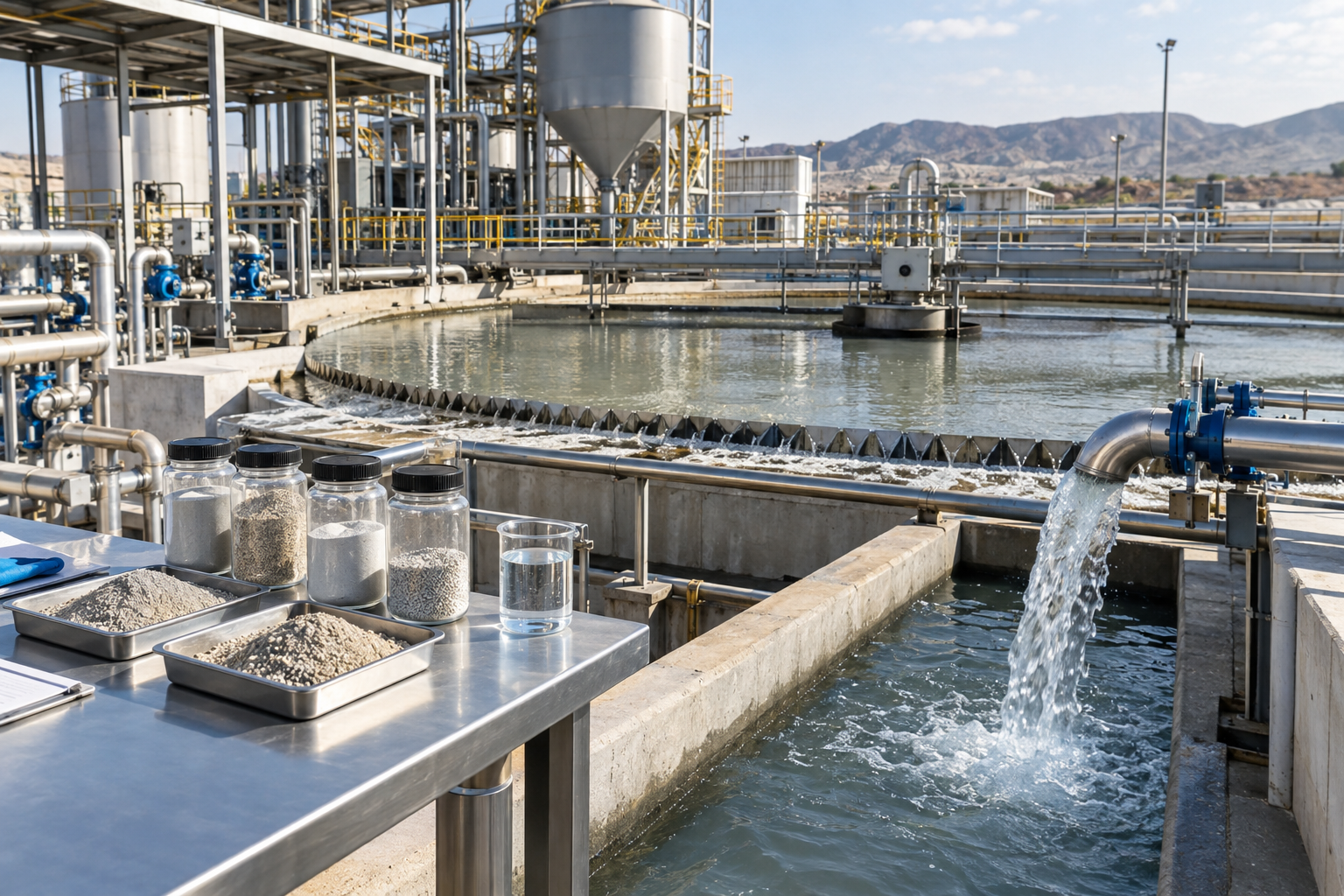
Bentonite can help manage drilling wastewater, but it isn't a universal treatment chemical. Its value comes mainly from the way its fine clay particles interact with suspended solids, dissolved ions, and other treatment chemicals. In the right process, bentonite can support clarification, adsorption, solids conditioning, and pre-treatment before more advanced treatment stages.
That distinction matters. Drilling wastewater varies widely depending on the formation being drilled, the drilling fluid system, additives, salinity, oil content, and the treatment equipment already in use. A bentonite dose that works well for one wastewater stream may perform poorly in another. Jar testing and laboratory analysis should therefore guide the final treatment program rather than relying on a fixed dose.
Bentonite is a naturally occurring clay composed largely of smectite minerals, particularly montmorillonite. Sodium-rich bentonite is valued for its ability to hydrate and swell, while its charged clay surfaces provide sites for cation exchange and adsorption. Those properties explain why bentonite is useful in several parts of a drilling wastewater treatment train.
This guide covers seven practical applications, explains where bentonite fits, compares it with polymer-based treatment aids, and outlines a sensible approach for selecting and testing a suitable grade.
Bentonite is a fine-grained clay formed from volcanic ash that has undergone geological alteration. Its dominant smectite mineral, montmorillonite, has a layered structure and a substantial surface area. The exact mineral composition and performance depend on the deposit, processing method, and grade.
Sodium bentonite is particularly well known for swelling when it contacts water. Hydration causes the clay layers to separate and disperse, producing a stable colloidal suspension. That same behavior is highly useful in drilling fluids, but it needs to be controlled carefully when bentonite is used as part of wastewater treatment.
In treatment applications, the important properties include:
The key point is that bentonite is usually a treatment aid, not a complete wastewater treatment system. It doesn't replace oil separation, chemical precipitation, biological treatment, membrane treatment, or disinfection when those processes are required.
Drilling wastewater can contain much more than ordinary suspended dirt. Its composition depends on the drilling method and geology, but common constituents include:
A treatment system therefore needs to distinguish between suspended contaminants and dissolved contaminants. Bentonite can interact strongly with particulate material, while its effect on dissolved contaminants varies by contaminant, pH, ionic strength, competing ions, and clay characteristics.
That is why a claim such as "bentonite removes every heavy metal" is too broad. Performance should be demonstrated with the actual wastewater.
One of the better-known properties of bentonite is its ability to participate in ion exchange. Montmorillonite clay carries a net negative charge associated with its layered structure. Exchangeable cations balance that charge, and some dissolved metal ions can interact with the clay through ion exchange or adsorption.
This can be relevant when drilling wastewater contains metals such as lead, copper, zinc, cadmium, or other dissolved or particulate-associated metals. The actual removal efficiency depends on the metal concentration, pH, competing ions, contact time, clay dose, and the chemical form of the metal.
A simplified treatment sequence looks like this:
Bentonite shouldn't be described as a stand-alone heavy-metal treatment unless testing proves that it can meet the required discharge target. If dissolved metal concentrations are high, precipitation, specialized adsorption media, ion exchange, or membrane processes may be needed alongside clay treatment.
Suppose a drilling wastewater sample contains elevated zinc and suspended solids. A treatment trial could compare several bentonite doses while keeping mixing time and pH controlled. The operator can then measure dissolved zinc before and after treatment, rather than assuming that the clay dose is effective simply because the water looks clearer.
Visual clarity and metal removal aren't the same thing.
Fine drilling solids can remain suspended for long periods because very small particles have low settling velocities and may carry electrical charges that keep them dispersed. This is especially troublesome when the wastewater contains clay-rich formation solids.
Bentonite can be incorporated into a coagulation or flocculation program, but its role needs to be selected carefully. Depending on the wastewater, bentonite may function as a source of mineral solids, a surface for particle attachment, or part of a chemically assisted flocculation system.
It is often more useful to think of bentonite as one component of a treatment recipe rather than assuming that adding more clay will automatically produce faster settling.
A treatment plant may test bentonite alongside coagulants such as alum or polyaluminum chloride and, where appropriate, a polymer flocculant. The optimum sequence can vary. Some streams respond better when the coagulant is added first, followed by bentonite or polymer; others may require a different order.
Jar testing is the simplest way to establish the correct sequence.
During a jar test, operators can compare:
The goal isn't simply to create large flocs. The flocs also need to settle reliably and produce a sludge that the downstream equipment can handle.
Oil-containing drilling wastewater presents a different challenge from clay-rich water. Oil droplets may be dispersed through the water and stabilized by surfactants or drilling-fluid additives. In these cases, simply adding bentonite shouldn't be presented as a guaranteed emulsion-breaking solution.
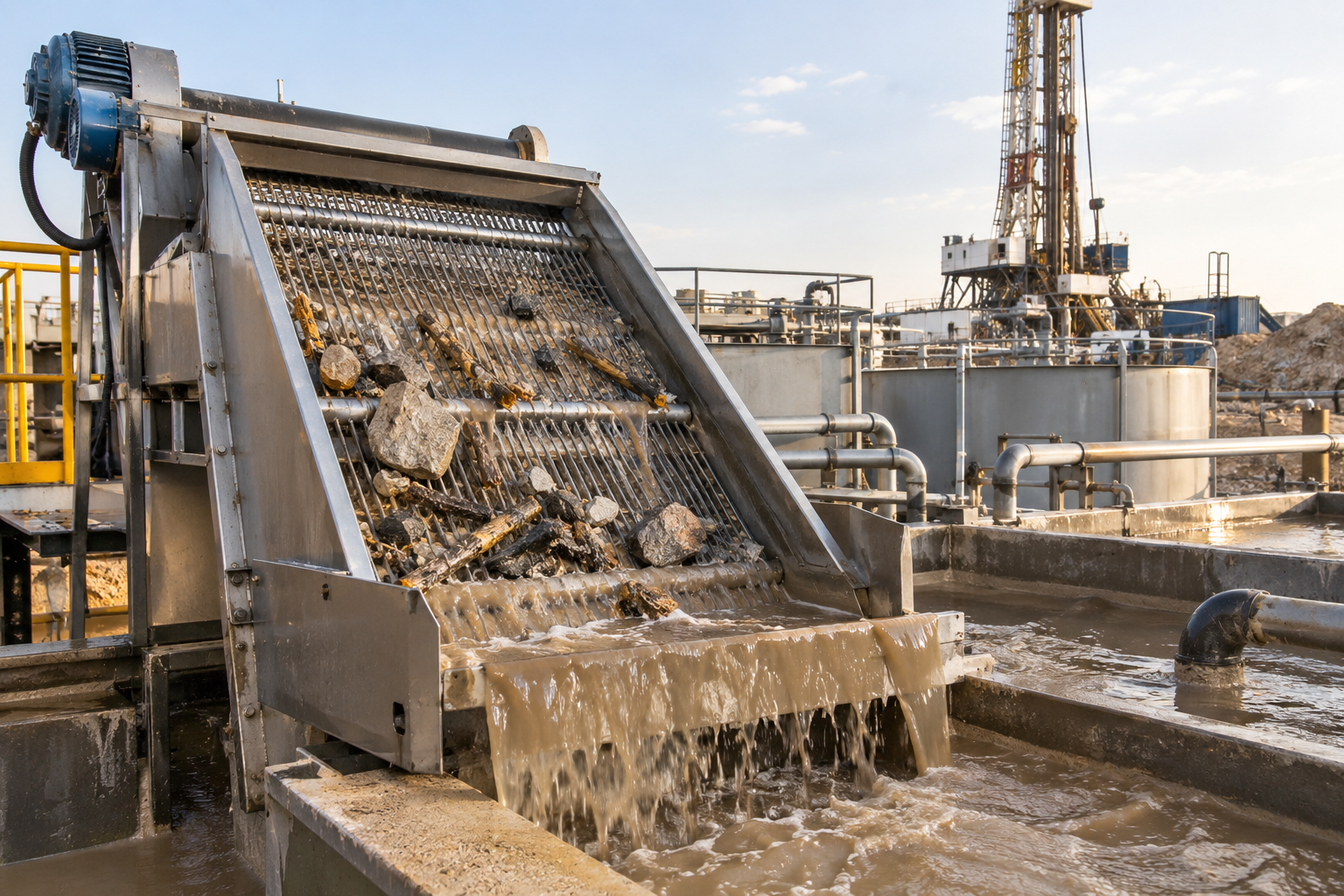
Clay can interact with oil-associated solids and other components of a wastewater stream, and it may contribute to solids formation or separation under particular chemical conditions. However, oil removal normally relies on a combination of physical and chemical processes selected for the specific waste stream.
Common technologies include:
Bentonite may have a supporting role before or during some of these stages, especially when suspended solids need conditioning. The correct approach is to measure oil and grease, total petroleum hydrocarbons where relevant, turbidity, and suspended solids before and after treatment trials.
Treating every oil-containing drilling wastewater stream as chemically identical can lead to poor results. Oil-based mud, synthetic-based mud, and water-based mud have different compositions and behave differently during separation. Treatment chemicals should be selected from actual samples rather than from the drilling-fluid name alone.
Drilling wastewater treatment eventually produces a solids stream. Managing that sludge can be just as important as producing clear water because transportation, storage, and disposal depend heavily on solids concentration and physical properties.
Bentonite can participate in sludge conditioning by changing the structure and filtration behavior of the solids. In some treatment systems, mineral conditioning can help produce a filter cake that releases water under pressure. In others, adding more fine clay may increase the total solids load and make dewatering harder.
There is no universal rule that bentonite automatically makes sludge drier.
When properly selected and dosed, clay particles may improve the structure of a filter cake or provide additional surfaces for floc formation. Mechanical equipment such as filter presses, belt filter presses, or centrifuges can then separate water from the conditioned solids.
The performance should be evaluated by measuring:
The commercial question is also important. A treatment change should be judged on total operating cost, not just on whether the cake contains less water. If a large amount of bentonite increases the mass of material that must be transported, the apparent dewatering improvement may not reduce overall disposal costs.
Some drilling wastewater remains cloudy because it contains extremely fine mineral particles that don't settle readily. Screens and conventional strainers aren't designed to remove every colloidal particle, so a separate coagulation and clarification step may be necessary.
Bentonite can interact with fine particles and treatment chemicals, but an important distinction is often missed: bentonite itself is also a fine colloidal material. Adding it to water doesn't automatically "neutralize" every existing colloid.
The final result depends on the surface chemistry of both the bentonite and the wastewater particles.
Zeta potential is commonly used as an indicator of colloidal stability. Particles with similar surface charges can repel one another strongly enough to remain dispersed. Coagulation changes the chemical environment and can reduce that stability, allowing particles to form larger aggregates.
Bentonite may contribute to this process in a properly designed formulation, particularly when used with conventional coagulants or polymers. But the right dose has to be established experimentally.
For persistent cloudy drilling water, a useful testing program can compare bentonite alone, coagulant alone, and combined treatment. Measuring turbidity and settling performance after each trial gives a much clearer picture than judging the samples by appearance alone.
Bentonite's cation exchange capacity can be useful when wastewater contains a mixture of dissolved ions. The clay can exchange certain cations associated with its structure with ions present in the surrounding water.
However, bentonite should not be treated as a general-purpose pH buffer. This is an important correction to a common oversimplification.
The pH of drilling wastewater is governed by the chemistry of the water and the materials added to it. Bentonite can influence that chemistry indirectly, but it isn't a substitute for dedicated pH adjustment using an appropriate acid, alkali, or other treatment chemical.
If wastewater enters a precipitation stage at the wrong pH, metals may remain dissolved or treatment chemicals may perform poorly. The operator should therefore control pH directly and use bentonite for the functions it has actually demonstrated in testing.
For a robust process, monitor:
This data helps determine whether bentonite is providing a useful treatment effect or simply adding mineral solids to the system.
Membranes, cartridge filters, and other polishing systems can be vulnerable to suspended solids and organic fouling. Sending poorly clarified drilling wastewater directly into these units can increase pressure drop, shorten filter runs, and increase cleaning requirements.
Bentonite can be considered as part of a solids-conditioning and clarification stage before fine filtration when jar tests show a benefit. The objective is straightforward: remove as much of the troublesome particulate load as practical before the water reaches the more sensitive treatment equipment.
A typical treatment train might include several stages:
Bentonite isn't necessarily appropriate at every site. The treatment train should be designed around the contaminants that actually need to be removed.
Bentonite and synthetic polymers don't perform the same job, even though both may appear in a solids-treatment program. Bentonite is a mineral with swelling and ion-exchange properties. Polymers are engineered chemicals that can destabilize particles or bridge them into larger flocs at very low doses.
The comparison below is therefore a practical starting point rather than a claim that one material universally replaces the other.
| Feature | Bentonite | Synthetic Polymers |
|---|---|---|
| Material type | Natural clay mineral, mainly smectite | Engineered organic polymers |
| Main treatment role | Adsorption, mineral conditioning, particle interaction, solids conditioning | Coagulation and flocculation support |
| Typical dose | Often higher by mass | Usually much lower by mass |
| Swelling | Sodium-rich grades can swell strongly | Not applicable in the same way |
| Sludge effect | Adds mineral solids and can alter filter-cake structure | Can produce strong flocs, with performance depending on polymer type and dose |
| Thermal behavior | Mineral structure is generally stable over a broad temperature range | Depends strongly on polymer chemistry and operating conditions |
| Chemical sensitivity | Performance changes with salinity, pH, competing ions, and grade | Performance also depends on pH, ionic strength, particle type, and polymer chemistry |
| Best selection method | Product specification plus wastewater testing | Product specification plus wastewater testing |
In many plants, the choice isn't "bentonite or polymer." A combined program may work better. The objective is to find the lowest total treatment cost that reliably meets water-quality and sludge-handling requirements.
It is also useful to separate bentonite treatment from chemical precipitation. If a wastewater stream contains dissolved metals, a chemical precipitation step may convert those metals into insoluble compounds. Bentonite can then potentially help with the resulting solids through adsorption, aggregation, or filtration support.
For example, a treatment system could use pH adjustment and metal precipitation first, followed by coagulation, flocculation, clarification, and filtration. Bentonite might be tested at one of these stages if laboratory results show a measurable benefit.
This approach is more defensible than treating bentonite as a single product capable of replacing every treatment step.
A well-designed laboratory trial can prevent expensive dosing mistakes. The first step is to collect representative wastewater rather than relying on clean water or a sample that has already settled for several days.
Measure the parameters that matter for the site. Depending on the project, this may include pH, turbidity, total suspended solids, conductivity, total dissolved solids, oil and grease, hydrocarbons, and target metals.
Also record the drilling-fluid chemistry if available. Knowing which polymers, viscosifiers, weighting agents, surfactants, or other additives are present can explain why a particular treatment behaves unexpectedly.
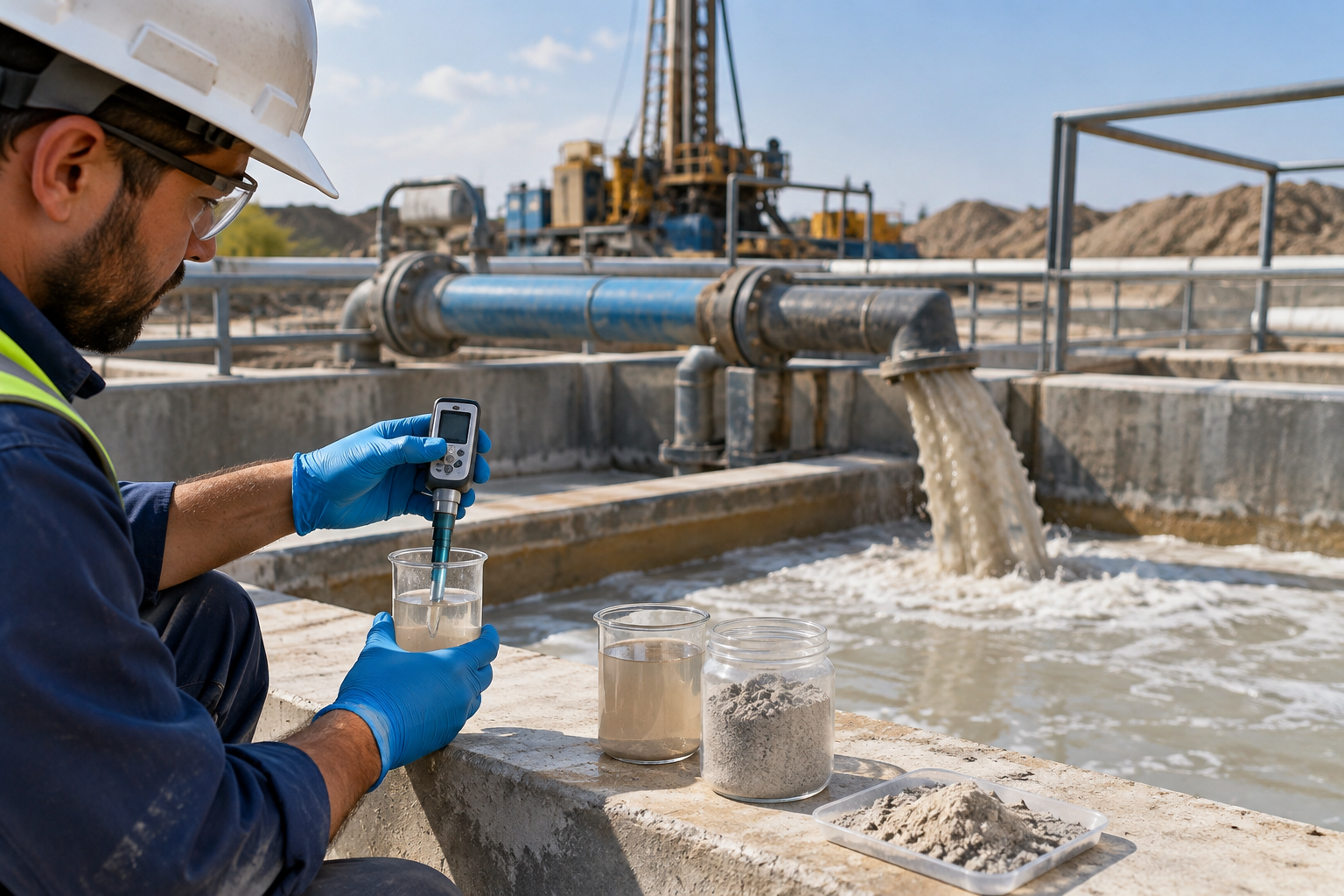
Compare grades using measurable properties rather than the phrase "high quality" alone. Relevant specifications may include montmorillonite content, moisture, swelling behavior, particle-size distribution, cation exchange capacity, viscosity or rheological performance where applicable, and chemical purity.
The right specification depends on the treatment objective.
Prepare a series of controlled tests with different bentonite doses. Keep mixing conditions, settling time, sample volume, and temperature as consistent as practical.
If a coagulant or polymer will also be used, test the treatment sequence as well. A useful experiment can include bentonite alone, coagulant alone, polymer alone, and combinations of the materials.
Don't judge the treatment only by water appearance. Measure turbidity, suspended solids, dissolved contaminants, settling performance, and sludge characteristics where relevant.
For metal treatment, analyze the specific metals of concern. For oily wastewater, measure the appropriate oil or hydrocarbon parameter. For membrane pre-treatment, evaluate the solids level that actually reaches the membrane feed.
A lower chemical price doesn't necessarily mean a lower treatment cost. Include bentonite consumption, coagulants, polymers, electricity, mixing, filter operation, sludge disposal, transportation, and equipment cleaning.
The best dose is the one that meets the treatment target at an acceptable total cost while producing manageable residual solids.
Adding extra clay can increase suspended solids and sludge production. Once the useful treatment sites or particle-conditioning benefit have been reached, additional bentonite may provide little improvement.
Drilling wastewater changes from site to site and sometimes from one drilling interval to another. A dose that worked yesterday may not work after the formation or drilling-fluid chemistry changes.
Clear water isn't proof that dissolved metals, salts, hydrocarbons, or other regulated contaminants have been removed. Laboratory analysis is needed for parameters that matter to the discharge or reuse specification.
Bentonite can participate in ion exchange, but it shouldn't replace direct pH control. Monitor and adjust pH using a treatment program designed for the wastewater.
High concentrations of dissolved salts can change clay swelling, dispersion, and interaction with other treatment chemicals. This is particularly relevant for drilling operations where saline water or formation brines are present.
A cheaper mineral may require a higher dose or deliver less consistent performance. Compare the delivered treatment cost and measured performance rather than the price per tonne alone.
Every kilogram of mineral added to wastewater eventually has to go somewhere. Evaluate the effect on sludge mass, cake moisture, disposal classification, and transportation requirements before moving from laboratory testing to full-scale operation.
A practical implementation can be organized into the following stages:
This workflow also gives operators a way to respond when wastewater chemistry changes. Instead of increasing the bentonite dose by guesswork, they can identify which treatment parameter has shifted and adjust the process accordingly.
The phrase "sodium bentonite" covers a range of products with different mineral compositions and processing characteristics. A treatment buyer should request a technical data sheet and, when appropriate, a certificate of analysis.
Important factors can include:
| Property | Why It Matters |
|---|---|
| Montmorillonite content | Indicates the proportion of the clay mineral responsible for many of bentonite's characteristic properties |
| Swelling behavior | Helps assess hydration and dispersion characteristics of sodium-rich grades |
| Cation exchange capacity | Relevant when adsorption and ion-exchange behavior are part of the treatment objective |
| Moisture content | Affects storage, handling, and the actual amount of dry mineral delivered |
| Particle-size distribution | Influences dispersion, mixing, settling, and filtration behavior |
| Chemical purity | Helps reduce unwanted mineral or chemical contributions to the treatment process |
| Consistency between batches | Important for maintaining predictable dosing and process performance |
The required specification should be matched to the wastewater. A drilling-fluid-grade bentonite may have properties optimized for rheology and fluid-loss control, while a mineral selected for another industrial process may have a different specification. Don't assume that the product with the highest swelling value is automatically the best wastewater-treatment material.
Wastewater treatment and drilling-fluid recycling are closely related but shouldn't be confused. When solids are removed and water quality is restored to a suitable range, treated water may sometimes be reused in drilling operations. Whether that is practical depends on the drilling-fluid formulation and the quality requirements of the next batch.
High salinity, hardness, residual polymers, hydrocarbons, or dissolved contaminants can affect the performance of recycled water. The recycling decision should therefore be based on the drilling-fluid formulation and measured water chemistry.
Bentonite itself is also a major component of many water-based drilling fluids. Excessive removal or uncontrolled addition during recycling can change mud rheology, solids content, filtration behavior, and density. Treatment operators and drilling-fluid specialists should coordinate the recycling process rather than treating wastewater and drilling fluid as completely separate systems.
Bentonite is a naturally occurring mineral, but calling a treatment process "eco-friendly" solely because it uses bentonite is too simplistic. The environmental profile of the complete waste stream depends on what the clay has captured and what other chemicals are present.
For example, bentonite used to treat wastewater containing metals or hydrocarbons becomes part of the resulting waste. The final sludge must be characterized according to the applicable local requirements before disposal or reuse.
Operators should keep records of:
For projects operating in the United States, treatment and discharge requirements can vary by operation, location, permit, and wastewater type. The treatment material should be selected to help meet the actual regulatory specification rather than relying on a generic claim of environmental safety.
Bentonite isn't suitable for every drilling wastewater problem. If the primary contaminant is dissolved salt, for example, adding more clay won't provide desalination. Reverse osmosis, evaporation, ion exchange, or another appropriate technology may be required depending on the water-quality target.
Likewise, high concentrations of dissolved hydrocarbons, volatile compounds, or specific toxic contaminants may require specialized treatment. Bentonite can sometimes support a treatment train, but it shouldn't be selected as a substitute for a technology designed specifically for the contaminant.
A simple decision process helps:
| Main Problem | Potential Role for Bentonite | Other Treatment May Be Needed |
|---|---|---|
| Fine suspended solids | Conditioning or flocculation support | Coagulant, polymer, clarification, filtration |
| Some dissolved metals | Adsorption or ion-exchange support | Precipitation, ion exchange, membranes |
| Oily wastewater | Possible solids-conditioning role | Oil separation, demulsification, flotation |
| Sludge with poor filtration | Possible mineral conditioning | Polymer conditioning, filter press, centrifuge |
| High salinity | Limited direct benefit | Membranes, evaporation, or other desalination methods |
| Extreme pH | Not a primary pH-control solution | Dedicated acid or alkali dosing |
The right question isn't "Can bentonite treat this wastewater?" It's "What measurable treatment job can bentonite perform in this wastewater, and does it improve the overall process?"
Bentonite has a useful place in drilling wastewater treatment when its mineral properties match the problem being treated. Its swelling behavior, surface chemistry, and cation exchange capacity can support solids removal, adsorption, flocculation, sludge conditioning, and pre-filtration in appropriately designed systems.
The strongest treatment programs share a few characteristics. They start with wastewater testing, use jar trials to establish dosage, measure both water and sludge performance, and evaluate the total operating cost. They also recognize the limits of the material.
For operators, the practical priorities are straightforward:
A consistent bentonite supply can make process control easier, but supplier selection should be based on documented specifications, batch consistency, technical support, and results from your own wastewater trials. For industrial users evaluating sodium bentonite, a producer such as Axewelledge can be considered as one potential source, provided its grade and specifications match the treatment requirements.
The most effective use of bentonite isn't about adding as much clay as possible. It's about using the right mineral, at the right stage, at a tested dose, as part of a treatment system designed around the actual wastewater.













Have questions about our products? We're here to help!