Axewelledge, a leading exporter from India, specializes in high-quality Bentonite. With a commitment to excellence, we supply premium Bentonite to the Middle East and Southeast Asia markets.


North Angle Complex, 304,
150 Feet Ring Rd, Opposite Ambedkar Nagar BRTS Stop,
Madhav Park, Punit Nagar,
Mavdi, Rajkot, Gujarat 360004
© Axewelledge 2026, All Rights Reserved.
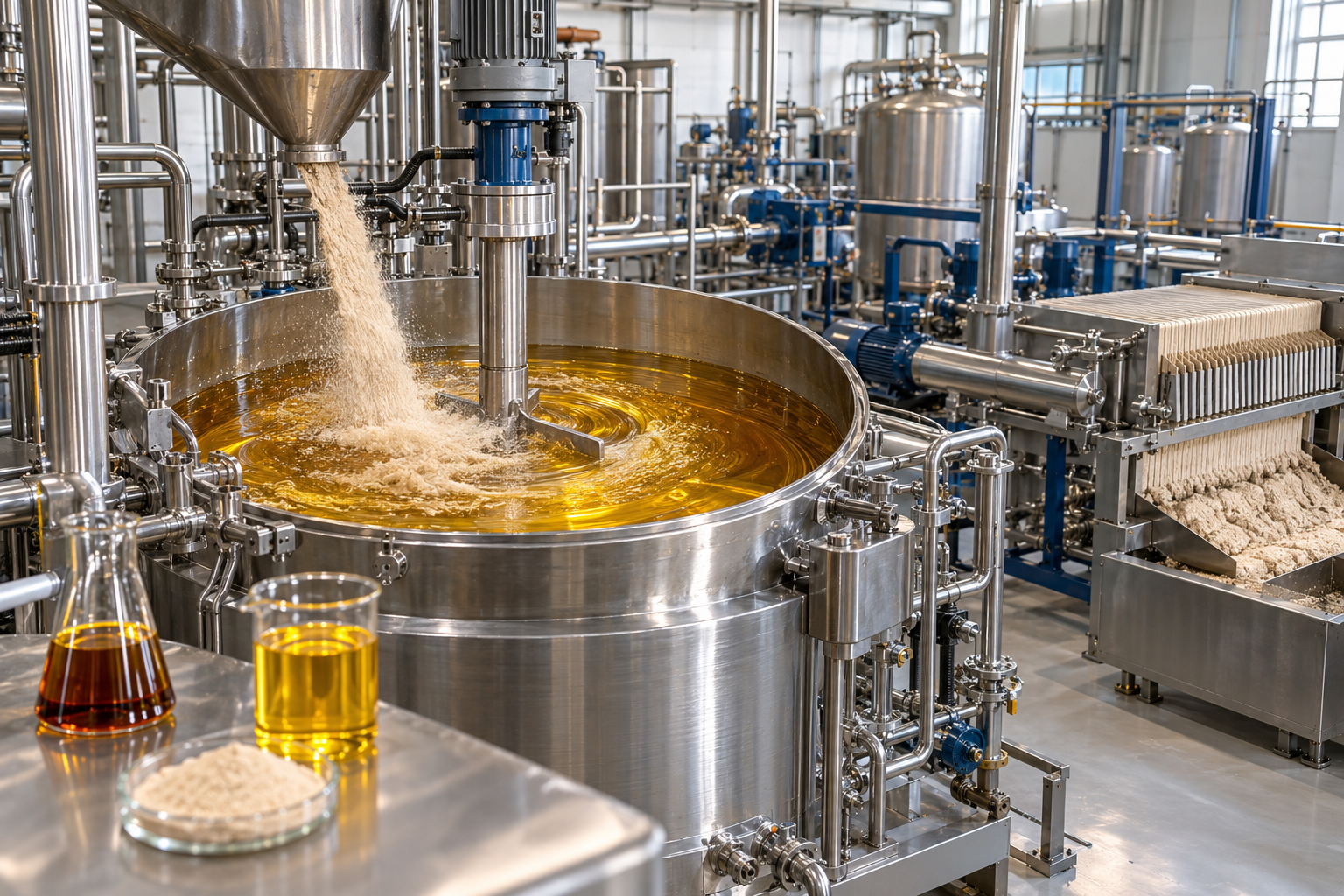
Bentonite-based bleaching earth is used in edible oil refining to adsorb pigments and other unwanted compounds so they can be removed by filtration. The main targets can include chlorophyll, carotenoids, residual phospholipids, soaps, trace metals, and selected oxidation products. In conventional refining, acid-activated bleaching earth is often used at around 1–2% of the oil mass, although the right dosage depends on the oil, adsorbent, process conditions, and final specification.
The important point is that more clay doesn't automatically produce better oil. A suitable bleaching-earth grade, correctly matched to the oil, can reach the required color and quality target with less material and lower oil loss than an unsuitable grade used at a higher dose.
This guide explains seven practical bentonite uses in edible oil clarification, how the bleaching step works, how to establish dosage, what to test in the laboratory, and which mistakes can make an apparently cheap adsorbent expensive in actual production.
In oil refining, the word bleaching can cause confusion. The process isn't about adding a chemical that simply makes oil look white or pale. Instead, an adsorbent is mixed with the oil so unwanted compounds attach to its surface and can then be separated from the oil.
Bentonite is a clay mineral, and its performance depends on factors such as mineral composition, surface characteristics, particle size, and processing history. For edible oil bleaching, the material is generally used as an activated bleaching earth rather than untreated bentonite. Acid activation can change the clay surface and improve its ability to adsorb particular compounds.
The basic process is straightforward:
Commercial bleaching conditions vary between refineries, but temperatures around 100°C and contact times measured in tens of minutes are common reference points. A dosage around 1–2% is also frequently used as a starting range for conventional acid-activated bleaching earth.
Those figures should not be treated as a universal recipe. A refinery processing fresh sunflower oil may need a different treatment from one processing heavily pigmented palm oil. Starting color, phosphorus, soap content, oxidation history, adsorbent activity, mixing, vacuum, and filtration all influence the result.
The most reliable way to establish a process is to test the actual oil with the actual adsorbent under controlled laboratory or pilot conditions.
The seven uses below cover the main clarification functions associated with bentonite-based bleaching earth. They aren't completely separate functions. A single bleaching treatment can adsorb several types of unwanted compounds at the same time.
Color reduction is the most familiar reason for using bleaching earth.
Freshly extracted vegetable oils naturally contain pigments carried over from the seed, fruit, or other raw material. Depending on the oil, these can include carotenoids, chlorophylls, xanthophylls, and related color compounds. Some pigments are reduced during earlier refining stages, but enough can remain to make bleaching necessary.
Activated bleaching earth provides a large, chemically active surface where these compounds can become adsorbed. Once the pigment is associated with the clay, filtration separates the clay and the adsorbed material from the oil.
The result is a lighter, more consistent oil that can meet the desired color specification.
But the goal shouldn't be to make the oil as pale as technically possible. Excessive adsorption can increase clay consumption, oil retention in the filter cake, and the removal of desirable minor components. Some naturally occurring compounds can contribute to oxidative stability, so aggressive treatment may not always improve the finished product.
For that reason, refiners should define a target rather than chase maximum color reduction. The practical objective is to achieve the required specification while keeping yield, stability, filtration, and operating cost under control.
Chlorophyll can be an important bleaching target, particularly in oils where green pigments remain after upstream processing.
Chlorophyll and related compounds affect the appearance of oil, but their significance isn't limited to color. Under light exposure, chlorophyll-related pigments can participate in photooxidation. Controlling them can therefore matter for both appearance and storage stability.
Suitable bleaching earth can adsorb chlorophyll and related pigments during the bleaching stage. The extent of removal depends on the clay's surface properties and the chemical composition of the oil.
This is one reason a supplier's general claim of "high bleaching capacity" isn't enough to select a product. A clay that performs well against one pigment system may behave differently with another oil.
For example, an adsorbent selected for strong carotenoid removal shouldn't automatically be assumed to provide identical performance against an oil with a significant chlorophyll load. Comparative testing gives a much clearer picture.
Carotenoids contribute yellow, orange, and red tones to many vegetable oils and are a major target during bleaching.
Palm oil is a familiar example. Its natural carotenoid content can give crude palm oil an intense orange-red color. Sunflower, maize, soybean, and other vegetable oils can also contain carotenoid pigments that influence the appearance of the refined product.
Activated clays have long been used to adsorb carotenoids, including beta-carotene. The effectiveness depends on the interaction between the adsorbent and the specific oil, as well as operating conditions such as temperature, dosage, and contact time.
That explains why a fixed dosage shouldn't be copied from one oil to another without testing.
Consider a refinery comparing two oils with the same 1% bleaching-earth dose. One may reach its target color easily, while the other remains above specification. Increasing the dose could improve the second result, but it could also increase spent clay, filtration requirements, and oil losses.
A controlled laboratory comparison is usually more useful. A refinery might screen several doses such as 0.5%, 0.75%, 1.0%, 1.25%, and 1.5%, provided that range makes sense for the oil and candidate adsorbent. The purpose isn't to find the highest possible dose. It's to identify the lowest practical dose that consistently meets the required specifications.
Bleaching earth can also help reduce residual phospholipids and other polar materials left after upstream degumming or neutralization.
Most phospholipid removal should be addressed through appropriate pretreatment. However, some residual phosphorus and related compounds can remain in the oil and become part of the bleaching load.
Adsorption during bleaching can help reduce these residual materials. That can support downstream refining and contribute to a cleaner final oil.
There is an important limitation, though: bleaching earth shouldn't be used as a substitute for effective degumming when proper degumming is required.
If an incoming oil contains an unusually high phospholipid load, attempting to solve the entire problem with bleaching clay can require excessive adsorbent. That increases filter-cake volume and can increase the amount of oil lost with the spent earth.
The better approach is to treat each refining stage as part of a sequence. Good pretreatment reduces the load placed on bleaching, while an appropriately selected bleaching earth handles the residual contaminants that remain.
Chemical refining can leave small amounts of soap in the oil after separation and washing. These residual soaps can become part of the adsorption load during bleaching.
Bleaching earth can help remove residual soaps and other polar compounds, although its effectiveness depends on the adsorbent and the composition of the oil.
This is also where other adsorbents can become useful. Silica-based materials, for example, are commonly considered when soaps, phospholipids, and certain trace contaminants are significant. In some refining systems, silica is used before or alongside bleaching earth to reduce the load on the clay.
That doesn't make one material universally better than another. It means the refining process should be designed around the contaminants actually present.
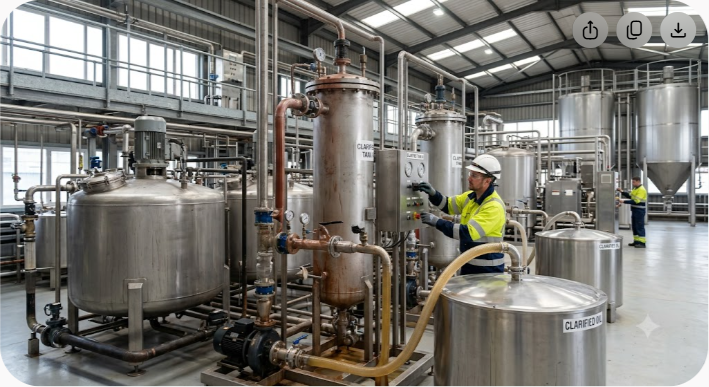
For a processor, the useful question isn't simply whether bentonite or silica is better. The more practical question is which treatment combination reaches the required oil quality with acceptable adsorbent cost, oil loss, filtration performance, and waste handling requirements.
Trace metals such as iron can affect oil stability because certain metals can promote oxidation reactions. Even when present at low concentrations, they can matter when the objective is long-term storage stability and consistent finished-oil quality.
Bleaching earth can contribute to the removal of certain trace metals during adsorption. The extent of removal depends on the chemical form of the metal, the oil matrix, and the characteristics of the adsorbent.
This is why color alone shouldn't be used to judge bleaching performance.
A treated sample may look significantly lighter while still requiring additional testing for phosphorus, metals, peroxide value, and oxidative stability. Another clay may produce a similar color result while performing differently on those other measurements.
The correct choice therefore depends on the complete quality profile rather than a single visual result.
Trace-metal control can also become relevant in oils that have undergone additional processing. Where catalyst residues or other process-related contaminants are present, the appropriate adsorbent strategy should be established through testing rather than assumed from a general clay specification.
Bleaching can also reduce some oxidation products present in crude or partially refined oil.
Oil can begin oxidizing during storage, handling, extraction, and processing. The compounds formed during oxidation vary with the raw material and processing history. A suitable adsorbent can remove a portion of certain oxidation-related compounds during bleaching.
That can help the oil meet quality requirements, but it shouldn't be interpreted as a way to repair severely oxidized oil. Bleaching is one part of the refining process, not a substitute for good raw-material storage and oxidation control.
There is another reason to avoid treating maximum adsorption as the goal. Some naturally occurring minor compounds can contribute to the stability and characteristics of an oil. Excessive adsorption may remove some desirable material along with unwanted compounds.
The better target is a balanced process: sufficient adsorption to meet the specification without unnecessarily increasing clay consumption or removing useful minor components.
The underlying process is easier to understand than the chemistry may suggest.
The oil is first brought to an appropriate temperature. The bleaching earth is then dispersed into the oil under controlled mixing conditions. Unwanted compounds move from the oil phase toward the adsorbent surface and become associated with the clay.
After sufficient contact time, the oil-clay mixture is sent through filtration. The filter retains the spent bleaching earth while the clarified oil moves forward in the refining process, often toward deodorization.
Several operating variables determine how well this works.
Too little adsorbent may leave the oil above its color or contaminant specification. Too much can increase material cost, filter-cake volume, oil retention, and waste-handling requirements.
Dosage should therefore be established by performance testing rather than by copying a number from another refinery.
Temperature affects oil viscosity, adsorption behavior, and the movement of compounds between the oil and adsorbent surface.
A higher temperature can improve mixing and mass transfer, but the process still needs to stay within a suitable operating range for the oil, adsorbent, and equipment. Temperature should be kept consistent during comparative laboratory trials so that clay performance can be evaluated fairly.
The clay needs enough time to interact with the compounds being removed. However, extending contact indefinitely doesn't guarantee better results.
Many industrial bleaching processes use contact times measured in tens of minutes. The useful contact period should be determined experimentally because the point of diminishing returns depends on the oil and adsorbent.
Bleaching is commonly carried out under vacuum or controlled low-oxygen conditions to limit unwanted oxidation during hot processing.
The exact vacuum level and equipment arrangement depend on the refinery. What matters during product evaluation is consistency: candidate adsorbents should be compared under conditions that reasonably represent the intended production process.
There is no universal bentonite dosage for edible oil clarification.
A conventional starting range for acid-activated bleaching earth is often around 1–2% of the oil mass, but actual commercial dosage can be lower or higher depending on the oil, starting quality, adsorbent activity, process design, and final specification.
Consider a refinery processing 10 metric tons of oil. A 1% dose represents 100 kg of bleaching earth, while a 1.5% dose represents 150 kg. The additional 50 kg may look modest in a single batch, but at continuous industrial scale it can become a substantial annual material expense.
Higher dosage can also mean more spent earth and potentially more oil trapped in the filter cake.
Instead of asking only, "How much bentonite should I add?", evaluate the factors that determine the correct dosage:
These questions turn dosage selection from a guess into a measurable process decision.
Bentonite-based bleaching earth is one part of the broader group of adsorbents used in edible oil refining. Depending on the contaminant profile, refiners may also use silica-based adsorbents, activated carbon, or combinations of materials.
| Adsorbent | Common strength | Typical role | Key consideration |
|---|---|---|---|
| Acid-activated bentonite or bleaching earth | Pigment and color adsorption | Chlorophyll, carotenoids, and general bleaching | Performance varies significantly by grade |
| Silica-based adsorbent | Adsorption of polar contaminants | Soaps, phospholipids, and some metals | Often considered alongside bleaching earth |
| Activated carbon | Strong adsorption for selected compounds | Specific applications, including some persistent contaminants | Usually more targeted than conventional bleaching clay |
| Combined adsorbents | Broader contaminant control | Complex or specialized refining requirements | Requires process-specific optimization |
The choice should follow the contaminant profile rather than a generic claim that one material is the "best" adsorbent.
For example, if the main problem is intense carotenoid color, an activated bleaching earth with strong pigment adsorption may be the logical material to evaluate. If residual soaps and phospholipids are the dominant concern, a process that includes a silica-based adsorbent may deserve consideration.
In some applications, the most efficient solution is not to force one adsorbent to remove every contaminant. A combination of well-controlled refining stages can be more economical.
A product name alone tells you very little about how a clay will perform in your refinery.
Two materials can both be described as bentonite or bleaching earth and still behave differently because of their mineral composition, activation treatment, particle characteristics, and adsorption properties.
For edible oil processing, evaluate a product specifically intended and documented for the application. Untreated bentonite sold for drilling, construction, foundry work, or other industrial uses should not be assumed to be suitable for food-oil refining.
Ask for technical documentation covering relevant properties such as moisture, particle-size distribution, bulk or apparent density, activation characteristics, adsorption performance, and applicable purity or food-contact information.
Oil type matters, but even the same oil category can vary considerably between batches.
Starting pigment concentration, phosphorus, soap content, oxidation history, extraction method, storage conditions, and upstream refining all affect bleaching demand.
A bleaching earth that works well for one soybean oil stream may not deliver the same result on a different soybean oil stream with a different starting quality.
This is the step that removes the most uncertainty.
Take a representative sample of the oil you actually process and compare several candidate grades at several dosages. Keep temperature, mixing, contact time, and filtration conditions consistent.
Depending on the oil and the refinery's quality requirements, useful measurements can include:
A clay should be evaluated on the complete process result, not on its headline adsorption number alone.
A controlled bench-scale test can tell you much more than a product brochure. The goal is to reproduce the important parts of the plant process closely enough to compare candidate materials.
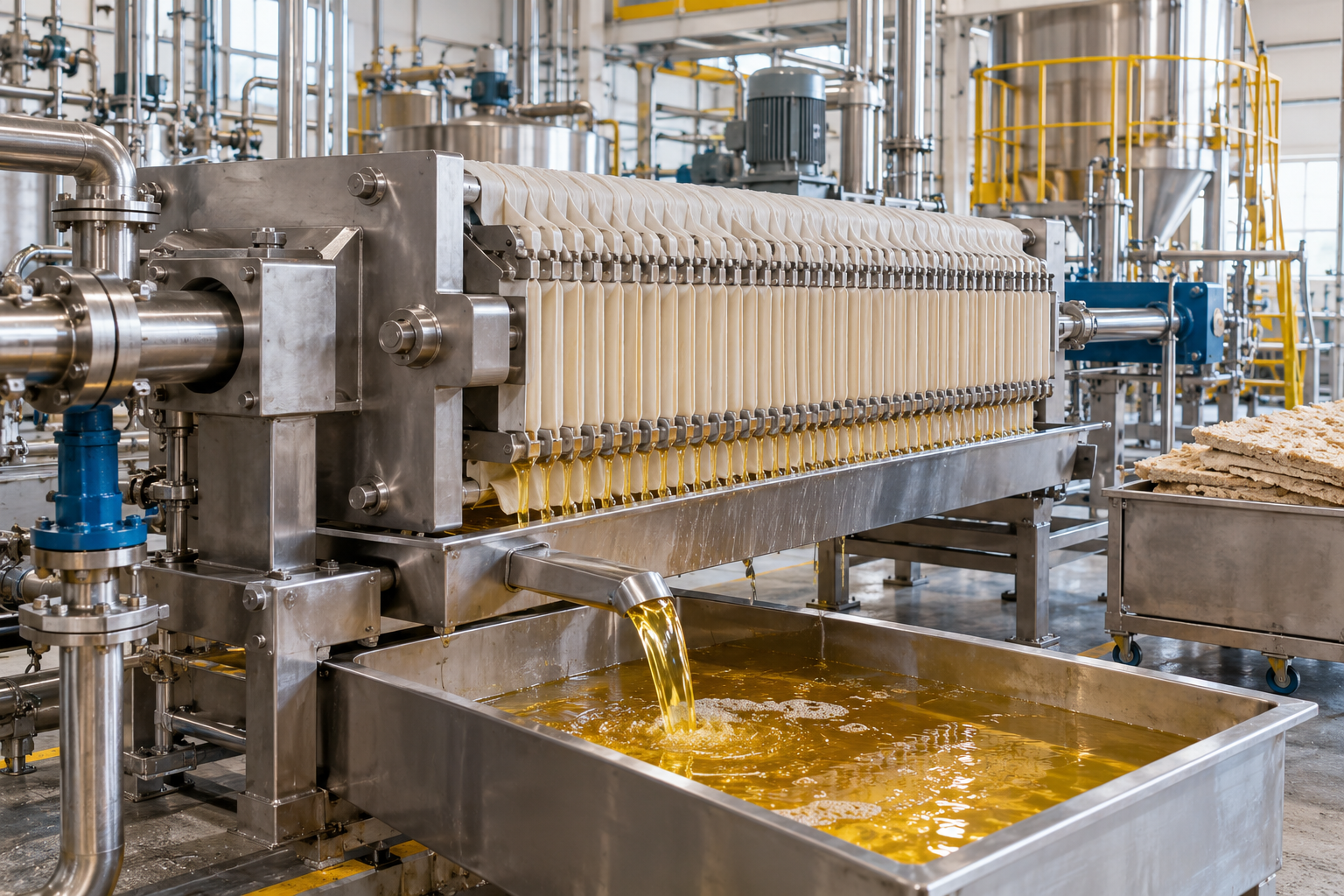
Use a well-mixed sample that reflects the production stream. Don't choose an unusually clean batch simply because it makes the trial easier.
If the refinery processes several grades or sources of oil, consider testing representative samples from each important stream.
Prepare several samples with different bleaching-earth concentrations. A screening range such as 0.5%, 0.75%, 1.0%, 1.25%, and 1.5% can be useful when it matches the expected operating window.
The test range should be adjusted when the starting oil or candidate adsorbent suggests that a different dosage range is more appropriate.
Heat every sample to the same target temperature. If one sample is significantly hotter than another, the comparison may reflect temperature differences rather than differences between the adsorbents.
Use consistent agitation and the same contact time for every sample. The objective is to give each adsorbent a fair and repeatable opportunity to interact with the oil.
Use the same filtration method for each trial whenever possible. Poor filtration can make an effective adsorbent appear ineffective, while an unusually efficient laboratory filter may give a result that doesn't translate to the plant.
Compare color and the other quality parameters relevant to the application. Don't stop at visual appearance.
A good test may reveal that two samples achieve similar color, but one gives better filtration or lower oil retention. Those differences can matter more to operating cost than a small difference in final color.
Compare the full economics of each treatment. Include adsorbent cost, oil retained in spent earth, filtration requirements, waste handling, energy, and any downstream effects.
The lowest price per kilogram isn't necessarily the lowest cost per ton of finished oil.
Bentonite is a broad mineral category. A product intended for drilling, construction, foundry work, or another industrial use isn't automatically suitable for edible oil refining.
Food-contact suitability, purity, contaminant limits, and intended use must be established through appropriate supplier documentation and compliance checks for the target market.
Always confirm that the material is appropriate for the intended food-processing application before conducting production trials.
A low purchase price can be misleading.
A cheaper clay may require a higher dosage, produce more filter cake, retain more oil, or deliver weaker color reduction. A higher-priced product may prove more economical if it reaches the target at a substantially lower dose and produces less oil loss.
Compare the cost per ton of successfully clarified oil, not simply the price of a kilogram of powder.
If the oil suddenly becomes darker, don't immediately double the bleaching-earth dose.
First check the incoming oil, degumming performance, neutralization, washing, temperature, vacuum, clay dispersion, contact time, and filtration.
An upstream process problem can easily appear to be an adsorbent problem. Correcting the cause may restore performance without increasing clay consumption.
A pale oil isn't automatically a better oil.
Track the other parameters that matter to the finished product, including oxidation indicators, phosphorus, residual soaps, metals, yield, and oil loss where relevant.
The objective is a balanced refining process that meets the product specification without creating unnecessary losses elsewhere.
The adsorbent must be removed effectively after it has done its job.
Poor filtration can leave residual solids in the oil and increase oil losses. Residual activated earth can also contribute to oxidation during storage, which makes effective separation important for finished-oil quality.
Filtration should therefore be part of the adsorbent evaluation from the beginning rather than a separate problem addressed after the clay has already been selected.
After adsorption, the clay becomes spent bleaching earth. It contains the pigments and other compounds removed from the oil, along with entrained oil.
The amount of oil retained in the spent material can be significant. This creates two practical concerns: economic loss and safe handling.
Oil-containing spent bleaching earth can heat through oxidation when exposed to air, creating a potential fire hazard under unsuitable storage conditions. Refiners therefore need appropriate procedures for collecting, storing, transporting, and disposing of spent material.
The amount of spent earth also increases with bleaching dosage. If a refinery can reduce the dose from 1.5% to 1.0% while maintaining the same product specification, the reduction can affect material consumption, solid-waste volume, and oil loss over a large production run.
This is another reason dosage optimization should consider the complete process rather than color alone.
Activated bleaching earth can be relevant to many edible-oil refining processes, including:
The appropriate adsorbent and dosage can vary substantially between these oils.
Palm oil, for example, can present a significant carotenoid-removal requirement. An oil with a greater chlorophyll load may require a different adsorption profile. Oils that have experienced prolonged storage or poor handling may also carry a different oxidation load from freshly processed material.
Upstream refining matters just as much. An oil that has already undergone effective degumming and neutralization may place a much smaller contaminant load on the bleaching step than poorly pretreated oil.
So the oil name is only the starting point. The actual chemistry of the feedstock determines what the bleaching earth needs to accomplish.
The most useful way to view bleaching earth is as part of a process optimization problem.
You need enough adsorption capacity to reach the final specification, but unnecessary clay consumption adds cost. You want strong pigment removal, but excessive adsorption may remove desirable minor components. You need efficient filtration, but excessive oil retention in the filter cake reduces yield.
That balance explains why two refineries processing the same general type of oil can use different bleaching-earth dosages.
Their incoming oils may have different pigment concentrations. Their degumming and neutralization stages may perform differently. Their bleaching vessels may provide different mixing and vacuum conditions. Their filters may have different capacities and cake-handling characteristics. Their final customers may also require different color or quality specifications.
There isn't one dosage that works simply because another refinery uses it.
The most useful result is the one demonstrated by representative oil under the conditions of the process where the material will actually be used.
When evaluating a new bentonite or bleaching-earth grade, work through the following sequence:
This approach gives a much stronger basis for purchasing and process decisions than selecting the cheapest mineral product available.
For an edible oil processor, sourcing starts with more than finding a bentonite exporter. Consistent material quality, technical documentation, dependable supply, and suitability for the intended application all matter.
Axewelledge supplies bentonite from India and supports mineral sourcing and international supply. For an edible oil clarification application, the most useful discussion starts with the oil itself: its type, starting quality, target specification, expected dosage, and refining conditions.
That information can help identify a suitable product for laboratory evaluation. The final selection should still be based on test results from representative oil and on the food-safety, quality, and regulatory requirements that apply in the destination market.
A supplier can provide material information and samples, but the refinery should make the final technical decision using its own validation process.
The main bentonite-based bleaching-earth uses in edible oil clarification include reducing unwanted color, adsorbing chlorophyll, removing carotenoids, reducing residual phospholipids, helping remove soaps, supporting trace-metal control, and reducing selected oxidation products.
The key isn't to use the maximum amount of clay. It's to match the adsorbent and operating conditions to the oil and the quality target.
Start with representative oil samples. Compare several candidate grades and dosages. Keep laboratory conditions consistent. Measure more than color, and include filtration and oil loss in the evaluation. Then compare the total cost of achieving the required specification.
That process gives refiners a much more reliable basis for selecting bleaching earth than price per kilogram alone.













Have questions about our products? We're here to help!