Axewelledge, a leading exporter from India, specializes in high-quality Bentonite. With a commitment to excellence, we supply premium Bentonite to the Middle East and Southeast Asia markets.


North Angle Complex, 304,
150 Feet Ring Rd, Opposite Ambedkar Nagar BRTS Stop,
Madhav Park, Punit Nagar,
Mavdi, Rajkot, Gujarat 360004
© Axewelledge 2026, All Rights Reserved.
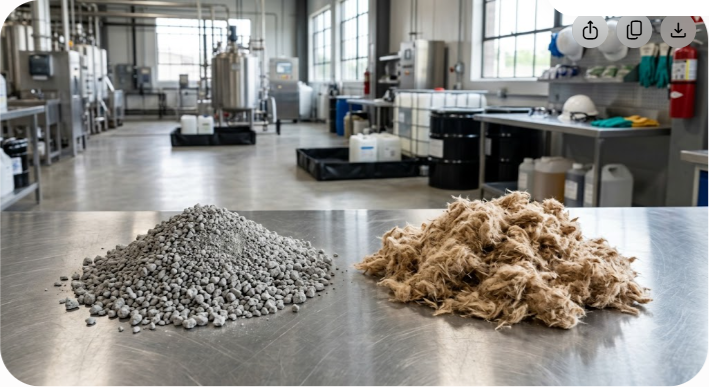
The better choice between bentonite and cellulose depends on the liquid you're handling, how quickly you need to control it, the conditions around the spill, and what happens to the saturated material afterward. Cellulose usually wins on liquid pickup per unit of dry weight. Bentonite is more useful when the job calls for mineral stability, physical containment, or liquid immobilization rather than simple absorption.
That distinction matters because the word absorbent covers several different mechanisms. Cellulose primarily pulls liquid into a network of plant fibers through capillary action. Bentonite interacts strongly with water through hydration and swelling, while its performance with oils and other non-aqueous liquids depends much more on particle structure, formulation, surface adsorption, and the type of bentonite used.
For a routine indoor spill involving water, coolant, or light oil, cellulose pads, rolls, socks, or loose fibers can be fast and convenient. For applications involving water retention, sealing, sludge conditioning, soil or waste stabilization, or situations where a non-combustible mineral is preferred, bentonite can be the better fit.
The key is not to choose a material from a headline absorption ratio alone. Check the actual liquid, the product's test data, compatibility information, application method, and disposal route before making the decision.
| Operational Factor | Sodium Bentonite | Cellulose Sorbent |
|---|---|---|
| Main liquid-control mechanism | Hydration and swelling with water; surface adsorption and physical entrapment can contribute with other liquids | Capillary uptake into porous plant fibers |
| Typical dry-weight pickup | Highly variable; product and liquid dependent | Highly variable; product and liquid dependent, often high for low-viscosity liquids |
| Bulk density | Generally high | Generally low |
| Water retention | Strong when properly hydrated | Good initial pickup, but retained liquid can be released under compression |
| Oil pickup | Depends strongly on grade and formulation; standard bentonite is not a universal oil sorbent | Generally effective for many light oils and hydrocarbons |
| Combustibility | Non-combustible mineral | Combustible organic material |
| Heat resistance | High compared with organic sorbents, although performance changes with temperature and grade | Limited by the thermal stability and ignition behavior of cellulose |
| Chemical compatibility | Must be checked against the specific chemical; not universally inert | Must be checked carefully, especially with strong oxidizers and reactive chemicals |
| Physical containment | Useful for sealing, berming, and immobilizing water-rich liquids | Better suited to rapid pickup and surface cleanup |
| Common forms | Granules, powder, pellets, treated grades | Pads, rolls, socks, mats, loose fiber, pellets |
| Disposal | Depends on the absorbed material and local waste rules | Depends on the absorbed material and local waste rules |
A useful rule of thumb is simple: cellulose is often the practical choice for fast surface pickup, while bentonite becomes more attractive when swelling, sealing, mineral stability, or liquid immobilization is part of the job.
Bentonite is a naturally occurring clay whose main active mineral is usually montmorillonite, a member of the smectite clay group. Commercial bentonites vary in mineral composition, exchangeable cations, particle size, moisture content, and processing history, so two products sold under the same broad name can behave quite differently.
The most important distinction is between sodium bentonite and calcium bentonite. Sodium-rich bentonite generally develops greater swelling and water-retention capacity than calcium-rich material. That makes sodium bentonite particularly valuable where the objective is to absorb or immobilize water, create a low-permeability barrier, or form a cohesive hydrated mass.
Montmorillonite has a layered crystal structure with a high internal surface area and negatively charged clay surfaces. Exchangeable cations occupy spaces between the layers. When sodium bentonite contacts water, hydration causes the interlayer spacing to increase. Under suitable conditions, individual clay particles disperse and form a viscous suspension or gel.
This is the source of bentonite's familiar swelling behavior. Depending on mineralogy, sodium content, particle size, water chemistry, and test method, commercial sodium bentonite can exhibit substantial volume expansion. A claim such as "15 to 20 times swelling" should therefore be treated as a product-specific test result rather than a universal property of every bentonite.
That distinction is especially important in spill response. Bentonite does not simply behave like a dry sponge that absorbs every liquid at the same rate. Its strongest and most predictable liquid-control behavior is associated with water and other compatible polar liquids. Salts and dissolved ions can suppress swelling, while high concentrations of some chemicals can change the clay's structure and performance.
Standard sodium bentonite shouldn't automatically be described as a high-performance oil sorbent. Hydrocarbon liquids don't hydrate montmorillonite in the same way water does. Depending on the grade and physical form, bentonite may adsorb or physically trap some oil, but its performance can be very different from that of a purpose-designed oil sorbent.
For hydrophobic organic liquids, organophilic bentonite, also called organoclay, is often a more appropriate mineral option. These materials are modified to increase affinity for organic compounds and can be used in selected hydrocarbon treatment and containment applications.
This is one of the most important corrections to make when comparing bentonite with cellulose: never assume that a bentonite's water-swelling number represents its oil absorption capacity.
Bentonite is particularly useful when the application involves water retention, sealing, stabilization, or a need for a non-combustible mineral material. Typical applications include:
Bentonite's mineral nature also means it doesn't biodegrade like an untreated plant-fiber sorbent. That can be an advantage when long-term physical stability is required, but it isn't automatically an environmental advantage. Mining, processing, transport, and disposal all need to be considered.
Cellulose sorbents are made from plant-derived fibers, commonly from recycled paper, wood pulp, agricultural residues, or other processed biomass. They are manufactured in several forms, including loose fibers, pads, rolls, socks, mats, and granules.
Their main mechanism is straightforward: liquid enters the pores and spaces within the fibrous structure through capillary action. The large internal surface area and interconnected voids allow cellulose products to pick up many low-viscosity liquids quickly.
This makes cellulose particularly convenient for routine maintenance spills. A worker can place a pad under a leaking hydraulic fitting, surround a spill with absorbent socks, or spread loose material across a contaminated floor without first preparing a slurry or waiting for mineral particles to hydrate.
Cellulose is lightweight and porous, so its dry mass can be relatively small compared with the amount of liquid it temporarily holds. Product specifications may report absorption in liters per kilogram, grams of liquid per gram of sorbent, or another test-specific measure.
Those figures shouldn't be treated as universal. Liquid viscosity, surface tension, temperature, fiber structure, compaction, test method, and product density all affect the result. A highly porous cellulose pad can perform very differently from a dense cellulose pellet even when both are described as cellulose absorbents.
Cellulose generally performs best with liquids that can readily penetrate the fiber network. Water, aqueous solutions, coolants, and many light oils are common examples. Thick grease, heavy crude, resins, and highly viscous liquids may penetrate more slowly and can coat the outside of the fibers instead.
Cellulose physically holds liquid inside its pore network; it doesn't normally transform the liquid into a chemically bound solid. If a saturated material is compressed, some of the liquid can be forced back out.
That matters when saturated absorbents are stacked, compacted, transported, or placed under heavy loads. A product that looks excellent in a static laboratory test may require additional containment in a real industrial waste stream.
Cellulose also has an important safety limitation: it is an organic combustible material. Its use around ignition sources, hot equipment, or reactive chemicals requires appropriate controls. Strong oxidizers can create serious compatibility hazards with organic materials.
Absorption capacity is one of the most commonly advertised sorbent specifications, but it's also one of the easiest numbers to misuse.
A statement such as "absorbs 10 times its weight" isn't enough to predict performance in a factory. You need to know what liquid was used, how long the material was exposed, whether excess liquid was drained, how the saturated sample was handled, and how the result was calculated.
For example, a cellulose product may show a high pickup rate with water in a controlled test but perform differently with a viscous hydraulic oil. A sodium bentonite may show impressive swelling in fresh water but much lower swelling in saline water or a chemically concentrated solution.
For procurement, compare products using the same test basis whenever possible. Better still, conduct a small application trial using the actual liquid encountered at your facility.
Cellulose has a major advantage in low-density applications: it's light. Bentonite is much denser, so a given container volume can contain substantially more mineral mass.
This creates two different ways of thinking about efficiency:
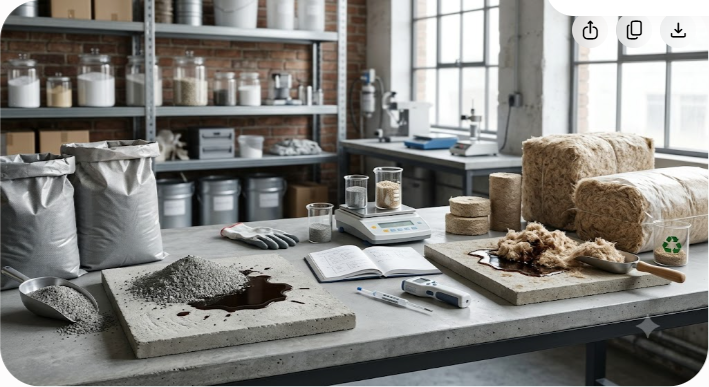
A purchasing team that looks only at mass efficiency may favor cellulose. A facility with limited storage space, outdoor exposure, or a requirement for dense material may value other properties more highly.
Thin liquids generally move rapidly into porous cellulose fibers. Highly viscous materials move much more slowly. This is why a product that performs extremely well on water may be disappointing on heavy oil or resin.
Bentonite has a different set of strengths. When water is present and conditions are favorable, sodium bentonite hydrates and forms a cohesive mass. With heavy hydrocarbon liquids, however, standard sodium bentonite should not be assumed to provide equivalent performance. If oil uptake is the primary requirement, compare the bentonite product with a dedicated oil sorbent or an organoclay formulation.
A sorbent isn't finished doing its job when the liquid disappears from the floor. The saturated material must also remain manageable during collection, transfer, storage, and transportation.
Cellulose can release liquid when heavily compressed. Bentonite can form a cohesive hydrated mass under suitable water-rich conditions, but its retention performance still depends on the liquid chemistry, formulation, and hydraulic conditions.
The practical question is therefore not just "How much does it absorb?" Ask: How much liquid can it retain throughout the entire cleanup and disposal process?
No absorbent should be described as universally safe for chemicals. Compatibility must be assessed against the specific liquid and the manufacturer's safety information.
Cellulose is an organic material, so strong oxidizing agents can react with it. Concentrated nitric acid and other powerful oxidizers are examples of materials that require specialized spill-response procedures rather than an ordinary cellulose absorbent.
Acids, bases, solvents, oxidizers, and mixtures can behave differently depending on concentration and temperature. A general-purpose cellulose pad should never be selected for an unidentified chemical solely because it absorbs water or oil well.
Bentonite is an inorganic mineral, but calling it "chemically inert across the entire pH range" is too broad. Strong acids can attack clay minerals and reduce or alter their swelling behavior. High ionic strength can also suppress sodium bentonite swelling. Certain organic liquids may require an organophilic clay rather than untreated bentonite.
For an unknown chemical spill, the correct approach is to identify the substance first, consult its safety data sheet, and use an absorbent specifically approved or recommended for that chemical. If the material is reactive, toxic, oxidizing, or otherwise hazardous, follow the site's emergency response procedure rather than improvising with bulk absorbent.
The best choice becomes clearer when the operating environment is considered alongside the liquid itself.
Bentonite has a long-established role in drilling and civil engineering because its water-based rheology and filtration-control properties are useful in subsurface work. In water-based drilling fluids, bentonite can increase viscosity, suspend cuttings, and help form a low-permeability filter cake.
Cellulose can also appear in drilling-fluid formulations, including as a lost-circulation material or filtration-control additive, depending on the product and formulation. It isn't simply a substitute for bentonite, because the two materials perform different functions in a drilling system.
For a site spill involving drilling fluid, the choice depends on what the spilled fluid contains and what containment objective is required. Adding dry bentonite may help control water-rich material in some circumstances, but it shouldn't be treated as a universal spill-control solution.
Chemical plants present a more demanding selection problem because a spill may involve corrosive acids, caustics, oxidizers, solvents, or mixtures with unknown compatibility.
Bentonite can be useful in selected applications where a mineral material is compatible with the spilled substance and where immobilization is desirable. Organoclays are used in certain applications involving hydrophobic organic contaminants because their surface chemistry is different from untreated sodium bentonite.
Cellulose is useful for many routine maintenance liquids, provided the chemical is compatible with the organic material. It should not be selected for reactive chemicals without confirmation from the chemical and absorbent safety documentation.
Machine shops commonly deal with hydraulic fluids, cutting oils, coolants, lubricants, and water-based maintenance liquids. Here, convenience often matters as much as theoretical absorption capacity.
Cellulose pads, rolls, and socks are easy to position around leaking equipment. They also work well for protecting drains and defining the perimeter of a spill before workers collect the contaminated material.
Loose granular bentonite can be useful for certain liquid-containment tasks, particularly where a dense mineral material is desirable. But on polished floors, fine hydrated clay can become slippery. Product form and particle size should therefore be selected carefully.
Bentonite is often more relevant than cellulose when the objective extends beyond simple floor cleanup. Its swelling and low-permeability behavior can contribute to containment and stabilization systems, particularly where water movement is the main concern.
However, adding bentonite to hazardous waste doesn't automatically make that waste non-hazardous or legally suitable for landfill disposal. Waste characterization, treatment requirements, and regulatory criteria still apply.
Similarly, cellulose contaminated with hazardous chemicals cannot simply be composted or sent to ordinary waste-to-energy facilities. The absorbed substance determines the waste classification and disposal route.
The environmental profile of an absorbent doesn't end when the spill has been cleaned. The contaminated sorbent becomes a waste stream, and the liquid it contains usually matters more than the original absorbent material when determining how that waste must be handled.
Bentonite is extracted from mineral deposits, commonly through surface mining. Processing may include crushing, drying, milling, screening, and other steps depending on the final specification. Mining therefore carries a material and energy footprint that should be included in lifecycle comparisons.
The advantage is long-term mineral stability. Bentonite doesn't biodegrade in the same manner as untreated cellulose and isn't itself a combustible organic fuel.
That doesn't mean bentonite waste can automatically be reused or landfilled. Once contaminated with oil, solvents, metals, or other hazardous substances, the saturated material must be managed according to the applicable waste classification and local regulations.
Cellulose can be manufactured from recycled paper and other plant-based feedstocks, which can reduce dependence on virgin raw materials. Its low density can also reduce transport weight, although bulky loose products may consume considerable cargo volume.
Because cellulose is organic and combustible, thermal treatment can be an option for some contaminated waste streams. Whether incineration is appropriate depends on the absorbed substance, facility permits, emissions controls, and local regulations.
Untreated, uncontaminated cellulose may be biodegradable, but contaminated cellulose should never be composted simply because the base material is biodegradable. The absorbed liquid determines whether composting or biological treatment is appropriate.
A facility should know where saturated absorbents will go before a major spill happens. A practical plan identifies:
This approach prevents a common problem: choosing an absorbent because it is cheap and readily available, then discovering that the resulting waste is expensive or difficult to dispose of.
The cheapest bag of absorbent isn't necessarily the cheapest spill-response option.
A realistic comparison should consider four major cost categories:
Depending on the facility, you may also need to account for spill-kit replacement, protective equipment, equipment downtime, drain protection, secondary containment, and regulatory reporting.
Suppose two sorbents are being evaluated for a recurring hydraulic-oil spill problem. Instead of comparing only dollars per kilogram, calculate the following for each product:
Consider a hypothetical 1,000-liter hydraulic-oil spill. It may be tempting to assume that one kilogram of bentonite absorbs a fixed number of liters and one kilogram of cellulose absorbs another fixed number, then multiply those figures across the entire spill.
That calculation can produce a neat spreadsheet but a poor purchasing decision. Actual oil pickup varies with viscosity, temperature, product grade, particle size, porosity, application method, and test procedure. Standard sodium bentonite also isn't interchangeable with a dedicated oil sorbent.
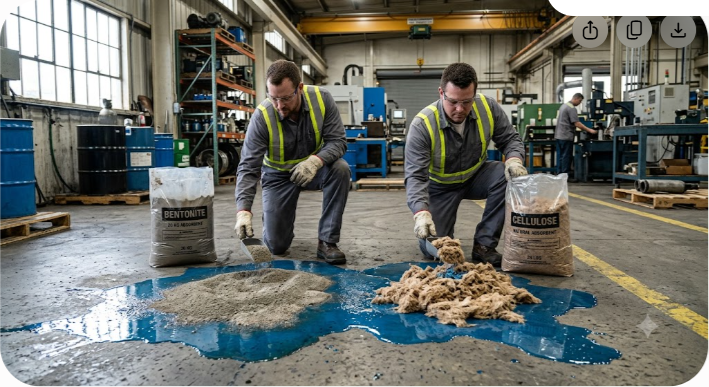
For a genuine procurement decision, use the manufacturer's test data for the exact product and fluid. If the financial difference is significant, perform a controlled field trial and measure actual consumption and disposal volume.
This is especially important for hazardous materials, where disposal and compliance costs can outweigh the initial price of the absorbent.
The material you choose is only one part of effective spill response. A sound procedure should control the hazard before workers start spreading absorbent.
This sequence is more reliable than simply throwing absorbent onto a spill and sweeping it up. Containment comes first.
Dry bentonite can generate airborne dust during pouring, transfer, or sweeping. The mineral may also contain naturally occurring crystalline silica, depending on its source and processing. Exposure controls should therefore be based on the supplier's safety data sheet and the site's industrial hygiene assessment.
Use local exhaust ventilation or other engineering controls where practical. Avoid creating unnecessary dust during application. Respiratory protection, when required, should be selected under the site's respiratory protection program rather than prescribed solely from the name of the material.
Loose cellulose can also generate airborne particulate during handling. Because cellulose is an organic combustible material, facilities should consider housekeeping, ignition-source control, ventilation, and the specific product's fire-safety information.
Do not store cellulose absorbents beside incompatible oxidizing chemicals. Keep packaging dry and protect stock from unnecessary contamination.
Bentonite should remain dry until use. Moisture exposure can cause premature hydration, clumping, and changes in flowability.
Cellulose should also be protected from moisture because damp fibers can compact, degrade, or develop microbial growth depending on storage conditions and product formulation.
For both materials, use the manufacturer's recommended packaging and storage conditions. Stock rotation is worthwhile even when the underlying material is relatively stable because packaging can deteriorate long before the mineral or fiber itself does.
A spill may be chemically controlled while the floor remains physically hazardous.
Fine bentonite can become slippery when hydrated. A thin layer of clay and water on polished concrete can create a significant slip hazard, particularly when workers are moving quickly during an emergency response.
For applications where loose mineral absorbent is appropriate, a suitably coarse grade may be easier to collect and less likely to form a smooth mud-like film. Particle size should be selected according to the manufacturer's intended application rather than assuming that one mesh size is suitable for every floor.
Cellulose products can leave a comparatively dry surface after pickup, especially when pads or mats are used correctly. Loose fibers can still remain around equipment, drains, and floor joints, so the area should be inspected after collection.
The final step should always be a floor-safety check. If the surface remains oily, wet, or coated with fine material, additional cleaning may be necessary.
A simple decision process can prevent most selection errors.
Start with the substance itself, not the absorbent.
Ask:
For water-rich liquids where swelling and containment are useful, sodium bentonite may be appropriate. For many routine light-liquid spills, cellulose can provide faster and more convenient pickup. For hydrocarbons, compare dedicated oil sorbents and organoclay products as well as cellulose; don't assume untreated bentonite will outperform them.
Next, consider where the spill will happen.
Lightweight cellulose is convenient indoors but can be difficult to manage in windy outdoor conditions. Dense granular mineral products can be easier to control in exposed areas, although dust and wet-floor hazards still need attention.
Different spills have different objectives. You may need to:
Once the objective is clear, the appropriate sorbent is usually easier to identify.
Ask the waste contractor or environmental team how saturated absorbent will be classified and handled. This can eliminate seemingly attractive options before money is spent on them.
If the absorbed liquid is hazardous, corrosive, toxic, or reactive, disposal decisions should be based on the contaminated waste stream, not on whether the original absorbent was labeled "natural" or "eco-friendly."
A high number on a product sheet doesn't guarantee better performance in your facility. Always check the liquid, test method, product form, and retention behavior.
Sodium bentonite, calcium bentonite, activated bentonite, and organoclay can behave very differently. Mineralogy and processing matter.
Cellulose is useful for many maintenance liquids, but organic materials require careful compatibility checks with strong oxidizers and other reactive chemicals.
Standard sodium bentonite's strongest swelling behavior occurs with water. If hydrocarbon pickup is the primary requirement, evaluate an oil-specific sorbent or organoclay rather than relying on water-swelling data.
A low-cost absorbent can become expensive after it has absorbed a hazardous liquid. Disposal requirements should be part of the selection process from the start.
Powder, granules, pellets, pads, rolls, and socks serve different purposes. A highly absorbent material in the wrong format may be slower to deploy or harder to collect.
Removing liquid isn't enough if the cleanup leaves a slippery film or loose residue. Always inspect the finished surface before reopening the area.
For most facilities, the answer isn't to replace one material with the other. A better spill-response program uses each where its properties make sense.
Choose cellulose when rapid surface pickup, lightweight handling, and convenient deployment are priorities. It is particularly useful for many routine indoor spills involving water, coolants, and light oils, provided the liquid is compatible with the product.
Choose sodium bentonite when water swelling, sealing, mineral stability, or liquid immobilization is central to the application. It is especially relevant to civil engineering, drilling, containment, and selected water-rich waste-management applications.
Choose organoclay or another purpose-designed mineral sorbent when hydrocarbon adsorption is the primary requirement and the product has been formulated and tested for that service.
And when the chemical is unknown or highly reactive, don't make the decision from a general comparison chart. Identify the material and follow the site's emergency response procedure and the absorbent manufacturer's compatibility guidance.
The most useful lessons from a bentonite-versus-cellulose comparison are practical:
For industrial facilities, the right absorbent is ultimately the one that controls the specific liquid safely, remains manageable through collection and transport, and fits the site's approved disposal route. Price per bag and advertised absorption ratios are only part of that calculation.
For organizations evaluating sodium bentonite for industrial containment, sealing, drilling, wastewater, or liquid-stabilization applications, ORRIS WORLD can support product selection based on grade, particle size, packaging, and application requirements. The appropriate specification should be matched to the intended use rather than selected from a generic absorption figure.













Have questions about our products? We're here to help!