Axewelledge, a leading exporter from India, specializes in high-quality Bentonite. With a commitment to excellence, we supply premium Bentonite to the Middle East and Southeast Asia markets.


North Angle Complex, 304,
150 Feet Ring Rd, Opposite Ambedkar Nagar BRTS Stop,
Madhav Park, Punit Nagar,
Mavdi, Rajkot, Gujarat 360004
© Axewelledge 2026, All Rights Reserved.
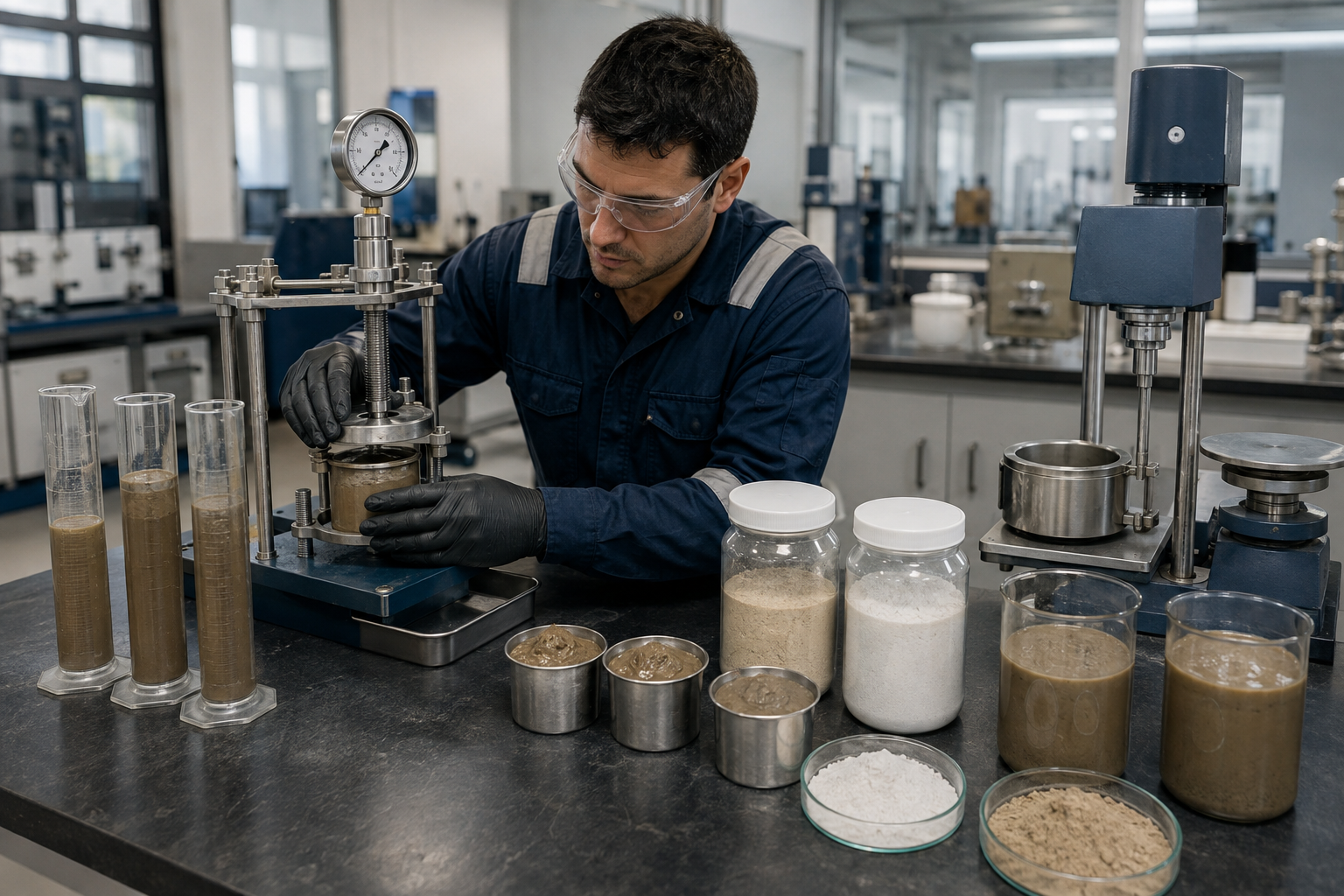
If you need to control fluid loss in a water-based drilling fluid, the choice between sodium bentonite and synthetic polymers isn't simply a matter of which product is stronger. The right choice depends on water chemistry, formation permeability, temperature, solids loading, required rheology, environmental requirements, and the type of filter cake you need to build.
For many fresh-water drilling applications, high-quality sodium bentonite remains an effective and economical foundation. In high-salinity, high-temperature, or low-solids applications, synthetic and semi-synthetic polymers can provide filtration control that conventional bentonite cannot maintain on its own. In a large number of practical drilling programs, the best answer is a combination: bentonite supplies the mineral structure and suspension, while a polymer is used to refine filtration or address a specific formation problem.
That distinction matters because fluid loss is not an isolated mud property. It affects filter-cake quality, wellbore stability, hole cleaning, torque and drag, formation damage, and the amount of fluid that enters a permeable formation. Choosing an additive without considering the whole mud system can solve one laboratory number while creating a different field problem.
Fluid loss is the amount of liquid phase that passes from a drilling fluid into a porous, permeable formation or through a standardized filtration medium under a pressure differential. The liquid that leaves the mud is called filtrate. The solids retained at the filtration surface form a filter cake.
In a wellbore, hydrostatic pressure and other pressure differences can drive filtrate into formation pores. A properly designed drilling fluid responds by depositing solids and polymers at the formation face, reducing the permeability of the developing filter cake and limiting further invasion.
A good filter cake should be relatively thin, low in permeability, reasonably tough, and easy to remove or manage when the drilling operation requires it. A thick or weak cake can increase friction, contribute to differential sticking, or restrict the effective wellbore diameter. Excessive filtrate invasion can also interact with water-sensitive formations and affect formation evaluation or productivity.
Fluid loss therefore needs to be interpreted alongside rheology, solids content, density, chemistry, and formation characteristics. A low laboratory fluid-loss value isn't automatically proof that a mud system will perform well in the field.
When filtration begins, larger suspended particles tend to be deposited first. Smaller particles then fill gaps between them, while clay platelets and polymer molecules can reduce the remaining pore spaces. As the cake becomes less permeable, the rate of filtrate loss normally decreases.
Bentonite and polymers contribute to this process in different ways. Bentonite supplies hydrated clay particles that can arrange themselves into a dense mineral structure. Polymers can adsorb onto solids, bridge small pore openings, increase the viscosity of the liquid phase, and modify the interaction between particles.
The final result depends on the complete formulation rather than on one additive. Bentonite quality, particle-size distribution, polymer chemistry, concentration, hydration, shear history, temperature, salinity, hardness, pH, and formation mineralogy all influence filtration behavior.
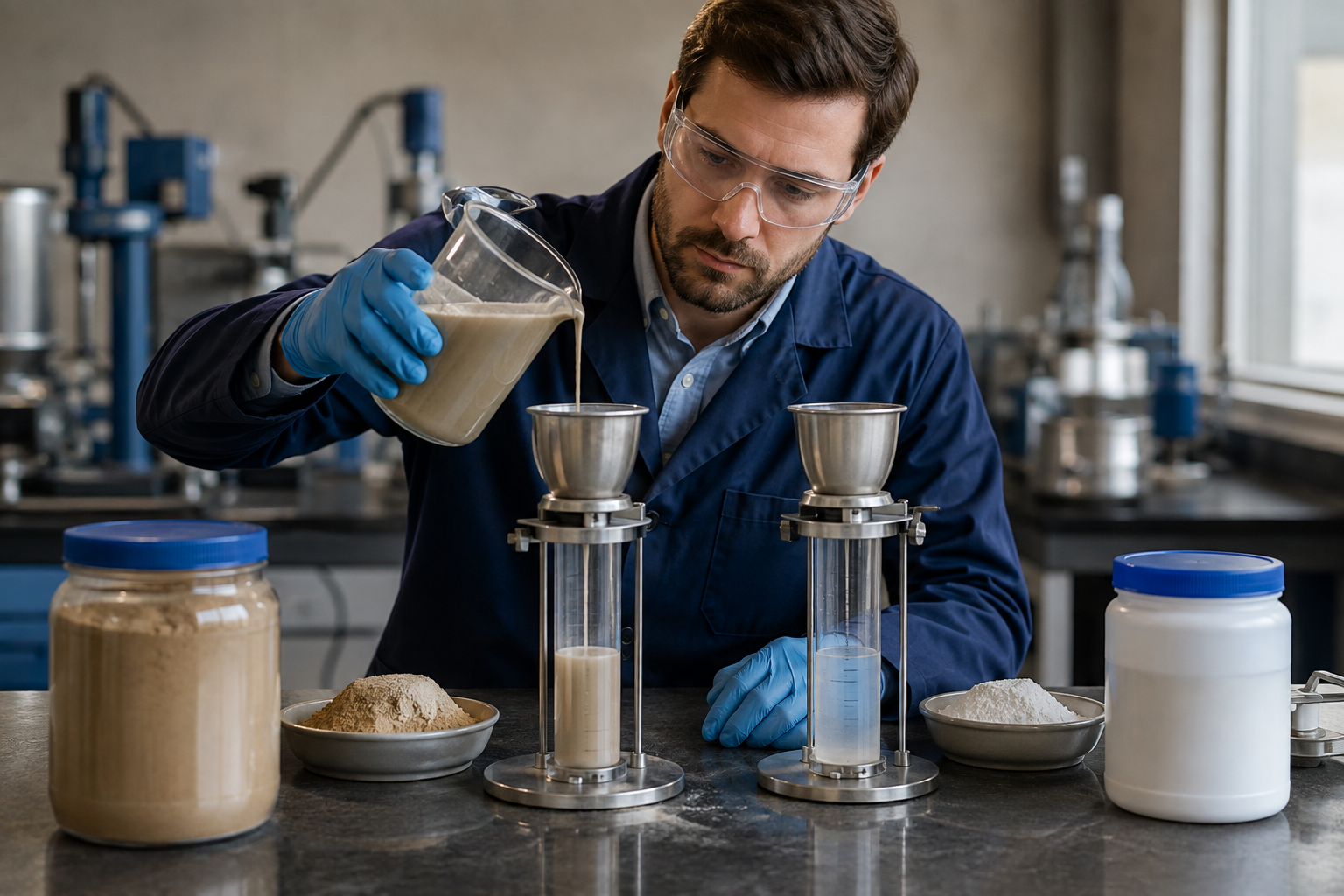
The API fluid-loss test is commonly performed with a filter press under specified test conditions. A measured volume of filtrate is collected over a defined period, commonly 30 minutes for a standard low-pressure, low-temperature test. Other equipment and procedures are used when high-temperature or high-pressure conditions need to be evaluated.
Field teams should avoid treating one test result as a complete description of downhole behavior. Laboratory filtration tests provide controlled comparisons, but actual formations introduce variables such as permeability, pore pressure, temperature, salinity, reactive clays, and contamination.
Sodium bentonite is a naturally occurring clay whose principal active mineral is usually montmorillonite, a member of the smectite group. Its value in drilling fluids comes from its ability to hydrate, disperse, swell, increase viscosity, and form a low-permeability filter cake when properly mixed and maintained.
The quality of bentonite matters. A product with a high proportion of suitable smectite and good colloidal properties can provide more useful viscosity and filtration performance at a given concentration than a lower-quality clay containing more inert material.
When sodium bentonite is added to fresh water, water enters the spaces between clay layers and promotes hydration and dispersion. The resulting clay particles provide surface area and form a network throughout the fluid. Under filtration pressure, these particles contribute to a compact cake that restricts further liquid movement.
Bentonite also contributes to suspension. That is one reason it remains useful beyond fluid-loss control. A properly formulated bentonite mud can carry drilled cuttings and weighting material while maintaining useful low-shear and gel properties.
Strong filter-cake formation: Hydrated bentonite platelets can create a dense, low-permeability cake that limits filtrate invasion.
Rheology contribution: Bentonite provides viscosity and suspension, so one material can influence several important mud properties at once.
Cost efficiency: Natural bentonite is generally less expensive per unit mass than specialty synthetic polymers, although the actual cost comparison depends on dosage, product grade, transportation, water treatment, and the required mud properties.
Availability: Bentonite is widely used in drilling and civil construction, with established mining, processing, packaging, and distribution infrastructure.
Useful for large-volume systems: Where substantial mud volumes are required, the economics of a mineral-based system can be attractive, particularly when local or regional supply is available.
Natural mineral origin: Sodium bentonite is a naturally occurring clay. Its environmental profile is generally favorable compared with some specialty chemical products, but the complete drilling-fluid formulation and disposal route still determine environmental suitability.
Sensitivity to water chemistry: Calcium and magnesium can interfere with clay hydration and dispersion. High concentrations of dissolved salts can also reduce the swelling and colloidal behavior of conventional sodium bentonite.
Added solids: Bentonite is a solid material. Increasing its concentration raises the solids content of the drilling fluid, which can affect rheology, penetration, equipment loading, and dilution requirements if solids control is inadequate.
Hydration requirements: Bentonite doesn't instantly reach its full useful performance. Mixing energy, water quality, temperature, concentration, and hydration time all affect yield.
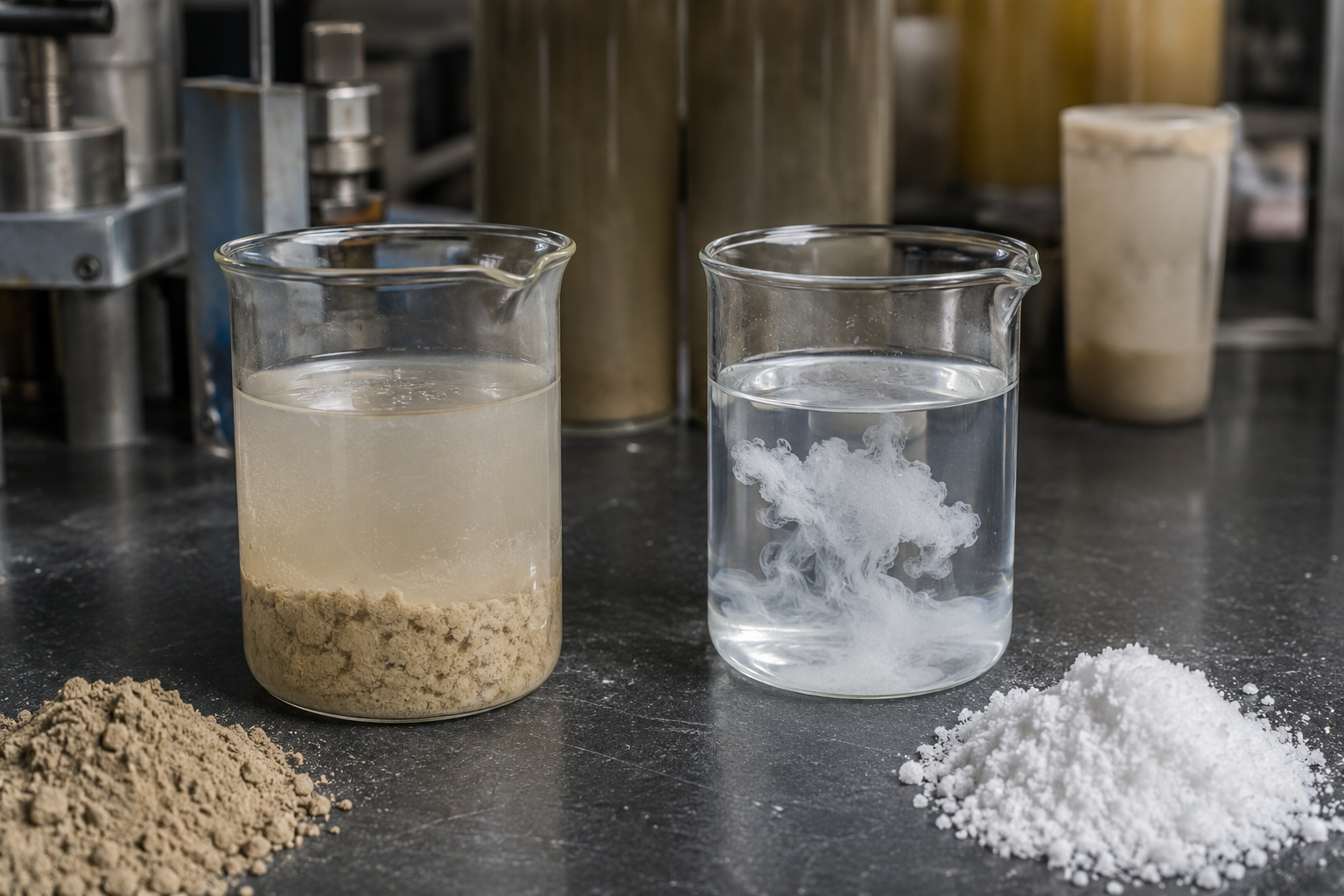
Reduced performance in concentrated brine: Conventional freshwater bentonite is not the first choice for many saturated-salt or highly saline systems. Specialized clays and polymers may be required depending on the application.
Logistics: Mineral products require more physical storage and transportation volume than highly concentrated polymer products.
Synthetic and semi-synthetic polymers are used to modify drilling-fluid filtration, rheology, shale interaction, and solids behavior. The chemistry varies considerably, so treating all polymers as one category can lead to poor formulation decisions.
Common materials include polyanionic cellulose, partially hydrolyzed polyacrylamide, and specialty copolymers based on chemistries such as acrylamide, acrylic acid, and sulfonated monomers. Each product has its own molecular-weight range, charge characteristics, temperature tolerance, salt tolerance, and interaction with formation solids.
Polymers can control filtration through several mechanisms. They may adsorb onto clay or other mineral surfaces, improve particle bridging, increase the viscosity of the filtrate, and modify the surface chemistry of reactive shale. Some polymers are designed primarily for filtration control, while others are selected for encapsulation, shale inhibition, viscosity modification, or rheology management.
That distinction is important. A high-viscosity polymer isn't automatically the best fluid-loss additive. Excessive viscosity can make pumping and solids control more difficult, while a polymer selected for shale inhibition may not provide the same filtration response as a dedicated fluid-loss-control polymer.
Low treatment volume: Many polymers can produce a significant filtration response at relatively low concentrations, reducing the physical volume of additive required.
Salt tolerance: Selected polymer chemistries can retain useful performance in brackish water, saline systems, or environments containing elevated concentrations of divalent ions. Performance still depends on the specific polymer and the concentration of contaminants.
Temperature options: Specialty polymers can be designed for demanding temperature ranges. The correct product must be selected and laboratory-tested for the actual expected downhole conditions.
Low contribution to suspended solids: Dissolved polymers don't add mineral solids in the same way that bentonite does, which can be valuable when a low-solids mud system is required.
Formulation flexibility: Polymers can be selected for specific jobs, allowing the engineer to target filtration, shale inhibition, encapsulation, lubrication, or rheology rather than relying on one material for every function.
Higher product cost: Specialty polymers generally cost more per unit mass than natural bentonite. Their economics should therefore be evaluated based on treatment concentration and total system cost, not purchase price alone.
Shear sensitivity: Some high-molecular-weight polymers can lose performance after severe mechanical shear. The degree of degradation depends on molecular structure, equipment, shear conditions, and exposure time.
Temperature limitations vary by chemistry: There is no universal temperature rating for synthetic polymers. A formulation that performs well in one well may not be suitable for another with significantly higher temperature or different salinity.
Chemical compatibility: Polymers can interact differently with clay, salts, hardness ions, weighting materials, and other additives. Compatibility testing is important before field-scale treatment.
Environmental considerations: Environmental performance depends on the polymer chemistry, impurities, concentration, local regulations, and disposal method. A product shouldn't be described as environmentally safe simply because it is synthetic or water-soluble.
The most useful comparison is not simply natural versus synthetic. It is which material gives the required filtration performance while keeping the entire mud system stable and manageable.
| Performance Metric | Natural Sodium Bentonite | Synthetic or Semi-Synthetic Polymers |
|---|---|---|
| Primary filtration mechanism | Hydrated clay particles and filter-cake structure | Particle bridging, adsorption, filtrate viscosity, and surface modification |
| Typical material cost per unit mass | Generally lower | Generally higher |
| Required treatment volume | Relatively high | Often relatively low |
| Contribution to solids | Adds mineral solids | Usually low when dissolved |
| Fresh-water performance | Strong | Strong, depending on chemistry |
| High-salinity performance | Conventional grades can lose effectiveness | Many specialty grades perform well |
| Hard-water tolerance | Can be poor without water treatment | Depends strongly on polymer chemistry |
| Filter-cake contribution | Strong physical cake formation | Can improve cake structure and reduce permeability |
| Rheology contribution | Significant | Highly product-dependent |
| Temperature performance | Useful over a broad range, but application-specific | Specialty products can be designed for high-temperature service |
| Hydration requirement | Important | Usually less dependent on clay hydration |
| Storage footprint | Larger | Smaller for concentrated products |
| Best role | Base clay, suspension, filtration, and rheology | Targeted filtration, inhibition, encapsulation, and rheology control |
There isn't a universal winner. A freshwater water-based mud used for a large-diameter borehole has different requirements from a low-solids drilling fluid used in a hot, saline formation. The formation and the operating conditions should determine the selection.
Water quality is one of the easiest variables to overlook and one of the most important for bentonite performance. A clay that performs well in laboratory freshwater can behave very differently when mixed with untreated field water.
Calcium can reduce the ability of sodium bentonite to hydrate and disperse. The resulting mud may become more flocculated, show undesirable rheology, and produce poorer filtration behavior.
When hardness is significant, water treatment may be required before bentonite is added. Soda ash is commonly used in drilling-fluid practice to precipitate certain hardness ions, but the treatment should be based on measured water chemistry rather than a fixed dose applied without testing.
High concentrations of sodium chloride compress the electrical double layer around clay particles and can reduce the swelling and dispersion associated with freshwater bentonite. In a saline environment, conventional sodium bentonite may therefore provide less viscosity and a less favorable filtration response.
This is where polymer-based systems can become more attractive. Certain polymers are designed to remain functional under elevated salinity, although the exact performance must be verified with representative water and formation conditions.
pH affects clay dispersion, polymer behavior, corrosion control, and the performance of several drilling-fluid additives. The appropriate pH range depends on the complete formulation rather than on bentonite alone. Routine monitoring helps identify chemical changes before they become a major filtration problem.
The best fluid-loss-control strategy changes with the hole section and the job. A system designed for a shallow water well shouldn't automatically be carried into a deep, hot, saline interval.
Shallow sections may contain unconsolidated sands, gravels, silts, and reactive clays. Large volumes of drilling fluid can also be required, making additive economics important.
A properly hydrated sodium bentonite system is often a practical starting point because it provides viscosity, suspension, and filter-cake development at the same time. The formulation should still be adjusted for local water chemistry and formation conditions.
Water-well drilling commonly requires good cuttings transport and filtration control without unnecessarily complicating the mud system. Sodium bentonite is widely used because it can build viscosity and form a filter cake while remaining comparatively economical.
The operator must also consider the intended well completion and development method. Excessive or poorly managed filter cake can increase the effort required to develop the formation, so the mud should be selected with the completion strategy in mind.
Oil and gas wells can present much wider ranges of temperature, pressure, salinity, formation reactivity, and solids loading. A simple bentonite system may be appropriate in some intervals but inadequate in others.
Polymer-enhanced or polymer-dominated systems become more useful when the well requires low-solids rheology, enhanced shale inhibition, improved filtration control under salinity, or specialized high-temperature performance.
Geothermal wells can expose drilling fluids to elevated temperatures and difficult formation conditions. Polymer selection must account for thermal stability and the duration of exposure. Standard products should not be assumed to perform at temperatures outside their tested range.
Bentonite may still have a role in suitable intervals, particularly where water chemistry and temperature allow effective hydration. In hotter or chemically challenging sections, specialty polymers or alternative fluid systems may be more appropriate.
HDD projects need a fluid that can transport cuttings, stabilize the borehole, manage seepage, and reduce friction. Sodium bentonite is commonly used as the base clay because it provides suspension and filter-cake formation.
Polymers can then be added when the project needs additional filtration control, shale inhibition, encapsulation, or lubricity. The exact formulation depends on soil type, groundwater chemistry, bore length, drilling equipment, and environmental requirements.
Bentonite-based slurries are also used in diaphragm-wall construction, slurry trenching, microtunneling, and other ground-engineering applications. In these projects, filtration control helps maintain slurry stability and manage interaction with permeable ground.
Polymer systems may be useful where a lower-solids slurry, specific rheology, or particular soil interaction is required. Selection should account for slurry recovery, separation equipment, disposal, and the construction method rather than filtration performance alone.
Using bentonite and polymer together isn't a compromise by default. It can be a deliberate way to assign different jobs to different materials.
Bentonite can provide the mineral framework, suspension, and basic filter-cake structure. A polymer can then be used at a controlled concentration to reduce filtrate loss, improve the cake, encapsulate reactive cuttings, or modify rheology.
A hybrid system is especially useful when the base bentonite performs well but doesn't quite meet the required filtration target. Instead of replacing the clay entirely, the engineer can evaluate whether a small polymer treatment solves the specific deficiency.
The reverse can also be true. In a low-solids polymer system, adding bentonite may be undesirable because it changes the solids concentration and rheological profile. The correct approach depends on the objective of the mud system.
A reliable fluid-loss program starts with testing rather than guessing. The following process gives drilling teams a practical framework.
If fluid loss suddenly increases, adding more polymer may temporarily improve the laboratory number while leaving the underlying problem untouched. Check water chemistry, solids content, dilution, temperature, formation changes, and mechanical equipment first.
Bentonite products differ in mineral composition, processing, particle-size distribution, yield, and filtration performance. Product selection should be based on the required application and verified with representative testing.
Poor-quality water can reduce bentonite performance before the mud reaches the formation. Measure hardness and salinity rather than assuming that available water is suitable for direct mixing.
Freshly added bentonite needs sufficient hydration and dispersion. Introducing polymers, weighting agents, or other chemicals before the clay has properly developed can produce a mud that performs below its potential.
A polymer marketed for viscosity isn't necessarily a dedicated fluid-loss-control material. Check the product's intended function, molecular characteristics, temperature limits, salinity tolerance, and compatibility with the rest of the formulation.
A fluid-loss additive cannot compensate indefinitely for poor solids control. Excess drilled solids can change rheology, increase dilution requirements, affect filtration, and reduce the efficiency of the entire mud system.
A low purchase price doesn't necessarily mean a low treatment cost. The meaningful comparison is the total cost required to achieve the target performance, including dosage, transportation, water treatment, dilution, waste handling, and operational impact.
The most useful economic calculation is treatment cost per unit volume of usable mud, not price per kilogram of product.
For bentonite, the calculation should include the required concentration, product yield, transportation, mixing requirements, water treatment, solids-control burden, and disposal. For polymers, include product concentration, mixing equipment, shear exposure, storage, compatibility testing, and replenishment requirements.
A polymer may cost substantially more per kilogram yet require a much smaller treatment concentration. Conversely, a low-cost bentonite may become less attractive if poor water quality forces extensive treatment or if the additional solids require significant dilution and processing.
A practical comparison should therefore ask three questions: What dosage achieves the required filtration performance? What effect does that dosage have on the rest of the mud system? What is the total cost per cubic meter or barrel of treated fluid?
Environmental suitability should be assessed at the formulation level. Sodium bentonite is a natural clay, but a drilling fluid may also contain polymers, salts, lubricants, weighting agents, and other chemicals. The final waste stream is what needs to meet applicable requirements.
Synthetic polymers are not automatically hazardous, and natural materials are not automatically harmless in every application. Product-specific safety data, regulatory requirements, waste classification, local discharge limits, and the intended disposal route should guide the decision.
For projects near sensitive water resources or populated areas, environmental requirements should be established before the mud program is finalized. This can influence the choice of additives as much as technical performance does.
If you're choosing between bentonite and synthetic polymers, start with the operating conditions rather than the product brochure.
| Operating Condition | Practical Starting Point |
|---|---|
| Fresh water and shallow drilling | Sodium bentonite often provides a strong base system |
| Large mud volumes and cost-sensitive work | Bentonite may offer favorable treatment economics |
| High salinity or saturated brine | Evaluate salt-tolerant polymer systems and specialized clay systems |
| Low-solids drilling requirement | Polymer-dominant systems may be more suitable |
| Reactive shale | Consider polymers designed for inhibition or encapsulation, often with compatible clay control |
| High-temperature drilling | Select products based on tested temperature stability |
| HDD and trenchless drilling | Bentonite base with targeted polymer treatment can be effective |
| Complex formation conditions | Use laboratory testing to compare bentonite, polymer, and hybrid formulations |
This framework is only a starting point. Actual treatment should be confirmed with representative water, formation solids, temperature, and pressure conditions.
Bentonite and synthetic polymers solve fluid-loss problems through different mechanisms. Sodium bentonite creates a mineral-based filter cake while also contributing useful viscosity and suspension. Synthetic polymers can provide targeted filtration control with lower solids contribution and, depending on chemistry, stronger tolerance to salt and temperature.
For many conventional freshwater applications, sodium bentonite offers a strong combination of performance, availability, and cost. For saline, high-temperature, low-solids, or highly specialized systems, polymers may provide capabilities that conventional bentonite cannot deliver alone.
The best fluid-loss program is rarely selected by looking at the additive in isolation. Test the water, understand the formation, define the required mud properties, and evaluate the complete formulation. When the conditions allow it, a carefully designed bentonite and polymer combination can provide both a strong mineral foundation and targeted filtration control.
For drilling-fluid manufacturers, contractors, and industrial users, consistent raw-material quality is just as important as formulation design. Axewelledge supplies sodium bentonite for drilling and industrial applications, with product selection based on the performance requirements of the intended use. For a specific project, laboratory evaluation of the supplied bentonite with the actual mix water and additive package remains the best way to confirm suitability.













Have questions about our products? We're here to help!