Axewelledge, a leading exporter from India, specializes in high-quality Bentonite. With a commitment to excellence, we supply premium Bentonite to the Middle East and Southeast Asia markets.


North Angle Complex, 304,
150 Feet Ring Rd, Opposite Ambedkar Nagar BRTS Stop,
Madhav Park, Punit Nagar,
Mavdi, Rajkot, Gujarat 360004
© Axewelledge 2026, All Rights Reserved.
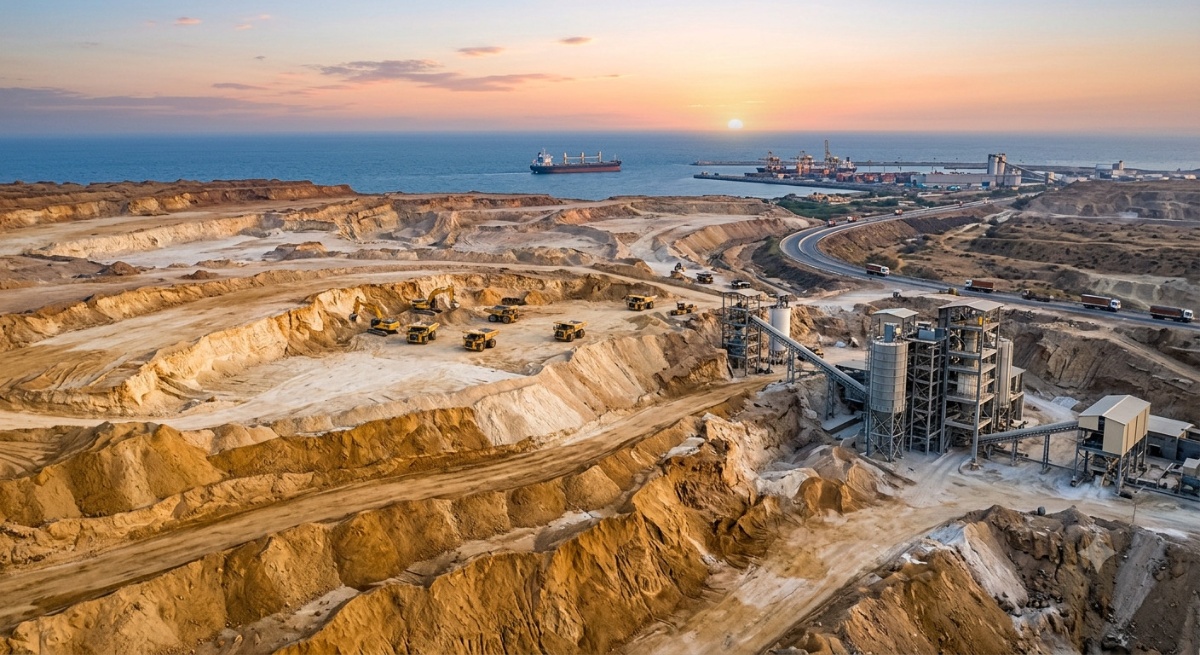
The vibrant growth of Vietnam’s manufacturing sector has positioned it as a dominant hub for industrial expansion in Southeast Asia. Driven by rapid urbanization, massive infrastructure spending, and a roaring automotive assembly sector, the domestic market for architectural, marine, and protective coatings is experiencing unprecedented acceleration. For modern paint formulators operating within this hyper-competitive environment, maintaining strict quality control while managing production costs is a balancing act. Achieving this balance depends entirely on the structural integrity and reliability of the raw materials integrated into the production line.
Among these essential raw materials, specialized clay minerals stand out as foundational ingredients. High-purity bentonite serves as a vital component in determining the performance, longevity, and application behavior of advanced coating systems. However, not all clay deposits are created equal. For Vietnamese paint manufacturers aiming to elevate their product performance to meet global standards, sourcing from a world-class top bentonite exporter from India has become the gold standard for securing high-performance rheological additives.
At its core, bentonite is an aluminum phyllosilicate clay consisting primarily of montmorillonite. When properly refined, milled, and activated, this mineral exhibits unique physical and chemical characteristics—such as a high cation-exchange capacity, extreme swelling potential, and exceptional thixotropic properties—that make it indispensable in fluid engineering.
In liquid architectural paints, industrial coatings, and protective enamels, bentonite acts as a multifunctional additive. It works silently within the formulation to resolve several common manufacturing and application challenges.
The primary reason paint chemists introduce bentonite into their mixtures is to manipulate the rheological profile of the liquid. A well-formulated paint must behave dynamically: it must remain highly viscous and stable while resting in a container, yet instantly liquify and flow smoothly when subjected to mechanical shear forces during brushing, rolling, or spray application.
Bentonite creates a reversible, microscopic three-dimensional network within the paint matrix. When the paint is applied, the mechanical shear breaks this network down, reducing viscosity and allowing for a seamless, uniform coat. Once the application force ceases, the clay particles rapidly rebuild their structural network. This quick recovery prevents the wet film from sagging, running, or dripping down vertical surfaces.
Paint formulations are dense mixtures packed with heavy inorganic pigments (such as titanium dioxide, iron oxides, and various functional extenders). Over extended storage periods, these heavy particulate matters naturally tend to succumb to gravity, settling to the bottom of the container to form a dense, unmixable cake.
By utilizing premium grades sourced from an experienced bentonite supplier from India, producers can establish an excellent yield stress value within the liquid phase. The thixotropic gel network effectively suspends dense pigment particles indefinitely, eliminating hard-cake settling and ensuring that the end-consumer experiences a perfectly homogenous product upon opening the container, even after months on a warehouse shelf.
Achieving a substantial, uniform dry film thickness without encountering aesthetic defects like sagging, running, or wrinkling is highly critical for protective industrial and marine coatings. Modified bentonites provide the exact structural yield value required to apply thick, high-build coatings to vertical steel or concrete surfaces. The fluid locks in place the moment it hits the substrate, safeguarding the structural integrity of the application.
During application via roller, lower-quality architectural paints frequently suffer from dramatic splattering, resulting in messy cleanups and uneven application. The inclusion of customized bentonite rheological agents provides an elastic cushion under high shear, limiting splattering. Furthermore, it prevents syneresis—the unwanted separation of the liquid binder from the pigment paste during prolonged storage.
The Vietnamese paint and coatings industry has historically relied on a mixture of domestic clay materials and expensive, imported synthetic rheological thickeners. However, changing economics and stricter quality demands from the construction and industrial sectors have caused a significant shift in sourcing strategies. Vietnamese procurement managers are increasingly turning to the vast, high-grade mineral deposits of India.
The geological characteristics of Indian bentonite, particularly the reserves found within the highly mineralized Kutch and Bhuj regions of Gujarat, are globally renowned. These natural deposits boast exceptionally high montmorillonite content, often exceeding 80% in its raw state. This high purity translates directly into superior swelling volumes, clean cation-exchange capabilities, and predictable viscosity outputs. For paint manufacturers, this means less raw material is required to achieve the desired thixotropic effect compared to lower-grade regional alternatives.
While synthetic thickeners or cellulosics offer high precision, they come with volatile, premium price tags that directly erode a manufacturer's bottom-line profitability. Indian natural sodium and modified calcium bentonites offer a highly cost-effective alternative. They deliver equivalent or superior anti-settling performance and sag resistance at a fraction of the cost, giving Vietnamese enterprises a distinct competitive advantage in both domestic and export markets.
Vietnam’s industrial expansion requires a supply chain that can scale effortlessly alongside sudden spikes in market demand. India’s mining infrastructure is robust, featuring high-capacity processing mills and deeply integrated logistics chains capable of moving hundreds of containers daily. This massive operational scale guarantees that large-scale paint production plants in hubs like Binh Duong, Dong Nai, or Haiphong experience zero production downtime due to raw material shortages.
When navigating the vast landscape of global mineral sourcing, selecting a reliable, sophisticated partner is just as critical as the mineral itself. Axewelledge has established itself as an international powerhouse in mineral extraction and refinement, ranking as India's premier mine owner and exporter of top-tier industrial clays.
With direct control over extensive, high-quality mining reserves in Gujarat and Rajasthan, Axewelledge brings unparalleled stability, quality, and technical expertise to the Southeast Asian marketplace.
| Physical & Chemical Parameter | Typical Industry Requirement | Axewelledge Premium Paint Grade Performance |
| Montmorillonite Content | $ge 75\%$ | 80% to 85%+ |
| Swelling Capacity | $15 - 25 ext{ ml} / 2 ext{g}$ | 25 to 30 ext{ ml} / 2 ext{g}$ |
| Moisture Content | $10\% - 14\%$ | 10% to 12% (Optimally Dried) |
| pH Level | $8.0 - 10.0$ | 8.5 to 10.0 (Non-corrosive Matrix) |
| Particle Size Distribution | $95\% ext{ passing 200 mesh}$ | Dry-milled down to Ultra-fine 325/400 mesh |
One of the most dangerous risks in raw mineral procurement is batch-to-batch variance. When dealing with independent traders or third-party brokers, the mineral composition can fluctuate wildly between shipments, forcing paint chemists to constantly recalibrate their delicate chemical formulations.
Because Axewelledge directly owns and operates its expansive mining reserves, they maintain total control over the raw material from the moment it is extracted from the earth to its final packaging. This asset-heavy model guarantees that the physical properties of the clay delivered to your plant in Vietnam remain perfectly consistent, month after month, year after year.
Unrefined bentonite contains abrasive grit and coarse silica particles that can ruin industrial high-speed dispersers and degrade the final gloss finish of high-end paints. Axewelledge eliminates this issue through advanced refinement techniques.
The raw clay undergoes intensive de-gritting, purification, and multi-stage air flotation processes to strip away impurities. It is then dry-milled down to ultra-fine particle sizes (often passing through 325 or 400 mesh screens). This ultra-fine particle distribution ensures instant, seamless dispersion within water-borne or solvent-borne paint bases without scratching or altering the gloss characteristics of the coating film.
A paint formulator must understand the behavioral distinctions between the two primary classifications of bentonite clay when designing a coating system.
Natural sodium bentonite possesses an inherent, remarkable affinity for water. The sodium ions residing between the silicate platelets allow vast amounts of water molecules to penetrate the crystalline structure, causing the clay to swell up to several times its dry volume.
For water-based emulsion paints (such as acrylics, vinyls, and latex architectural coatings), utilizing sodium bentonite provides an incomparable aqueous gel structure. It delivers high low-shear viscosity, preventing pigment separation while offering immaculate levelling properties as the water evaporates from the drying film. To understand how this mineral behaves across diverse, heavy-duty applications globally, one can study the insights regarding the top 10 industries that import bentonite from India.
Unlike its sodium counterpart, natural calcium bentonite exhibits a lower swelling index and a more moderate water absorption profile. However, its unique crystal structure makes it the ideal starting material for chemical modification into organoclays (organophilic bentonites).
By reacting refined calcium bentonite with quaternary ammonium compounds, the clay surface is transformed from hydrophilic (water-loving) to hydrophobic (water-repelling / solvent-loving). These specialized organoclays are vital for solvent-borne paint systems, heavy-duty industrial anti-corrosive primers, marine coatings, and chlorinated rubber paints. They swell efficiently in aliphatic and aromatic solvents, providing flawless thixotropic suspension in non-aqueous environments.
To extract the maximum performance and efficiency from high-grade bentonite, paint manufacturers must ensure that the clay is activated correctly within the production cycle. Improper dispersion can lead to un-hydrated clay agglomerates, resulting in gritty paint textures and poor rheological control.
[Step 1: Water/Solvent Addition] âž” [Step 2: Add Bentonite Under Shear] âž” [Step 3: High-Speed Pre-Shear (15-20 Mins)] âž” [Step 4: Introduce Pigments/Extenders] âž” [Step 5: Final Letdown & Emulsion Blend]
For optimal results in water-borne systems, it is highly recommended to prepare a standalone bentonite pre-gel (typically concentrating 3% to 5% clay solids in pure water) before introducing other ingredients. The clay should be added slowly to the water under high-speed agitation using a Cowles-type disperser blade. Allowing the pre-gel to sit and fully hydrate for several hours ensures complete platelet separation and maximum viscosity yield.
Bentonite relies on mechanical energy to separate its tightly bound silicate layers. Low-speed paddle mixers are insufficient. The formulation must pass through high-shear dispersing equipment running at peripheral speeds of at least 15 to 20 meters per second. This mechanical force shears the individual clay platelets apart, allowing them to form the desired thixotropic house-of-cards structure throughout the liquid medium.
When utilizing organoclays within solvent-borne coatings, proper chemical activators (such as polar organic solvents like propylene carbonate, methanol, or ethanol) must be introduced alongside high shear. Additionally, maintaining a controlled processing temperature between $35^circ ext{C}$ and $50^circ ext{C}$ greatly accelerates the swelling and activation process of the organoclays, locking in the thixotropic profile early in the manufacturing run.
Navigating the maritime logistics between Indian shipping hubs and major Vietnamese ports requires a reliable partner with deep export experience. Axewelledge has spent over fifteen years optimizing its international supply chain networks, regularly delivering bulk shipments across Southeast Asia, Europe, and the Americas.
Axewelledge's manufacturing and storage facilities are strategically situated in close proximity to major Indian maritime gateways, such as Mundra and Kandra ports in Gujarat. This geographical advantage cuts down internal transit times within India, leading to lower overall logistics costs and faster dispatch turnarounds. Whether your delivery destination is Haiphong Port serving northern industrial zones or Cat Lai Port in Ho Chi Minh City for southern manufacturing clusters, the transit lines run smoothly and predictably.
Bentonite is highly sensitive to ambient atmospheric humidity. If exposed to open air or sub-par containment during long ocean transits, the powder can prematurely absorb moisture, leading to product clumping and reduced performance potential upon arrival.
Axewelledge utilizes top-tier, multi-layered, moisture-proof industrial packaging. Options range from standard, durable 25kg multi-wall paper bags to massive 1-ton and 1.25-ton UV-stabilized jumbo bulk bags equipped with specialized inner polythene liners. These secure packaging solutions ensure the material arrives at your factory gates dry, free-flowing, and ready for immediate deployment.
Importing bulk raw materials into Vietnam involves strict customs clearances and quality inspections. Axewelledge handles all necessary international trade documentation with precision. Every shipment is accompanied by detailed Certificate of Analysis (CoA) forms generated from their advanced internal laboratory facilities, detailed packing lists, ocean bills of lading, and custom certificates of origin. This meticulous documentation guarantees rapid customs clearance, avoiding expensive port demurrage delays.
As the global marketplace pivots toward strict environmental responsibility, the paint and coatings sector faces heavy regulatory pressure to lower its carbon footprint and reduce volatile organic compound (VOC) emissions. Sourcing raw materials from environmentally conscious partners has transformed from a corporate social responsibility initiative into a strict commercial necessity.
Axewelledge remains fully committed to green, sustainable mining practices across all its operations in India. Their extraction sites operate under rigorous land reclamation and ecosystem restoration protocols, ensuring minimal long-term ecological disturbance.
Furthermore, by substituting toxic, highly processed synthetic thickeners with pure, naturally occurring, and sustainably processed bentonite clays, paint manufacturers can significantly lower the environmental impact of their formulations. This transition helps brands comfortably qualify for prestigious regional green label certifications, appealing directly to the modern, eco-conscious consumer base expanding across Vietnam.
The modern Vietnamese paint and coatings landscape presents immense opportunities, but only for manufacturers who can successfully protect their profit margins while delivering uncompromising, world-class product durability. Incorporating high-purity, precisely milled bentonite into your coating matrix is one of the most reliable and efficient ways to optimize rheology, guarantee long-term shelf stability, and achieve flawless application aesthetics.
Partnering with an industry-recognized giant like Axewelledge provides Vietnamese paint producers with far more than an ordinary raw material supplier. It secures a direct link to the world's finest mineral reserves, backed by advanced processing infrastructure, rigid batch-to-batch consistency, and a highly optimized international shipping network.
To explore the long-term benefits of integrating high-grade Indian clay minerals into your production lines, or to discover the step-by-step framework required to establish a robust import partnership, explore the comprehensive bentonite industry insights and resources compiled by our global expert team. Secure your raw material supply chain today, optimize your production economics, and deliver coating solutions that stand the test of time.
Ready to upgrade your formulation's rheological performance? Contact Axewelledge's dedicated international engineering division to request tailored technical data sheets, arrangement of pre-shipment laboratory evaluation samples, or to discuss customized particle size distribution metrics tailored to your unique industrial coating lines. Let us help you formulate a more stable, successful future.













Have questions about our products? We're here to help!