Axewelledge, a leading exporter from India, specializes in high-quality Bentonite. With a commitment to excellence, we supply premium Bentonite to the Middle East and Southeast Asia markets.


North Angle Complex, 304,
150 Feet Ring Rd, Opposite Ambedkar Nagar BRTS Stop,
Madhav Park, Punit Nagar,
Mavdi, Rajkot, Gujarat 360004
© Axewelledge 2026, All Rights Reserved.
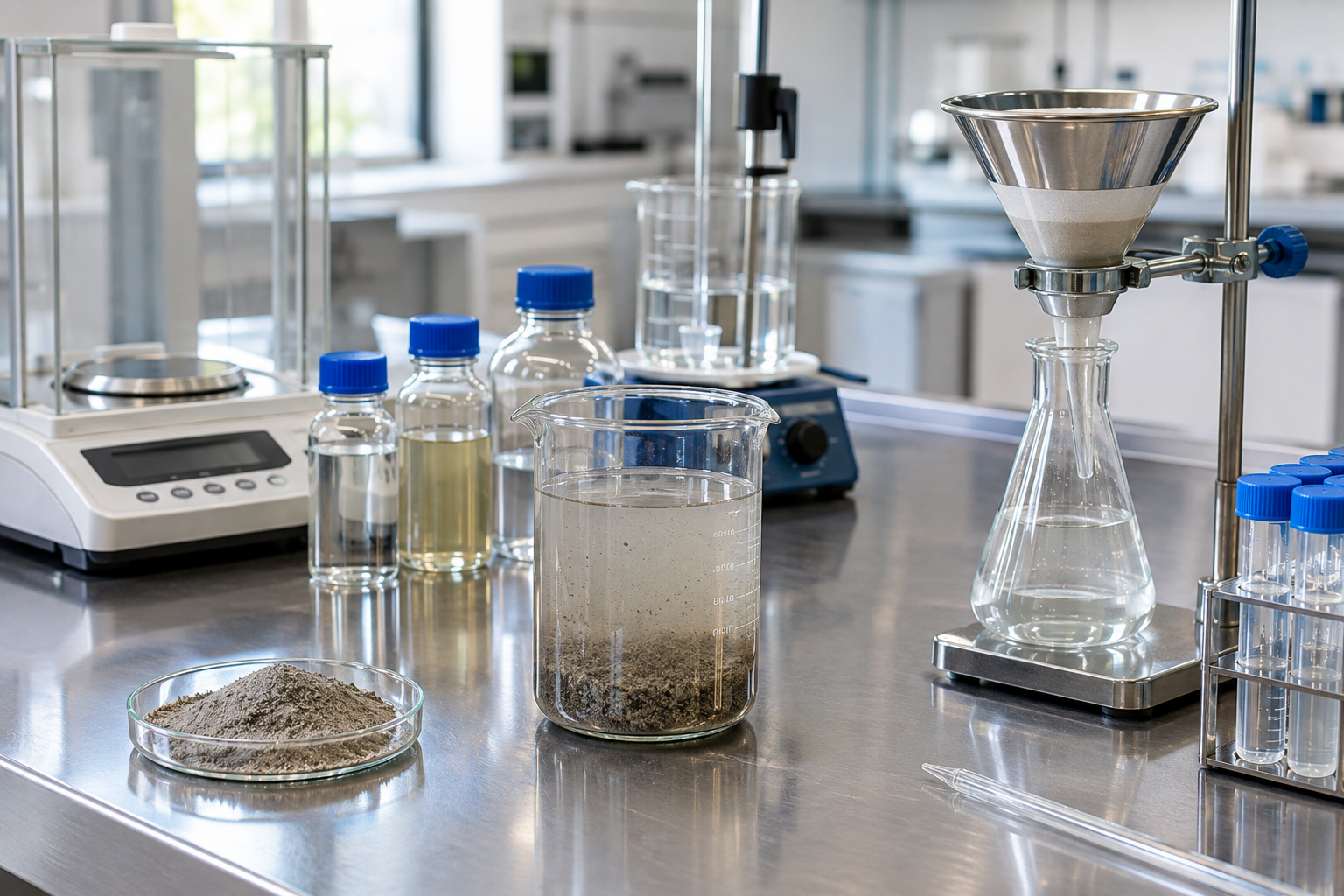
Can bentonite remove heavy metals from water? Yes, it can. Bentonite, particularly montmorillonite-rich bentonite, can adsorb and retain several dissolved metal ions, including lead, cadmium, and copper. But that answer needs an important qualification: bentonite is not a universal heavy-metal filter, and untreated bentonite should not automatically be considered a complete drinking-water treatment system.
The reason is simple. Bentonite performance depends heavily on the water and the clay being tested. pH, competing ions, metal concentration, contact time, clay dosage, particle size, mineral composition, and processing can all change the result. A bentonite that performs well in a controlled laboratory solution may behave differently in industrial wastewater or mineral-rich groundwater.
For industrial wastewater, contaminated process water, mining applications, reactive barriers, or a treatment train where the clay can be separated after use, bentonite can be worth evaluating. Drinking-water applications require a much higher level of control. The treatment must be validated for the contaminant of concern, operated consistently, and verified against the applicable health or regulatory target.
The practical takeaway is that bentonite should be selected and tested as a treatment material, not judged from its swelling capacity or a generic adsorption figure alone.
Bentonite is a naturally occurring clay dominated by smectite minerals, especially montmorillonite. Its layered structure gives it negatively charged sites and a useful cation-exchange capacity. Those characteristics make it capable of interacting with positively charged dissolved metal ions.
Several mechanisms can contribute to metal removal. The most important are cation exchange, surface adsorption, and specific interactions between dissolved species and reactive sites on the clay. These mechanisms can occur at the same time, and their relative importance changes with the metal and the chemistry of the water.
Consider lead as a straightforward example. Dissolved lead ions encounter negatively charged sites associated with the clay structure. Some lead can exchange with cations already occupying those sites, while other ions can become associated with reactive surfaces. The dissolved concentration can therefore fall as lead moves from the water into the solid phase.
The same basic principle helps explain why montmorillonite-rich clays have attracted attention for wastewater treatment. Their surface chemistry provides many sites where dissolved ions can interact with the mineral.
However, saying that bentonite simply 'absorbs' heavy metals is too broad. Adsorption is only part of the picture, and ion exchange can be particularly important for cationic metals. The actual removal mechanism depends on the bentonite, the contaminant species, and the surrounding water chemistry.
Research on natural sodium bentonite has demonstrated the removal of cadmium, copper, and lead from aqueous solutions. Those studies also show that variables such as pH and competing ions can materially change adsorption performance. A laboratory result is therefore best understood as evidence of potential under defined conditions, not as a universal product specification.
Bentonite has been investigated for a broad range of inorganic contaminants. Lead, cadmium, and copper are among the more extensively studied cationic metals. Research has also examined nickel, zinc, chromium, mercury, and other metal species, as well as arsenic in different chemical forms and in modified bentonite systems.
The phrase 'can remove' needs to be interpreted carefully. A material may show measurable adsorption in a laboratory test without delivering the required residual concentration in a full-scale treatment process.
The differences become especially important when comparing cationic metals with contaminants such as arsenic, which commonly occurs as oxyanions rather than simple positively charged metal ions.
Lead is one of the better-studied metals for bentonite adsorption. Laboratory experiments have demonstrated substantial Pb2+ uptake by bentonite under controlled aqueous conditions. Some published experiments have reported removal above 98 percent under optimized test conditions, but such figures should not be treated as a guaranteed removal rate for every bentonite or every water source.
Lead adsorption can be strongly affected by pH. The number and character of available surface sites change as water chemistry changes, while dissolved lead can also undergo other reactions that affect its apparent removal.
Real treatment water adds another layer of complexity. Calcium, magnesium, sodium, chloride, bicarbonate, sulfate, dissolved organic matter, and other metals may compete for sites or alter metal speciation. A clay that performs strongly in a simple prepared solution can therefore produce a different result in field water.
For that reason, a lead-removal study should use representative source water whenever possible. If the final application is drinking water, the test should also cover the concentration range and operating conditions that the treatment system will actually encounter.
Cadmium can also be retained by bentonite through adsorption and ion-exchange processes. Natural bentonite has shown substantial cadmium uptake in laboratory studies, but the result is sensitive to the surrounding solution.
Ionic strength is particularly relevant. Higher concentrations of competing ions can alter the interaction between cadmium and clay surfaces. This is one reason bentonite performance can change in saline, brackish, or highly mineralized water.
Some studies of sodium bentonite have reported relatively rapid adsorption kinetics for cadmium under their experimental conditions. That finding is useful when designing screening tests, but it does not eliminate the need to measure contact time using the actual water and material.
A specification based on swelling, moisture, or particle size alone cannot tell a buyer how much cadmium a particular bentonite will remove. If cadmium removal is the application, the material should be tested for cadmium removal under representative conditions.
Copper ions can interact readily with clay surfaces, and natural sodium bentonite has been studied as an adsorbent for copper in aqueous systems.
The amount retained depends on factors such as pH, initial concentration, dosage, contact time, and competing dissolved ions. A higher clay dose may reduce the remaining copper concentration, but that improvement has to be weighed against the quantity of metal-loaded solids produced.
For industrial wastewater, bentonite may therefore have a useful role as part of a treatment process. The practical question is whether the treated water consistently reaches the required copper concentration while the resulting solids can be separated and managed economically.
Arsenic requires more caution than many common cationic heavy metals. In natural waters, arsenic commonly occurs as oxyanions, and arsenite and arsenate have different chemical behaviour. Their interaction with untreated bentonite can therefore differ substantially from the behaviour of Pb2+, Cd2+, or Cu2+.
Researchers have investigated modified bentonite materials for arsenic removal, including systems containing iron phases, additional functional groups, or other components designed to improve arsenic affinity. These materials should not be treated as equivalent to ordinary natural bentonite.
For drinking water, arsenic should be approached as a contaminant requiring a validated, contaminant-specific treatment process. The World Health Organization guideline value for arsenic in drinking water is 10 micrograms per litre. Achieving a low residual concentration consistently requires appropriate process design and verification.
If arsenic is present in source water, don't select ordinary bentonite simply because it has a high cation-exchange capacity. Determine the arsenic species, characterize the water, and test a treatment process capable of meeting the required target.
Bentonite mineralogy matters because not all clays have the same surface chemistry.
Montmorillonite has a layered crystal structure with a net negative charge that arises largely from substitutions within the mineral lattice. Exchangeable cations balance that charge. When the clay hydrates, water enters the structure and the particles can disperse or swell, depending on the type of bentonite and its surrounding chemistry.
These characteristics contribute to bentonite's usefulness as an adsorbent and ion exchanger. They can provide:
These properties explain why natural bentonite, montmorillonite, modified bentonite, and bentonite-based composites continue to be studied for inorganic contaminant removal.
There is an important distinction, though: swelling performance and metal-removal performance are different measurements. A bentonite that is excellent for drilling fluids, geosynthetic clay liners, or well sealing isn't automatically the best adsorbent for a particular dissolved metal.
When selecting material for water treatment, the relevant performance data should match the intended application.
Two bentonite products can behave differently in the same water, and the same bentonite can perform differently in two water sources. The variables below are usually the first ones to examine.
pH is one of the most important controls on adsorption.
It affects the surface charge of reactive sites, the chemical form of dissolved metals, competition between dissolved ions, and the tendency of some metals to form separate solid phases.
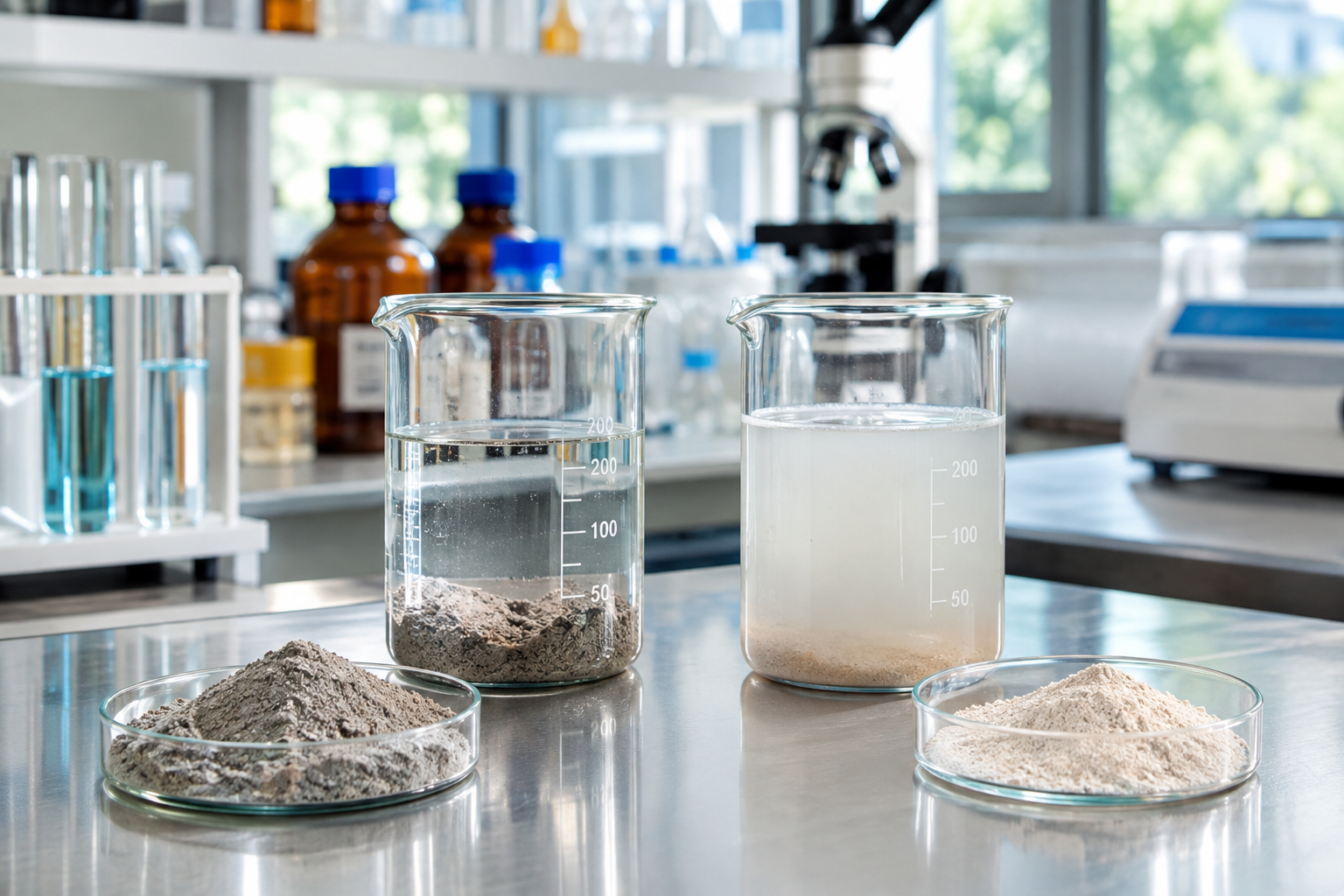
Lead adsorption on sodium bentonite, for example, has been reported to vary substantially with pH. Similar pH effects occur in many other clay adsorption systems.
For practical treatment work, don't take a dosage or removal percentage from a published experiment and apply it directly to another water source. Measure the source-water pH and test the bentonite under the conditions the process will actually experience.
If pH adjustment is part of the treatment design, include that adjustment in the laboratory test. Otherwise, the test may not represent the final process.
Heavy metals rarely occur alone.
Calcium and magnesium can compete for exchange sites, while sodium and other dissolved ions influence clay hydration and ion exchange. Chloride, bicarbonate, sulfate, dissolved organic matter, and other constituents can also change the chemistry of the system.
The effect becomes particularly important in saline or brackish water. High concentrations of competing ions can reduce the adsorption of some metals by bentonite.
This is why a jar test performed with deionized water can give an overly optimistic impression compared with a test using actual industrial wastewater. If the final application involves complex water, use that water in the screening program.
An adsorbent has a finite number of available sites.
At a low contaminant concentration, many adsorption sites may remain available relative to the amount of metal entering the system. As the concentration increases, more sites become occupied. Eventually, additional metal remains dissolved because the available capacity is being approached.
Researchers often describe this behaviour using adsorption isotherms such as Langmuir and Freundlich models. These models are useful for understanding how adsorption changes with concentration under defined experimental conditions.
A reported adsorption capacity in milligrams per gram should therefore be treated as a test result, not a universal property of every bentonite product. The value is meaningful only alongside the conditions under which it was measured.
Increasing the amount of bentonite generally increases the number of available adsorption sites, but adding more clay isn't automatically the most efficient solution.
A higher dose may reduce the residual metal concentration while simultaneously increasing the amount of metal-loaded sludge. If that spent material requires controlled handling or disposal, its management becomes part of the treatment cost.
The useful target is usually the lowest dose that consistently reaches the required treated-water concentration with an acceptable safety margin and manageable solids production.
A dose-response test is therefore more informative than a single trial. It shows where additional clay stops producing enough improvement to justify the extra material.
Adsorption does not always reach its useful endpoint immediately.
Some systems show rapid initial uptake followed by a slower approach to equilibrium. Others may require longer contact because of particle size, mixing, diffusion, or the nature of the adsorption sites.
Laboratory research on sodium bentonite has reported relatively fast kinetics for cadmium, copper, and lead under specific test conditions. Those results still need to be translated carefully into a real process.
For example, a batch experiment that mixes clay and water for two hours cannot by itself justify a continuous treatment system with a much shorter hydraulic residence time. Test the contact time available in the proposed equipment.
Finer particles generally provide more accessible surface area and can interact with water quickly. The trade-off is that very fine bentonite can be difficult to settle or filter after treatment.
If the clay is added directly to a treatment tank, the process needs an effective method for separating the solids from the treated water. If the bentonite is incorporated into a fixed bed, granule, pellet, or composite, pressure drop and hydraulic behaviour become important as well.
Processing can also change adsorption behaviour. Acid activation, thermal treatment, exfoliation, iron modification, or organic functionalization may improve affinity for selected contaminants. Such materials should be evaluated as modified adsorbents rather than assumed to behave like untreated natural bentonite.
The sodium-versus-calcium distinction is useful, but it should not be reduced to the idea that sodium bentonite is automatically better for every water-treatment application.
Sodium bentonite generally swells more strongly in water, while calcium bentonite has different hydration and exchange characteristics. Those differences affect slurry behaviour and processing, but swelling alone doesn't determine heavy-metal adsorption performance.
For a treatment application, the better question is which material gives the required contaminant removal under the actual water chemistry and can be separated and managed afterward.
| Property | Sodium bentonite | Calcium bentonite |
|---|---|---|
| Dominant exchangeable cation | Sodium | Calcium |
| Water swelling | Generally higher | Generally lower |
| Cation exchange behaviour | Useful for many dissolved metal ions | Also capable of exchanging cations; performance depends on water chemistry |
| Slurry behaviour | Can form highly hydrated suspensions | Usually less swelling |
| Heavy-metal adsorption | Can be effective for several cationic metals | Can also adsorb metals; results are application-specific |
| Selection approach | Test against the target water and contaminant | Test against the target water and contaminant |
For a commercial treatment project, ask for mineralogical and chemical information rather than choosing a grade simply because it is labelled sodium or calcium bentonite.
Bentonite can adsorb lead, but that does not make loose or untreated bentonite an appropriate household drinking-water filter.
Lead is a particularly sensitive drinking-water contaminant. The US Environmental Protection Agency states that the maximum contaminant level goal for lead is zero. Its Lead and Copper Rule also establishes an action level of 15 micrograms per litre for lead at the tap in applicable public water systems, along with monitoring and other requirements.
The difference between laboratory adsorption and certified drinking-water treatment is important. A research experiment may show a high percentage of lead removal from a prepared solution. A drinking-water treatment system must demonstrate reliable performance at the relevant concentration range, account for changing water chemistry, control the treatment process, manage spent media, and verify the treated water.
If water has tested positive for lead, use a treatment technology specifically evaluated for lead reduction rather than relying on untreated bentonite as a stand-alone safeguard. The treatment device, media, operating conditions, and replacement schedule all matter.
Bentonite can interact with arsenic, but ordinary natural bentonite should not be assumed to provide reliable arsenic removal to drinking-water targets.
Arsenic speciation is important. Arsenite and arsenate behave differently, and adsorption can change with pH, competing ions, dissolved organic matter, and the mineral surfaces available for reaction.
Modified bentonite materials have been developed and studied for arsenic removal. Some incorporate iron or other reactive components that provide stronger binding sites for arsenic species. Those products may perform very differently from untreated bentonite.
For drinking-water applications, arsenic treatment should be designed around a validated process. Established adsorptive media can include activated alumina and iron-based media, depending on the contaminant species and water chemistry. Other technologies may be appropriate in different situations.
If your source water contains arsenic, test the actual water and identify the arsenic species before choosing an adsorbent. A high cation-exchange capacity alone is not enough evidence that natural bentonite will meet the required treatment target.
Bentonite is one option within a much larger water-treatment toolbox. The appropriate technology depends on the contaminant, concentration, water chemistry, discharge or drinking-water target, flow rate, available equipment, and management requirements for the resulting waste stream.
Possible alternatives include activated carbon, ion exchange, chemical precipitation, membrane processes, activated alumina, iron-based adsorptive media, and engineered composite adsorbents.
| Treatment approach | Typical strength | Important limitation |
|---|---|---|
| Natural bentonite | Low-cost adsorption and ion exchange for several cationic metals | Performance can vary significantly with water chemistry |
| Modified bentonite | Can provide greater or more selective affinity for some contaminants | Additional processing, cost, and spent-media considerations |
| Activated carbon | Widely used for many organic contaminants | Not a universal solution for dissolved metals |
| Ion exchange | Effective for selected dissolved ions | Competing ions can reduce performance and resin management is required |
| Activated alumina | Established adsorptive option for contaminants such as arsenic and fluoride | Performance depends on pH and competing constituents |
| Iron-based adsorptive media | Useful for several inorganic contaminants, particularly arsenic | Media selection and breakthrough monitoring are important |
| Reverse osmosis | Broad contaminant reduction when properly designed | Requires energy, membrane management, and concentrate disposal |
| Chemical precipitation | Established method for many industrial metal-bearing wastewaters | Produces sludge and requires chemical control |
The right comparison isn't simply which material has the highest reported adsorption capacity. Treatment performance, operating cost, solids management, maintenance, reliability, and the required final concentration all matter.
For example, precipitation may be practical for a high-concentration industrial wastewater but produce a significant sludge stream. Reverse osmosis may achieve broad contaminant reduction but creates a concentrate that still requires management. An adsorbent may be attractive where a smaller residual stream and simple operation are more important.
Bentonite can fit into that decision when its adsorption performance, handling characteristics, and waste-management requirements make sense for the application.
Bentonite is particularly worth investigating where the treatment objective involves industrial wastewater, process water, contaminated sediment, reactive barriers, or a treatment train in which clay solids can be separated after contact with the water.
Potential applications include:
The value of bentonite is often its role as one component of a process rather than its ability to replace every other treatment method. It can provide a relatively inexpensive mineral phase for capturing or immobilizing contaminants while another treatment step handles solids separation, polishing, or a different contaminant class.
If you're evaluating bentonite for a real treatment project, start with the water rather than the product brochure.
A useful screening programme should answer three questions: how much metal can the material remove, under what conditions does it work, and what happens to the metal-loaded clay afterward?
Measure the target metals and the basic chemistry that could influence adsorption. Depending on the application, this may include pH, conductivity or total dissolved solids, hardness, alkalinity, major ions, dissolved organic matter, and suspended solids.
The more complex the water, the more important it is to use a representative sample rather than a simplified laboratory solution.
Set the maximum acceptable concentration before testing the material. An industrial discharge requirement may be very different from a drinking-water target.
Without a defined endpoint, a test can show impressive percentage removal while still leaving too much contaminant in the treated water.

Review the mineralogy, montmorillonite content or equivalent mineralogical characterization, moisture, particle-size distribution, exchangeable cations, and cation-exchange capacity where relevant.
Also determine whether the product is natural, activated, chemically modified, or blended. Those distinctions can have a substantial effect on performance.
Don't rely on a single dose. Run a practical range of bentonite concentrations so you can see how much additional removal comes from each increase in dosage.
The resulting dose-response curve can help identify a useful operating range and show when additional clay provides diminishing returns.
Run tests at the actual process pH. If pH adjustment is likely to be part of the treatment system, include that condition in the test programme.
A few controlled pH points can also show whether performance is stable or highly sensitive to pH changes.
Test the contact time available in the proposed process. If the final design provides only 15 minutes of contact, a two-hour laboratory test cannot be used as direct evidence for that operating condition.
Mixing intensity and temperature should also be considered where they are expected to affect the process.
After adsorption, remove the bentonite using the method intended for the final system, such as settling, filtration, centrifugation, or another solids-separation process.
This step is essential. Fine bentonite can remain suspended, and poor solids separation can make the treated water appear worse even when adsorption itself has worked.
Analyze the treated water using a suitable analytical method and detection limit for the target concentration. If the required residual is very low, the analytical method must be capable of measuring at or below that level reliably.
Real wastewater may contain several metals at the same time. Repeat the test with the actual contaminant mixture rather than relying solely on single-metal experiments.
Competition can change adsorption behaviour and reveal limitations that aren't visible in a simplified solution.
Determine what happens to the metal-loaded clay. Consider its chemical stability, potential for desorption, classification under applicable waste rules, and the practical disposal or further-treatment route.
This final step closes the loop. Removing metal from water is only part of the treatment problem.
Adsorption transfers a contaminant. It doesn't destroy the metal.
When bentonite captures lead, cadmium, copper, or another contaminant, the metal moves from the liquid phase into the solid phase. The resulting material therefore contains concentrated contaminants that still need to be managed.
Depending on concentration and local requirements, spent bentonite may require controlled disposal, stabilization, further treatment, or another approved management route.
Desorption also deserves attention. A metal that is retained under one set of conditions may become more mobile if the pH, salinity, ionic composition, or other chemistry changes later. Research on metals such as cadmium and lead has demonstrated that release from bentonite can occur under changed chemical conditions.
This matters when spent clay is stored, transported, placed into a containment system, or exposed to changing environmental conditions.
A sound treatment design therefore considers both adsorption capacity and contaminant retention. If the metal can simply be released again under downstream conditions, the apparent removal from the original water may not represent long-term containment.
Bentonite isn't a single standardized chemical. Deposit geology, montmorillonite content, exchangeable ions, processing, particle size, impurities, and moisture can all influence its behaviour.
Two products sold under the same broad bentonite description may produce different results in the same treatment test.
Free swell is useful for applications such as drilling fluids and sealing, but it doesn't directly tell you how much lead, cadmium, copper, or arsenic a material will remove.
A high-swelling clay may be useful in treatment, but its metal-removal performance still needs to be demonstrated.
Single-metal experiments can make adsorption look simpler than it is. In actual wastewater, several dissolved ions may compete for the same sites.
If the treatment plant will receive mixed contaminants, the test should reflect that chemistry as closely as possible.
A result at pH 6 shouldn't automatically be applied to water at pH 8.5. Changes in surface charge, metal speciation, precipitation, and competition can all affect the observed removal.
Record and control pH throughout the test rather than treating it as a minor background variable.
A published 90 percent or 98 percent removal figure describes a defined experiment. It is not a universal performance guarantee for every commercial bentonite.
The test conditions are part of the result. Remove those conditions and the percentage loses much of its practical meaning.
Fine bentonite can remain suspended after mixing. Without effective clarification, filtration, or another separation step, some of the clay may leave the treatment vessel with the water.
That can undermine an otherwise successful adsorption process.
A treatment system also has to maintain the required residual concentration over time. As adsorption sites become occupied, performance can decline and breakthrough can occur.
For continuous systems, test the point at which the media approaches its useful capacity rather than evaluating only the first treated samples.
If you're buying bentonite for heavy-metal removal, ask the supplier for application-specific information rather than relying on a generic product sheet.
Useful questions include:
For industrial buyers, these questions can be more useful than a headline adsorption-capacity number. A supplier that can provide consistent material specifications and support application testing gives the buyer a better basis for process development.
Axewelledge can be relevant when an industrial buyer needs a consistent bentonite supply for application testing or mineral-processing requirements. Its sodium bentonite products are positioned for applications that include water purification and wastewater treatment. The appropriate grade should still be evaluated against the actual contaminant, water chemistry, dosage, and process conditions rather than selected from a general application label alone.
Bentonite is a naturally occurring mineral, and its availability and relatively low material cost can make it attractive for some treatment applications. That doesn't automatically make every bentonite-based process environmentally preferable.
A proper assessment includes mining, processing, transport, water use, energy consumption, chemical modification where applicable, and management of the spent material containing concentrated contaminants.
Natural bentonite may be a practical choice when its performance is sufficient and the resulting solids can be handled responsibly. Modified bentonite may provide better affinity for a specific contaminant, but modification can introduce additional chemicals, energy requirements, and waste-management considerations.
The environmental comparison should therefore cover the entire treatment cycle rather than focusing only on the purchase price of the clay.
The scientific literature supports the central principle behind bentonite heavy-metal removal: bentonite and montmorillonite-rich clays can retain several dissolved metal ions through ion exchange, adsorption, and related surface interactions.
Studies using natural sodium bentonite have demonstrated adsorption of lead, cadmium, and copper. They also show that pH, contaminant concentration, ionic strength, and competing ions can change the outcome. Other research has examined calcium-treated bentonite and modified bentonite systems for selected contaminants.
Reviews of clay-based adsorbents continue to identify bentonite and montmorillonite as useful materials for heavy-metal research while highlighting the importance of water chemistry, material characteristics, and modification.
The literature also explains why simple marketing claims can be misleading. Adsorption capacity isn't a fixed number that applies independently of the water. The test conditions define the result.
For buyers, engineers, and treatment operators, this is the most useful lesson from the research: compare materials using the same water, contaminant concentration, pH, dosage, contact time, separation method, and analytical procedure whenever possible.
Yes. Bentonite can remove or retain several dissolved heavy-metal ions from water, particularly through adsorption and ion exchange. Lead, cadmium, and copper are among the contaminants for which natural bentonite has been studied extensively.
But bentonite isn't a universal water purifier. Its performance depends on the clay's mineralogy and processing as well as pH, competing ions, contaminant concentration, contact time, dosage, particle characteristics, and solids separation. Arsenic requires additional caution because its chemistry differs from that of many positively charged metal ions.
For industrial wastewater, bentonite can serve as a low-cost adsorbent, a component of a treatment train, or part of a broader immobilization strategy. For drinking water, the appropriate approach is contaminant-specific, validated treatment followed by verification of the treated water. Untreated bentonite should not be treated as a stand-alone drinking-water safeguard.
If you're evaluating bentonite for heavy-metal removal, the most useful next step is a controlled application test using representative water and the target contaminant. Test several dosages, realistic contact times, relevant pH conditions, mixed contaminants, solids separation, and the stability of the spent clay. That gives you evidence you can actually use when designing the treatment process.
Axewelledge can support industrial buyers seeking consistent bentonite supply for application trials and mineral-processing requirements, while the final grade selection should be based on measured performance in the intended treatment conditions.













Have questions about our products? We're here to help!