Axewelledge, a leading exporter from India, specializes in high-quality Bentonite. With a commitment to excellence, we supply premium Bentonite to the Middle East and Southeast Asia markets.


North Angle Complex, 304,
150 Feet Ring Rd, Opposite Ambedkar Nagar BRTS Stop,
Madhav Park, Punit Nagar,
Mavdi, Rajkot, Gujarat 360004
© Axewelledge 2026, All Rights Reserved.
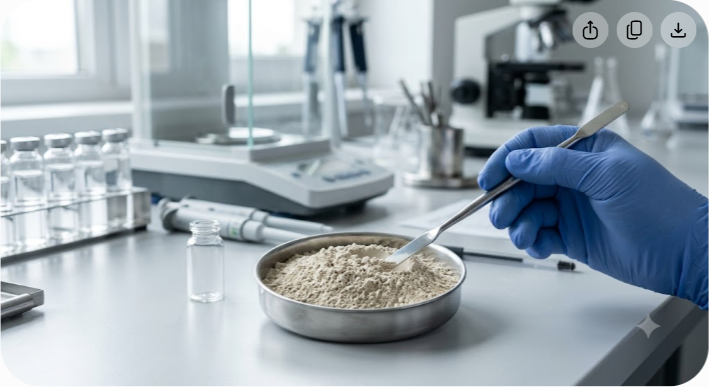
High-purity bentonite is used when a process depends on predictable swelling, viscosity, adsorption, binding, or low permeability. The most important industrial applications include foundry sand binding, water-based drilling fluids, geosynthetic clay liners, iron ore pelletizing, wastewater treatment, specialty pharmaceutical and cosmetic formulations, and selected agricultural applications.
The term "high-purity" does not describe one universal specification. Bentonite quality varies by deposit, mineralogy, processing method, particle-size distribution, exchangeable cations, moisture, and the impurities present. A drilling-fluid grade, for example, is evaluated differently from a foundry grade or a GCL-grade bentonite. The right material is therefore the one whose measured properties match the process requirements.
For buyers and process engineers, the most useful properties to examine are active smectite or montmorillonite content, swelling behavior, cation exchange capacity (CEC), rheology, filtration or fluid-loss performance, particle size, moisture, soluble salts, and the level of non-clay minerals. Sodium-rich bentonite generally provides greater swelling and gel formation than calcium-rich bentonite, although chemical composition and processing can change the final performance.
The seven major industrial application areas covered in this guide are:
Bentonite is a naturally occurring clay material made predominantly of smectite minerals, most commonly montmorillonite. It forms when volcanic ash or similar volcanic material undergoes alteration over geological time. The resulting clay can contain different proportions of quartz, feldspar, carbonates, volcanic glass, iron-bearing minerals, and other components depending on the deposit.
High-purity bentonite has a relatively high proportion of active smectite and a controlled level of unwanted mineral impurities. Processing may include drying, crushing, milling, screening, air classification, beneficiation, or activation. The exact treatment depends on the intended application.
Montmorillonite has a layered 2:1 structure. Each platelet contains an octahedral sheet between two tetrahedral silica sheets. Substitution of ions within the crystal structure creates a net negative charge on the clay surface. Exchangeable cations, such as sodium, calcium, magnesium, and potassium, balance that charge.
This structure explains much of bentonite's industrial value. Water can enter between clay layers, while charged surfaces can interact with dissolved ions and other molecules. When dispersed in water, sufficiently fine bentonite can also form a network that gives the suspension useful viscosity and gel strength.
The dominant exchangeable cation strongly influences how bentonite behaves in water. Sodium bentonite generally hydrates and swells more than calcium bentonite. Calcium bentonite tends to form a less expansive clay structure, although it can still provide useful adsorption, binding, and rheological properties in applications where extreme swelling isn't required.
A simplified comparison looks like this:
| Property | Sodium-Rich Bentonite | Calcium-Rich Bentonite |
|---|---|---|
| Water absorption | Generally high | Generally lower |
| Free swelling | Generally high | Generally lower |
| Gel formation | Strong under suitable conditions | More limited |
| Fluid-loss control | Often excellent after proper dispersion | Usually lower without modification |
| Typical applications | Drilling fluids, GCLs, sealing, selected foundry grades | Foundry, absorbents, binders, selected agricultural uses |
| Response to hard or saline water | Can lose performance as calcium and other ions increase | Often less affected by its already lower swelling state |
Sodium bentonite isn't automatically the best choice for every process. For example, a foundry may select a clay for its combination of swelling, green strength, thermal behavior, and compatibility with the existing sand system rather than simply choosing the material with the highest free-swell value.
There is no single laboratory number that defines high-purity bentonite. A useful specification combines several measurements.
| Property | Why It Matters |
|---|---|
| Smectite or montmorillonite content | Indicates the proportion of active clay minerals |
| Cation exchange capacity | Indicates the clay's ability to exchange and retain cations |
| Free swell | Shows how strongly the clay expands in a specified test medium |
| Rheology | Determines viscosity and gel behavior in fluid systems |
| Fluid loss | Measures how effectively a drilling slurry limits filtrate loss |
| Particle-size distribution | Influences hydration, dispersion, filtration, and handling |
| Moisture content | Affects storage, dosing, transport, and milling |
| Quartz and other grit | Can affect wear, product purity, and process performance |
| Soluble salts | Can interfere with hydration and rheology |
| Chemical composition | Helps confirm consistency and suitability for the end use |
A supplier should provide a current certificate of analysis and, where relevant, test results against the specification used by the customer's industry.
One of the most established uses of sodium bentonite is as a binder in green sand casting. In a typical green-sand system, silica sand is mixed with bentonite, water, and other controlled additions. The hydrated clay coats the sand grains and helps the molding material hold its shape before and during metal pouring.
The binder has to do several jobs at once. It must provide enough strength for mold handling, maintain dimensional stability, allow the mold to vent gases, and release from the casting without creating excessive defects. The optimum formulation depends on the sand system, metal being cast, molding equipment, moisture level, and other additives.
High-purity sodium bentonite can be valuable because its active clay content makes the binder response more predictable. A foundry can then control the balance between clay addition, moisture, compactability, green strength, and other process variables more closely.
Green sand must have adequate strength while it is still moist. Green compression strength indicates how well the mold resists deformation under handling and molding stresses. Wet tensile strength is particularly important near the mold surface, where moisture can migrate and create a high-moisture zone during pouring.
If the binder system is poorly balanced, the result may be mold erosion, sand inclusion, scabbing, veining, poor surface finish, or other casting defects. Excessive clay can also reduce permeability and increase the amount of material that has to be thermally removed from the system.
The correct target values should come from the foundry's own sand-system requirements rather than a universal bentonite number. Molding equipment and casting conditions make a significant difference.
The mold surface is exposed to intense heat when molten metal enters the cavity. Some of the bentonite near the casting interface becomes thermally degraded or "dead clay" and loses its original bonding capacity. Mechanical and thermal reclamation systems remove or reduce some of this inactive material, while fresh bentonite is added to maintain the required properties.
A high-quality binder can help reduce unnecessary additions because more of the supplied clay contributes useful bonding performance. The economic benefit comes from controlling the entire sand system, not simply from buying the clay with the highest laboratory swelling number.
Foundry buyers should therefore compare bentonite using properties such as active clay content, compactability response, green compression strength, wet tensile strength, methylene blue value where applicable, moisture, particle size, and behavior in the plant's actual sand system.
Bentonite is a core component of many water-based drilling fluids. It is used in oil and gas drilling as well as horizontal directional drilling (HDD), water-well drilling, bored piling, diaphragm-wall construction, tunneling, and other civil-engineering operations.
When properly dispersed in water, sodium bentonite increases viscosity and develops gel strength. Those properties allow the drilling fluid to transport cuttings, suspend solids when circulation stops, and help control fluid loss into permeable formations.
The behavior of bentonite slurry comes from the interaction of hydrated clay platelets. Under movement and shear, the structure can flow through pumps and drill strings. When circulation slows or stops, the clay network develops gel strength and can help keep suspended particles from settling rapidly.
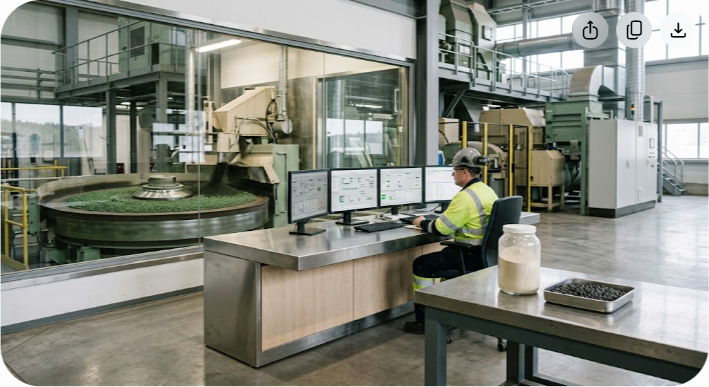
The drilling-fluid formulation still has to be designed around the ground conditions. Bentonite alone cannot compensate for every formation or water-chemistry problem.
A good bentonite slurry forms a relatively low-permeability filter cake on the wall of a porous borehole. The cake limits the amount of filtrate entering the surrounding formation and can help stabilize the borehole.
Fluid loss is affected by much more than clay purity. Particle-size distribution, concentration, water chemistry, temperature, polymers, formation permeability, and shear history all matter. This is why API testing and application-specific slurry trials are more useful than relying on a generic swelling claim.
For drilling products sold into oil and gas applications, buyers commonly look for compliance with the applicable requirements of API Specification 13A. The exact product specification should be checked against the current edition and the particular section applicable to the bentonite grade.
Calcium and magnesium ions can interfere with the hydration and dispersion of sodium bentonite. Saline water can also reduce swelling and alter rheology. In challenging conditions, drilling-fluid engineers may use chemical treatments or polymers alongside bentonite to maintain the required properties.
For HDD and trenching, the choice of bentonite should therefore consider the local water source, soil type, drilling diameter, expected formation pressure, cuttings characteristics, and required fluid-loss performance.
Geosynthetic clay liners (GCLs) use bentonite as a low-permeability barrier in applications such as landfill containment, mining facilities, ponds, canals, and selected secondary-containment systems. A GCL typically contains a layer of bentonite held between geotextile materials. Depending on the product design, the components may be bonded by needle punching, stitching, or another manufacturing method.
Sodium bentonite is widely used because it swells when hydrated and can produce very low hydraulic conductivity when properly confined and installed under suitable conditions.
When water enters the GCL, the bentonite hydrates and expands. Confinement within the geotextile structure promotes formation of a dense clay layer. The resulting barrier can restrict water movement through the liner.
Hydraulic conductivity isn't determined by purity alone. It depends on bentonite mineralogy, swell pressure, applied confining stress, hydration conditions, water chemistry, and the test method. In particular, calcium-rich water can reduce the swelling performance of sodium bentonite.
GCLs can provide a much thinner alternative to compacted clay liners. Their lower mass and thickness can reduce material handling and simplify installation, although site preparation and construction quality remain critical.
Compacted clay liners use locally sourced or imported soil compacted to a specified moisture content and density. They can perform very well when properly designed and constructed, but they require substantial earthwork and careful moisture and compaction control.
| Consideration | GCL | Compacted Clay Liner |
|---|---|---|
| Typical construction thickness | Millimeters to centimeters, depending on product | Often hundreds of millimeters |
| Main sealing material | Bentonite | Compacted clay soil |
| Installation | Roll-out and seam/detail treatment | Earthmoving and controlled compaction |
| Water sensitivity | Requires suitable hydration and confinement | Requires controlled moisture and density |
| Transport volume | Relatively low | Relatively high |
| Quality control | Product and installation testing | Extensive field compaction testing |
Bentonite's swelling can help close small discontinuities and maintain contact with surrounding materials, but it should not be described as an unlimited self-healing system. Large tears, exposed seams, poor overlaps, excessive desiccation, incompatible fluids, or inadequate confinement can compromise a GCL.
For environmental containment, designers should follow the GCL manufacturer's installation requirements and the applicable project specifications. The bentonite grade must also be evaluated for the chemistry of the liquid it will contact.
Iron ore concentrates are extremely fine and generally cannot be fed directly into a blast furnace or direct-reduction process in their loose form. Pelletizing agglomerates the concentrate into stronger, more permeable pellets that can withstand handling and subsequent thermal processing.
Bentonite is widely used as a binder in iron ore pelletizing. The addition rate is relatively small compared with the amount of iron ore, but the binder has an important effect on green pellet strength and handling behavior.
During pelletizing, water and mechanical action bring fine iron ore particles together. Bentonite absorbs water and contributes to the bonding network that helps the green pellets maintain their shape.
The green pellets then pass through screening, conveying, drying, preheating, and firing stages. They need sufficient mechanical strength at each stage to avoid excessive breakage and dust generation.
Bentonite selection involves a trade-off. Too little binder may produce weak green pellets, while excessive binder can introduce unwanted gangue components and affect pellet chemistry. Steelmakers therefore seek a clay that provides the required binding performance at a controlled addition rate.
Silica and other non-iron-bearing minerals introduced through the binder become part of the pellet chemistry. Depending on the process and ore composition, additional gangue can affect slag volume, flux requirements, and furnace performance.
The goal isn't simply to purchase the bentonite with the highest swelling capacity. Pelletizing plants normally evaluate binder dosage, green pellet strength, drop number, moisture response, fired pellet strength, pellet chemistry, and compatibility with the specific concentrate.
High-purity, low-impurity sodium bentonite can be useful when it provides the necessary binding performance at a lower addition rate. The actual optimum should be established through plant trials or controlled laboratory testing.
Bentonite can be used in selected water and wastewater treatment processes as an adsorbent, carrier, or coagulation aid. Applications include turbidity control, removal of certain dissolved contaminants, treatment of oily wastewater after modification, and support for other treatment chemicals.
Its performance comes from the large reactive surface area of fine clay particles and the negative charge associated with montmorillonite surfaces. These characteristics allow bentonite to interact with positively charged ions and some polar molecules.
Montmorillonite has a measurable cation exchange capacity. Exchangeable cations in the clay can be replaced by other positively charged species in solution. Depending on the clay, water chemistry, competing ions, pH, and contaminant concentration, this mechanism can contribute to the removal of metals such as lead, copper, cadmium, nickel, and zinc.
A simplified exchange reaction can be represented as:
This equation represents the ion-exchange concept rather than a guarantee of complete or permanent immobilization. In an actual treatment system, adsorption, precipitation, competition between ions, pH, and solids separation all affect the final result.
Bentonite should therefore be tested with the real wastewater before it is selected as the primary treatment medium.
Fine bentonite can also act as a solids carrier or coagulation aid when combined with conventional coagulants and polymers. The clay particles provide additional surface area, while the combined treatment system can form larger aggregates that settle or can be separated by filtration.
The correct dosage depends on turbidity, suspended solids, pH, coagulant type, mixing conditions, and settling time. Jar testing is a practical way to identify an effective treatment window before full-scale implementation.
Bentonite can be modified with quaternary ammonium compounds to produce organophilic clay. This modification changes the surface chemistry and makes the material more compatible with non-polar organic compounds and oils.
Organoclay products are used in some oil-contaminated wastewater and spill-treatment systems. Performance varies significantly by modification chemistry and contaminant, so broad claims about a fixed oil or PFAS removal percentage should not be made without application-specific test data.
Highly refined bentonite has specialty uses in cosmetics, topical products, pharmaceutical formulations, and other controlled applications. These markets require much tighter control over contaminants and microbiological quality than conventional construction or drilling products.

A material described as "high purity" for an industrial process should not automatically be treated as pharmaceutical grade. Pharmaceutical and cosmetic applications require compliance with the applicable regulatory, pharmacopeial, and customer specifications for the intended market.
Fine bentonite can function as an absorbent, thickener, suspending agent, or rheology modifier in products such as masks, cleansers, creams, and other formulations. Its surface properties allow it to absorb oils and contribute body to water-based formulations.
Formulators need to consider particle size, hydration behavior, pH response, microbiological quality, heavy metals, and compatibility with preservatives and other ingredients. A clay that performs well in one formulation may not be suitable for another.
Bentonite and related pharmaceutical clays have been used as suspending or thickening agents in certain formulations. Their ability to hydrate and develop viscosity can help keep insoluble ingredients dispersed.
However, pharmaceutical use requires more than mineral performance. Identity, purity, microbial limits, elemental impurities, processing controls, and compliance with the applicable pharmacopoeia or regulatory framework must be verified for the finished material.
Claims that bentonite universally "detoxifies" the body or provides medical benefits should be avoided. The legitimate use of a refined clay in a regulated formulation is based on its defined physical and chemical function.
For specialty-grade bentonite, procurement teams should request documentation appropriate to the application. This may include a certificate of analysis, specification sheet, heavy-metal or elemental-impurity results, microbiological data, particle-size data, moisture content, and evidence of compliance with the relevant standard.
Bentonite has several agricultural uses, but the requirements differ sharply between soil amendment, animal feed, and other applications. A product suitable for soil conditioning shouldn't automatically be used in animal feed.
Some bentonite-based feed additives are used as mycotoxin binders, particularly for aflatoxins. The layered structure and surface chemistry of selected smectite clays can adsorb certain mycotoxins in the gastrointestinal tract and reduce their bioavailability.
The effect is not universal across all toxins or all bentonites. Aflatoxin B1, for example, is more readily adsorbed by some clay materials than several other mycotoxins. Product efficacy depends on mineralogy, surface chemistry, toxin concentration, feed composition, inclusion rate, and gastrointestinal conditions.
For this reason, feed-grade clay should be selected using evidence from relevant efficacy testing and the regulatory requirements of the target market. Purity and safety testing are essential because feed additives must not introduce unacceptable levels of heavy metals, contaminants, or other unwanted substances.
Sodium bentonite can also be used as a soil amendment, particularly where coarse or sandy soils have limited water-holding capacity. The clay's ability to absorb and retain water can increase the moisture available within the amended soil.
Its high CEC can also help retain positively charged nutrients such as ammonium, potassium, calcium, and magnesium. The practical result depends on soil texture, climate, application rate, irrigation practices, salinity, drainage, and how uniformly the bentonite is incorporated.
Bentonite isn't a replacement for good soil management. Excessive application, poor incorporation, or use in unsuitable soils can create drainage and handling problems. Field trials are preferable when large areas or high application rates are involved.
A strong technical specification should start with the process requirement and work backward to the mineral properties. Buying solely on the words "high purity" or "high swelling" leaves too much room for variation between suppliers.
X-ray diffraction (XRD) can identify the clay minerals and associated non-clay phases. Depending on the application, buyers may also use methylene blue testing or other methods as indicators of active clay content.
Ask the supplier how the reported montmorillonite or smectite percentage was measured. Different analytical methods can produce values that aren't directly comparable.
Free swell is useful when swelling is important, particularly for sealing and some drilling applications. ASTM D5890 is commonly associated with free-swell testing for clay used in geosynthetic clay liner applications.
The test medium matters. A bentonite's swelling in distilled or deionized water may differ significantly from its behavior in hard, saline, or contaminated water. Always compare results generated under the same test conditions.
CEC provides information about the number of exchangeable cations the clay can hold. High values are often associated with active smectite-rich material, but CEC alone doesn't predict every industrial property.
A buyer should treat CEC as one part of the specification alongside swelling, rheology, particle size, chemical composition, and application-specific testing.
Drilling-fluid buyers should review viscosity, yield behavior, gel strength, and fluid loss under the relevant standard. API Specification 13A provides established testing requirements for bentonite used in drilling-fluid applications.
The actual slurry should also be tested using the water source and additives used at the job site. Laboratory water and field water can produce very different results.
X-ray fluorescence (XRF) can provide elemental composition data, while other laboratory methods may be required for specific contaminants. Buyers should pay particular attention to silica-bearing grit, carbonates, soluble salts, iron, and trace elements when those properties affect the application.
For regulated applications, testing should cover the specific impurities and limits required by the applicable standard rather than relying on a general statement of purity.
A supplier may provide an excellent laboratory sample while delivering material that varies considerably between shipments. Consistency matters just as much as peak performance when a plant processes hundreds or thousands of tonnes of material.
Ask for recent certificates of analysis, specification limits, sampling procedures, and information about the mining and processing operation. For long-term supply contracts, agreed acceptance criteria and periodic independent testing can provide additional protection.
More swelling isn't automatically better. A foundry binder, drilling fluid, GCL, and pelletizing binder each need a different balance of properties. A product with exceptionally high free swell may not deliver the best overall result in a particular process.
Two sodium bentonites can have noticeably different rheology, filtration, swelling, particle-size distribution, and salt tolerance. Deposit mineralogy and processing history matter.
Hard or saline water can reduce the hydration and dispersion of sodium bentonite. Testing the clay in the actual process water can reveal problems that aren't visible in a standard laboratory test using clean water.
A lower-cost product can become expensive if it requires a higher dosage, causes process instability, increases waste, or creates inconsistent product quality. Compare cost per unit of useful performance, not simply the purchase price.
Drilling, foundry, construction, feed, cosmetic, and pharmaceutical grades are not interchangeable. The required purity, testing, documentation, and regulatory controls differ substantially.
High-purity bentonite earns its place in industrial processes because of a combination of mineral chemistry and physical behavior. Sodium-rich smectite can absorb water, swell, form a gel, exchange cations, bind particles, and create a low-permeability barrier when conditions are suitable.
Its most important industrial applications include foundry sand binding, drilling fluids, GCLs, iron ore pelletizing, wastewater treatment, specialty formulations, and selected agricultural and feed applications.
The best grade depends on the job. For a drilling fluid, rheology and filtration may matter most. For a GCL, swelling pressure, hydraulic conductivity, and compatibility with site chemistry are critical. A foundry may focus on green strength, compactability, thermal behavior, and sand reclamation. A pelletizing plant may prioritize binding performance at low dosage and low impurity contribution.
That is why a reliable procurement process starts with measurable specifications rather than generic purity claims. Request a certificate of analysis, confirm the relevant testing standards, test representative samples, and compare the material under actual process conditions.
For bulk supply, international sourcing, or a grade matched to a specific industrial application, Axewelledge can provide product information and technical specifications for evaluation. Buyers should define their target properties and end use before selecting the appropriate bentonite grade.













Have questions about our products? We're here to help!