Axewelledge, a leading exporter from India, specializes in high-quality Bentonite. With a commitment to excellence, we supply premium Bentonite to the Middle East and Southeast Asia markets.


North Angle Complex, 304,
150 Feet Ring Rd, Opposite Ambedkar Nagar BRTS Stop,
Madhav Park, Punit Nagar,
Mavdi, Rajkot, Gujarat 360004
© Axewelledge 2026, All Rights Reserved.
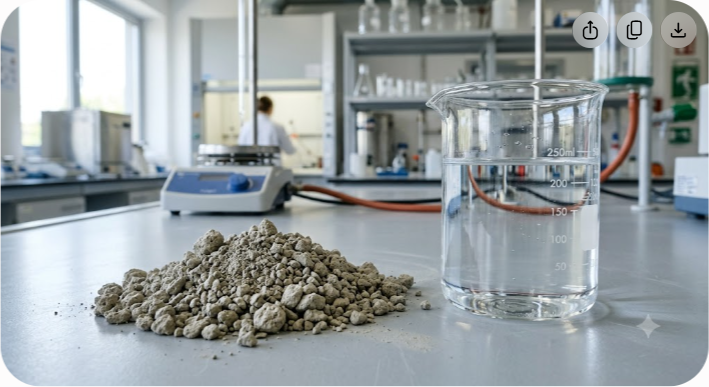
Managing wastewater isn't just a regulatory hurdle anymore. It’s a core component of your facility's operational efficiency and environmental footprint. If you're looking for a way to streamline your treatment process while staying ahead of tightening environmental standards, you might be overlooking one of nature’s most effective tools: bentonite.
At Axewelledge, we see firsthand how this versatile clay transforms industrial water management. It's not just about compliance; it's about making your system work harder for you. Let's look at how bentonite—specifically high-grade sodium bentonite—is reshaping the landscape of industrial wastewater treatment in the USA.
Bentonite is essentially a high-swelling clay primarily composed of montmorillonite. When you put it in contact with water, it doesn't just sit there. Its unique layered structure allows it to expand significantly, creating a massive surface area relative to its size. This is where the magic happens for wastewater.
In industrial settings, water is rarely just water. It’s a cocktail of heavy metals, suspended solids, oils, and chemical pollutants. You need something that can grab these contaminants and pull them out of suspension. Because of its negatively charged surface and high cation exchange capacity, bentonite acts like a chemical magnet. It attracts positively charged pollutants, binding them tight so you can filter them out.
Efficiency is the heartbeat of any industrial operation. If your water treatment cycle is sluggish or requires massive amounts of synthetic chemicals, your overhead costs are likely higher than they need to be. Integrating bentonite into your coagulation and flocculation processes can change that dynamic.
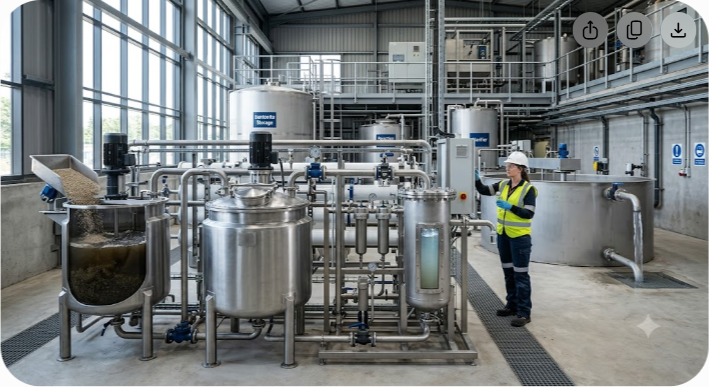
In many plants, you're using polymers or chemical coagulants to clump particles together. These chemicals are expensive and can be difficult to manage. Bentonite acts as a highly effective weighting agent. When you add it to your process, it helps smaller, lighter particles bond into heavier flocs that settle rapidly. This reduces the time your tanks need to sit stagnant. Faster settling means higher throughput. If you’re processing thousands of gallons daily, saving an hour per cycle adds up to significant operational gains by the end of the month.
Some industrial effluents, particularly from the automotive, metal plating, and chemical manufacturing sectors, contain heavy metals like lead, cadmium, or chromium. These are tough to remove. Bentonite’s adsorption capabilities are impressive here. It doesn’t just trap solids; it chemically interacts with dissolved ions. By fine-tuning the dosage, you can achieve cleaner effluent that meets discharge standards more consistently, avoiding costly fines and environmental risks.
Sustainability is no longer a buzzword. It’s an economic reality. Investors, regulators, and your local community are watching how you manage your waste streams. Choosing a naturally occurring mineral like bentonite over synthetic, petroleum-derived chemical additives is a clear step toward a circular economy.
Think about what you're currently dumping into your treatment basins. Often, standard chemical treatments leave behind a complex chemical sludge that is hazardous and expensive to dispose of. Because bentonite is a natural mineral, it can often replace or significantly reduce the reliance on synthetic polymers. This leads to a sludge profile that is easier to manage, sometimes even simplifying your waste disposal logistics.
Efficiency isn't just about chemicals; it's about energy. If your filtration systems are constantly clogging, your pumps are working harder than necessary. By using bentonite to improve floc formation and settling rates, you’re essentially helping your equipment run smoother. A well-designed settling process requires less mechanical intervention and energy-intensive dredging or cleaning.
We’ve seen our bentonite utilized across a variety of sectors, each with its own set of challenges. Here’s a breakdown of how it fits into the broader industrial picture.
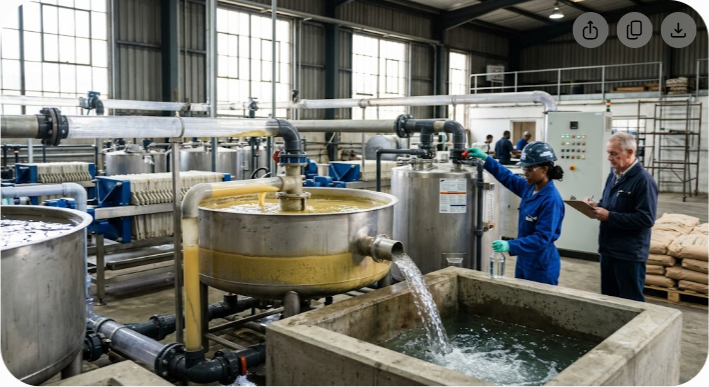
If you’re considering switching to or incorporating bentonite, it’s not as simple as dumping a bag into a tank. You need to understand your specific water chemistry.
We manage our own mining reserves, which means we have total control over the quality of the mineral from the moment it’s extracted. We’ve spent over 15 years refining our processing techniques to ensure that our sodium bentonite provides consistent swelling and binding properties.
When you’re dealing with industrial wastewater, consistency is everything. If your bentonite varies from batch to batch, your treatment results will vary, too. That’s a headache you don’t need. By leveraging our large-scale reserves and advanced processing, we provide a reliable, stable product that allows you to standardize your treatment protocols once and for all.
Looking ahead, we expect the demand for cleaner water to only increase. Regulations are getting stricter, and the cost of water is rising. The most successful facilities will be those that view wastewater not as a cost center, but as a system that can be optimized.
Implementing bentonite is a low-risk, high-reward strategy. It’s an established, proven technology that doesn’t require a total overhaul of your existing infrastructure. Whether you’re looking to improve your flocculation rates, reduce your reliance on synthetic chemicals, or simply meet tougher discharge requirements, it offers a pathway to operational excellence.
It’s time to move past the traditional reliance on heavy-duty chemical treatment and look at how natural minerals can provide a more sustainable, efficient path forward. Your bottom line—and the environment—will thank you for it. If you’re ready to see how your specific wastewater stream responds to high-grade bentonite, we’re here to help you test, evaluate, and implement a solution that works for the long haul. We’ve done this for clients across the globe, and we’re eager to see what efficiency gains you can unlock in your own facility.
By focusing on the basics—like surface area, cation exchange, and proper dispersion—you can turn a complex wastewater problem into a manageable, cost-effective process. It’s about working smarter, not just harder. With the right mineral partner, your treatment plant can become a model for efficiency in your industry.













Have questions about our products? We're here to help!