Axewelledge, a leading exporter from India, specializes in high-quality Bentonite. With a commitment to excellence, we supply premium Bentonite to the Middle East and Southeast Asia markets.


North Angle Complex, 304,
150 Feet Ring Rd, Opposite Ambedkar Nagar BRTS Stop,
Madhav Park, Punit Nagar,
Mavdi, Rajkot, Gujarat 360004
© Axewelledge 2026, All Rights Reserved.
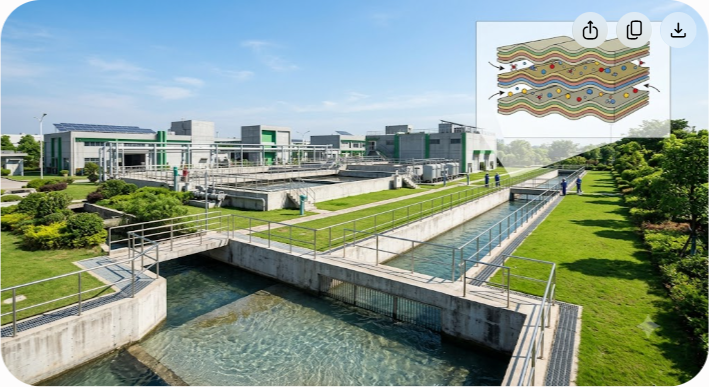
Water is the lifeblood of our communities and industries, yet managing the byproduct of our economic progress—wastewater—remains one of the steepest challenges of our time. Traditional municipal and industrial treatment plants are facing a double whammy: increasingly stringent environmental regulations from agencies like the EPA and skyrocketing operational costs. Legacy chemical treatment systems rely heavily on synthetic polymers and harsh coagulants. While these methods get the job done, they often leave behind a toxic trail of secondary chemical sludge that is notoriously difficult and expensive to handle.
Enter high-purity sodium bentonite. This naturally occurring volcanic clay is quietly rewriting the rules of sustainable infrastructure. Thanks to its remarkable molecular structure, high swelling capacity, and exceptional adsorption properties, bentonite is shifting from a standard industrial additive to a cornerstone of green wastewater engineering. When sourced from massive, high-quality reserves like those managed by global producers such as Axewelledge, this humble mineral offers a pathway to clean water that balances fiscal responsibility with genuine environmental stewardship.
To understand why high-purity bentonite is so incredibly effective, you have to look at it under a microscope. Bentonite is primarily composed of montmorillonite, a layered silicate mineral. The magic lies in its structure: thin, three-layer sheets stacked on top of one another. The internal surfaces of these layers carry a negative electrical charge, while the edges carry a slight positive charge.
When sodium bentonite comes into contact with water, it absorbs molecules into its interlayer spaces, swelling up to several times its dry volume. This creates a vast, highly active surface area. Think of it as a microscopic, super-charged sponge. The negative charge on the clay's surface acts like a magnet for positively charged contaminants floating in wastewater. This includes heavy metals like lead, copper, and cadmium, as well as complex organic compounds, dyes, and emulsified oils.
Unlike synthetic filters that merely trap particles mechanically based on size, bentonite works via adsorption and ion exchange. Contaminants bond chemically and physically to the clay platelets. Once the bentonite captures these pollutants, its high swelling and natural binding properties cause it to aggregate into dense, stable clumps. These clumps settle out of the water quickly, leaving behind a clear, purified liquid ready for discharge or recycling.
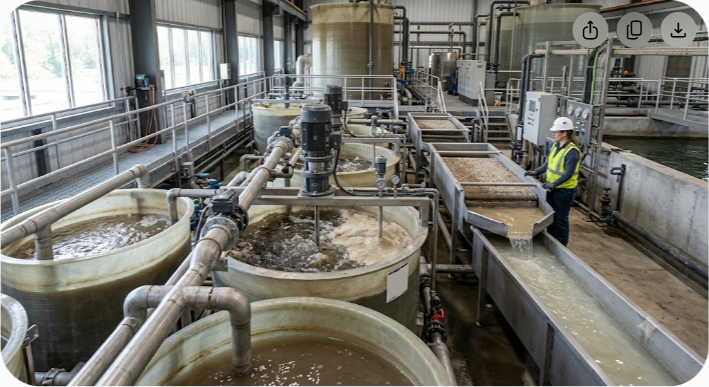
For decades, aluminum sulfate (alum) and ferric chloride have been the standard coagulants in wastewater treatment. They are effective at removing suspended solids, but they come with a major catch. They dramatically lower the pH of the treated water, requiring secondary chemical additions like lime or caustic soda to neutralize it before discharge. Worse yet, they generate massive volumes of gelatinous, chemical-laden sludge.
Disposing of this hazardous sludge in landfills is becoming a financial black hole for treatment facilities, thanks to rising tipping fees and strict regulatory oversight. High-purity bentonite offers a clean break from this cycle. As a natural, non-toxic mineral, it does not alter the fundamental pH balance of the water, eliminating the need for neutralizing chemicals.
The sludge produced by bentonite treatment is compact, stable, and dramatically lower in volume compared to chemical alternatives. Because it is free from toxic synthetic polymers, this mineral-rich sludge is far easier to dewater using standard filter presses. In some agricultural and industrial contexts, the resulting dry cake can even be repurposed rather than buried, shrinking the facility's overall carbon footprint.
Industrial operations, from automotive manufacturing to electronic plating, generate effluents packed with toxic heavy metals. Municipal facilities deal with a cocktail of pharmaceutical residues, personal care products, and surfactants. Dealing with both types of contamination usually requires complex, multi-stage treatment trains. Bentonite simplifies this process by tackling both fronts simultaneously.
Through its inherent ion-exchange mechanism, sodium bentonite swaps out harmless sodium ions for heavy metal ions present in the water. Zinc, nickel, chrome, and lead are locked tight within the clay matrix. Even in solutions with low metal concentrations where traditional precipitation methods fail, high-purity bentonite can polish the water to meet strict federal and state drinking-water-source standards.
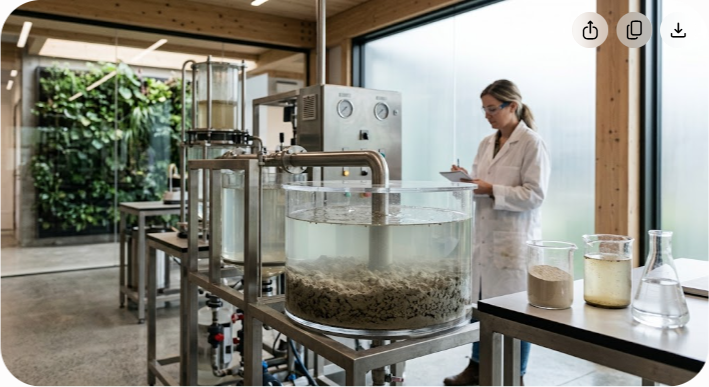
In industries like food processing and petroleum refining, emulsified oils and greases pose a nightmare for standard filtration membranes, clogging them rapidly. Bentonite's affinity for organic molecules allows it to break down these emulsions. It encapsulates the oil droplets, binding them into heavy flocs that drop out of suspension, protecting downstream equipment and membranes from premature fouling.
Wastewater treatment is not just about what happens inside the tanks; it is about protecting the surrounding environment from leaks and seepage. Holding ponds, equalization basins, and anaerobic lagoons require foolproof containment systems. Traditional concrete basins are prone to cracking over time due to ground shifting, while synthetic plastic liners (HDPE) can puncture or degrade under UV exposure.
High-purity sodium bentonite solves this vulnerability through Geosynthetic Clay Liners (GCLs) and soil-bentonite slurry walls. When a layer of bentonite is sandwiched between geotextiles or mixed into the native soil of a lagoon bed, it hydrates to form a virtually impermeable barrier.
If the ground shifts or a minor tear occurs, the bentonite does something extraordinary: it heals itself. As it comes into contact with moisture, it swells to fill the void, sealing the breach automatically. This self-healing property provides long-term peace of mind for municipal engineers and industrial operators alike, preventing hazardous contaminants from leaching into local groundwater tables for decades.
Implementing advanced green technology can sometimes feel out of reach for municipalities operating on tight public budgets or companies trying to maintain lean manufacturing margins. However, high-purity bentonite is highly cost-effective because it utilizes existing infrastructure. Facilities do not need to tear out their current systems; bentonite can be introduced via existing dry-feed or slurry-injection setups.
To make this sustainable shift viable on a macro scale, a reliable, high-volume supply chain of top-tier mineral reserves is absolutely essential. This is where specialized global producers play a vital role. Companies like India-based Axewelledge, leveraging extensive mine ownership and massive high-quality reserves, ensure that industrial operations across the globe have access to the consistent, highly refined sodium bentonite needed to keep massive treatment plants running without interruption.
As the world transitions toward a circular economy, treating wastewater can no longer be viewed as a costly regulatory burden. Instead, it must be approached as an opportunity for resource recovery and environmental restoration. By embracing high-purity bentonite, modern infrastructure can achieve pristine water quality, lower operating costs, and eliminate hazardous waste—all by utilizing one of the earth's most abundant, natural minerals.













Have questions about our products? We're here to help!