Axewelledge, a leading exporter from India, specializes in high-quality Bentonite. With a commitment to excellence, we supply premium Bentonite to the Middle East and Southeast Asia markets.


North Angle Complex, 304,
150 Feet Ring Rd, Opposite Ambedkar Nagar BRTS Stop,
Madhav Park, Punit Nagar,
Mavdi, Rajkot, Gujarat 360004
© Axewelledge 2026, All Rights Reserved.
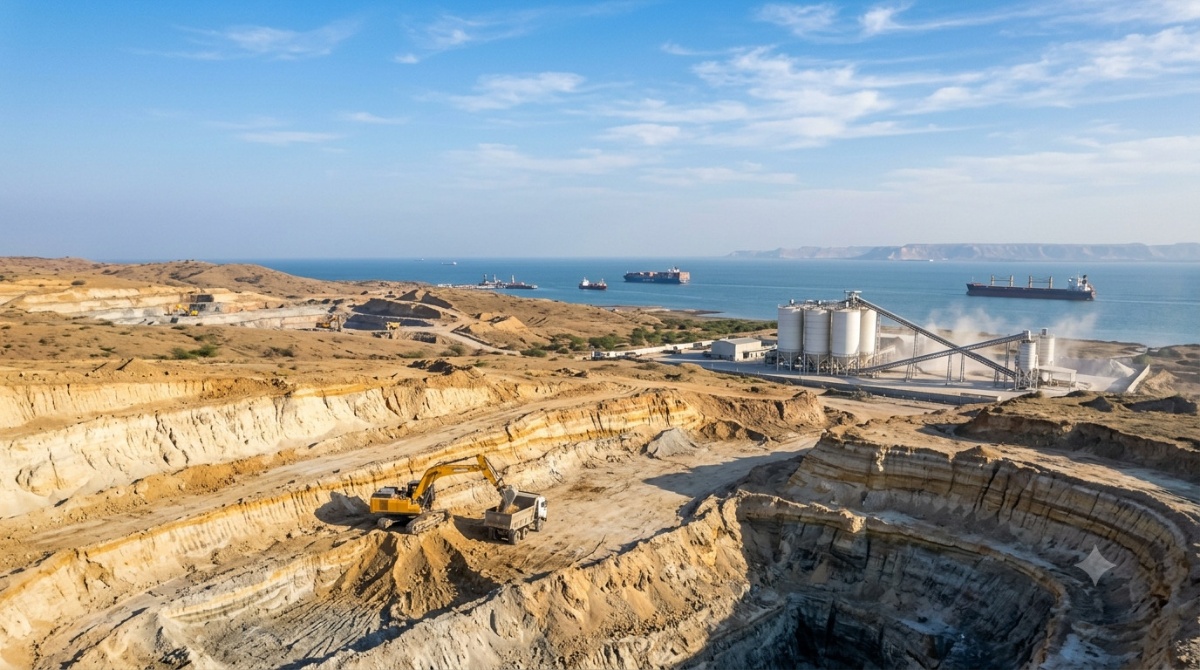
The industrial landscape of the Sultanate of Oman is expanding at an unprecedented rate. Driven by ambitious national economic visions, the country is witnessing massive investments in mega-infrastructure, urban development, water conservation, and its foundational oil and gas sectors. Beneath the surface of these massive engineering feats lies a critical, versatile mineral that holds everything together: bentonite clay.
As an indispensable component in drilling fluids, civil engineering foundations, metal casting, and environmental containment, high-performance clay is in constant demand throughout the Gulf Cooperation Council (GCC) region. However, because local commercial reserves are limited compared to global giants, Omani enterprises look across the Arabian Sea to secure their supply chains.
Their destination of choice? The Kutch district of Gujarat, India. This unique region holds some of the world’s richest, most reliable deposits of high-yield sodium and calcium bentonite.
Sourcing this vital raw material involves a complex process. Navigating international logistics, identifying specialized mineral grades, and conducting meticulous quality checks require significant expertise. Successful Omani procurement teams rely on a systematic approach to unlock the strategic potential of Kutch bentonite, partnering with leading Indian producers to power their industrial growth.
Oman’s diverse industrial landscape creates a complex set of demands for specialized mineral properties. The unique geological conditions of Kutch, Gujarat, produce bentonite with exact chemical and physical traits that perfectly match these varied commercial needs.
The Sultanate's upstream energy sector remains a primary consumer of industrial minerals. In complex rotary drilling operations, deep well exploration, and horizontal directional drilling (HDD) projects, the stability of the borehole is paramount. Kutch sodium bentonite is highly valued here for its rapid hydration and exceptional swelling index.
When mixed with water, it forms an advanced thixotropic slurry. This drilling mud cools and lubricates the drill bit, applies hydrostatic pressure to prevent well collapse, and suspends heavy drill cuttings to transport them efficiently to the surface. Omani operators specifically source Kutch material because it meets or exceeds stringent American Petroleum Institute (API 13A) and OCMA standards, ensuring reliable performance in high-temperature, high-pressure downhole environments.
From the expansion of modern port facilities in Sohar and Salalah to urban metro developments and deep foundation piling for commercial complexes, Oman’s construction sector faces challenging soil conditions. Coastal regions often present loose, sandy, or highly permeable strata.
Civil contractors use Kutch sodium bentonite to build structural diaphragm walls, execute tunnel boring operations, and secure foundation piles. The clay acts as a superior sealing agent, penetrating the surrounding soil to form an impermeable "filter cake." This layer seals the excavation walls, stabilizes the ground, and prevents groundwater infiltration during critical structural pours.
Oman's industrial diversification has spurred the growth of modern metal foundries and manufacturing plants supporting the automotive, shipping, and utility sectors. These facilities rely heavily on high-quality binding agents to produce precise green sand molds for ferrous and non-ferrous metal castings.
Kutch calcium and activated bentonite grades provide the high thermal stability and excellent dry bond strength needed for these applications. The mineral ensures that green sand molds retain their precise geometric integrity under the intense heat of molten metal. This drastically reduces casting defects, improves surface finishes, and enhances overall operational efficiency.
Water scarcity is a defining challenge across the Arabian Peninsula. Oman actively invests in advanced wastewater treatment facilities, industrial sludge management, agricultural soil remediation, and secure landfill containment systems.
Bentonite from Kutch serves as a natural, highly efficient eco-friendly barrier. Its excellent adsorption and ion-exchange capabilities allow it to trap heavy metals, industrial toxins, and chemical contaminants from wastewater. Furthermore, when deployed in geosynthetic clay liners (GCLs) for landfills or industrial evaporation ponds, its superior swelling and sealing capacity protects precious groundwater tables from hazardous leachate contamination.
The journey to successful procurement begins with a clear technical understanding of the mineral itself. Bentonite is not a uniform commodity; it is a highly variable volcanic clay primarily composed of the clay mineral montmorillonite. The specific exchangeable cations present within its crystal lattice define its industrial behavior and ultimate utility. Omani procurement teams carefully categorize their sourcing requirements into distinct commercial classifications:
Characterized by the dominance of sodium ions within its molecular structure, this variety boasts an extraordinary ability to absorb water and swell up to several times its dry volume. This immense swelling index yields high viscosity, excellent gel strength, and superior filtration control.
Omani buyers prioritize this grade for oilfield drilling muds, horizontal directional drilling, trenchless infrastructure installation, civil engineering piling, and pond or reservoir sealing.
Unlike its sodium counterpart, calcium bentonite exhibits a lower swelling capacity but possesses excellent natural adsorption, binding, and catalytic properties. This makes it highly sought after by foundries for green sand molding, by agricultural enterprises for animal feed additives and fertilizer granulometry, and by chemical processors for wastewater purification.
To meet highly specific technical requirements, raw Kutch lumps are frequently subjected to modification processes. This includes thermal activation or acid treatment to create specialized bleaching earths and refined industrial filtrates. These advanced formulations are extensively utilized in industrial filtration systems, environmental remediation projects, and even specialized cosmetic manufacturing across the GCC.
The Kutch district of Gujarat is internationally recognized as a premier hub for bentonite extraction and refinement. The region’s unique arid geology has preserved vast, high-purity deposits of montmorillonite clay that are easily accessible via open-cast mining methods. However, for an Omani importer, simply identifying the region is insufficient. Evaluating a supplier’s operational infrastructure is critical to securing a reliable, long-term supply.
Experienced buyers look beyond marketing claims and deeply investigate a partner’s production capabilities. A reliable exporter must possess extensive, well-managed mine reserves to guarantee a steady raw material supply, safeguarding the importer against sudden market shortages or price spikes.
Furthermore, the supplier's processing facilities must feature advanced milling technology, automated screening mechanisms, and climate-controlled drying beds. This infrastructure is essential to achieve uniform particle size distribution, maintain optimal moisture profiles, and eliminate the risk of external grit or quartz contamination.
Equally important is the exporter's commitment to stringent quality control. Elite suppliers maintain fully equipped, state-of-the-art laboratory testing facilities directly on-site. Every production batch undergoes rigorous evaluation, measuring core rheological parameters such as yield point, plastic viscosity, mesh fineness, and swelling index.
Importers receive a comprehensive Certificate of Analysis (COA) for every shipment, providing complete transparency and ensuring full compliance with international engineering and industrial standards.
In the international mineral trade, a Certificate of Analysis is the definitive proof of product quality. Omani technical procurement officers evaluate several key laboratory parameters listed on the COA before authorizing any large-scale commercial shipment from Kutch:
| Core Analytical Parameter | Standard Industrial Target Range | Strategic Importance for Omani Importers |
| Montmorillonite Content | 75% to 95%+ (Grade Dependent) | Represents the active mineral component; higher purity directly correlates with superior swelling, binding, and adsorption performance. |
| Swelling Capacity | 18 to 35+ ml / 2 grams | Critical for civil engineering, piling, and drilling; confirms the clay's ability to hydrate fully and form an effective impermeable barrier. |
| Moisture Profile | 8% to 12% (Strictly Controlled) | Excess moisture inflates global freight costs and triggers product lumping in silos; insufficient moisture indicates over-drying, which degrades the clay's natural crystal lattice. |
| Viscosity & Yield Point | 30 to 60+ cps (API Drilling Grades) | Measures the slurry's flow resistance and carrying capacity; vital for stabilizing deep boreholes and efficiently transporting heavy drill cuttings. |
| Sieve/Mesh Analysis | 200 Mesh to 325 Mesh passing (98%+) | Determines the fineness of the processed powder; essential for uniform dispersion in liquid mixing systems and achieving optimal binding strength in foundry sand. |
| pH Value | 8.0 to 10.5 (Alkaline Range) | Influences chemical compatibility with local water sources, treatment chemicals, polymer additives, and specialized environmental formulations. |
Sourcing premium mineral reserves is only half the battle; transporting thousands of metric tons of heavy bulk commodities across international borders requires a highly optimized maritime logistics strategy. The geographic proximity between the western coast of India and the Sultanate of Oman offers a massive competitive advantage, resulting in fast transit times and highly efficient shipping routes.
+------------------------------------------+
|  Kutch Mining & Processing Facilities    |
|  (Bhuj / Mandvi / Mundra Regions)        |
+---------------------+--------------------+
                      |
                      | (Secure Trucking / Container Loading)
                      v
+------------------------------------------+
|    Major Gujarat Maritime Gateways       |
|   (Mundra Port / Kandla Port / Mandvi)   |
+---------------------+--------------------+
                      |
                      | (Ocean Freight - Arabian Sea Transit)
                      v
+------------------------------------------+
|        Omani Commercial Ports            |
|       (Port of Sohar / Salalah)          |
+---------------------+--------------------+
                      |
                      | (Local Customs Clearance & Inland Haulage)
                      v
+------------------------------------------+
|     Industrial End-Users & Projects      |
|    (Oilfields, Foundries, Civil Sites)   |
+------------------------------------------+
Bentonite is highly sensitive to ambient humidity and atmospheric moisture. If exposed to the elements during ocean transit, the powder can pre-hydrate, form dense lumps, and lose its industrial efficacy before arriving at the project site. Kutch exporters utilize robust, heavy-duty packaging configurations to prevent this damage:
Multi-Wall Paper & PP Bags (25 KG / 50 KG): Ideal for smaller operations, manual batch mixing systems, and distribution through local retail supply chains.
Flexible Intermediate Bulk Containers (FIBC Jumbo Bags - 1.0 to 1.5 Metric Tons): The standard choice for large-scale industrial consumers. These jumbo bags feature heavy-duty UV-stabilized woven polypropylene, moisture-resistant internal polyethylene liners, and reinforced lifting loops for safe mechanical handling.
Bulk Container Liners & Loose Shipments: Utilized for massive infrastructure projects or dedicated manufacturing facilities equipped with integrated pneumatic silo unloading networks.
The Kutch region is uniquely positioned near some of India's largest and most technologically advanced deep-water seaports, including Mundra Port and Kandla Port. These maritime gateways offer expansive container terminals, dedicated bulk cargo berths, and highly efficient customs documentation infrastructure.
From these hubs, major shipping lines operate frequent, direct containerized and break-bulk vessel routes across the Arabian Sea to Oman’s primary commercial ports, such as the Port of Sohar and the Port of Salalah. This streamlined maritime corridor minimizes ocean transit times—often to just a few days—allowing Omani enterprises to maintain lean on-site inventories, optimize warehouse space, and sharply reduce working capital tied up in transit.
Navigating international trade regulations is vital to avoid costly delays at port customs terminals. Omani border authorities maintain precise entry requirements for raw materials and processed industrial minerals to ensure safety, environmental compliance, and accurate tax assessment. Successful importers collaborate closely with their Indian exporting partners to ensure that every single document is flawlessly prepared and issued before the vessel departs India:
Accurate HS Code Classification: Bentonite must be classified precisely under the Harmonized System structure to prevent misdeclaration penalties. Processed or ground industrial bentonite typically utilizes HS Code 2508.10.90, while crude, unprocessed lumps fall under HS Code 2508.10.10. Using the correct code ensures smooth automated processing through Oman’s customs systems.
Comprehensive Commercial Documentation: Every shipment must be accompanied by a detailed Commercial Invoice detailing product values, a precise Packing List specifying container weights and packaging types, and a clean Bill of Lading providing legal proof of maritime transit.
Verified Certificate of Origin (COO): This document legally verifies that the bentonite was mined and processed within India. It is essential for customs verification and ensuring compliance with regional trade pacts and tariff structures.
Technical Data Sheets (TDS) and Material Safety Data Sheets (MSDS): These documents outline the mineral’s safe handling procedures, physical properties, chemical stability, and environmental safety profiles. They are vital for port safety inspectors and industrial warehouse managers alike.
Sourcing high-quality bentonite from Kutch, Gujarat, is a strategic choice for Omani industrial enterprises looking to optimize their supply chains, boost project efficiencies, and reduce operational costs. By establishing a clear, step-by-step procurement framework—spanning rigorous technical grading, comprehensive supplier evaluations, strict COA analyses, and secure maritime logistics—importers can reliably access India's vast mineral wealth without friction.
In this highly specialized, quality-driven global market, choosing the right production partner makes all the difference. For businesses seeking a premium, reliable supply of natural minerals, Axewelledge stands out as a premier partner in the sector. Ranked among India's elite mineral exporters, the company combines vast, sustainable mine ownership with advanced laboratory testing and world-class processing capabilities.
Whether your enterprise requires specialized API-compliant sodium bentonite for challenging oilfield drilling projects, high-bond calcium formulations for precision metal casting, or custom grades for infrastructure piling, exploring the Axewelledge official website provides direct access to a comprehensive portfolio of high-performance solutions.
To deepen your understanding of mineral procurement and gain valuable insights into international shipping, technical quality standards, and industry-specific applications, check out the Axewelledge blog for a wealth of expert guidance. Aligning your procurement strategy with an experienced, quality-focused industry leader ensures your vital projects are backed by uncompromised mineral purity, reliable delivery timelines, and elite technical support for long-term operational success.













Have questions about our products? We're here to help!