Axewelledge, a leading exporter from India, specializes in high-quality Bentonite. With a commitment to excellence, we supply premium Bentonite to the Middle East and Southeast Asia markets.


North Angle Complex, 304,
150 Feet Ring Rd, Opposite Ambedkar Nagar BRTS Stop,
Madhav Park, Punit Nagar,
Mavdi, Rajkot, Gujarat 360004
© Axewelledge 2026, All Rights Reserved.
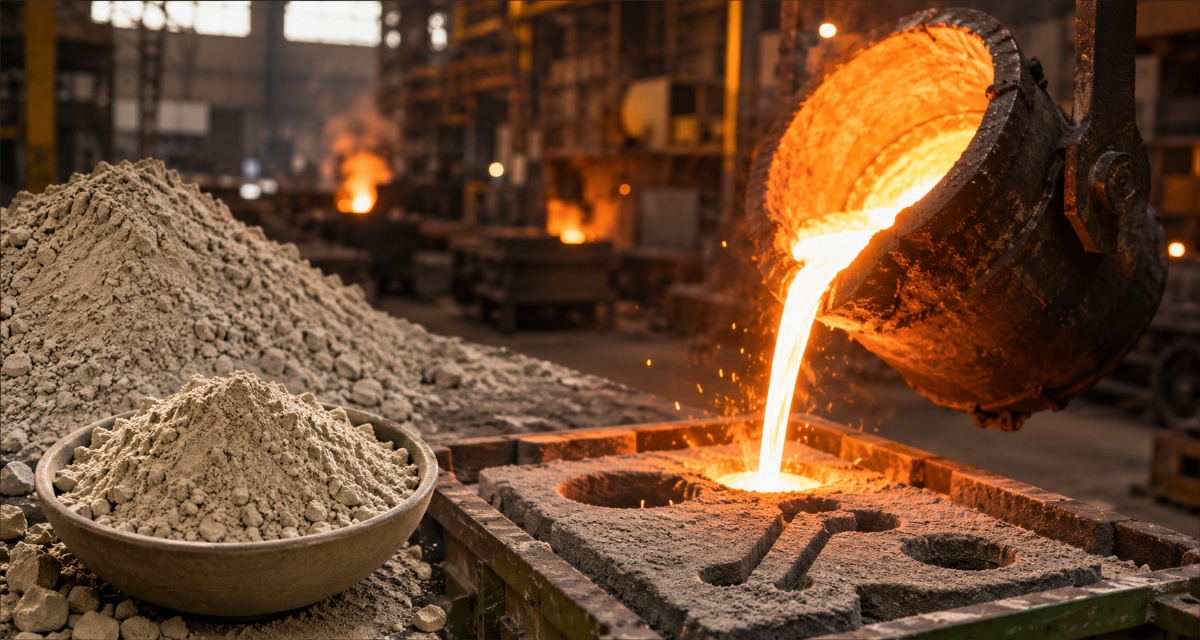
The metal casting industry plays a critical role in Saudi Arabia's industrial growth. From oil and gas equipment to automotive components, construction machinery, valves, pumps, and engineering products, foundries across Saudi Arabia rely on high-quality casting materials to produce durable and precise metal components. One of the most important materials used in the foundry process is bentonite, a natural clay mineral that acts as a binder in molding sand.
India has emerged as one of the world's leading suppliers of premium bentonite, particularly from Gujarat, which possesses some of the richest bentonite reserves globally. Saudi foundries increasingly depend on Indian bentonite because of its superior binding properties, thermal stability, consistency, and cost-effectiveness. Indian bentonite helps foundries create strong molds that can withstand molten metal temperatures while delivering high-quality castings with minimal defects.
Companies such as Axewelledge have become trusted partners for international buyers seeking reliable bentonite exports. Through its website, Axewelledge supplies premium bentonite products to industries worldwide, including the Middle East and Saudi Arabia.
Metal casting involves pouring molten metal into a mold cavity and allowing it to solidify into the desired shape. The quality of the mold directly affects the quality of the finished casting.
Bentonite serves as a crucial binder in green sand molding systems. When mixed with silica sand and water, bentonite forms a cohesive mixture that can be shaped into molds capable of retaining their structure during metal pouring. The clay creates a sticky coating around sand grains, providing the necessary strength and flexibility required for casting operations.
A typical green sand mixture contains:
The bentonite component generally accounts for around 8–10% of the mixture, making it one of the most critical ingredients in foundry sand systems.
Saudi Arabia is investing heavily in industrial diversification under its economic development initiatives. The country has expanded manufacturing activities across sectors including:
All these industries require cast metal products, increasing the demand for high-performance foundry materials.
Foundries throughout Saudi Arabia continuously seek reliable bentonite suppliers capable of delivering consistent quality and large volumes. Indian bentonite has become a preferred choice because of its proven performance and steady supply chain.
One of the primary reasons Saudi foundries import Indian bentonite is its outstanding binding capability.
When bentonite is mixed with water, it swells and creates strong bonds between sand particles. This helps molds maintain their shape during handling, compaction, and metal pouring. Strong molds reduce casting defects and improve dimensional accuracy.
Benefits include:
Molten metals such as iron and steel reach extremely high temperatures during casting.
Indian foundry-grade bentonite offers exceptional thermal resistance, enabling molds to maintain their integrity under intense heat conditions. This minimizes mold collapse and helps achieve defect-free castings.
Saudi foundries producing:
particularly benefit from these properties.
Consistency is essential in industrial production.
Indian bentonite manufacturers employ strict quality control measures to ensure uniform:
This consistency allows Saudi foundries to maintain stable production processes and predictable casting results.
Saudi foundries constantly seek ways to reduce production costs without sacrificing quality.
Indian bentonite offers an excellent balance between performance and affordability. Compared to many alternative binders, bentonite delivers:
These factors contribute to lower overall production expenses.
Saudi Arabia's growing manufacturing sector requires a stable and scalable supply of raw materials.
India's extensive bentonite reserves and advanced mining infrastructure enable exporters to meet large-volume demands consistently. Gujarat, in particular, is recognized as one of the world's major bentonite-producing regions.
Foundries begin by mixing:
Bentonite binds the mixture together and creates a moldable material known as green sand.
The green sand mixture is packed around patterns to form mold cavities.
Indian bentonite ensures:
These characteristics improve mold quality and casting precision.
Once the mold is prepared, molten metal is poured into the cavity.
The thermal stability of bentonite helps maintain mold integrity during exposure to extreme temperatures.
After pouring, the metal cools and solidifies.
Strong molds prevent:
resulting in better finished products.
One major advantage of bentonite-based green sand systems is recyclability.
Used sand can often be reclaimed and reused multiple times, reducing waste and operational costs.
Indian bentonite supports a wide variety of casting operations across Saudi Arabia.
Used in:
Bentonite provides strong molds capable of handling molten iron temperatures.
Steel casting requires molds with exceptional thermal stability.
Indian sodium bentonite is often preferred because of its high hot strength properties.
Aluminum foundries use bentonite to produce:
The clay helps achieve smooth surfaces and dimensional precision.
Bentonite is widely used in:
ensuring reliable mold performance.
Saudi foundries typically select bentonite grades according to their casting requirements.
Advantages:
Commonly used for:
Advantages:
Often used for:
Both varieties are available from Indian suppliers.
When sourcing bentonite from India, Saudi foundries evaluate:
Higher montmorillonite levels typically indicate better performance.
Measures the clay's ability to absorb water and expand.
Determines mold strength before pouring.
Affects storage and processing performance.
Ensures mold integrity during metal pouring.
Directly influences casting quality and defect reduction.
These parameters help foundries achieve consistent production results.
Modern foundries increasingly prioritize sustainability.
Indian bentonite contributes to environmentally responsible operations through:
Green sand systems allow repeated sand reclamation and reuse.
Stronger molds lead to fewer rejected castings.
Recycling molding sand reduces raw material usage.
Improved casting efficiency supports greener industrial practices.
Gujarat is widely recognized as one of the world's leading bentonite-producing regions.
Advantages include:
These factors allow Indian exporters to efficiently supply international markets, including Saudi Arabia.
As demand for high-quality foundry materials continues to rise, Saudi manufacturers seek dependable suppliers capable of meeting strict industrial standards.
Axewelledge specializes in supplying premium bentonite products for diverse industrial applications. With a commitment to quality, consistency, and global export capabilities, Axewelledge serves customers across international markets, including the Middle East.
The company focuses on:
These strengths make Axewelledge a valuable partner for Saudi foundries seeking long-term supply relationships.
The future of Saudi Arabia's foundry industry looks highly promising. Increasing investments in manufacturing, infrastructure, mining, and industrial development will continue driving demand for quality casting materials.
Indian bentonite is expected to remain a preferred choice because of:
As Saudi foundries adopt more advanced casting technologies, the need for premium-grade bentonite will become even more significant.
Indian bentonite has become an essential material for Saudi Arabia's metal casting industry. Its exceptional binding strength, thermal stability, recyclability, and cost-effectiveness make it ideal for green sand molding systems used in iron, steel, aluminum, and non-ferrous metal casting operations.
Saudi foundries rely on Indian bentonite to improve casting quality, reduce defects, enhance productivity, and lower manufacturing costs. With abundant reserves, advanced processing facilities, and strong export infrastructure, India continues to be a trusted source of foundry-grade bentonite for global markets.
For Saudi buyers seeking dependable bentonite solutions, Axewelledge offers premium products backed by quality assurance and international export expertise. Visit Axewelledge to learn more about high-performance bentonite products for foundry and industrial applications.













Have questions about our products? We're here to help!