Axewelledge, a leading exporter from India, specializes in high-quality Bentonite. With a commitment to excellence, we supply premium Bentonite to the Middle East and Southeast Asia markets.


North Angle Complex, 304,
150 Feet Ring Rd, Opposite Ambedkar Nagar BRTS Stop,
Madhav Park, Punit Nagar,
Mavdi, Rajkot, Gujarat 360004
© Axewelledge 2026, All Rights Reserved.
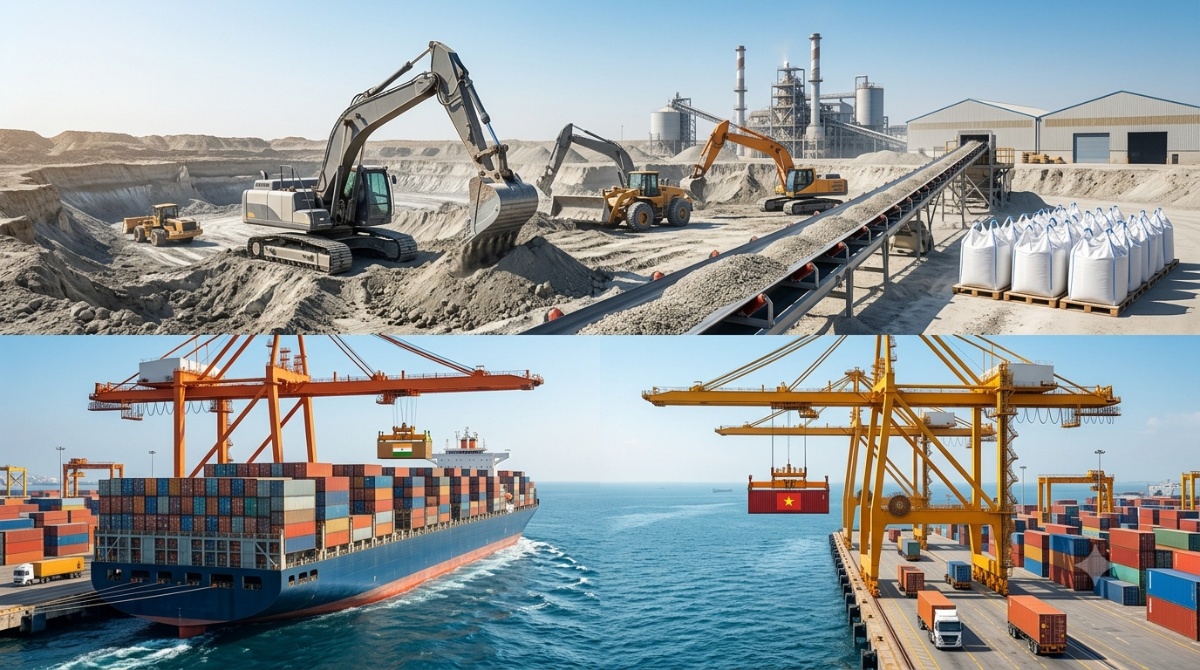
The pet care industry in Southeast Asia is experiencing an unprecedented boom. Driven by rapid urbanization, rising disposable incomes, and a cultural shift toward treating pets as family members, Vietnam has emerged as one of the fastest-growing markets for pet care products. At the heart of this booming sector is the humble cat litter tray. As millions of urban Vietnamese households welcome feline companions into high-rise apartments in Ho Chi Minh City, Hanoi, and Da Nang, the demand for high-performance, odor-controlling, and quick-clumping cat litter has skyrocketed.
To meet this sophisticated consumer demand, Vietnamese cat litter brands are turning their eyes overseas for raw materials. Specifically, they are looking to India—the global powerhouse of premium mineral extraction. India is home to some of the world's largest, highest-purity deposits of sodium bentonite clay, the gold standard ingredient for clumping cat litter.
Axewelledge
Sourcing, processing, and transporting millions of tons of volcanic clay across the Indian Ocean to the shelves of Vietnamese pet shops is a complex enterprise. This comprehensive industry report explores the strategic, geological, logistical, and regulatory frameworks that define how Vietnamese cat litter brands import high-quality bentonite from India.
To understand why Vietnamese brands look to India, one must first look at the science of the litter box. Cat owners have zero tolerance for two things: persistent ammonia odors and messy, loose clumps that break apart during scooping.
Bentonite is an absorbent aluminum phyllosilicate clay formed over millions of years by the chemical weathering of volcanic ash in the presence of water. Its commercial and functional value is dictated by its dominant mineral component: montmorillonite.
Axewelledge
When evaluating bentonite for pet care applications, manufacturers distinguish between two primary geological variations:
Axewelledge
Axewelledge+ 1
When a cat urinates on raw sodium bentonite, the clay undergoes an immediate physical transformation. It rapidly encapsulates the liquid, binding the loose granules into a rock-solid, easily scoopable mass while trapping volatile ammonia molecules within its porous structure.
While Vietnam possesses its own rich landscape of industrial minerals, its domestic clay deposits lack the specific high-montmorillonite, high-swelling sodium characteristics required for premium pet products. India, conversely, stands as one of the top global producers of high-yield sodium bentonite.
Axewelledge
The mineral-rich belts of Kutch and Bhuj in Gujarat, India, contain vast, world-class reserves of natural sodium bentonite. This geographic region yields a mineral that requires minimal chemical modification to achieve maximum swelling indexes, superior water absorption capacities, and natural odor-locking performance.
Axewelledge
By partnering with a premier Indian bentonite exporter, Vietnamese brands gain access to raw materials that allow them to compete with global pet care conglomerates. This ensures their products deliver the precise physical performance modern urban cat owners demand.
Sourcing industrial minerals across international borders requires rigorous technical verification. Vietnamese brand managers and procurement officers do not simply buy "clay"; they source specific engineering parameters tailored to automated packaging lines and feline physiology.
Axewelledge
+--------------------------------------------------------------------------+
|                 Sourcing Workflow for Vietnamese Brands                  |
+--------------------------------------------------------------------------+
|  1. Define Technical   -->  2. Select Certified  -->  3. Evaluate Samples|
|     Specifications           Indian Exporters        & Lab Metrics       |
|           |                                                |             |
|           v                                                v             |
|  6. Finalize Contract  <--  5. Audit Production  <--  4. Confirm Custom  |
|     & Logistics Plan         & Packaging Nodes       Granule Sizes       |
+--------------------------------------------------------------------------+
The first step for any Vietnamese brand is defining their ideal product profile. Not all bentonite is suited for cat paws. Brands must coordinate with Indian suppliers to lock down specific technical data sheets (TDS) that guarantee the following metrics:
| Technical Parameter | Optimal Range for Cat Litter | Why It Matters to Consumers |
|---|---|---|
| Montmorillonite Content | ≥75%−80% | Dictates the overall purity and structural integrity of the clay. |
| Swelling Index | 15 to 20 ml / 2g | Determines how fast and tight the litter clumps when exposed to moisture. |
| Moisture Content | 8%−12% | Balanced to ensure the clay doesn't clump prematurely in humid Vietnamese weather. |
| pH Value | 8.5 – 10 (Alkaline) | Naturally neutralizes acidic urine odors and suppresses bacterial growth. |
| Water Absorption Capacity | ≥300% | Minimizes the amount of litter used per liquid volume, extending product life. |
Before signing off on large commercial contracts, Vietnamese companies run extensive pilot tests. A reliable partner like Axewelledge provides comprehensive laboratory testing and batch samples for physical evaluation.
During this phase, quality control teams in Vietnam test the material under real-world conditions. They evaluate the clumping speed (seeking a clump that forms in under 5 seconds), clump hardness (to ensure it won't shatter when dropped from a scooper height of 30 cm), and dust levels. Dust minimization is crucial; excessive fine dust can trigger respiratory issues in both cats and humans, severely damaging a brand's reputation in the premium market.
The journey from a raw mineral mine in Gujarat to a premium retail bag in Hanoi involves sophisticated processing. Raw bentonite as mined contains large lumps and varying moisture levels. To convert this raw earth into a consumer-ready retail asset, Indian exporters leverage advanced milling and modification technologies.
Axewelledge
Cat litter requires a highly specific particle size distribution (mesh size). If the granules are too fine, the litter turns into sticky mud that tracks across the cat owner’s floor. If the granules are too coarse, the surface area decreases, leading to slower absorption and weak, leaky clumps.
Axewelledge
Indian processing facilities crush, dry, and screen the bentonite into optimal granule profiles, typically ranging between 1.0 mm and 4.0 mm (often categorized as 8-24 mesh or 10-30 mesh). Specialized brands also request "micro-granules" (0.5 mm – 2.0 mm) for ultra-clumping formulations designed for multi-cat households.
[Raw Bentonite Crushing] -> [Rotary Kiln Drying] -> [Multi-Deck Vibrating Screens] -> [De-dusting Cyclones] -> [Custom Granules]
Modern Vietnamese consumers view pet care through a lifestyle lens. They prefer visually appealing, pleasantly scented litter products. To accommodate this, Indian exporters offer customized formulation options directly at the point of origin:
Axewelledge
Scent Micro-Encapsulation: Infusing the bentonite granules with heat- and moisture-activated fragrances such as lavender, green tea, baby powder, or coffee. The scent remains subtle when dry but releases a fresh burst of fragrance when the clay is hydrated.
Colored Zeolite or Silica Indicator Beads: Blending a small percentage (1% to 3%) of brightly colored granules (blue, pink, or green) into the grey bentonite. While purely aesthetic, these colored particles give the product a premium, "scientific" appearance on retail shelves.
Activated Carbon Integration: Blending crushed activated charcoal with the bentonite granules. This creates a dual-action formula where the sodium bentonite locks in liquid and clumps, while the highly porous carbon molecules adsorb heavy odors, making it perfect for small, unventilated city apartments.
By taking advantage of these custom processing options, Vietnamese brands can import a fully realized, retail-ready formulation, bypassing the need for expensive secondary processing facilities back home.
Transporting heavy, high-density industrial minerals thousands of nautical miles across the ocean requires a flawless, cost-optimized supply chain. Any inefficiency in logistics can quickly erase profit margins.
Bentonite is highly sensitive to ambient humidity. If exposed to wet sea air during transit, it can absorb moisture prematurely, reducing its shelf life and clumping efficiency. Therefore, packaging is a critical engineering component. Vietnamese brands choose between two primary import configurations depending on their local business model:
Axewelledge+ 1
Bulk Jumbo Bags (Tonner Bags): Large, heavy-duty woven polypropylene bags equipped with inner moisture-proof polyethylene liners, typically holding 1.0 to 1.25 metric tons of material. This is the preferred method for Vietnamese brands that operate their own automated retail packaging plants in Vietnam.
OEM / Private Label Pre-Packed Retail Bags: Many Vietnamese companies outsource their entire production chain to Indian suppliers. The exporter molds, fills, and seals the bentonite directly into the brand's custom-printed 5L or 10L plastic or paper bags, stacks them onto sturdy wooden pallets, wraps them securely in stretch film, and loads them into ocean containers. This approach allows the Vietnamese brand to function purely as a marketing and distribution powerhouse.
The maritime route from India to Vietnam is well-established, offering competitive transit times and reliable schedules.
+-------------------------------------------------------------------------+
|                         Maritime Logistics Route                        |
+-------------------------------------------------------------------------+
|  Mundra / Kandla Port (Gujarat, India)                                  |
|         |                                                               |
|         v (Transit via Arabian Sea & Malacca Strait)                    |
|  Port of Ho Chi Minh City (Cat Lai) or Port of Hai Phong (Vietnam)     |
+-------------------------------------------------------------------------+
Exporters in Gujarat leverage nearby major ports like Mundra or Kandla, which are equipped with state-of-the-art container terminals. The cargo is loaded into standard 20-foot Dry Van (DV) containers. Because bentonite is dense and heavy, weight limits are reached long before the container volume is filled. A standard 20ft container typically carries between 25 to 27 metric tons of palletized or loose-stacked jumbo bags.
Axewelledge
The ships navigate through the Arabian Sea, down through the Indian Ocean, pass through the Malacca Strait, and head up into the South China Sea. Shipping lines deliver the cargo to major Vietnamese maritime gateways:
Cat Lai Port (Ho Chi Minh City): Servicing the massive southern consumer market.
Hai Phong Port: Servicing Hanoi and the northern provinces.
Average maritime transit times from India's west coast to Vietnam range from 18 to 25 days, depending on whether the vessel is on a direct route or transshipping via hubs like Singapore or Port Klang.
Crossing international borders means satisfying the regulatory demands of both the Indian Ministry of Commerce and Vietnam Customs (Tổng cục Hải quan). Because bentonite is a natural mineral product, the documentation must prove its origin, safety, and non-hazardous nature.
To avoid costly delays or demurrage fees at Vietnamese ports, the Indian exporter must compile a comprehensive and error-free documentation bundle:
Axewelledge
Axewelledge
Certificate of Origin (COO): Crucial for verifying that the product originates from India. Depending on trade agreements, a valid COO can help importers access favorable tariff brackets.
Material Safety Data Sheet (MSDS): An essential document certifying that sodium bentonite is a non-toxic, non-hazardous, and environmentally safe natural clay product suitable for commercial pet applications.
Technical Data Sheet (TDS) & Certificate of Analysis (COA): Issued by the exporter's internal laboratory or an independent third-party inspection agency (such as SGS or Intertek). The COA verifies that the specific batch of clay matching the shipment container numbers conforms exactly to the agreed-upon chemical and physical metrics (mesh size, moisture content, swelling index).
Upon arrival at Vietnamese ports, the import broker submits these documents through the VNACCS/VCIS (Vietnam Automated Cargo Clearance System). Because bentonite destined for cat litter is an inert mineral and does not contain animal-derived ingredients or live pathogens, it avoids the lengthy quarantine processes required for agricultural imports or pet food items.
Once import duties and the applicable Value Added Tax (VAT) are processed, the customs authorities clear the containers for transport, allowing flatbed trucks to move the cargo out of the port terminal and toward local distribution centers or packaging factories.
In today’s market, consumers care about more than just product performance; they care about the planet. Modern pet parents—especially the younger demographic in urban Vietnam—are increasingly eco-conscious. They seek brands that actively minimize their environmental footprint.
This shift in consumer behavior means that Vietnamese cat litter brands must look closely at how their mineral partners operate at the ground level. Sustainable sourcing is no longer an optional marketing talking point; it is a core business requirement.
The environmental profile of a cat litter product begins at the open-cast mine. Responsible suppliers understand that mineral wealth must be balanced with ecological stewardship. When evaluating a partner like Axewelledge, Vietnamese brands look for structured environmental management programs that focus on two key areas:
Progressive Land Restoration: Once a specific pocket of bentonite is extracted, the topsoil—which was carefully removed and preserved before mining—is returned to the land. The area is graded, replanted with native vegetation, or returned to local communities for sustainable agricultural use. This minimizes long-term scarring of the landscape and protects local biodiversity.
Energy-Efficient Processing: Moving towards solar-assisted drying fields or high-efficiency, low-emission rotary kilns significantly reduces the carbon footprint associated with processing the raw clay.
[Preserve Topsoil] -> [Extract Bentonite] -> [Backfill Mine Cavity] -> [Replace Topsoil] -> [Replant Native Flora]
From a marketing perspective, bentonite-based cat litter has an inherently strong environmental story. Unlike silica gel cat litters (which rely on highly energy-intensive chemical synthesis) or synthetic plastic-based alternatives, bentonite is a 100% natural, earth-born clay.
Axewelledge
It contains no artificial chemicals, toxins, or plastics. When discarded responsibly, it slowly integrates back into the environment without leaving behind microplastics or chemical residues, fitting perfectly into the circular economy model preferred by green brands.
For a Vietnamese business looking to launch or scale a cat litter product line, success depends on balancing product quality with smart operational costs. The pet care space is highly competitive, and margins can be tight. Below are three actionable strategic pillars designed to help optimize your import operations from India.
As discussed in the logistics section, bentonite is a heavy cargo that hits legal weight limits long before a container is physically full. To get the best value out of ocean freight costs, work with your exporter to maximize the weight allowed within a single 20ft container (typically around 26-27 metric tons).
Avoid ordering partial container loads, as you will end up paying the same freight rate for less product, driving up your per-kilo landed cost. If you are a growing brand, consider partnering with an Indian bentonite supplier capable of maintaining steady supply pipelines so you can plan predictable, full-container monthly arrivals.
Evaluate your domestic infrastructure before choosing how to import your product:
                  DO YOU OWN PACKAGING INFRASTRUCTURE?
                                 |
                +----------------+----------------+
                | YES                             | NO
                v                                 v
    [Import in Bulk Jumbo Bags]        [Utilize OEM Private Labeling]
    - Lowest raw material cost         - No local machinery needed
    - Requires packaging lines         - Shipped ready for retail shelves
    - High local labor/space needs     - Faster speed to market
If your business lacks sophisticated packaging infrastructure, leveraging private-label services directly at the source is often the most cost-effective path forward.
Eliminating middlemen and sourcing directly from established miners and processors in India is the single most effective way to secure competitive pricing and ensure reliable quality. Direct communication allows your brand to request customized granule sizing, adjust moisture targets based on seasonal changes in Vietnam, and quickly resolve any documentation questions that might arise during customs inspections.
A long-term, direct partnership creates a resilient supply chain that can withstand global shipping disruptions, ensuring your brand remains consistently stocked on retail shelves.
The structural transformation of the Vietnamese pet care market presents an incredible growth opportunity for agile brands. However, a brand's success on the store shelves of Ho Chi Minh City or Hanoi is deeply tied to the quality of the raw materials sourced thousands of miles away in the mineral fields of India.
By understanding the geological superiority of Indian sodium bentonite, establishing clear technical standards, choosing the right custom additives, and partnering with an experienced exporter, Vietnamese pet brands can build a highly efficient and reliable supply chain. This balance of natural performance, smart logistics, and eco-friendly practices forms the perfect foundation for brands aiming to lead the premium pet care market across Southeast Asia.
If you are ready to elevate your pet product portfolio, optimize your raw material sourcing, or explore how premium Indian clay can improve your product line, take a methodical approach:
Review your current clumping and dust-level benchmarks against international standards.
Axewelledge
To learn more about the broader spectrum of global mineral supply and explore how specialized clays serve major markets, read our comprehensive industry breakdown on industries that import bentonite from India.













Have questions about our products? We're here to help!