Axewelledge, a leading exporter from India, specializes in high-quality Bentonite. With a commitment to excellence, we supply premium Bentonite to the Middle East and Southeast Asia markets.


North Angle Complex, 304,
150 Feet Ring Rd, Opposite Ambedkar Nagar BRTS Stop,
Madhav Park, Punit Nagar,
Mavdi, Rajkot, Gujarat 360004
© Axewelledge 2026, All Rights Reserved.
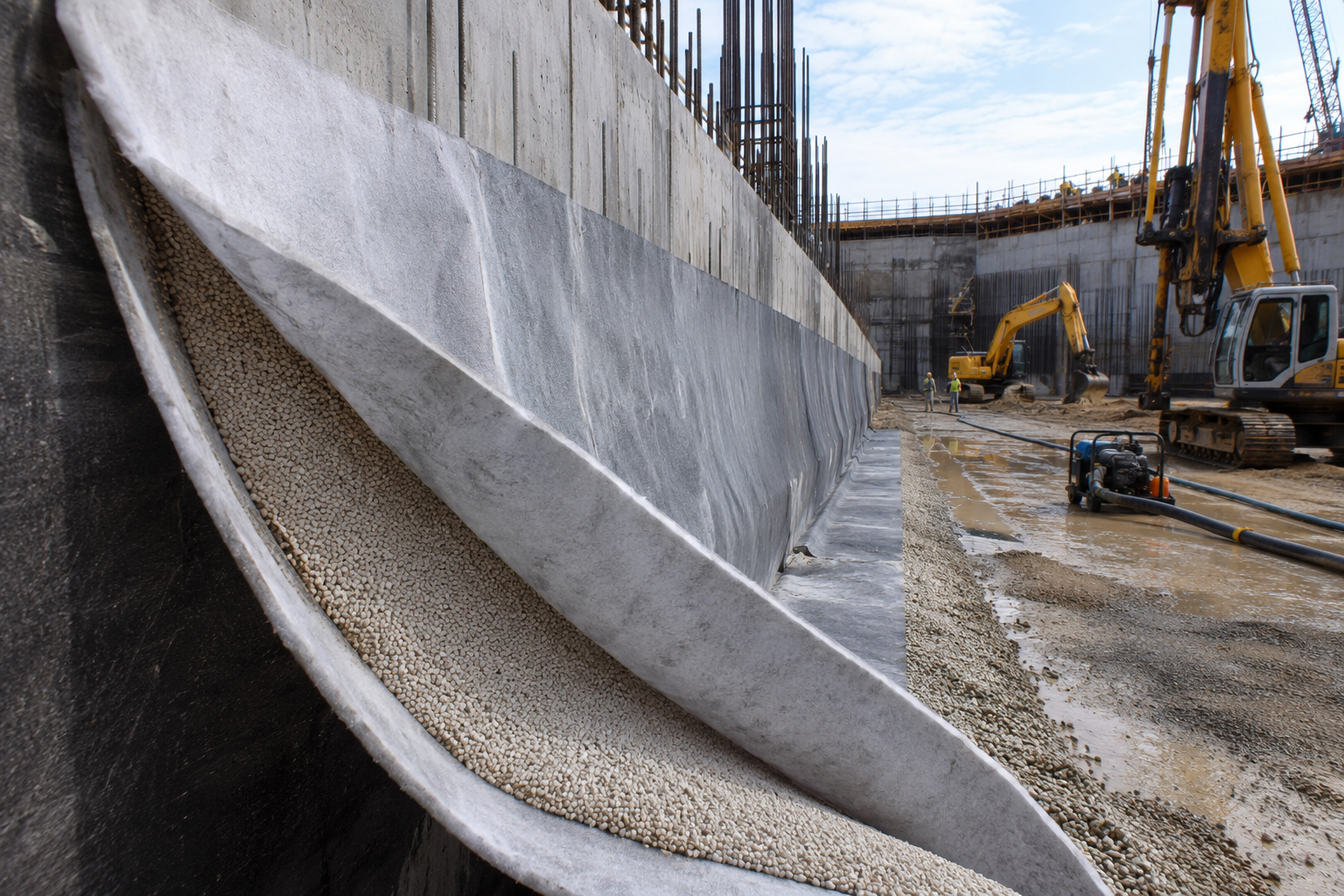
Water is the ultimate test of human engineering. Whether you are excavating forty feet below the water table for a skyscraper foundation in downtown Chicago, lining a five-hundred-acre industrial containment pond in Texas, or driving a tunnel shield beneath an urban corridor, water is always looking for a pathway through your structure. Left unchecked, hydrostatic pressure causes catastrophic foundation failure, soil erosion, structural degradation, and toxic contaminant migration.
For decades, civil engineers relied heavily on petrochemical membranes and synthetic coatings to keep water where it belongs. While synthetic barriers have their place, they suffer from a fatal flaw: aging. Synthetic membranes puncture during backfill, degrade under thermal cycling, and lose their integrity when exposed to harsh subsurface chemicals.
Enter sodium bentonite—a naturally occurring smectite clay dominated by the mineral sodium montmorillonite. When hydrated, raw sodium bentonite can swell to over fifteen to twenty times its original dry volume, transforming into a dense, impermeable gelatinous matrix that blocks hydraulic passage down to coefficients lower than 1×10 ?9 cm/s.
In modern civil engineering and heavy infrastructure, sodium bentonite has moved from a specialty niche material to a primary structural safeguard. From Geosynthetic Clay Liners (GCLs) and diaphragm wall slurry trenching to foundation waterproofing membranes and soil remediation barriers, this extraordinary mineral acts as nature's self-healing sealant. In this comprehensive technical guide, we will break down the mineralogical mechanics of sodium bentonite, explore its core applications across modern construction, analyze real-world engineering standards, and detail best practices for sourcing high-performance clay for high-stakes projects.
To understand why sodium bentonite performs so effectively in structural sealing, you have to look at its crystal lattice at a microscopic level. Bentonite is created through volcanic ash weathering over millions of years. The active engine within bentonite is sodium montmorillonite, a 2:1 expandable sheet silicate mineral.
Each microscopic montmorillonite platelet consists of an octahedral sheet of alumina sandwiched between two tetrahedral sheets of silica. Because of natural ion substitution during formation—where trivalent aluminum ions in the crystal lattice are occasionally replaced by divalent magnesium ions—the crystal lattice develops a net negative surface charge.
In natural sodium bentonite, hydrated sodium (Na+) cations occupy the interlayer space between these negative silica sheets to neutralize the charge. Because sodium ions have a large hydration radius and relatively weak electrostatic attraction compared to calcium (Ca2+) or magnesium (Mg2+) ions, water molecules readily rush into the interlayer spaces when the clay is exposed to moisture.
As water enters the crystalline structure, the distance between individual silicate sheets expands dramatically. This process occurs in two distinct stages:
When confined within a rigid physical space—such as between concrete slabs, behind structural retaining walls, or compressed under backfill soil—the expanding clay cannot freely expand infinitely. Instead, it generates a continuous, isotropic swell pressure (often exceeding 5 to 10 psi). This expansion forces the swollen gel into microscopic pores, hairline concrete cracks, void spaces, and soil interstices.
If a moving structural element cracks or if a foreign object punctures a bentonite membrane, incoming moisture immediately hydrates adjacent unreacted clay particles. The surrounding clay expands into the void, effectively 'self-healing' the leak without human intervention. This active self-healing mechanism is something no static synthetic plastic liner can ever replicate.
When building below-grade infrastructure—such as high-rise basements, underground parking structures, subway stations, and deep vaults—contractors must protect the concrete envelope against persistent hydrostatic pressure. Sodium bentonite serves as a foundational component in high-performance waterproofing systems across three primary delivery formats.
Modern pre-applied and post-applied waterproofing sheets consist of high-swelling granular sodium bentonite held securely between woven and non-woven geotextile fabric layers. Advanced manufacturing processes use needle-punching technology, where thousands of tough fibers are punched through the clay layer to mechanically lock the geotextiles together.
This needle-punched structural locking controls and uniformizes the swell of the bentonite. When fresh concrete is poured directly against the non-woven side of a pre-applied sheet (blind-side waterproofing), the expanding slurry integrates mechanically with the curing concrete, forming an unyielding mechanical bond that eliminates lateral water migration.
In areas exposed to saline groundwater, acidic runoff, or aggressive industrial leachates, pure natural sodium bentonite can experience ion exchange. If calcium or magnesium ions displace sodium ions, the clay's swell capacity drops significantly.
To counteract this chemical degradation, modern materials scientists blend premium sodium bentonite with specialized hydrophilic polymers and chemical-resistant additives. These polymer-modified bentonite membranes retain exceptionally high swell ratios and maintain structural integrity even in brackish water, high-pH marine soils, or contaminated industrial sites.
Cold joints, expansion joints, and pipe penetrations represent the weakest links in any poured-concrete structure. As concrete cures, micro-shrinkage creates path-of-least-resistance channels for water infiltration.
Flexible bentonite waterstop strips—composed of sodium bentonite embedded in a synthetic rubber matrix—are installed directly into construction joints prior to subsequent concrete pours. When groundwater hits the joint, the embedded bentonite swells outward, forming a tight compression seal against both concrete faces that easily withstands high hydrostatic heads.
Modern urban construction requires building vertically and excavating deeper than ever before. To support deep excavations near existing buildings or below high water tables, geotechnical engineers rely on diaphragm walls, slurry trenches, and drilled shafts. High-yielding sodium bentonite slurry is the vital fluids system that makes these deep excavations physically possible.
When excavating a deep narrow trench through loose sand, gravel, or soft clay, the trench walls will collapse unless supported. By filling the trench with a dense, engineered sodium bentonite slurry during excavation, engineers exert outward hydrostatic pressure against the trench walls.
As the bentonite slurry presses against the permeable soil face, fine clay particles filter out on the trench wall to create an ultra-thin, low-permeability film known as a filter cake. This filter cake locks the surrounding soil grains in place and prevents fluid loss into the formation, allowing stable trenching down to depths exceeding two hundred feet without structural collapse.
In deep foundation construction, bored piles and cast-in-place drilled shafts require clean, stable boreholes prior to reinforcement cage placement and concrete tremie placement. Premium sodium bentonite slurries serve multiple fluid functions:
+-----------------------------------------------------------------------------+
| BENTONITE SLURRY TRENCH MECHANICS |
| |
| Hydrostatic Pressure of Slurry Filter Cake Formation |
| =============================> ==========================> |
| |
| [ Excavation Trench ] | (Filter Cake) | [ Surrounding Soil ] |
| [ Filled with ] | | [ Stabilized by ] |
| [ Bentonite Slurry ] |===> Clay Film <=== [ Hydrostatic Pressure] |
| | | | +-----------------------------------------------------------------------------+
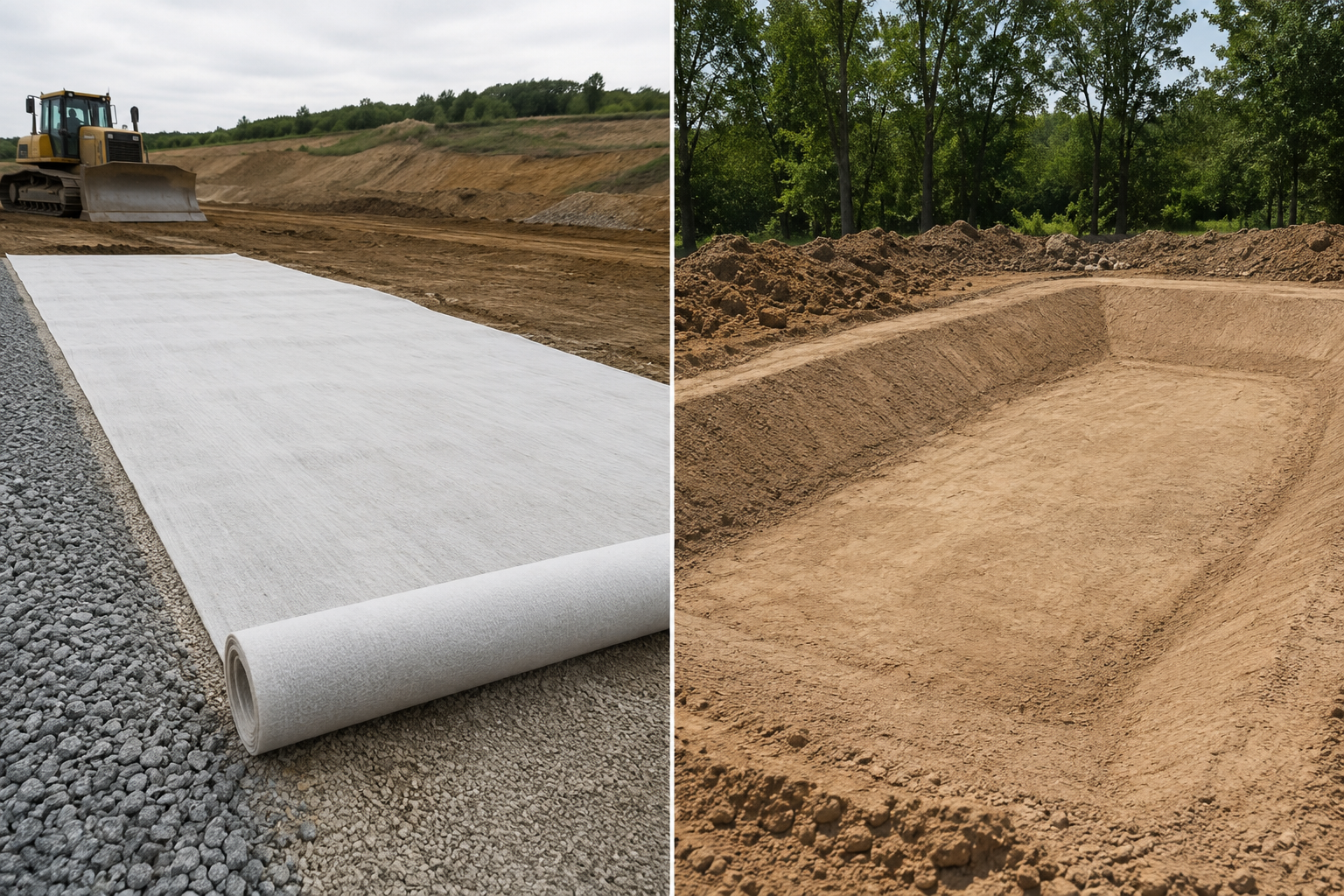
Environmental protection regulations in the United States, enforced by the EPA, mandate strict hydraulic isolation for municipal solid waste landfills, hazardous waste containment, and mining tailing facilities. Geosynthetic Clay Liners (GCLs) have revolutionized waste containment systems by replacing or enhancing traditional compacted clay liners (CCLs).
Historically, landfill operators constructed bottom liners by hauling, spreading, and compacting multiple feet of native clay. This process required massive heavy machinery operations, strict moisture-density monitoring, and high transportation costs. A standard GCL provides superior hydraulic performance at a fraction of the structural volume.
| Property | Compacted Clay Liner (CCL) | Geosynthetic Clay Liner (GCL) |
|---|---|---|
| Thickness | 2 to 3 feet (60-90 cm) | 0.25 to 0.35 inches (6-8 mm) |
| Hydraulic Conductivity | 1×10 ?7 cm/s | 1×10 ?9 cm/s |
| Installation Speed | Slow, weather-dependent | Rapid, roll-out deployment |
| Differential Settlement | Cracks easily under stress | Flexible; high self-healing |
In modern composite lining systems, GCLs are paired directly with smooth or textured flexible geomembranes (such as HDPE). The GCL acts as a secondary hydraulic line of defense. If a needle-punched pinhole or seam flaw occurs in the overlying HDPE geomembrane, the underlying sodium bentonite hydrates instantly upon leachate exposure, swelling against the geomembrane to lock off the leak path.
Mining operations produce vast quantities of slurry waste known as tailings, which often contain heavy metals or process chemicals. Unconfined tailings ponds pose significant risks to surrounding freshwater aquifers. Lining tailings ponds with heavy-duty sodium bentonite GCLs ensures long-term chemical containment, preventing toxic seepage into regional subsurface water systems.
Beyond pre-manufactured sheets, raw granular and powdered sodium bentonite is widely applied directly to soils to seal agricultural ponds, recreational lakes, stormwater retention basins, and industrial canals.
When constructing a new basin on porous, sandy, or gravelly soil, blending dry sodium bentonite into the native soil creates an engineered, low-permeability liner matrix.
In situations where native soils are too coarse for effective blending, the blanket method applies a pure, continuous layer of granular sodium bentonite directly over the excavated subgrade. The clay layer is covered immediately with six inches of compacted backfill soil to provide the required overburden pressure for optimal hydration and protection against physical erosion.
Sealing an existing pond without draining the water presents a unique challenge. In targeted instances, coarse granular bentonite can be sprinkled across the water surface directly above known leak zones. Because bentonite granules are denser than water, they sink rapidly to the pond bottom. As water draws the clay down into leaking soil fissures, the particles swell, binding with the soil matrix to choke off the flow.
As subterranean urban utility corridors become increasingly congested, open-cut trenching for utility installation is rarely feasible. Trenchless technologies like Horizontal Directional Drilling (HDD), microtunnelling, and pipe jacking allow contractors to install underground utility lines with minimal surface disruption.
During long-distance pipe jacking, high-capacity hydraulic jacks push heavy concrete or steel pipe segments through the ground behind a tunnelling shield. The soil friction acting against the outer surface of the pipe string increases exponentially with distance, risking structural pipe damage or jacking frame overload.
To combat this friction, operators inject high-performance sodium bentonite slurry directly into the annular void between the outer pipe wall and the excavated soil bore. The thixotropic slurry creates a continuous fluid lubricant envelope, dramatically reducing skin friction and allowing continuous jacking runs over thousands of feet.
Once pipe installation is complete, the annular space around the pipe must be sealed permanently to prevent ground settlement or groundwater movement along the pipeline path. Engineered grouts formulated with sodium bentonite, cement, and pozzolans are pumped into the void. The bentonite maintains fluid pumpability and prevents solids segregation during injection, curing into a stable, non-shrink, watertight grout barrier.
Not all bentonite deposits yield the chemical performance required for structural civil engineering. Project managers and quality control inspectors must specify and verify key material properties in accordance with established standard testing methods.
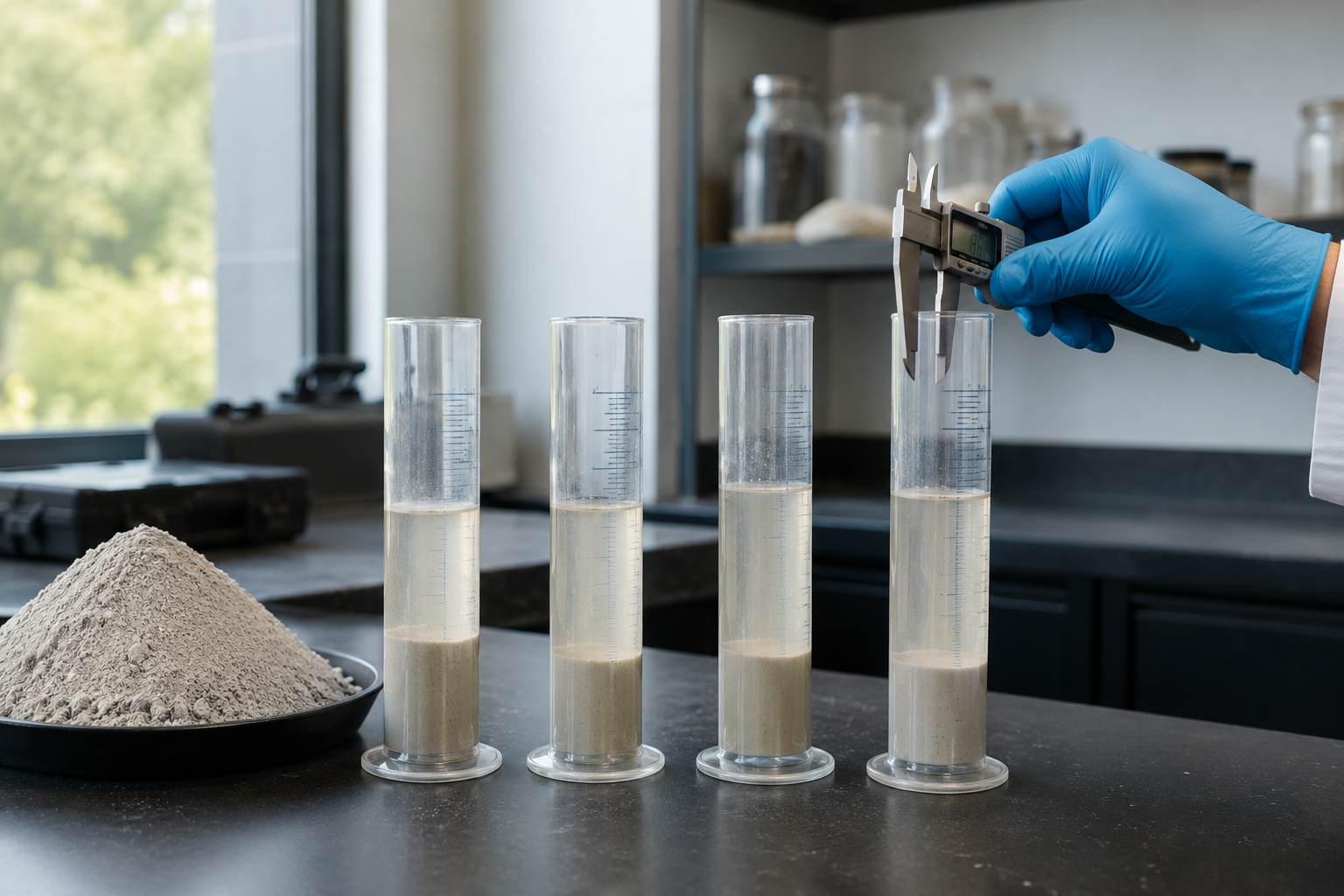
The Free Swell test measures the swelling capability of dried, finely ground bentonite in distilled water. Two grams of powdered clay are added incrementally to a 100 mL graduated cylinder filled with water. High-grade sodium bentonite intended for sealing applications must exhibit a minimum free swell volume of 24 mL / 2 grams (and frequently exceeds 30 mL / 2g for premium grades).
Fluid loss testing determines how effectively a bentonite slurry forms a thin, tight barrier under pressure. A slurry sample is placed in a standardized pressure cell at 100 psi for 30 minutes. The volume of filtrate liquid passing through the filter paper is measured. High-quality construction bentonites yield low fluid loss (typically less than 12.0 mL), proving their ability to minimize seepage losses during slurry trenching or drilling operations.
The liquid limit defines the moisture content at which clay transitions from a plastic state to a liquid state. Premium sodium bentonites display exceptionally high liquid limits—typically between 500% and 800%—reflecting their immense capacity to absorb and retain water molecules under structural loading.
For slurry walls and microtunnelling operations, rheological properties govern fluid performance. Viscosity controls cutting removal efficiency, while yield point governs the fluid's ability to suspend heavy particulate matter when pump circulation halts.
In deep civil engineering, a product failure hundreds of feet underground or behind thousands of tons of concrete is financially catastrophic to remediate. Success begins with raw material purity and manufacturing precision.
As one of the world's premier mineral producers, Axewelledge stands as a global leader in high-grade bentonite mining, refinement, and supply. Owning over 60 million tons of high-grade natural reserves and leveraging over 15 years of mineral handling expertise, Axewelledge delivers sodium bentonite engineered specifically to meet stringent international standards, including ASTM and API specifications.
Even the highest-grade sodium bentonite can be compromised if stored or handled improperly on the construction job site. To ensure maximum sealing performance in the field, civil contractors should observe these crucial operational rules:
Keep bulk bags (super sacks) and paper sacks elevated off ground surfaces on wooden pallets inside weather-tight storage facilities or covered under heavy-duty tarps. Premature exposure to rain, atmospheric humidity, or ground moisture causes partial pre-hydration, clumping, and reduced swell capacity upon final application.
When preparing bentonite slurries for diaphragm walls or grouting, always add dry bentonite slowly into a high-shear mixer containing water. Never dump dry clay rapidly into standing water, as this causes unhydrated 'fish-eye' lumps with dry cores. Allow the mixed slurry to age in a hydration pit for at least 6 to 12 hours prior to trench pumping to allow complete molecular swelling and optimal rheology development.
Sodium bentonite needs pressure to seal effectively. When applying granular bentonite or laying GCL membranes, ensure that required overburden soils or concrete pours are placed immediately prior to high water exposure. Hydrating bentonite without structural confinement can cause unconfined displacement, washing away the clay gel before it consolidates into a tight hydraulic barrier.
Modern construction demands structural longevity, environmental compliance, and cost efficiency. While chemical sealants fade and synthetic sheets degrade, high-swell sodium bentonite remains a permanent, self-healing hydraulic guardian.
By leveraging the natural crystalline swelling power of sodium montmorillonite, civil engineers can build deeper basements, construct longer tunnels, line larger landfills, and seal critical water bodies with absolute confidence. Partnering with proven material suppliers like Axewelledge guarantees that your project's foundational integrity is backed by world-class mineral quality from the ground up.













Have questions about our products? We're here to help!