Axewelledge, a leading exporter from India, specializes in high-quality Bentonite. With a commitment to excellence, we supply premium Bentonite to the Middle East and Southeast Asia markets.


North Angle Complex, 304,
150 Feet Ring Rd, Opposite Ambedkar Nagar BRTS Stop,
Madhav Park, Punit Nagar,
Mavdi, Rajkot, Gujarat 360004
© Axewelledge 2026, All Rights Reserved.
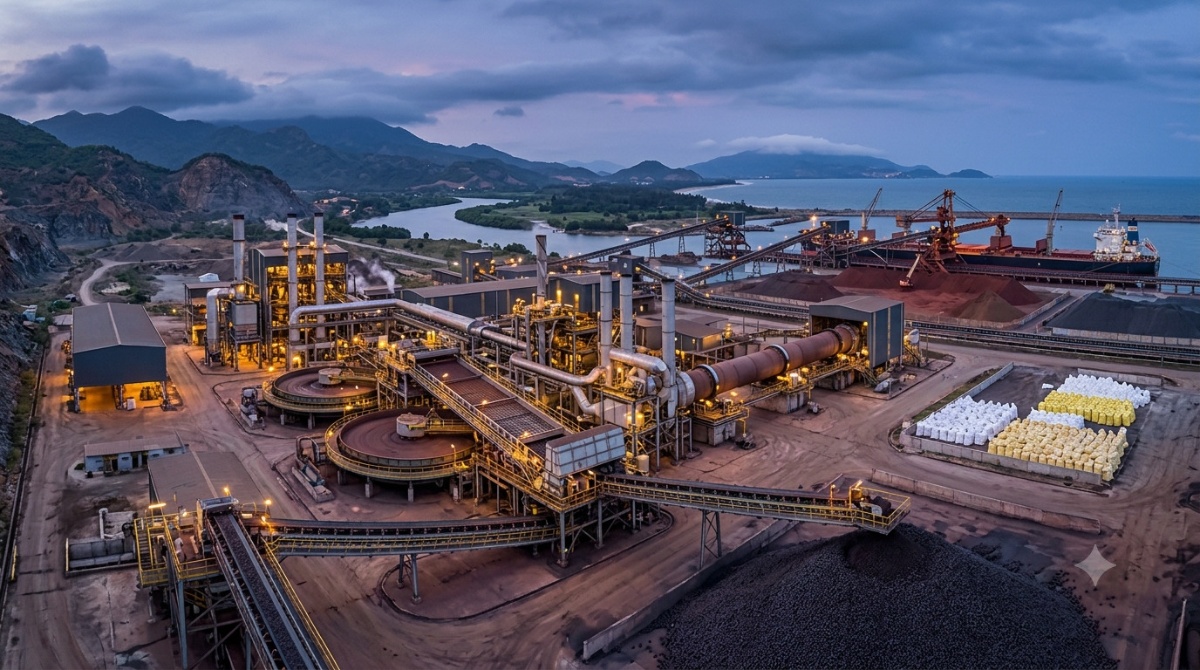
The global steel industry is undergoing a monumental transformation. As environmental regulations tighten and steelmakers strive for higher thermal efficiency and lower carbon footprints, the demand for high-quality raw materials has skyrocketed. At the center of this shift is iron ore pelletization, a process that transforms low-grade iron ore fines into high-density, uniform spheres (pellets) suitable for blast furnaces and Direct Reduced Iron (DRI) plants.
Vietnam has rapidly emerged as a powerhouse in Southeast Asian steel manufacturing. Backed by expanding domestic infrastructure and rising export volumes, Vietnamese steel plants are modernizing their operations at an unprecedented pace. However, producing top-tier iron ore pellets requires more than just premium iron ore fines; it demands an exceptional binding agent that can withstand the intense thermal and mechanical stresses of metallurgical processing.
This is where Indian Sodium Bentonite enters the equation. Renowned globally for its extraordinary swelling index, high montmorillonite content, and unmatched thermal stability, this specialized industrial clay has become an indispensable asset for the Vietnamese steel sector.
This comprehensive guide explores the structural mechanics of iron ore pelletization, the flourishing industrial landscape of Vietnam, and why leading steel manufacturers across the region rely on premium mineral products sourced from India to optimize their production pipelines.
Historically, the metallurgical landscape of Southeast Asia relied heavily on imported crude steel or the processing of scrap metal in electric arc furnaces (EAFs). However, over the past decade, Vietnam has fundamentally reshaped its industrial profile. Through massive capital investments, strategic coastal locations, and a booming domestic construction market, the country has built state-of-the-art integrated iron and steel complexes.
To achieve economies of scale, Vietnamese steel producers have increasingly transitioned to large-capacity Blast Furnaces (BF) and are actively exploring Direct Reduced Iron (DRI) pathways. These advanced systems require iron ore burdens that possess:
High Mechanical Strength: To prevent premature crushing and dust generation under the immense weight of the furnace stack.
Uniform Sphericity and Size: To maximize permeability within the furnace, ensuring optimal gas flow and faster reduction times.
Minimal Contaminants: To reduce slag volume and minimize carbon dioxide emissions per ton of hot metal produced.
Raw iron ore fines cannot be charged directly into these advanced furnaces because they choke the gas passages, leading to catastrophic structural instabilities and massive energy losses. While sintering was once the preferred agglomeration method, pelletization has proven to be far superior. It allows for the commercial utilization of ultra-fine iron ore concentrates generated during advanced beneficiation processes, transforming what was once waste into a high-value metallurgical feedstock.
To appreciate why the choice of binder is so critical, one must understand the step-by-step physics and chemistry behind creating an iron ore pellet. The process can be broken down into three fundamental stages: green pelletization, induration (firing), and cooling.
Ultra-fine iron ore concentrates, with particle sizes typically below 45 microns, are blended thoroughly with a small percentage of moisture and a binder. This mixture is fed into massive, inclined rotating discs or drums known as balling circuits. As the particles tumble, capillary forces generated by the moisture draw them together, forming tiny seeds. As these seeds continue to roll across the bed of the disc, they capture more fine particles, growing larger in a process analogous to rolling a snowball.
The resulting spheres are known as green pellets. At this stage, the pellets are held together purely by surface tension and the adhesive properties of the binder. They must possess sufficient Green Crushing Strength (GCS) to survive dropping from conveyor transfers and screen decks without breaking. Furthermore, they must exhibit adequate Drop Number resistance, meaning they can withstand multiple repeated impacts during transport from the balling area to the induration machine.
Once formed, the green pellets are evenly distributed across a traveling grate and transferred into a massive induration furnace. Here, they undergo a rigorous thermal cycle consisting of drying, preheating, firing, and soaking. Temperatures inside the furnace soar up to $1200^circ ext{C}$ to $1350^circ ext{C}$.
During the drying phase, moisture must be driven out of the pellet cores safely. If the temperature rises too rapidly and the water inside vaporizes faster than it can escape through the pellet's micro-pores, steam pressure builds up internally. This leads to a catastrophic phenomenon known as pellet spalling or bursting, which turns the pellets back into loose dust, ruining furnace permeability and destroying production yields.
Once dry, the pellets are fired at peak temperatures to initiate solid-state bridging and recrystallization of the hematite or magnetite grains. This transformation imparts the final, ultra-high compressive strength required for blast furnace charging.
The fired pellets are passed through a cooling zone where ambient air rapidly lowers their temperature. The cooled, hardened pellets are then screened and sent to storage yards or loaded onto vessels.
Throughout this entire life cycle, the structural integrity of the pellet relies on the properties established during the initial mixing stage. This highlights why selecting the right binder is a foundational operational decision.
While various organic polymers and inorganic compounds have been evaluated as pellet binders, sodium bentonite remains the global gold standard for industrial iron ore pelletization. To understand why, we must look at its specific mineralogical and chemical makeup.
Bentonite is an absorbent aluminum phyllosilicate clay formed over millions of years by the chemical weathering of volcanic ash in the presence of water. Its primary active constituent is montmorillonite, a smectite-group mineral characterized by a 2:1 expanding crystal lattice structure. This means a single montmorillonite layer consists of an octahedral alumina sheet sandwiched securely between two tetrahedral silica sheets.
$$ ext{Al}_2 ext{O}_3 cdot 4 ext{SiO}_2 cdot ext{H}_2 ext{O} cdot n ext{H}_2 ext{O}$$
What sets sodium bentonite apart from its calcium-dominant counterpart is the presence of exchangeable sodium ions ($Na^+$) within its crystal interlayer structures, rather than calcium ions ($Ca^{2+}$). This small atomic variance has a massive impact on its physical properties:
When sodium bentonite comes into contact with water, the highly hydrated sodium ions force their way into the interlamellar spaces, pushing the clay sheets apart. This allows the material to absorb massive volumes of water, swelling up to 15 to 20 times its original dry volume. This ultra-high hydration capability transforms the dry powder into a highly thixotropic, gelatinous slurry with incredibly high surface area coverage.
The expanded clay platelets carry a net negative charge on their flat surfaces and a positive charge along their edges. When dispersed in water, these platelets arrange themselves into a complex, three-dimensional "house-of-cards" structure. This network imparts exceptional viscosity and high gel strength to the mixing water, allowing the binder to coat every individual iron ore fine particle with a thin, uniform, viscous film.
Because sodium bentonite traps water molecules securely within its interlayer lattice, it slows down the rate of evaporation during the initial stages of furnace drying. This unique property significantly raises the thermal shock temperature of the green pellets, preventing sudden steam explosions and keeping the pellets intact during rapid thermal transitions.
While Vietnam has domestic mineral deposits, its native clays are predominantly calcium-based or contain high levels of quartz and iron impurities, making them unviable for high-spec metallurgical applications. To secure the long-term operational efficiency of their multi-billion-dollar steel infrastructure, Vietnamese procurement teams turn to India.
India is globally recognized as an elite hub for industrial mineral extraction. The country boasts some of the world's largest, purest, and highest-grade natural sodium bentonite reserves, primarily concentrated in the highly unique geological formations of Kutch and Bhuj in the state of Gujarat.
For a comprehensive overview of how Indian mining companies manage these incredible reserves to serve international markets, you can read about the top bentonite exporter from India: how axewelledge leads the market. This resource details the precise industrial benchmarks and strict operational standardizations that govern premium mineral exports from India.
The strategic alignment between Vietnamese steel plants and Indian sodium bentonite suppliers is built on several technical and logistical advantages:
Premium Indian sodium bentonite features an exceptionally high montmorillonite concentration, often exceeding 80% to 85%. This ensures that even when added at very low dosages (typically between 0.5% and 0.8% by weight), the binder delivers maximum binding efficiency. Minimizing the binder dosage is crucial for steel manufacturers because bentonite introduces small amounts of silica ($SiO_2$) and alumina ($Al_2O_3$) into the pellet. Lower binder requirements translate directly into a higher total iron (Fe) grade in the final product, lowering fuel consumption and reducing slag volumes inside the blast furnace.
As green pellets travel along the induration grate, they lose their free moisture. During this transition, the surface tension of the water disappears. At this critical juncture, the high-purity Indian sodium bentonite forms a durable, dry clay matrix that locks the iron ore fines in place. This high Dry Compression Strength prevents the pellets from degrading or crumbling into fine dust before they reach the high-temperature recrystallization zones of the kiln.
Operating a modern integrated steel plant requires a perfectly timed supply chain; any disruption in raw material inflows can lead to millions of dollars in idling losses. India’s major ports along the western coast, such as Mundra and Kandla, offer seamless, direct maritime routes to Vietnam’s major industrial ports, including Hai Phong, Da Nang, and Vung Tau. This geographical proximity ensures short transit times, highly competitive ocean freight rates, and a reliable, year-round buffer stock of essential industrial minerals.
To illustrate why metallurgical engineers consistently prefer high-grade sodium bentonite over alternative options, consider the performance matrix below:
| Performance Metric | Premium Indian Sodium Bentonite | Calcium Bentonite (Activated) | Organic Polymers / CMC | Fluxed Lime / Hydrated Lime |
| Swelling Index (ml/2g) | 25 – 35 (Extremely High) | 8 – 12 (Low to Moderate) | Non-swelling | Minimal |
| Binder Dosage Required | 0.4% – 0.8% | 1.2% – 2.0% | 0.1% – 0.2% | 1.5% – 3.0% |
| Green Crush Strength | High | Moderate | Low to Moderate | Low |
| Dry Crush Strength | Excellent | Fair | Poor | Moderate |
| Thermal Shock Resistance | Outstanding | Moderate | Poor (Burns off early) | Fair |
| Impact on Final Pellet Grade | Minor silica addition | Moderate silica addition | Zero mineral residue | Adds calcium (fluxing effect) |
| Cost-to-Benefit Ratio | Optimum | Sub-optimal due to high consumption | Very High Chemical Cost | High volumetric handling costs |
While organic polymers like Carboxymethyl Cellulose (CMC) leave no mineral residue behind, they completely disintegrate at temperatures above $250^circ ext{C}$. This leaves a dangerous strength vacuum inside the pellet during the preheating phase before metallurgical bonding takes place, often resulting in widespread pellet collapse inside the kiln. Sodium bentonite, being an inorganic mineral, remains stable across the entire temperature spectrum, acting as a structural bridge from green balling all the way to final high-temperature induration.
To maximize the benefits of premium Indian sodium bentonite, pelletization plants across Vietnam must pay careful attention to their processing parameters. Mineral quality is only half the battle; proper operational execution is what unlocks its full potential.
[Raw Iron Ore Fines + Moisture]
              │
              â–¼
[Intense High-Energy Intensive Blending] ◄── Add 0.5% - 0.8% Indian Sodium Bentonite
              │
              â–¼
   [Balling Disc Rotation] ◄──────────────── Precise Micro-Water Sprays
              │
              â–¼
   [Green Pellet Formation] (Target: 9-12mm, High Drop Number)
              │
              â–¼
 [Controlled Grate Drying] (Moisture driven out slowly via clay pores)
              │
              â–¼
 [High-Temp Kiln Induration] (Recrystallization at 1300°C)
              │
              â–¼
    [Premium Fired Pellets]
Because sodium bentonite is used in very small quantities, it must be distributed perfectly throughout the vast mass of iron ore fines. Utilizing high-energy intensive mixers, such as vertical intensive mixers or specialized pin mixers, ensures that the bentonite particles are thoroughly delaminated and evenly coated onto the surfaces of the iron ore concentrate. Poor mixing results in localized pockets of high binder concentration and large zones of unprotected fines, leading to highly erratic pellet strengths.
The swelling kinetics of sodium bentonite are directly dependent on the chemistry and quantity of the process water. The moisture content of the filter cake entering the balling circuit must be monitored and maintained within a tight range, typically between 8% and 9%. If the mix is too dry, the bentonite will not hydrate fully, diminishing its binding properties. Conversely, excessive moisture leads to over-wetted, sticky green balls that deform easily and stick to transfer chutes and screens.
The thixotropic properties of sodium bentonite are highly sensitive to the presence of dissolved salts in the processing water. High concentrations of calcium or magnesium ions in hard water can cause ion exchange, inadvertently converting high-performance sodium bentonite into lower-performing calcium bentonite during the mixing process. Maintaining an alkaline process water pH (ideally between 8.5 and 9.5) through controlled additions of soda ash ($Na_2CO_3$) helps stabilize the sodium ion configuration, ensuring maximum swelling index values and peak viscosity performance.
As the world shifts toward sustainable industrial operations, the international trade dynamics for iron ore and steel are evolving rapidly. To see how these shifts affect import-export pipelines across diverse regions, it is highly instructive to review the wider industrial ecosystem by analyzing the top 10 industries that import bentonite from india. This global perspective shows that pelletization is part of a massive international network of heavy manufacturing, civil infrastructure, and advanced environmental engineering projects that rely on Indian mineral supplies.
For Vietnam, producing high-quality pellets is no longer just about satisfying domestic demand; it is a vital strategy for expanding its global footprint. International steel buyers in Europe, North America, and Northeast Asia are demanding cleaner raw materials to meet their strict sustainability metrics.
By utilizing premium Indian sodium bentonite to manufacture low-silica, high-strength iron ore pellets, Vietnamese steelmakers can confidently export premium-grade steel products that comply with the strictest international quality and environmental standards.
The partnership between Vietnam's fast-growing steel industry and India's premium industrial mineral sector is a prime example of modern industrial synergy. The complex physics of transforming micro-fine iron ore dust into robust, highly uniform pellets requires a binder that delivers exceptional performance under extreme thermal and mechanical conditions.
With its high montmorillonite purity, exceptional swelling capacity, and superior thermal retention, Indian sodium bentonite serves as the vital structural matrix that keeps the pelletization process moving forward. For Vietnamese steel complexes looking to maximize furnace yields, lower energy expenditures, and produce world-class steel, choosing the right mineral partner is a fundamental operational necessity.
By implementing rigorous processing standards and securing a consistent, reliable supply of high-grade Indian sodium bentonite, Vietnamese manufacturers can ensure their operations remain highly competitive, efficient, and ready to meet the demands of tomorrow’s global market.
For international steel plants, civil engineering firms, and industrial buyers looking to secure premium mineral supplies, partner with an established, vertically integrated supplier. Discover how a leading global producer can streamline your supply chain by visiting the Axewelledge corporate platform to browse their comprehensive range of high-performance sodium, calcium, and specialized foundry-grade bentonite solutions tailored to meet the demanding requirements of heavy industry worldwide.













Have questions about our products? We're here to help!