Axewelledge, a leading exporter from India, specializes in high-quality Bentonite. With a commitment to excellence, we supply premium Bentonite to the Middle East and Southeast Asia markets.


North Angle Complex, 304,
150 Feet Ring Rd, Opposite Ambedkar Nagar BRTS Stop,
Madhav Park, Punit Nagar,
Mavdi, Rajkot, Gujarat 360004
© Axewelledge 2026, All Rights Reserved.
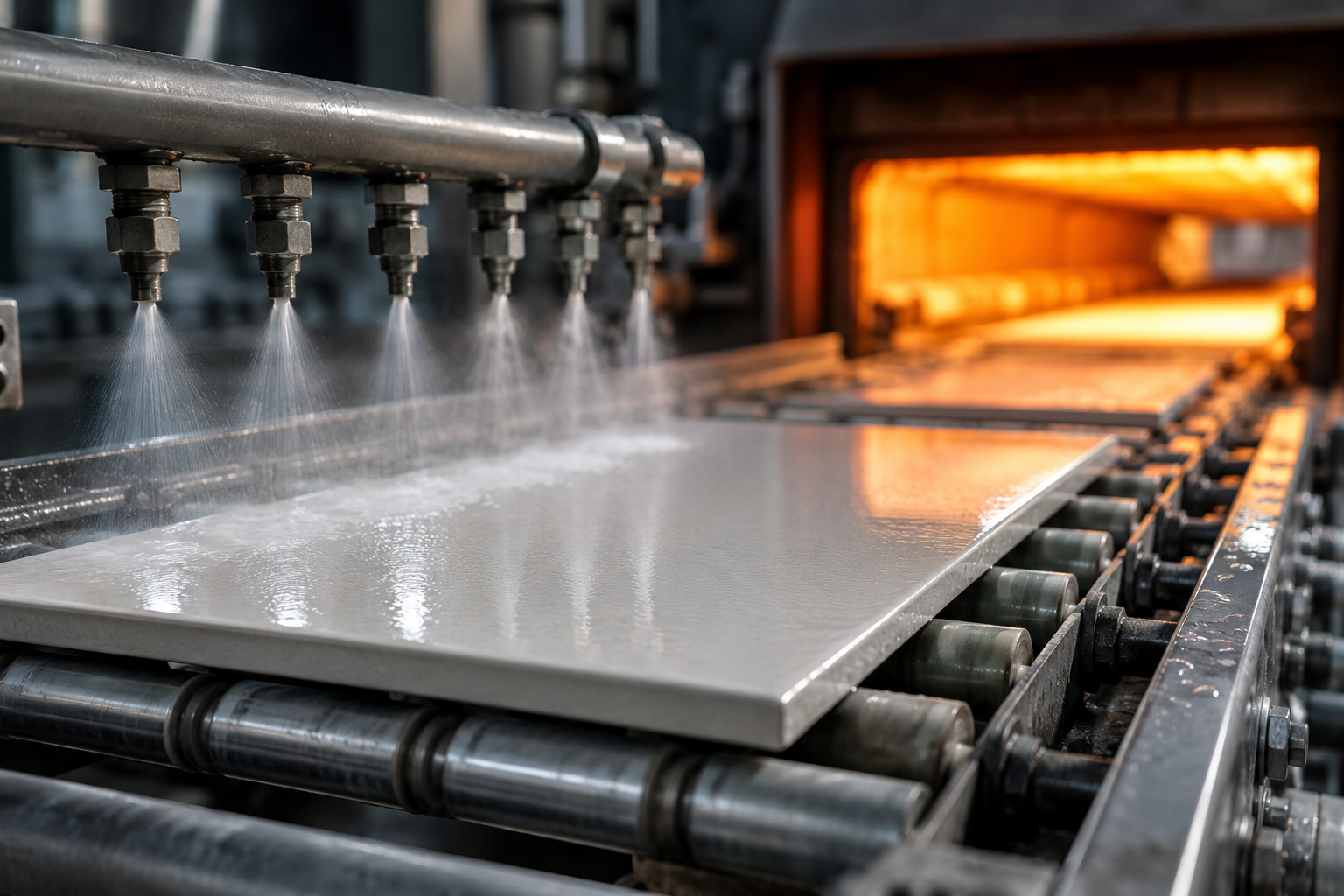
The final test of a ceramic tile does not happen in the controlled environment of a laboratory. It happens in the real world. It happens when a heavy iron skillet drops on a kitchen floor, when thousands of boots trudge across an airport terminal, or when sub-zero winter temperatures hit an outdoor patio. In those moments, the tile either holds its ground or fails catastrophically. For manufacturers, a single failure in the field can trigger a wave of warranty claims, damaged reputations, and lost contracts. Building a tile that can withstand these daily challenges requires looking closely at what happens inside the kiln, specifically focusing on the critical relationship between the ceramic body, the engobe, the frit, and the glaze.
Many production managers focus heavily on press pressure and body clay formulations when trying to improve tile strength. While a dense, well-compacted body is essential, the surface layers dictate how the tile interacts with the environment. The frit and glaze layers act as the shield, the wear layer, and the primary barrier against chemical and mechanical attack. If these surface materials are subpar, even the strongest ceramic body will yield to scratches, stains, and thermal cracking. Optimizing production means understanding how chemical compositions, thermal expansion coefficients, and raw material purity come together to create a surface that lasts for decades.
To build a highly durable tile, we need to treat the final product as a composite material rather than a single solid block. A standard glazed tile consists of three distinct layers: the ceramic body (bisque), the engobe, and the final glaze. Each layer plays a specific role, and they must fuse together flawlessly during the firing cycle.
The ceramic body provides the structural mass and load-bearing capacity. However, raw clays often fire to a dark buff, red, or grey color, which can distort the appearance of light-colored glazes applied directly over them. This is where the engobe comes in. The engobe is a clay-based coating applied between the body and the glaze. It acts as a masking layer, hiding the raw body color so the glaze colors appear vibrant and true. More importantly, the engobe serves as a chemical and physical bridge. It absorbs gases escaping from the body during firing and smooths out minor surface imperfections, providing a pristine canvas for the glaze.
Sitting on top of the engobe is the glaze layer, which is formulated largely from ceramic frits. A frit is a combination of raw materials that have been melted, rapidly quenched in water to shatter into glassy fragments, and then ground into a fine powder. By pre-melting ingredients like silica, boron, barium, and zinc, manufacturers achieve two critical benefits: they turn water-soluble chemicals into stable, insoluble glass forms, and they ensure that toxic elements are locked safely into a non-hazardous chemical structure. When this frit powder is mixed with water and additives, sprayed onto the tile, and fired, it melts again to form a smooth, impermeable glass coating. This coating gives the tile its final hardness, scratch resistance, and aesthetic appeal.
Not all frits are created equal. The purity, particle size distribution, and chemical homogeneity of the frit powder directly influence how the glaze behaves inside the kiln. When you use lower-grade frits, you introduce unwanted chemical variations. This inconsistency leads to erratic melting behavior, where some areas of the tile melt faster than others, causing uneven surface textures, orange peel effects, or pinholes.
High-quality frits, such as those supplied by Axewelledge, are engineered for precise melting windows. During the rapid firing cycles of modern roller kilns—which can range from 30 to 60 minutes—there is no room for error. The frit must melt, flow evenly across the engobe, allow trapped air bubbles to escape, and settle into a perfectly flat layer before the tile exits the firing zone. If the frit contains impurities or lacks chemical uniformity, the molten glass remains too viscous, trapping gases inside the glaze layer. As these gases try to escape near the end of the heating cycle, they pop through the surface, leaving tiny craters known as pinholes. These surface defects ruin the aesthetic appeal and create weak points where dirt, moisture, and bacteria can settle, rapidly degrading the tile's durability.
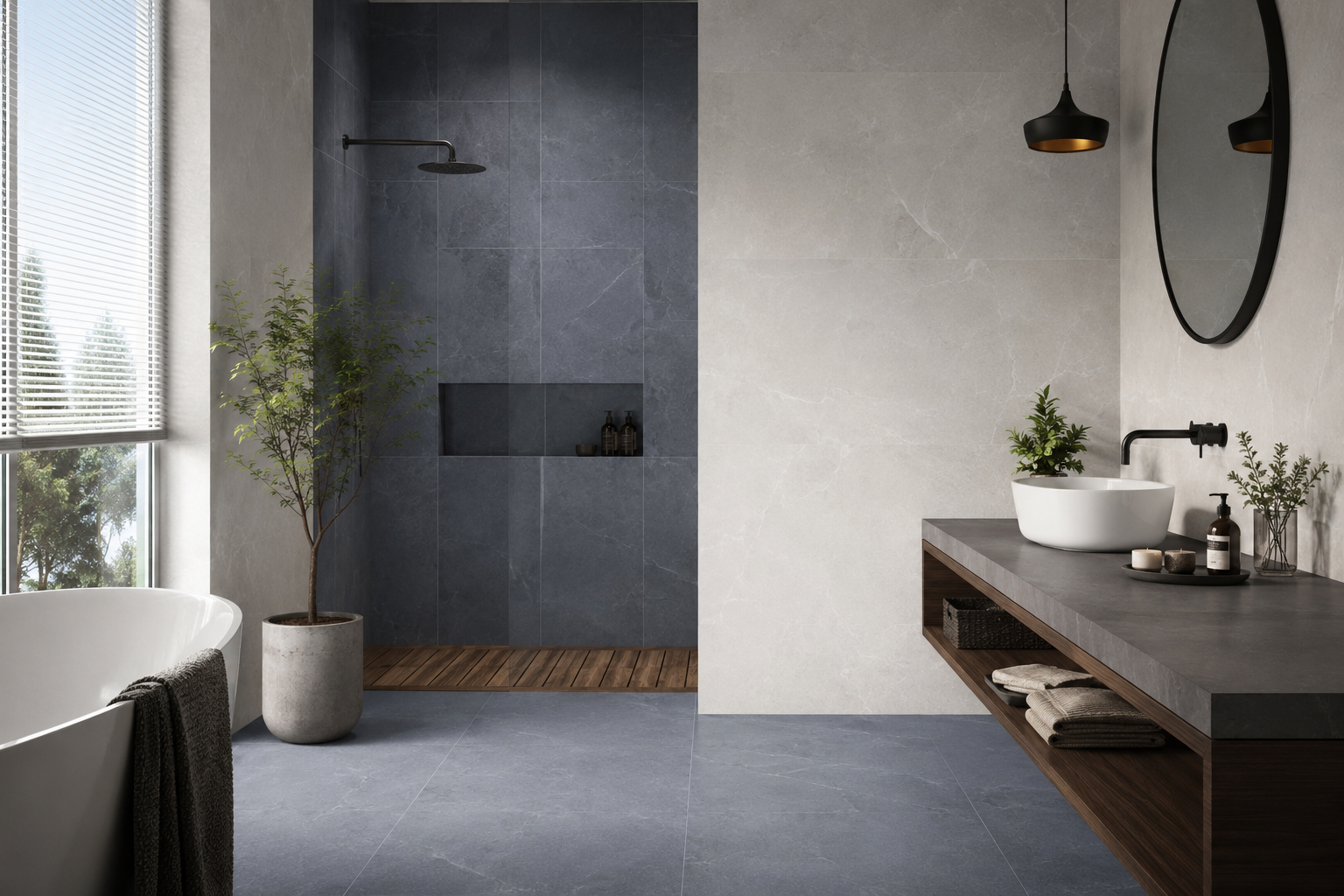
One of the most complex challenges in ceramic tile manufacturing is managing the Coefficient of Thermal Expansion (CTE). Every material expands when heated and contracts when cooled. If the ceramic body, the engobe, and the glaze contract at significantly different rates as they cool down from 1200 degrees Celsius, the tile will develop structural flaws.
If the glaze layer contracts much more than the ceramic body during cooling, the glaze is pulled tight across the body, putting it under severe tensile stress. Because glass is weak under tension, it relieves this stress by cracking. This defect is known as crazing. You see it as a web of fine, spiderweb-like cracks running through the glaze layer. Crazing can happen immediately upon exiting the kiln, or it can show up months or years later as the tile experiences normal temperature fluctuations. While sometimes used intentionally for decorative rustic pottery, crazing is a fatal defect for commercial floor and wall tiles. Moisture seeps through these fine cracks, reaching the porous body underneath, leading to mold growth, discoloration, and eventual structural failure.
Conversely, if the glaze contracts much less than the ceramic body, the glaze is pushed inward, creating compressive stress. A small amount of compressive stress is actually desirable; glass is highly resistant to compression, and a glaze under slight compression is tougher and more scratch-resistant. However, if the mismatch is too severe, the compressive forces become uncontrollable. The glaze will violently sheer away from the body, popping off at the edges in a defect known as peeling or shivering.
To prevent these issues, ceramic engineers must carefully adjust the frit chemistry. Ingredients like sodium and potassium oxides increase thermal expansion, while boron oxide, silica, and alumina reduce it. Sourcing frits with tightly controlled, predictable CTE profiles ensures that your glaze layer remains in a state of mild, stable compression. This balance eliminates late-stage crazing and guarantees that the tile can handle extreme thermal shocks without cracking or delaminating.
Achieving the right balance of durability and design depends heavily on selecting the correct category of frit for the application. Manufacturers typically utilize three main classes of frits to build their product lines:
While frits provide the raw material for the glass surface, you cannot simply spray dry powder onto a tile. The frit must be ground with water, clay, and specific chemical additives to create a stable liquid slurry or slip. Managing the physical behavior of this liquid slip before it ever enters the kiln is just as important as the chemical reactions that happen inside it.
This is where specialized minerals like Bentonite play a vital role. In glaze and engobe formulations, high-purity sodium bentonite acts as a powerful suspension agent and rheology modifier. Because frit particles are relatively heavy and dense, they have a natural tendency to settle out of the liquid mixture, sinking to the bottom of storage tanks and glazing lines to form a hard, concrete-like cake. Adding a small, controlled percentage of premium bentonite—typically between 0.25% and 1%—keeps the heavy frit particles suspended evenly throughout the liquid.
Bentonite works by creating a temporary, reversible gel structure within the slip. When the glaze is being pumped, stirred, or sprayed, the mechanical force breaks this gel structure down, allowing the liquid to flow smoothly through nozzles and coat the tile evenly. As soon as the spraying stops, the bentonite instantly rebuilds its gel structure, locking the glaze in place and preventing it from running off the edges or pooling in low spots. Additionally, bentonite increases the raw, unfired dry strength of the glaze coating. This allows the delicate green tiles to travel along fast-moving conveyor belts, turn corners, and pass under digital printers without the raw glaze chipping or smudging before it reaches the kiln.
Once the ideal combination of body, engobe, frit, and suspension agents is applied, the final durability of the tile is decided by the firing curve inside the tunnel or roller kiln. Vitrification is the process of turning the ceramic materials into a glassy, non-porous state, and it requires precise temperature management across three distinct zones: preheating, firing, and cooling.
During the preheating phase (up to 800 degrees Celsius), any organic matter in the clays must be burned off completely, and chemically bound water must be driven out. If the temperature rises too quickly during this stage, the surface glaze may melt early, sealing the outer pores of the tile and trapping these gases inside. This leads to massive bloating, structural blistering, and brittle interior structures.
In the peak firing zone (typically between 1150 and 1220 degrees Celsius for porcelain tiles), the frits melt fully and react chemically with the engobe and the upper boundary of the ceramic body. This interface zone, where the layers dissolve into one another, is what creates a permanent, indestructible bond. If the peak temperature is too low, or if the tile spends insufficient time in the firing zone, the vitrification process remains incomplete. The resulting tile will have high water absorption, poor mechanical strength, and a dull surface finish. Conversely, over-firing causes the glaze to become too fluid, leading to running, pinholes, and a loss of surface detail.
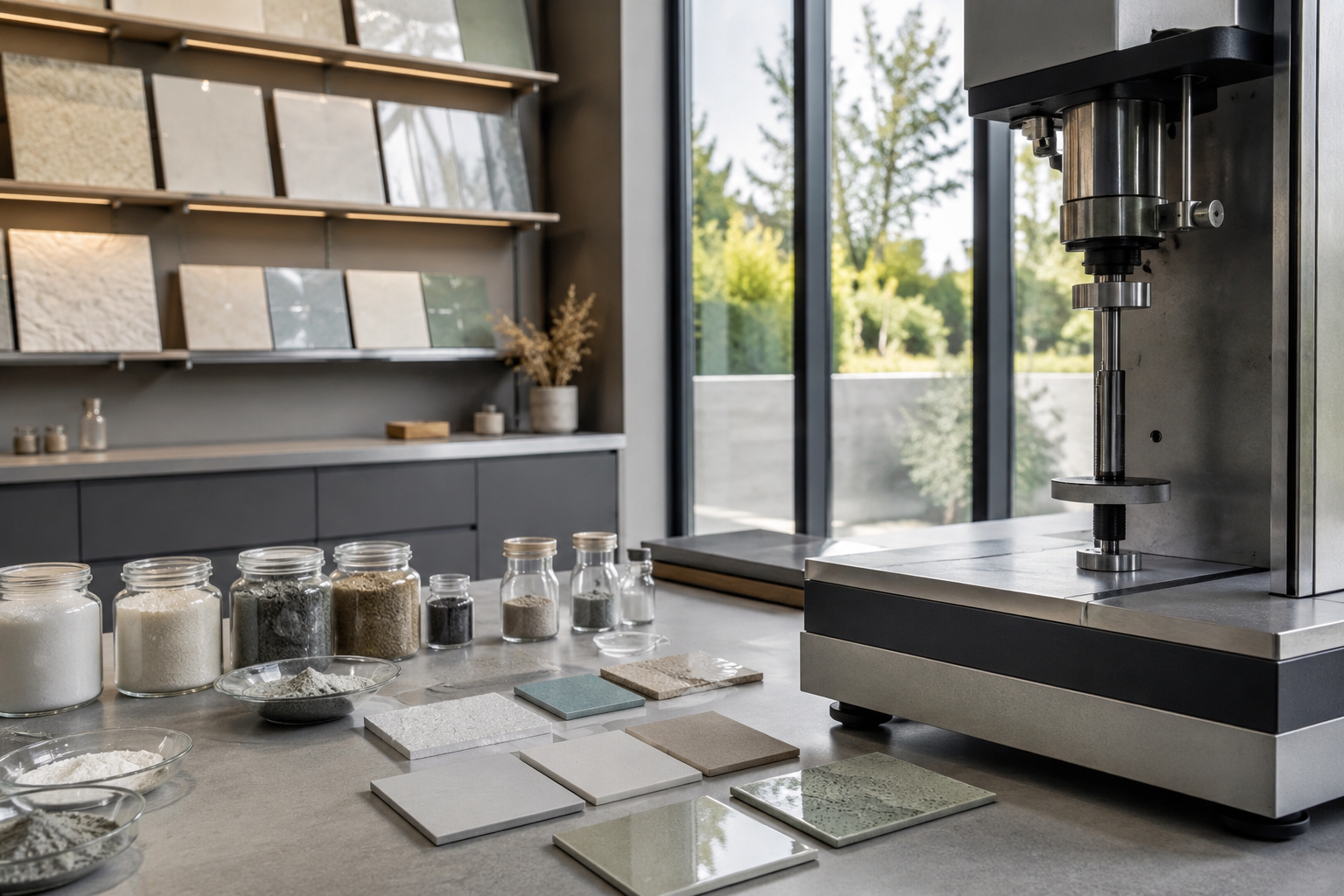
Finally, the cooling zone requires meticulous control, especially as the tiles pass through the quartz inversion point at approximately 573 degrees Celsius. At this temperature, crystalline silica undergoes a sudden, sharp change in volume. If the cooling is too rapid or uneven across the width of the kiln roller bed, internal stresses will warp the tiles or cause micro-cracking within the newly formed glass matrix, destroying the impact resistance of the finished product.
To ensure that optimization efforts are yielding tangible results, manufacturers must implement a rigorous quality control testing regime. Relying solely on visual inspections will not protect against long-term field failures. The following three standardized tests are essential for verifying surface durability:
Optimizing your ceramic tile production line is a balancing act of chemistry, physics, and thermal dynamics. Trying to save money by purchasing cheap, unrefined frits or poor-quality suspension agents is a false economy. The money saved on raw materials is quickly wiped out by high reject rates at the kiln exit, slower production speeds, and costly distributor returns.
Partnering with reliable global suppliers like Axewelledge ensures that your production line receives raw materials engineered to meet strict international standards. Whether it is sourcing pure, high-swelling bentonite to perfect your glaze suspension, or utilizing advanced frit compounds that deliver flawless finishes under rapid firing conditions, the quality of what goes into your processing plant dictates the quality of what comes out. By paying close attention to frit formulation, stabilizing your liquid slip rheology, and tightly controlling your kiln dynamics, you can reliably manufacture ceramic tiles that deliver exceptional visual beauty alongside rugged, long-lasting durability.
Q1: What is the main difference between a ceramic frit and a ceramic glaze? A1: A frit is a component material of a glaze. It is a pre-melted, rapidly cooled, and pulverized glass compound that contains specific chemical oxides. A glaze is the final liquid mixture—composed of frits, raw clays, suspension agents like bentonite, pigments, and water—that is sprayed onto the tile surface before firing.
Q2: How does high water absorption in the ceramic body affect glaze durability? A2: If the ceramic body has high water absorption, it remains porous after firing. Over time, moisture can seep into the body from grout lines or the subfloor. This moisture causes the body to expand slightly, placing intense tensile stress on the glaze layer, which eventually causes crazing or peeling.
Q3: Why does pinholing occur in the glaze layer, and how can we fix it? A3: Pinholing occurs when gases trapped in the ceramic body or engobe escape through the glaze layer after the frit has already melted. If the glaze is too viscous or the firing cycle drops in temperature too quickly, these gas entry paths cannot heal. It can be fixed by lowering the viscosity of the frit, extending the peak firing time slightly, or ensuring organic matter burns out completely during preheating.
Q4: Can adding bentonite to the glaze formulation cause color changes? A4: Standard, unrefined industrial bentonites can contain iron and titanium impurities that will discolor white or transparent glazes. This is why it is essential to use highly refined, low-iron bentonite compounds designed specifically for ceramic glazes, ensuring structural stability without affecting optical clarity.
Q5: How do matte frits achieve a low-gloss finish without losing cleanability? A5: Premium matte frits are chemically formulated to undergo controlled micro-crystallization during the cooling phase. These microscopic crystals scatter light to create a matte look but grow in soft, rounded formations. Low-quality matte frits create sharp, jagged crystal faces that catch dirt easily, making the tile difficult to clean.
Q6: What role does the engobe play in preventing tile warpage? A6: The engobe acts as a critical stress-buffer zone between the ceramic body and the glaze. If there is a minor mismatch in thermal expansion, a well-formulated engobe can absorb these opposing shear forces, preventing structural stress from warping the tile core.
Q7: How does zirconium silicate improve the durability of opaque frits? A7: Zirconium silicate serves a dual purpose. It acts as an opacifier by scattering light, hiding the dark body color beneath, and it is an incredibly hard, chemically inert mineral that increases the scratch resistance and abrasive wear tolerance of the tile surface.













Have questions about our products? We're here to help!