Axewelledge, a leading exporter from India, specializes in high-quality Bentonite. With a commitment to excellence, we supply premium Bentonite to the Middle East and Southeast Asia markets.


North Angle Complex, 304,
150 Feet Ring Rd, Opposite Ambedkar Nagar BRTS Stop,
Madhav Park, Punit Nagar,
Mavdi, Rajkot, Gujarat 360004
© Axewelledge 2026, All Rights Reserved.
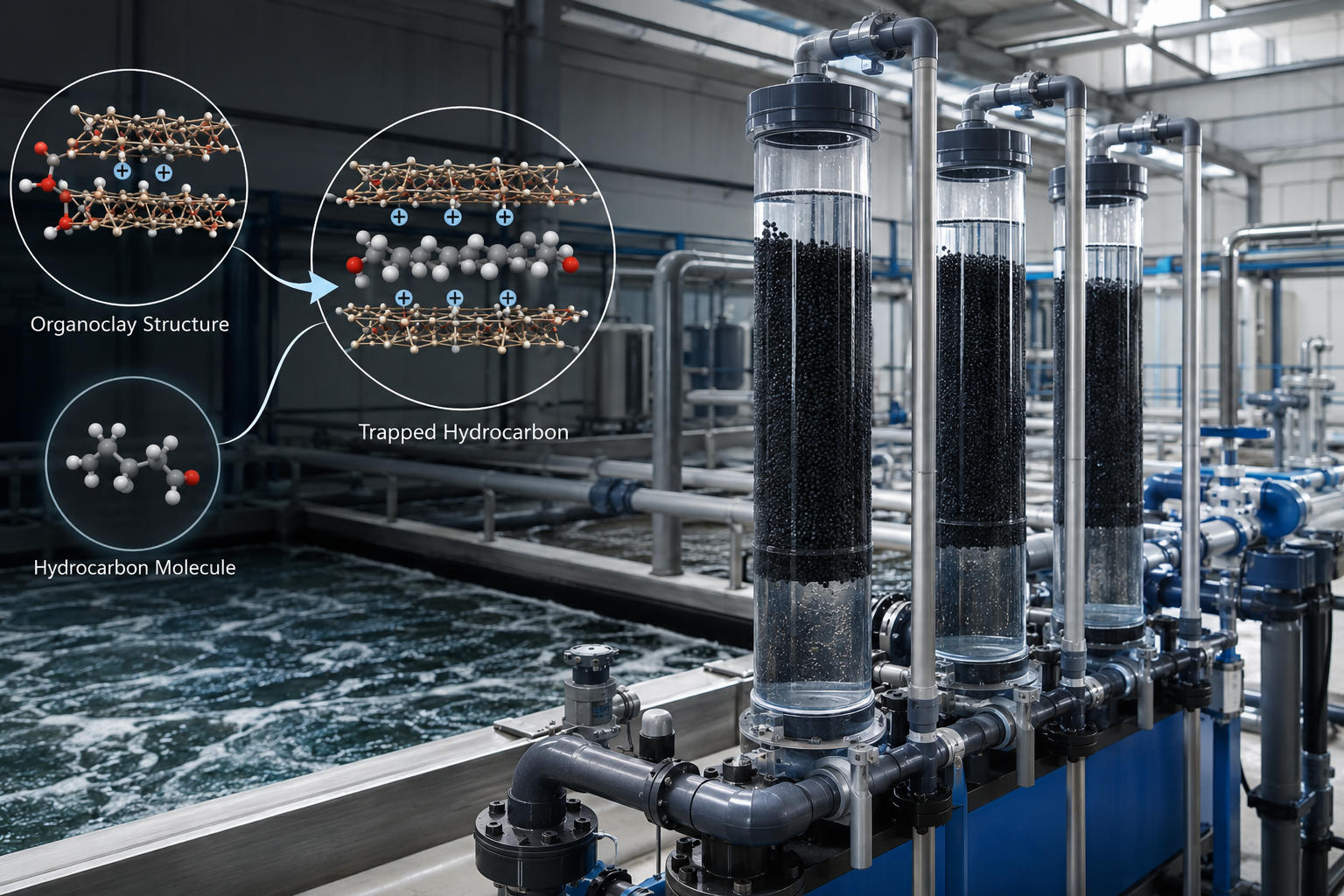
Standard sodium bentonite excels at swelling and binding inorganic suspended solids, but it fails rapidly when confronted with free-floating oils, dissolved hydrocarbons, and emulsified grease. Converting bentonite into organoclay by chemically modifying its interlayer structure creates a hydrophobic adsorbent that routinely removes up to 99% of oil and grease from industrial wastewater without blinding downstream filtration equipment.
If you manage an industrial facility, an oil-water separation unit, or a municipal remediation project, you have likely encountered the limits of traditional clay chemistry. Standard bentonite is hydrophilic; it attracts water and repels non-polar organic molecules. Organoclay flips this chemical preference, creating a high-capacity media built specifically to capture oils, heavy hydrocarbons, and stubborn organic compounds.
Here is a detailed comparison of why organoclay outperforms conventional bentonite in industrial water treatment, exploring the underlying molecular mechanisms, operational advantages, lifetime cost dynamics, and real-world system designs.
To appreciate why organoclay performs so well in aggressive industrial applications, you first need to look at what happens at the mineral layer level.
Bentonite is a naturally occurring clay rock composed primarily of montmorillonite, a 2:1 expandable smectite clay mineral. In its natural state, bentonite features a stacked sheet structure with a net negative surface charge. This negative charge is balanced by exchangeable inorganic cations, typically sodium or calcium, sitting in the interlayer spaces between the clay platelets.
Because these inorganic ions attract water molecules, untreated sodium bentonite is strongly hydrophilic (water-loving). When placed in water, it hydrates rapidly, expanding to many times its dry volume. This high swelling capacity and cation exchange capability make standard bentonite excellent for:
However, this same hydrophilic nature presents a major chemical barrier when treating wastewater laden with oils, fuels, and complex organic molecules.
Organoclay is an organically modified bentonite. It is produced by taking high-purity sodium bentonite and performing an ion-exchange reaction with cationic quaternary ammonium surfactants.
During synthesis, long-chain organic quaternary ammonium ions displace the native inorganic sodium ions in the clay's interlayer galleries. The hydrocarbon tails of the surfactant extend outward into the interlayer space, transforming the clay's fundamental surface chemistry from hydrophilic to organophilic.
The resulting organoclay mineral matrix no longer swells uncontrollably in pure water. Instead, it acts like a dense, solid-state organic solvent that selectively absorbs and adsorbs non-polar and hydrophobic compounds directly out of aqueous streams.
| Surface Characteristic | Standard Sodium Bentonite | Organically Modified Bentonite (Organoclay) |
|---|---|---|
| Primary Affinity | Water and inorganic cations | Hydrocarbons, fats, oils, grease (FOG) |
| Surface Charge / State | Hydrophilic, negatively charged clay faces | Hydrophobic / Organophilic, alkyl tail network |
| Swelling Mechanism | Expands via water layer intercalation | Expands via organic solute partition |
| Interlayer Cations | Native sodium or calcium ions | Quaternary ammonium surfactant chains |
| Behavior in Free Oil | Repels organic molecules | Partition-binds non-polar compounds |
| Blinding Risk in Oil | High (forms impermeable oily gel) | Low (maintains hydraulic conductivity) |
Why does standard bentonite struggle with hydrocarbons while organoclay captures them effortlessly? The answer lies in the difference between surface adsorption and partition absorption.
Water molecules are highly polar. Hydrocarbons, such as diesel fuel, transformer oil, or BTEX compounds (benzene, toluene, ethylbenzene, xylene), are non-polar.
When standard bentonite is introduced to a mixture of water and oil, water molecules outcompete the oil for access to the clay's charged surface. The hydrophilic surface prefers to build hydrogen bonds with water. As a result, non-polar oil droplets pass right by the clay platelets without binding.
Even worse, if heavy oil touches standard wet bentonite, it coats the outer surface of the hydrated clay particle. This blocks the pores, stops further water flow, and leads to rapid hydraulic blinding. The clay quickly becomes an unmanageable, sticky sludge that clogs filters and pumps.
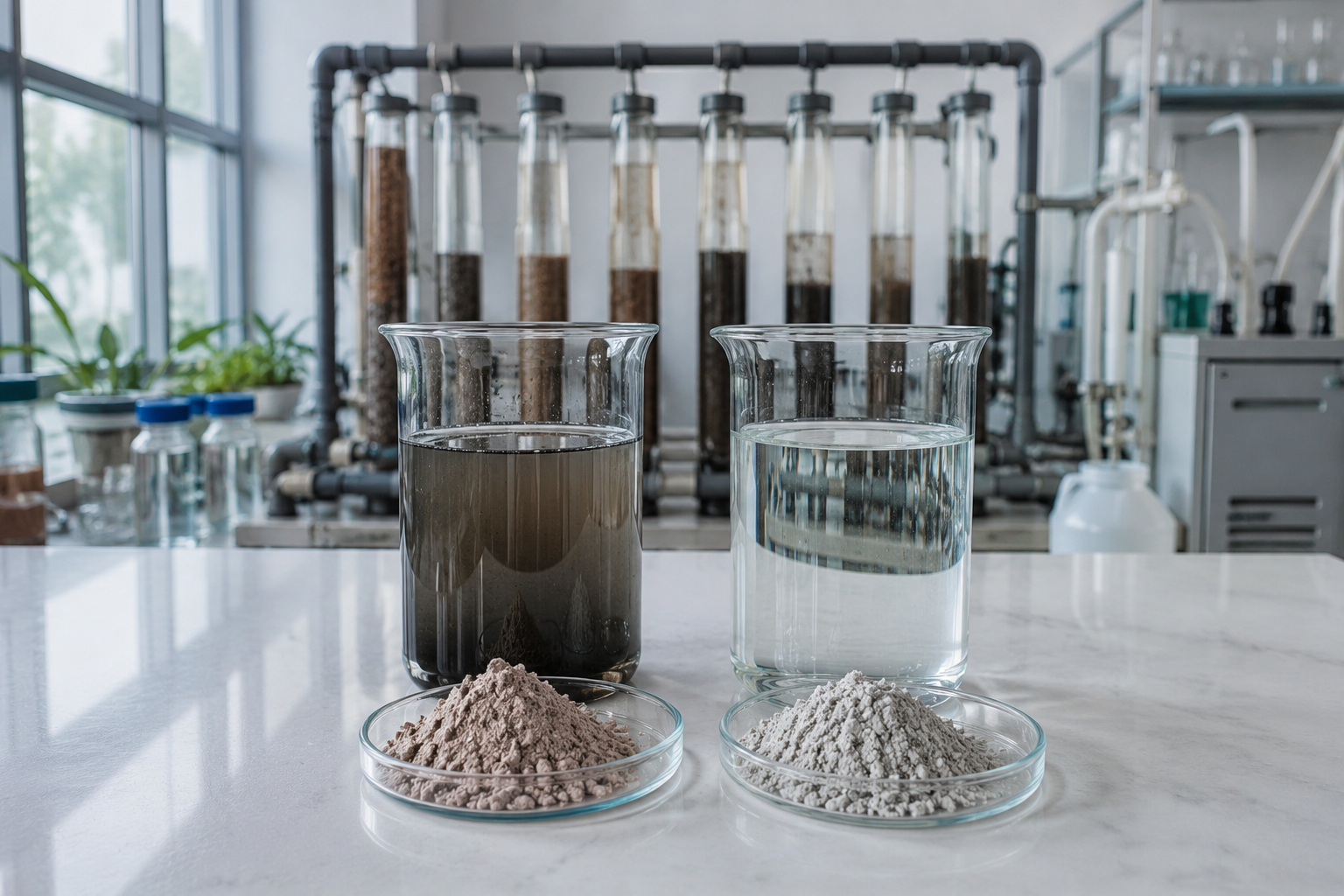
Organoclay removes non-polar organics through a mechanism called partitioning, which behaves much like solvent extraction.
When surfactant molecules are grafted into the clay interlayer, their long hydrocarbon chains (typically 12 to 18 carbon atoms in length) create a localized hydrophobic phase inside the clay structure. As oily wastewater passes through the organoclay bed:
Because this process does not rely on simple physical surface attraction, organoclay retains captured hydrocarbons tightly. Captured oil will not leach back into the water stream, even if pressure spikes or flow rates fluctuate.
When evaluating filtration media for industrial wastewater treatment plants, performance comes down to hydraulic stability, loading capacity, and target contaminant removal rates. Organoclay offers distinct practical advantages across these categories.
Standard bentonite reaches physical saturation at very low oil loading levels, often blinding after absorbing less than 5% to 10% of its weight in oil.
By contrast, high-grade organoclay routinely absorbs 50% to 100% of its dry weight in hydrocarbons. For example, 100 pounds of organoclay media can trap 50 to 100 pounds of oil and grease before replacement is required. It performs equally well on free-floating oil, mechanically dispersed oil, and chemically emulsified oil that bypasses traditional oil-water separators.
Activated carbon (GAC) is a common choice for final wastewater polishing, but it is expensive and easily ruined by heavy organics. If oil and grease reach a granular activated carbon bed, they quickly plug the micropores, rendering the carbon useless for removing soluble organic contaminants.
Organoclay is immune to this type of oil blinding. Installing an organoclay vessel ahead of an activated carbon system creates a reliable protective barrier. The organoclay strips out heavy hydrocarbons and fats, allowing the activated carbon downstream to process dissolved VOCs and trace contaminants at maximum efficiency.
Natural sodium bentonite swells into a thick paste when mixed with water. In a fixed-bed vessel, this expansion causes high differential pressure, channel formation, and complete flow restriction.
Organoclay is formulated into rigid granules or extruded pellets designed for packed-bed columns. It maintains structural integrity under continuous water pressure, preserving uniform flow channels and steady hydraulic throughput without blinding or compacting.
Organoclay targets a broad spectrum of problematic water pollutants that standard clay misses completely:
To see where organoclay fits into a treatment system, it helps to compare it directly against alternative adsorption media, including standard bentonite, granular activated carbon, and synthetic resins.
| Performance Metric | Standard Bentonite | Organoclay | Granular Activated Carbon (GAC) | Synthetic Ion Exchange Resin |
|---|---|---|---|---|
| Oil & Grease Loading Capacity | Extremely Low (< 10% wt) | High (50% to 100% wt) | Low to Moderate (5% to 15% wt) | Very Low (Ruined by oil) |
| Tolerance to Free/Emulsified Oil | Poor (Blinds rapidly) | Excellent (Primary target) | Poor (Pores plug quickly) | Poor (Surface fouls) |
| Hydraulic Performance in Columns | Very Poor (Gelation) | Excellent (Granular bed) | Excellent (Granular bed) | Excellent (Spherical beads) |
| Removal of Dissolved Low-MW VOCs | Poor | Fair to Moderate | Excellent (Primary strength) | Variable |
| Heavy Metal Removal | Good (Cation exchange) | Moderate (Dual-functional types) | Fair | Excellent (Targeted) |
| Susceptibility to Biofouling | Moderate | Low | High | Moderate |
| Relative Operational Cost for High-Oil Water | High (Frequent bed changes) | Low (High capacity per lb) | High (Premature bed poisoning) | Very High (Frequent replacement) |
Organoclay is widely used across industrial sectors where water streams carry significant organic loads.
Water generated during crude oil and natural gas extraction contains high levels of dissolved and emulsified hydrocarbons, production chemicals, and BTEX compounds. Standard bentonite cannot handle these high oil levels. Organoclay polishing units lower oil-in-water levels from several hundred parts per million (ppm) down to under 5 ppm, meeting strict discharge regulations or protecting downstream desalination membranes.
Contaminated industrial sites often contain groundwater plumes mixed with creosote, heavy fuel oils, and chlorinated solvents. Organoclay pump-and-treat systems, as well as permeable reactive barriers, absorb non-polar contaminants over long periods without washing out or degrading chemically.
Logistics hubs, metal recycling yards, marine terminals, and maintenance facilities generate stormwater runoff polluted with motor oils, hydraulic fluids, and grease. Using organoclay in stormwater filter cartridges or catch basins traps these hydrocarbons during high-flow rainfall events, preventing environmental violations.
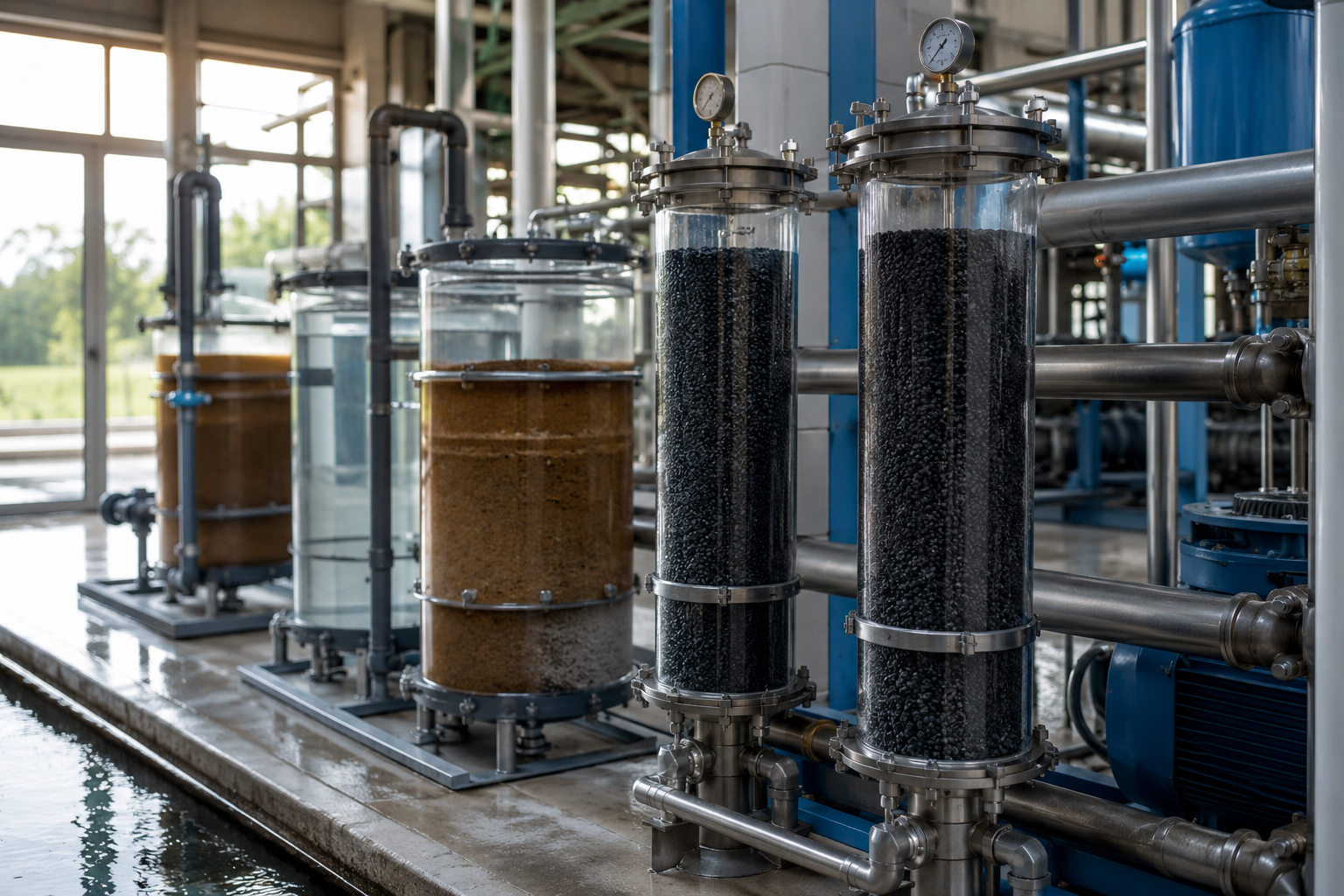
Food processing effluent contains high concentrations of fats, oils, and grease along with organic solids. Standard bentonite forms a soft sludge when it contacts grease, making dewatering difficult. Organoclay binds grease efficiently, producing a firmer, drier sludge cake that simplifies solids handling and disposal.
Upgrading a treatment plant from standard clay or standalone activated carbon to an organoclay-supported process follows a straightforward path:
Measure the total oil and grease, total petroleum hydrocarbons, suspended solids, and pH of your raw wastewater. Organoclay performs best when large suspended solids above 20 to 50 microns are removed upstream.
Pass raw effluent through an oil-water separator, dissolved air flotation unit, or bag filter to capture heavy settleable solids and gross free oil. This step preserves the organoclay's capacity for emulsified and dissolved organic fractions.
Design the organoclay vessel to allow an empty bed contact time of 5 to 15 minutes, depending on hydrocarbon concentration and flow rate. Maintain a linear velocity between 2 and 5 gallons per minute per square foot to ensure uniform fluid contact without channeling.
Placing a Granular Activated Carbon or ion-exchange bed after the organoclay vessel creates an effective multi-stage treatment train. The organoclay removes the oil and grease load, allowing the activated carbon to polish out trace volatile organics and color bodies without the risk of pore blinding.
Track pressure drop across the organoclay vessel along with downstream hydrocarbon concentrations. A sudden increase in downstream oil levels signals that the organoclay bed has reached capacity and requires media replacement.
Even robust filtration media can encounter performance issues if system parameters drift outside design limits.
Evaluating filtration media solely on cost per pound is a common mistake in wastewater engineering. A lower upfront price for standard bentonite often leads to much higher operational costs over time.
Because unmodified sodium bentonite absorbs only a fraction of its weight in oil, a plant treating water with 100 ppm oil and grease consumes up to ten times more raw bentonite by weight compared to organoclay. This high consumption rate increases shipping costs, media changeout frequency, and labor expenses.
Spent standard bentonite mixed with oil forms a voluminous, water-heavy sludge that is costly to haul and landfill. Spent organoclay holds hydrocarbons tightly in a dense, solid granular matrix that passes Toxicity Characteristic Leaching Procedure testing in many jurisdictions. This low leaching risk often qualifies spent organoclay for non-hazardous solid waste disposal or beneficial reuse in fuel blending applications.
Poisoning a 10,000-pound bed of granular activated carbon with free oil can cost tens of thousands of dollars in premature media replacement and emergency downtime. Installing an organoclay lead vessel acts as an insurance policy, extending downstream carbon bed life by 300% to 500%.
Selecting high-performance treatment media starts with a reliable mineral supply chain. High-quality organoclay depends entirely on the quality of its base bentonite feedstock. Subpar montmorillonite purity or inconsistent particle size distribution yields low-capacity organoclay that channels or degrades under hydraulic stress.
Axewelledge provides premium sodium bentonite feedstocks and engineered mineral products backed by extensive processing control and mine reserves. With deep technical expertise in industrial mineral applications, Axewelledge delivers dependable, consistent raw materials that satisfy strict global water purification standards.
Whether you are designing a new industrial water treatment facility, optimizing an existing oil-water separation loop, or building custom filtration media, pairing high-purity mineral reserves with advanced chemical processing ensures long-term operational success.













Have questions about our products? We're here to help!