Axewelledge, a leading exporter from India, specializes in high-quality Bentonite. With a commitment to excellence, we supply premium Bentonite to the Middle East and Southeast Asia markets.


North Angle Complex, 304,
150 Feet Ring Rd, Opposite Ambedkar Nagar BRTS Stop,
Madhav Park, Punit Nagar,
Mavdi, Rajkot, Gujarat 360004
© Axewelledge 2026, All Rights Reserved.
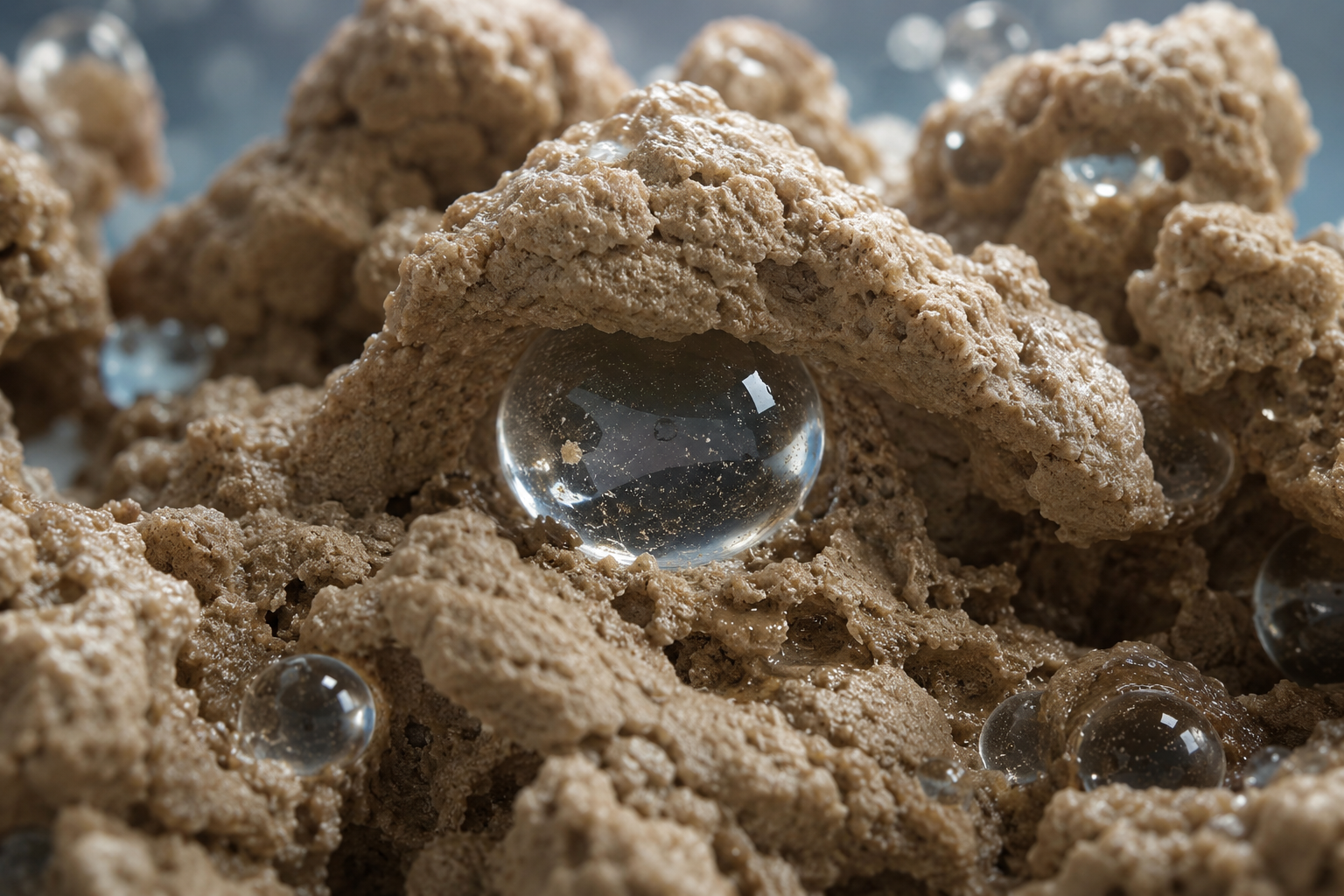
Sodium bentonite creates strong, scoopable cat litter clumps because its unique montmorillonite clay structure swells up to 15 to 20 times its dry volume upon contact with feline urine. This rapid volumetric expansion, paired with high cation exchange capacity, binds liquid into a dense, solid mass that will not break apart during scooping.
For pet product brands and mineral processors, raw material selection determines whether a cat litter formula succeeds or crumbles on retail shelves. Understanding the surface chemistry, particle size distribution, and processing techniques behind natural sodium bentonite is essential for engineering a market-leading product.
Sodium bentonite is a naturally occurring smectite clay composed primarily of the mineral montmorillonite. Formed millions of years ago through the volcanic ash weathering in ancient, alkaline marine environments, this layered silicate possesses physical and chemical traits found in no other natural mineral.
At a microscopic level, sodium bentonite consists of crystalline sheets made of an aluminum octahedral layer sandwiched between two silicon tetrahedral layers (a 2:1 layer structure). What sets sodium bentonite apart from other clay varieties is the presence of hydrated sodium ions ( Na +
) residing within its interlayer spaces.
Because these exchangeable sodium cations carry a single positive charge and have a relatively large hydrated ionic radius, they attract water molecules directly into the clay's crystal lattice. When liquid hits the dry clay, water forces the crystalline layers apart, initiating massive structural expansion.
The key reason sodium bentonite dominates the global scoopable litter market comes down to three physical parameters: swelling capacity, hydration kinetics, and mechanical shear strength.
When feline urine (composed of roughly 95% water, 2% urea, along with various salts and organic compounds) contacts dry sodium bentonite, water penetrates the interlayer galleries of the montmorillonite structure. The sodium cations hydrate, driving the clay layers up to 20 times their original dry volume. This expansion fills the void space between neighboring granules, fusing them into a continuous, impenetrable barrier.
Sodium bentonite typically features a Cation Exchange Capacity ranging from 70 to 100 meq/100g. This high surface charge density allows the clay particles to form strong electrostatic bonds with water molecules and organic nitrogenous compounds present in cat urine. The high CEC locks moisture into the clay matrix instantly, preventing fluid from leaking down to the bottom of the litter box.
As sodium bentonite absorbs fluid, it transforms from a dry particulate into a cohesive, viscoelastic gel. This gel fills macro-pores between granules and forms strong liquid-solid bridges. Upon slight drying, these hydration bridges harden, locking adjacent granules into a firm solid mass that withstands the mechanical force of a litter scoop.
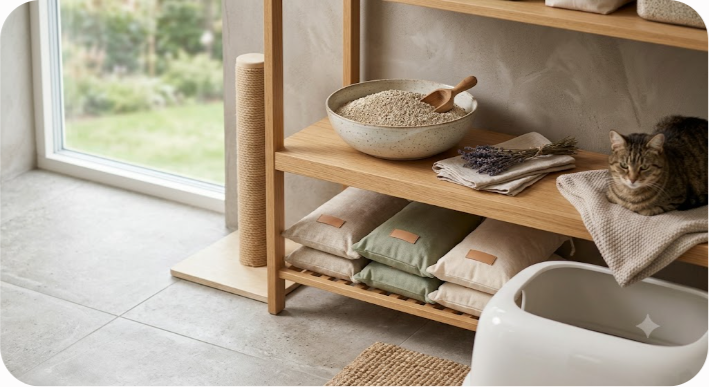
Not all clays or absorbent media behave identically in cat litter applications. A common pitfall in pet product manufacturing is mistaking calcium bentonite or non-clumping clays for high-swelling sodium bentonite.
| Material Property | Natural Sodium Bentonite | Calcium Bentonite (Activated) | Wood Fiber / Plant Pellets | Silica Gel (Crystal) |
|---|---|---|---|---|
| Primary Mechanism | Swelling & Gelation | Surface Absorption | Capillary Action | Micro-pore Absorption |
| Swelling Ratio | 15x – 20x dry volume | 2x – 4x dry volume | Minimal (1.5x) | Zero swelling |
| Clump Integrity | Very High (Durable solid mass) | Low to Moderate (Crumbles) | Low (Soft clumps) | None (Non-clumping) |
| Hydration Speed | Instant (< 3 seconds) | Moderate (5–10 seconds) | Slow (10–30 seconds) | Instant surface trap |
| Natural Odor Trap | Excellent (Ionic binding) | Moderate | Poor (Requires scent) | Excellent (Moisture lock) |
| Dust Potential | Low to Mid (Process dependent) | High | Variable | Low |
Calcium bentonite contains divalent calcium ions ( Ca 2+
) in its interlayer space. Because calcium ions carry a double positive charge, they hold the clay sheets tightly together, preventing water from penetrating deeply between layers. Calcium bentonite absorbs liquid well on its surface, but it expands very little (typically 2 to 4 times its dry volume). Litter made from unactivated calcium bentonite creates soft, muddy slurry rather than firm, scoopable clumps.
While calcium bentonite can undergo chemical modification with sodium carbonate (a process known as sodium activation), naturally occurring sodium bentonite consistently delivers superior thermal stability, faster swelling kinetics, and longer-lasting clump integrity over time.
Converting raw, mined sodium bentonite ore into a high-margin consumer product requires strict control over processing variables. Raw ore straight from a mine cannot be packed directly into a retail bag; it must go through precise crushing, drying, granulating, and dedusting cycles.
Granule sizing directly impacts how quickly urine is absorbed and how tightly the resulting clump forms:
Raw sodium bentonite naturally contains 25% to 35% free moisture when excavated. Industrial rotary dryers reduce this moisture level to a target window between 6% and 10%:
Dust is the single largest cause of consumer dissatisfaction with clay cat litter. High-volume air classification systems, fluid bed dedusting, and non-toxic mineral oil spray coatings are applied during final packaging to keep airborne respirable dust well below industry limits.
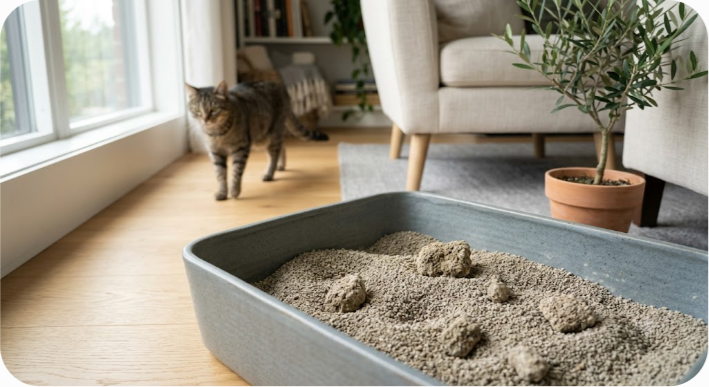
Understanding how a clump develops over time helps product development teams evaluate raw material quality during laboratory screening.
Cat urine contains urea, which decomposes rapidly via the bacterial enzyme urease into ammonia gas ( NH 3 ?
). Ammonia produces the harsh, pungent odor associated with unmaintained litter boxes.
Sodium bentonite controls odors naturally through two distinct mechanisms:
Because sodium bentonite swells instantly around fluid, it seals liquid in a dense micro-porous gel layer. This rapid physical trap slows down the rate at which volatile ammonia molecules can escape into the surrounding air.
The net negative surface charge on montmorillonite clay platelets acts as a magnet for positively charged ammonium ions ( NH 4 + ?
). Through cation exchange, ammonium ions replace sodium ions on the clay surface, chemically locking the nitrogenous compound within the mineral matrix before it can convert into airborne ammonia gas.
Quality control laboratories rely on standardized test methods to benchmark raw bentonite shipments before committing raw material to large-scale production runs.
This test measures how many milliliters a 2-gram sample of finely ground bentonite swells when dropped into 100 mL of distilled water over 24 hours. Premium sodium bentonite for cat litter should yield a swell index of at least 24 mL/2g to 30+ mL/2g.
A standardized liquid volume (typically 10 mL to 15 mL of synthetic urine solution) is dropped onto a bed of litter from a set height. After 5 minutes, the formed clump is removed, weighed, and dropped from a height of 30 cm (12 inches) onto a standard sieve mesh. The percentage of clump mass retained after the drop indicates its mechanical durability. High-performing litters maintain a retained mass greater than 95%.
Measures the percentage of water a dry clay powder can hold relative to its dry weight over a fixed timeframe. Premium sodium bentonite regularly achieves absorption values ranging from 300% to 500%.
For industrial manufacturers and private-label brands operating in North America, Europe, Southeast Asia, and the Middle East, securing a consistent supply of uniform, high-swelling sodium bentonite is vital for operational stability.
Variations in ore grade from inconsistent deposits cause significant performance issues, including weak clumps, high dust levels, and unexpected customer churn. Successful cat litter brands partner with primary mine owners and refiners capable of supplying consistent, high-purity sodium bentonite backed by rigorous quality assurance.
As one of India's premier mineral producers, Axewelledge controls over 60 million tons of proven high-grade bentonite reserves. Utilizing advanced refinement techniques and strategic processing plants, Axewelledge delivers premium-grade sodium bentonite engineered specifically to meet the high swell, rapid gelation, and low-dust demands of global cat litter manufacturers.
The cat litter market continues to evolve as consumer expectations shift toward cleaner, lighter, and more sustainable products:
By understanding the underlying mineralogy of sodium bentonite and partnering with reliable, high-yield producers, cat litter brands can consistently deliver the dust-free, ultra-durable clumping performance pet owners expect.













Have questions about our products? We're here to help!