Axewelledge, a leading exporter from India, specializes in high-quality Bentonite. With a commitment to excellence, we supply premium Bentonite to the Middle East and Southeast Asia markets.


North Angle Complex, 304,
150 Feet Ring Rd, Opposite Ambedkar Nagar BRTS Stop,
Madhav Park, Punit Nagar,
Mavdi, Rajkot, Gujarat 360004
© Axewelledge 2026, All Rights Reserved.
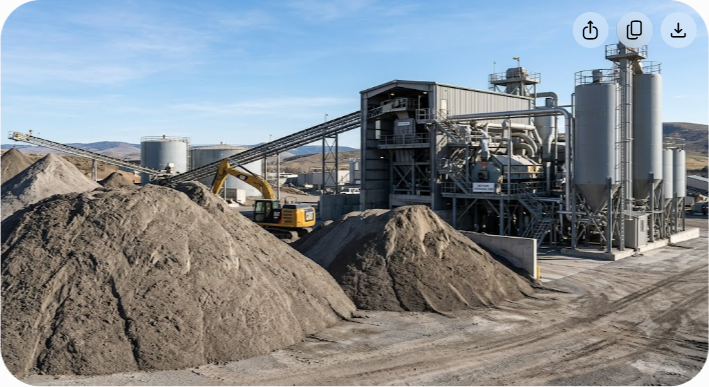
When you step onto a bustling civil engineering site or peer into the smoky belly of a metalcasting foundry, you rarely think about ancient volcanic ash settling into prehistoric alkaline lakes. Yet, that geological history dictates the success of nearly every heavy operation you manage today. Bentonite clay sits quietly at the center of modern manufacturing, drilling, and environmental engineering. But picking the wrong type of bentonite can lead to collapsed borehole walls, defective metal castings, or failing waterproof liners. That single mistake costs thousands of dollars in downtime and material waste.
Two distinct variants dominate the market: sodium bentonite and calcium bentonite. While they share a similar familial lineage as aluminum phyllosilicates, their behaviors in water, under heat, and across chemical gradients are vastly different. If you treat them as interchangeable commodities, your processes will suffer. Let's break down the chemistry, the physical quirks, and the distinct industrial applications that separate these two powerhouse minerals so you can make informed choices for your next project.
To understand why sodium and calcium bentonite behave so differently, we need to look at what's happening on a microscopic level. Bentonite is primarily composed of montmorillonite, a smectite group mineral structured like a microscopic club sandwich. It consists of an octahedral sheet of alumina sandwiched between two tetrahedral sheets of silica.
These layers carry a slight negative electrical charge because of atomic substitutions within the crystal lattice—specifically, magnesium or iron swapping out for aluminum, or aluminum swapping out for silicon. To balance that negative charge, positive ions, known as exchangeable cations, hang out in the spaces between the silicate layers, called the interlayer space.
+ ): When sodium is the dominant interlayer cation, water molecules slip easily between the structural layers. The hydration energy of the sodium ion pulls water inward, forcing the layers apart. This process causes the clay to swell to many times its dry volume.
2+ ): When calcium dominates the interlayer spaces, the divalent calcium ion holds the adjacent silicate layers together with twice the electrostatic force of a monovalent sodium ion. Water has a much harder time wedging these layers apart. Consequently, calcium bentonite exhibits limited swelling.
This fundamental variance in interlayer chemistry dictates every functional metric you care about: viscosity, fluid loss control, green strength in molds, and cation exchange capacity.
Sodium bentonite is famous for its exceptional swelling capacity and high liquid limit. Drop dry sodium bentonite into water, and it doesn't just dissolve; it expands, forming a slippery, highly viscous colloidal gel. This behavior stems from its ability to hydrate extensively, creating a thixotropic fluid—meaning it acts like a gel when it sits still, but thins out and flows when you stir or pump it.
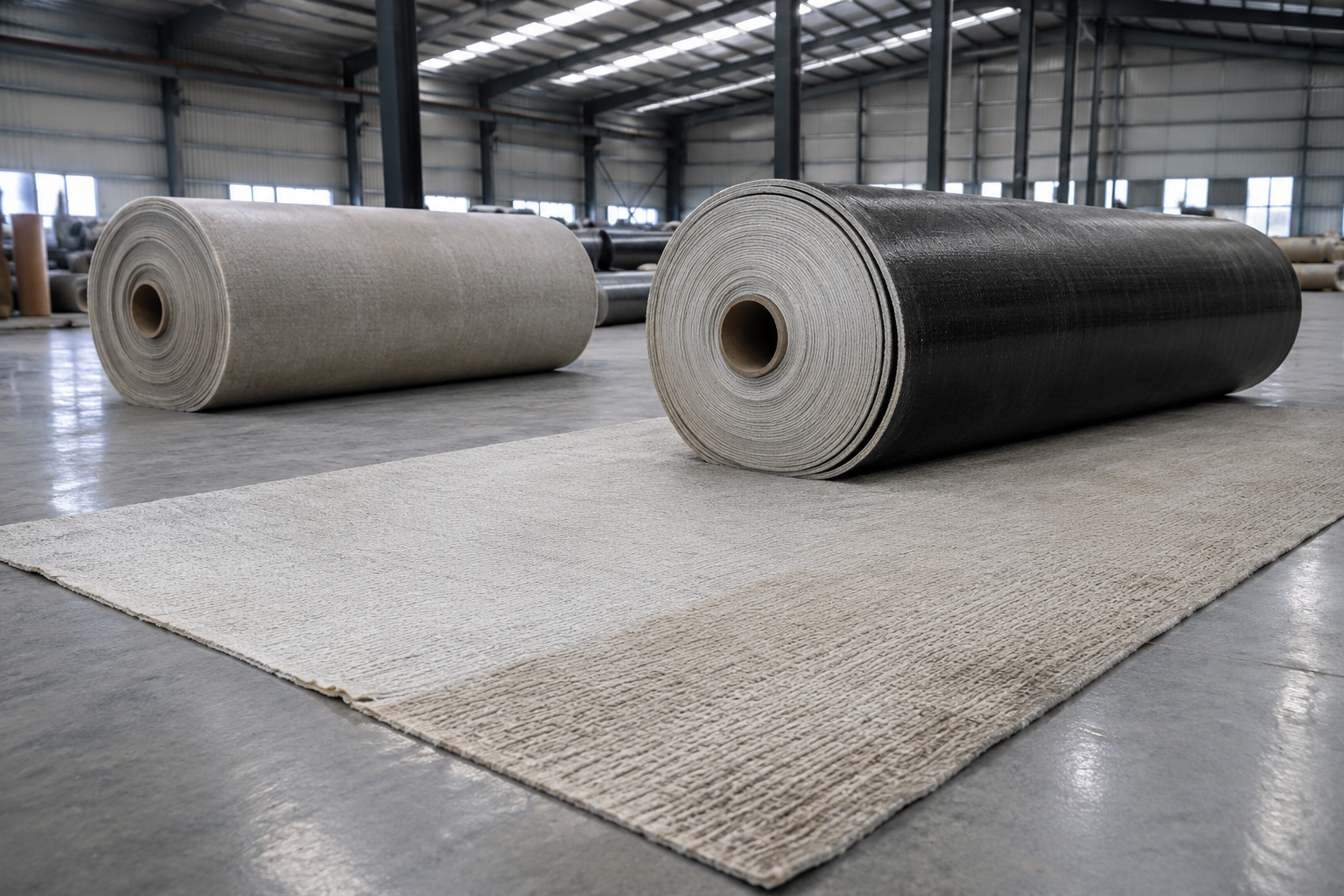
Because of these traits, sodium bentonite is the go-to mineral for operations requiring dynamic sealing, suspension, and lubrication.
In drilling operations, you need a fluid that can suspend heavy rock cuttings, cool the drill bit, and maintain borehole stability against collapsing walls. Sodium bentonite slurries form a thin, low-permeability filter cake on the borehole walls, preventing fluid loss into surrounding porous formations while keeping viscosity high enough to lift debris to the surface.
Landfills, mining tailing ponds, and wastewater lagoons require absolute containment to protect groundwater. Engineers layer sodium bentonite between geotextile fabrics or apply it directly as a compacted blanket. When groundwater hits the liner, the clay swells and self-seals around minor punctures or shifts in the subgrade.
During diaphragm wall construction or deep foundation excavation, a stable trench fluid is non-negotiable. Sodium bentonite supports open vertical excavations in unstable soils before concrete is poured.
Calcium bentonite, sometimes referred to in historical contexts as sub-bentonite or fuller's earth (though fuller's earth can encompass other clays), does not swell dramatically in water. Instead of expanding into a gel, calcium bentonite tends to disperse into smaller agglomerates, settling out of water much faster than its sodium counterpart.
That might sound like a disadvantage, but calcium bentonite shines in applications where high swelling would cause structural instability, or where high surface area and adsorptive capacity matter most.
Metalcasting requires molds that can withstand molten metal temperatures without breaking down prematurely. Calcium bentonite is widely used as a binder in green sand molding systems. While sodium bentonite is also used in foundries, calcium bentonite provides excellent green compressive strength and allows for easier breakdown and shakeout of the sand mold after the metal cools.
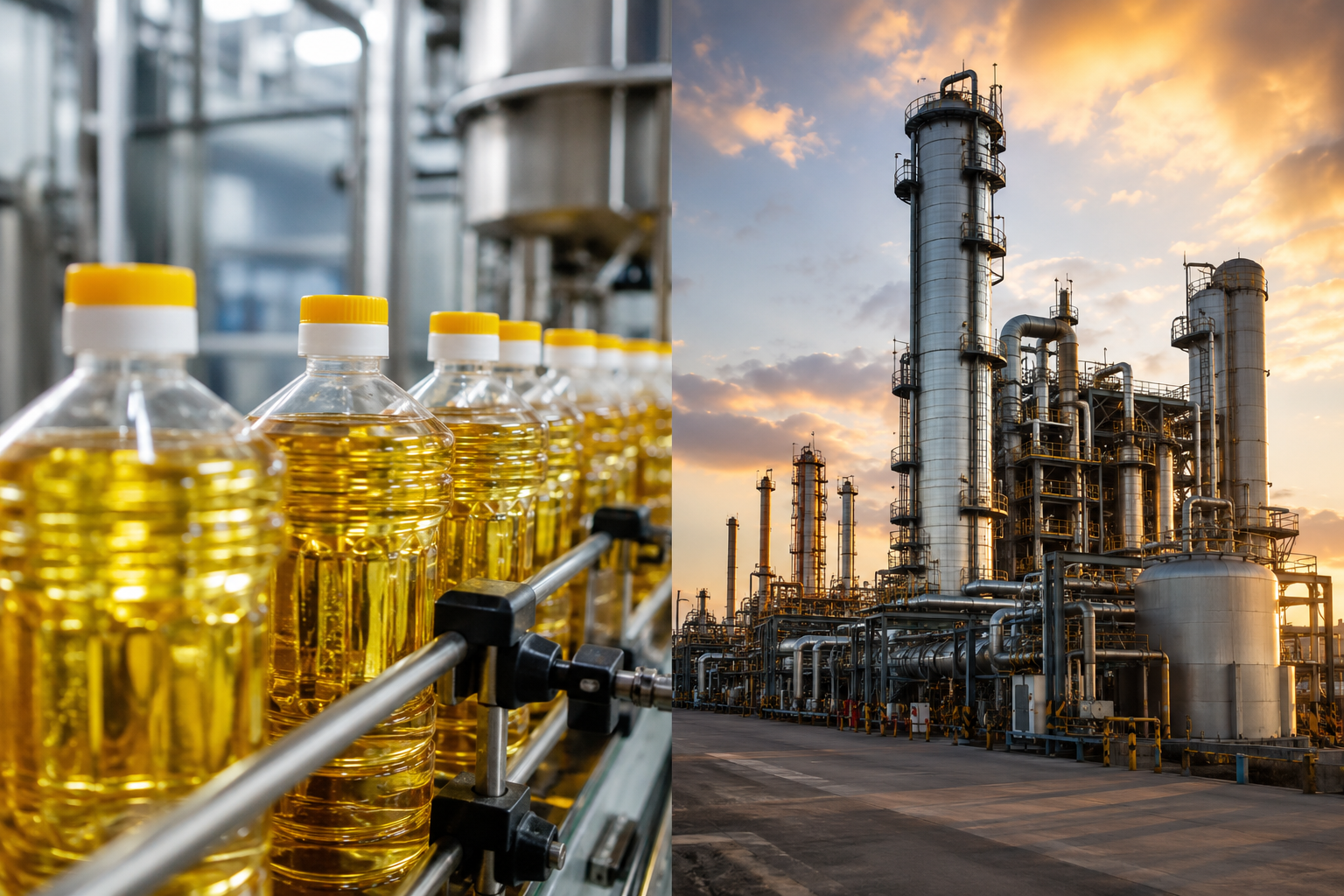
In food processing and petrochemical purification, calcium bentonite acts as a bleaching earth. It strips out chlorophyll, carotenoids, and other impurities from vegetable oils, animal fats, and mineral oils without altering the base chemistry of the oil.
Iron ore fines must be rolled into small pellets before they go into a blast furnace. Calcium bentonite acts as an effective green pellet binder, providing the necessary wet and dry strength so the pellets survive handling and thermal shock during heating.
To make the right choice for your facility, you need to see how these two minerals stack up across critical operational metrics. Let's look at the data side by side.
| Performance Metric | Sodium Bentonite | Calcium Bentonite |
|---|---|---|
| Swelling Index | Extremely High (15-20x dry volume) | Low to Moderate (2-5x dry volume) |
| Fluid Viscosity | High, thixotropic gel formation | Low to Moderate, rapid settling |
| Permeability | Extremely low when hydrated | Moderate, higher water transmission |
| Cation Exchange Capacity | Moderate (typically 70-90 meq/100g) | High (often 90-130 meq/100g) |
| Primary Binding Action | High plasticity, strong cohesive gel | Rigid grain-to-grain contact, easy shakeout |
| Thermal Behavior | Can lose suspension under extreme heat | Retains structural stability in foundry molds |
| Adsorption Capability | Good for ionic species | Excellent for oils, pigments, and toxins |
Nature doesn't always deposit pure sodium bentonite where industrial demand is highest. In many regions, natural deposits are calcium-based or mixed-ion clays. To bridge this gap, mineral processors use a process called sodium activation.
By treating calcium bentonite with a sodium compound—typically soda ash (sodium carbonate)—processors trigger an artificial cation exchange. The sodium ions from the soda ash force the calcium ions out of the interlayer spaces. The calcium precipitates out as calcium carbonate, leaving behind a modified clay with swelling and rheological properties that closely mirror natural sodium bentonite.
This process allows producers with massive, stable mineral reserves to supply high-swelling sodium-activated bentonite to global markets, ensuring that drillers and civil engineers have access to consistent materials even if local deposits are primarily calcium-based. When you source your minerals from established operations with rigorous quality control, activated bentonite performs with the same reliability as its geological twin.
Choosing between sodium and calcium bentonite shouldn't be a guessing game. Ask yourself these practical questions before placing your next bulk order:
Industrial performance relies entirely on mineral consistency. Variations in montmorillonite content, pH levels, grit, and moisture content can disrupt an entire production run. Whether you require the high-swelling properties of sodium bentonite for deep drilling operations or specialized clay grades for manufacturing, partnering with a reliable supplier makes all the difference.
Producers who manage their own mining reserves and processing facilities can fine-tune particle size distribution, maintain tight quality control standards, and deliver consistent mineral profiles batch after batch. When your supply chain is backed by decades of mining expertise and advanced R&D, you eliminate the operational guesswork that slows down production floors.
Sodium bentonite and calcium bentonite are distinct tools designed for different industrial challenges. Sodium bentonite dominates applications requiring high swelling, low permeability, and thick fluid suspension, such as drilling and waterproofing. Calcium bentonite excels where thermal stability, rapid settling, high cation exchange, and superior adsorption are paramount, such as foundry casting and liquid purification.
By understanding their structural differences and matching the right clay grade to your exact operational requirements, you reduce waste, optimize efficiency, and ensure long-term structural integrity across all your industrial workflows.













Have questions about our products? We're here to help!