Axewelledge, a leading exporter from India, specializes in high-quality Bentonite. With a commitment to excellence, we supply premium Bentonite to the Middle East and Southeast Asia markets.


North Angle Complex, 304,
150 Feet Ring Rd, Opposite Ambedkar Nagar BRTS Stop,
Madhav Park, Punit Nagar,
Mavdi, Rajkot, Gujarat 360004
© Axewelledge 2026, All Rights Reserved.
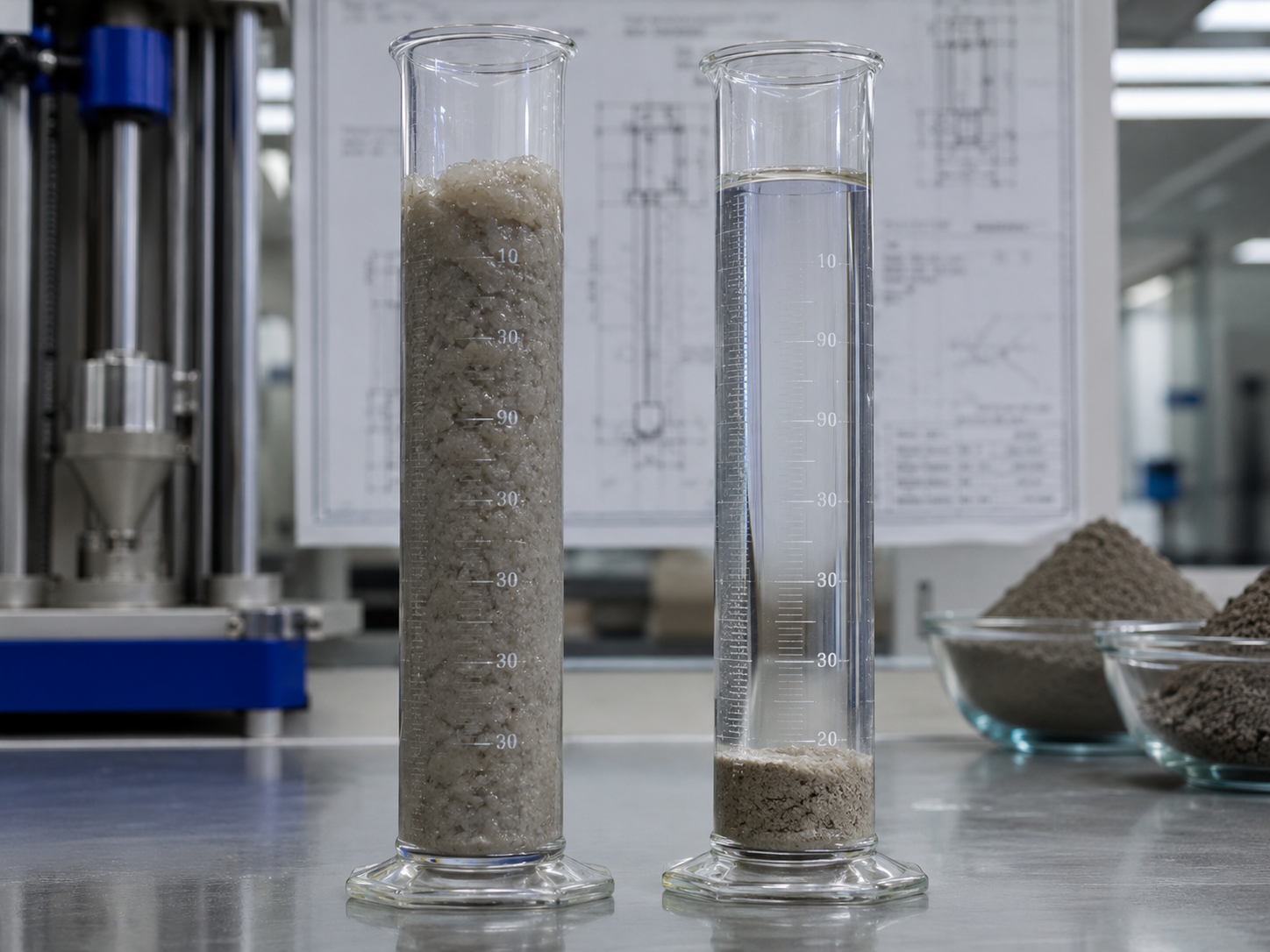
Choosing the wrong bentonite clay for a civil infrastructure or environmental containment project can lead to catastrophic seal failure, runaway fluid loss, or costly structural remediation. If you need a hydraulic barrier that expands up to 18 times its dry volume to self-heal around punctures and block water movement, Sodium Bentonite is the industry standard. If your primary requirement is high-temperature green sand casting in a foundry, moisture absorption without massive swelling, or low-viscosity iron ore pelletizing, Calcium Bentonite is usually the correct specification.
While both clays stem from weathered volcanic ash composed mostly of the smectite mineral montmorillonite, their behavior under field conditions could not be more distinct. The exchangeable cation held between their microscopic silicate sheets—sodium (Na + ) versus calcium (Ca 2+ )—dictates every physical characteristic from free swell index and gel strength to liquid limit and hydraulic conductivity.
This guide breaks down the chemical, physical, and economic differences between Sodium Bentonite and Calcium Bentonite. Designed for geotechnical engineers, civil contractors, drilling supervisors, and industrial procurement teams across North America and worldwide, it provides the precise technical metrics needed to specify the right clay for your next project.
To understand why these two clays behave so differently on a job site, you have to look at their crystal lattice structure.
Bentonite is composed primarily of montmorillonite, a 2:1 layer aluminosilicate mineral. Each microscopic sheet consists of an internal octahedral alumina sheet sandwiched between two tetrahedral silica sheets. During formation millions of years ago, isomorphic substitution occurred within this lattice—aluminum ions were replaced by magnesium, or silicon by aluminum. This created an overall negative surface charge on the clay sheets.
Nature balances this negative charge by attracting hydrated cations into the interlayer space between sheets. The dominant cation present determines the clay's fundamental category:
Contains naturally occurring single-charged sodium ions (Na + ) in its interlayer space. Because sodium carries a single charge and has a relatively large hydrated ionic radius, it attracts water molecules weakly per ion but allows extensive distance between individual silicate layers. When exposed to freshwater, water molecules flood into the interlayer space, pushing the sheets apart in a process called crystalline and osmotic swelling. The layers can separate almost completely, creating a dispersed, highly viscous colloid with extreme water retention and self-sealing ability.
Contains double-charged calcium ions (Ca 2+ ) in its interlayer structure. The divalent calcium ion holds adjacent silicate sheets together with a tight electrostatic grip, much like a strong spring. Water molecules can enter the outer surface and initial interlayer pore spaces, but the strong divalent bond prevents the sheets from expanding significantly. As a result, Calcium Bentonite absorbs water into its micro-porous structure without dispersing or swelling extensively.
Sodium Bentonite (Na+) [Silicate Sheet] <--- Weakly Held Single Charge ---> [Silicate Sheet] --> Massive Water Influx --> Sheets Separate --> High Swelling (15-18x)
Calcium Bentonite (Ca2+) [Silicate Sheet] <=== Tightly Bound Double Charge ===> [Silicate Sheet] --> Limited Water Influx --> Sheets Stay Tied --> Low Swelling (2-4x)
Engineers require hard metrics, standard test protocol values, and physical constants when designing containment systems or fluid formulations. The following table highlights the operational parameters of untreated natural Sodium Bentonite versus natural Calcium Bentonite:
| Technical Parameter | Natural Sodium Bentonite | Natural Calcium Bentonite | Standard Test Method |
|---|
| Dominant Interlayer Cation | Sodium (Na + ) | Calcium (Ca 2+ ) | X-Ray Fluorescence / ICP-AES |
| Free Swell Index | 24 to 30+ mL/2g | 6 to 11 mL/2g | ASTM D5890 |
| Swelling Capacity (Volumetric) | 1200% to 1800% (12–18x) | 100% to 300% (2–4x) | ASTM D5890 | | Hydraulic Conductivity (k) | 1×10 ?9 to 1×10 ?7 cm/s | 1×10 ?6 to 1×10 ?5 cm/s | ASTM D5084 |
| Liquid Limit (LL) | 400% to 600%+ | 100% to 200% | ASTM D4318 |
| Plasticity Index (PI) | 350 to 500+ | 50 to 120 | ASTM D4318 |
| Yield Stress / Gel Strength | Very High (Thixotropic) | Low to Moderate | API RP 13B-1 |
| API 13A Barrel Yield | 90 to 100+ bbl/ton | 30 to 50 bbl/ton | API Specification 13A |
| CEC (Cation Exchange Capacity) | 70 to 100 meq/100g | 70 to 100 meq/100g | Ammonium Acetate Method | | Specific Surface Area | 700 to 800 m 2 /g (hydrated) | 400 to 600 m 2 /g | BET Surface Area Analysis |
Understanding these distinct physical profiles explains why each type of bentonite serves specific industrial sectors.
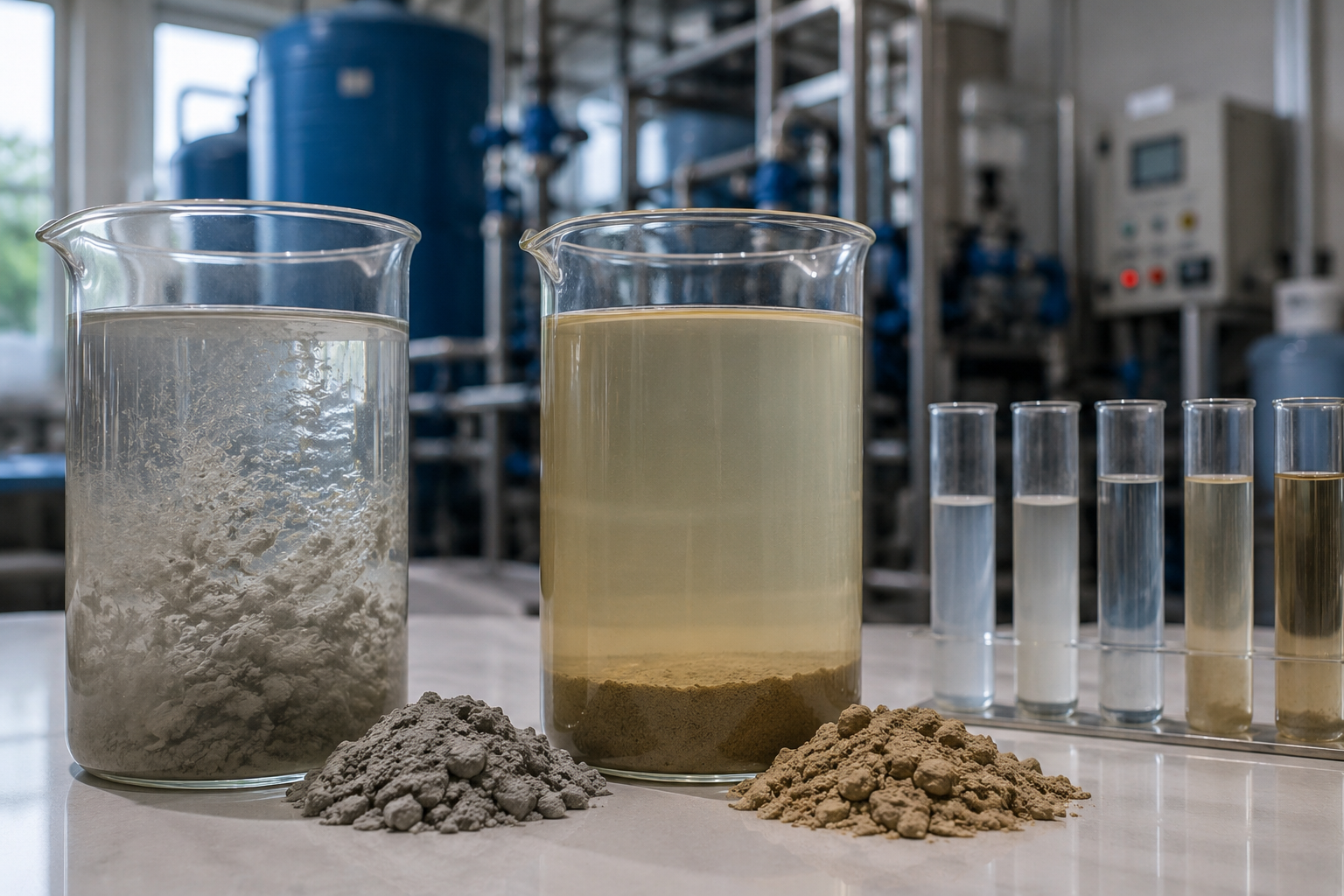
In geoenvironmental engineering, the goal is often preventing liquid migration—stopping leachate from escaping a municipal landfill or keeping contaminated groundwater out of clean aquifers.
?9 cm/s, it is the active ingredient in Geosynthetic Clay Liners (GCLs), compacted soil-bentonite slurries, and soil amendments. When hydrated under confinement (such as under an overburden layer of soil or gravel), it expands into every void, self-sealing cracks, root penetrations, and settlement fissures.
Compacted Hydrated Sodium Bentonite Layer ======================================================= [Soil Overburden Weight]
[Bent. Gel] [Bent. Gel] [Bent. Gel] <-- Voids Completely Sealed ======================================================= Impermeable Hydraulic Barrier (k < 10^-9 cm/s)
Drilling fluids must perform three essential functions: cool and lubricate the bit, carry heavy rock cuttings up to the surface, and form a thin, impermeable filter cake along the borehole wall to prevent fluid loss and hole collapse.
In green sand casting, sand, water, and clay are blended to form reusable molds for molten metals like iron, steel, and aluminum.
Because natural Sodium Bentonite reserves are concentrated in specific geographical zones—primarily the Wyoming Powder River Basin in North America and select high-purity deposits in India—transporting raw Sodium Bentonite to distant sites can incur high freight costs. This has driven interest in Sodium-Activated Calcium Bentonite (often called soda-ash activated bentonite).
Calcium Bentonite is mined locally, dried, and treated with 2% to 5% sodium carbonate (Na 2 ?
CO 3 ?
, or soda ash). A chemical cation exchange occurs in the presence of moisture and mechanical shear:
Ca-Bentonite+Na 2 ?
CO 3 ?
?Na-Bentonite+CaCO 3 ?
The sodium ions from the soda ash displace the calcium ions in the clay lattice, precipitating out insoluble calcium carbonate (CaCO 3 ?
).
While sodium activation increases the free swell index and viscosity of low-swell Calcium Bentonite, it is not identical to natural Sodium Bentonite:
2 ?
, NaCl), the clay easily swaps back to a low-swelling calcium state. Natural Sodium Bentonite is far more resistant to ion exchange under field conditions.
Natural Sodium Bentonite
Sodium-Activated Calcium Bentonite
When specifying or testing bentonite for US projects, geotechnical laboratories rely on standardized ASTM and API protocols. Knowing how to interpret these test results prevents field failure.
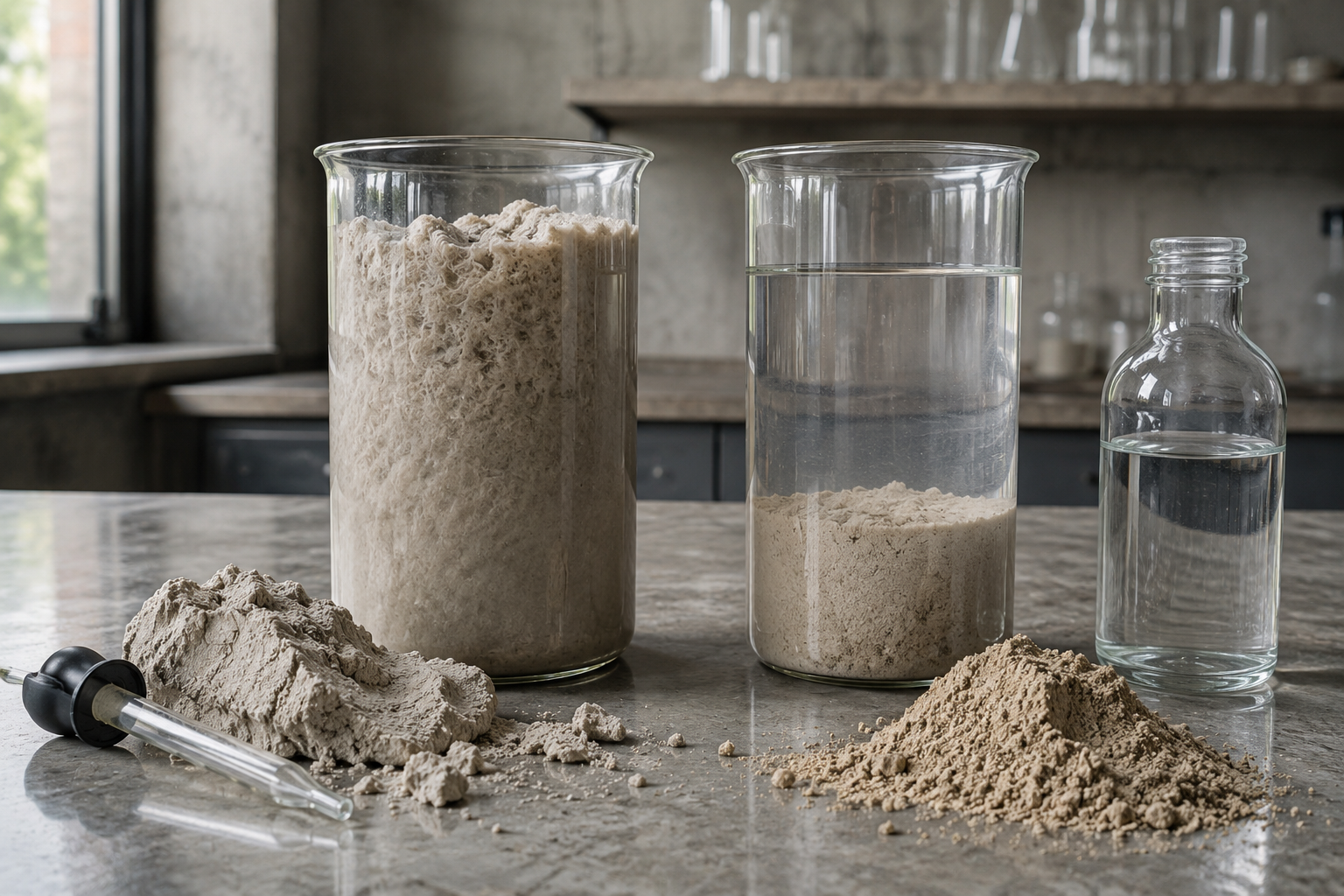
3 ), and the remaining filter cake thickness on the filter paper is measured in millimeters.
3 . High-quality Sodium Bentonite creates a thin, flexible, impermeable filter cake (<2 mm thick). Calcium Bentonite yields high fluid loss (>30 cm 3 ) and a thick, soft cake that easily washes away.
?8 cm/s or 1×10 ?9 cm/s. Achieving this low permeability requires at least 5% to 10% natural Sodium Bentonite mixed with native soil, whereas Calcium Bentonite struggles to drop below 1×10 ?6 cm/s even at high addition rates.
Even high-purity Sodium Bentonite can underperform if mishandled during field preparation or installation. Below are practical solutions to frequent field issues:
2+ ), Magnesium (Mg 2+ ), or Sodium Chloride (NaCl) prevents the clay layers from expanding. The multivalent cations collapse the electrical double layer, drastically reducing gel strength and hydraulic sealing.
Correct Soil-Bentonite Liner Profile ========================================================= [ 6-inch Topsoil / Protective Cover Layer ]
[ 2-inch Uniform Compacted Soil-Sodium Bentonite Mix ]
[ Smooth Subgrade Soil (No stones > 0.75 inches) ] =========================================================
When sourcing industrial bentonite for large-scale North American or international infrastructure projects, material procurement managers must balance landed cost, supply reliability, and quality control.
While domestic Wyoming bentonite has traditionally supplied North American civil markets, international logistics networks allow high-grade Indian Sodium Bentonite—mined from extensive, high-purity reserves in regions like Kutch, Gujarat—to compete effectively on global projects.
To ensure consistent material quality regardless of origin, specify these quality controls in supply contracts:
As a global mining and processing enterprise holding over 60 million tons of high-purity reserves, Axewelledge delivers high-yield Sodium and Calcium Bentonite that meets strict API 13A and ASTM standards. Serving industrial clients across North America, the Middle East, and Southeast Asia, Axewelledge combines advanced processing technology with reliable international logistics to supply consistent, high-yield mineral solutions for drilling, geo-containment, and foundry operations.
When choosing between Sodium Bentonite and Calcium Bentonite, use this operational checklist to select the optimal material for your site conditions:
Project Scope | +--------------------------+--------------------------+
| | Hydraulic Sealing, High-Temp Metal Casting, HDD, Slurry Walls, or Absorbents, Pelletizing, Environmental Barriers? or Fast Mold Shakeout? | v v Use SODIUM BENTONITE Use CALCIUM BENTONITE (Swell: 15-18x, k < 10^-9) (Swell: 2-4x, High Porosity) | +---> Is Groundwater Saline/Hard? | +-- YES --> Pre-treat mix water with Soda Ash or | specify polymer-modified bentonite | +-- NO --> Standard high-yield natural Sodium Bentonite
?8 cm/s.













Have questions about our products? We're here to help!