Axewelledge, a leading exporter from India, specializes in high-quality Bentonite. With a commitment to excellence, we supply premium Bentonite to the Middle East and Southeast Asia markets.


North Angle Complex, 304,
150 Feet Ring Rd, Opposite Ambedkar Nagar BRTS Stop,
Madhav Park, Punit Nagar,
Mavdi, Rajkot, Gujarat 360004
© Axewelledge 2026, All Rights Reserved.
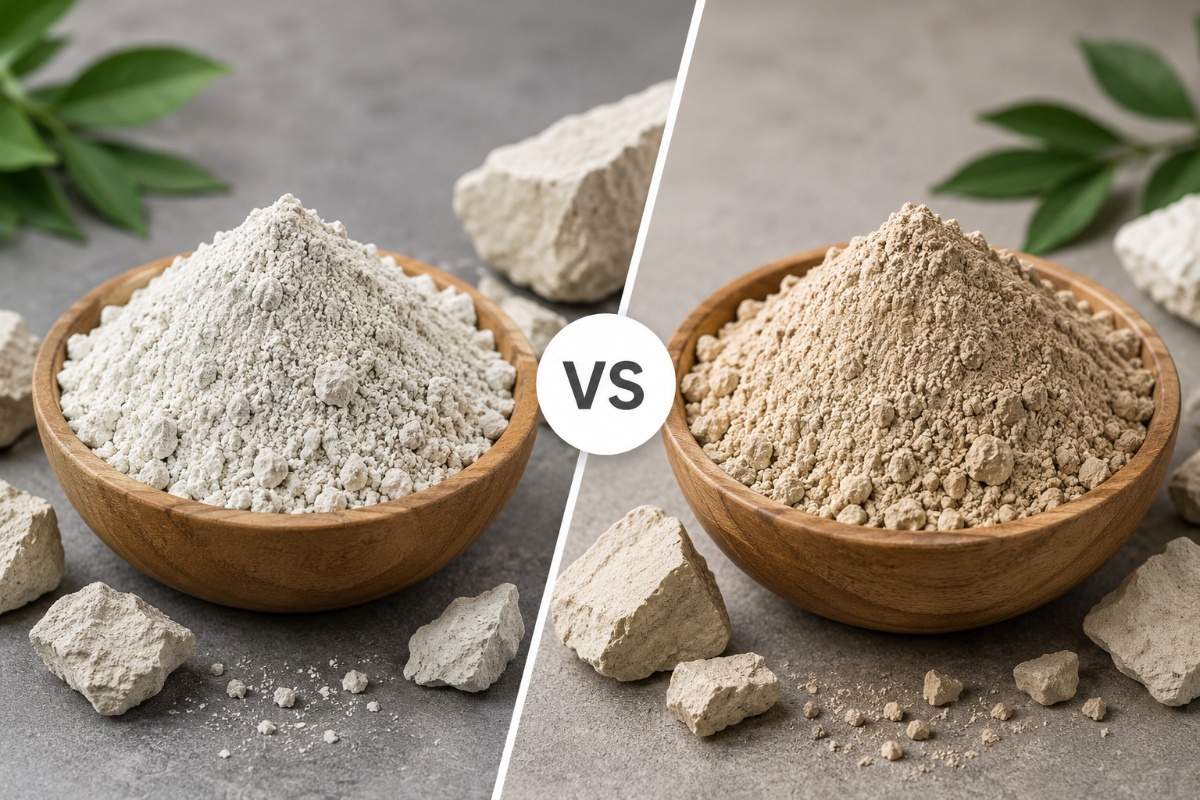
Bentonite is one of the most versatile industrial minerals used worldwide in drilling, construction, foundries, water treatment, agriculture, cosmetics, and environmental projects. However, many buyers and importers often face a common question: Should I choose Sodium Bentonite or Calcium Bentonite?
Although both varieties originate from the same clay mineral family and contain a high percentage of montmorillonite, their properties, performance, and industrial applications differ significantly. The choice between sodium and calcium bentonite can directly impact project efficiency, product quality, and overall costs.
This comprehensive guide explains the differences between sodium bentonite and calcium bentonite, their characteristics, industrial applications, advantages, limitations, and how to select the right type for your business needs. Whether you are an importer, manufacturer, contractor, or industrial buyer, this article will help you make an informed purchasing decision.
For premium-quality bentonite products sourced from India, visit Axewelledge.
Bentonite is a naturally occurring absorbent clay formed from volcanic ash deposits over millions of years. The primary mineral component is montmorillonite, which gives bentonite its exceptional ability to absorb water, swell, bind materials, and exchange ions.
The classification of bentonite depends largely on the dominant exchangeable cation present within the clay structure:
The presence of sodium or calcium ions dramatically influences how the clay behaves when exposed to water and other substances.
Sodium bentonite contains predominantly sodium ions within its structure. It is known for its remarkable swelling capacity and ability to absorb large quantities of water.
When hydrated, sodium bentonite expands significantly and forms a highly viscous gel-like material. This characteristic makes it ideal for applications requiring sealing, waterproofing, suspension, and fluid retention.
Sodium bentonite can swell many times its original volume when exposed to water, making it one of the most effective natural sealing materials available.
Calcium bentonite contains calcium ions as the dominant exchangeable cation. Unlike sodium bentonite, calcium bentonite exhibits limited swelling when hydrated.
Its primary strength lies in adsorption and absorption rather than expansion. Calcium bentonite is commonly used in applications requiring purification, filtration, detoxification, and adsorption of impurities.
Because calcium ions hold the clay layers more tightly together, the material remains relatively stable in water.
| Property | Sodium Bentonite | Calcium Bentonite |
|---|---|---|
| Main Ion | Sodium (Na+) | Calcium (Ca2+) |
| Swelling Capacity | Very High | Low |
| Water Absorption | Excellent | Moderate |
| Sealing Ability | Excellent | Limited |
| Viscosity | High | Moderate |
| Adsorption Capacity | Moderate | Excellent |
| Gel Formation | Strong | Weak |
| Waterproofing | Excellent | Limited |
| Drilling Applications | Ideal | Less Common |
| Cosmetics | Limited | Widely Used |
| Soil Conditioning | Moderate | Good |
| Water Treatment | Good | Excellent |
The most important distinction between sodium bentonite and calcium bentonite is swelling behavior.
When water enters the clay structure:
This expansion creates highly effective seals and barriers. Sodium bentonite can swell many times its dry volume under favorable conditions.
In contrast:
This makes calcium bentonite unsuitable for applications requiring waterproofing or self-sealing capabilities.
Sodium bentonite is widely used in:
Its high viscosity and suspension properties help transport drill cuttings and stabilize boreholes.
Because of its swelling characteristics, sodium bentonite is commonly used for:
The clay expands and fills soil pores, preventing water leakage.
Environmental projects use sodium bentonite in:
Its low permeability helps prevent groundwater contamination.
Applications include:
The material provides excellent waterproofing and soil support.
Sodium bentonite acts as a binding agent in iron ore pellet production.
Benefits include:
Foundries use sodium bentonite as a binder for molding sand.
Advantages include:
Calcium bentonite is widely used in:
Its adsorption capabilities help remove oils and impurities from the skin.
Calcium bentonite effectively removes:
This makes it useful in industrial water treatment systems.
The clay helps:
Calcium bentonite is commonly used for:
Its adsorption characteristics help remove proteins and impurities.
Calcium bentonite serves as:
Farmers use calcium bentonite to:
The most significant advantage is its ability to expand dramatically upon hydration.
Forms highly effective barriers against water movement.
Ideal for drilling fluids and industrial slurries.
Can automatically seal small cracks and voids when exposed to moisture.
Efficiently captures impurities, toxins, and contaminants.
Maintains integrity without excessive expansion.
Gentle adsorption characteristics make it suitable for skincare formulations.
Widely used in filtration and clarification processes.
Select sodium bentonite if your application involves:
✓ Waterproofing
✓ Pond sealing
✓ Drilling mud
✓ Geosynthetic clay liners
✓ Landfill containment
✓ Construction barriers
✓ Iron ore pelletizing
✓ Foundry applications
If stopping water movement is your primary objective, sodium bentonite is usually the preferred solution.
Choose calcium bentonite when your project requires:
✓ Adsorption
✓ Purification
✓ Cosmetic manufacturing
✓ Beverage clarification
✓ Soil conditioning
✓ Water treatment
✓ Feed additives
✓ Oil refining
For filtration and impurity removal, calcium bentonite is generally the better option.
Yes.
Many producers perform a process known as sodium activation. During this treatment, calcium ions are partially replaced with sodium ions, improving swelling and sealing properties. Activated bentonite is widely used in industrial applications requiring higher performance.
India is one of the world's largest producers and exporters of bentonite.
Major deposits are located in:
Indian bentonite is exported to more than 70 countries and is widely recognized for its consistent quality and competitive pricing.
Both sodium bentonite and calcium bentonite are available in:
Global buyers prefer Indian bentonite because of:
Leading suppliers provide customized grades for industries including drilling, foundry, construction, agriculture, cosmetics, and environmental engineering.
The choice between sodium bentonite and calcium bentonite depends entirely on your application requirements.
If you need maximum swelling, waterproofing, sealing, and drilling performance, sodium bentonite is the clear choice. Its ability to absorb water and expand makes it indispensable in construction, environmental protection, and drilling operations.
If your focus is adsorption, purification, filtration, cosmetics, agriculture, or contaminant removal, calcium bentonite offers superior performance. Its stable structure and excellent adsorption properties make it valuable across multiple industries.
Understanding these differences helps importers, manufacturers, and project managers select the right bentonite grade, improve operational efficiency, and reduce costs.
For high-quality Sodium Bentonite, Calcium Bentonite, Fuller's Earth, and customized industrial mineral solutions, visit Axewelledge and connect with experienced bentonite export specialists.













Have questions about our products? We're here to help!