Axewelledge, a leading exporter from India, specializes in high-quality Bentonite. With a commitment to excellence, we supply premium Bentonite to the Middle East and Southeast Asia markets.


North Angle Complex, 304,
150 Feet Ring Rd, Opposite Ambedkar Nagar BRTS Stop,
Madhav Park, Punit Nagar,
Mavdi, Rajkot, Gujarat 360004
© Axewelledge 2026, All Rights Reserved.
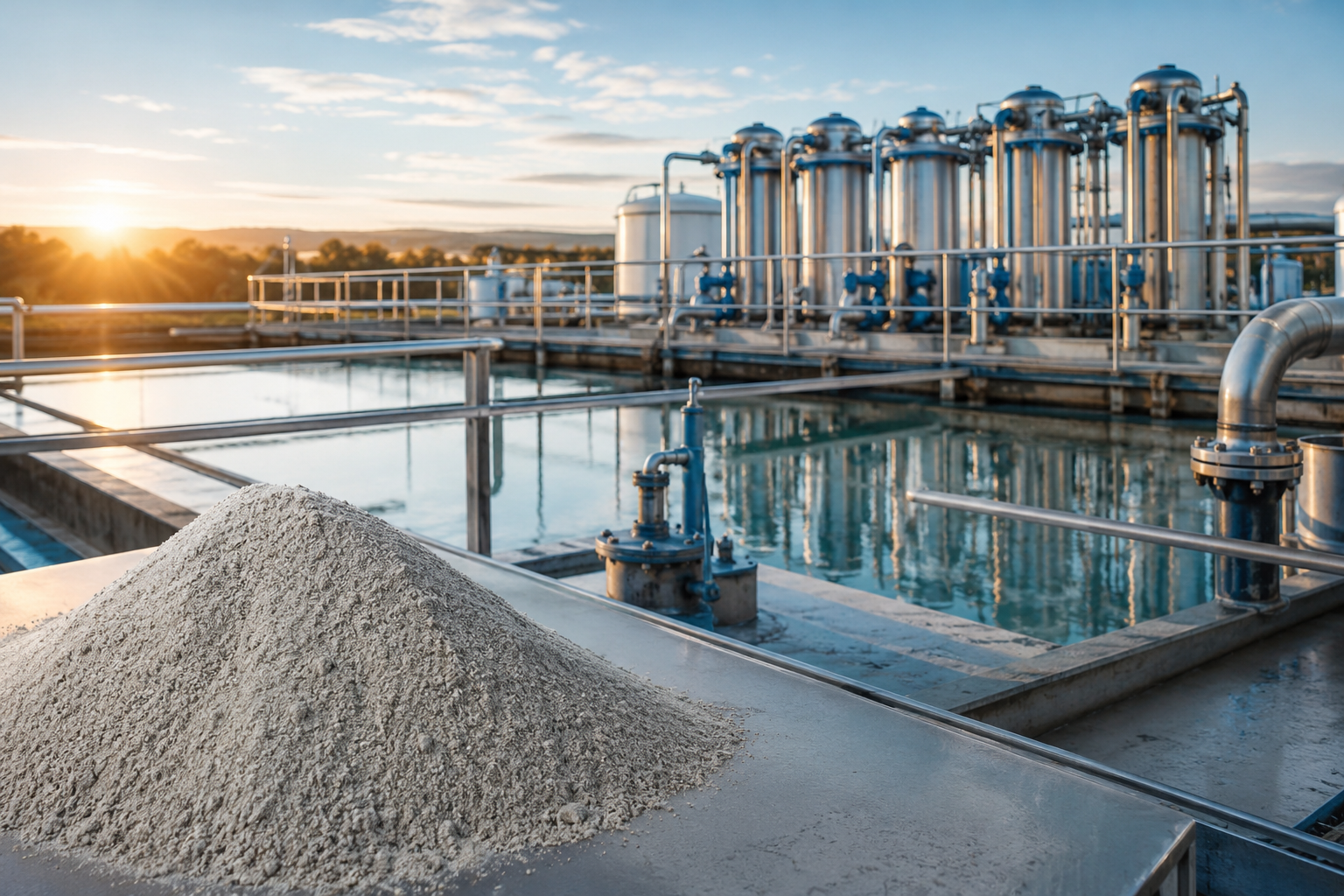
Water never really stays still. Whether it is rushing through municipal drainage systems, cycling through industrial cooling towers, or seeping into local aquifers, the fluid we rely on carries the weight of modern human activity. If you run an industrial plant, manage municipal utilities, or simply care about environmental compliance, you know that treating wastewater isn't just a regulatory checkbox. It is an ongoing environmental responsibility.
Traditional chemical treatments often leave behind secondary pollutants or require energy-intensive processing that strains both budgets and local ecosystems. Engineers and environmental scientists are increasingly looking backward to move forward, turning to natural, earth-derived minerals to solve complex modern purification challenges. Among these, bentonite clay stands out as a quiet powerhouse.
At Axewelledge, we spend our days knee-deep in the mechanics of mineral extraction and processing. Having mined and refined over 60 million tons of high-grade reserves, we see firsthand how raw geological formations translate into high-efficiency industrial applications. Let's look closely at how this remarkable clay works, why its physical properties make it an exceptional tool for wastewater treatment, and how you can implement sustainable mineral solutions in your operations without compromising performance.
To appreciate what bentonite does in a wastewater facility, you have to understand what it is. Bentonite is an absorbent aluminum phyllosilicate clay formed mostly from ancient volcanic ash weathering in the presence of water. Its defining characteristic is its unique crystal structure, which gives it a massive surface area and incredible cation exchange capacity.
When sodium bentonite comes into contact with water, it doesn't just get wet. It expands. It swells up to several times its dry volume, creating a high-viscosity, low-permeability gel. This swelling behavior is driven by the hydration of sodium ions trapped between the clay crystal layers.
For a wastewater treatment plant manager, this behavior is gold. The combination of high swelling, expansive surface area, and negative surface charge allows bentonite to act as a natural sponge, an ion exchanger, and a coagulant aid all at once. You are essentially deploying a microscopic network of chemical traps straight into your effluent stream.
When wastewater enters an effluent treatment plant, it brings a chaotic mix of suspended solids, heavy metals, organic dyes, oils, and chemical residues. Neutralizing this soup requires steps that break down emulsions, pull out heavy elements, and clarify the liquid.
Bentonite steps into this process at multiple stages. Here is how it functions under real-world operating conditions.
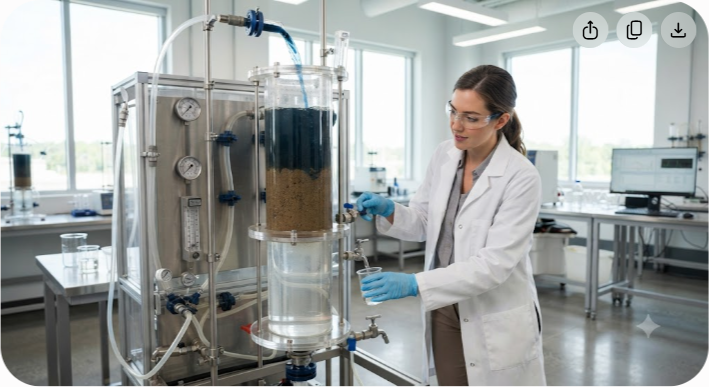
Heavy metal contamination—such as lead, copper, cadmium, and zinc—poses a severe threat to aquatic life and human health. Traditional precipitation methods can be messy and generate toxic sludge.
Bentonite clay has a net negative charge on its platelet surfaces. Positively charged heavy metal ions dissolved in wastewater are naturally drawn to these negative sites through electrostatic attraction. Once they attach, they remain bound to the clay matrix. When the clay settles or is filtered out, the heavy metals go with it, effectively stripping the toxins out of the water column.
Suspended particles in wastewater often carry tiny negative charges that cause them to repel each other, keeping the water perpetually turbid. While synthetic polymers and alum are commonly used to force these particles to clump together, they can be costly and environmentally persistent.
Adding sodium bentonite provides nuclei for flocculation. The expansive clay particles sweep through the water, bridging microscopic suspended solids together into heavier, denser aggregates called flocs. These flocs drop out of suspension much faster, speeding up sedimentation basins and reducing the load on downstream filtration units.
Industries like textiles, paper manufacturing, and chemical processing produce wastewater loaded with stubborn synthetic dyes and complex organics. Many of these compounds are resistant to biological breakdown.
Because of its high porosity and large specific surface area, bentonite acts as an exceptional adsorbent for organic molecules. It traps dye molecules within its interlayer spaces and structural pores, clearing colored effluent efficiently before discharge or recycling.
When designing or upgrading a treatment protocol, engineers constantly weigh cost, efficacy, and environmental impact. Let's look at how natural bentonite stacks up against traditional synthetic alternatives.
| Parameter | Natural Sodium Bentonite | Synthetic Polymers / Alum | Biological Treatment Only |
|---|---|---|---|
| Origin | Naturally occurring mineral reserves | Petroleum-derived / Chemically synthesized | Microorganism cultures |
| Environmental Impact | Low; inert mineral that settles safely | Can introduce residual monomers or toxicity | Eco-friendly but sensitive to toxic shock |
| Speed of Action | Rapid physical adsorption and swelling | Fast flocculation | Slow; requires retention time |
| Heavy Metal Removal | Excellent via cation exchange | Moderate; requires chemical precipitation agents | Limited; can poison microbial cultures |
| Sludge Generation | Non-toxic, easily dewatered mineral sludge | Often hazardous chemical sludge requiring special disposal | Organic biomass sludge |
Using natural minerals doesn't mean sacrificing performance. In fact, many facilities find that pairing bentonite with existing biological or chemical systems creates a hybrid approach that lowers total operating costs while meeting strict environmental discharge limits.
Sustainability in wastewater treatment starts long before the water reaches your plant. It begins at the mine.
If your mineral supplier relies on destructive extraction methods or lacks transparent processing controls, your green initiative is compromised at the source. At Axewelledge, our operations are built around responsible resource management. With over 60 million tons of strategically located reserves in India and state-of-the-art processing plants, we ensure that every ton of sodium bentonite we export meets rigorous international standards.
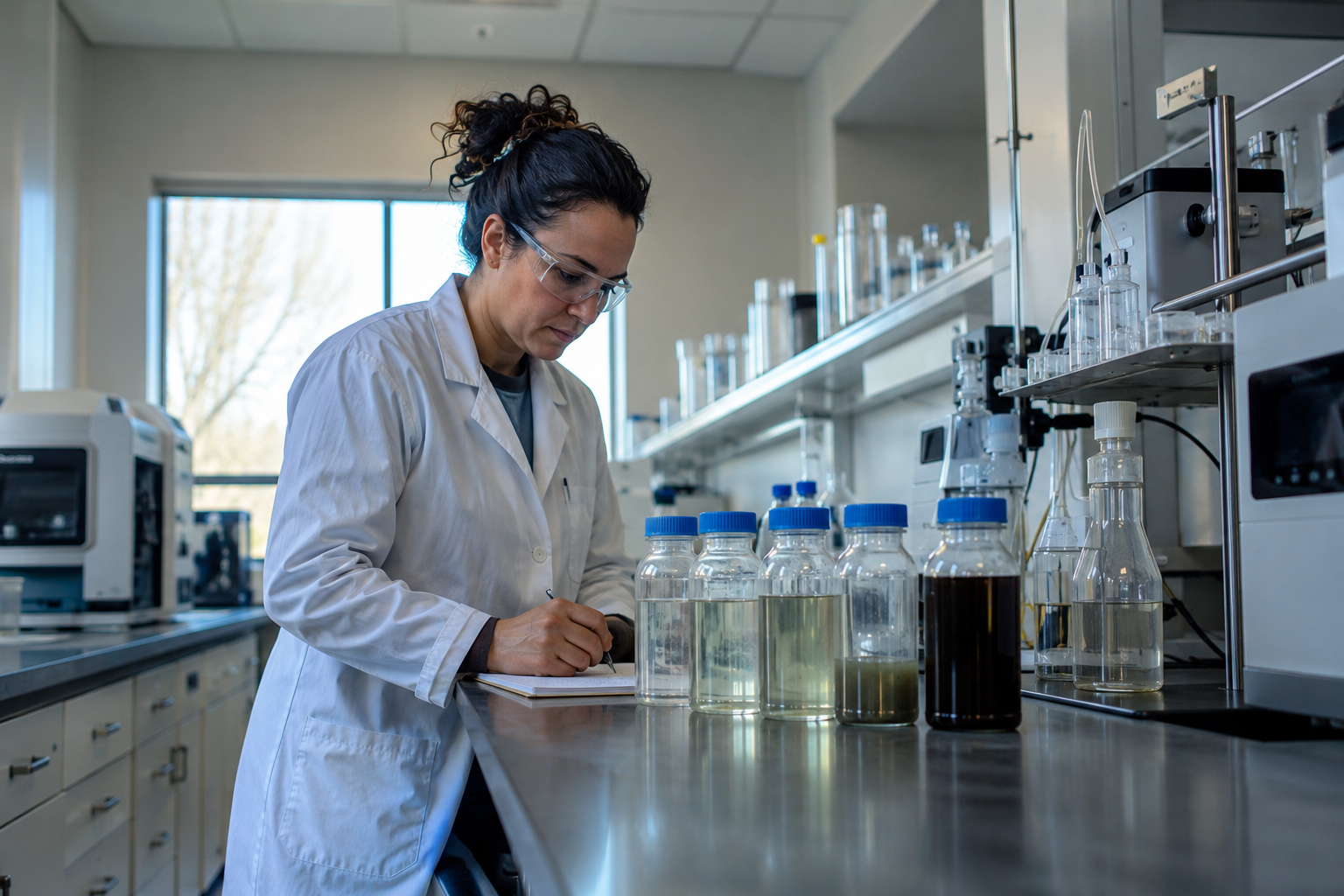
Supply chain stability is another critical factor for industrial facilities. Running out of treatment media mid-operation can lead to costly shutdowns or environmental non-compliance fines. By maintaining robust reserves, advanced R&D, and efficient logistics corridors linking our processing centers to global ports, we make sure your supply remains steady, predictable, and fully compliant with quality benchmarks.
When you source high-swelling sodium bentonite from an integrated mine owner and processor, you cut out unnecessary middlemen. This guarantees product consistency, uniform particle size distribution, and predictable swelling indexes batch after batch.
If you are considering adding bentonite to your facility's treatment train, implementation requires careful planning. Here are practical steps to ensure success.
Not all wastewater is created equal. Textile wastewater differs vastly from metal plating effluent or food processing runoff. Conduct a thorough characterization of your water stream to determine pH levels, dominant contaminants, and turbidity.
Sodium bentonite performs exceptionally well in neutral to slightly alkaline environments. If your wastewater is heavily acidic, you may need a preliminary pH adjustment stage before dosing the clay.
More is not always better. Over-dosing bentonite can unnecessarily increase sludge volume and strain filtration equipment. Run jar tests in your laboratory to find the precise dosage required to achieve the desired clarity and pollutant reduction.
Typically, bentonite is added as a slurry. Mixing dry powder with water before introduction ensures rapid dispersion and immediate hydration of the clay platelets, maximizing their active surface area before they hit the main wastewater stream.
One of the greatest operational advantages of using bentonite is sludge dewatering. Synthetic polymers often create slippery, gelatinous sludge that resists mechanical pressing. Bentonite-rich sludge, by contrast, forms a denser, more granular cake that releases water easily under pressure filtration. This reduces hauling weights and lowers disposal costs significantly.
Regulatory bodies across the globe are tightening discharge limits for industrial effluent. At the same time, corporations face mounting pressure to reduce their carbon footprint and adopt circular economy principles.
Natural minerals like bentonite represent a bridge between industrial productivity and environmental stewardship. They offer high-tech performance derived from low-impact geological sources. As technology advances, we are seeing new modifications—such as acid-activated bentonite and organoclays—pushing the boundaries of what natural minerals can extract from contaminated water.
By embracing sustainable mineral solutions, you protect local ecosystems, reduce chemical handling risks for your workforce, and future-proof your operations against tightening environmental regulations.
Water is our most precious shared resource. Treating it with the respect it deserves starts with choosing the right tools for the job. Whether you are scaling up an existing effluent treatment plant or designing a brand-new facility from the ground up, high-grade sodium bentonite offers a proven, natural, and highly effective path toward cleaner water and a more sustainable industrial future.













Have questions about our products? We're here to help!