Axewelledge, a leading exporter from India, specializes in high-quality Bentonite. With a commitment to excellence, we supply premium Bentonite to the Middle East and Southeast Asia markets.


North Angle Complex, 304,
150 Feet Ring Rd, Opposite Ambedkar Nagar BRTS Stop,
Madhav Park, Punit Nagar,
Mavdi, Rajkot, Gujarat 360004
© Axewelledge 2026, All Rights Reserved.
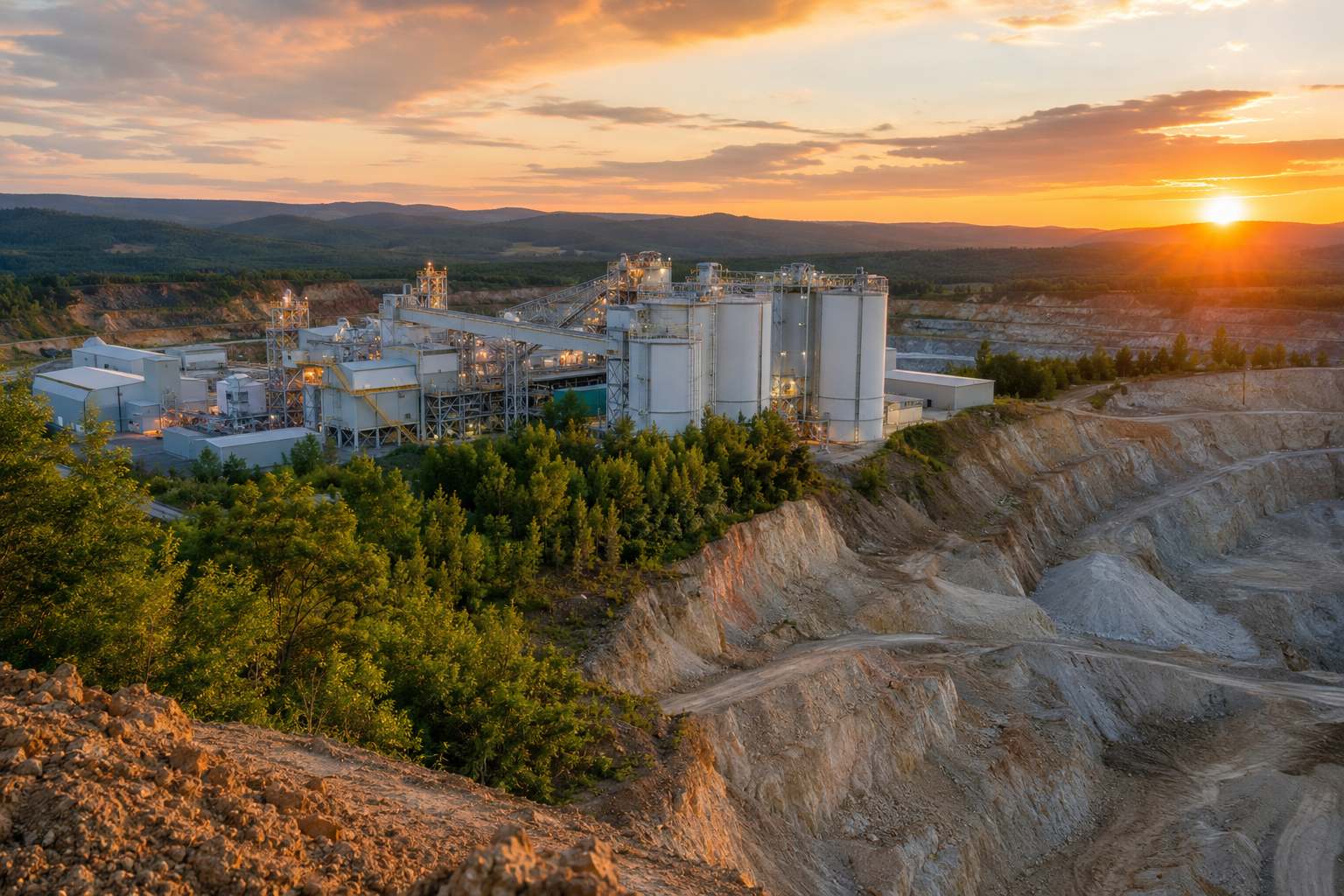
Look at the raw materials powering our most critical industries and you will find a quiet crisis brewing. Procurement teams across the United States are staring down a two-pronged challenge that feels almost impossible to solve. On one side, corporate sustainability mandates are no longer just PR fluff; they are hard operational targets tied to carbon taxes, investor pressure, and shifting regulations. On the other side, supply chains are brittle, costs are climbing, and industrial performance cannot take a backseat.
This tension is forcing heavy industry to rethink the literal foundation of their processes. From the deep wells of energy production to the scorching floors of metal foundries and the complex underground networks of civil engineering, the search is on for raw materials that deliver high technical performance while shrinking the environmental footprint.
That search is leading a rapidly growing number of North American procurement managers, engineers, and plant operations directors to premium Indian bentonite. This naturally occurring, highly adaptable volcanic clay has quietly become one of the most crucial assets in the transition to sustainable industrial practices. Let's unpack exactly why global industries are pivoting toward Indian bentonite deposits, how this mineral solves complex engineering problems, and how companies like Axewelledge are stabilizing global supply chains while keeping environmental stewardship at the forefront.
For decades, purchasing decisions in heavy industry followed a predictable, three-step hierarchy: price, availability, and technical specification. If a material met the engineering requirements, arrived on schedule, and fit the budget, the contract was signed. The broader ecological impact of extracting, processing, and shipping that material was rarely a primary factor.
Those days are gone. Today, the concept of Scope 3 emissions—which encompass the entire value chain, including purchased materials and transport—means that an industrial manufacturer is directly accountable for the environmental practices of its suppliers. If your mining partner uses outdated, energy-intensive processing methods or lacks a clear land-reclamation strategy, your own corporate sustainability scores take a hit.
However, switching to 'green' alternatives frequently introduces a frustrating compromise. Many bio-based or synthetic substitutes fail to hold up under extreme industrial conditions. They break down under high thermal stress, lack the necessary shear strength, or require complex, chemical-heavy modifications to function correctly. Industry needs a material that is inherently sustainable from the ground up, requiring minimal processing while delivering elite performance.
To understand why Indian bentonite is capturing the attention of global markets, you have to look at its unique geological origin. Bentonite is not just generic mud or clay; it is a weathered volcanic ash layer, rich in the clay mineral montmorillonite. What makes the deposits found in specific regions of India—particularly the vast reserves managed by major producers like Axewelledge—so exceptional is the high concentration of natural sodium ions trapped within the crystalline structure.
This specific mineral profile gives premium Indian bentonite an extraordinary characteristic: high water absorption and swelling capacity. When exposed to moisture, this clay can expand up to fifteen times its dry volume. As it swells, it forms an impermeable, gelatinous barrier that resists water, traps contaminants, and exerts significant hydrostatic pressure.
From a sustainability perspective, this natural swelling mechanism is pure gold. It means the mineral does its job purely through physical mechanics, without needing synthetic polymers, toxic chemical additives, or heavy modification. It is nature's own high-performance sealant, binder, and absorbent, ready to work straight out of the ground.

While bentonite deposits exist across the globe, including inside the United States, the distinct characteristics of Indian reserves offer a clear competitive edge for international buyers. It comes down to a perfect storm of geology, scale, and strategic infrastructure.
To see how this mineral drives sustainable operations, we need to look at specific, real-world industrial applications where premium Indian bentonite is displacing less sustainable, synthetic alternatives.
Modern urban development relies heavily on trenchless technology, horizontal directional drilling (HDD), and deep foundation work. Whether building subway tunnels, laying fiber-optic networks, or constructing massive concrete diaphragms, engineers must stabilize borehole walls and prevent structural collapses.
Traditionally, this required complex synthetic polymer slurries. While effective, these chemical formulations pose significant disposal challenges. When the job is done, pumping chemical-laden fluids back into the local environment is a regulatory nightmare and a severe ecological hazard.
Premium sodium bentonite offers a clean, highly effective alternative. When mixed with water, it creates a thixotropic slurry. This fluid acts like a liquid when agitated by the drill bit, allowing smooth movement, but turns into a firm gel when resting. This gel applies natural hydrostatic pressure against the borehole walls, preventing cave-ins and sealing the surrounding soil to prevent fluid loss. Once the project concludes, the leftover slurry is completely natural, non-toxic, and drastically simpler to manage, dewater, or repurpose safely.
Protecting local groundwater from industrial contamination is one of the most critical aspects of environmental engineering. Landfills, mining tailing ponds, and industrial wastewater reservoirs must be completely isolated from the surrounding ecosystem.
Synthetic liners, such as high-density polyethylene (HDPE) sheets, are standard in many projects. However, plastic liners are vulnerable to punctures during installation, thermal cracking, and long-term degradation.
Engineers frequently pair or replace these plastics with Geosynthetic Clay Liners (GCLs) powered by high-swelling Indian bentonite. When moisture attempts to pass through the liner, the bentonite swells shut, self-healing any minor tears or punctures automatically. It creates a permanent, natural barrier that blocks heavy metals, organic pollutants, and toxic leachates from reaching clean aquifers. By using a natural mineral barrier that lasts for generations, facilities significantly reduce their long-term environmental liability.
The metal casting industry is notoriously energy-intensive and faces intense scrutiny over workplace emissions and hazardous waste generation. Foundries utilize 'green sand' molds to cast everything from automotive engine blocks to heavy industrial gears.
The 'green' in green sand does not refer to color; it refers to the fact that the mold moisture is kept intact, and the sand is bound together using natural clay rather than synthetic chemical resins. Premium Indian bentonite serves as the ultimate binding agent in this process. Because of its high thermal stability, it holds the sand mold perfectly intact against the rushing flow of molten metal, which can easily exceed 2,500 degrees Fahrenheit.
When the metal cools and the casting is removed, the bentonite-bound sand can be easily broken down, reconditioned, and reused for the next casting cycle. This high recyclability minimizes the need for fresh industrial sand extraction and dramatically slashes the volume of spent foundry sand heading to local landfills. Furthermore, because it avoids synthetic binders, the foundry floor is free from the dangerous volatile organic compounds (VOCs) that endanger workers and pollute the air.
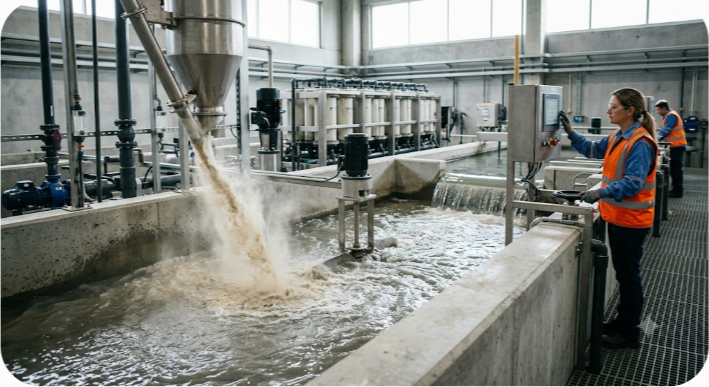
Treating highly contaminated industrial wastewater requires complex chemistry. Standard treatment facilities often rely on heavy doses of synthetic coagulants, flocculants, and chemical precipitants to strip oils, dyes, heavy metals, and suspended solids from the water column before it can be safely discharged.
Indian bentonite simplifies this process through natural adsorption. The mineral's layered crystalline structure carries a strong negative electrical charge. This turns each individual clay particle into a powerful, microscopic magnet that attracts and binds to positively charged contaminants, such as heavy metal ions, emulsified oils, and complex organic molecules.
By introducing refined bentonite into the treatment sequence, facilities can significantly reduce their reliance on harsh chemical additives. The contaminants clump together with the clay, forming a stable, non-leaching sludge that is easy to filter out. The result is clean effluent that meets strict environmental regulations, lower chemical procurement costs, and a much safer, more manageable waste byproduct.
A common question from procurement teams evaluating international mineral sourcing is simple: 'Does shipping bulk minerals across the ocean cancel out the environmental benefits?' It is a fair point. If a material is sourced sustainably but transported inefficiently, the net carbon balance can quickly turn negative.
This is where the operational scale of global producers like Axewelledge changes the equation. Through optimized supply chain structures, localized regional hubs, and large-scale maritime freight, the carbon emissions per ton-mile of ocean transport are remarkably low compared to long-distance domestic trucking.
Furthermore, because premium Indian bentonite possesses an inherently superior swelling and binding capacity compared to standard clays, you simply need less material by weight to achieve the same engineering results. Using less physical product translates directly to fewer shipments, reduced fuel consumption, and a smaller overall carbon footprint for the industrial end-user.
Transitioning to sustainable industrial minerals requires absolute confidence in your supply partner. A green strategy collapses immediately if the material arriving at your facility lacks the necessary purity, or if shipments are delayed, stalling production lines.
Axewelledge bridges the gap between massive natural capacity and rigorous global standards. Operating as one of the top five global producers, we maintain complete control over the supply chain, from the initial mining of our 60-million-ton high-quality reserves through to advanced refinement, strict R&D validation, and international shipping logistics. With over 15 years of deep industry expertise, we ensure that every batch of Sodium Bentonite exported to our global partners meets the exact technical tolerances required for heavy industrial applications.
We recognize that sustainability is not a static milestone; it is a process of continuous improvement. Our modern processing facilities leverage cutting-edge technology to minimize energy consumption during milling and drying, ensuring that the mineral powering your eco-friendly project is produced with the utmost respect for the planet.
The pressure on global industries to adopt cleaner, more circular practices is only going to intensify. The businesses that thrive in this new regulatory and cultural landscape will be those that look beyond quick cosmetic fixes and instead choose to overhaul their core raw material selections.
Premium Indian bentonite offers a rare, elegant solution to a messy industrial problem. It proves that you do not have to compromise on binding strength, sealing capacity, or thermal resistance to honor your commitments to the environment. By tapping into a natural, abundant, and highly efficient mineral, your operation can secure its supply chain, reduce its chemical footprint, and protect the ecosystems we all share. It is time to look beneath the surface and discover what premium bentonite can do for your business.













Have questions about our products? We're here to help!