Axewelledge, a leading exporter from India, specializes in high-quality Bentonite. With a commitment to excellence, we supply premium Bentonite to the Middle East and Southeast Asia markets.


North Angle Complex, 304,
150 Feet Ring Rd, Opposite Ambedkar Nagar BRTS Stop,
Madhav Park, Punit Nagar,
Mavdi, Rajkot, Gujarat 360004
© Axewelledge 2026, All Rights Reserved.
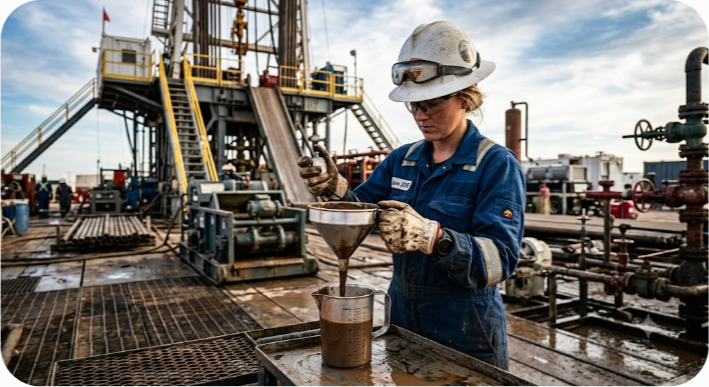
Deep beneath the earth's surface lies the energy that powers modern industry. Extracting that energy, however, is a battle against geology. You are constantly fighting pressure, temperature, and unstable rock formations that want to collapse your borehole the moment you break through. When you are on the rig floor, you know that the drilling fluid is the lifeblood of the operation. It's not just mud; it's a precisely engineered system. At the heart of that system, particularly in water-based drilling operations, is high-grade sodium bentonite. If you want to keep your bit spinning and your costs down, understanding this mineral isn't optional—it's essential.
Not all clay is created equal. When you look at sodium bentonite at a molecular level, you are seeing a marvel of nature. Its crystalline structure consists of thin, plate-like layers held together by weak forces. When water enters this structure, the sodium ions facilitate an incredible expansion. A high-grade sodium bentonite can swell to many times its original dry volume. This isn't just a party trick for a chemistry class. In a drilling context, this swelling creates the viscosity needed to carry drill cuttings from the bottom of the hole up to the surface. Without that suspension, your cuttings settle, your bit gets stuck, and you end up with a fishing job that costs you thousands of dollars an hour.
One of the most persistent nightmares for any drilling manager is borehole instability. When you drill through unconsolidated sand or reactive shale, the rock tends to cave in. You need a way to support those walls while the drill string is active. High-grade sodium bentonite creates a thin, low-permeability layer on the wall of the hole, known as the filter cake. Think of this as a protective plaster. It seals off permeable formations, preventing the drilling fluid from bleeding into the formation and, more importantly, keeping the formation from collapsing into the wellbore. The higher the quality of the bentonite, the more uniform and impermeable this filter cake becomes. It’s the difference between a smooth operation and a stuck pipe incident.
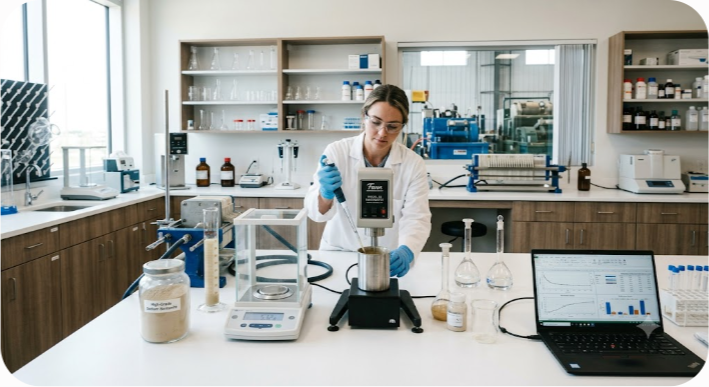
Every driller knows that rheology—the flow behavior of the mud—is everything. You need your mud to be thin enough to be pumped easily by your rig’s high-pressure pumps, yet thick enough to suspend weighting materials like barite. This is the beauty of bentonite's thixotropic property. When the fluid is moving under the pump's pressure, it thins out. When you stop circulation—like when you’re making a connection—the gel strength of the bentonite kicks in. It turns into a gel that holds the cuttings and weight materials in suspension, preventing them from sinking. Axewelledge has spent years refining our processing techniques to ensure that our sodium bentonite provides that perfect balance of yield point and gel strength. It’s about predictability. When you are hundreds of feet down, you don't want to wonder if your mud will hold.
Let’s be real: time is money. In the North American energy sector, efficiency isn't just a goal; it's the baseline for survival. Using low-grade or impure bentonite is a false economy. You might save a few pennies per bag, but you end up using three times as much product to achieve the same mud weight and viscosity. This increases the total volume of mud you have to manage, creates more waste, and complicates your solids control equipment. By using a high-grade product, you get a higher yield. You use less bentonite to achieve the same results, which reduces transport costs, storage requirements, and cleanup time. It makes for a leaner, more efficient drilling program.
Why does origin and processing matter? Because nature doesn't provide pure bentonite in a bag. It’s mined from the earth and contains impurities like quartz, feldspar, or calcite. If these aren't removed or processed correctly, they act as abrasives. You don't want sand particles wearing down your mud pumps or your drill string internals. Axewelledge’s commitment to mining and processing ensures that what reaches your site is pure, consistent material. We know that if the viscosity varies from batch to batch, the mud engineer on your rig is going to have a headache. Consistency is the foundation of trust in this business.
Drilling isn't just about speed; it's about control. When you encounter sensitive shale, you have to worry about clay hydration. If your drilling fluid isn't correctly formulated, the water in your mud can cause the formation to swell and slough off, leading to tight spots and pipe sticking. While bentonite is a water-based additive, its interaction with other chemical conditioners is key. A high-grade bentonite base provides a stable platform upon which you can layer other additives—polymers or lubricants—to tailor your mud to the specific geology of your formation. It’s the reliable base that keeps your chemical additives working exactly as they should.
In today's landscape, you aren't just responsible for the hole; you're responsible for the site. Operators are under increasing pressure to minimize their environmental footprint. Bentonite is a naturally occurring, non-toxic mineral. It is essentially an eco-friendly choice when compared to many synthetic alternatives that can be harder to manage in disposal or containment. Because it is highly efficient, you aren't producing excess mud volumes that need to be trucked off-site, which lowers the overall carbon footprint of your drilling operation. We take pride in the fact that our mining operations are designed to be sustainable, ensuring that the minerals you use today don't compromise the resources of tomorrow.

If you are designing a mud program for an upcoming project, don't leave the bentonite selection to the last minute. Look at the API standards. Ensure that the bentonite you specify has the correct yield point, low-shear rate viscosity, and water loss characteristics required for the depths and pressures you anticipate. Talk to your suppliers. Ask about the quality control metrics—what is the grit content? How consistent is the swelling capacity? You’ll find that when you move to a higher grade of product, the number of issues you encounter at the well site tends to drop significantly. It’s a proactive way to manage risk.
Behind every successful well, there’s a team. The mud engineer, the directional driller, the toolpusher—these professionals rely on the quality of their consumables. There's a certain peace of mind that comes from knowing the bentonite in the tanks isn't going to cause a disaster. At Axewelledge, we view ourselves as partners in that success. We aren't just shipping minerals; we are helping to ensure that the rig keeps moving. It’s a technical relationship built on the understanding that our mineral performance has a direct impact on your operational bottom line.
As the industry pushes into more challenging environments—deeper wells, more complex directional drilling, and tighter regulations—the demand for high-performance additives will only increase. We are constantly researching better ways to refine our products to meet the evolving needs of the sector. Whether it's enhancing the dispersion rate or optimizing the particle size distribution, the goal is always the same: make the driller’s life easier. The core science of bentonite is thousands of years old, but the application is more sophisticated than ever.
When you get the product on-site, treat it right. Keep it dry. Even high-grade bentonite will struggle if it’s been sitting in the rain and starts to pre-hydrate before it hits the mixing hopper. Use proper agitation in your mixing tanks to ensure complete dispersion. Don't rush the mix. Let the bentonite fully hydrate before you start pumping it downhole. It takes a little more time upfront, but it pays off in the performance of the mud. If you're mixing in challenging conditions—like high-salinity water—be aware that this will impact swelling. You might need to adjust your concentration or look for specific additives to counteract salt contamination. It’s all about monitoring the mud properties in real-time and making the necessary tweaks.
Success in oil and gas isn't about cutting corners. It's about knowing which components of your operation provide the highest return on investment. High-grade sodium bentonite is one of those critical components. It provides the stability, the suspension, and the sealing power that you simply cannot afford to compromise on. When you choose your supplier, choose one that understands the rig floor as well as they understand the geology. Your operation depends on it, and the difference in quality is something you'll notice in every foot of hole you drill.
We invite you to reach out if you have questions about specific grades or if you need technical data to assist in your next mud program design. We’ve built our reputation on quality and reliability, and we’re ready to put that expertise to work for you. Let's keep your operations running smoothly, one hole at a time. It’s been an absolute pleasure to share these insights with you. If you need any more information regarding specific technical specs for your upcoming drilling projects, just let us know, and we'll be happy to assist you further. We’ll be ready to support your next project with the premium quality your operations deserve. Your success is our mission, and we are committed to providing the materials that make that possible. Our team is always here to help you optimize your drilling fluids, ensuring your operations remain safe, productive, and cost-effective. We look forward to hearing about your project goals and how we can contribute to their success.













Have questions about our products? We're here to help!