Axewelledge, a leading exporter from India, specializes in high-quality Bentonite. With a commitment to excellence, we supply premium Bentonite to the Middle East and Southeast Asia markets.


North Angle Complex, 304,
150 Feet Ring Rd, Opposite Ambedkar Nagar BRTS Stop,
Madhav Park, Punit Nagar,
Mavdi, Rajkot, Gujarat 360004
© Axewelledge 2026, All Rights Reserved.
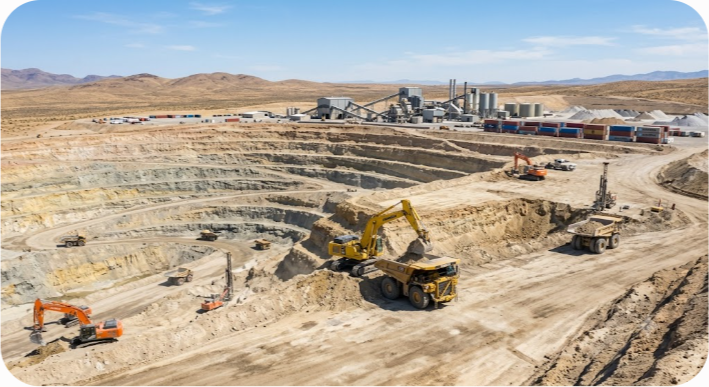
Think about the infrastructure holding our modern world together. The deep wells tapping into energy reserves, the massive foundry molds shaping heavy machinery, and the invisible barriers keeping toxic waste from leeching into clean drinking water. None of these work without a highly specific, naturally occurring volcanic clay: sodium bentonite.
Often called the mineral of a thousand uses, sodium bentonite possesses an almost magical ability to absorb water, swell to many times its dry volume, and form an impermeable barrier. But navigating the global market for this vital resource isn't simple. For industrial buyers, procurement managers, and civil engineers in the USA, securing a stable, high-quality supply requires understanding both the science of the clay and the geopolitical scale of its extraction. Let's break down exactly what makes sodium bentonite irreplaceable, where the global supply chains sit, and how to evaluate your sourcing options.
To understand why sodium bentonite dominates heavy industry, you have to look at its atomic structure. At its core, bentonite is a smectite clay composed primarily of the mineral montmorillonite. These mineral layers are shaped like incredibly thin, microscopic sheets.
In sodium bentonite, sodium ions sit between these layers. When water enters the mix, those sodium ions hydrate, pushing the layers apart. This causes the clay to swell up to 15 to 20 times its original dry volume. When fully hydrated, it transforms into a thick, gelatinous slurry that blocks water completely.
This is fundamentally different from calcium bentonite, which has a much lower swelling capacity. While calcium bentonite excels in structural applications like bleaching oils or clarifying liquids, it cannot match the sealing and suspending power of its sodium-rich sibling. For heavy industrial work, sodium bentonite is the undisputed gold standard.
Go onto any oil rig or deep water well drilling site, and you'll find sodium bentonite hard at work. In the drilling sector, it serves as the foundational component of water-based drilling fluids, commonly known as drilling mud.
When a drill bit chews through thousands of feet of rock, it generates massive amounts of heat and friction. At the same time, it creates rock cuttings that must be removed from the hole. The drilling mud is pumped down through the drill string and exits out of the bit. Here is where sodium bentonite performs three critical functions:
Without high-grade sodium bentonite, deep well drilling becomes a logistical and mechanical nightmare.
Every time an engine block, a train coupling, or a heavy iron valve is cast, sodium bentonite is likely involved. In the foundry industry, it is utilized as a vital binding agent for green sand molding.
To create a metal casting, a mold must be formed from sand. Pure sand won't hold its shape against the rushing torrent of molten iron or steel. Foundries mix sand with a small percentage of sodium bentonite and water. The clay provides high green strength (the ability of the moist sand mold to hold its shape before pouring) and high dry strength (the ability to withstand the thermal shock and erosion of molten metal at temperatures exceeding 2500°F).
Because sodium bentonite resists thermal degradation better than most organic binders, it allows the sand to be recycled and reused multiple times, saving foundries massive operational costs.
We don't just use sodium bentonite to extract resources or build machines; we use it to protect our ecosystems. In civil engineering and environmental containment, this clay serves as nature's ultimate sealant.
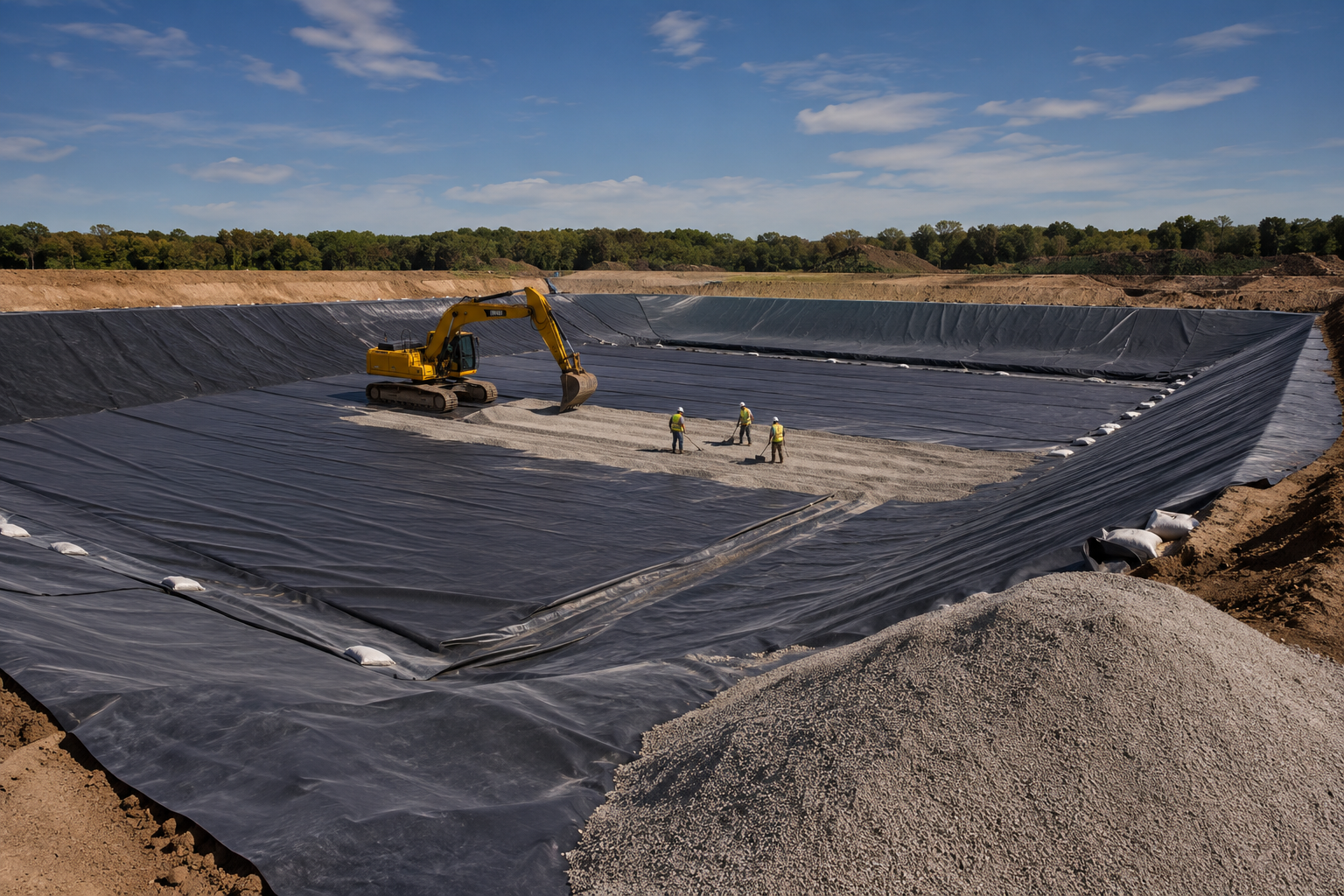
Consider modern municipal landfills. To prevent toxic leachate from seeping into local groundwater tables, engineers build complex containment liners. Many of these rely on Geosynthetic Clay Liners (GCLs)—thin sheets of geotextile sandwiching a uniform layer of sodium bentonite. When moisture hits the GCL, the clay swells and seals any voids, creating a self-healing hydraulic barrier that outlasts synthetic plastic liners.
Similarly, it is the primary material used for sealing artificial ponds, municipal lagoons, and agricultural waste pits. If a pond leaks, adding granular sodium bentonite to the water or tilling it into the soil creates a permanent, eco-friendly seal without the need for expensive concrete or rubber liners.
Before steel can be manufactured, iron ore must be mined and processed. Often, the mined ore is a fine powder that cannot be directly fed into a blast furnace because it would choke the airflow.
To solve this, the fine ore is mixed with a tiny fraction of sodium bentonite and rolled into small spheres called pellets. The swelling and binding properties of the clay ensure that these green pellets survive the journey through high-temperature baking kilns and subsequent transport without crumbling into dust. It takes very little bentonite to achieve this—typically less than 1% by weight—but that tiny fraction is critical to global steel supply chains.
Historically, industrial buyers in North America looked almost exclusively to the western United States—specifically Wyoming—for their sodium bentonite needs. The region boasts massive deposits of natural, high-swelling sodium montmorillonite. However, as global demand skyrockets and domestic logistics costs fluctuate, forward-thinking procurement managers are diversifying their supply chains.
This shift has turned eyes toward India, which has rapidly emerged as a dominant global force in bentonite production and export. Indian deposits, particularly in the western regions, offer exceptional mineral purity with swelling and water absorption characteristics that rival or exceed traditional Western reserves.
At Axewelledge, we operate at the absolute vanguard of this global shifting scale. As India's largest mine owner and exporter of bentonite, we hold over 60 million tons of high-quality reserves. This immense footprint ranks us among the top five global producers of the mineral. For international markets, including highly demanding industrial buyers in the USA, this scale translates directly into long-term price stability, consistent mineral composition, and a guarantee against supply disruptions.
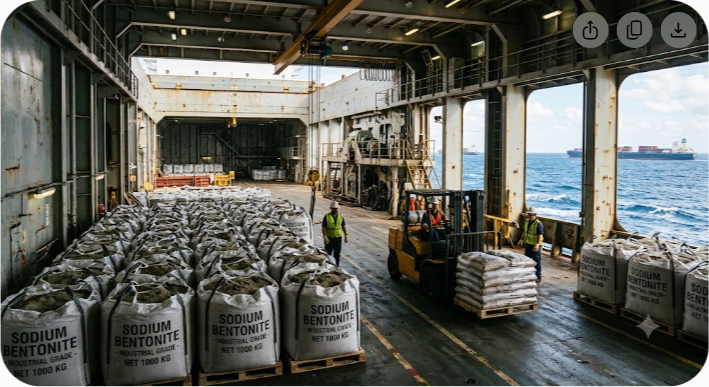
Buying raw minerals in bulk isn't just about what is in the ground; it's about getting it to your processing plant or job site efficiently. The international shipping of bulk clays requires advanced processing infrastructure and efficient maritime logistics.
Raw bentonite contains significant moisture when extracted from the earth. Processing requires careful drying, milling, and sizing to meet specific industrial standards, such as API (American Petroleum Institute) specs for drilling mud or foundry-grade particle sizes.
With 15+ years of expertise, Axewelledge integrates advanced R&D with strategically located processing plants in India and regional hubs like the UAE to ensure seamless operations. When exporting to the USA, we manage the complexities of bulk vessel loading, containerized shipping, and international quality compliance so that our clients receive a plug-and-play product at their domestic ports.
If you are responsible for sourcing sodium bentonite for your operations, you cannot treat it as a pure commodity where price is the only metric. A low-cost, sub-par batch can ruin a drilling run, cause mold failures in a foundry, or lead to catastrophic leaks in an environmental liner. Here are the core metrics you must evaluate:
As industrial sectors face increasing pressure to adopt greener practices, sodium bentonite stands out as an inherently sustainable material. It is completely natural, non-toxic, and introduces no harmful chemicals into the soil or water table. Whether it is being used to purify water, line a clean energy infrastructure project, or bind animal feed, it offers a heavy-duty industrial solution that aligns perfectly with modern environmental mandates.
Securing your supply of this essential mineral shouldn't be an afterthought. By partnering with global giants who possess the actual mining infrastructure, deep R&D capabilities, and international logistics networks, you can future-proof your manufacturing and engineering operations for decades to come.













Have questions about our products? We're here to help!