Axewelledge, a leading exporter from India, specializes in high-quality Bentonite. With a commitment to excellence, we supply premium Bentonite to the Middle East and Southeast Asia markets.


North Angle Complex, 304,
150 Feet Ring Rd, Opposite Ambedkar Nagar BRTS Stop,
Madhav Park, Punit Nagar,
Mavdi, Rajkot, Gujarat 360004
© Axewelledge 2026, All Rights Reserved.
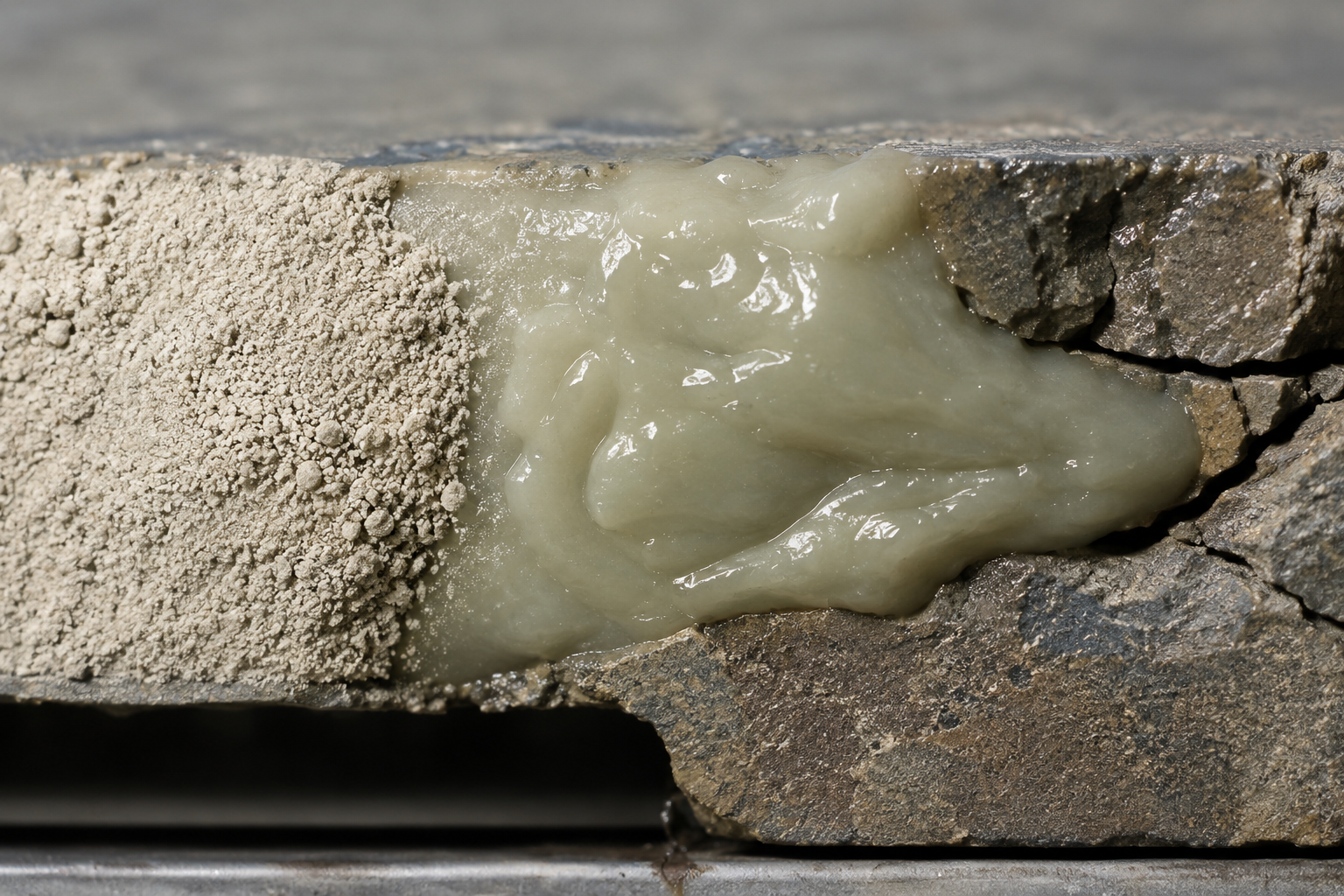
If you are managing a multi-million dollar environmental containment project, a civil engineering site, or an industrial waste pond, you are constantly fighting a silent war against gravity and fluid migration. Liquid wants to move. It wants to seep into the water table, breach your retaining structures, or compromise your foundation. To stop it, engineers do not always turn to high-tech synthetic polymers or complex chemical grouts. Instead, they look to a specialized volcanic clay that has been doing this job reliably for decades: sodium bentonite.
But not all bentonite is created equal. Go into any procurement meeting or technical review, and one specific metric dominates the conversation: swelling capacity. This single physical trait dictates whether your seal holds up for fifty years or fails within fifty days. Let's unpack the hard science, industrial applications, and practical realities of why swelling capacity is the make-or-break factor in industrial sealing.
To understand why this clay swells, we have to look closely at its microscopic structure. Bentonite is not just dirt; it is a weathered volcanic ash composed primarily of montmorillonite, a smectite group clay mineral.
Montmorillonite has a distinct crystalline structure resembling a microscopic club sandwich. It consists of an octahedral sheet packed tightly between two tetrahedral silica sheets. This forms a single clay layer that is incredibly thin but possesses an expansive surface area. Crucially, these layers carry a net negative electrical charge.
In nature, this negative charge must be balanced by positive ions (cations) residing in the spaces between the layers, known as the interlayer or gallery space. This is where the distinction between sodium bentonite and calcium bentonite becomes critical.
Calcium bentonite possesses divalent calcium ions (Ca 2+ ). These ions have a strong, tight grip on the surrounding clay sheets, holding them closely together like a short, stiff spring. When exposed to water, calcium bentonite absorbs some moisture, but the strong electrostatic forces prevent the layers from pushing far apart. It expands minimally.
Sodium bentonite, on the other hand, contains monovalent sodium ions (Na + ). These ions have a much weaker charge density, allowing water molecules to crowd into the interlayer spaces with ease. As water floods in, the sodium ions hydrate, and the distance between the clay sheets expands dramatically. Under the right conditions, these layers completely separate, causing the clay to swell up to 15 to 20 times its original dry volume. This massive volumetric expansion is the engine behind its industrial sealing power.
When dry sodium bentonite meets water, the hydration process occurs in two distinct, sequential phases: crystalline swelling and osmotic swelling.
This is the initial phase. Water molecules enter the interlayer spaces, binding directly to the sodium cations and the oxygen atoms on the silicate surfaces. This forms organized layers of water, pushing the clay platelets apart in a stepwise fashion. The clay can absorb up to four layers of water within its internal structure during this phase, causing a measurable but limited volume increase.
Once the crystalline swelling phase finishes, osmotic forces take over if free water is still available. The concentration of sodium ions inside the interlayer space is significantly higher than in the surrounding bulk water. To balance this concentration gradient, water rushes into the interlayer spaces via osmosis. This creates a powerful outward pressure that pushes the clay platelets even further apart.
If the clay is unconfined, it turns into a highly dispersed, thick gel. However, if the clay is confined within a borehole, a trench, or under a layer of soil, it cannot expand indefinitely. Instead, it exerts a tremendous internal swelling pressure against its boundaries. This pressure crams the expanded clay particles into every microscopic void, crack, fissure, and pore space available. The result is a highly dense, gelatinous matrix with incredibly low hydraulic conductivity—often dropping below 1×10 ?9 cm/s. Liquid simply cannot find a path through it.
In industrial applications, swelling capacity is not just a neat lab trick; it is a direct proxy for sealing performance. A high free swell index means fewer paths for liquid migration. Here is exactly why high-swelling capacity matters on-site:
Industrial environments are dynamic. Soils shift, structures settle, temperature swings cause expansion and contraction, and heavy machinery creates constant vibrations. If you use a rigid sealant like concrete or a standard chemical grout, these structural shifts create micro-fractures. Once a crack forms, liquid breaches the barrier, and your containment system fails.
High-swelling sodium bentonite behaves like a living, self-healing material. If a shift in the surrounding soil creates a new void or fracture in the bentonite barrier, the exposed clay immediately draws in available moisture, swells up, and plugs the new gap. This automatic self-healing property provides an active, long-term safety net that synthetic alternatives cannot match.
The primary goal of any industrial seal is to stop fluid movement. Hydraulic conductivity measures how easily a fluid can move through a porous medium. High-purity sodium bentonite, with its superior swelling properties, creates a tortuous path for water molecules. The swollen clay platelets overlap like microscopic shingles, forcing water to travel a highly convoluted, impossible route to get to the other side. This achieves a virtual zero-permeability state, keeping hazardous materials contained and pristine water resources protected.
When you use a premium, high-swelling sodium bentonite, you simply need less material to achieve the desired sealing effect. A lower-quality clay with poor swelling capacity requires a much thicker application layer to achieve the same hydraulic conductivity. For large-scale civil works or sprawling industrial ponds, needing less material means lower shipping costs, reduced excavation needs, and faster installation timelines. Sourcing from top-tier operations with high-quality reserves, such as Axewelledge, ensures you get maximum swelling performance per ton of material delivered.
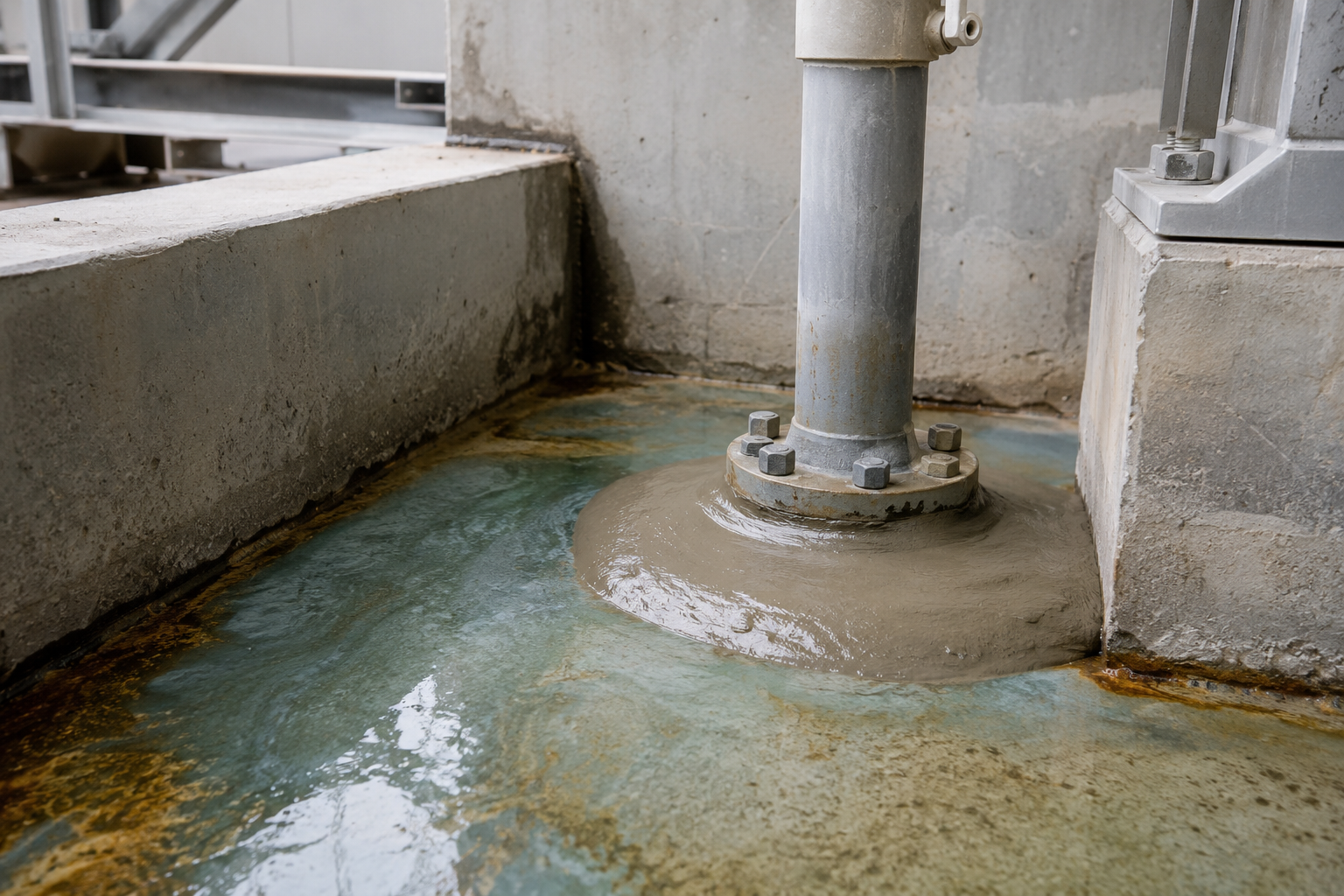
Let's look at how this swelling action translates into real-world engineering solutions across major North American and global industries.
Modern municipal and hazardous waste landfills use multi-layered composite liner systems to prevent toxic leachate from seeping into local groundwater. GCLs are a core component of these systems. A GCL consists of a uniform layer of high-swelling sodium bentonite sandwiched between two layers of geotextile fabric, stitched or needle-punched together.
When leachate or moisture hits the GCL, the encapsulated sodium bentonite swells inside the fabric matrix. Because it is physically confined by the weight of the overlying waste and soil layers, it forms a dense, continuous hydraulic barrier. If a stone or a piece of debris punctures the adjacent plastic geomembrane liner, the underlying bentonite swells up into the puncture hole, sealing it instantly.
In deep foundation construction, urban excavation, and groundwater remediation, engineers must prevent unstable soil from collapsing and stop groundwater from flooding the workspace. Slurry wall construction solves both problems simultaneously.
Contractors excavate a deep, narrow trench while filling it continuously with a fluid mixture of water and high-swelling sodium bentonite. This slurry serves two critical roles. First, its hydrostatic pressure keeps the trench walls from collapsing. Second, the high-swelling clay particles form a thin, impermeable coating on the trench walls, known as a filter cake. This filter cake stops the slurry fluid from escaping into the surrounding soil, maintaining trench stability until workers can tremie-pipe concrete into place or leave the bentonite-soil mix to cure as a permanent groundwater cutoff wall.
Whether it is an industrial chemical holding pond, a mining tailings basin, or a large agricultural reservoir, leaking ponds cause severe regulatory fines and environmental liability. Many soils contain too much sand or silt to hold water on their own.
By blending high-swelling sodium bentonite directly into the existing soil or applying it as a concentrated blanket layer covered with clean dirt, operators can turn porous ground into an impermeable basin. As the pond fills, the blended bentonite swells within the soil pores, locking down the site and ensuring zero structural seepage.
When an oil, gas, or geothermal well reaches the end of its productive life, it must be permanently decommissioned to prevent hydrocarbons or saltwater from migrating up the borehole into shallow freshwater aquifers.
While cement plugs are common, they are brittle and prone to shrinking, cracking, or degrading over time when exposed to corrosive downhole chemicals. High-swelling sodium bentonite plugs offer an exceptional alternative or complement. Dropped down the well as dense compressed pellets or pumped as a heavy grout, the clay expands within the casing and open-hole sections, creating a flexible, permanent, and gas-tight seal that adapts to downhole pressures and tectonic movements.
While sodium bentonite is an outstanding sealing material, it is not invincible. Its swelling capacity depends heavily on the chemistry of the water it encounters. If you don't account for water quality during the design phase, your sealing barrier can fail.
Remember that osmotic swelling happens because of a concentration gradient between the clay's interior and the surrounding water. If you hydrate sodium bentonite with highly saline water, seawater, or industrial wastewater packed with dissolved salts, the external concentration gradient disappears. The osmotic drive stalls out, and the clay will not swell properly.
Similarly, if the water contains high levels of divalent cations like calcium (Ca 2+ ) or magnesium (Mg 2+ ), a process called cation exchange occurs. The calcium ions displace the native sodium ions within the clay structure. Over time, your premium sodium bentonite degrades into calcium bentonite right in the ground, causing the clay matrix to shrink, crack, and lose its sealing efficiency.
To combat these chemical threats, engineers use a few reliable strategies:
You cannot verify high swelling capacity simply by looking at a pile of bulk clay. Industrial procurement teams and quality assurance engineers rely on standardized testing protocols established by organizations like ASTM International to verify raw material performance before it arrives on site.
| Test Metric | ASTM Standard | What It Measures | Minimum Industrial Target |
|---|---|---|---|
| Free Swell Index | ASTM D5890 | The volume to which 2 grams of dried, powdered clay expands in water after 24 hours. | ?24 mL per 2 grams |
| Fluid Loss | ASTM D5891 | The volume of water that filters through a clay slurry under specified pressure. | ?18 mL |
| Moisture Content | ASTM D2216 | The percentage of residual moisture in the dry bulk product. | 8% - 12% |
When sourcing bentonite for critical projects, always request certified lab reports verifying these metrics. Partnering with vertically integrated producers like Axewelledge ensures consistent adherence to these international standards, as they control the process from their massive 60-million-ton mining reserves through advanced refinement plants.
Even the highest-grade sodium bentonite will fail if installed poorly. If you are overseeing an installation, guard against these common field mistakes:
When blending bentonite into existing pond soils, the ground must be completely cleared of large rocks, tree roots, and vegetation. Large rocks create localized areas where the clay cannot form a continuous matrix, leaving direct pathways for leaks.
Whether you are using a drop spreader for dry powder or a disking tractor to blend the clay into the soil, uniformity is everything. If one spot gets 5 pounds per square foot and an adjacent spot gets only 1 pound, the under-applied section will blow out under hydraulic pressure. Take the time to calibrate equipment and cross-check application rates carefully.
For soil-bentonite blends, proper compaction is non-negotiable. Use a sheep's foot or smooth-drum roller to compact the blended layer to at least 90% to 95% of its maximum dry density (Standard Proctor). Compaction minimizes initial void spaces, forcing the bentonite to work efficiently as a tight, binding sealant rather than wasting its swelling energy filling large, unnecessary gaps.
Once your bentonite layer is installed, it must be covered with a protective layer of clean soil (usually 6 to 12 inches thick) or hydrated promptly. If an installed bentonite barrier is left exposed to hot sun and dry winds for days, it will desiccate, crack, and blow away, destroying your hard work before the project is even finished.
For large-scale infrastructure projects, consistency is your biggest risk factor. A single project can require thousands of tons of high-purity clay. If the quality swings wildly from the first shipment to the last, your engineering calculations go right out the window.
This is why savvy procurement managers look closely at a supplier's raw mineral assets and logistics capabilities. Working with a top global producer that owns and operates its own mines provides long-term peace of mind. It ensures that the chemical composition and mineralogical purity of the smectite clay remain uniform across the entire construction cycle, keeping your project compliant, on budget, and watertight for the long haul.













Have questions about our products? We're here to help!