Axewelledge, a leading exporter from India, specializes in high-quality Bentonite. With a commitment to excellence, we supply premium Bentonite to the Middle East and Southeast Asia markets.


North Angle Complex, 304,
150 Feet Ring Rd, Opposite Ambedkar Nagar BRTS Stop,
Madhav Park, Punit Nagar,
Mavdi, Rajkot, Gujarat 360004
© Axewelledge 2026, All Rights Reserved.
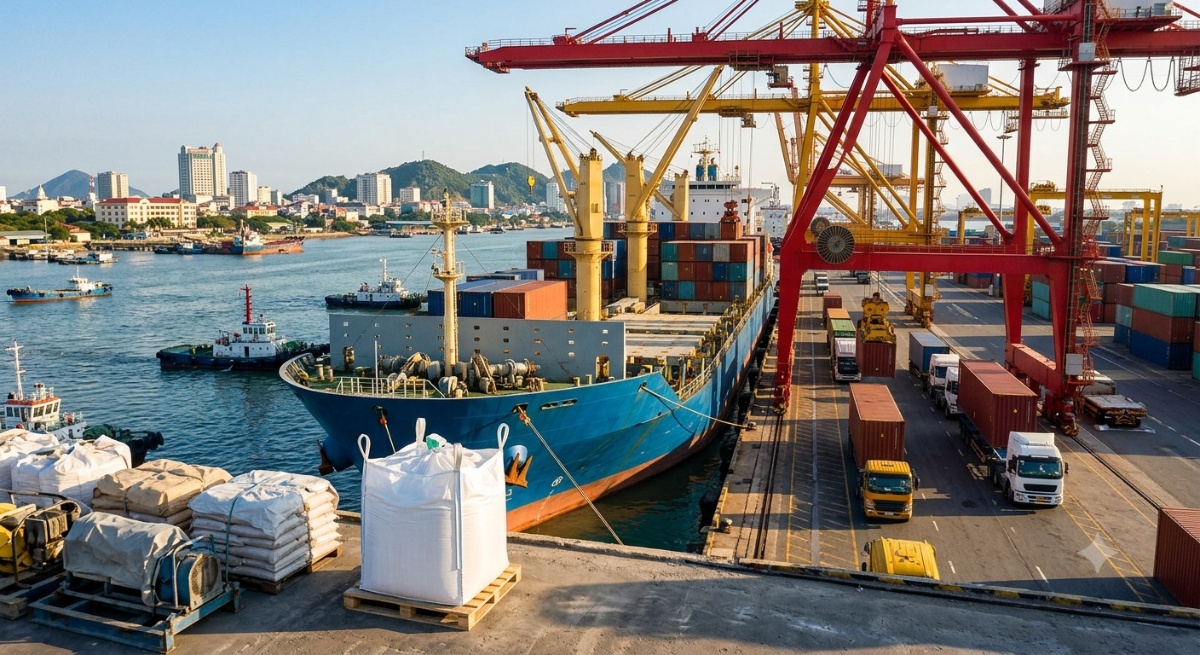
Vietnam's rapid industrialization, expanding infrastructure projects, and thriving manufacturing landscape have driven an unprecedented surge in the demand for raw industrial minerals. Among these, bentonite clay has emerged as a cornerstone material across multiple sectors. From stabilizing deep excavations in Hanoi and Ho Chi Minh City to powering oil drilling operations off the southern coast, the demand for high-grade bentonite is at an all-time high.
However, sourcing this versatile mineral internationally and bringing it into Vietnam requires navigating a web of logistics, maritime shipping strategies, and strict customs compliance. For Vietnamese procurement managers, industrial engineers, and commodities distributors, understanding the complexities of the import corridor is vital to ensuring uninterrupted project timelines and maintaining cost-efficiency.
This comprehensive guide breaks down every step of the Vietnam bentonite import process—covering industrial applications, shipping frameworks, exact customs documentation, and strategies to streamline your supply chain.
Before diving into the logistics of international shipping, it is essential to look at why Vietnamese industries require large volumes of imported bentonite. The specific physical characteristics of the clay must align perfectly with its intended industrial application, as different engineering projects demand distinct mineral properties.
Vietnam is currently undergoing a massive infrastructure transformation, highlighted by urban metro rail projects, expansive highway networks, and deep-foundation port facilities. In these major geotechnical operations, engineers rely heavily on civil engineering bentonite.
During bored piling and diaphragm wall excavations in Vietnam’s soft coastal soils, a high-swelling sodium bentonite slurry is circulated into the borehole. This slurry exerts hydrostatic pressure against the trench walls, forming an impermeable "filter cake" that stabilizes the excavation and prevents catastrophic soil collapse before concrete can be poured.
As urban areas become more congested, trenchless tech like Horizontal Directional Drilling (HDD) and micro-tunneling have become the standard for installing underground utility networks, fiber-optic cables, and water pipelines across Vietnam.
For these projects, procurement teams look for high-yield drilling bentonite that complies with American Petroleum Institute (API) or OCMA technical standards. This specialized clay provides the predictable viscosity required to cool cutting heads, lubricate the drill string, and float heavy soil cuttings out of the borehole.
Vietnam’s metal casting and heavy manufacturing sectors produce high-precision components for the automotive, maritime, and electronic assembly industries. These operations utilize foundry grade bentonite as a premium binding agent for green sand molding. High-quality industrial clay provides excellent thermal stability and high green compression strength, ensuring that sand molds retain their precise shape under the extreme heat of molten metal.
With Vietnam's growing regulatory focus on eco-sustainability and environmental preservation, bentonite plays a crucial role in waste containment and water filtration. Furthermore, the country's massive aquaculture sector utilizes specialized clay formulations for pond lining and water purification, trapping heavy metals and controlling impurities to maintain a healthy ecosystem for shrimp and fish farming.
When evaluating global options for industrial minerals, international procurement networks overwhelmingly point toward India as the ideal geographic sourcing hub. India is home to some of the world's largest, highest-purity sodium bentonite reserves, with major high-grade deposits concentrated in the mineral-rich Bhuj and Kutch regions of Gujarat.
For Vietnamese businesses looking to optimize their supply chain, collaborating with an established, vertically integrated player is crucial. A premier mineral supplier like Axewelledge offers a strategic advantage. As one of India's leading producers, managing extensive mining operations and modern processing facilities, they provide a reliable foundation for long-term industrial partnerships.
Sourcing Indian sodium bentonite yields clear benefits for Vietnamese buyers:
Superior Mineral Purity: High montmorillonite content translates to an exceptional swelling index, strong gel strength, and excellent rheological properties.
Cost-Efficient Sourcing: Compared to Western or regional alternatives, Indian producers deliver highly competitive pricing models without sacrificing technical compliance.
Custom Formulations: Advanced processing allows suppliers to tailor particle sizes, moisture levels, and viscosity profiles to match unique project specifications.
Shipping bulk minerals across international ocean lanes requires meticulous planning. Because bentonite performance relies on its ability to react with water, moisture control and packaging integrity are the top priorities during sea transit.
+--------------------------------------------------------------------------+
|                     BENTONITE SEA TRANSIT LOGISTICS                      |
+--------------------------------------------------------------------------+
|  [Origin: India]                                                         |
|  Loading Port: Mundra / Kandla (Gujarat)                                 |
|         │                                                                |
|         â–¼                                                                |
|  [Ocean Transit]                                                         |
|  Moisture-Proof Jumbo Bags (1.0 to 1.25 MT)                              |
|         │                                                                |
|         â–¼                                                                |
|  [Destination: Vietnam]                                                  |
|  Discharge Ports: Hai Phong (North) / Da Nang (Central) / Cat Lai (South) |
+--------------------------------------------------------------------------+
Bentonite is highly sensitive to ambient humidity. To safeguard the raw material while traveling through hot, humid tropical climates, experienced exporters utilize heavy-duty, moisture-resistant packaging structures.
The industry standard involves packing the processed clay into multi-layered, UV-stabilized Jumbo Bags (Flexible Intermediate Bulk Containers / FIBCs), typically ranging from 1.0 to 1.25 metric tons. These heavy bags feature inner polyethylene liners that block external moisture, preventing premature hydration or clumping during transit. For smaller distribution networks or retail applications, pallets holding individual 25kg or 50kg multi-walled paper and plastic bags are also widely used.
Depending on your project's scale and consumption rates, you must choose the right maritime shipping configuration:
Full Container Load (FCL): This is the most common method for regular industrial supply chains. Standard 20-foot dry van containers are ideal for transporting heavy mineral shipments, typically accommodating 20 to 27 metric tons of palletized or loose jumbo bags. FCL shipping offers excellent protection against handling damage and environmental exposure.
Breakbulk Shipping: For massive infrastructure developments, reclamation sites, or large-scale distribution centers requiring thousands of tons at once, chartering a breakbulk vessel is more economical. In breakbulk operations, jumbo bags are loaded directly into the ship’s cargo holds, lowering per-ton freight rates for high-volume orders.
Shipments leaving India's western coast typically depart from highly automated gateways like the Port of Mundra or Port of Kandla in Gujarat. These ports offer direct vessel connections to Vietnam's core maritime hubs. Selecting your discharge port depends entirely on where your project or manufacturing plant is located:
Northern Vietnam: Port of Hai Phong serves as the primary entry point for industrial centers around Hanoi, Bac Ninh, and Ha Long.
Central Vietnam: Port of Da Nang handles incoming industrial minerals for regional infrastructure and construction works.
Southern Vietnam: Port of Cat Lai (Ho Chi Minh City) or the Cai Mep Port complex are the busiest gateways, supplying the manufacturing hubs of Binh Duong, Dong Nai, and the Mekong Delta.
Transit times from India's western ports to Vietnam generally range from 14 to 22 days, depending on transshipment stops and carrier schedules.
Clearing customs in Vietnam requires strict attention to detail. The General Department of Vietnam Customs enforces precise classification rules, inspection procedures, and valuation metrics for all imported raw minerals.
Accurately identifying your product's Harmonized System (HS) code is the foundation of a smooth customs entry. Incorrect classification can result in costly penalties, delayed cargo, or unexpected tariff audits. Bentonite clay typically falls under the following classifications:
HS Code 2508.10.00: Specifically covers Bentonite, whether or not calcined.
Under Vietnam’s current Most Favored Nation (MFN) tariff schedule, the basic import duty rate for bentonite stands at 0%. However, imports are subject to a standard Value-Added Tax (VAT) of 10% upon entry. It is highly recommended to review relevant bilateral or regional Free Trade Agreements (FTAs) to see if preferential tariff treatments or streamlined clearance tracks apply to your specific shipment.
To secure customs clearance without costly bottlenecks, the importer must present a complete and flawless documentation package. The core file must contain:
Bill of Lading (B/L): The official maritime transport document issued by the shipping line, which can be provided as a Telex Release or an Original Ocean B/L.
Commercial Invoice: A detailed financial record itemizing the unit pricing, total transaction value, currency, and agreed Incoterms (e.g., FOB, CFR, CIF).
Packing List: A precise manifest stating the exact number of jumbo bags, total net weight, gross weight, and container seal numbers.
Certificate of Origin (C/O): A crucial document issued by government bodies in the exporting country, verifying where the mineral was mined and processed.
Certificate of Analysis (CoA): A technical quality report confirming that the chemical and physical attributes of the shipment—such as montmorillonite content, swelling index, moisture level, and particle size distribution—comply with contract specifications.
Fumigation Certificate & Phytosanitary Certificate: Required if wood pallets or wooden dunnage are used inside the containers to secure the cargo.
Understanding the operational steps at Vietnamese port terminals allows logistics managers to prevent unnecessary demurrage and detention fees.
+--------------------------------------------------------------------------+
|                  VIETNAM CUSTOMS CLEARANCE WORKFLOW                      |
+--------------------------------------------------------------------------+
|  Step 1: Manifest Submission & VNACCS Remote Declaration                 |
|         │                                                                |
|         â–¼                                                                |
|  Step 2: Customs Channel Assessment (Green / Yellow / Red)               |
|         │                                                                |
|         â–¼                                                                |
|  Step 3: Document Verification & Physical Inspection (If Red Channel)   |
|         │                                                                |
|         â–¼                                                                |
|  Step 4: Tax Payment Settlement (VAT & Local Port Fees)                  |
|         │                                                                |
|         â–¼                                                                |
|  Step 5: Cargo Release & Final Last-Mile Domestic Transport              |
+--------------------------------------------------------------------------+
Before the vessel drops anchor at ports like Hai Phong or Cat Lai, the importer or their authorized customs broker submits an electronic declaration using the Vietnam National Single Window and the VNACCS/VCIS automated cargo clearance system. This portal processes the invoice data, HS codes, and importer credentials.
Once the electronic filing is received, the automated system evaluates the risk profile of the cargo and assigns the shipment to one of three processing channels:
Green Channel (Luồng Xanh): The ideal scenario. Cargo is automatically approved for release without a physical document audit or cargo inspection. This usually takes just a few minutes.
Yellow Channel (Luồng Vàng): Customs officials perform a thorough manual review of all physical paper documents and digital files. If inconsistencies are found in the invoice values or the Certificate of Analysis, the cargo may be delayed for corrections.
Red Channel (Luồng Äá»): The highest scrutiny level. This requires both a complete document audit and a physical inspection of the cargo at the port yard. Customs officers open the containers to inspect seal numbers, evaluate the jumbo bags, and verify that the mineral aligns with the import declaration.
After successfully navigating the designated channel, the importer must pay the assessed 10% VAT along with local port infrastructure fees. These financial transfers are handled electronically through authorized commercial banks linked directly to the customs network.
With the customs clearance stamp secured, the terminal operator issues a cargo release note. Flatbed trailers or container trucks can then enter the port area to pick up the jumbo bags and handle last-mile delivery to the project site or distribution facility.
Even well-planned import operations can face unexpected disruptions if hidden supply chain risks are overlooked. Mitigating these common pitfalls ensures a smooth, cost-effective import experience.
Demurrage and detention fees accrue quickly when cargo sits idle at container yards due to paperwork errors or delayed customs clearance. To minimize these costs, work closely with your exporter to ensure all transport documents—especially the Bill of Lading and Certificate of Origin—are drafted, reviewed, and transmitted well before the vessel arrives in Vietnam.
Using the wrong grade of clay can cause major setbacks on a job site, such as a borehole collapse during a deep piling excavation. Prevent these issues by requiring a comprehensive Certificate of Analysis for every single batch before it leaves the processing plant.
Partnering with an industry authority that publishes consistent updates through an informative mineral industry blog helps procurement teams stay informed on evolving technical specifications, changing regulatory standards, and global logistics trends.
The international shipping market and global mineral trade are heavily influenced by shifting fuel costs, changing container availability, and fluctuating exchange rates. Industrial buyers can hedge against this volatility by signing long-term supply contracts with fully integrated mine owners. This locks in stable volume guarantees and predictable pricing structures over extended project lifecycles.
To maximize efficiency and build a resilient supply chain, Vietnamese procurement teams should implement these straightforward operational strategies:
Establish Pragmatic Lead Times: Factor in a reliable buffer of 30 to 45 days from the initial order placement to final delivery at your facility. This accounts for production times, ocean transit, and customs processing.
Utilize Experienced Regional Customs Brokers: Partnering with local logistics experts who understand the unique operational habits at major entry points like Hai Phong or Cat Lai can speed up processing and prevent unexpected clearance delays.
Conduct Routine Storage Audits: Always store your bentonite inventory in a dry, covered warehouse space with proper ventilation. Keeping jumbo bags off wet warehouse floors using sturdy wooden or plastic pallets preserves the clay's shelf life and performance.
Consolidate Your Vendor Relationships: Instead of sourcing from fragmented third-party trading firms, work directly with a fully integrated producer. Choosing a reliable, comprehensive industrial bentonite manufacturer gives you total control over raw material quality, packaging standards, and shipping timelines.
Importing premium bentonite into Vietnam doesn't have to be a complicated process. By mastering the details of maritime shipping, ensuring proper packaging, and preparing accurate customs documentation, Vietnamese industrial enterprises can build a highly dependable, cost-effective supply chain.
Sourcing your minerals from high-purity regions like India and partnering with an established industry leader ensures your projects stay on track. By taking a proactive approach to customs compliance and logistics management, your business can avoid unexpected bottlenecks and keep its operations moving forward smoothly in Vietnam’s competitive industrial landscape.













Have questions about our products? We're here to help!