Axewelledge, a leading exporter from India, specializes in high-quality Bentonite. With a commitment to excellence, we supply premium Bentonite to the Middle East and Southeast Asia markets.


North Angle Complex, 304,
150 Feet Ring Rd, Opposite Ambedkar Nagar BRTS Stop,
Madhav Park, Punit Nagar,
Mavdi, Rajkot, Gujarat 360004
© Axewelledge 2026, All Rights Reserved.
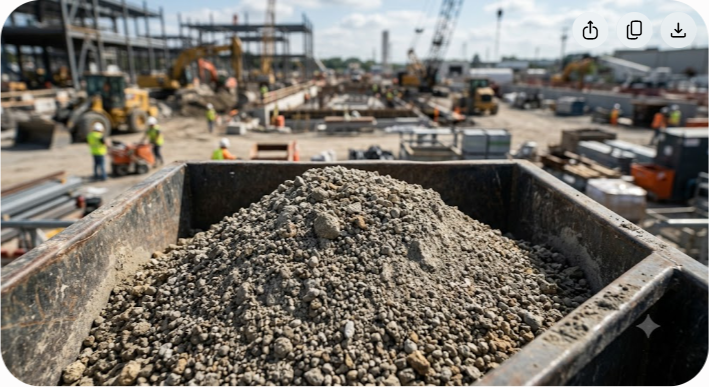
You have probably seen construction sites where the focus is entirely on concrete, steel, and heavy machinery. While these materials are undeniably strong, the unseen hero holding those projects together—and keeping the water out—is often a simple, natural clay called Bentonite. It feels almost counterintuitive that a substance pulled from the earth, basically a refined clay, acts as a high-tech sealant in massive infrastructure projects. But that is exactly what makes it so fascinating. We are looking at a material that manages to be both ancient and cutting-edge at the same time.
As we push for more sustainable building practices, it is time to rethink the materials we rely on. We can no longer afford to treat the environment as an afterthought. Bentonite stands out because it doesn't require harsh synthetic chemicals to perform its job. It does what it does simply because of its unique mineral structure.
To understand why Bentonite is a go-to for engineers, you have to look at how it behaves when it gets wet. Sodium Bentonite, in particular, is a marvel of chemistry. When it comes into contact with water, it doesn't just absorb it; it expands. We are talking about the ability to swell to many times its dry volume. This isn't just a minor reaction. It is a powerful, physical expansion that fills gaps, seals cracks, and creates a dense, impermeable barrier.
Think about a basement foundation or a landfill liner. You need something that will hold tight for years, even decades. If you use a rigid material, shifting ground or settling soil will crack it. But Bentonite? It is dynamic. It is self-healing. If a small crack forms in the soil or the structure, the Bentonite nearby will naturally swell into that void. It adapts to the movement of the earth, something synthetic sealants simply cannot do. That flexibility is exactly why it is such a reliable choice for advanced engineering.
Construction is an industry traditionally known for its high carbon footprint and heavy use of synthetic materials. When we choose Bentonite, we are picking a naturally occurring mineral. It isn't manufactured in a high-energy factory process that releases massive amounts of CO2. It is mined, processed, and refined. Because it is a natural material, it is non-toxic. This makes it an ideal solution for environmental containment.
Take wastewater treatment plants or mining tailings ponds. You cannot afford to have hazardous materials leaching into the local water table. By using a Bentonite-based liner, you are essentially creating a natural clay barrier that stays effective for a long time. It provides peace of mind that you are protecting the soil and the groundwater, rather than just covering up a problem with something that might break down over time.
It is easy to talk about the benefits, but where are we actually using this stuff? The answer is: everywhere, if you know where to look.
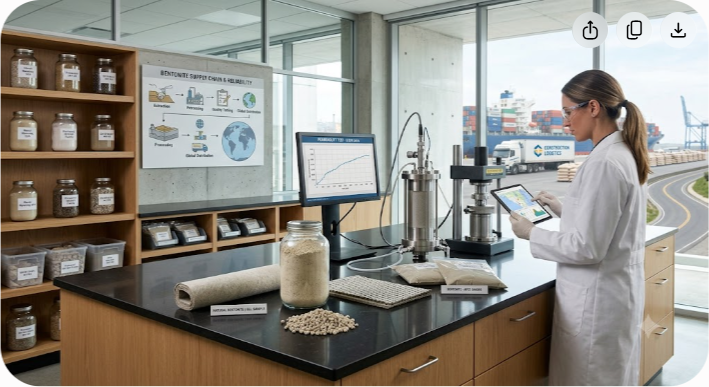
Historically, the industry loved materials that were 'set and forget.' You pour the concrete, it hardens, and you're done. But nature isn't 'set and forget.' The ground moves, temperatures change, and pressure shifts. That is why rigid solutions often fail over time.
Bentonite works with nature rather than against it. Its ability to remain active, to swell when needed, and to flow into imperfections gives it a longevity that synthetic alternatives struggle to match. When you design a structure, you want it to endure. By using materials that have a bit of 'give'—like Bentonite—you are planning for the reality that the world is always in motion.
Now, you might be thinking, if this material is so great, why isn't it everywhere? Actually, it is quite ubiquitous. But for large-scale industrial projects, the challenge isn't just finding the material; it is finding the right quality. Not all Bentonite is created equal. The swelling capacity, the purity, and the consistency of the particle size are what dictate how well a project turns out.
At Axewelledge, we have been in this game for over 15 years. We own the mines and control the processing. This matters because it gives us a clear line of sight from the earth to the construction site. When you are pouring thousands of tons of material, you need to know exactly how it will react. Variability in a mineral can lead to site issues, and those issues are costly. Reliability is the silent partner in any engineering success.
Let’s be honest: mining has an impact. We recognize that. The key to being 'eco-friendly' in the mineral industry is responsible extraction and efficient processing. We focus on modern mining techniques that minimize land disruption and energy usage. By optimizing our logistics, we also reduce the carbon cost of transporting such a dense material. It is about closing the loop from extraction to application.
Furthermore, because Bentonite helps prevent contamination, it acts as an environmental safeguard. Think of it as a protective layer for the planet. Whether it is keeping pollutants in a containment site or keeping groundwater pure, the application of Bentonite is often a net positive for the local environment.
Some critics might argue that synthetic membranes are more predictable. And sure, in a controlled lab environment, a plastic liner might have very specific specs. But in the field, in the real world of dirt, rocks, and unpredictable water tables, those membranes can be punctured. They are brittle.
Bentonite is different. It is forgiving. If you have a small tear in a liner, the surrounding Bentonite migrates toward it and seals it. It’s like a living bandage. That self-healing capability is, in our experience, worth far more than the 'perfect' stats of a rigid plastic sheet. It adds a layer of safety that you just cannot manufacture.

When specifying Bentonite for a project, you have to look at the job requirements. Are you doing deep-well drilling? You need a specific viscosity and swelling rate. Are you lining a pond? You need a different consistency. One of the biggest mistakes we see is using a 'one-size-fits-all' approach.
Always work with your supplier to understand the technical data. What is the free swell index? What is the filtrate loss? These numbers tell you how the product will perform under pressure. If you are not sure, ask for the technical documentation. A good supplier will be able to tell you exactly how their product will behave in your specific soil conditions.
We are seeing a major shift in how urban planning is handled. With more intense weather events and shifting urban soil, the demand for high-performance, flexible waterproofing has never been higher. Engineers are looking for ways to build smarter. Using natural minerals like Bentonite isn't just a nod to 'green' building; it is a practical, cost-effective, and technically superior way to manage water and soil stability.
We love seeing projects that prioritize long-term resilience. When a contractor chooses Bentonite, they aren't just saving money on the initial installation; they are reducing the likelihood of future maintenance. And let's be real—the best maintenance is the kind you never have to do because the solution worked right the first time.
Where do we go from here? As we get better at refining and modifying natural minerals, we are finding even more specialized uses for Bentonite. We are seeing blends that are even more resistant to harsh chemicals or extreme temperatures. It is an exciting time to be involved in industrial minerals. We are taking something as basic as earth and turning it into a high-performance solution.
But regardless of the advancements, the core value remains the same: it is a natural, sustainable, and powerful tool. It connects our construction practices back to the earth, using nature's own properties to solve modern problems.
If you are planning your next project, consider the role that your materials play. Are they just fillers, or are they contributors to the overall success of the structure? If you haven't looked closely at Bentonite yet, it might be time to start. It is a workhorse that often doesn't get the credit it deserves, but the results speak for themselves in foundations, tunnels, and containment projects around the world.
It is about building for the long haul. It is about using what works. And it is about being smart enough to know that sometimes, the best technology isn't invented in a lab—it is found beneath our feet. We look forward to seeing how these natural solutions continue to shape the skyline and the landscape, one project at a time.
One of the most frequent questions we field is, 'How much do I actually need?' It is never a simple answer. It depends on the hydraulic pressure, the soil type, and the depth of the project. This is where professional consultation becomes vital. It is not just about dumping clay into a pit. It is about engineered placement.
When we consult on projects, we look at the whole picture. If the site has high salinity, for example, we might recommend a specific grade of Bentonite that maintains its performance even under those challenging chemical conditions. You don't have to navigate these technical decisions alone. A collaborative relationship between the supplier and the engineering team is the most effective way to ensure the project meets its goals.
Sustainability is more than a buzzword; it is a responsibility. We take our role in the supply chain seriously. By providing high-quality Bentonite, we help our partners build structures that last longer and protect the environment more effectively. It is a simple concept, but the impact is profound.
Every time you choose a material that is natural, locally sourced, or requires less energy-intensive manufacturing, you are making a decision that benefits the planet. Bentonite is a standout example of how we can achieve high-performance results without relying solely on synthetic, petroleum-based products.
It is a great time to be in the construction industry, with so many new ways to think about our impact. We are happy to be part of that journey, providing the foundation—literally—for the next generation of infrastructure projects. Let's keep building, and let's keep doing it in a way that respects the world we are building on. Remember to keep checking in on your project specifications as you go, and always prioritize material testing to guarantee consistency. It is the small, disciplined steps in the design phase that lead to the most successful outcomes in the field. Stay focused on those technical details, and you will see how much of a difference the right grade of Bentonite makes in the long run.
Time to get back to the drawing board and see where else we can implement these natural, high-performance solutions. The world of infrastructure is vast, and we are just scratching the surface of what is possible with the right mineral resources. Let’s keep moving forward with innovation and a clear eye on the goal: structures that last, materials that perform, and a footprint that we can all feel good about. The future is waiting, and it looks a lot like the earth beneath us.













Have questions about our products? We're here to help!