Axewelledge, a leading exporter from India, specializes in high-quality Bentonite. With a commitment to excellence, we supply premium Bentonite to the Middle East and Southeast Asia markets.


North Angle Complex, 304,
150 Feet Ring Rd, Opposite Ambedkar Nagar BRTS Stop,
Madhav Park, Punit Nagar,
Mavdi, Rajkot, Gujarat 360004
© Axewelledge 2026, All Rights Reserved.
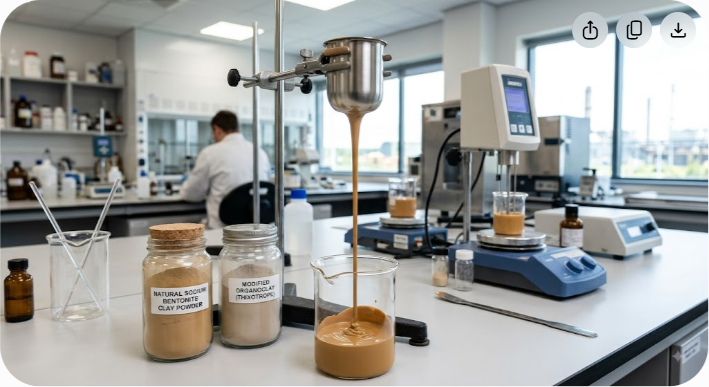
If you leave a gallon of commercial latex paint sitting on a shelf for six months, heavy pigments like titanium dioxide should theoretically sink to the bottom of the can, creating a hard, cement-like cake that no stirring can fix. Yet when you open that can, the paint pours smoothly, stays uniform, and clings to your brush without dripping onto the floor.
That stability is not an accident. It is the result of precise rheology control, and very often, natural smectite clay is the hidden engine behind it.
Bentonite clay—specifically purified sodium bentonite and chemically modified organoclays—serves as one of the most versatile mineral additives in the paint and coatings industry. From architectural wall paints and protective marine coatings to industrial dip primers, bentonite solves four of the toughest physical problems formulators face: pigment settling, sag, poor brushability, and syneresis (water separation).
In this guide, we break down the 7 best uses of bentonite in paint and coatings, explain the physical mechanisms behind its performance, and share practical formulation tips to help you get the maximum value out of this natural rheology modifier.
Before exploring specific applications, it is essential to understand that not all bentonite used in coatings is identical. Formulators typically work with two distinct classes of bentonite additives:
Natural sodium bentonite is a layered aluminum silicate mineral composed primarily of montmorillonite. In waterborne coatings, these microscopic layers hydrate, expand, and separate (a process called delamination). The positively charged edges and negatively charged faces of the clay platelets form a three-dimensional house-of-cards structure. This structure traps water and pigment particles, creating a thixotropic gel.
Natural bentonite is inherently hydrophilic (water-attracting), which means raw clay will not swell or disperse in organic solvents like xylene, toluene, or mineral spirits. To overcome this, mineral processors react purified bentonite with quaternary ammonium compounds. This organic modification replaces inorganic sodium ions with hydrophobic alkyl chains, turning the clay into an organoclay that disperses effortlessly in solventborne paints, alkyds, epoxies, and polyurethane coatings.
| Attribute | Natural Sodium Bentonite | Organophilic Bentonite (Organoclay) |
|---|---|---|
| Primary System Compatibility | Waterborne (Latex, Acrylic, Emulsion) | Solventborne (Alkyd, Epoxy, Polyurethane) |
| Mechanism of Action | Water hydration and hydrogen bonding | Organic chain entanglement and swelling |
| Typical Processing | Pre-gel or direct add with high shear | High shear + polar activator (e.g., ethanol/water) |
| Key Benefit | Eco-friendly, low-cost rheology and stability | Temperature-stable viscosity and heavy anti-settling |
| pH Sensitivity | Works best at pH 7.5 to 10.5 | Broad pH tolerance in organic media |
Heavy functional pigments—such as titanium dioxide, iron oxides, zinc dust, and barium sulfate—have a strong natural tendency to settle during storage. Over time, gravity pulls these dense particles to the bottom of the container, forming a compact sediment known as hard caking.
When bentonite is properly activated in a paint formulation, its delaminated platelets form a continuous gel network throughout the liquid phase. This network exhibits a critical physical property known as yield value (yield stress).
Yield value is the minimum force required to break the gel structure and make the liquid flow. As long as the gravitational force exerted by a suspended pigment particle is lower than the yield stress of the bentonite network, the particle remains permanently suspended in space.
Practical Formulation Tip: Adding just 0.3% to 0.8% bentonite by total weight can extend the shelf life of heavy industrial paints from a few months to several years without causing unwanted viscosity spikes during pumping.
Paint formulators constantly balance two conflicting requirements: the paint must flow smoothly when applied, but it must immediately freeze in place once it hits a vertical surface.
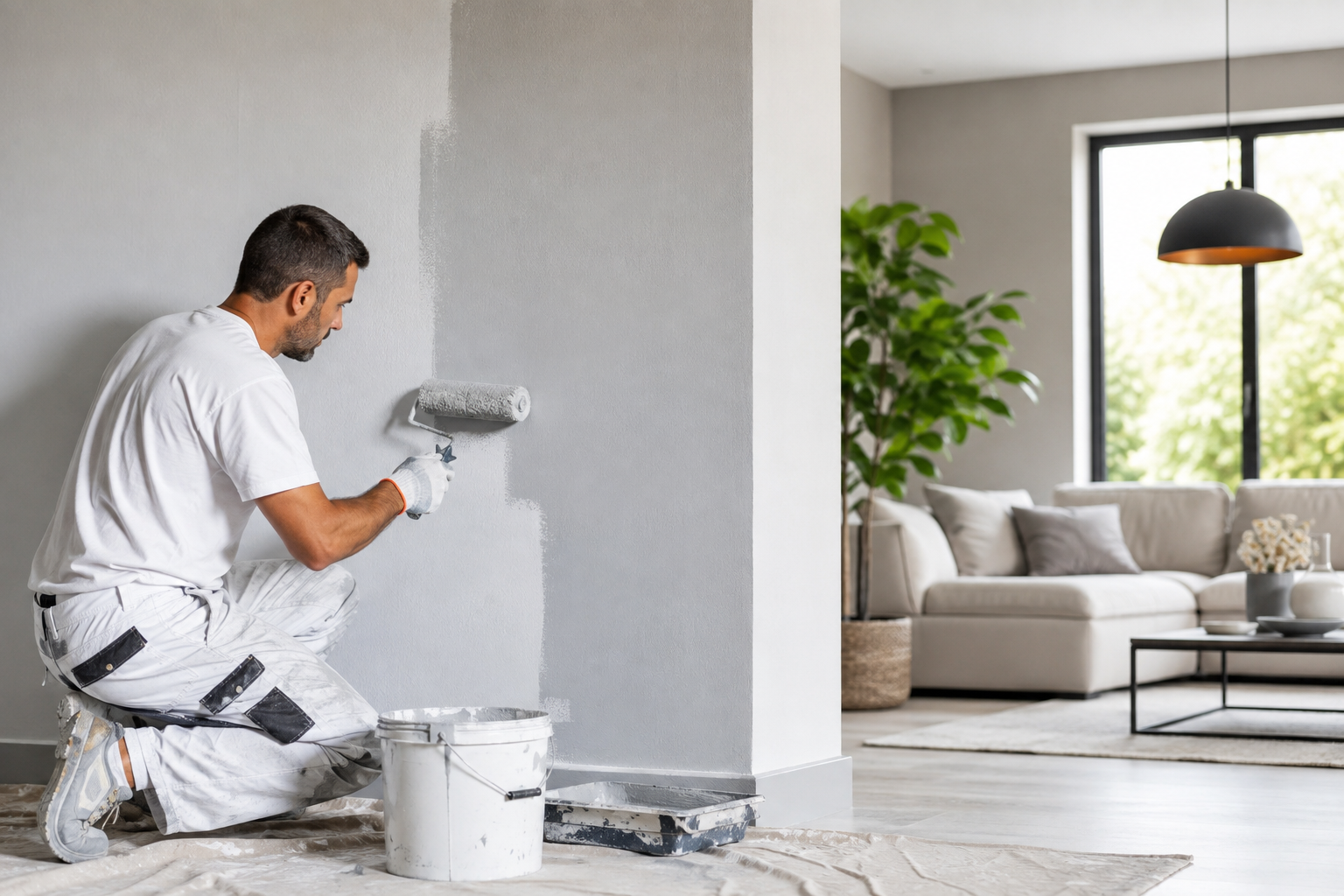
If the viscosity drops too low, gravity pulls the wet film downward, creating ugly runs, drips, and sags. If the viscosity remains too high, brush marks and roller stipples will not level out, leaving a rough surface finish.
Bentonite is a classic thixotropic additive. Under high shear forces—such as during spraying, brushing, or rolling—the weak physical bonds between the clay platelets break down instantaneously. The paint's viscosity drops, allowing it to atomize smoothly through a spray nozzle or spread evenly under a brush.
The moment the shear force stops (when the paint touches the wall), the bentonite platelets begin to re-align and rebuild their three-dimensional network. This rapid recovery restores high low-shear viscosity, holding wet film thicknesses of up to 250 to 300 microns on vertical surfaces without sagging.
Have you ever opened a can of paint and found a clear, watery layer floating on top of a thick colored paste? That phase separation is called syneresis.
Syneresis occurs when polymer binder emulsions, water, and lightweight solvents separate from the main pigment matrix over time due to thermodynamic instability or temperature fluctuations during shipping.
Because montmorillonite clay has an exceptionally high specific surface area (up to 800 square meters per gram when fully delaminated), it acts like a microscopic sponge. Natural sodium bentonite locks free water molecules inside its interlamellar spaces through hydrogen bonding and electrostatic attraction.
By immobilizing the free water phase, bentonite prevents liquid layer separation even under challenging storage conditions, such as high-temperature summer shipping or prolonged warehousing.
When you roll paint onto a ceiling or wall using a high-speed synthetic roller, the liquid film between the roller sleeve and the wall undergoes extreme stretching. Standard water-soluble polymer thickeners (like hydroxyethyl cellulose, or HEC) can form long molecular chains under tension. As these chains snap, they fling tiny droplets into the air—a frustrating phenomenon known as roller spatter.
Unlike linear synthetic polymers, bentonite clay platelets are rigid, inorganic disks. They do not stretch or form elastic filaments under high-speed rotational shear.
Replacing a portion of organic cellulose thickeners with high-purity sodium bentonite produces clean shear-thinning behavior without viscoelastic elasticity. The result:
Painting porous substrates—such as raw masonry, drywall, unsealed wood, or concrete blocks—presents a major challenge. The porous background sucks liquid vehicle (water or solvent) out of the wet paint film before the coating can form a continuous protective seal. This leads to poor adhesion, uneven gloss levels (flashing), and cracking.
Bentonite acts as a physical micro-barrier additive in primers and masonry coatings:
As a result, formulators can design high-performing sealers and interior primers that achieve full opacity and uniform sheen in a single coat over bare drywall or porous concrete.
In modern industrial, structural steel, and architectural coatings, passive fire protection is a fast-growing requirement. Intumescent coatings—special paints that expand into a thick insulating char when exposed to high heat—rely heavily on inorganic additives to maintain structural integrity during a fire.
Bentonite clay is non-combustible and thermally stable up to temperatures exceeding 900 degrees Celsius. When incorporated into intumescent or fire-retardant paint formulations, bentonite delivers two vital thermal benefits:
Even in standard architectural flat paints, replacing a small fraction of organic binder with processed bentonite enhances thermal resistance and lowers the total heat release rate of the cured film.
Achieving a low-gloss, matte, or satin finish in decorative paints typically requires high loadings of silica or calcium carbonate matting agents. However, excessive silica can degrade scratch resistance and make the dry paint film chalky.
Purified bentonite clay serves as an effective co-matting agent. Because bentonite platelets orient randomly at the coating surface as the film dries, they scatter incoming light rays in multiple directions, naturally lowering gloss levels without compromising film toughness.
Furthermore, bentonite enhances edge retention (the ability of wet paint to cover sharp 90-degree metal or wood edges without pulling back). Standard paints tend to flow away from sharp corners due to surface tension, leaving thin spots prone to early corrosion or wear. The high yield stress imparted by organoclays holds the wet film evenly across sharp profiles, ensuring full barrier protection.
To get the best performance from bentonite additives, you must activate them correctly during the manufacturing process. Improperly dispersed clay will leave coarse specks in the finish and fail to build the necessary yield stress.
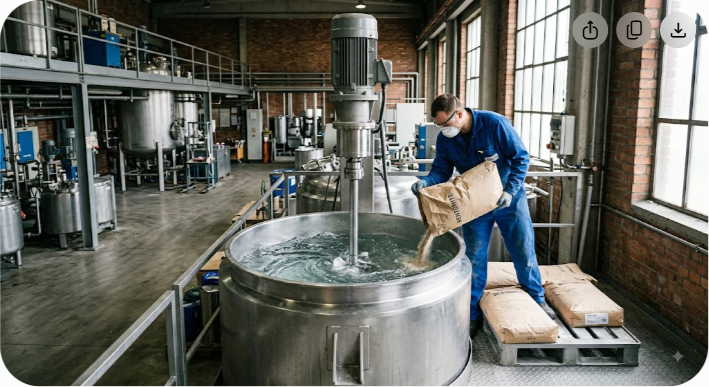
A pre-gel is a pre-dispersed paste containing 5% to 10% clay, water or solvent, and a chemical activator. Preparing a pre-gel allows the clay to fully hydrate and delaminate before coming into contact with pigments or resins.
If pre-gel tanks are unavailable, formulators can add bentonite powder directly to the mill base during the initial pigment dispersion phase.
Even experienced paint chemists occasionally encounter processing challenges when working with smectite clay additives. Here is how to fix the most common errors:
How does bentonite stack up against other popular coating additives like HEC (cellulosics), fumed silica, and synthetic associative thickeners (HEUR/HASE)?
| Feature / Modifier | Bentonite / Organoclay | Cellulosics (HEC) | Fumed Silica | Associative (HEUR) |
|---|---|---|---|---|
| Anti-Settling Power | Exceptional (High Yield) | Moderate | Excellent | Fair |
| Thixotropic Recovery | Fast to Medium | Slow | Instant | Fast |
| Temperature Stability | Outstanding | Fair (Syneresis Risk) | Excellent | Poor (Viscosity Drops) |
| Enzymatic Degradation | 100% Immune | Prone to Spoilage | 100% Immune | 100% Immune |
| Relative Cost | Low to Moderate | Moderate | High | High |
| Spatter Resistance | High | Low | High | High |
Notice that while fumed silica offers excellent performance, its high cost and dusting hazards during handling make organoclay and sodium bentonite the far more economical choice for large-scale industrial and architectural formulations.
As the paint and coatings industry faces tighter VOC regulations and growing demand for eco-friendly, bio-based materials, natural mineral additives offer a proven, sustainable edge. Bentonite provides unmatched thixotropic control, robust anti-settling performance, zero VOC contribution, and complete immunity to bacterial breakdown.
Whether you are formulating waterborne architectural acrylics, heavy anti-corrosion epoxies, or fire-rated intumescent barrier paints, choosing the right grade of processed bentonite makes all the difference between an average paint and a market-leading product.
At Axewelledge, we leverage over 60 million tons of high-purity sodium bentonite reserves alongside advanced processing technologies to deliver raw and organophilic clay solutions tailored specifically for global coating manufacturers. Contact our technical team today to request samples, discuss custom grind profiles, or optimize your rheology package.













Have questions about our products? We're here to help!