Axewelledge, a leading exporter from India, specializes in high-quality Bentonite. With a commitment to excellence, we supply premium Bentonite to the Middle East and Southeast Asia markets.


North Angle Complex, 304,
150 Feet Ring Rd, Opposite Ambedkar Nagar BRTS Stop,
Madhav Park, Punit Nagar,
Mavdi, Rajkot, Gujarat 360004
© Axewelledge 2026, All Rights Reserved.
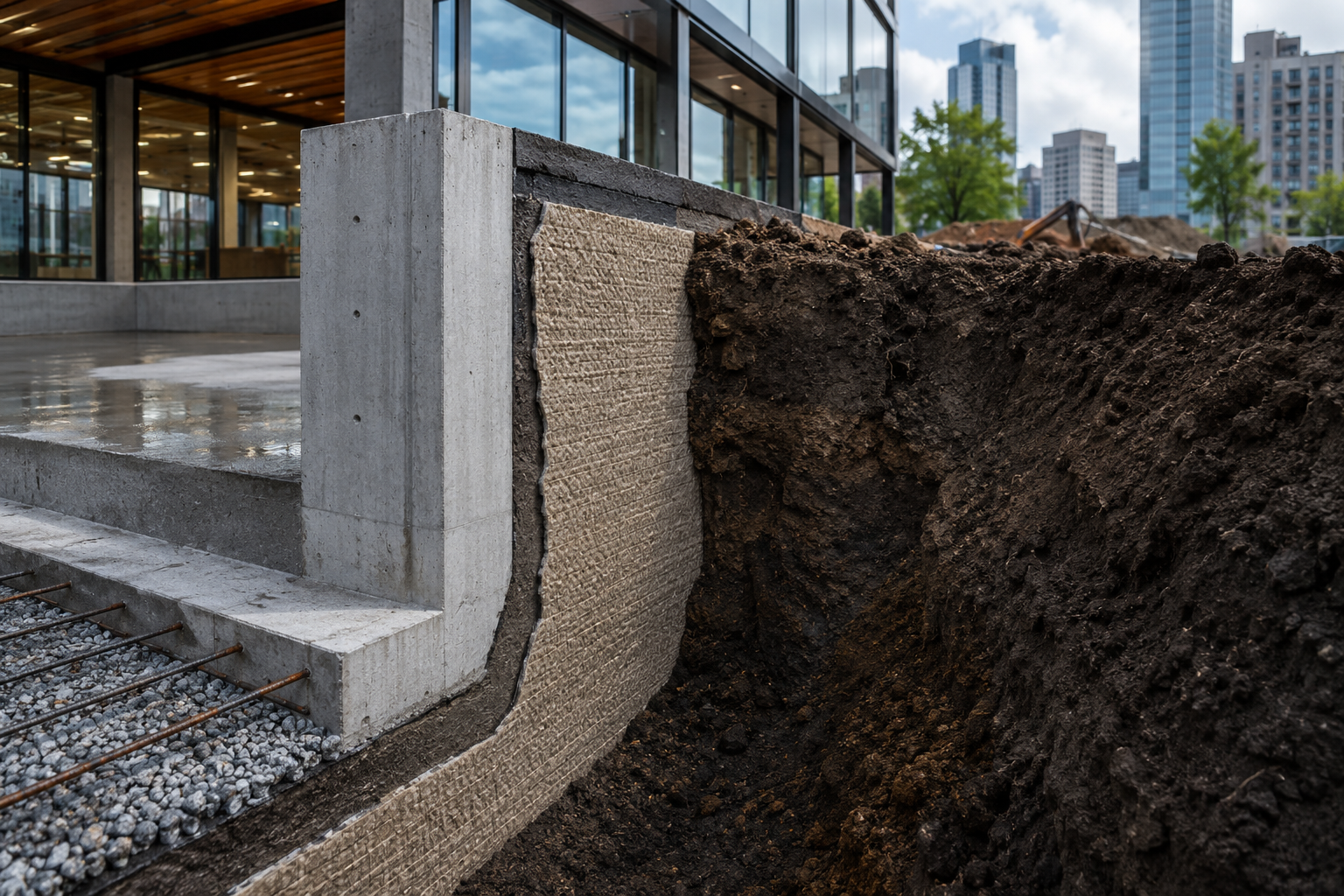
Look closely at the foundation of a modern zero-emission skyscraper, a deep civil transit tunnel, or a state-of-the-art waste containment facility. You won't see it, but a silent chemical miracle is taking place just beneath the surface. Millions of years ago, volcanic ash settled into ancient seas, weathering over millennia into a dense, clay-rich mineral known as bentonite. Today, this humble earth material has become one of the most critical assets in modern green engineering. As the US construction sector faces intense pressure to cut carbon footprints and build for extreme weather, the spotlight has shifted toward natural, low-embodied-energy alternatives. High-purity sodium bentonite is leading that charge.
For decades, heavy industry viewed sealing and waterproofing through a synthetic lens. Engineers relied on complex polymers, petro-chemical membranes, and energy-intensive concrete additives to keep water out or trap pollutants in. However, those materials degrade, leach chemicals, and carry heavy environmental costs. Bentonite clay turns that paradigm on its head. It offers a permanent, self-healing barrier that actually performs better under pressure. Let's explore the science, the latest material advancements, and the real-world applications changing how we build sustainably.
To appreciate why bentonite is indispensable, you have to look at its molecular structure. Sodium bentonite is primarily composed of montmorillonite, a smectite clay mineral structured like a deck of microscopic cards. Each sheet carries a negative electrical charge on its flat surface and a positive charge on its edges. When water hits these sheets, the highly polar water molecules are drawn directly into the interlayer spaces, pushing the plates apart.
This isn't simple dampening. The clay swells up to 15 to 20 times its dry volume. When this expansion happens within a confined space—like between compressed soil layers or inside a foundation joint—the clay transforms into a dense, highly impermeable gel. This gel exerts continuous outward pressure, effectively sealing voids, fissures, and micro-cracks automatically. It is a completely passive, self-healing mechanism that requires zero external energy, making it an ideal choice for infrastructure meant to last for centuries.
Modern green construction isn't just about sticking solar panels on a roof. It requires reducing the embodied carbon of every component, starting right at the foundation. Traditional sub-grade waterproofing typically relies on thick rubberized asphalt or heavy PVC sheets. These materials are notorious for off-gassing, require meticulous, toxic adhesive applications, and fail catastrophically if punctured during backfilling.
Enter bentonite-based composite sheets. The latest advancements combine active sodium bentonite layers needle-punched between robust geotextiles, creating what the industry calls Geosynthetic Clay Liners (GCLs). When a construction crew lays these liners against a foundation wall, the clay reacts with the moisture in the soil, swelling to form a monolithic, unyielding barrier. If a stray piece of rebar punctures the liner during construction, the surrounding clay simply swells into the tear, sealing it shut. This self-healing property eliminates the costly, stressful callbacks that plague commercial real estate developers when underground water tables rise.
Furthermore, sourcing high-purity minerals from massive, scientifically managed reserves ensures structural consistency. Producers like Axewelledge tap into vast global reserves to provide minerals that meet precise ASTM standards, ensuring that US engineers get predictable, verifiable swelling metrics for high-stakes urban builds.
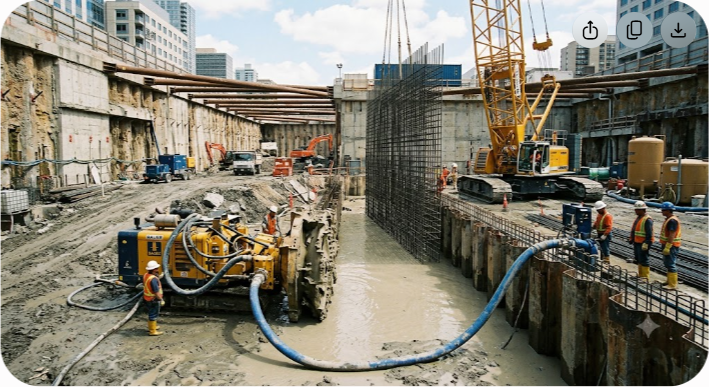
Urban density demands that we build further downward. Subways, deep highway cuts, and subterranean utility networks must cut through shifting, water-saturated strata. Here, bentonite slurry walls have become the gold standard for structural stabilization.
During excavation, engineers pump a fluid bentonite-water mixture into the trench. Because the slurry is heavier than water but fluid enough to be pumped, it exerts hydrostatic pressure against the trench walls, preventing collapse without the need for extensive steel shoring. At the same time, the clay particles penetrate the surrounding soil matrix, creating a thin, impermeable 'filter cake' along the trench sides. This cake keeps groundwater out of the work zone and holds the excavation steady until crews can tremie-pump concrete from the bottom up. By optimizing the particle size distribution of the clay, modern processors have drastically reduced the amount of mineral needed per cubic yard, minimizing transport emissions and onsite waste.
Beyond vertical construction, industrial facilities face an existential challenge: keeping hazardous process fluids, chemical runoff, and municipal waste from migrating into shared aquifers. The regulatory penalties for groundwater contamination in the United States are staggering, but the environmental costs are worse.
In landfill design, environmental engineers deploy advanced multi-layered lining systems. A critical component is the clay barrier. Synthetic membranes can crack under the immense weight of a landfill or break down via UV exposure during installation. Combining a high-density polyethylene (HDPE) geomembrane with a high-swelling sodium bentonite GCL creates a redundant, fail-safe system. If chemical leachates manage to bypass the plastic sheet, the bentonite layer absorbs the fluid, expands, and stops the plume in its tracks.
The same logic applies to industrial wastewater evaporation ponds, mining leach pads, and agricultural retention basins. Because natural sodium bentonite resists chemical degradation from a wide range of industrial pH levels, it maintains its sealing integrity far longer than synthetic alternatives, providing a true lifetime barrier.
Historically, the Achilles' heel of sodium bentonite was highly saline groundwater. When conventional bentonite encounters water packed with calcium or magnesium ions, the salt ions displace the sodium ions between the clay sheets. This ion exchange collapses the electrical double layer, reducing the clay's ability to swell and seal effectively.
To solve this, advanced mineral processing has turned to polymer-modified bentonites. By chemically intertwining eco-friendly polymers into the montmorillonite structure during the refinement phase, material scientists have created clays that resist ion exchange. These advanced formulations allow sustainable construction practices to expand safely into coastal zones, brackish marshlands, and heavy industrial sites where traditional clays previously fell short.
Transitioning the US construction sector to sustainable minerals requires an unbroken, highly reliable supply chain. It doesn't matter how eco-friendly a material is if it isn't available when the concrete mixers arrive. Axewelledge handles this challenge by leveraging over 60 million tons of high-quality reserves alongside integrated mineral processing plants. By maintaining tight quality controls from the initial open-cast mine extraction to the final milling process, the mineral's purity is protected, ensuring it functions flawlessly when deployed on American project sites.
As building codes grow more stringent and the impacts of climate change bring unpredictable flooding and shifting water tables across the US, our choice of foundational materials matters more than ever. Incorporating natural sodium bentonite clay into architectural specifications isn't just a nod to environmentalism; it's a calculated decision to build resilient, self-sustaining infrastructure. By choosing minerals that work in harmony with the natural laws of physics and chemistry, the construction industry can stop fighting the elements and start building structures that stand the test of time.













Have questions about our products? We're here to help!