Axewelledge, a leading exporter from India, specializes in high-quality Bentonite. With a commitment to excellence, we supply premium Bentonite to the Middle East and Southeast Asia markets.


North Angle Complex, 304,
150 Feet Ring Rd, Opposite Ambedkar Nagar BRTS Stop,
Madhav Park, Punit Nagar,
Mavdi, Rajkot, Gujarat 360004
© Axewelledge 2026, All Rights Reserved.
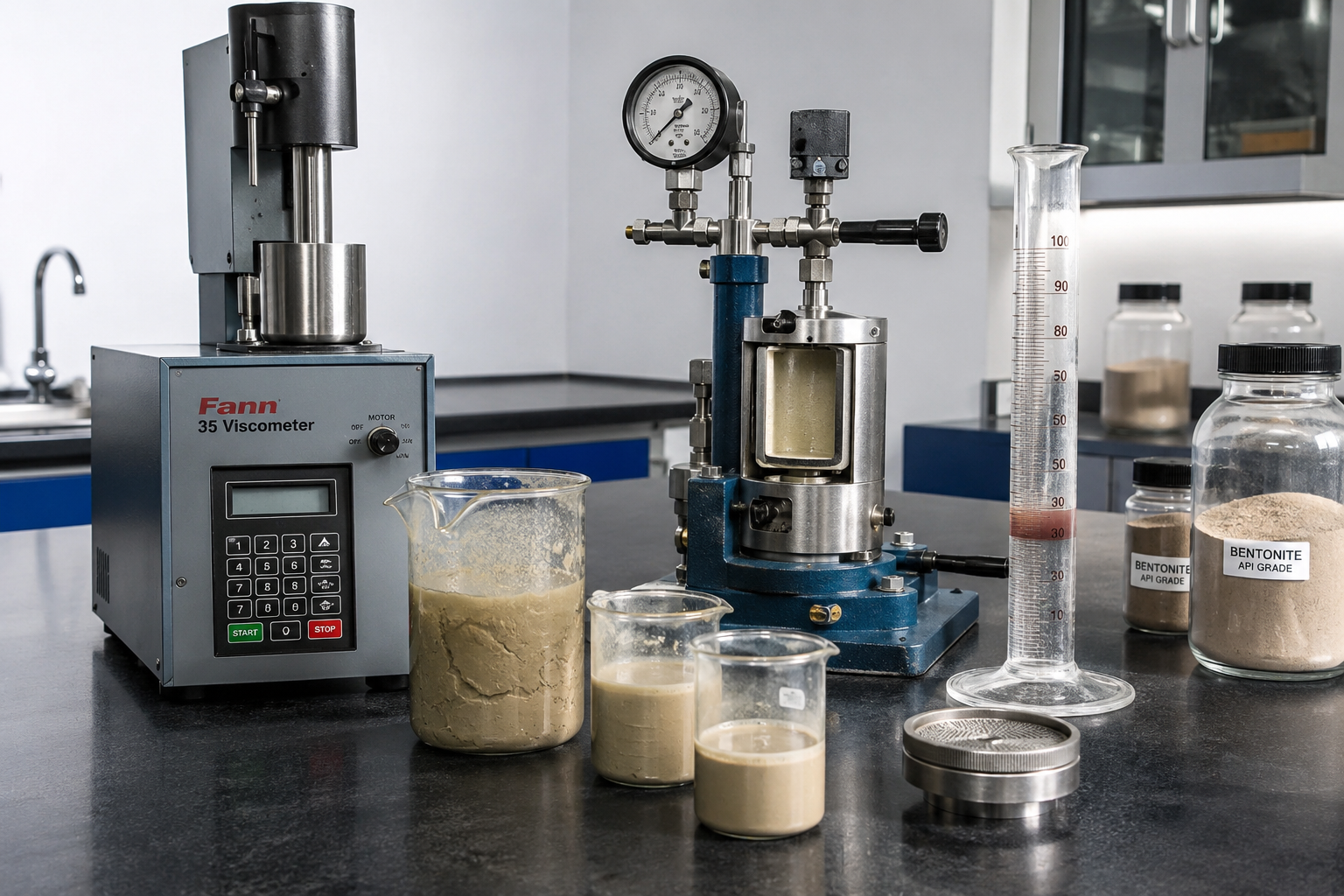
Choosing between API Spec 13A and OCMA bentonite comes down to a simple technical tradeoff: API Spec 13A Section 9 mandates higher raw mud yield and lower fluid loss for standard freshwater drilling, whereas OCMA (and API 13A Section 11) allows lower yield but permits chemical treatment and higher yield-point-to-plastic-viscosity ratios to maintain borehole stability in variable water quality.
Selecting the wrong drilling fluid standard leads to hole collapse, stuck pipe incidents, excessive chemical additive expenditure, and lost circulation. Drilling engineers, mud chemists, and procurement managers frequently encounter confusion when navigating technical datasheets for sodium bentonite. Terms like 'API Grade,' 'OCMA Grade,' 'Section 9,' and 'Section 11 (OCMA)' are often tossed around interchangeably, even though their lab testing limits and real-world performance under downhole pressure differ significantly.
This guide breaks down the physical properties, chemical mechanisms, testing protocols, and economic parameters governing API Spec 13A and OCMA standards. By understanding these distinction points, you can make cost-effective decisions that optimize penetration rates and protect wellbore integrity.
To evaluate their modern application, it helps to understand why two parallel standards evolved in international drilling operations.
API Spec 13A is the American Petroleum Institute's global standard governing drilling fluid materials. Formulated originally for North American land operations, the specification sets rigorous performance criteria for high-purity, high-yield sodium bentonite. The classic standard for standard drilling bentonite is detailed under API Spec 13A, Section 9 (formerly Section 4 in older code editions).
Section 9 specifies high-grade, premium natural sodium bentonite (typically sourced from high-purity montmorillonite deposits) that provides immediate hydration, high barrel yield, and tight filtration control without heavy reliance on synthetic polymer extenders.
OCMA stands for the Oil Companies Materials Association, a legacy organization established by major European oil companies operating extensively in the Middle East, North Africa, and Southeast Asia. Operators in these regions frequently encountered hard water, mild salinity, and varied clay deposits where raw, un-extracted bentonite could not meet strict API yield thresholds without structural modification.
To establish a dependable procurement standard for these operating environments, the association established the OCMA DFCP-4 standard. When ISO and API harmonized global standards under ISO 13500 and updated API 13A editions, OCMA's legacy guidelines were integrated directly into the API framework as API Spec 13A, Section 11.
Key takeaway: When a supplier quotes 'OCMA Bentonite' today, they are referencing material complying with API Spec 13A Section 11 (or OCMA DFCP-4), whereas 'API Bentonite' traditionally refers to API Spec 13A Section 9.
Comparing laboratory specification limits highlights the functional differences between these two drilling clay standards. Below is a head-to-head parameter analysis based on standard API RP 13B-1 testing methods.
| Performance Parameter | API Spec 13A Section 9 (Standard API) | API Spec 13A Section 11 / OCMA DFCP-4 | Operational Significance |
|---|---|---|---|
| Viscometer 600 RPM Reading | 30 minimum | 30 minimum (or 31 min depending on edition) | Ensures basic carrying capacity and rheological structure |
| Yield Point / Plastic Viscosity Ratio | 3.0 maximum | 6.0 maximum | Indicates shear-thinning ability and polymer extension levels |
| Filtrate Volume (Fluid Loss) | 15.0 mL maximum | 16.0 mL maximum | Determines thinness and impermeability of the filter cake |
| Residue > 75 µm (Wet Sieve / Sand) | 4.0 wt. % maximum | 2.5 wt. % maximum | Controls abrasive wear on mud pumps and downhole tools |
| Moisture Content | 10.0 wt. % maximum | 13.0 to 15.0 wt. % maximum | Affects shelf life, free-flow handling, and grinding efficiency |
| Minimum Yield (Approximate) | 91 to 100 bbl/ton (16–18 m³/t for high yield) | 75 to 85 bbl/ton (13–15 m³/t base) | Dictates the mass of clay needed to build 1 barrel of standard mud |
Examining the physical mechanisms behind these numbers reveals how each clay behaves inside the fluid circuit.
The maximum allowed YP/PV ratio represents one of the biggest functional differences between Section 9 and Section 11/OCMA bentonite.
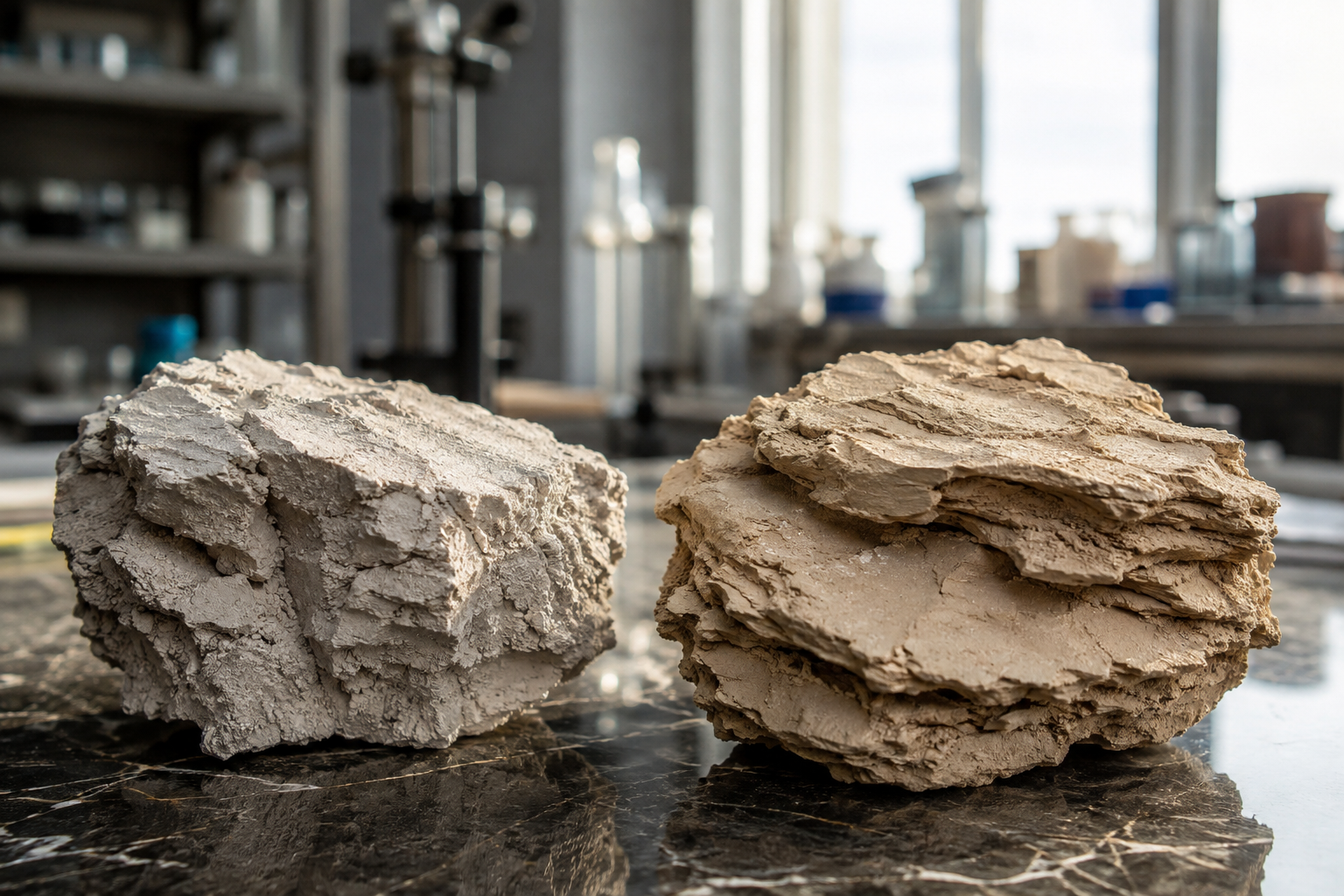
Abrasive grit in drilling fluid accelerates wear on pump liners, valve seats, bit nozzles, and directional motor bearings.
For deep wells and high-speed motor assemblies, OCMA's lower grit allowance provides vital equipment protection, minimizing maintenance downtime.
Filtrate loss measures the volume of fluid forced into permeable geological formations under differential pressure, leaving behind a semi-impermeable clay layer called a mud cake.
Both standards form thin, tough filter cakes that seal porous sands and prevent differential sticking. However, API Section 9's strict natural clay structure creates an exceptionally stable filter cake in fresh water without relying on thermal-sensitive chemical additives.
Understanding performance on site requires examining the mineralogy of montmorillonite.
Natural sodium bentonite contains exchangeable sodium ions ($ ext{Na}^+$) bound natively within the inter-lamellar crystalline space of the montmorillonite clay mineral. When mixed with water, water molecules readily hydrate these cations, causing the crystal lattice to expand to many times its dry volume. This produces high viscosity, natural gel strength, and excellent thermal stability up to temperatures exceeding 350°F (175°C).
In many regions globally, naturally occurring reserves consist primarily of calcium bentonite ($ ext{Ca}^{2+}$). Calcium montmorillonite exhibits low swelling capacity because divalent calcium ions bind the clay platelets tightly together.
To transform this material into high-performing drilling mud, manufacturers introduce sodium carbonate ($ ext{Na}_2 ext{CO}_3$, or soda ash) during wet milling or extrusion. The soda ash drives an ion exchange reaction:
$$ ext{Ca-Bentonite} + ext{Na}_2 ext{CO}_3 ightarrow ext{Na-Bentonite} + ext{CaCO}_3downarrow$$
This activation process converts calcium clay into an active swelling sodium bentonite that easily meets OCMA / API 13A Section 11 parameters.
While soda-ash activated OCMA bentonite delivers excellent rheology at lower initial raw material cost, operators must account for thermal breakdown in deep, high-temperature wells where chemical activation can deteriorate above 250°F (120°C).
Choosing between API Spec 13A Section 9 and OCMA / Section 11 depends directly on your geological profile, water chemistry, equipment design, and operational budget.
To verify whether a delivered consignment complies with API Spec 13A Section 9 or Section 11 (OCMA), mud technicians perform laboratory testing following API Recommended Practice 13B-1.
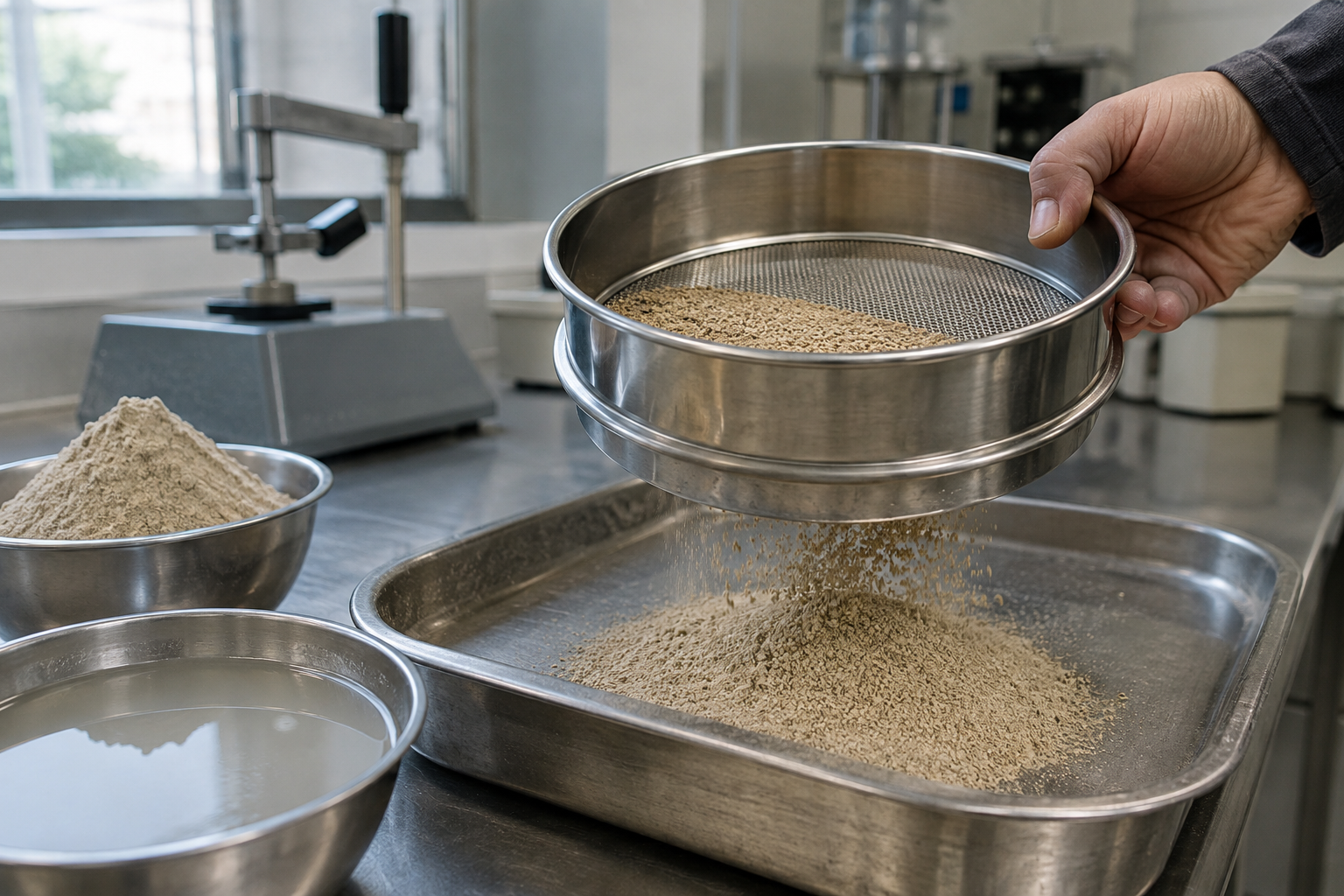
Follow this step-by-step testing sequence to verify bentonite compliance on site:
$$ ext{PV (cP)} = ext{Reading}_{600} - ext{Reading}_{300}$$ $$ ext{YP (lb/100 ft}^2 ext{)} = ext{Reading}_{300} - ext{PV}$$
$$ ext{Ratio} = rac{ ext{YP}}{ ext{PV}}$$
$$ ext{Residue %} = left( rac{ ext{Dry Residue Weight}}{ ext{Initial Sample Weight}} ight) imes 100$$
When drilling fluids fail downhole, field teams often misdiagnose the root cause. Below are common drilling mud problems tied to bentonite standard selection, along with field corrective actions.
For international drilling contractors and procurement officers, material specifications directly impact logistics budgets.
Moisture specification compliance ($10.0%$ max for Sec 9; $13.0 ext{--}15.0%$ max for OCMA) prevents caking during ocean transit and bulk storage. Material should be packed in heavy-duty 1,000 kg or 1,250 kg multi-ply polypropylene jumbo bags (super sacks) with moisture-proof polyethylene inner liners, or in multi-wall paper valve bags for smaller site deliveries.
To simplify material selection across your technical and commercial teams:
By matching the precise bentonite standard to your wellbore geology and water parameters, you ensure optimal hole cleaning, prevent costly downhole losses, and keep operational budgets under control.
As India's largest mine owner and exporter of high-grade sodium bentonite, Axewelledge controls over 60 million tons of natural montmorillonite reserves. Backed by 15+ years of mineral processing expertise, advanced R&D labs, and strategic export hubs in India and the UAE, Axewelledge delivers fully certified API Spec 13A Section 9 and Section 11 (OCMA) drilling bentonites to operators across the Middle East, Southeast Asia, and global markets. Contact our technical engineering team today to review custom mud formulations, request official lab certificates, or secure reliable bulk supply for your upcoming drilling campaign.













Have questions about our products? We're here to help!