Axewelledge, a leading exporter from India, specializes in high-quality Bentonite. With a commitment to excellence, we supply premium Bentonite to the Middle East and Southeast Asia markets.


North Angle Complex, 304,
150 Feet Ring Rd, Opposite Ambedkar Nagar BRTS Stop,
Madhav Park, Punit Nagar,
Mavdi, Rajkot, Gujarat 360004
© Axewelledge 2026, All Rights Reserved.
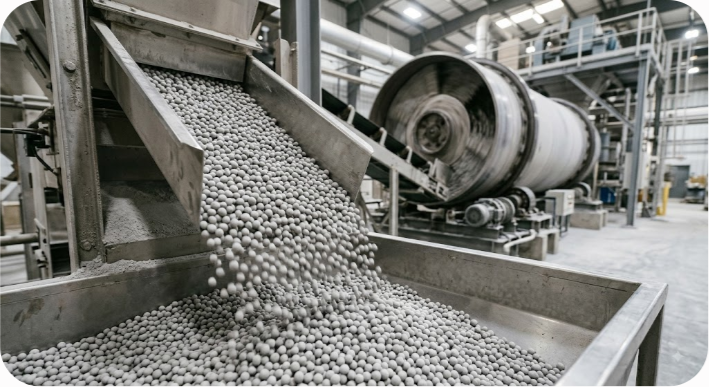
Bulk NPK (nitrogen, phosphorus, and potassium) fertilizers cake because they are inherently hygroscopic. The raw chemical salts that make up compound and blended fertilizers—such as ammonium nitrate, urea, monoammonium phosphate (MAP), diammonium phosphate (DAP), and potassium chloride (muriate of potash)—constantly draw moisture out of the surrounding air. When humidity levels fluctuate in a warehouse, storage silo, or shipping vessel, these salts dissolve at their contact points. As the relative humidity drops or temperatures rise, the water evaporates, leaving behind solid crystalline salt bridges that fuse individual granules together.
Left untreated, a pile of free-flowing NPK granules transforms into a solid, impenetrable monolith in a matter of weeks. Breakage during handling further worsens this problem by creating fine dust, which increases granule-to-granule surface contact and accelerates bridge formation.
To prevent this, commercial fertilizer producers rely on specialized mineral conditioners. Bentonite—a natural aluminum hydrosilicate clay primarily composed of montmorillonite—serves as one of the most reliable, cost-effective, and environmentally sustainable anti-caking and conditioning agents available to the global fertilizer industry.
In this guide, we will break down the precise chemical and physical mechanisms behind fertilizer caking, evaluate how sodium and calcium bentonite clays disrupt salt-bridging, detail industrial application methods, compare mineral coatings against synthetic oil-amine alternatives, and outline best practices for maintaining granule integrity across global supply chains.
To stop caking, you first need to understand the thermodynamics governing granule interactions. Moisture caking in NPK blends isn't just a simple wetting process; it is a complex cycle of phase changes, dissolution, recrystallization, and mechanical compression.
Every soluble salt and compound fertilizer formulation has a specific Critical Relative Humidity (CRH). At ambient temperatures, if the atmospheric relative humidity rises above the CRH of the fertilizer, the material absorbs moisture from the air until it completely dissolves (a process known as deliquescence).
When multiple salts are mixed to create an NPK complex, the CRH of the mixture drops significantly below the CRH of any individual component. For instance, while pure urea has a CRH of approximately 75% at 30°C (86°F) and pure ammonium nitrate has a CRH of around 59%, a physical blend of urea and ammonium nitrate exhibits an extreme CRH drop down to roughly 18%. This means the blend will pull moisture out of even bone-dry air.
When moisture condenses on granule surfaces, it migrates into the tiny pores and contact points between adjacent granules. Surface tension pulls the liquid into micro-capillaries, forming liquid bridges. These liquid bridges act as localized solvents, dissolving soluble nitrogen and potassium salts into a concentrated brine solution.
When atmospheric conditions shift—such as daytime heating in a warehouse followed by night-time cooling—water evaporates from these liquid bridges. The supersaturated brine recrystallizes, growing solid salt bridges between the granules. Over thousands of contact points across a bulk storage pile, these crystalline threads weld the granules into a rigid matrix.
In large warehouse bays or silo structures, bulk fertilizer piles can reach heights of 10 to 20 meters (30 to 60 feet). The mechanical pressure at the bottom of the stack compresses adjacent granules against one another, increasing their contact surface area. Mechanical deformation lowers the energy threshold needed for crystalline bridges to form, accelerating caking at the base of the pile.
Bentonite clay halts the caking process through a combination of surface barrier protection, moisture sequestration, and physical lubrication.
When micro-fine bentonite powder is coated onto NPK granules, it forms a continuous, inert mineral shell around each particle. This physical barrier prevents direct granule-to-granule contact. Even if localized surface melting or salt dissolution occurs inside a granule, the liquid brine cannot make direct contact with neighboring granules, preventing solid salt bridge formation.
Montmorillonite, the active clay mineral in bentonite, possesses an expanding 2:1 smectite crystal lattice structure. This unique molecular architecture gives bentonite an immense specific surface area (often between 400 and 800 m²/g when fully expanded) and high hydratability.
Instead of allowing free moisture to dissolve surface salts, bentonite traps ambient water molecules within its interlayer mineral sheets. By acting as a localized vapor buffer, bentonite keeps the external granule surface dry, ensuring moisture stays locked inside the clay matrix rather than creating brine at granule contact points.
Uncoated granules form liquid brine and solid salt bridges at contact points, causing permanent fusion. Bentonite-coated granules maintain continuous mineral-to-mineral contact layers, preserving free-flowing particle separation.
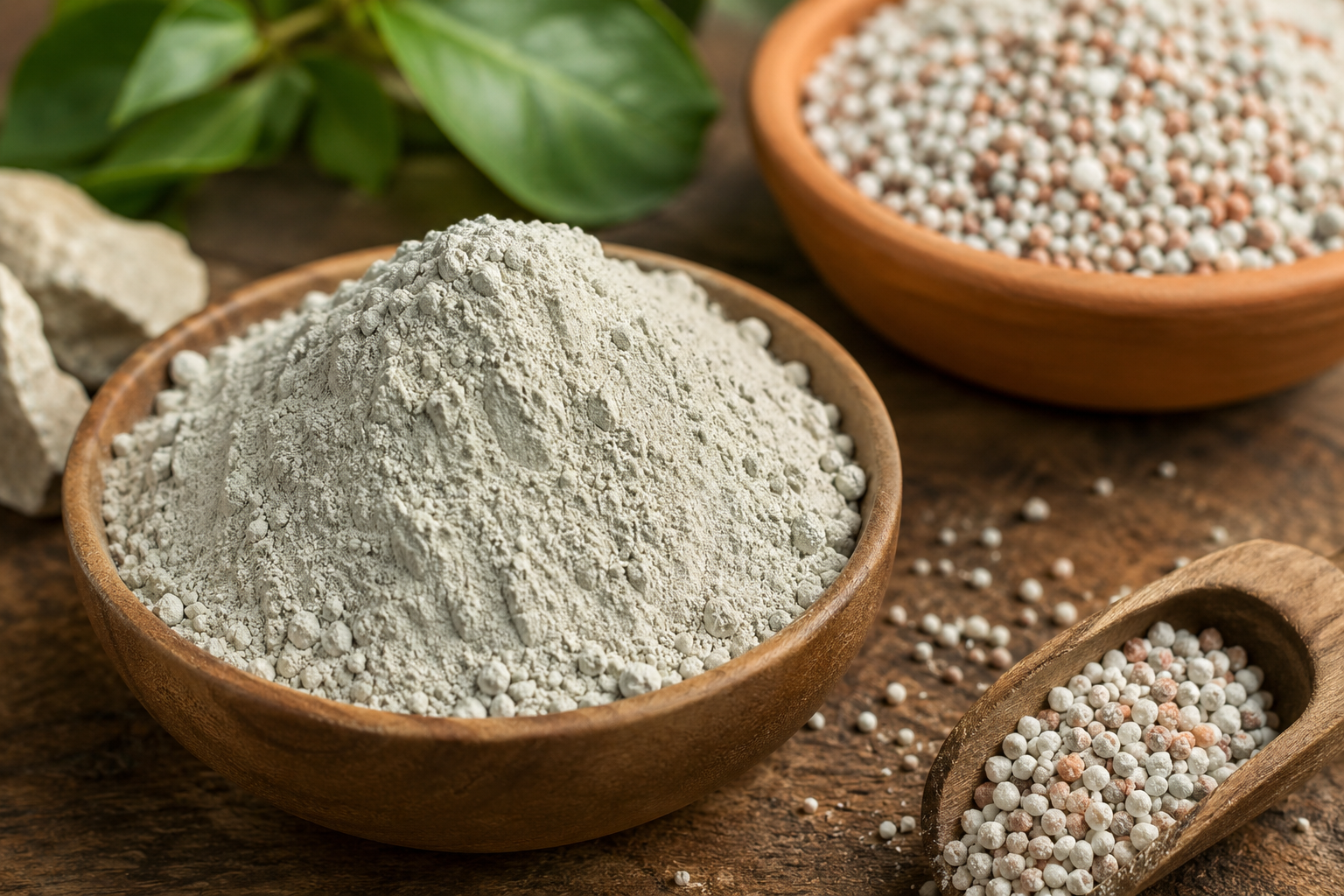
Unconditioned fertilizer granules feature microscopic surface rough spots, micro-cracks, and attached dust particles. Dust increases the available surface area for moisture absorption and acts as a binder during salt bridge formation. Fine bentonite particles fill in these microscopic surface cracks and bind loose dust, creating a smooth exterior shell that reduces friction and mechanically lowers adhesion.
Not all bentonites are created equal. The two primary industrial classifications—sodium bentonite and calcium bentonite—exhibit vastly different swelling capacities, ion exchange traits, and mechanical properties. Choosing the right variant depends on whether you are using the clay as an external anti-caking coating or an internal granulation binder.
| Property / Parameter | Sodium Bentonite (Swelling Clay) | Calcium Bentonite (Non-Swelling Clay) |
|---|
| Dominant Interlayer Cation | Sodium (Na + ) | Calcium (Ca 2+ ) |
| Free Swelling Capacity | High (15–30x dry volume) | Low (2–4x dry volume) |
| Moisture Absorption Speed | High (gels upon hydration) | Moderate (absorbs without heavy gelling) |
| Cation Exchange Capacity (CEC) | 70–100 mEq/100g | 50–80 mEq/100g |
| Primary Anti-Caking Role | External dusting, moisture barrier | Internal granulation binder, carrier |
| Dry Particle Adhesion | High natural tacky bond | Moderate mechanical adhesion |
| Dust Suppression Efficacy | Superior (forms cohesive film) | Good (requires oil/wax binder) |
| Effect on Soil pH | Slightly Alkaline (8.5–10.5) | Near Neutral to Slightly Acidic (6.0–8.0) |
Sodium bentonite features exchangeable Na + ions between its smectite layers. When exposed to ambient moisture, it absorbs water rapidly and expands into a cohesive gel layer.
When applied as a fine dry dusting powder (often in combination with a light oil or wax binder), sodium bentonite creates an exceptionally durable physical barrier. Its high natural plasticity helps the fine clay particles stick tightly to granule surfaces, providing long-term resistance to caking in high-humidity shipping conditions.
Calcium bentonite contains exchangeable Ca 2+ ions. It exhibits lower swelling capacity and does not form a high-viscosity gel when hydrated.
While less effective as a standalone high-expansion external barrier, calcium bentonite excels as an internal binder during the wet granulation stage of NPK manufacturing. It adds green strength to newly formed fertilizer droplets, reduces breakages during drying, acts as an ideal carrier for micronutrients (like zinc, boron, and manganese), and improves the physical hardness of the final granule.
To make informed sourcing decisions, plant managers must evaluate bentonite alongside other industrial anti-caking additives, including talc, diatomaceous earth, silica, and liquid organic amine coatings.
| Feature / Metric | Bentonite Clay | Industrial Talc Powder | Diatomaceous Earth (DE) | Synthetic Oils & Amines |
|---|---|---|---|---|
| Anti-Caking Mechanism | Barrier + Moisture Absorption | Physical Lubrication / Separation | High Porosity Absorption | Hydrophobic Liquid Coating |
| Cost per Metric Ton | Low to Moderate | Moderate | Moderate to High | High |
| Application Complexity | Low (Dusting Drum) | Low (Dusting Drum) | Low (Dusting Drum) | Moderate (Heated Spray) |
| Environmental Impact | Eco-friendly / Soil Enriching | Neutral Inert Mineral | Neutral Inert Mineral | Potential Environmental Hazards |
| Dusting / Plant Hygiene | Low (when oiled) | High Airborne Dust | High Airborne Dust | Zero (Liquid System) |
| Moisture Buffer Capacity | Excellent | Poor | High | None (Repels Moisture) |
| Agronomic Value | Adds CEC and trace silica | Minimal | Adds Amorphous Silica | None |
Liquid anti-caking agents consisting of fatty amines dissolved in paraffin oil work purely by creating a hydrophobic (water-repelling) film around the granule. While effective in the short term, fatty amines carry clear operational drawbacks:
Bentonite, by contrast, is a stable mineral. It does not evaporate, decompose, or break down under high storage temperatures. When combined with a minimal dose of binding oil, bentonite offers both surface repelling and physical cushioning at a fraction of the cost of pure synthetic systems.
Successfully conditioning bulk NPK fertilizer with bentonite requires precise dosing, proper mesh size selection, and appropriate machinery.
This is the most common technique for finished, dry NPK granules leaving the cooler drum. Fine bentonite powder is continuously metered onto the moving fertilizer bed inside a rotating coating drum.
In this approach, bentonite powder is added directly to the raw material mix before wet granulation in a rotary drum, pan granulator, or high-shear mixer.
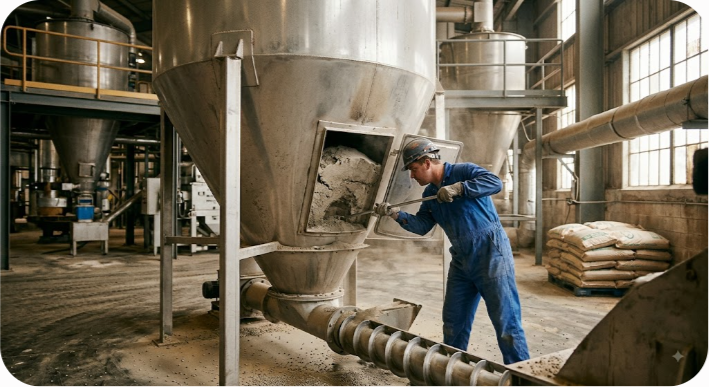
For premium export-grade bulk fertilizers facing multi-week oceanic transit through humid tropical zones, dual-action systems provide the highest level of protection.
In this setup, a low-viscosity paraffinic oil containing a small percentage of primary fatty amine is applied first, followed by a fine bentonite powder coating. The oil seals micro-pores and sticks the clay to the surface, while the bentonite absorbs residual surface moisture and forms a resilient outer armor. This hybrid approach cuts total amine usage by up to 60% while outperforming standalone liquid coatings.
To ensure consistent coating performance and prevent equipment downtime, fertilizer manufacturers must enforce strict quality control parameters when sourcing raw bentonite powder.
Even high-quality bentonite can underperform if applied incorrectly. Here is how to fix the most common operational issues in fertilizer conditioning lines:
Beyond preventing physical caking, bentonite offers distinct agronomic benefits when applied to agricultural soils.
4 + ?
) and potassium (K + ) ions against heavy rainfall leaching.
Sandy soils often suffer from poor nutrient retention, allowing applied nitrogen and potassium to leach down past the root zone during heavy rains. Bentonite clay features a high natural Cation Exchange Capacity (CEC), typically ranging from 60 to 100 mEq/100g.
When bentonite-coated fertilizer granules dissolve in the root zone, the surrounding clay particles remain in the upper soil profile, binding positively charged ammonium (NH 4 + ?
) and potassium (K + ) ions. This temporary storage keeps nutrients available to crop roots longer and cuts leaching losses.
In arid and semi-arid farming regions, sodium bentonite acts as a soil amendment. As fertilizer granules release their nutrient payload, the clay particles absorb surrounding water molecules, expanding and retaining moisture within the topsoil layer. This localized moisture retention helps seedlings establish during early growth stages.
Regulators around the world are increasing scrutiny on synthetic polymer coatings and non-biodegradable microplastics used in slow-release and conditioned fertilizers. Microplastic fragments accumulate in agricultural soils, posing long-term ecological risks.
Bentonite is an all-natural, non-toxic mineral mined directly from the earth. Using bentonite to condition bulk fertilizer helps manufacturers meet strict environmental standards, cut synthetic chemical risks, and deliver cleaner products to organic and sustainable agricultural markets.
Managing caking risks isn't just a technical challenge—it directly affects your bottom line. Caked bulk shipments lead to expensive port delays, damaged equipment, product downgrades, and rejected deliveries.
Let's compare the cost structures of conditioning a 10,000 metric ton bulk shipment of NPK 15-15-15 using three common strategies:
| Cost Factor / Metric | Option A: Synthetic Amine | Option B: Industrial Talc | Option C: Oil + Bentonite Hybrid |
|---|---|---|---|
| Additive Dosage Rate | 1.5 kg / ton (0.15%) | 10 kg / ton (1.0%) | 1.5 kg Oil + 8 kg Bentonite / ton |
| Average Additive Cost | $3.50 – $5.00 / kg | $0.20 – $0.35 / kg | Oil: $1.20/kg, Bentonite: $0.12/kg |
| Chemical Cost per Ton | $5.25 – $7.50 | $2.00 – $3.50 | $0.96 (Oil) + $1.80 (Bentonite) = $2.76 |
| Capital Equipment Needs | Heated tanks, dosing pumps | Dry powder feeder | Standard pump + dry feeder |
| Long-Term Storage Safety | Moderate (degrades over 60+ days) | Moderate (lacks moisture buffer) | High (stable for 120+ days) |
| Crush Strength Impact | None | None | Improves surface toughness |
| Total Cost / 10,000 Ton Ship | $52,500 – $75,000 | $20,000 – $35,000 | $27,600 |
Switching from pure synthetic amine coatings to a dual-action oil-bentonite system delivers substantial savings—often cutting chemical conditioning costs by 40% to 50% while offering superior long-term moisture buffering during multi-week ocean transport.
Securing consistent, high-grade anti-caking additives requires a dependable mining and supply chain partner.
As India’s largest mine owner and exporter of premium sodium and calcium bentonite, Axewelledge ranks among the top five global producers, holding over 60 million tons of proven reserves. Backed by more than 15 years of technical expertise, state-of-the-art refining facilities, and strategically located processing plants, Axewelledge delivers custom-milled bentonite tailored to the demanding needs of global fertilizer manufacturers.
Whether you need ultra-fine 325-mesh sodium bentonite for high-efficiency dusting systems or high-bind calcium bentonite for internal wet granulation, Axewelledge provides stable chemistry, consistent particle sizes, and reliable bulk logistics across North America, the Middle East, Southeast Asia, and worldwide.
Contact Axewelledge's mineral technical team today to request custom mesh samples, review technical specification sheets, and optimize your bulk fertilizer conditioning lines.













Have questions about our products? We're here to help!