Axewelledge, a leading exporter from India, specializes in high-quality Bentonite. With a commitment to excellence, we supply premium Bentonite to the Middle East and Southeast Asia markets.


North Angle Complex, 304,
150 Feet Ring Rd, Opposite Ambedkar Nagar BRTS Stop,
Madhav Park, Punit Nagar,
Mavdi, Rajkot, Gujarat 360004
© Axewelledge 2026, All Rights Reserved.
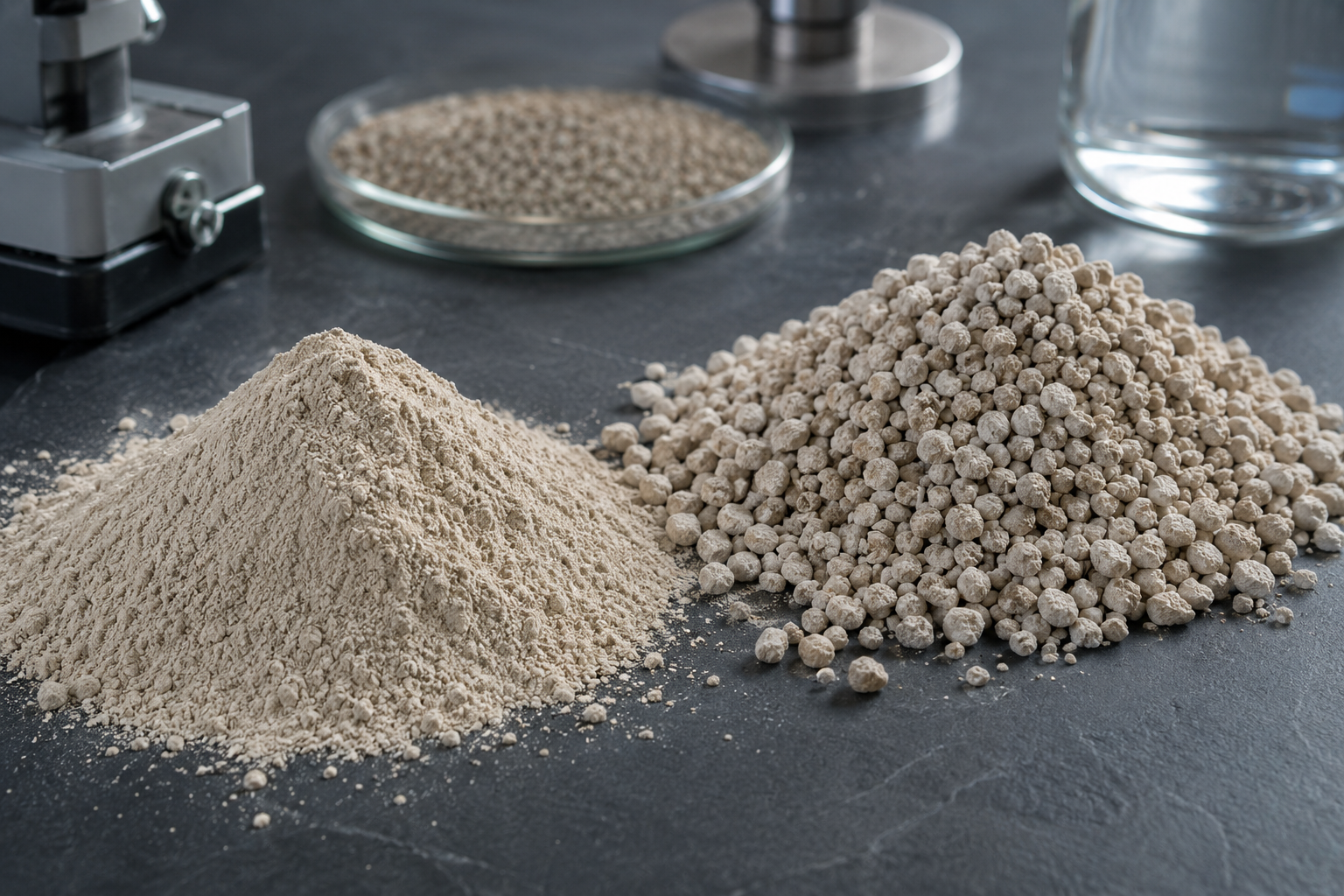
Bentonite CEC, or cation exchange capacity, tells you how much exchangeable positively charged ions a bentonite can hold. It is an important indicator of clay mineral behavior, but it shouldn't be treated as a stand-alone measure of product quality. For industrial buyers, CEC is most useful when read alongside mineral composition, swelling, viscosity, filtration, moisture, particle size, and the requirements of the application.
That distinction matters because two bentonite samples can have similar CEC values and still perform differently in the field. The reason is simple: bentonite performance depends on more than its ability to exchange ions. The dominant exchangeable cation, montmorillonite content, particle size, chemistry of the surrounding fluid, and processing history all influence how the clay behaves.
This guide explains what bentonite CEC means, how laboratories measure it, how sodium and calcium bentonites differ, and where CEC has practical value in drilling fluids, environmental barriers, wastewater treatment, foundry work, and other industrial applications.
Cation exchange capacity is the amount of positively charged ions, or cations, that a clay can retain on its charged surfaces and exchange with ions in the surrounding solution. It is commonly reported in milliequivalents per 100 grams of dry material, written as meq/100g, although some laboratories and technical specifications use centimoles of positive charge per kilogram, cmol(+)/kg.
Bentonite is dominated by smectite minerals, particularly montmorillonite. Montmorillonite has a layered structure with a large reactive surface area. Small substitutions of elements within the crystal structure create a permanent negative charge. Exchangeable cations such as sodium, calcium, magnesium, and potassium balance that charge around the clay particles.
Those ions aren't simply locked into place. Under suitable chemical conditions, a cation in the clay's exchange sites can be replaced by another cation in the surrounding liquid. That reversible process is the basis of cation exchange.
Montmorillonite content is one of the main reasons CEC is so relevant when evaluating bentonite. More active smectite generally means more exchange sites, although CEC does not increase in a perfectly predictable way with a single mineral percentage because mineral chemistry and measurement conditions also matter.
Montmorillonite's layered structure gives bentonite another important characteristic: a large surface area relative to the amount of material present. Once hydrated, individual clay platelets can interact strongly with water and dissolved ions. Those interactions contribute to swelling, dispersion, gel formation, adsorption, and filtration behavior.
This is why CEC is best understood as a mineralogical and chemical indicator. It helps explain performance; it doesn't replace application-specific testing.
CEC isn't determined simply by looking at a sample or measuring how much water it absorbs. A laboratory uses a defined chemical procedure to replace the exchangeable ions, quantify the amount held by the clay, and express the result on a dry-weight basis.
Several analytical approaches are used for clay minerals. The appropriate method depends on the material, laboratory practice, and purpose of the test. Common approaches include ammonium-based exchange methods and methods using other index ions. Methylene blue testing is also widely used in geotechnical and drilling-related work, but it should not automatically be treated as identical to a formal CEC determination.
That distinction is important when comparing supplier data. A number reported as CEC should be compared with another CEC result obtained using a comparable method and test basis. A methylene blue value and a laboratory CEC value can both be useful, but they don't necessarily represent the same measurement.
A simplified CEC testing process looks like this:
For purchasing decisions, always ask the laboratory or supplier which method was used, what units were reported, and whether the value refers to the as-received or dry sample.
You may see bentonite CEC reported as meq/100g or cmol(+)/kg. These units are numerically equivalent when used on the same basis. For example, 80 meq/100g corresponds to 80 cmol(+)/kg.
A technical specification should make the unit clear. It should also identify the test method and sample basis so that buyers can compare results correctly.
There is no single CEC number that makes a bentonite suitable for every application. Natural bentonites vary considerably in mineral composition, exchangeable cations, geological origin, processing, and purity.
Values around 70 to 100 meq/100g are often associated with bentonites containing substantial active montmorillonite, but this range should be treated as a general reference rather than a universal specification. Some commercially useful bentonites fall outside it, and a higher CEC doesn't automatically make a product better for a particular job.
For example, a drilling-fluid formulation may prioritize API-related viscosity, filtration, yield, and gel characteristics rather than CEC alone. A foundry application may place greater emphasis on thermal behavior, green compression strength, moisture control, and reclaim performance. An environmental barrier requires permeability and chemical compatibility to be considered alongside mineral properties.
The better question is not "What is the highest CEC I can buy?" It is "What CEC and related properties does my application require?"
CEC matters because exchangeable ions influence how clay particles interact with water and dissolved chemicals. The effects can show up in several important properties, although CEC is rarely the only factor responsible.
Sodium-dominated bentonite generally hydrates and swells much more strongly than calcium-dominated bentonite. Sodium ions are monovalent and more readily support separation of hydrated clay layers under favorable conditions. Calcium, as a divalent ion, can promote stronger particle associations and a more compact clay structure.
This difference is one reason sodium bentonite is widely used where high swelling and low permeability are required.
CEC helps describe the number of sites available for exchange, while the identity of the ions occupying those sites helps explain how the clay responds to water. The two concepts should be considered together.
Bentonite can retain dissolved cations through ion exchange. This property is useful in applications where the clay needs to interact with dissolved metals or other charged species.
For example, lead, copper, zinc, and cadmium can interact with negatively charged clay surfaces under appropriate chemical conditions. However, describing this as permanent trapping is too broad. Exchange reactions are reversible, and the amount of contaminant retained depends on pH, competing ions, concentration, contact time, clay dose, and other characteristics of the water.
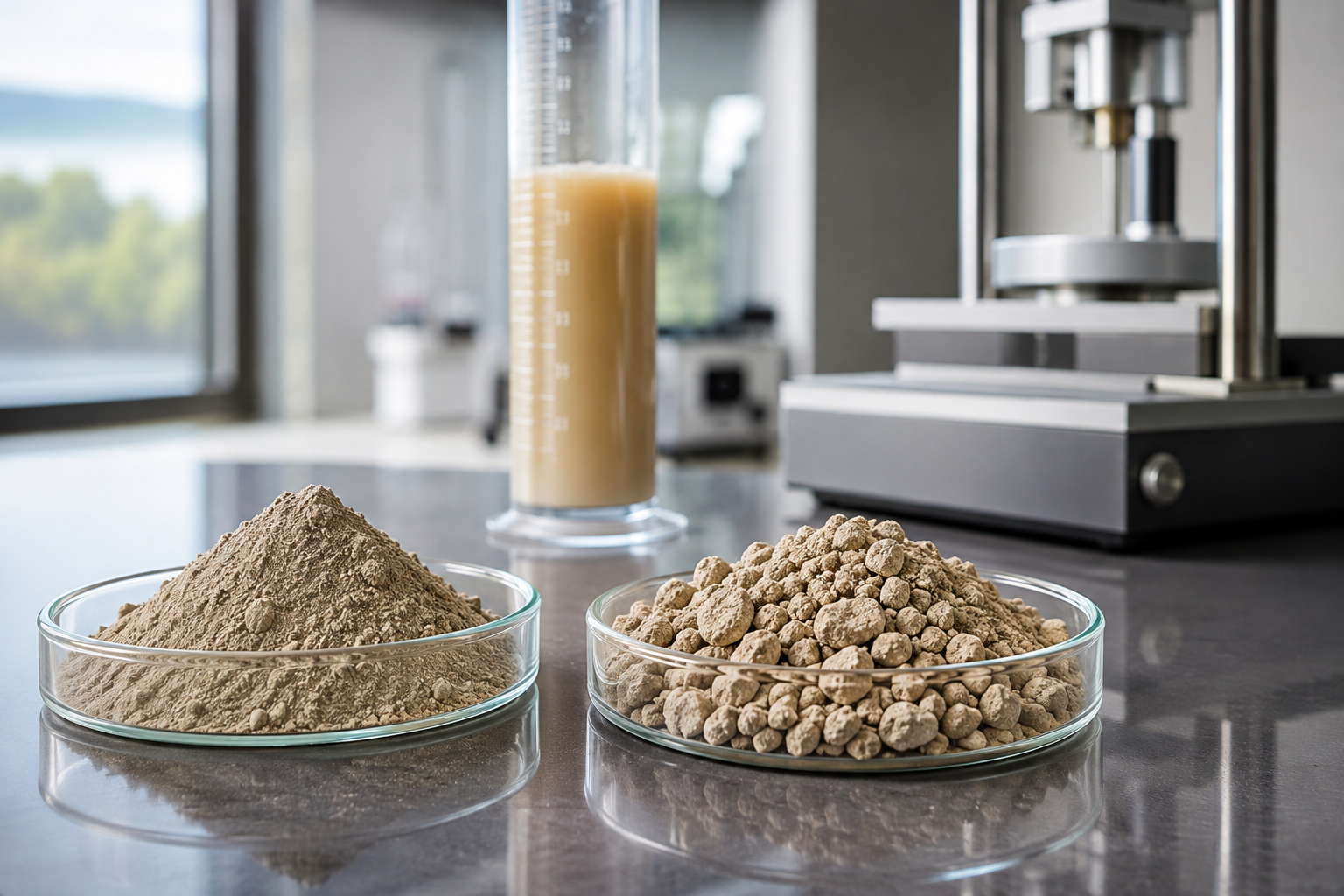
For wastewater treatment, bentonite may therefore be part of a treatment system rather than a universal replacement for established precipitation, adsorption, membrane, or ion-exchange technologies.
In drilling fluids and construction slurries, hydrated bentonite particles form networks that influence viscosity and gel strength. The behavior depends on clay concentration, particle size, exchangeable cations, water chemistry, additives, shear history, and temperature.
A good bentonite for one slurry can behave poorly in another if the formulation is different. High CEC can indicate a strong population of active exchange sites, but rheological performance should still be confirmed with the tests specified for the intended application.
Fine bentonite particles can create a low-permeability filter cake or sealing layer when properly hydrated and dispersed. This property is valuable in drilling, slurry walls, landfill containment, pond sealing, and other applications where limiting fluid movement is important.
The quality of that seal depends on particle size distribution, clay concentration, hydration, chemistry, compaction, and the presence of other minerals. CEC contributes to the underlying behavior but doesn't independently determine permeability.
The most useful comparison between sodium and calcium bentonite isn't simply which one has the higher CEC. Their exchangeable cations produce different hydration and swelling behavior, so the application determines which characteristics are desirable.
| Property / Feature | Sodium Bentonite | Calcium Bentonite |
|---|---|---|
| Common dominant exchangeable cation | Sodium (Na+) | Calcium (Ca2+), often with magnesium and other cations |
| General swelling behavior | High | Low to moderate |
| Hydration response | Strong under suitable water chemistry | More limited than sodium bentonite |
| Typical CEC | Often high, but deposit-specific | Variable and deposit-specific |
| Common applications | Drilling fluids, sealing, geosynthetic clay liners, slurry applications | Foundry uses, absorbents, some pelletizing and other specialty applications |
| Key purchasing concern | Swelling, viscosity, filtration, fluid compatibility | Strength, thermal behavior, absorbency, processing requirements |
Natural deposits don't always fit neatly into these two categories. Some bentonites contain mixtures of exchangeable sodium, calcium, magnesium, and potassium. Processors can also modify exchangeable chemistry, such as by sodium activation, to change swelling and rheological behavior.
Not necessarily. CEC depends strongly on mineral composition and the chemistry of the clay, not simply on whether sodium or calcium is the dominant exchangeable cation. Sodium activation can substantially change swelling and handling behavior without turning a lower-quality mineral into a fundamentally different deposit.
This is why a buyer should request actual test data rather than assume performance from the product name alone.
Drilling fluids are one of the clearest examples of why bentonite chemistry matters. A drilling mud has to perform several jobs at once: carry cuttings to the surface, control fluid loss, maintain an appropriate pressure balance, lubricate and cool the drilling system, and help stabilize the borehole.
Sodium bentonite is widely used because hydrated clay particles can develop useful viscosity and form a relatively impermeable filter cake. The exact performance depends on the grade and the water chemistry used to prepare the mud.
CEC alone isn't enough to qualify a drilling bentonite. Depending on the specification and drilling environment, buyers may also need data for:
The right combination of tests gives a much clearer picture of whether a bentonite will perform consistently in a mud system.
CEC can make bentonite useful for treating water containing positively charged contaminants. Exchange sites on clay minerals can interact with dissolved metal cations, including lead, copper, zinc, and cadmium.
But the chemistry of the water matters. If several ions compete for the same exchange sites, the amount of a particular metal retained by bentonite can change. pH also affects metal speciation and clay surface behavior. Organic matter and dissolved salts can further influence treatment performance.
For that reason, industrial users should run jar tests or other application-specific trials before selecting a bentonite dosage for a treatment plant. A laboratory CEC value can indicate potential, but it doesn't tell you the final removal efficiency under your actual wastewater conditions.
Suppose two samples both show a CEC near 80 meq/100g. At first glance, they appear comparable. One sample, however, may contain more active montmorillonite and have a particle-size distribution that produces better suspension behavior. The other could contain more non-clay minerals or respond differently to the plant's wastewater chemistry.
The CEC result is still useful. It simply needs to be interpreted with the rest of the test data.
Bentonite is used in engineered containment systems because hydrated clay can provide very low hydraulic conductivity when the material is properly selected and installed.
In geosynthetic clay liners, slurry walls, landfill systems, and other containment applications, sodium bentonite is often valued for its swelling and sealing behavior. When the clay hydrates, its platelets can create a dense structure that restricts water movement.
CEC helps explain the clay's interaction with dissolved ions, but barrier design requires more than a CEC specification. Engineers need to consider hydraulic conductivity, swell index, clay content, grain-size distribution, permeant chemistry, consolidation, and compatibility with the surrounding materials.
A bentonite that performs well with clean water may respond differently when exposed to saline or chemically aggressive leachate. Testing under representative conditions is therefore important for critical containment projects.
CEC can be relevant in several other sectors, but its importance varies by application.
Foundry bentonite is used as a binder in molding sands. The target isn't simply maximum swelling. Foundries typically care about bonding strength, mold durability, moisture balance, thermal stability, casting quality, and the ability to reclaim and reuse sand.
A calcium-rich bentonite can be useful in applications where its behavior fits the molding process. The best grade is the one that delivers the required molding properties consistently, not necessarily the one with the highest CEC.
Bentonite can serve as a binder in iron ore pelletizing. The mineral's surface chemistry, swelling behavior, particle size, and dosage all influence pellet formation and green-pellet strength.
CEC can provide information about the clay's exchange properties, but pelletizing performance should be assessed through the specific tests used by the producer because excessive bentonite addition can affect pellet chemistry and downstream processing.
Bentonite is also used in absorbent products and other specialty formulations. In these cases, water absorption, swelling, particle size, mineral purity, and processing characteristics may be more important than CEC by itself.
Higher CEC can indicate a greater capacity for ion exchange, but that doesn't make a product automatically better for every application. A foundry, drilling contractor, wastewater plant, and geotechnical project can have very different specifications.
The useful question is whether the complete property profile matches the job.
They are related, but they aren't interchangeable measurements. CEC describes exchange capacity, while swelling describes how much the clay expands when exposed to a specified fluid under specified test conditions.
Exchangeable cation type, mineral structure, particle size, concentration, and water chemistry all affect swelling. A CEC result alone can't predict a precise swelling value.
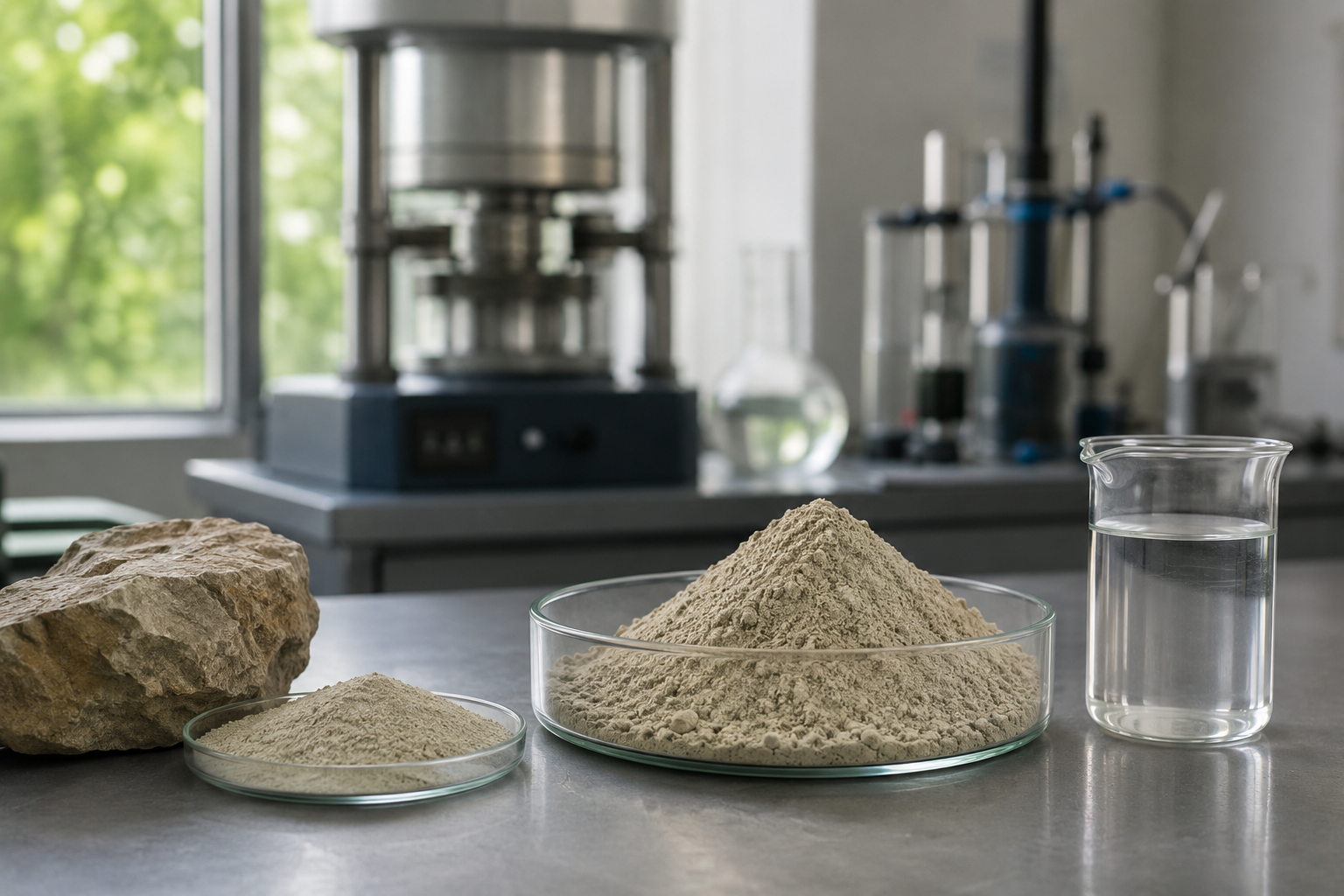
Methylene blue tests are useful indicators of active clay and are widely applied in certain engineering and drilling contexts. However, a methylene blue value should not automatically be presented as a formal CEC result. The two measurements use different analytical principles and may respond differently to the mineral composition of a sample.
When a customer specification calls for CEC, request a CEC test using the required method.
Color isn't a reliable way to estimate CEC. Bentonite color can be influenced by iron-bearing minerals, organic material, moisture, and other trace components. Light-colored material isn't automatically higher quality, and darker material isn't automatically lower quality.
Laboratory data is far more useful than visual appearance when evaluating industrial bentonite.
They don't. Geological origin strongly influences mineral composition and exchangeable chemistry. Even material from the same broad deposit can show variation between seams or mining areas.
For large-volume industrial purchases, consistent sampling and batch testing can be just as important as the headline specification.
Buying bentonite by CEC alone can create avoidable problems. A better sourcing process starts with the application and works backward to the material specification.
Identify what the clay must actually do. Is the priority swelling, sealing, viscosity, adsorption, binding, filtration control, or absorbency? Write these requirements into the purchasing specification before comparing suppliers.
Ask for CEC along with the other properties relevant to the application. Depending on the use, that may include montmorillonite content, moisture, swelling index, viscosity, filtration loss, particle size, pH, bulk density, and chemical composition.
Don't rely on a single number if the application is technically demanding.
A reported value is only useful when you know how it was obtained. Ask the supplier or laboratory for the test method, units, sample preparation, and reporting basis. This makes comparisons between suppliers much more meaningful.
If swelling or hydration is important, determine whether the product is naturally sodium-dominant, calcium-dominant, or chemically activated. The exchangeable cations help explain how the clay will behave in water.
Before committing to a large shipment, evaluate a representative sample under conditions that resemble the actual process. For drilling mud, use the relevant make-up water and additives. For wastewater treatment, use actual or suitably representative effluent. For sealing applications, test with the expected permeant chemistry.
A supplier may provide an excellent sample while later shipments vary. Ask how the supplier controls mining, blending, processing, drying, grinding, and packing. Consistent quality is particularly important when the bentonite becomes part of a tightly controlled formulation.
A cheaper bentonite can become expensive if you need a higher dosage or if inconsistent performance causes production problems. Compare the delivered cost against the amount required to achieve the target performance.
A useful specification should connect measurable properties with the actual purpose of the material. A generic specification might include the following categories:
| Quality parameter | Why it matters | When it is especially important |
|---|---|---|
| CEC | Indicates exchange capacity | Clay characterization and formulation work |
| Montmorillonite or smectite content | Indicates active clay mineral content | Drilling, sealing, adsorption, and technical formulations |
| Swelling index | Measures expansion under defined conditions | Sealing and swelling applications |
| Viscosity | Indicates suspension and flow behavior | Drilling fluids and slurries |
| Fluid loss | Indicates filtration-control performance | Drilling and slurry applications |
| Moisture | Affects handling, dosing, and storage | Powder products and automated processing |
| Particle size | Affects hydration and dispersion | Most formulated industrial products |
| Exchangeable cations | Helps explain hydration and swelling behavior | Sodium and calcium bentonite selection |
| Chemical composition | Identifies impurities and application constraints | High-specification industrial uses |
The exact specification should be tailored to the end use rather than copied from another industry.
One of the most common mistakes is treating a product label as a technical specification. Terms such as "premium," "high swelling," or "high CEC" don't replace test results.
Another mistake is comparing values obtained through different methods as though they were directly interchangeable. Ask for the method before ranking suppliers by CEC.
Buyers can also overlook water chemistry. Sodium bentonite may show excellent swelling in one water source and significantly different behavior in another, especially when dissolved salts are high.
Finally, don't approve a large shipment based only on one laboratory sample. Establish a sampling plan and acceptance criteria that can be applied to future batches.
A practical evaluation should consider CEC as one part of a larger property profile. The relative importance of each parameter changes with the application.
For drilling fluids, rheology and fluid-loss performance may carry more weight than CEC alone. For containment systems, hydraulic conductivity and chemical compatibility are critical. For wastewater treatment, adsorption performance under real water chemistry matters more than a theoretical exchange capacity. For foundry work, bonding and thermal behavior can dominate the purchasing decision.
This broader view prevents a common procurement error: selecting the mineral with the most impressive laboratory number instead of selecting the material that performs reliably in the process.
Bentonite CEC stands for cation exchange capacity. It describes how much exchangeable positive charge a bentonite can retain on its mineral surfaces and is commonly reported in meq/100g or cmol(+)/kg. The value helps characterize the activity of clay minerals such as montmorillonite, but it should be interpreted alongside mineral composition and application-specific performance tests.
There is no universal CEC value that defines high-quality bentonite. Many active bentonites used in industrial applications can have CEC values in the broad range of 70 to 100 meq/100g, but suitable values vary by deposit and application. Buyers should compare CEC with swelling, viscosity, filtration, mineral composition, and the relevant product specification.
CEC influences the clay's exchange chemistry, but it does not determine swelling by itself. The type of exchangeable cation is especially important: sodium-dominated bentonite generally swells more strongly than calcium-dominated bentonite when hydrated under suitable conditions. Water chemistry, clay concentration, particle size, mineral composition, and processing also affect the final swelling behavior.
Bentonite CEC is relevant to wastewater treatment because negatively charged clay surfaces can exchange cations with dissolved ions, including some heavy metals. The actual removal achieved depends on pH, competing ions, contaminant concentration, contact time, clay dose, and wastewater composition. For industrial treatment, laboratory testing with representative wastewater should confirm performance before full-scale use.
Laboratories determine CEC by exposing a clay sample to a selected index cation, replacing the exchangeable ions, and measuring how much index cation the clay retains. Several standardized approaches exist. Methylene blue testing is also common in drilling and geotechnical work, but it is an indicator test rather than a direct substitute for every formal CEC method.
No. Bentonite color isn't a reliable indicator of cation exchange capacity. Color can result from iron-bearing minerals, organic matter, moisture, and other minor components. A grey, tan, cream, or darker bentonite can have useful or high exchange capacity depending on its mineral composition. Laboratory testing provides a much more reliable basis for comparing CEC between samples.
Bentonite CEC is a useful measure of the clay's ability to hold and exchange positively charged ions. It helps explain important aspects of bentonite chemistry, but it isn't a complete quality score.
For industrial purchasing, keep five points in mind:
For companies sourcing bentonite for drilling, construction, environmental, foundry, pelletizing, or other industrial applications, a mine-to-customer quality process can help reduce variation between batches. Axewelledge supplies bentonite grades for industrial applications and can provide technical information to help buyers evaluate material against their specific requirements.













Have questions about our products? We're here to help!