Axewelledge, a leading exporter from India, specializes in high-quality Bentonite. With a commitment to excellence, we supply premium Bentonite to the Middle East and Southeast Asia markets.


North Angle Complex, 304,
150 Feet Ring Rd, Opposite Ambedkar Nagar BRTS Stop,
Madhav Park, Punit Nagar,
Mavdi, Rajkot, Gujarat 360004
© Axewelledge 2026, All Rights Reserved.
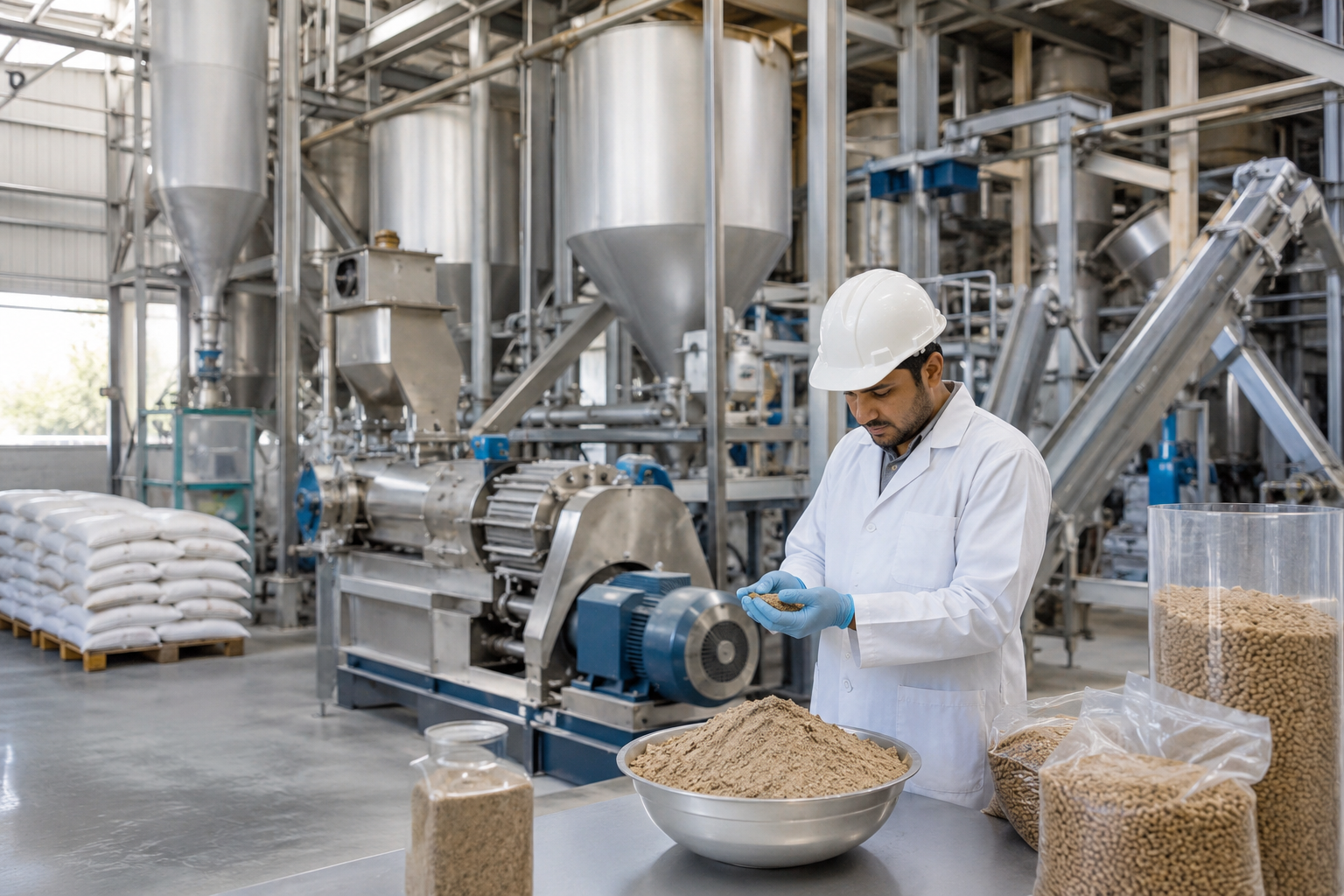
Bentonite has several established uses in animal feed manufacturing, but its value depends heavily on the mineral type, processing quality, formulation, and intended application. Feed-grade bentonite can serve as a pellet binder, flow aid, carrier, and adsorbent for certain mycotoxins. It may also contribute useful physical properties to a ration when formulators select the grade and inclusion level carefully.
The important point is that bentonite isn't a universal feed additive. It doesn't automatically improve every diet, and it shouldn't be treated as a substitute for good feed hygiene, proper storage, balanced nutrition, or validated mycotoxin-control programs. Its performance comes from specific properties such as swelling behavior, surface area, water adsorption, and cation-exchange capacity.
For feed manufacturers, the best approach is to match the bentonite grade to the job it needs to perform and then verify the result with plant and laboratory measurements. Here are seven practical uses worth considering.
Pellet durability is one of the clearest manufacturing applications for bentonite. A pellet may leave the press looking sound and still break apart during cooling, conveying, loading, transport, or feeding. The result is fines, uneven consumption, dust, and avoidable feed loss.
Bentonite can improve cohesion between feed particles because its fine clay particles interact with water during conditioning and develop binding properties under pressure. The effect depends on the bentonite's mineralogy, particle size, hydration behavior, feed formulation, conditioning conditions, and pellet-press settings.
A feed mill shouldn't assume that adding more clay will always produce stronger pellets. Excessive inclusion can affect nutrient density, handling characteristics, or the economics of the formula. The useful level is the level that delivers a measurable manufacturing benefit without creating a nutritional or processing disadvantage.
During conditioning, moisture and heat prepare the feed for compression. Hydrated bentonite can swell and increase the cohesion of the feed mass. As the conditioned material passes through the die, that cohesion can help produce a more durable pellet.
The result should be evaluated rather than assumed. Feed mills can compare treated and untreated batches using Pellet Durability Index, percentage of fines, bulk density, throughput, energy consumption, and post-transport breakage.
For example, if a mill has acceptable pellet production at the press but excessive fines after pneumatic conveying, the problem may not be the die itself. A formulation trial with a suitable feed-grade binder could show whether bentonite improves durability enough to justify its use.
These measurements provide a much stronger basis for a formulation decision than simply judging pellets by appearance.
Mycotoxin control is another important reason bentonite appears in animal-feed formulations. Certain bentonite-based products can adsorb specific mycotoxins, particularly aflatoxins, in the gastrointestinal tract. However, adsorption performance varies considerably between clay sources and between different toxins.
That distinction matters. It is inaccurate to describe all bentonite as a broad-spectrum mycotoxin neutralizer. A clay that performs well against aflatoxin may be much less effective against other mycotoxins such as deoxynivalenol, zearalenone, fumonisins, or ochratoxin A. Product claims should therefore be supported by appropriate laboratory and feeding evidence for the specific toxin and animal species involved.
Bentonite contains layered clay minerals with charged surfaces and a high surface area. Depending on its mineral composition, these surfaces can interact with certain toxin molecules and retain them under gastrointestinal conditions.
The most important commercial example is aflatoxin adsorption. Calcium montmorillonite and sodium-rich bentonite materials with suitable mineral characteristics have been studied for this purpose. Performance depends on the clay's structure, exchangeable cations, surface chemistry, particle size, and the conditions under which adsorption occurs.
This is why the phrase "feed-grade bentonite" isn't enough when selecting a toxin-control material. Buyers should ask for technical specifications and supporting test data rather than relying on the mineral name alone.
A toxin binder should never be the first line of defense against contaminated raw materials. Good mycotoxin management begins with grain purchasing, supplier qualification, moisture control, storage hygiene, representative sampling, and laboratory testing.
If contamination is detected, the response should be based on the toxin, concentration, animal species, production stage, and applicable feed-safety requirements. A bentonite product may form part of that strategy when its efficacy has been demonstrated for the relevant toxin.
Feed mills handle many ingredients that absorb moisture readily. Mineral premixes, salt-containing blends, powdered additives, and some processed byproducts can cake during storage, making them difficult to discharge and dose accurately.
Fine mineral materials such as bentonite can help manage physical flow in selected formulations. Their moisture-adsorbing properties may reduce the tendency of some dry blends to form hard agglomerates. The effect depends on humidity, ingredient composition, particle size, storage time, and the amount and type of bentonite used.
Poor flow isn't merely an inconvenience. A material that bridges inside a hopper or fails to discharge consistently can interrupt production and create dosing variation. In a feed plant with automated micro-ingredient handling, reliable flow is part of process control.
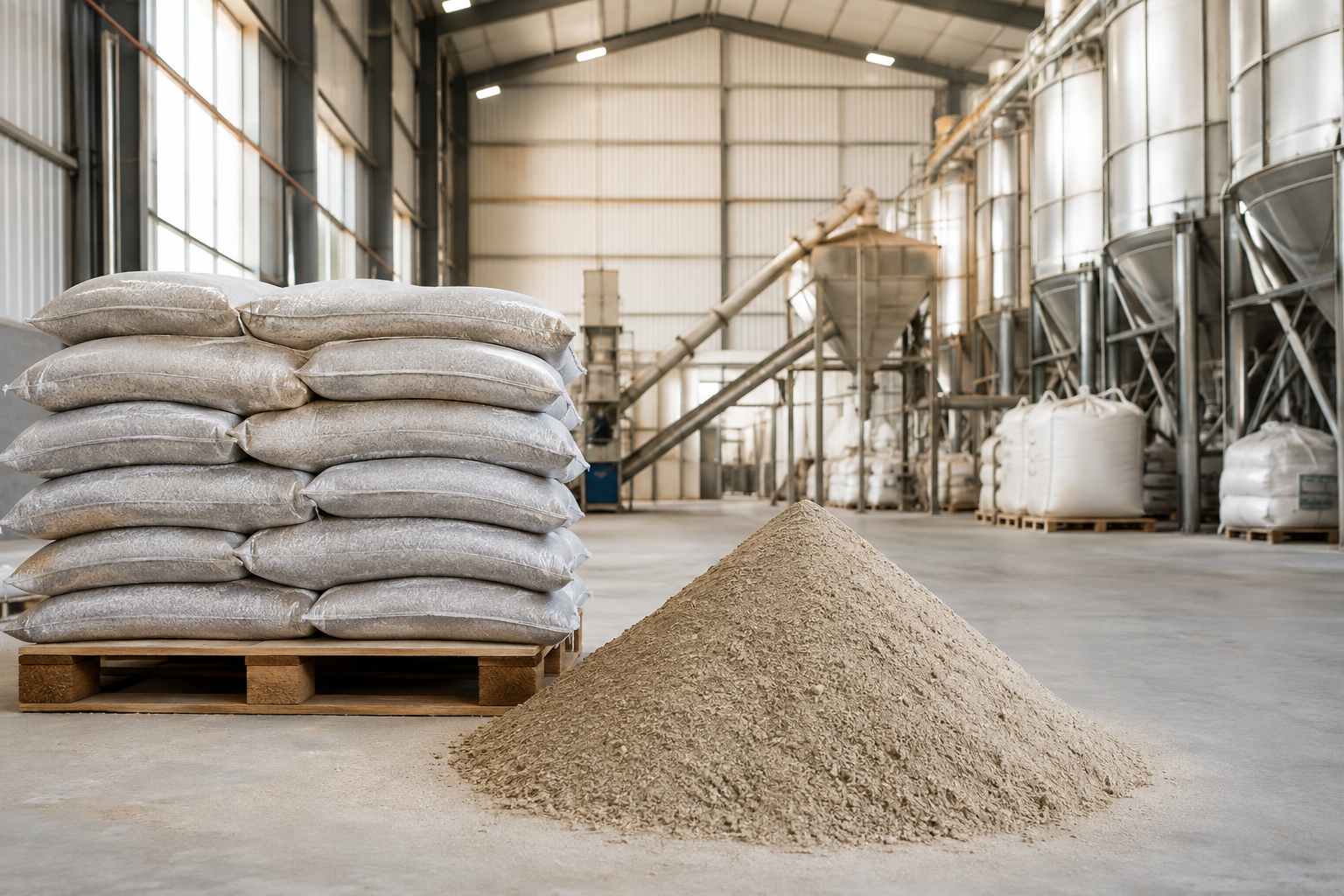
Bentonite may be considered in:
The formulation should still be tested under realistic storage conditions. A material that flows well immediately after production may behave differently after several weeks in a humid warehouse.
Bentonite can interact with moisture, but it shouldn't be marketed as a standalone mold-control solution. Mold growth is governed by factors including water activity, temperature, oxygen availability, storage time, and contamination. Proper grain drying, aeration, sanitation, storage management, and approved preservatives remain central to spoilage prevention.
Uniform distribution becomes difficult when a feed formula contains an ingredient at a very low inclusion rate. A small quantity of an additive has to reach a large quantity of grain or meal evenly. That is where a suitable carrier becomes useful.
Bentonite can function as a carrier in selected premix and additive applications because its fine particle size and absorbent properties can help convert certain liquid or concentrated ingredients into a more manageable dry blend.
The carrier has to be compatible with the active ingredient. It also needs to disperse consistently through the final feed without creating segregation problems.
Suppose a feed manufacturer needs to distribute a small quantity of a liquid additive throughout several tonnes of feed. Adding the liquid directly to the main mixer may produce uneven distribution or create localized wet spots. A compatible dry carrier can first absorb or distribute the liquid, creating a more manageable intermediate premix.
Bentonite may serve this purpose in some formulations, but it shouldn't automatically be selected for every additive. The active ingredient, carrier compatibility, moisture content, bulk density, mixing sequence, and storage stability all need to be checked.
Bentonite is also used in some cattle and other ruminant feed formulations because of its physical and ion-exchange properties. However, claims about digestion, rumen buffering, or improved animal performance need to be made carefully.
Rumen function is controlled by a complex interaction among diet composition, particle size, starch fermentability, fiber, feeding frequency, saliva production, microbial populations, and mineral balance. Bentonite alone shouldn't be presented as a dependable treatment for ruminal acidosis.
Clay minerals can interact with water, ions, and organic compounds in the digestive environment. Depending on the product and diet, these interactions may influence digesta characteristics and mineral availability. Research on clay additives in ruminant diets has produced mixed results, with outcomes varying by clay type, inclusion level, ration composition, and animal conditions.
For a dairy or beef operation, that means the formulation objective should be specific. If the goal is pellet durability, evaluate pellet quality. If the goal is mycotoxin adsorption, test adsorption performance against the target toxin. If the goal is rumen health, the product should have evidence relevant to the intended species and feeding conditions.
Bentonite and sodium bicarbonate shouldn't be treated as interchangeable ingredients. Sodium bicarbonate is a well-established dietary buffer that contributes bicarbonate to the rumen environment. Bentonite has different physical and chemical properties and may have a different role in the ration.
If a formulation is designed to manage subacute ruminal acidosis, the primary controls remain appropriate ration formulation, effective fiber, starch management, feeding consistency, and sound herd-management practices. A clay additive may be considered as part of a broader strategy when supported by evidence.
Moisture affects nearly every stage of feed manufacturing. It influences raw-material storage, grinding, mixing, pelleting, cooling, transport, and shelf stability. Too much available moisture can also increase the risk of microbial deterioration.
Bentonite's ability to adsorb water makes it useful in selected dry formulations where moisture control is part of the physical specification. The clay can hold water within its structure and help modify the handling characteristics of a blend.
Still, the distinction between moisture content and water activity is important. Simply adding a moisture-adsorbing mineral doesn't guarantee a lower microbial risk. Feed manufacturers should measure the relevant quality parameters and control storage conditions rather than relying on bentonite as a preservation method.
A feed mill should monitor:
Bentonite can complement these controls in suitable formulations, but it cannot replace them.
Bentonite is a naturally occurring clay mineral, most commonly associated with montmorillonite-rich deposits. Depending on its source and processing, it can contribute cation-exchange capacity, swelling behavior, surface area, and water-binding characteristics.
These properties make it a functional ingredient rather than simply an inert filler. At the same time, the nutritional contribution of natural bentonite shouldn't be overstated. The presence of elements such as silicon, aluminum, calcium, magnesium, sodium, or iron doesn't automatically make the clay a meaningful source of essential nutrients.
The feed formulation should therefore be based on the product's measured specification, not on assumptions about the mineral content of the deposit.
Two bentonite deposits can behave very differently. Mineralogy, montmorillonite content, exchangeable ions, particle-size distribution, moisture, processing method, and impurities all influence performance.
For feed manufacturers, consistency is often more valuable than a generic claim of high swelling capacity. A material that performs predictably from shipment to shipment is easier to formulate and validate.
| Application | What bentonite contributes | What should be verified |
|---|---|---|
| Pellet binding | Improves cohesion in suitable formulations | PDI, fines, throughput, energy use |
| Mycotoxin adsorption | Can adsorb certain toxins, especially some aflatoxins | Target toxin, adsorption data, feeding evidence |
| Anti-caking | Can improve physical flow in selected blends | Flowability, humidity response, storage stability |
| Carrier | Helps handle certain concentrated or liquid additives | Compatibility, dispersion, segregation |
| Ruminant applications | May alter physical and chemical properties of the diet | Species-specific efficacy and safety data |
| Moisture management | Adsorbs water in suitable dry formulations | Moisture, water activity, storage conditions |
| Functional mineral ingredient | Provides clay-related physical and ion-exchange properties | Mineralogy, purity, consistency, regulatory status |
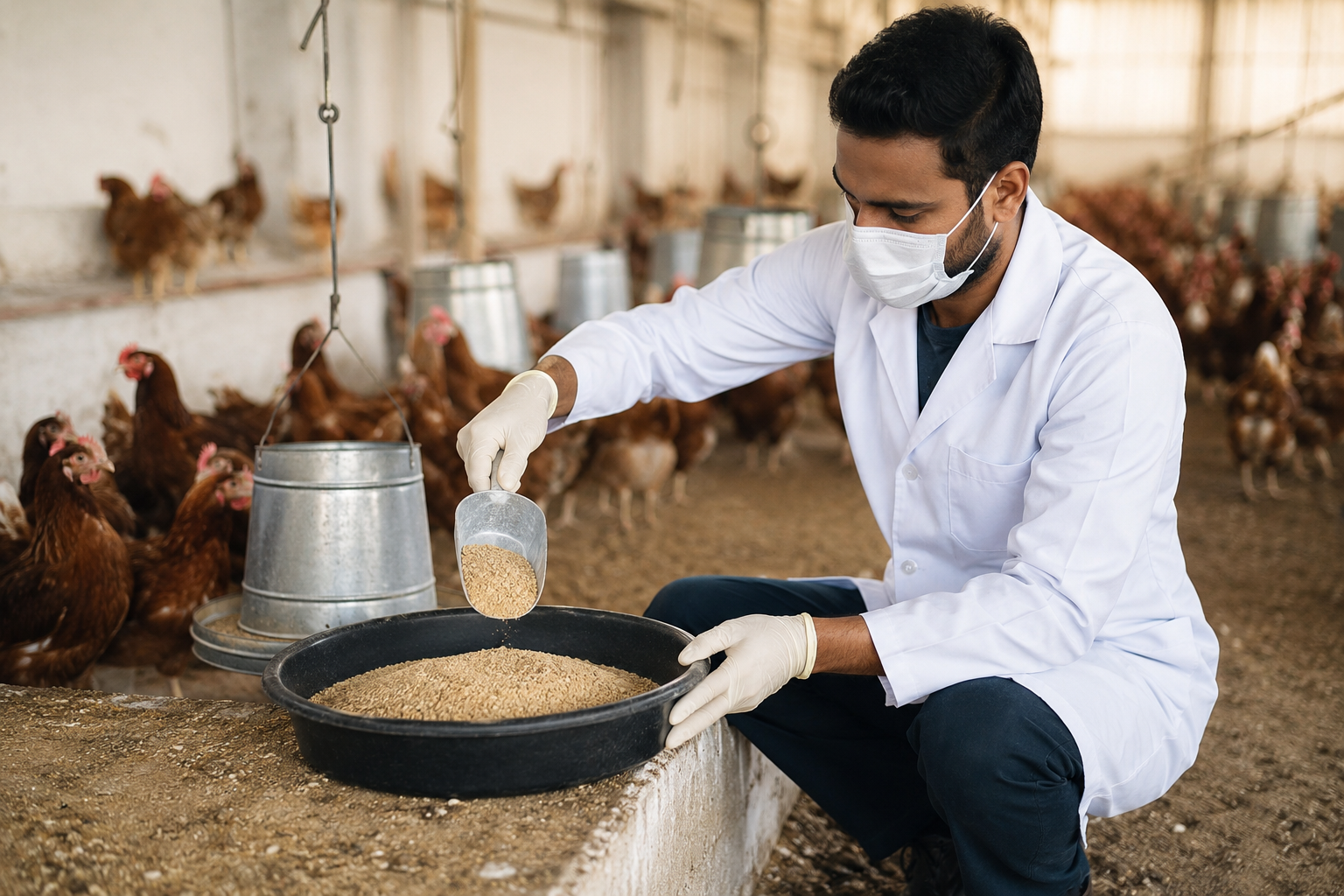
Choosing a feed-grade clay should begin with the intended application. A product selected primarily for pellet binding doesn't necessarily have the same specification as one selected for mycotoxin adsorption.
Ask the supplier for the mineralogical composition and the dominant clay mineral. Montmorillonite-rich bentonite is commonly used in feed applications, but the exact composition matters.
Particle size affects dispersion, handling, hydration, and mixing behavior. The appropriate specification depends on how the product will be introduced into the feed process.
Moisture content and swelling behavior can influence both handling and binding performance. These values should be consistent with the manufacturer's technical specification and the intended use.
Heavy metals and other unwanted contaminants deserve particular attention in feed ingredients. Ask for a current certificate of analysis and verify that the product complies with the feed-safety requirements applicable to the destination market.
A mineral product used in feed manufacturing should meet the applicable microbiological specifications. Supplier quality systems, batch testing, and traceability are important parts of the purchasing decision.
Don't accept a general statement that a bentonite product is suitable for every feed application. If the purpose is toxin adsorption, request data for the relevant toxin. If the purpose is pellet binding, conduct a controlled plant trial and measure PDI and fines.
A common formulation mistake is to treat one inclusion rate as appropriate for every animal species and application. In reality, the suitable level depends on the product, target benefit, complete diet, regulatory requirements, and supplier recommendations.
Some commercial feed applications use relatively low inclusion levels, while other technical uses may call for different rates. A stated range such as 0.5 to 2 percent can be useful as a starting point for discussion, but it shouldn't be treated as a universal prescription.
Feed formulators should establish the inclusion rate through the product specification, applicable regulations, published evidence, and controlled trials. The final decision also needs to account for the nutritional dilution that occurs when any mineral ingredient is added to a complete feed.
Instead of adding bentonite to a full production run immediately, use a controlled comparison where practical:
This approach turns bentonite selection from a generic purchasing decision into a formulation and process-control decision.
Bentonite is a geological material, not a single standardized chemical. Mineral composition can vary substantially between deposits. Two products carrying similar commercial descriptions may behave differently in the mixer, conditioner, or digestive tract.
This is one of the most important technical errors. Clay adsorption depends on the chemistry of the toxin and the properties of the clay. A product with evidence for aflatoxin control shouldn't automatically be described as effective against every mycotoxin.
A clay additive cannot correct badly stored grain, excessive moisture, condensation, or inadequate warehouse hygiene. Prevention begins with raw-material control and storage management.
More bentonite isn't necessarily better. Excessive mineral inclusion can dilute nutrients, alter feed characteristics, increase formulation cost, or affect the handling properties of the finished product.
A high-quality bentonite can still fail to deliver the intended result if it isn't distributed evenly. Mixing sequence, particle size, bulk density, and addition point all affect uniformity.
The cheapest material isn't necessarily the lowest-cost option. A consistent product that improves pellet durability or performs a validated technical function may have a better total cost than a cheaper material with variable specifications.
Before approving a supplier, ask for documentation covering the following points:
| Specification | Why it matters |
|---|---|
| Mineralogical composition | Confirms the clay type and expected functional properties |
| Montmorillonite content, where specified | Helps characterize the principal clay component |
| Particle-size distribution | Affects mixing, dispersion, and handling |
| Moisture content | Influences storage and dosing characteristics |
| Swelling or related performance data | Useful for applications that depend on hydration behavior |
| Heavy-metal results | Supports feed-safety assessment |
| Microbiological specifications | Helps verify suitability for feed use |
| Certificate of analysis | Provides batch-level quality information |
| Traceability | Supports quality investigations and recalls if required |
| Regulatory documentation | Confirms suitability for the destination market and intended use |
Feed manufacturers need more than a product that looks right in a sample bag. They need predictable performance across repeated deliveries.
A reliable bentonite supplier should be able to explain where the material comes from, how it is processed, which specifications are controlled, and how each shipment is documented. Mine-to-batch traceability can be particularly valuable when a formulation depends on consistent swelling, particle size, or adsorption performance.
For an exporter such as Axewelledge, the useful question for a feed manufacturer isn't simply whether the company supplies sodium bentonite. The more important questions are which feed-grade specification is available, what quality documentation accompanies each shipment, how consistent the mineral is between lots, and whether the product is suitable for the intended market and application.
The main bentonite uses in animal feed center on its physical and surface properties. It can support pellet binding, selected anti-caking applications, carrier systems, moisture management, and certain mycotoxin-control programs. It may also have a role in specific ruminant formulations, but animal-health claims should be supported by evidence rather than assumed from the mineral's general properties.
The best results come from treating bentonite as a technical ingredient with a defined purpose. Start with the manufacturing or formulation problem, choose a product whose specification matches that purpose, run a controlled trial, and measure the outcome.
For pellet quality, look at PDI and fines. For flowability, test the actual blend under representative storage conditions. For mycotoxin management, verify performance against the target toxin and use a broader feed-safety program. For every application, review purity, traceability, regulatory status, and batch consistency.
That approach gives feed manufacturers something more useful than a generic claim about the benefits of bentonite: a repeatable way to determine whether a particular feed-grade clay delivers measurable value in their own process.













Have questions about our products? We're here to help!