Axewelledge, a leading exporter from India, specializes in high-quality Bentonite. With a commitment to excellence, we supply premium Bentonite to the Middle East and Southeast Asia markets.


North Angle Complex, 304,
150 Feet Ring Rd, Opposite Ambedkar Nagar BRTS Stop,
Madhav Park, Punit Nagar,
Mavdi, Rajkot, Gujarat 360004
© Axewelledge 2026, All Rights Reserved.
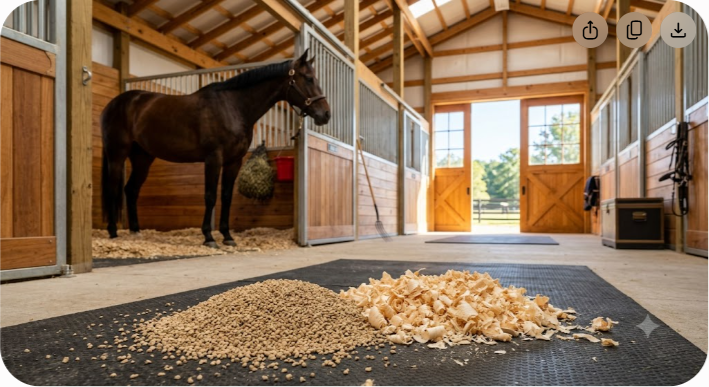
Bentonite clay for animal bedding is best understood as a moisture-management material, not a universal replacement for straw, wood shavings, or other bedding. Sodium bentonite can absorb and retain substantial amounts of water, and some grades swell and form cohesive clumps when wet. That makes it useful for targeted moisture control in animal housing, particularly where urine creates persistently wet spots.
The practical benefit is straightforward: remove the wet material instead of stripping large amounts of otherwise usable bedding. When the clay is correctly graded and applied, this can make cleaning more precise and help keep the bedding surface drier. It may also contribute to odor management because moisture is one of the conditions that supports microbial conversion of urea into ammonia.
That does not mean bentonite automatically eliminates ammonia, replaces ventilation, or works equally well for every species. Product grade, particle size, application method, drainage, ventilation, stocking density, and the type of bedding used above it all matter.
This guide explains how bentonite works, where it fits into livestock and pet bedding systems, how it compares with common alternatives, and what to consider before using it at scale.
Bentonite is a naturally occurring clay material formed largely from altered volcanic ash. Its properties vary according to the deposit, mineral composition, exchangeable ions, particle size, processing method, and moisture content. Montmorillonite, a member of the smectite clay group, is usually the main mineral responsible for bentonite's swelling and adsorption characteristics.
For animal bedding and clumping litter, sodium bentonite is particularly important. Sodium is the dominant exchangeable cation in this type of bentonite, and it generally gives the clay greater swelling capacity than calcium-dominant bentonite. The exact performance varies by deposit and processing grade, so a product's test data is more useful than a generic claim about how many times any bentonite will swell.
When water contacts sodium bentonite, it moves into spaces associated with the clay's layered structure. The particles hydrate, separate, and expand. Under the right conditions, they form a cohesive mass. This is the basic principle behind clumping cat litter and some agricultural applications of granular bentonite.
The distinction matters because not all bentonite behaves the same way.
Sodium bentonite is generally selected when strong swelling, water retention, and clumping are important. These characteristics make it suitable for applications in which liquid needs to be captured in a defined area.
Calcium bentonite has different performance characteristics and typically shows much less swelling in water. It can still have useful adsorption properties, but it is not normally the first choice when the objective is strong water-induced clumping.
Before buying material for animal bedding, check the supplier's technical specification rather than relying on the word bentonite alone. Useful information can include montmorillonite content, swelling performance, moisture content, particle-size distribution, dust level, and other quality parameters relevant to the intended use.
The main reason to consider bentonite is its ability to capture moisture in a concentrated area. That changes how wet bedding is removed and replaced.
Urine is one of the biggest sources of moisture in many animal housing systems. With conventional organic bedding, liquid is absorbed into plant-based fibers and spreads through the surrounding material. Once enough liquid accumulates, the bedding becomes wet, compacted, and harder to clean selectively.
Granular sodium bentonite behaves differently. When sufficiently wet, it hydrates and forms a denser mass. In a properly designed bedding system, that makes the wet area easier to identify and remove.
The result isn't that the entire stall becomes dry simply because bentonite is present. The useful effect is more targeted: the clay concentrates liquid in the area where it is applied and where wetting occurs.
That distinction matters. A stall with poor drainage, inadequate ventilation, or excessive moisture cannot be fixed by adding more clay. Bentonite works best as one part of a broader bedding and manure-management system.
Ammonia in animal housing is closely connected with urine, manure, moisture, microbial activity, temperature, and ventilation. When urea in urine is converted by microbial activity, ammonia can be released into the surrounding air.
Bentonite can help by retaining moisture and, depending on its mineral characteristics, exchanging or adsorbing ammonium ions. By reducing the amount of freely available moisture and concentrating wet waste for removal, it can support an overall odor-control strategy.
Still, bentonite should not be described as an ammonia neutralizer that makes ventilation unnecessary. Good ventilation remains essential, especially in enclosed livestock buildings. Regular removal of wet bedding and manure is equally important.
For facilities trying to reduce ammonia exposure, the strongest approach is usually a combination of dry bedding, timely cleaning, appropriate stocking density, good drainage, and effective ventilation, with bentonite used where its moisture-retention properties make sense.
One of the most useful operational advantages of clumping bedding is selective removal.
With loose wood shavings, wet and dry material can become mixed. During cleaning, workers often remove a larger volume of bedding than the amount that was actually soiled. Some of the clean material leaves the stall with the waste.
A clumping clay system can make the wet portion easier to separate. The worker removes the visibly wet clump and leaves surrounding material in place. Fresh clay is then added only where material was lost.
That can reduce bedding waste and simplify daily cleaning, although the actual savings depend on the animal, stall design, bedding depth, cleaning technique, and cost of the clay.
Dry bedding contributes to a more comfortable animal environment. Excess moisture can increase the risk of skin and hoof problems and can encourage microbial growth, particularly when bedding remains wet for extended periods.
Bentonite can contribute to moisture management, but it should not be treated as a stand-alone solution for animal health. Hoof care, stall hygiene, nutrition, drainage, ventilation, stocking density, and veterinary management still matter.
The goal is simple: reduce persistent wet spots and remove contaminated material promptly.
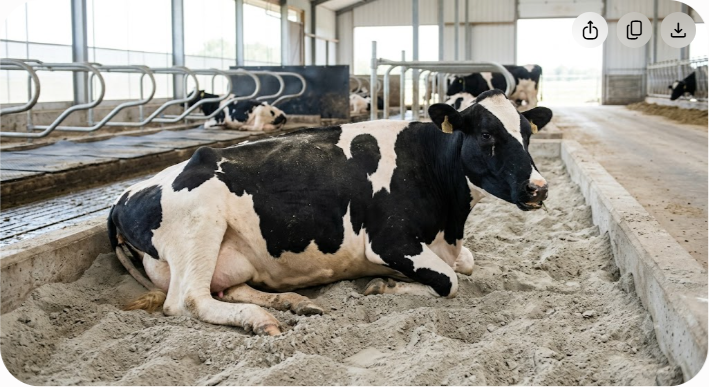
There is no single best bedding material for every animal or facility. Wood shavings, straw, sand, paper products, pellets, and clay all have different strengths.
| Feature | Bentonite Clay | Pine or Wood Shavings | Straw | Sand |
|---|---|---|---|---|
| Moisture management | High when the correct grade is used | Moderate to high, depending on material | Moderate, with performance varying by straw quality | Low absorption but good drainage and separation characteristics |
| Clumping | Strong with suitable sodium bentonite grades | No true mineral clumping | No | No |
| Odor management | Supports moisture and ammonium retention | Depends heavily on moisture and cleaning | Can develop odor quickly when wet | Relies mainly on drainage and cleaning |
| Waste removal | Can be highly targeted | Often removes some clean material with wet bedding | Often requires larger-volume removal | Heavy material requires specialized handling |
| Composting | Mineral does not compost | Generally compostable | Generally compostable | Mineral does not compost |
| Handling | Relatively dense and can be heavy when wet | Lightweight | Lightweight but bulky | Very heavy |
| Dust considerations | Depends strongly on processing and particle size | Can generate dust | Usually lower dust but varies | Can generate dust when dry |
| Main advantage | Moisture retention and clumping | Familiar, widely available, and compostable | Low cost and good availability | Durable inorganic bedding with good drainage |
Bentonite isn't automatically better than organic bedding. It solves a different problem particularly well.
Wood shavings remain attractive because they are familiar, relatively lightweight, comfortable, and often suitable for composting. Straw can be economical where it is readily available. Sand is widely used in dairy housing because it is inorganic and can provide a comfortable resting surface, although its weight creates challenges for manure handling and equipment.
Bentonite becomes more interesting when moisture is concentrated in predictable areas and the operator wants to remove only the wet portion. It can also be useful as an additive or targeted layer rather than the primary bedding material.
Before changing systems, compare total operating cost rather than price per bag. Include purchase cost, replacement frequency, labor, waste handling, storage, transport, and disposal.
The appropriate use of bentonite depends heavily on the species and housing system. A method that works in a cat litter box should not simply be scaled up for a horse stable or poultry house.
Horse owners often focus on urine management because wet areas can quickly become the most difficult part of stall cleaning. Traditional shavings can absorb the liquid, but repeated wetting creates dense, contaminated bedding that must eventually be removed.
For some stalls, bentonite can be used selectively in known urine zones rather than across the entire floor. A compatible layer of granular clay may be placed beneath a suitable organic bedding material, allowing the upper layer to provide cushioning while the clay helps capture liquid below.
This approach requires testing. A horse should not be expected to stand directly on large quantities of loose clay simply because it has strong absorption properties. Particle size, dust, hoof exposure, drainage, and the animal's individual behavior all need to be considered.
A practical routine is to identify the horse's normal wet spot, keep the underlying surface dry before application, use a suitable granular grade, cover it with appropriate bedding, and remove wet clumps regularly.
Poultry litter presents a different challenge. Unlike a horse stall, a poultry house normally contains a broad litter surface exposed to droppings, spilled water, humidity, and high stocking density.
Excessive litter moisture can contribute to caking and footpad problems. Ammonia can also become a concern when manure and moisture accumulate under unsuitable ventilation conditions.
Bentonite may be considered as part of a litter-management program, but it should not be marketed as a guaranteed solution to poultry-house ammonia. Application rate, litter depth, drinker management, ventilation, house temperature, stocking density, and manure moisture all affect results.
If clay is being evaluated for poultry litter, conduct a controlled trial and measure practical outcomes such as litter moisture, caking, dust, bird footpad condition, ammonia concentration, and total material cost.
Dairy bedding has a direct relationship with cleanliness and cow comfort. Wet or heavily contaminated resting areas can increase exposure to environmental pathogens and may contribute to hygiene problems around the udder.
Sand is a common bedding choice in many dairy systems because it is inorganic and can provide good cow comfort. Its major drawback is handling. Large quantities of sand can increase wear on manure equipment and complicate manure separation.
Bentonite can be evaluated as an additive or targeted moisture-control material in systems using organic bedding. Its usefulness will depend on the bedding mix, management routine, manure-handling equipment, and local disposal practices.
It is better to treat bentonite as one component of a dairy hygiene program than as a substitute for good stall management. Clean resting areas still require regular grooming and replenishment, and udder health depends on much more than bedding alone.
Clumping cat litter is one of the best-known consumer applications of sodium bentonite. The reason is simple: when urine reaches the clay, the granules can form a cohesive clump that can be removed without replacing the entire litter box.
For indoor pet use, particle size and dust control are especially important. A well-processed litter should be easy to scoop while producing as little airborne dust as practical.
Cat owners should follow the litter manufacturer's instructions and consider the individual animal. Some cats dislike scented or dusty products, while others may have different preferences. Small mammals require additional care because species-specific bedding requirements differ, and a product designed for cats should not automatically be assumed to be appropriate for rabbits, guinea pigs, or other animals.
A sensible transition starts with a small, controlled area rather than treating the entire facility at once.
Remove the old wet bedding and manure. Sweep the floor or clean the stall mats, then allow the surface to dry.
Starting with a dry surface matters because bentonite has a finite moisture-retention capacity. If the clay is activated by standing water before the animal uses the stall, some of its useful capacity is lost.
Watch where the animal normally urinates. Many horses repeatedly use the same section of the stall, although individual behavior varies.
Targeting that area can be more economical than spreading a thick clay layer across the entire floor.
Use a granular product intended for the application. Avoid assuming that a finely powdered industrial bentonite is suitable for animal housing.
Fine particles can increase dust, while poorly selected grades may not deliver the desired swelling or clumping performance. Ask the supplier for particle-size information, swelling characteristics, moisture content, and relevant quality documentation.
If the system calls for an organic bedding layer above the clay, apply the manufacturer's or supplier's recommended amount of bentonite first, then add enough clean bedding to provide a comfortable surface.
The correct depth varies by animal, stall construction, bedding type, and product. The goal is not to create the deepest possible clay layer. It is to place enough material where it can capture moisture without creating unnecessary cost, weight, or dust.
Remove wet clumps as soon as practical. Leaving a saturated clump in place defeats much of the purpose of a clumping system.
Use equipment suited to the bedding mixture. A fork designed for coarse shavings may behave differently from one designed for finer material, so staff may need to adjust their technique.
After removing a wet clump, replace the lost clay and bedding as needed. Over time, track how much material is actually consumed rather than estimating usage from the original application.
This information is useful when calculating whether the system is saving money compared with conventional bedding.
The word bentonite doesn't guarantee a particular level of swelling, purity, particle size, or dust performance. Different deposits and processing methods produce different materials.
For animal bedding, ask for specifications that match the intended application.
More clay does not automatically mean better moisture control. A targeted application may perform well while a full-floor application creates unnecessary expense and heavy waste.
Test one or two representative stalls first. Measure actual consumption and cleaning time before expanding the system.
Clay can support moisture and odor management, but it cannot replace adequate airflow. Ammonia control depends on the entire housing system.
If a facility has a persistent ammonia problem, investigate wet spots, manure accumulation, drinker leaks, stocking density, ventilation, and cleaning frequency rather than simply increasing the clay dose.
A highly absorbent product is not useful if it creates excessive airborne dust during handling. Dust levels depend on particle size, processing, storage, and the way the product is poured or moved.
Granular material with controlled particle sizing is generally more practical than a fine powder for bedding applications.
Bentonite doesn't decompose like straw or wood shavings. Once mixed into manure, it remains a mineral component of the waste stream.
Before adopting the material at scale, determine where used bedding will go. This is particularly important for farms that spread manure on agricultural land or rely on composting as part of their waste-management system.
Animal bedding should always be evaluated for more than absorption performance. Dust exposure, ingestion, hoof or skin contact, and waste disposal all deserve attention.
Dust is one of the most important considerations when handling dry mineral products. Fine particles can become airborne during unloading, pouring, mixing, or cleaning.
Choose a product manufactured for the intended application and ask suppliers about dust-control measures and particle-size distribution. Store bags or bulk material in a dry location and handle the product in a way that minimizes unnecessary dust generation.
Where occupational exposure is a concern, follow applicable workplace safety requirements and use appropriate protective equipment.
Animals can ingest bedding while eating or grooming. The risk depends on the species, product formulation, amount consumed, and individual behavior.
Bentonite is used in some regulated animal-feed applications, but that fact does not make every bedding-grade product suitable for consumption. Bedding and feed products are manufactured and specified for different purposes.
If an animal repeatedly eats its bedding or consumes a large amount, remove access to the material and consult a veterinarian for species-specific guidance.
Bentonite remains in manure rather than decomposing. Sodium-rich materials can affect soil physical and chemical properties when applied in sufficiently large quantities, particularly in soils with drainage or salinity concerns.
That does not mean every small amount of clay-containing manure is unsuitable for land application. The practical question is the total clay loading, the soil characteristics, the application rate, and local agricultural guidance.
Farms using substantial amounts should evaluate their manure-management plan before switching bedding systems.
Calling bentonite simply eco-friendly oversimplifies the issue. It is a naturally occurring mineral and does not depend on the cultivation or harvesting of plant fibers, but mining and processing require energy and create an environmental footprint.
Its environmental value depends on how it is used.
A targeted clumping system can reduce the amount of otherwise clean bedding removed during daily cleaning. That can reduce the volume of waste generated in some operations. On the other hand, bentonite cannot be composted and may complicate manure handling when used in large quantities.
The best environmental assessment therefore looks at the complete system: extraction, processing, transport, application rate, bedding replacement, waste volume, manure disposal, and the destination of the used material.
For buyers comparing products, ask suppliers for information about sourcing, processing, quality control, packaging, and recommended application rates rather than relying on broad sustainability claims.
The performance of bedding clay depends on the material you actually receive. Consistency matters, particularly for commercial operations where a change in swelling behavior or particle size can affect cleaning routines.
When comparing suppliers, look for:
For international buyers, sourcing from established producers or exporters can also simplify quality control and supply planning. The right supplier isn't necessarily the one making the biggest performance claim. It is the one that can provide consistent material and documentation for the application.
The strongest case for bentonite isn't that it replaces every other bedding material. Its value comes from using its properties where they solve a specific problem.
A horse stall may benefit from targeted clay beneath an organic bedding layer. A poultry operation may investigate clay as one component of litter-moisture management. A dairy farm may evaluate it alongside its existing bedding and manure-handling system. A cat owner may prefer a purpose-made sodium bentonite litter because it simplifies daily urine removal.
Those are different applications, but the underlying principle is the same: capture moisture where it occurs, remove contaminated material efficiently, and keep the remaining bedding as clean and dry as practical.
A common mistake when comparing bedding is to look only at purchase price. A cheaper material can cost more if it requires frequent replacement, takes longer to clean, or creates a larger waste stream.
A more useful calculation includes five categories:
| Cost factor | What to measure |
|---|---|
| Material | Purchase price and quantity used per stall or housing area |
| Labor | Time spent cleaning, replacing, and transporting bedding |
| Waste | Volume and weight of material removed |
| Equipment | Handling, manure removal, and storage requirements |
| Disposal | Composting, land application, transport, or other disposal costs |
Run the comparison using real numbers from your operation. A two- or four-week trial can reveal whether bentonite actually reduces total bedding consumption and labor in your particular setup.
Bentonite clay can be a useful animal bedding material when moisture control and selective removal are the main objectives. Sodium bentonite is particularly suitable for applications that benefit from swelling and clumping, although performance varies by product grade.
The biggest advantages are targeted moisture capture, easier removal of wet material, and the potential to reduce bedding waste. Bentonite can also support odor management by reducing persistent moisture and retaining some ammonium through ion exchange, but it should never be treated as a replacement for ventilation or good sanitation.
The most effective approach is usually selective rather than excessive. Identify the wettest areas, use a suitable granular grade, combine it with compatible bedding where appropriate, remove wet material promptly, and monitor actual consumption.
Before switching an entire facility, test the system on a small scale. Compare material use, cleaning time, animal comfort, dust, waste volume, and total cost. That evidence will tell you far more than a generic claim that one bedding material is universally superior.
For commercial farms and distributors, supplier quality matters just as much as the underlying mineral. Consistent particle size, predictable swelling performance, low dust, reliable logistics, and clear technical documentation make a bedding program easier to manage.
Bentonite isn't a magic fix. Used in the right place, though, it can turn a difficult wet-bedding problem into a more controlled and manageable part of the daily cleaning routine.













Have questions about our products? We're here to help!