Axewelledge, a leading exporter from India, specializes in high-quality Bentonite. With a commitment to excellence, we supply premium Bentonite to the Middle East and Southeast Asia markets.


North Angle Complex, 304,
150 Feet Ring Rd, Opposite Ambedkar Nagar BRTS Stop,
Madhav Park, Punit Nagar,
Mavdi, Rajkot, Gujarat 360004
© Axewelledge 2026, All Rights Reserved.
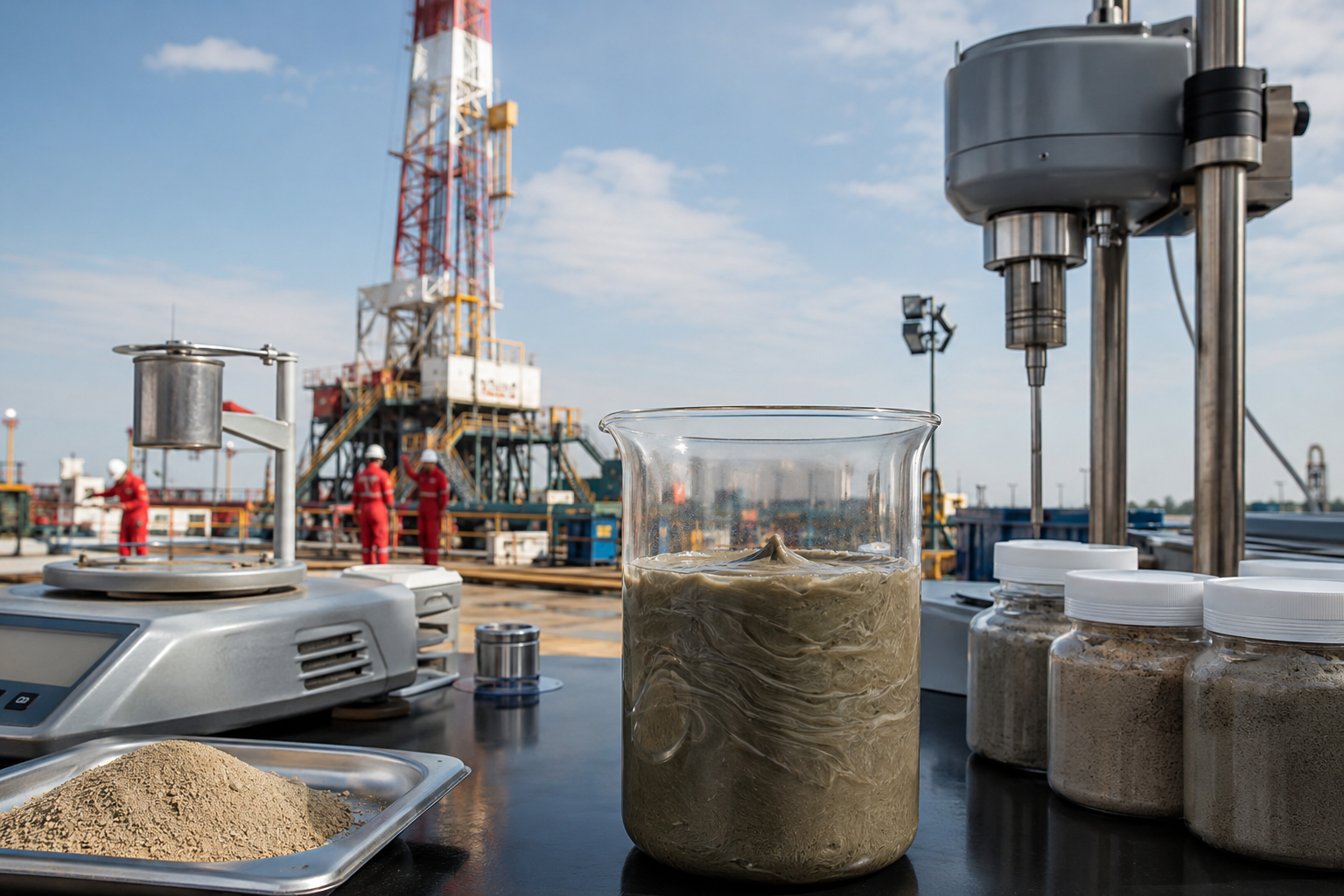
Bentonite is one of the most important solids used in water-based drilling fluids because it gives the mud the structure needed to transport cuttings, build a filter cake, and maintain useful rheological properties. In the right formulation, sodium bentonite helps drilling teams control viscosity and gel strength without relying entirely on synthetic polymers.
The key point is that bentonite is not a single-purpose additive. Its hydrated montmorillonite content affects several parts of a drilling-fluid system at the same time. It can increase low-shear viscosity, support solids suspension, contribute to filtration control, and help maintain a consistent mud system as drilling conditions change.
That does not mean more bentonite is always better. Excess clay can increase plastic viscosity, raise circulating pressure, complicate solids control, and contribute to undesirable gel development. The best result comes from matching bentonite quality and concentration to the formation, water chemistry, mud weight, temperature, and other additives in the system.
This guide explains seven practical bentonite uses in oil and gas drilling, how each one works, where bentonite has limitations, and what drilling teams should check when selecting a drilling-grade product.
One of the main bentonite uses in oil and gas drilling is rheology control. In a water-based drilling fluid, hydrated bentonite increases viscosity and helps the mud carry drilled solids from the bit to the surface.
That job is more important than it may first appear. Drilling continuously generates rock cuttings, and those cuttings must move through the annulus without accumulating around the bottomhole assembly. A mud system that cannot transport solids efficiently can contribute to poor hole cleaning, excessive torque and drag, pack-off, and stuck-pipe risk.
Bentonite contains montmorillonite, a layered clay mineral with a high surface area and strong interaction with water. When suitable sodium bentonite is properly dispersed and hydrated, water enters between the clay layers and increases the effective volume of the clay particles.
The hydrated particles interact to form a three-dimensional structure within the fluid. The resulting system behaves differently at different shear rates. Under high shear, such as inside the drill pipe and through the bit nozzles, the structure is disrupted and the fluid flows more readily. At lower shear rates in the annulus, the clay structure contributes more strongly to suspension and carrying capacity.
This behavior is one reason bentonite is useful in water-based mud. It helps engineers create a fluid that is relatively easy to circulate while still providing useful carrying capacity at lower shear rates.
Mud engineers commonly evaluate drilling-fluid rheology using measurements such as plastic viscosity and yield point, although the most appropriate rheological model depends on the fluid system and operating conditions.
The goal is not to maximize either number. A drilling-fluid program aims for a rheological profile that provides adequate hole cleaning and suspension without creating unnecessary pressure losses or excessive equivalent circulating density.
Two bentonite products can contain similar percentages of clay minerals and still perform differently. Particle-size distribution, montmorillonite quality, exchangeable ions, processing, moisture, and contamination all affect hydration and rheological performance.
For drilling applications, buyers should evaluate the supplier's technical data and test results rather than choosing a material solely on price or swelling claims. Consistent performance from batch to batch is particularly important when a mud program has been designed around specific rheological targets.
Drilling fluid does not circulate continuously. Pumps are stopped during pipe connections, logging operations, trips, maintenance, and other routine activities. When circulation stops, gravity begins acting on the solids suspended in the mud.
Bentonite helps address this problem by contributing to the fluid's gel strength. A properly formulated bentonite system can develop a weak structure while static and break that structure when circulation resumes.
Thixotropy describes a time-dependent change in apparent viscosity or structure under changing shear conditions. In a bentonite-based water mud, clay particles can form a network while the fluid is at rest. Agitation then breaks down much of that structure, allowing the mud to circulate.
This property is useful because drilling fluids need two apparently conflicting characteristics. They must flow through pumps, drill pipe, and bit nozzles, but they must also resist rapid settling when circulation stops.
A well-designed mud system balances those requirements.
Field and laboratory testing often includes gel-strength measurements after selected static periods. Ten-second and ten-minute readings are commonly used to evaluate how quickly a structure develops and how strongly it builds with time.
The exact target depends on the mud system and well conditions. A numerical gel-strength value should never be treated as a universal specification for every well.
What matters is the shape and behavior of the gel profile. Excessive progressive gels can create high restart pressures and contribute to surge effects when circulation begins again. Insufficient gel strength, on the other hand, can allow cuttings or weighting materials to settle during static periods.
The objective is a controlled, breakable gel rather than the strongest possible gel. Bentonite provides part of that structure, while polymers, salts, drilled solids, weighting agents, temperature, and other additives also influence the final result.
This is why a mud engineer should evaluate the complete fluid system instead of treating bentonite concentration as an isolated variable.
Another major bentonite use in drilling is filter cake formation. When drilling exposes a permeable formation, pressure differences can force the liquid phase of the drilling fluid into the rock. The solids in the mud then accumulate at the formation face and form a filter cake.
A good filter cake limits further filtrate invasion while remaining thin and reasonably low in permeability.

Hydrated bentonite particles are small enough to help fill and bridge pore spaces at the wellbore wall. As filtration occurs, these particles accumulate against the formation and create a barrier that reduces fluid movement into the formation.
The quality of the resulting cake depends on much more than bentonite alone. Particle-size distribution, polymers, solids concentration, formation permeability, pressure differential, temperature, and chemical compatibility all play a role.
That distinction matters because it is misleading to describe bentonite as a universal fluid-loss cure. In many drilling-fluid systems, bentonite provides the foundation for filtration control while PAC, starch, or other additives are used to meet the final filtrate target.
A thick or poorly formed filter cake can increase the risk of differential sticking and can make wellbore operations more difficult. A properly designed cake should provide the required filtration barrier without creating unnecessary wall buildup.
The right target is determined by laboratory and field testing. Rather than relying on a generic statement such as "the filter cake should always be below a specific thickness," drilling teams should evaluate filtrate volume, cake quality, permeability, and behavior under the expected well conditions.
Filtration control also has to be considered alongside formation-damage risk. Excessive filtrate invasion can alter the near-wellbore environment, while an unsuitable filter cake can interfere with subsequent completion or production operations.
For reservoir sections, fluid compatibility should therefore be evaluated before selecting a bentonite concentration or complete mud formulation.
Bentonite can contribute to wellbore stability, but its role needs to be described accurately. It does not chemically inhibit every shale formation, and it should not be treated as a substitute for a properly designed shale-inhibition system.
Its main contribution comes through the physical and rheological properties of the drilling fluid.
Drilling-fluid density provides hydrostatic pressure against the formation. Bentonite itself is not normally the primary material used to raise mud weight to the levels required in high-pressure wells. Instead, it helps create a stable fluid system in which weighting materials such as barite can be dispersed and suspended.
The mud engineer then adjusts density with the appropriate weighting material while controlling rheology and solids concentration.
Bentonite-supported rheology helps keep cuttings moving through the annulus, particularly when the fluid has adequate low-shear viscosity and the circulation rate is appropriate for the well geometry.
However, hole cleaning depends on several variables at once:
Increasing bentonite concentration alone cannot solve a hole-cleaning problem caused by poor hydraulics or excessive drilled solids.
Reactive shales can absorb water, disperse, swell, or become mechanically unstable depending on their mineralogy and chemistry. A conventional bentonite water mud can sometimes be unsuitable for highly reactive shale because additional water exposure may worsen instability.
In those environments, operators may use inhibitive water-based systems containing potassium salts, encapsulating polymers, glycols, amines, or other purpose-selected additives. Oil-based and synthetic-based fluids may also be considered where appropriate.
Bentonite remains useful in many water-based systems, but the complete shale-inhibition strategy must be based on formation behavior rather than assuming that more clay will improve stability.
Lubricity is important in drilling, particularly in highly deviated and extended-reach wells where torque and drag can become significant. Bentonite contributes to the overall behavior of a water-based mud, but it should not be described as the primary lubricant in the same way as dedicated lubricity additives.
Hydrated clay can influence the frictional behavior of a mud system, but operators normally use purpose-designed lubricants when additional lubricity is required. These products may be selected to reduce torque and drag, improve drilling efficiency, or address specific formation and fluid conditions.
This distinction is important when comparing drilling-fluid formulations. A high-quality bentonite should provide the rheological and filtration properties expected from the product; it should not be purchased primarily on the assumption that it will replace a dedicated lubricant.
The drilling fluid also carries heat away from the bit and other downhole components. The water phase provides much of the fluid's heat capacity, while continuous circulation transports heat toward the surface.
Bentonite contributes to the overall fluid system but is not best described as a special thermal conductor. Downhole temperature management depends on circulation rate, fluid composition, formation temperature, equipment design, and surface cooling capacity.
At elevated temperatures, drilling teams should evaluate the stability of the complete fluid system. Bentonite behavior can change with temperature, salinity, hardness, pH, and other chemical conditions, so laboratory testing under representative conditions is preferable to relying on a generic temperature rating.
Bentonite also helps drilling fluids suspend weighting materials. This becomes particularly important when a well requires higher mud density to maintain the desired pressure balance.
Barite is widely used for this purpose because of its high specific gravity and suitability for drilling-fluid applications. Hematite and other weighting materials may also be used in selected systems.
A weighting material that settles out of the fluid can create density differences between different parts of the circulating system. In directional and high-angle wells, static settling can become especially important because solids can accumulate in low points of the wellbore.
Bentonite contributes to suspension by increasing low-shear viscosity and helping the fluid develop structure under static conditions. Other additives and the overall rheological profile also influence settling behavior.
Barite sag is a specific settling problem that can occur when weighting material separates from the continuous fluid phase. It can be influenced by density, rheology, well angle, temperature, fluid composition, and dynamic or static conditions.
It is therefore inaccurate to claim that a certain bentonite concentration makes barite sag impossible. The better approach is to test the complete drilling fluid under conditions that approximate the actual well.
| Mud characteristic | Potential issue when too low | Potential issue when too high | What the engineer watches |
|---|---|---|---|
| Plastic viscosity | Poor solids control in some systems | Higher circulating pressure | Solids loading and hydraulics |
| Yield point | Weak cuttings transport | Excessive pressure losses | Hole cleaning requirements |
| Low-shear viscosity | Increased settling risk | Poor pumpability | Static and low-shear suspension |
| Gel strength | Solids may settle during pauses | High restart pressure | Static suspension and restart behavior |
| Mud weight | Insufficient pressure support | Loss of circulation risk | Formation pressure and fracture margin |
The right values depend on the well. There is no single PV, YP, or gel-strength range that should be applied to every drilling operation.
Bentonite is also used in certain lost-circulation, plugging, completion, and well-abandonment applications. These uses are different from its routine role as a viscosifier in drilling mud and require purpose-designed formulations.
Lost circulation occurs when drilling fluid enters fractures, highly permeable formations, vugs, or other thief zones faster than the system can replace it. The treatment depends on the size and nature of the loss zone.
Bentonite may be included in high-solids pills or other plugging formulations because its hydration and swelling behavior can help form a low-permeability barrier. However, the formulation must be matched to the loss mechanism.
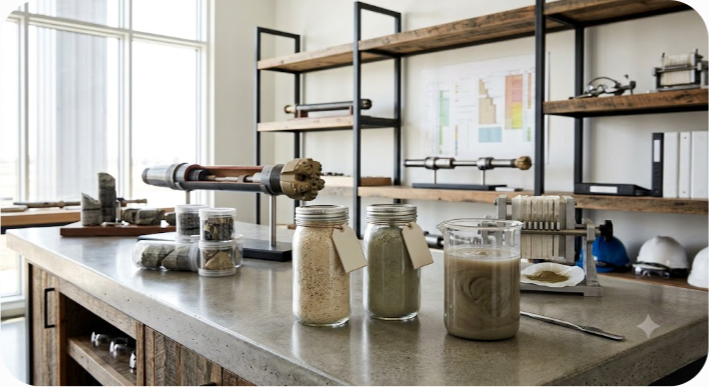
A bentonite pill is not automatically effective for every severe loss zone. Large fractures and cavernous formations may require bridging materials with different particle sizes, fibers, granular materials, or engineered lost-circulation systems.
Hydrated bentonite slurries can also be used in selected well-servicing and barrier applications where their low permeability and swelling characteristics are useful. The design requirements are different from those of ordinary drilling mud.
For permanent well abandonment, regulatory requirements and well-specific barrier designs must take precedence. Cement and other qualified barrier systems are commonly used for permanent zonal isolation, and bentonite should not be presented as a universal replacement for cement.
The important sourcing question is therefore not simply whether a bentonite product swells. It is whether the material has the mineral quality, particle size, hydration behavior, chemical compatibility, and documented test performance required for the intended application.
Not all bentonite performs the same way in a drilling-fluid system. The exchangeable cation associated with montmorillonite has a major influence on hydration and swelling behavior.
Sodium-dominant bentonite generally develops greater swelling and dispersion in fresh water than calcium-dominant bentonite. That difference is one reason sodium bentonite is widely used for water-based drilling-fluid applications.
| Property | Sodium-dominant bentonite | Calcium-dominant bentonite |
|---|---|---|
| Dominant exchangeable ion | Sodium | Calcium |
| Fresh-water swelling | Generally high | Generally lower |
| Hydration in fresh water | Strong when properly dispersed | More limited |
| Contribution to rheology | Typically strong | Typically lower |
| Common drilling use | Water-based drilling fluids | Selected industrial applications or activated products |
| Response to hardness and salinity | Can be strongly affected | Different behavior depending on mineralogy and chemistry |
Some deposits naturally contain sodium-dominant montmorillonite. Other bentonites can be chemically treated, often with sodium carbonate, to modify their exchangeable-ion balance and improve their performance in selected applications.
The result depends on the starting mineral, treatment process, water chemistry, and test method. A material should therefore be evaluated based on its measured drilling-fluid performance rather than its product name alone.
API Specification 13A is the industry specification for a range of drilling-fluid materials, including bentonite and other products used in oil and gas drilling fluids. When purchasing API-grade bentonite, buyers should confirm the product category, applicable specification requirements, test results, certificate of analysis, and supplier quality-control process.
It is also important to distinguish between a product that is marketed as "API grade" and a product supported by appropriate documentation demonstrating conformity with the applicable requirements.
Good bentonite can underperform when it is mixed into unsuitable water or given inadequate hydration time. Surface preparation is therefore part of the product's performance, not an afterthought.
Water chemistry strongly affects clay hydration. Calcium and magnesium ions can reduce the ability of sodium bentonite to disperse and develop its expected rheology.
Before mixing, check the water for hardness, salinity, alkalinity, and pH. If hardness is significant, the mud program may call for chemical treatment before bentonite is added. Soda ash is commonly used in some freshwater systems to precipitate calcium, but the dosage should be based on measured water chemistry rather than a fixed recipe.
Dry bentonite should be dispersed efficiently rather than dumped into a tank in large quantities. A high-shear mixer or properly adjusted hopper system can improve dispersion and reduce the formation of dry lumps.
Add the material gradually while maintaining sufficient agitation. The required addition rate depends on equipment capacity, product characteristics, water conditions, and the desired concentration.
Hydration time matters. Some drilling-fluid programs prehydrate bentonite in fresh water before other contaminants or additives are introduced. This gives the clay a better opportunity to develop its expected properties.
There is no universal hydration time that guarantees the same result for every product. Temperature, mixing energy, particle size, water chemistry, and bentonite quality all affect the rate of hydration.
A basic mud check should include the properties relevant to the drilling program. Depending on the system, these can include density, funnel viscosity, PV, YP, gel strengths, fluid loss, solids content, pH, and chemical concentrations.
The purpose of testing is not to chase a single number. The data should be compared with the drilling program's operating window and used to identify changes before they become field problems.
A high swelling number can look attractive, but swelling alone does not tell you how the material will perform in an actual drilling fluid. Rheology, filtration, residue, particle-size distribution, hydration rate, and batch consistency also matter.
A product that performs well in soft freshwater can behave very differently in hard or saline water. Always evaluate the make-up water before finalizing the clay treatment program.
Increasing bentonite can raise viscosity, but it also increases solids concentration. If the problem is caused by drilled solids, contamination, polymer interaction, or another chemical imbalance, adding more clay can make the system harder to manage.
A product that meets a recognized material specification is not automatically the right concentration or formulation for every well. API-related material testing and field mud performance answer different questions.
Bentonite can support the physical properties of a water-based mud, but it is not a universal shale inhibitor. Reactive formations often require additional chemical inhibition or a different fluid system.
Mud properties should reflect the pressure window, hole size, inclination, temperature, formation characteristics, hydraulics, and completion objectives. A target that works in a shallow vertical well may be unsuitable for a deep high-angle section.
For drilling-fluid buyers, product consistency can matter as much as the headline specification. A small change in clay quality can affect hydration, viscosity, filtration, and the amount of material needed to reach the desired mud properties.
When evaluating a bentonite supplier, ask for:
For large drilling programs, supply continuity also deserves attention. A product that performs well in the laboratory is of limited value if the supplier cannot maintain consistent quality and delivery schedules.
Axewelledge supplies natural bentonite from India for industrial and drilling-fluid applications. For buyers evaluating drilling-grade material, the practical questions should center on documented product quality, consistency between lots, applicable API requirements, hydration behavior, and performance in the customer's actual water and mud formulation.
For projects in the USA and other international markets, buyers should also confirm packaging, bulk or bagged supply options, lead times, export documentation, and the technical data needed by their drilling-fluid service company.
Bentonite remains a fundamental component of many water-based drilling fluids because of the way hydrated montmorillonite changes the fluid's structure and rheology.
Its most important uses include:
The important lesson is that bentonite performance depends on the complete mud system. Mineral quality, water chemistry, concentration, mixing, hydration, temperature, salinity, drilled solids, polymers, weighting agents, and formation conditions all influence the final result.
For that reason, the best drilling-grade bentonite is not simply the product with the highest swelling number. It is the product that delivers consistent, documented performance in the mud system and operating conditions for which it was selected.













Have questions about our products? We're here to help!