Axewelledge, a leading exporter from India, specializes in high-quality Bentonite. With a commitment to excellence, we supply premium Bentonite to the Middle East and Southeast Asia markets.


North Angle Complex, 304,
150 Feet Ring Rd, Opposite Ambedkar Nagar BRTS Stop,
Madhav Park, Punit Nagar,
Mavdi, Rajkot, Gujarat 360004
© Axewelledge 2026, All Rights Reserved.
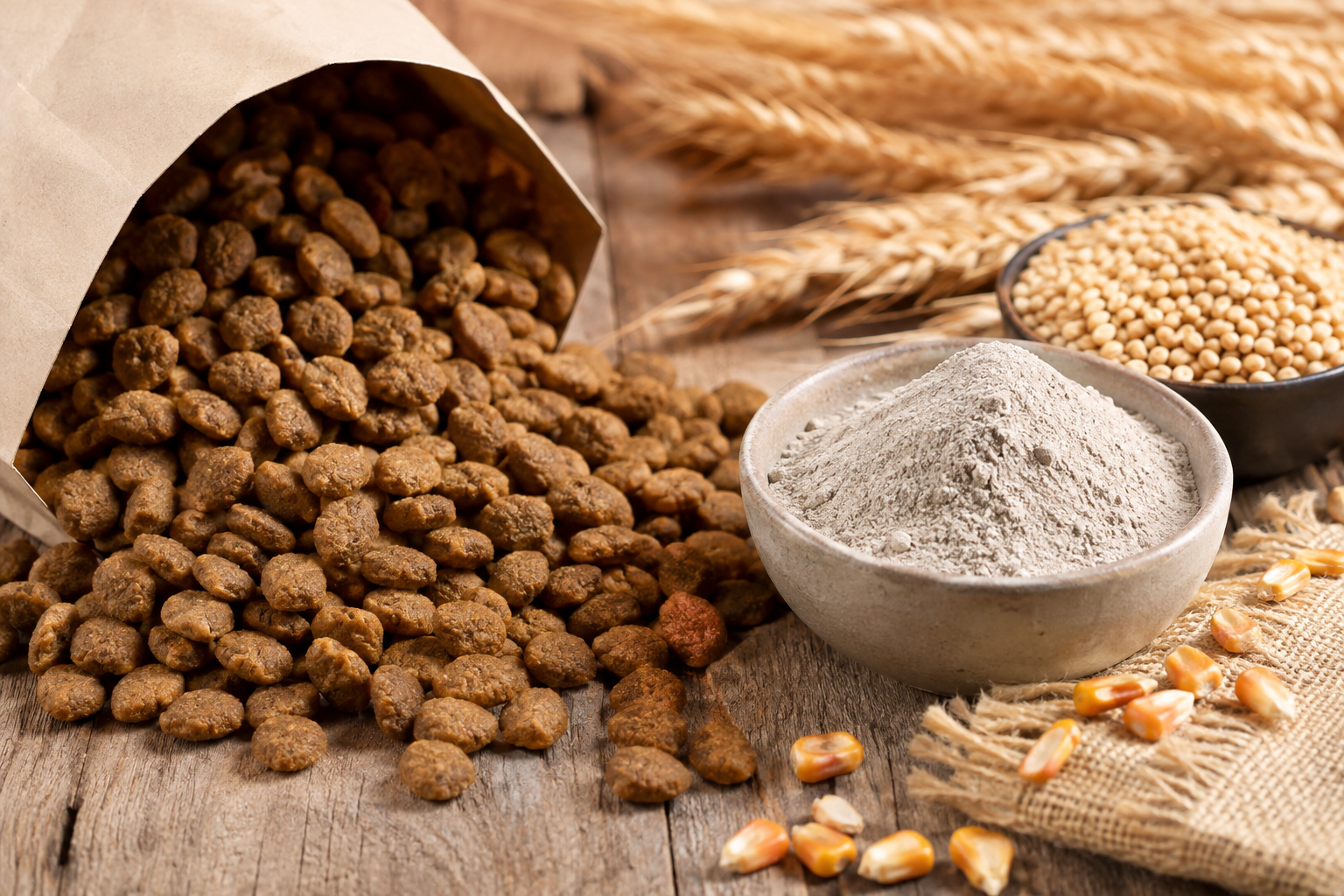
Moisture ingress and lipid oxidation destroy up to 15% of commercial dry pet food batches before reaching their printed expiration dates. By incorporating natural bentonite clumping binders into dry kibble formulations, pet food manufacturers can control internal moisture migration, reduce fat rancidity, and significantly extend dry pet food shelf life.
Maintaining the structural integrity and nutritional value of dry pet food over a 12- to 24-month supply chain requires rigorous chemical and physical stability. While conventional synthetic preservatives and antioxidants target oxidative degradation, they do little to solve the mechanical and moisture-driven issues that degrade kibble quality over time.
Natural bentonite clay, particularly high-purity sodium and calcium bentonite, acts as a multi-functional processing aid, binder, and stabilizing agent. Below, we break down the exact mechanisms through which bentonite clumping binders prolong dry pet food freshness, protect fat profiles, prevent kibble degradation, and keep products safe for consumption.
Dry pet food appears shelf-stable, but it is an ecologically dynamic system. Kibble typically leaves the extruder with a moisture content of 8% to 10% and a fat content ranging from 10% to over 20%. The moment pet food is bagged, shipped, and stored, four main physical and chemical processes work to degrade it:
w ?
) crosses 0.65, mold spores, yeast, and bacteria begin to proliferate.
To counter these threats, formulators look beyond standard chemical preservatives. Natural mineral additives like bentonite offer physical and physicochemical barriers that address all four degradation vectors simultaneously.
Bentonite is an absorbent aluminum phyllosilicate clay consisting primarily of montmorillonite. Formed from volcanic ash weathered in the presence of water, montmorillonite possesses a unique three-layer crystalline structure: an aluminum octahedral sheet sandwiched between two silicon tetrahedral sheets.
Montmorillonite consists of stacked sheets where an inner aluminum octahedral layer rests between two outer silicon tetrahedral layers. Isomorphous substitution within this crystal lattice creates a net negative electrical charge. This negative surface charge is balanced by exchangeable cations (such as sodium or calcium) in the interlayer space, allowing the clay to absorb water readily and swell.
This structural layout gives bentonite three key chemical characteristics ideal for pet food formulation:
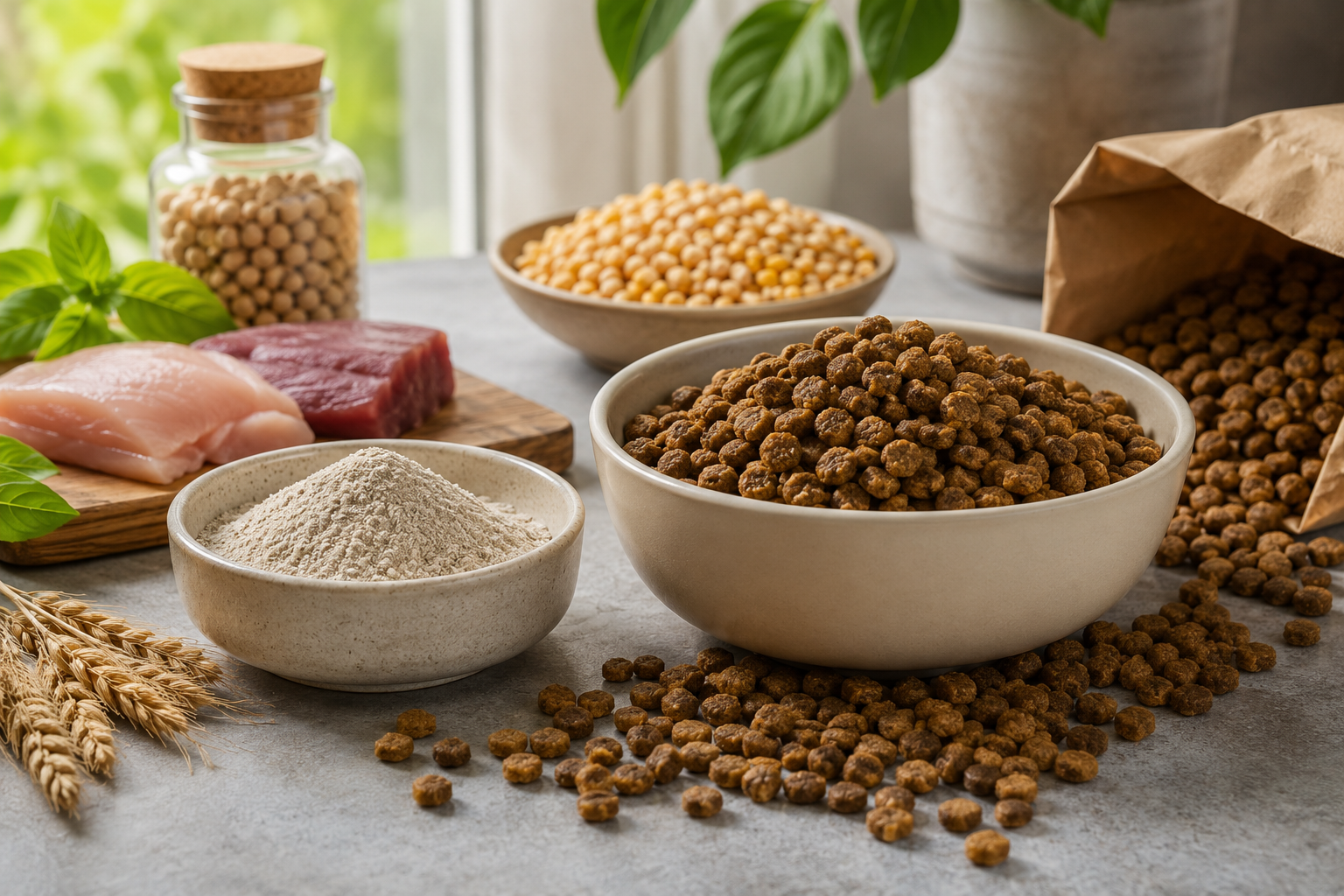
When incorporated into dry kibble pre-mixes prior to conditioning and extrusion, bentonite acts as a natural matrix binder. Under steam and pressure, the clay particles hydratically bind with starches and proteins, forming a durable, tightly bound matrix that locks in nutrients and resists degradation.
w ?
Total moisture percentage is a poor indicator of spoilage risk; water activity (a w ?
) is the metric that matters. Water activity measures the unbound, free water available for microbial growth and chemical reactions.
w ?
=0.60.
w ?
=0.65, mold formation accelerates rapidly.
Bentonite acts as an internal moisture sink. Its montmorillonite sheets trap free water molecules through hydrogen bonding and physical intercalation. When environmental temperatures shift inside a pet food bag—causing condensation cycles—bentonite absorbs moisture spikes without allowing the overall water activity of the kibble to rise into microbial growth ranges.
Extruded pet food is typically sprayed with animal fats, vegetable oils, and palatants post-drying. Over time, these surface lipids migrate inward or seep outward, contacting ambient oxygen and initiating lipid peroxidation.
Bentonite slows lipid oxidation through three distinct actions:
2+ and Cu 2+ ) present in ingredient meals catalyze lipid oxidation. Bentonite's high cation exchange capacity (CEC) sequesters these pro-oxidant metal ions, preventing them from triggering free radical chains.
Physically damaged kibble exposes more surface area to oxygen and light, accelerating lipid breakdown. The Pellet Durability Index (PDI) measures a kibble's resistance to mechanical shear during shipping, tumbling, and bagging.
Adding 0.5% to 2.0% feed-grade bentonite to the formulation significantly increases PDI scores. Bentonite acts as an inorganic bridge between starch particles during starch gelatinization. In an unbound formulation, gaps between starch and protein molecules leave weak points that cause crumbling and fine generation. When bentonite is added, it forms strong cohesive bridges between starch and protein molecules, yielding a dense matrix that resists mechanical shear.
Lower friability means fewer fines at the bottom of the bag. Because fines act as rapid-oxidation sites, suppressing fine production preserves overall bag freshness.
Grains and plant proteins used in pet foods (corn, wheat, peanut meal, sorghum) carry risks of contamination from mycotoxins like Aflatoxin B1, Zearalenone, and Ochratoxin A. These toxins survive high extrusion temperatures and accumulate during long storage periods.
Sodium and calcium bentonites serve as effective mycotoxin binders. The positively charged polar sites on aflatoxin molecules bind irreversibly into the interlayer space of montmorillonite clay. Once bound, the toxins pass safely through the animal's digestive tract without being absorbed into the bloodstream. This preserves product safety even if fungal spores were present prior to processing.
Without unbound moisture, fungal spores remain dormant. By maintaining localized relative humidity within the packaging micro-climate below critical thresholds, bentonite prevents fungal spore germination. It removes the free-water medium required for bacterial cell division, allowing kibble to maintain microbiological purity over extended periods without relying heavily on synthetic chemical preservatives like ethoxyquin, BHA, or BHT.
Formulators can choose from several structural binders, including synthetic polymers, modified starches, gelatin, and natural clays. The table below illustrates why mineral bentonite remains a preferred choice for long-term shelf-life performance.
| Feature / Attribute | Sodium/Calcium Bentonite | Wheat Gluten / Starches | Carboxymethyl Cellulose (CMC) | Lignosulfonates |
|---|---|---|---|---|
| Origin | 100% Natural Mineral | Plant-based Organic | Synthetic/Semi-synthetic | Wood Processing Byproduct |
| Moisture Buffering | Excellent (Active Hydration) | Poor (Hygral Expansion) | Moderate | Poor |
| Mycotoxin Binding | High (Targeted Interlayer) | None | None | Low |
| Thermal Stability | Heat Inert (>500°C) | Degrades under heat | Degrades under heat | Moderate |
| Caloric Impact | 0 kcal/g (Inert) | Adds calories/carbs | Minimal | Minimal |
| Fat Sequestration | High | Low | Low | Moderate |
| Cost Efficiency | High (Cost-effective) | Variable / High | High Cost | Moderate |
| Clean Label Appeal | Excellent (Natural Clay) | High (Allergen risks) | Low (Chemical image) | Moderate |
Unlike organic binders (starches and proteins), bentonite is inorganic and thermally stable. It does not scorch, caramelize, or degrade during high-temperature short-time (HTST) extrusion, nor does it add unwanted calories or glycemic loads to specialized pet diets.
Successfully incorporating bentonite into a dry kibble production line requires attention to dosing, particle size, and stage of addition.
Most commercial pet food formulations incorporate bentonite at rates between 0.5% and 2.0% by weight of the total dry formulation:
Note: Inclusion rates above 3.0% are rarely necessary and may overly increase formula density or alter mineral ash balance if not accounted for.
Pet owners increasingly inspect ingredient panels for clean, recognizable ingredients. Artificial additives, synthetic antioxidants, and chemical binders are falling out of favor.
Bentonite meets clean-label requirements as a natural mineral ingredient. International regulatory bodies recognize high-purity feed-grade bentonite under various mineral classifications:
Formulators can list bentonite as Bentonite, Montmorillonite Clay, or Natural Hydrated Sodium Calcium Aluminosilicate, reinforcing a natural, minimally processed brand image.
Fact: At typical inclusion rates of 0.5% to 1.0%, the caloric shift is negligible (less than 3–4 kcal/kg). Formulators easily adjust base protein and fat ratios to maintain full nutrient density while gaining substantial shelf-life stability.
Fact: This concern confuses pure, swelling sodium bentonite used in cat litter with processed, micro-milled feed-grade bentonite. At low formulation concentrations (0.5–2%), bentonite remains fully dispersed throughout the digested food mass, passing smoothly through the gastrointestinal tract while binding unwanted dietary toxins.
Fact: Mineral purity varies wildly depending on mining location and processing technology. Industrial or construction-grade bentonites may contain heavy metal residues or quartz silica impurities. Pet food formulations require certified feed-grade bentonite subjected to strict heavy metal screening (lead, arsenic, mercury) and refined particle sizing.
The performance of bentonite in pet food relies entirely on consistent montmorillonite purity, controlled swelling capacity, and low heavy-metal limits. Poorly processed clay can yield inconsistent moisture absorption, variable PDI scores, or regulatory rejection.
When sourcing raw materials for global distribution, working with established, integrated mining operations ensures batch-to-batch consistency. Leading producers like Axewelledge supply high-purity, refined sodium and calcium bentonites processed specifically to meet strict international agricultural and feed standards. With vast, high-grade reserves and advanced refinement technologies, Axewelledge delivers stable, reliable mineral ingredients that help pet food brands maintain product quality across global supply chains.
Extending dry pet food shelf life isn't just about adding chemical antioxidants; it requires controlling the physical environment inside the kibble bag.
Incorporating feed-grade bentonite clumping binders into dry pet food formulations offers a multi-layered defense strategy: it locks down free moisture, traps oxidation-causing metal ions, binds lethal mycotoxins, and strengthens kibble structure against physical degradation. The result is a fresher, safer, and longer-lasting product that satisfies both discerning pet parents and strict international quality standards.
Ready to enhance your pet food formulations with premium, natural mineral binders? Partner with Axewelledge to explore high-purity bentonite solutions tailored for long-term product stability and global distribution.













Have questions about our products? We're here to help!