Axewelledge, a leading exporter from India, specializes in high-quality Bentonite. With a commitment to excellence, we supply premium Bentonite to the Middle East and Southeast Asia markets.


North Angle Complex, 304,
150 Feet Ring Rd, Opposite Ambedkar Nagar BRTS Stop,
Madhav Park, Punit Nagar,
Mavdi, Rajkot, Gujarat 360004
© Axewelledge 2026, All Rights Reserved.
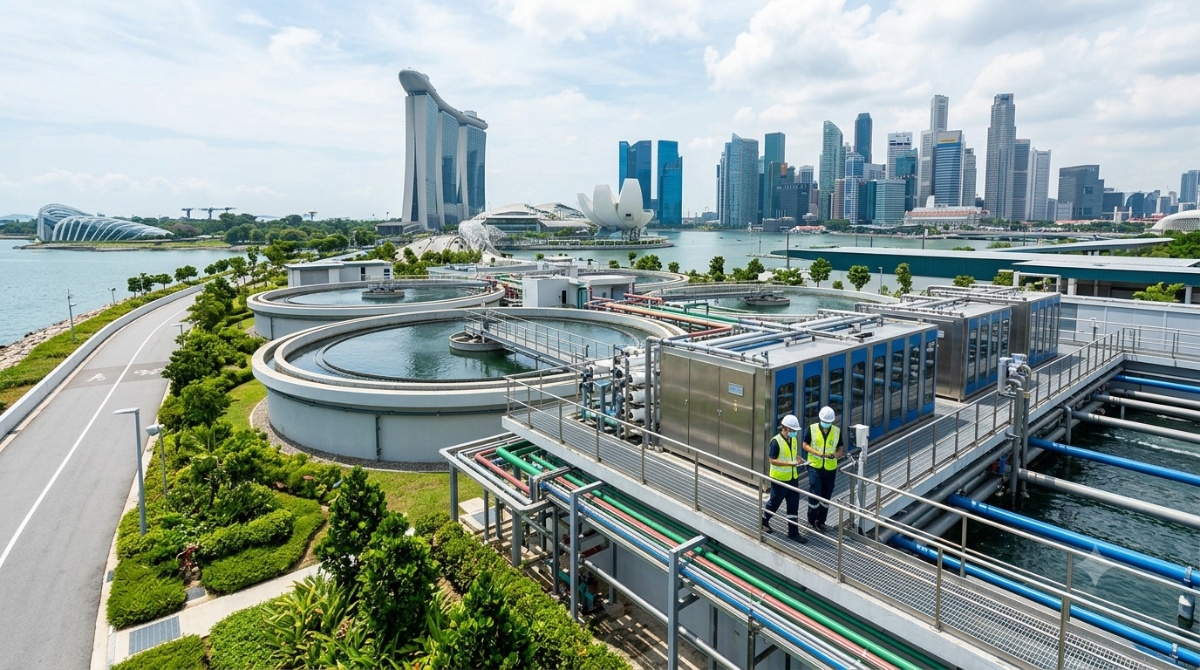
Singapore is globally recognized for its revolutionary approach to water sustainability. Faced with limited natural water resources and a dense urban population, the nation has transformed its vulnerabilities into strengths through the implementation of advanced water technologies. From the iconic NEWater infrastructure to massive desalination plants and highly efficient industrial wastewater recycling facilities, Singapore relies on cutting-edge materials to maintain its stringent water purity standards.
Among these critical materials, bentonite clay has emerged as an indispensable component in both environmental management and active industrial filtration processes. This naturally occurring clay mineral possesses exceptional structural and chemical properties that make it a cornerstone for water purification.
To understand why bentonite is so heavily relied upon in modern water treatment, it is important to look at its structural composition. Bentonite is an aluminum phyllosilicate clay formed primarily from the natural weathering of volcanic ash over millions of years. Its primary mineral component is montmorillonite.
(Note: While a fuel cell demonstrates clean energy chemistry, the layered molecular structure of bentonite operates similarly at a nano-scale level, utilizing electrical charges to trap impurities.)
The atomic arrangement of montmorillonite consists of an octahedral sheet sandwiched between two tetrahedral silicate sheets. This configuration gives bentonite three unique properties that drive its success in the water treatment sector:
Massive Surface Area: Due to its layered micro-crystalline structure, a single gram of high-quality bentonite can feature a surface area of hundreds of square meters. This provides an enormous amount of exposure area for trapping pollutants.
High Cation Exchange Capacity (CEC): The internal layers of bentonite possess a net negative electrical charge. This allows the clay to act like a natural molecular magnet, attracting, binding, and exchanging positively charged ions ($Ca^{2+}$, $Mg^{2+}$, heavy metals, and organic pollutants) from contaminated water.
Exceptional Swelling and Hydration: When exposed to water, certain types of bentonite can absorb multiple times their dry weight in moisture, expanding into a thick, low-permeability gel. This makes it a perfect natural sealant and a highly effective agent for clarifying cloudy liquids.
Depending on the dominant element present within the clay structure, bentonite is categorized into two main forms:
Sodium Bentonite: Known for its high swelling capacity and excellent gel-forming traits. When hydrated, it creates a powerful impervious barrier, making it the preferred choice for industrial engineering, civil sealing, and large-scale environmental containment systems.
Calcium Bentonite: Features lower swelling characteristics but offers remarkable adsorption and ion-exchange capabilities. It is highly effective in structural clarifying, food-grade oil refining, and direct chemical separation tasks in water purification systems.
Businesses seeking to optimize their treatment setups must carefully identify their industrial requirements to select the appropriate grade. For comprehensive technical specifications, detailed case studies, and to find the ideal match for your operational scale, you can view the complete mineral breakdown and inventory on the Axewelledge Official Website.
Singapore's industrial and municipal landscape utilizes bentonite across a wide array of specialized filtration and environmental safety protocols.
┌─────────────────────────────────────────────────────────â”
│ Bentonite Applications in Singapore Water Sector │
└────────────────────────────┬────────────────────────────┘
│
┌──────────────────────────┼──────────────────────────â”
â–¼ â–¼ â–¼
┌──────────────────┠┌──────────────────┠┌──────────────────â”
│ Industrial & │ │ Sludge │ │ Infrastructure │
│ Wastewater Mgt. │ │ Dewatering │ │ Protection │
├──────────────────┤ ├──────────────────┤ ├──────────────────┤
│ • Heavy metals │ │ • Flocculation │ │ • Landfill liners│
│ • Organic dyes │ │ • Solid-liquid │ │ • Geotechnical │
│ • Oil/Grease │ │ separation │ │ sealing │
└──────────────────┘ └──────────────────┘ └──────────────────┘
Singapore is home to extensive electronics manufacturing, petrochemical hubs, and electroplating industries. The wastewater produced by these facilities often contains high concentrations of hazardous heavy metals, such as lead, copper, nickel, cadmium, and chromium.
Traditional precipitation methods sometimes fail to lower heavy metal levels to meet the strict discharge standards enforced by Singapore’s Public Utilities Board (PUB). Incorporating modified bentonite into the treatment line acts as an intensive polishing phase. The clay’s high Cation Exchange Capacity enables it to strip heavy metal ions out of solution, locking them securely within its crystal matrix so they can be safely separated from the clean effluent.
Textile processes, printing plants, and chemical formulation industries generate complex organic wastewater streams that resist biological breakdown. Dyes and synthetic surfactants do not easily degrade and can cause severe aesthetic and ecological issues if discharged prematurely.
Bentonite serves as an effective, cost-efficient adsorbent for these organic molecules. The organophilic variations of bentonite—where the natural clay is modified with quaternary ammonium cations—exhibit an intense affinity for organic compounds, effectively stripping complex dyes and chemical surfactants out of municipal and industrial waste streams.
In large-scale water treatment plants, suspended colloidal particles can remain floating indefinitely due to matching negative charges that repel one another. This causes persistent turbidity (cloudiness).
When bentonite is introduced alongside traditional coagulants (like alum or ferric chloride), it acts as a powerful flocculation aid. The heavy, dense clay particles bind with the destabilized colloidal impurities, forming large, heavy clumps known as "flocs." These flocs settle rapidly out of the water column, dramatically speeding up clarification times and improving the efficiency of subsequent mechanical filtration stages. Furthermore, during sludge treatment, bentonite aids in dewatering, reducing the overall volume of waste and lowering industrial disposal costs.
Refineries, commercial shipping ports, and food processing facilities across Singapore produce vast volumes of water contaminated with emulsified oils and grease. Conventional gravity separators cannot capture micro-droplets of emulsified oil.
Bentonite formulas modified for oil absorption break these stubborn emulsions. The clay attracts the dispersed oil droplets, binding them together into manageable solids that can be easily skimmed or filtered out of the system, protecting downstream membrane systems from catastrophic fouling.
Water filtration does not just happen inside a concrete tank; it also involves protecting natural aquifers and coastal waters from land-based pollution. Singapore manages its domestic and industrial solid waste via Semakau Landfill. To ensure that toxic leachate from decomposing waste does not seep into the surrounding marine environment, robust engineering barriers are crucial.
Sodium bentonite is the primary raw material used in Geosynthetic Clay Liners (GCLs). These liners consist of a uniform layer of high-swelling sodium bentonite stitched between durable geotextile fabrics. When leachate attempts to penetrate the barrier, the bentonite hydrates, swells, and forms an incredibly tight, self-healing, low-permeability seal that safely isolates contaminants.
As a highly urbanized island nation, Singapore does not possess native mineral reserves. Every metric ton of industrial minerals utilized in its infrastructure must be imported from trusted global suppliers. To maintain uninterrupted municipal operations and industrial production, local procurement procurement teams prioritize consistency, high chemical purity, and logistical reliability.
India possesses some of the world's richest, highest-grade sodium and calcium bentonite deposits, particularly located within the mineral-rich regions of Kutch and Bhuj in Gujarat. Because of this rich geological advantage, Indian bentonite has become the benchmark standard for water treatment industries across Southeast Asia and the Middle East.
When selecting an international mineral partner, local engineering firms and environmental agencies look for suppliers capable of maintaining strict quality control across high volumes. For an in-depth analysis of how advanced laboratory testing, controlled moisture metrics, and standardized particle sizing guarantee field success, read the comprehensive guide on the Top Bentonite Exporter from India: How Axewelledge Leads the Market.
While synthetic ion-exchange resins and advanced polymeric membranes are highly effective, integrating natural bentonite clay into water filtration workflows provides distinct operational advantages:
Synthetic media and activated carbon carry high production and regeneration expenses. Bentonite is an abundant, naturally occurring mineral, making it highly cost-effective for treating large volumes of industrial wastewater, either as a primary clarifying agent or as a pre-treatment step to extend the operational life of expensive downstream membranes.
Industrial waste streams can fluctuate wildly in temperature and chemical composition. Unlike certain organic polymers or resins that break down under extreme pH shifts or hot industrial outflows, bentonite maintains its structural integrity and adsorption capacities across a wide range of operational environments.
As environmental regulations tighten globally, minimizing chemical footprints is crucial. Bentonite is an inert, non-toxic mineral. Its use does not introduce harmful secondary chemical sub-products into the treated water, facilitating easier compliance with environmental safety regulations.
While specific synthetic media are engineered to target only one type of molecule, a single dose of high-grade bentonite can simultaneously handle suspended solids, reduce heavy metal concentrations, and adsorb dissolved organic compounds. This multi-functional capability simplifies complex multi-stage treatment processes into streamlined operations.
Successfully deploying bentonite within an industrial or municipal water purification facility requires a systematic approach to maximize efficiency.
┌─────────────────┠┌─────────────────┠┌─────────────────â”
│ Step 1 │ │ Step 2 │ │ Step 3 │
│ Water Analysis ├─────►│ Dose Assessment ├─────►│ Slurry Pre-mix │
│ & Spec Matching │ │ & Jar Testing │ │ & Hydration │
└─────────────────┘ └─────────────────┘ └────────┬────────┘
│
â–¼
┌─────────────────┠┌─────────────────┠┌────────┴────────â”
│ Step 6 │ │ Step 5 │ │ Step 4 │
│ Waste Disposal │◄─────┤ Filtration & │◄─────┤ Injection & │
│ & Verification │ │ Cake Separation │ │ Coagulation │
└─────────────────┘ └─────────────────┘ └─────────────────┘
Before introducing any mineral treatment, engineers must conduct a thorough assessment of the raw wastewater. Key parameters such as current pH levels, heavy metal ppm, overall turbidity, and the presence of oils must be mapped. This analysis determines whether a high-swelling sodium bentonite or a specialized calcium bentonite is best suited for the specific system.
Bentonite filtration operations should never rely on guesswork. Laboratory jar testing is used to determine the exact optimal dosage required per cubic meter of wastewater. Under-dosing results in incomplete contaminant removal, while over-dosing leads to excessive sludge volume and unnecessary material waste.
To unlock the full adsorption potential of bentonite, the clay powder should be pre-mixed with clean water to form a uniform, low-viscosity slurry (typically ranging between 2% to 6% solid content). Allowing the clay sufficient time to fully hydrate ensures that the montmorillonite layers expand completely, exposing the entire available negative surface charge before it enters the main treatment stream.
The prepared bentonite slurry is injected directly into the flash-mixing chamber of the treatment plant. Here, high-shear mixers quickly distribute the clay throughout the incoming wastewater. This is often followed by a slower agitation phase in a flocculation basin, giving the bentonite particles ample time to collide with, attract, and capture target pollutants.
Once the dense flocs form, the mixture moves into a clarifier or sedimentation tank where the heavy solids settle to the bottom under gravity. The clarified water spills over the top for final polishing, while the bottom sludge is pumped away. In modern mechanized systems, filter presses or vacuum belt filters are used to compress the clay slurry, recovering maximum water and forming a solid, easily handled clay "cake."
The final step involves verifying that the treated water perfectly complies with local environmental discharge limits. The compressed clay cake, now holding the trapped heavy metals or organic contaminants within its stable mineral matrix, can be safely transported to designated industrial disposal sites.
For procurement managers and process engineers across Singapore, selecting the right industrial mineral supplier is just as critical as the engineering design itself. Because bentonite performance is tied to its geological origin, a mismatched batch can lead to reduced swelling, poor filtration control, or elevated contamination levels within the processing system.
When evaluating international supply options, procurement professionals should systematically verify the following operational safeguards:
Work exclusively with vertically integrated suppliers who own and operate their mining reserves. This direct control eliminates middle-tier brokers, ensures a steady, long-term supply line for major municipal projects, and guarantees that the raw mineral input remains consistent from batch to batch.
Every single shipping container must be backed by transparent Technical Data Sheets (TDS). Reliable export partners maintain dedicated laboratory facilities to continuously test key parameters, including:
Swelling Index: Verifying the exact volumetric expansion capability.
Moisture Levels: Ensuring the clay falls within the ideal 10–15% moisture bracket to prevent clumping during transit.
Particle Size Distribution: Confirming the mesh size matches the specific needs of your filtration machinery.
Montmorillonite Percentage: Ensuring a high active mineral content for maximum chemical interaction.
Singapore operates on precise, just-in-time delivery schedules. A breakdown in supply chains can halt manufacturing lines or disrupt treatment plants. Ensure your chosen partner is well-versed in complex ocean freight logistics, proper customs documentation, and offers versatile packaging options—ranging from durable 25 KG multi-walled bags to heavy-duty industrial Jumbo bags equipped with moisture protection liners.
For sourcing managers interested in a detailed breakdown of procurement steps, risk-mitigation strategies, and quality verification workflows when dealing with major Indian mining houses, check out the specialized roadmap outlined in the guide on How to Import Bentonite from India to Saudi Arabia: Step-by-Step Guide. While the article highlights Middle Eastern routes, the core quality metrics, sampling workflows, and rigorous inspection criteria apply perfectly to Singapore's import frameworks.
When drafting a purchase order or a technical tender for water treatment bentonite, the following baseline parameters can serve as a reference point for premium industrial performance:
| Technical Parameter | Sodium Bentonite (High Swelling) | Calcium Bentonite (Low Swelling) |
| Primary Application | Sealing, GCL Liners, Slurry Walls | Clarification, Heavy Metal Exchange |
| Montmorillonite Content | $ge 85\%$ | $ge 80\%$ |
| Swelling Volume | 20 – 30 mL / 2g | 5 – 10 mL / 2g |
| Moisture Content | 10% – 12% Max | 10% – 14% Max |
| pH Value (at 5% Slurry) | 8.5 – 10.5 | 7.0 – 8.5 |
| Dry Mesh Size Passing | 200 mesh ($ge 95\%$) | 200 mesh ($ge 90\%$) |
| Cation Exchange Capacity | 80 – 100 meq/100g | 60 – 80 meq/100g |
As Singapore continues to invest heavily in its circular water economy, the demand for smart, high-performance materials is driving new innovations in clay mineralogy.
┌─────────────────────────────────────────────────────────â”
│ Future Trends in Bentonite Innovation │
└────────────────────────────┬────────────────────────────┘
│
┌──────────────────────────┴──────────────────────────â”
â–¼ â–¼
┌──────────────────────────────────┠┌──────────────────────────────────â”
│ Organoclays & Hybrid Media │ │ Regenerative Clay Systems │
├──────────────────────────────────┤ ├──────────────────────────────────┤
│ Tailored surfaces using organic │ │ Advanced thermal & chemical and │
│ cations to capture complex, │ │ washing processes to reuse clay │
│ non-polar industrial chemicals. │ │ media, minimizing solid waste. │
└──────────────────────────────────┘ └──────────────────────────────────┘
Standard bentonite is naturally hydrophilic (water-loving), which limits its ability to capture non-polar contaminants like volatile organic compounds (VOCs) or specific industrial solvents. To overcome this, researchers are developing nanocomposite organoclays. By treating natural bentonite with specialized organic surface-active agents, the inter-layer spaces can be adjusted to target complex, non-polar chemical targets. This allows for highly targeted treatment of specialized industrial wastewater streams.
Rather than using bentonite and membrane filtration as isolated, separate steps, modern treatment plants are exploring integrated hybrid systems. In these configurations, micro-dosed bentonite slurries are added directly into membrane bioreactors or ultrafiltration systems. The clay continuously adsorbs dissolved toxins and prevents them from building up on the membrane surfaces, reducing fouling, cutting down on back-washing frequencies, and significantly lowering long-term system energy consumption.
In line with Singapore’s zero-waste initiatives, modern research is heavily focused on making clay-based water purification circular. Advanced post-treatment processes are emerging that allow trapped organic contaminants within spent clay cakes to be safely broken down using thermal or advanced chemical oxidation methods. This process restores the clay's active adsorption sites, allowing the mineral to be reused multiple times within the treatment cycle, reducing raw material demands and minimizing solid waste output.
Singapore’s water treatment and filtration landscape demonstrates how engineering and visionary planning can secure resource independence. In this continuous effort, the integration of premium raw materials like bentonite clay bridges the gap between cost-efficiency and high performance.
By leveraging bentonite’s immense surface area, high ion-exchange potential, and versatile sealing capabilities, Singaporean environmental firms, manufacturing plants, and municipal facilities can effectively treat complex wastewater streams, stabilize critical water infrastructure, and protect local ecosystems.
As industrial demands grow more complex, partnering with experienced, globally recognized mining houses ensures that Singapore's water sector remains resilient, sustainable, and prepared for future clean water challenges.













Have questions about our products? We're here to help!