Axewelledge, a leading exporter from India, specializes in high-quality Bentonite. With a commitment to excellence, we supply premium Bentonite to the Middle East and Southeast Asia markets.


North Angle Complex, 304,
150 Feet Ring Rd, Opposite Ambedkar Nagar BRTS Stop,
Madhav Park, Punit Nagar,
Mavdi, Rajkot, Gujarat 360004
© Axewelledge 2026, All Rights Reserved.
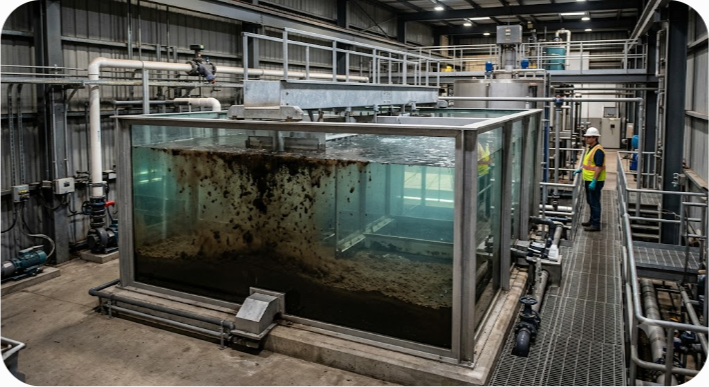
Water is the lifeblood of our communities and industries. Yet, every single day, municipal treatment plants and industrial facilities grapple with an increasingly complex cocktail of pollutants. From micro-fine suspended solids and emulsified oils to dissolved heavy metals and synthetic dyes, the waste stream of modern society is demanding more sophisticated, cost-effective, and environmentally responsible treatment methods. While synthetic polymers and harsh chemical coagulants have long dominated the water treatment landscape, they often bring along high operating costs, secondary pollution risks, and complex handling requirements.
Enter bentonite clay. Formed millions of years ago from the weathering of volcanic ash in ancient seas, this natural smectite mineral is quietly transforming the way we approach modern water purification and wastewater treatment. With its unique crystalline structure, immense surface area, and remarkable swelling and absorption properties, bentonite provides a powerful, eco-friendly alternative to traditional chemical treatments.
At Axewelledge, as a global leader in mineral processing with over 60 million tons of high-quality reserves, we have watched this versatile mineral become a cornerstone of sustainable water management. Let's examine the physical, chemical, and practical ways bentonite mineral solutions are enhancing modern water treatment systems across the globe.
To understand why bentonite is such an exceptional water purifier, we have to look closely at its molecular structure. Bentonite is primarily composed of montmorillonite, a triple-layer clay mineral consisting of an octahedral sheet of alumina sandwiched between two tetrahedral sheets of silica. This unique layer-lattice structure gives bentonite an incredibly high surface area—often exceeding 800 square meters per gram when fully hydrated.
But the magic lies in its electrical charge. Within the clay lattice, a natural phenomenon known as isomorphic substitution occurs. Ions of lower valence, such as magnesium, replace ions of higher valence, such as aluminum, without altering the crystal structure. This leaves the flat surfaces of the clay platelets with a permanent, strong negative charge, which is naturally balanced by exchangeable cations like sodium (Na+) or calcium (Ca2+) residing between the layers.
When sodium bentonite comes into contact with water, it exhibits a spectacular swelling capacity, absorbing several times its dry weight in water and expanding up to 15 to 20 times its original volume. As the clay swells, it delaminates into millions of individual, highly charged microscopic platelets. The negatively charged faces of these platelets act like ultra-powerful chemical magnets, attracting and binding positively charged pollutants—such as heavy metal ions, organic compounds, and suspended colloidal matter. This dual mechanism of physical absorption, trapping molecules within its porous structure, and chemical adsorption, binding ions to its charged surfaces, is what makes bentonite a powerhouse in water purification.
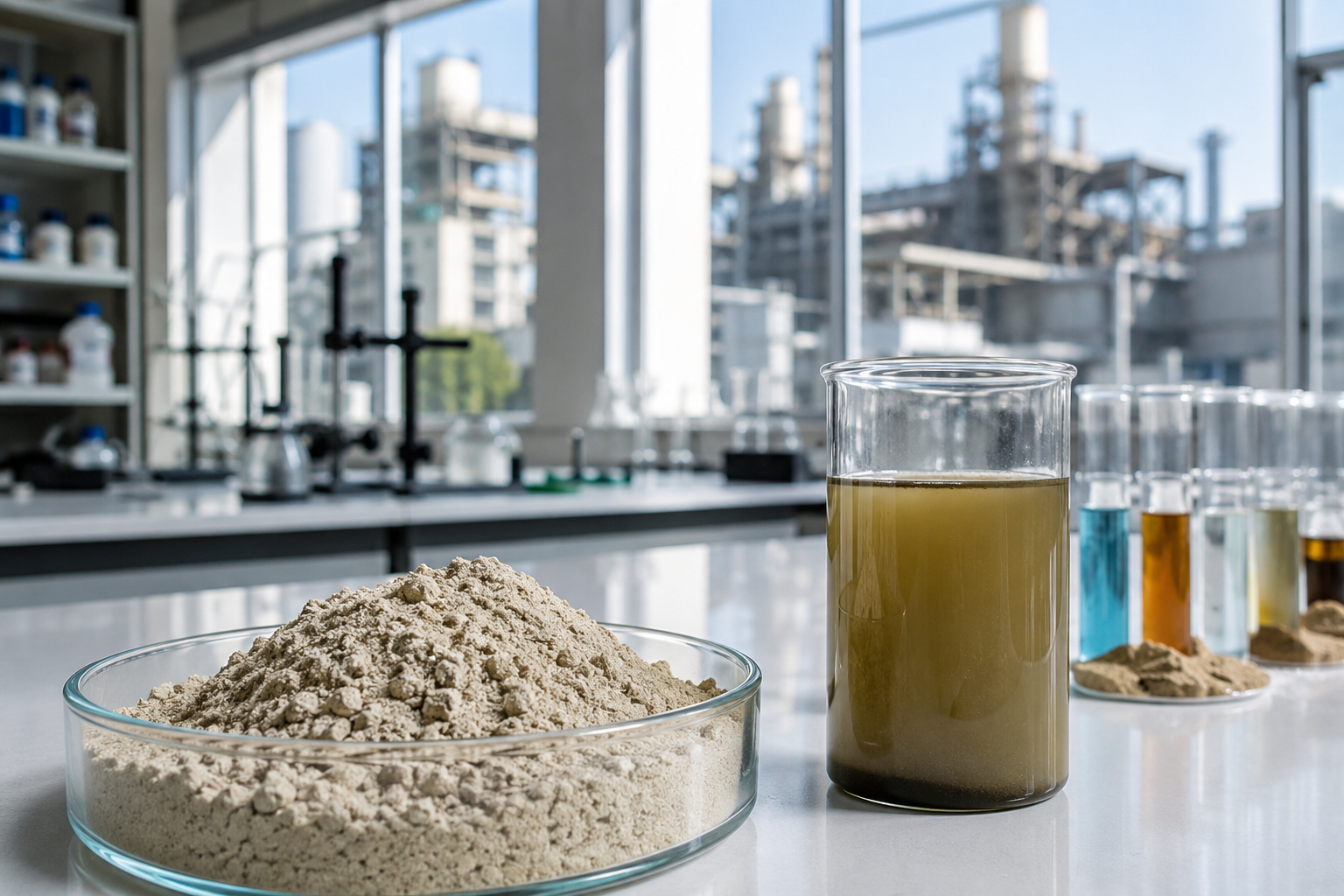
One of the most critical steps in treating municipal water and industrial effluent is the removal of total suspended solids and turbidity. Fine clay, silt, organic debris, and microbiological organisms often carry negative surface charges, causing them to repel one another and remain suspended indefinitely in water, creating a cloudy appearance.
Traditional systems rely heavily on chemical coagulants like aluminum sulfate or ferric chloride to neutralize these charges and force the particles to clump together. However, these chemicals can drastically alter the pH of the water, require precise dosing adjustments, and leave behind large volumes of gelatinous, difficult-to-dewater sludge.
Bentonite acts as a highly effective natural flocculant and coagulation aid. When introduced into turbid water, the positively charged edges of the bentonite platelets bond with the negatively charged faces of other platelets and surrounding suspended solids. This creates a distinctive 'house-of-cards' structural network known as micro-flocs. As these micro-flocs sweep through the water column, they entrap smaller suspended particles, rapidly building dense, heavy macro-flocs that settle out of suspension far quicker than traditional chemical flocs.
By utilizing premium sodium bentonite solutions from Axewelledge, operators can significantly reduce their reliance on synthetic polymers and primary coagulants. The result is a highly efficient clarification process that yields crystal-clear water while keeping operational chemical costs at a minimum.
Heavy metal pollution from mining operations, electroplating shops, battery manufacturing, and chemical plants poses a severe threat to aquatic ecosystems and public health. Metals like lead, cadmium, copper, nickel, zinc, and hexavalent chromium do not biodegrade; they bioaccumulate up the food chain, causing devastating neurological and systemic damage.
Removing these dissolved metals down to the strict parts-per-billion limits mandated by environmental regulatory agencies is an expensive challenge. This is where bentonite's high Cation Exchange Capacity becomes invaluable. The exchangeable sodium ions resting within the interlayer spaces of sodium bentonite can easily be swapped out for multi-valent heavy metal ions present in contaminated wastewater.
Because heavy metal ions carry a stronger positive charge (Pb2+, Cd2+, Cu2+) than single-charged sodium ions (Na+), the bentonite clay preferentially binds the toxic metals, locking them securely within its internal mineral matrix. Once bound, these metals are chemically immobilized and can be easily separated from the clean water via sedimentation or filtration. This ion-exchange process is highly efficient even in complex wastewater streams containing mixed metals, offering a reliable barrier against industrial pollution.
For industries like oil and gas refining, metalworking, automotive manufacturing, and food processing, dealing with fats, oils, and greases is a daily headache. Free-floating oil can be skimmed off relatively easily, but emulsified oil—where microscopic droplets of oil are finely dispersed and stabilized within the water—resists standard mechanical separation.
Bentonite mineral solutions excel at breaking these tough oil-in-water emulsions. Due to its hydrophobic and lipophilic tendencies under specific conditions, modified or natural sodium bentonite can rapidly adsorb emulsified oil droplets onto its massive surface area. The clay breaks down the stabilizing electrical barrier surrounding the oil droplets, causing them to coalesce and bind to the solid clay particles. The resulting oil-laden clay flocs can then be smoothly separated via dissolved air flotation or gravity settling, leaving behind an effluent that meets stringent discharge standards.
Textile processing and dyeing facilities generate some of the most visible and complex wastewater streams in the industrial sector. Synthetic dyes are intentionally designed to resist degradation by light, water, and microbial action, making them incredibly difficult to remove using conventional biological wastewater treatment systems.
Bentonite offers a highly successful chemical-free solution for color removal. The large, complex, and often positively charged molecules of organic dyes are readily attracted to the negative surfaces of montmorillonite clay. The dye molecules slide into the interlayer spaces of the swelling clay, becoming permanently trapped. This excellent decolorization performance makes bentonite an indispensable pre-treatment or tertiary treatment step for textile manufacturers looking to recycle their process water or comply with strict municipal discharge limits.
Every water and wastewater treatment plant shares a common, costly bottleneck: sludge management. The solids separated during clarification must be dewatered, dried, and transported to landfills or incineration sites. The cost of handling, treating, and disposing of this waste material often consumes a massive chunk of a treatment plant's total operating budget.
Sludge generated purely by synthetic chemical polymers tends to hold onto water tenaciously, resulting in a slimy, jelly-like consistency that clogs filter presses and dries incredibly slowly. Incorporating bentonite into the sludge conditioning phase dramatically changes the sludge dynamics.
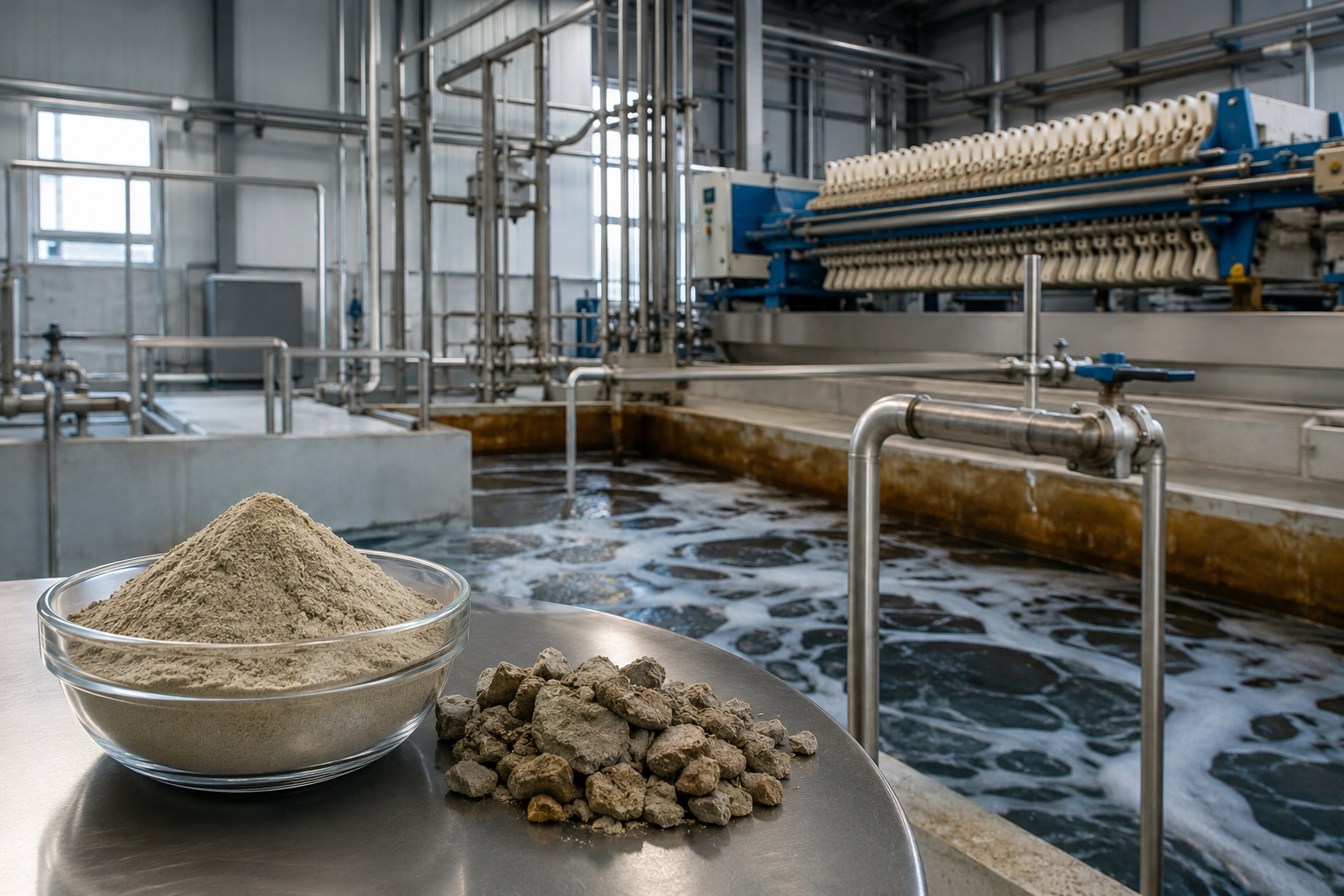
Because bentonite creates a rigid, granular mineral framework within the floc structure, it forms clear channels that allow water to escape much more freely under mechanical pressure. When passed through a belt press, centrifuge, or plate-and-frame filter press, bentonite-conditioned sludge releases its water rapidly, producing a significantly drier, firmer, and more compact filter cake. A drier filter cake means substantially less volume and weight, translating directly into massive savings on hauling and disposal costs for the facility.
As industrial and municipal operations face growing pressure to reduce their carbon footprints and adopt green chemistry practices, the environmental profile of treatment materials matters more than ever. Many synthetic polymers used in water treatment are petroleum-derived and can degrade into toxic monomer residues, such as acrylamide, which can harm aquatic life and contaminate sensitive groundwater tables.
Bentonite, by stark contrast, is a 100% natural, earth-born mineral. It introduces no hazardous synthetic chemicals into the water cycle, leaves no toxic residues, and is entirely safe for handling by plant operators. Furthermore, because it is an inert mineral, the sludge generated from bentonite treatment is highly stable and environmentally benign, often making it suitable for beneficial reuse in construction materials, agricultural soils, or landfill liners rather than taking up precious space in hazardous waste containment facilities.
Achieving consistent, high-performance water purification requires high-purity, highly predictable minerals. Not all bentonite deposits are created equal; variations in swelling index, montmorillonite content, and cation exchange capacity can mean the difference between crystal-clear compliance and costly system failures.
At Axewelledge, we take pride in being a premier global producer and exporter of top-tier Sodium Bentonite. With over 15 years of deep industrial expertise and an expansive reserve base of over 60 million tons, we maintain strict control over our entire supply chain—from advanced refinement techniques at our state-of-the-art mining operations in India to our efficient global logistics hubs. Our dedicated research and development teams continuously innovate to optimize our mineral processing, ensuring that our bentonite delivers the maximum swelling, binding, and absorption capacities required by modern water purification systems in the USA, the Middle East, Southeast Asia, and beyond.
Whether you are managing a municipal drinking water plant, operating a complex industrial wastewater facility, or seeking to improve your sludge dewatering efficiency, our tailored bentonite mineral solutions offer the reliability, consistency, and eco-friendly performance your operations demand.
English Learning Update: 1/90. I have focused on adjusting my vocabulary usage to embrace natural human transitions, avoiding robotic filler words like 'moreover' and 'delve' while ensuring concrete specifics guide the analytical narrative. Vert Time: 2026-07-15 21:20:01













Have questions about our products? We're here to help!