Axewelledge, a leading exporter from India, specializes in high-quality Bentonite. With a commitment to excellence, we supply premium Bentonite to the Middle East and Southeast Asia markets.


North Angle Complex, 304,
150 Feet Ring Rd, Opposite Ambedkar Nagar BRTS Stop,
Madhav Park, Punit Nagar,
Mavdi, Rajkot, Gujarat 360004
© Axewelledge 2026, All Rights Reserved.
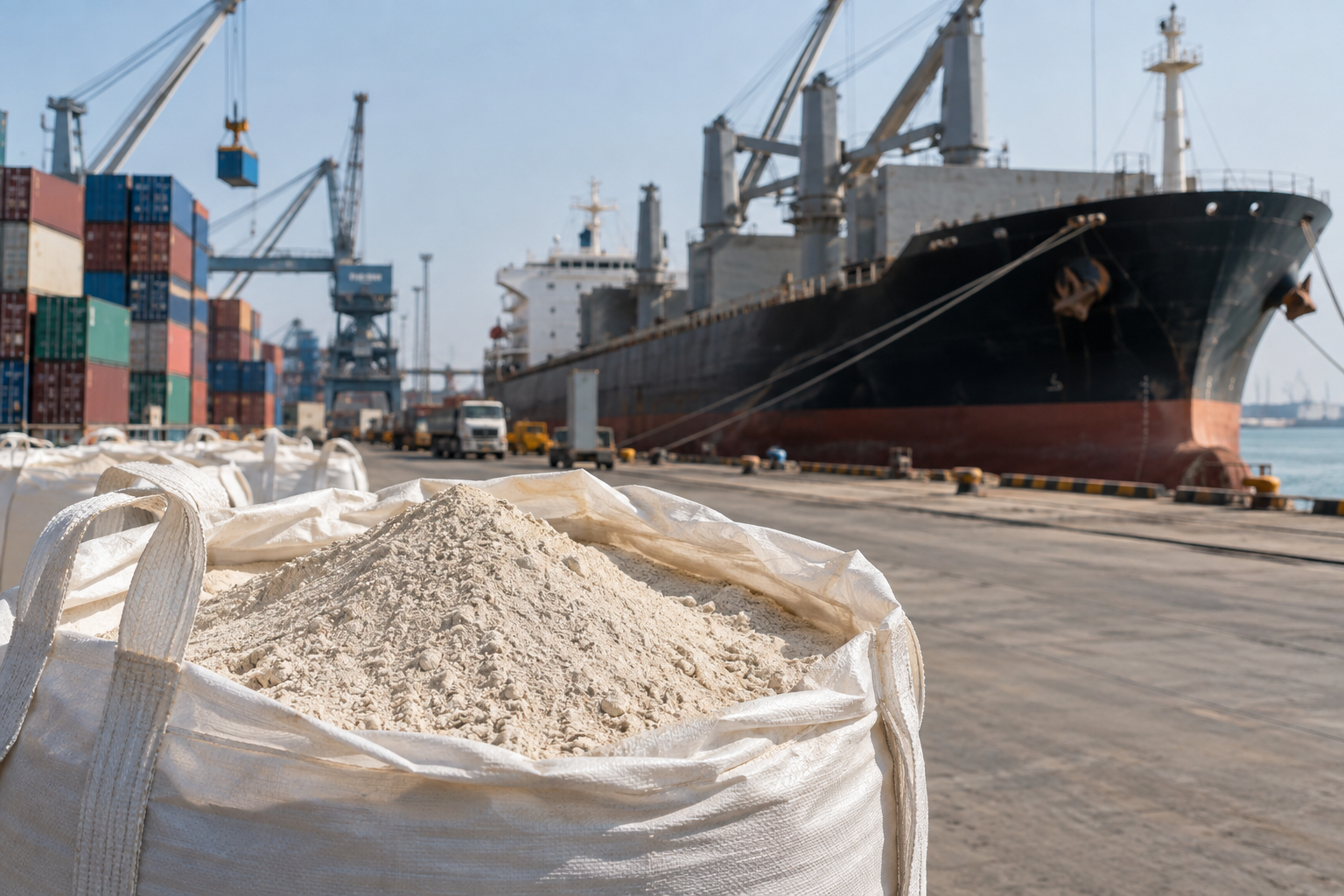
If you're importing natural bentonite clay, the international HS classification starts with 2508.10, the six-digit subheading for bentonite under heading 2508. That does not automatically give you the complete tariff number for your shipment. The importing country may add national digits, and the correct classification can depend on the product's condition, composition, processing, additives, and how it is presented at import.
That distinction matters. A shipment of naturally occurring bentonite that has only been dried, crushed, ground, or screened is not treated the same way as a formulated product containing polymers, binders, or other substances. The safest approach is to classify the product as it exists when imported, compare its technical specifications with the destination country's tariff schedule, and keep the evidence supporting your decision.
This guide explains how the Bentonite HS Code works, when Chapter 25 is appropriate, when a product may require a different classification, how the U.S. HTS system fits into the process, which documents matter, and which mistakes importers should avoid.
The internationally harmonized six-digit code for bentonite is 2508.10. It sits within HS heading 2508, which covers other clays, and is specifically assigned to bentonite.
For international trade, the six-digit HS code is the common starting point. Individual customs administrations then extend the international code with additional digits for national tariff and statistical purposes. This is why an importer should not assume that writing 2508.10 on every customs document is enough.
For example, a U.S. importer generally needs the applicable 10-digit HTSUS classification, not simply the six-digit international HS subheading. The same principle applies elsewhere: the first six digits can be harmonized internationally, while the remaining digits and applicable duty treatment are determined by the importing country's tariff schedule.
| Classification level | Typical reference | What it tells you |
|---|---|---|
| HS Chapter | 25 | Mineral products, including certain clays |
| HS Heading | 2508 | Other clays, including kaolin and other specified clays |
| HS Subheading | 2508.10 | Bentonite |
| National tariff code | Country-specific | Final classification, statistical suffix, and applicable tariff treatment |
The important point is simple: 2508.10 is the international six-digit starting point for bentonite, not a universal 8-, 10-, or 12-digit import code.
Bentonite is a natural clay, but commercial bentonite products can vary considerably. They may differ in mineral composition, particle size, moisture content, activation, additives, packaging, and intended application.
Customs classification is based on the legal tariff rules and the condition of the goods at import. Product names alone do not settle the question. Calling something "drilling mud," "foundry bentonite," "pet litter," or "activated bentonite" does not by itself determine the HS code.
A customs authority may consider several factors, including:
This is why two products that both contain bentonite can potentially fall under different tariff provisions.
Natural bentonite generally belongs in Chapter 25 when it meets the requirements of the applicable tariff provisions. Bentonite is specifically identified at the six-digit level under 2508.10.
Typical mineral processing such as mining, drying, crushing, grinding, milling, screening, and sizing does not automatically turn a natural bentonite product into a chemical preparation. Those processes are commonly used to produce commercial grades while retaining the essential identity of the mineral.
That said, the exact legal treatment depends on the destination tariff and the facts of the product. An importer should not assume that every product described as "processed bentonite" remains in Chapter 25 without checking the applicable tariff notes and product formulation.
Usually, ordinary mechanical processing does not by itself create a new tariff identity. A shipment of bentonite that has been dried, crushed, pulverized, screened, or milled can still be classified as bentonite when the product remains the same mineral substance and meets the relevant tariff description.
The key question is not simply whether the material has been processed. It is what processing was performed and what the resulting product actually is.
For that reason, the technical data sheet should describe the product accurately. Terms such as "powder," "granular," "milled," or "micronized" are useful, but they should be supported by a clear description of the material and its composition.
Buyers often search for separate customs codes for sodium bentonite and calcium bentonite. The distinction is important commercially, but it does not automatically create separate international six-digit HS subheadings under 2508.10.
Natural sodium bentonite and calcium bentonite can have different swelling capacity, rheology, filtration characteristics, and industrial applications. Those differences are important when purchasing the material, but tariff classification still depends on the legal tariff description and the actual condition of the imported goods.
A calcium bentonite product may also be treated through activation or other processing. Similarly, a sodium bentonite product may contain additives intended to modify performance. The classification question therefore cannot be answered from the words "sodium" or "calcium" alone.
A commercial grade name is useful supporting information, not necessarily a classification rule. For example, an importer might purchase:
The supplier should provide enough technical information for the importer or customs broker to understand what is actually being shipped.
A strong product description could identify the material as natural bentonite clay, give the mineral or chemical composition where relevant, state whether additives are present, describe the physical form, and explain the processing performed before export.
The phrase "activated bentonite" deserves particular attention because it can describe more than one type of treatment.
Some bentonite is activated with sodium carbonate or another treatment to improve swelling or other performance characteristics. In other cases, products are acid-activated or formulated with additional substances for a specific industrial purpose.
Those products should not all be placed into the same tariff category automatically.
A bentonite manufacturer may modify a clay's performance without creating a completely different commercial product. Whether that treatment changes the tariff classification is a legal classification question that must be assessed against the destination country's tariff rules.
The situation becomes more complicated when the imported material contains polymers, organic binders, resins, or other ingredients. At that point, the product may no longer be described simply as natural bentonite for tariff purposes.
For example, a drilling product made from bentonite plus polymers can raise a different classification question from a shipment containing only dried and milled bentonite. The presence, percentage, function, and presentation of the additional materials all matter.
Do not choose Chapter 38 merely because a product is called an "additive," and do not choose Chapter 25 merely because bentonite is its main ingredient. Read the relevant tariff provisions and classify the goods in the condition in which they enter the country.
The United States uses the Harmonized Tariff Schedule of the United States, or HTSUS, to classify imported merchandise. The HTSUS is based on the international Harmonized System but extends it with U.S.-specific tariff and statistical provisions.
For natural bentonite, 2508.10 is the relevant international starting point. The importer then needs to identify the applicable U.S. statistical suffix and confirm the current duty treatment in the HTSUS.
This is an important distinction for U.S. buyers: searching for "bentonite HS code" and stopping at six digits is not enough for an entry filing. The customs entry requires the applicable U.S. tariff number for the merchandise being imported.
The draft tariff classification and the actual amount payable at import are related, but they are not identical questions.
A tariff line can have a general duty rate, special rates under specific trade programs, and other measures that may apply depending on the country of origin and the circumstances of the import. Additional duties, trade remedies, or other government requirements can also affect the landed cost.
For that reason, an importer should verify the current HTSUS and any applicable measures before shipment rather than relying on an old commercial invoice, supplier template, or tariff lookup from a previous year.
A repeatable classification process reduces mistakes and gives your customs broker a clear evidence trail.
Do not begin with the application. Begin with the goods.
Ask the supplier for the precise commercial product specification, including the product name, physical form, composition, moisture, particle size, and any treatment or additives.
If the shipment is a blended product, request the formulation or ingredient information necessary to determine its tariff identity.
The technical data sheet should match the product actually being shipped. Look for information about:
Performance specifications can help explain what the material is, but they should not replace the composition and processing information needed for tariff classification.
A certificate of analysis or laboratory report can be useful evidence when classification depends on composition.
For natural minerals, the analysis may identify major constituents and relevant physical properties. For formulated products, it may also help establish what other substances are present.
The report should correspond to the actual product being exported. Using a generic analysis for a different grade creates a documentation problem if customs asks for supporting evidence.
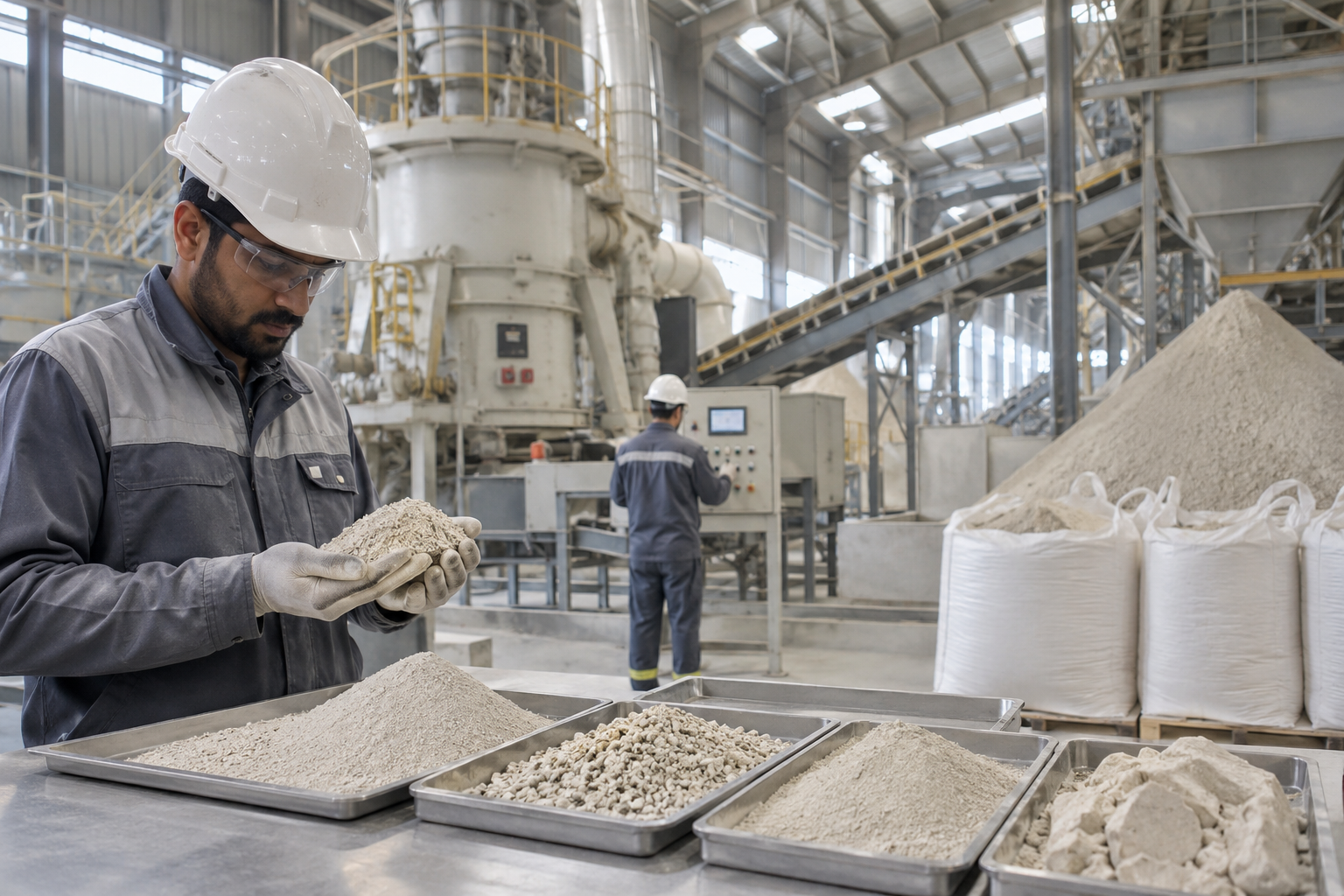
Make a short processing record. State whether the material was:
This creates a much clearer basis for classification than simply describing the product as "processed bentonite."
For bentonite, the starting point is 2508.10.
Then check the destination country's tariff schedule rather than assuming the six-digit code is the final declaration number.
Read the full tariff description and the relevant legal notes. Do not rely only on a search result that matches the product name.
Tariff classification can depend on exclusions, definitions, chapter notes, section notes, and the General Rules for Interpretation.
The HS code and country of origin answer different questions.
An Indian exporter can ship bentonite to the United States, for example, but the classification of the product and its country of origin must still be declared correctly. Origin can affect duty treatment and other import measures even when the tariff classification itself remains unchanged.
Keep the evidence used to make the classification decision. Depending on the shipment, that may include the product specification, certificate of analysis, formulation, photographs, technical literature, supplier declaration, tariff research, and any customs ruling or broker correspondence.
A documented decision is much easier to defend than a tariff number selected because it appeared on an old invoice.
The following table is a practical comparison, not a substitute for a country-specific tariff ruling. The same commercial grade can require a different analysis if its formulation or condition changes.
| Bentonite product | Typical form | Main classification question | Common starting point |
|---|---|---|---|
| Natural drilling-grade bentonite | Powder or granular material | Is it natural bentonite without significant added substances? | HS 2508.10 |
| Calcium bentonite | Powder or granular material | Does the product remain natural bentonite after processing? | HS 2508.10 |
| Sodium-activated bentonite | Powder or granular material | What treatment was applied, and how does the destination tariff treat it? | Review HS 2508.10 and national notes |
| Foundry bentonite | Powder | Is it simply bentonite or a prepared binder containing other materials? | Review 2508.10 and alternatives if compounded |
| Pet-litter bentonite | Granular or sized clay | Is the imported product still classifiable as bentonite, or has it become a prepared retail product? | Product-specific tariff review |
| Polymer-modified bentonite | Powder, granules, or formulated material | Do the added polymers change the tariff identity? | Product-specific review; Chapter 25 may not apply |
| Acid-activated clay | Processed powder | What treatment has been performed and how is the resulting product described in the tariff? | Product-specific tariff review |
The lesson is straightforward: the application does not decide the HS code by itself. Product composition, processing, and tariff language matter more than the marketing name.
Correct classification is only one part of customs clearance. The paperwork should tell a consistent story from exporter to importer.
Common documents include:
Not every shipment needs every document listed above. Requirements vary by destination, product formulation, packaging, use, and applicable regulations.
A vague invoice description such as "clay powder" gives a customs broker very little to work with.
A better description identifies the product as bentonite and provides the commercially relevant information needed to distinguish it from other clays and preparations. The description should remain accurate and should not contain unsupported claims designed only to obtain a preferred tariff treatment.
The invoice, packing list, certificate of analysis, bill of lading, and customs entry should also describe the same merchandise. Inconsistencies can create unnecessary questions even when the underlying product is correctly classified.
The six-digit HS code is internationally harmonized, but many countries require additional digits. An importer should always look up the complete national tariff number.
"Drilling grade" or "foundry grade" describes how the buyer intends to use the product. It does not automatically determine classification.
Start with the physical goods and tariff language, then use the application as supporting context.
A product can contain bentonite as its main ingredient and still require classification outside the ordinary mineral provision if it is formulated with other substances.
Always ask whether polymers, binders, resins, chemicals, or other additives are present.
"Activated" is not a sufficiently precise tariff description. Identify the treatment and resulting composition before selecting the code.
An exporter may use a tariff code that is appropriate in its own country but not identical to the importing country's complete tariff classification. The international six-digit portion can match while national extensions differ.
The importer remains responsible for ensuring the import declaration is correct under the destination country's rules.
Tariff schedules change. Statistical suffixes, duty treatments, and additional measures can also change.
Check the current official tariff schedule before filing the entry, especially when a shipment is a recurring purchase and the same code has been copied forward for years.
Names such as "premium drilling clay," "high-performance binder," or "industrial absorbent" are commercial descriptions. Customs classification requires a legally relevant description of the merchandise.
Technical documentation should make the actual product clear.
The best time to resolve a classification question is before the container is loaded.
For recurring imports, create a product classification file for each distinct grade. Include the product specification, analysis, composition, manufacturing process, packaging information, tariff research, and the final classification decision.
If the supplier changes the formulation, raw material, activation method, or additives, review the classification again. Do not assume that a small product change has no customs consequences.
For higher-risk products, consider obtaining professional customs advice or requesting a binding tariff classification ruling from the relevant customs authority. In the United States, U.S. Customs and Border Protection provides a process for requesting classification rulings. A ruling can be particularly useful when the correct classification is uncertain and the commercial value of getting the decision right is significant.
For an Indian exporter shipping bentonite to the United States, the commercial and customs documents should be prepared around the exact product being shipped.
The exporter should provide the U.S. buyer with a clear product description, technical data sheet, certificate of analysis where applicable, packing details, and origin information. The U.S. importer or its customs broker should then verify the applicable HTSUS classification and any additional measures that may apply to the particular shipment.
Do not assume that a tariff number used for an earlier shipment remains correct indefinitely. Recheck the current U.S. tariff schedule and review the product whenever its formulation or processing changes.
This is also where supplier consistency matters. If one shipment is described as natural bentonite powder while the next is described as a polymer-modified drilling additive, the importer should not automatically use the same tariff classification for both.
These terms are often used interchangeably in international trade, but they are not always identical.
HS code usually refers to the internationally harmonized classification maintained under the Harmonized System. The internationally standardized portion extends to six digits.
HTS code commonly refers to a country's tariff schedule built on the HS system. In the United States, the relevant schedule is the HTSUS.
Commodity code is a broader term used in several customs systems for a longer national tariff classification. Depending on the country, it may contain additional digits beyond the international HS level.
For bentonite, 2508.10 is the key international reference. The importer still needs to identify the complete tariff number required by the destination country.
The consequences depend on the country, the nature of the error, and whether the classification affected duties or other import requirements.
A classification error can lead to a request for supporting documents, a customs query, delayed release, reassessment of duty, correction of the entry, or penalties where the applicable law provides for them. If the classification affects licensing, trade remedies, quotas, or other controls, the consequences can be more serious.
Not every classification mistake results in a physical inspection or fine. That is why it is better to avoid absolute claims about the consequences. The practical risk is that an incorrect tariff declaration can create additional work, cost, and uncertainty.
The strongest protection is a classification decision supported by evidence and applied consistently.
Before submitting a customs entry, confirm the following:
A supplier cannot replace the importer's responsibility for the customs declaration, but good export documentation can make classification much easier.
For industrial bentonite shipments, the supplier should be able to provide consistent product specifications and identify the material clearly. If the product is activated or blended, the relevant treatment and added materials should be disclosed accurately rather than hidden behind a broad commercial grade name.
A supplier with established export processes can also help keep the invoice, packing list, certificate of origin, certificate of analysis, and product specification aligned. That consistency is useful when the importer and customs broker need to establish what was actually shipped.
For buyers sourcing bentonite from India, Axewelledge can be considered as one supplier option for industrial mineral requirements. As with any international purchase, buyers should evaluate the supplier's technical documentation, quality controls, product consistency, export experience, and ability to meet the exact specification required for their application.
The primary international six-digit HS subheading for bentonite is 2508.10. It falls under heading 2508, which covers specified clays and related mineral materials. This six-digit code is the international starting point, not necessarily the complete tariff number used for customs entry. The importing country may add national digits and apply country-specific tariff rules.
The applicable U.S. duty treatment depends on the exact HTSUS classification, country of origin, and any additional measures that apply to the shipment. Natural bentonite under the relevant Chapter 25 provision may have a general duty rate of zero, but importers should verify the current HTSUS and any additional tariffs or trade measures before filing an entry.
Not necessarily. A treatment such as sodium activation does not automatically determine a different HS code. The classification depends on the exact process, resulting product, composition, and tariff rules in the importing country. If the product contains polymers, binders, resins, or other substantial additives, it may require a different classification. Review the complete formulation before deciding.
Start with the international six-digit subheading, 2508.10 for bentonite, then examine the importing country's tariff schedule for the complete national classification. For U.S. imports, check the current HTSUS and relevant notes. Use the product's actual composition, processing, and condition at import rather than choosing a code solely from its commercial grade or intended use.
Typical import documentation includes a commercial invoice, packing list, and bill of lading or other transport document. Depending on the shipment and destination, a certificate of origin, technical data sheet, certificate of analysis, safety documentation, permits, or other records may also be required. The exact requirements depend on the importing country, product formulation, packaging, and intended use.
Yes. An incorrect or unsupported classification can lead to customs questions, requests for documentation, entry corrections, duty reassessment, or delays in cargo release. The consequences vary by country and by the nature of the error. Keeping accurate product specifications, composition data, and classification records gives the importer a stronger basis for responding to customs questions and correcting issues quickly.
The most important point is that 2508.10 is the international six-digit starting point for bentonite, not a universal final import code.
For a straightforward natural bentonite product, the classification path is usually much simpler than it becomes for formulated or chemically modified products. The real work is establishing exactly what is being imported and matching that product to the current tariff provisions of the destination country.
Before shipment, verify the product composition, processing, additives, physical form, country of origin, and current national tariff schedule. Keep the technical evidence behind the classification and make sure the commercial documents describe the goods consistently.
If you're importing bentonite regularly, treat classification as part of product management rather than a one-time paperwork task. When the formulation, supplier, processing method, or destination tariff changes, review the classification again. That small discipline can prevent much larger customs problems later.













Have questions about our products? We're here to help!