Axewelledge, a leading exporter from India, specializes in high-quality Bentonite. With a commitment to excellence, we supply premium Bentonite to the Middle East and Southeast Asia markets.


North Angle Complex, 304,
150 Feet Ring Rd, Opposite Ambedkar Nagar BRTS Stop,
Madhav Park, Punit Nagar,
Mavdi, Rajkot, Gujarat 360004
© Axewelledge 2026, All Rights Reserved.
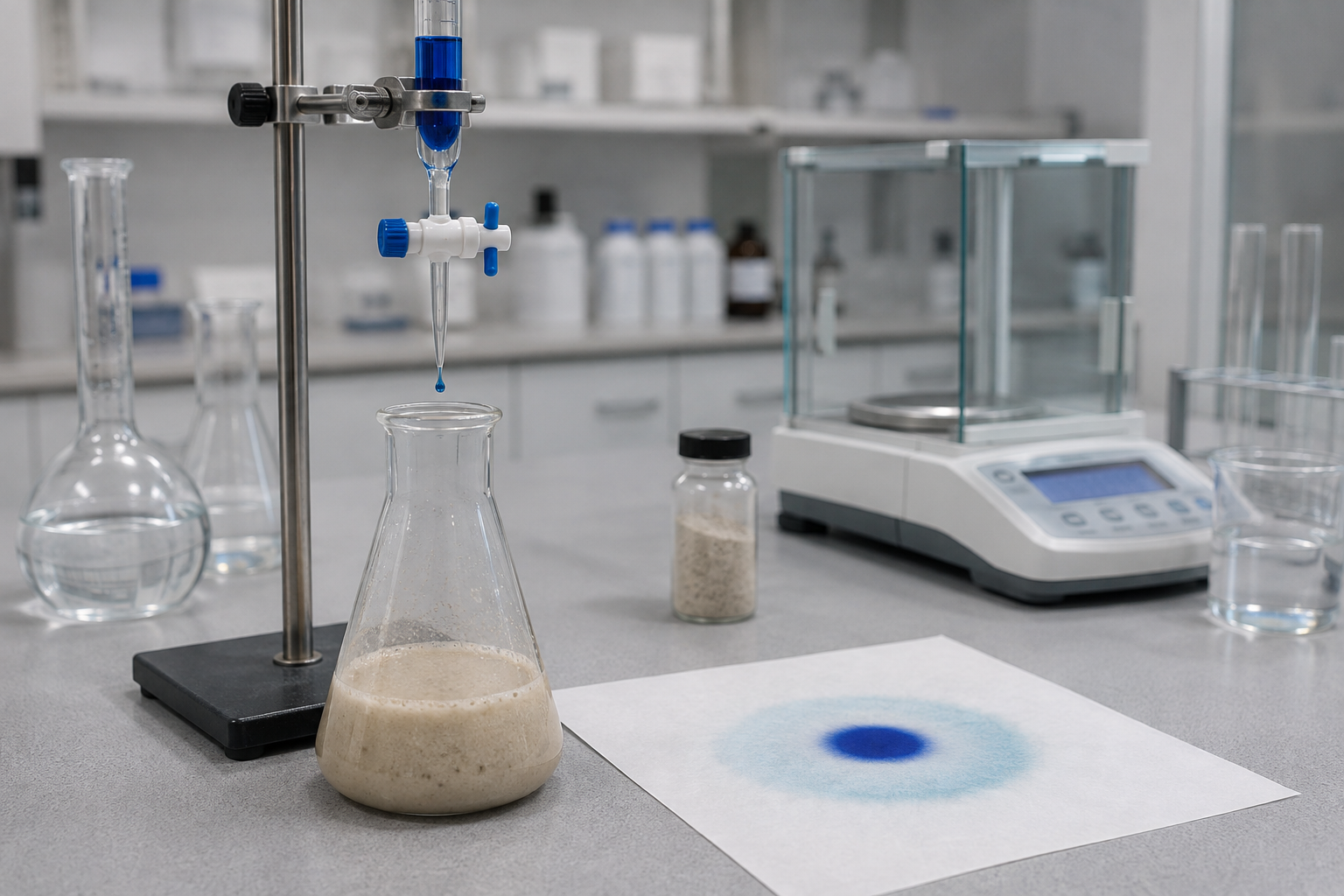
The Methylene Blue Index (MBI), or Methylene Blue Value (MBV), measures the active smectite (montmorillonite) content and cation exchange capacity (CEC) of bentonite clay. High-grade bentonite contains between 75% and 90% active montmorillonite. Lower-grade deposits or heavily diluted industrial clays often drop below 50% active clay due to inert contaminants like quartz, feldspar, gypsum, or calcite.
Because montmorillonite features a negatively charged layer structure, it attracts positively charged cations. Methylene blue (C 16 ?
H 18 ?
ClN 3 ?
S) is a cationic dye. When added to a bentonite slurry, methylene blue molecules swap places with naturally occurring exchangeable cations (Na + , Ca 2+ , Mg 2+ ) on the clay surfaces and within the expandable interlayers.
Measuring the exact volume of methylene blue solution required to saturate these exchange sites gives you a direct reading of active clay content. Inert minerals do not absorb methylene blue in meaningful quantities. A high Methylene Blue Index confirms high active clay content, superior swelling power, and strong binding performance.
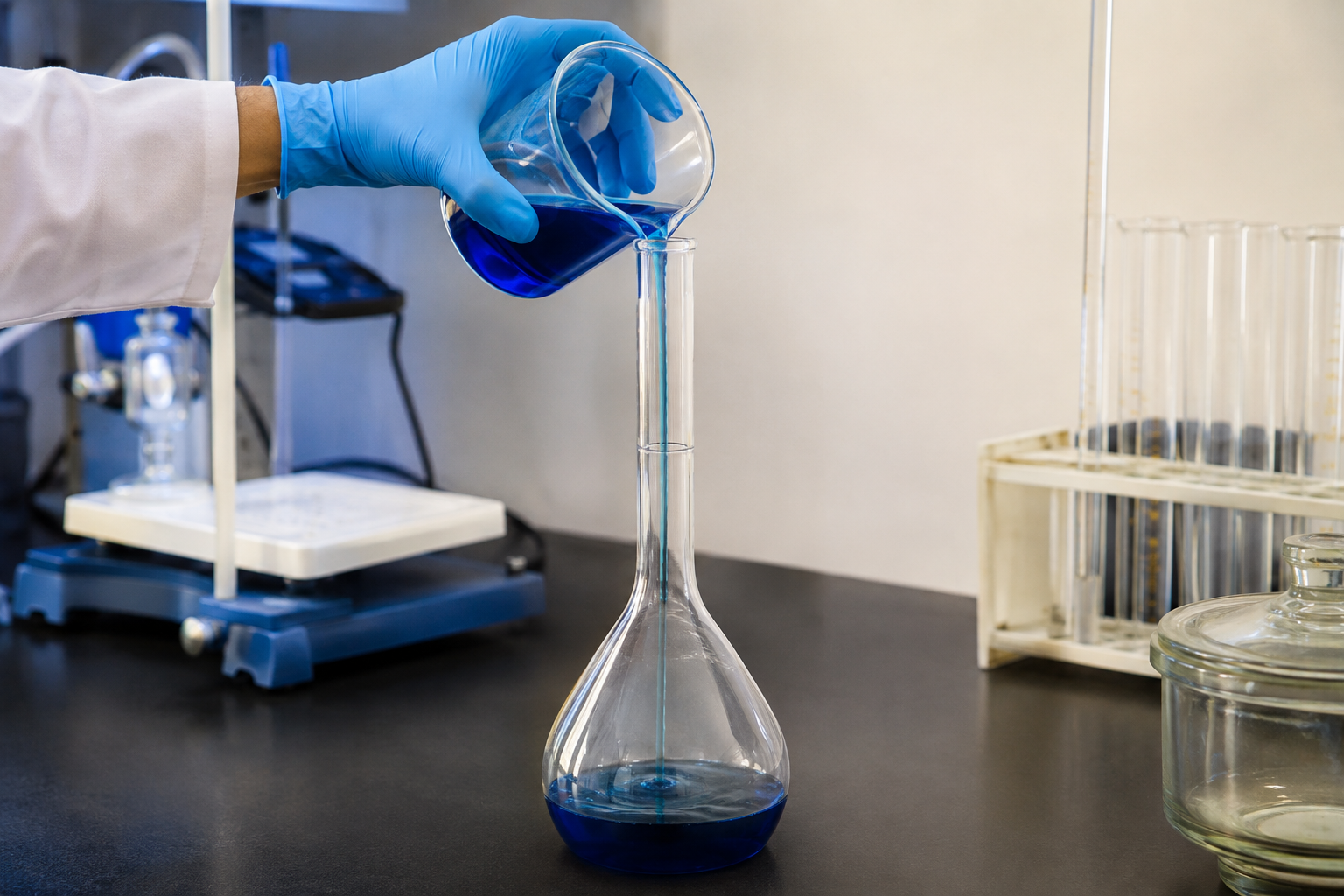
Testing bentonite via methylene blue titration relies on stoichiometric adsorption. The test uses an aqueous slurry of finely ground bentonite, titrated incrementally with a standardized 0.01 N (or 0.005 M) methylene blue solution.
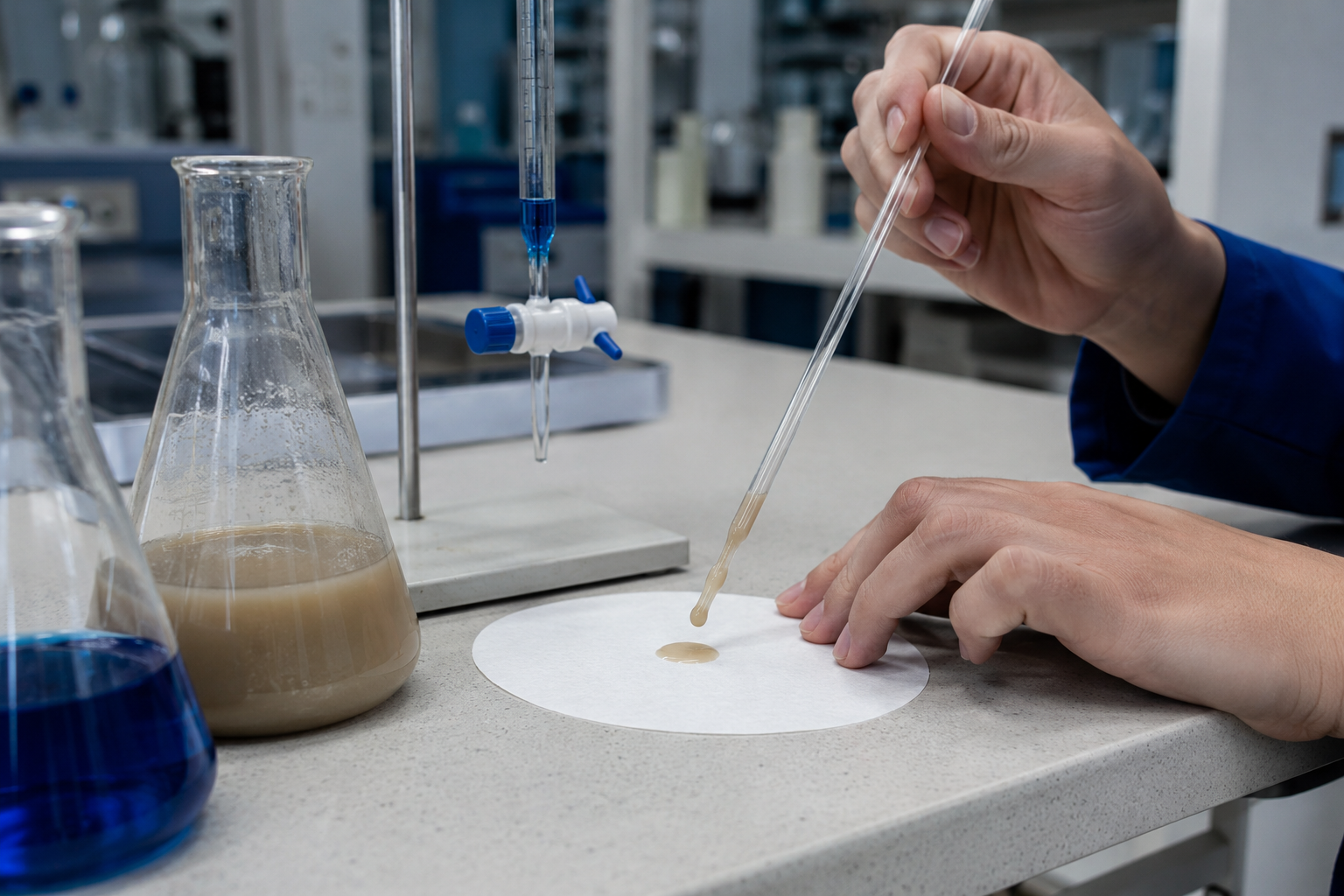
During titration, the cationic dye binds rapidly to the clay particles. As long as unreacted exchange sites remain on the montmorillonite platelets, the methylene blue stays bound to the solid phase. The liquid phase of the slurry remains clear when spotted on filter paper.
The fundamental indicator of complete cation saturation is the halo test. When a drop of the titrating slurry is transferred to a high-purity filter paper (such as Whatman No. 1 or equivalent), a distinct spot forms:
Calculating the total volume of methylene blue consumed yields the Methylene Blue Value expressed in milliequivalents per 100 grams of clay (meq/100g) or grams of dye absorbed per 100 grams of sample.
Accurate execution of the methylene blue index test requires clean equipment and calibrated solutions. Minor contamination or incorrect reagent concentration distorts test results.
16 ?
H 18 ?
ClN 3 ?
S?xH 2 ?
O): Reagent-grade certified cationic dye (trihydrate format common).
2 ?
SO 4 ?
, 0.1 N) or Tetrasodium Pyrophosphate (Na 4 ?
P 2 ?
O 7 ?
): Used as dispersing or acidifying agents depending on specific standard protocols (e.g., ASTM C837 vs. API Spec 13A).
2 ?
O 2 ?
, 3% to 30%): Required if organic contaminants or lignosulfonates are present in industrial samples.
Follow this detailed procedure to execute an accurate, repeatable methylene blue index test based on standard industrial methods including ASTM C837 and API Spec 13A.
? C±5 ? C for a minimum of 2 hours to remove free moisture.
? C?25 ? C).
? C.
2 ?
SO 4 ?
or tetrasodium pyrophosphate solution to promote complete clay platelet dispersion.
The raw burette reading must be converted into standardized metrics: Methylene Blue Value (MBV), Cation Exchange Capacity (CEC), or estimated percent Montmorillonite.
To calculate the Cation Exchange Capacity in milliequivalents per 100 grams of dry clay (meq/100g):
Where:
Example: If 1.000 g of bentonite consumes 85.0 mL of 0.01 N methylene blue solution:
In some industrial standards (such as European aggregate testing EN 933-9 or foundry standards), MBV is expressed as grams of dye per 100 grams of sample:
Where:
Pure montmorillonite typically exhibits a CEC of approximately $70 ext{ to } 100 ext{ meq/100g}$ (with pure reference samples averaging around $80-90 ext{ meq/100g}$). To estimate the percentage of active smectite/montmorillonite purity in a commercial bentonite sample:
ext{Montmorillonite Purity } (%) = left( rac{ ext{Measured CEC of Sample}}{ ext{Theoretical CEC of Pure Montmorillonite}} ight) imes 100$$
Assuming a benchmark standard of 85 meq/100g for pure sodium montmorillonite:
If a commercial sample yields a CEC of 68 meq/100g, its active purity is approximately 80 .
Different industrial applications demand different purity thresholds. The table below outlines typical Methylene Blue Index values, corresponding Cation Exchange Capacities, and estimated active clay purity across major industrial grades:
| Industrial Bentonite Grade | Typical MB Value (mL 0.01N per g) | CEC Range (meq/100g) | Active Smectite Content (%) | Primary Performance Drivers |
|---|---|---|---|---|
| Pharmaceutical & Cosmetic Grade | 85.0 - 100.0+ | 85 - 100+ | 90% - 98% | High surface area, maximum purity, ultra-low heavy metal content |
| API High-Yield Sodium Bentonite | 75.0 - 90.0 | 75 - 90 | 80% - 92% | Exceptional swelling, rapid viscosity build, gel strength |
| Foundry Quality Green Sand | 65.0 - 80.0 | 65 - 80 | 70% - 85% | Thermal stability, high wet compression strength, durability |
| Civil Engineering & Geosynthetic | 55.0 - 70.0 | 55 - 70 | 60% - 75% | Low hydraulic conductivity, fluid barrier sealing |
| Calcium Bentonite (Natural) | 40.0 - 60.0 | 40 - 60 | 45% - 65% | Low swelling, moderate adsorption, bleaching earth raw material |
| Impure / Impoverished Clay | < 35.0 | < 35 | < 40% | High silt/quartz content, poor binding and low swelling power |
Executing the methylene blue index test appears straightforward, but laboratory technicians frequently encounter anomalies that skew final purity calculations. Here is how to resolve the most common testing errors.
2 ?
O 2 ?
(hydrogen peroxide) and heat gently to oxidize organic compounds before running the titration.
? C to constant weight and cool in a sealed desiccator prior to weighing.
Different industries rely on distinct standardized procedures for executing the methylene blue test. Choosing the right protocol depends on your target industry and market geographic region.
Testing for purity reveals a clear truth: not all bentonite deposits are created equal. Processing efficiency, slurry yield, and thermal endurance depend directly on the starting purity of your raw mineral source.
At Axewelledge, we manage over 60 million tons of premium-grade sodium bentonite reserves. Operating high-capacity mining and refinement facilities in India alongside regional logistics support in the UAE, Axewelledge supplies industrial-grade bentonites with consistently high Methylene Blue Index ratings.
Whether you require high-yield sodium bentonite for deepwell drilling, green sand casting foundries, or civil engineering containment barriers, starting with high active smectite content eliminates the need for expensive chemical boosters. Consistent mineralogy ensures your lab tests yield predictable, reliable methylene blue values lot after lot.
Testing the Methylene Blue Index is the most reliable, cost-effective way to verify bentonite purity and cation exchange capacity. By measuring active smectite content rather than inert fillers, laboratory technicians and quality managers can accurately predict how a clay batch will perform in real-world applications.
By keeping your laboratory equipment calibrated, standardizing sample drying procedures, and maintaining strict 2-minute halo confirmation steps, you eliminate false end points and ensure repeatable result metrics.
Looking for high-purity, laboratory-certified sodium bentonite for your industrial operations? Contact the mineral specialists at Axewelledge to request product technical datasheets, certified test reports, or custom sample shipments tailored to your industry standards.













Have questions about our products? We're here to help!