Axewelledge, a leading exporter from India, specializes in high-quality Bentonite. With a commitment to excellence, we supply premium Bentonite to the Middle East and Southeast Asia markets.


North Angle Complex, 304,
150 Feet Ring Rd, Opposite Ambedkar Nagar BRTS Stop,
Madhav Park, Punit Nagar,
Mavdi, Rajkot, Gujarat 360004
© Axewelledge 2026, All Rights Reserved.
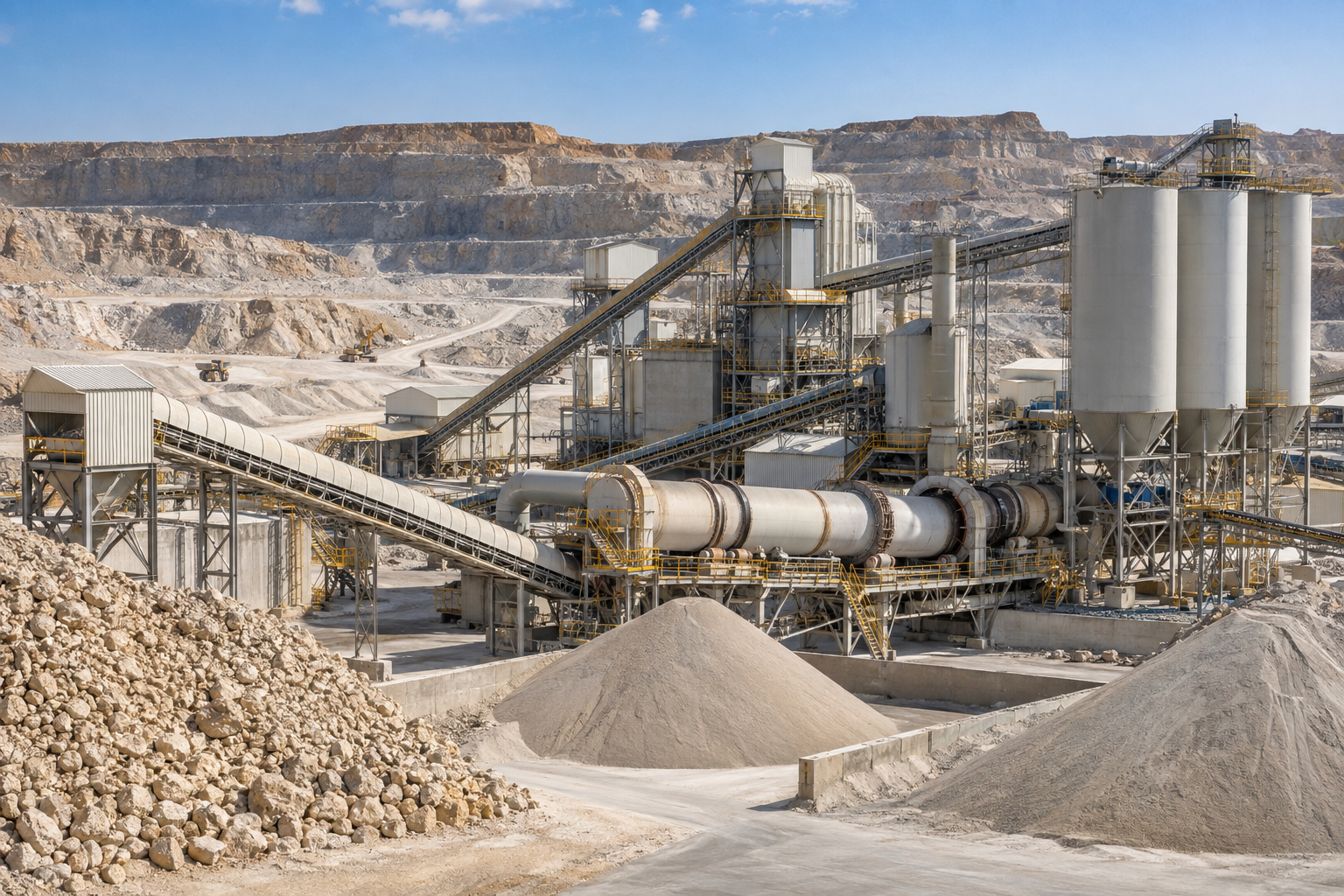
Bentonite mining is only the first part of producing an industrial-grade clay. The material must be selectively extracted, dried, milled, classified, tested, and, when necessary, chemically modified before it is ready for a demanding application.
Bentonite is a clay-rich material dominated by smectite minerals, particularly montmorillonite. Its ability to absorb water, swell, form a low-permeability barrier, and provide useful binding or rheological properties makes it valuable in drilling fluids, civil engineering, foundry work, absorbents, sealing systems, and other industrial applications.
The important point is that not all bentonite behaves the same way. Deposit geology, mineral composition, exchangeable cations, moisture, particle size, and processing conditions all affect the finished product. A bentonite that performs well as a drilling-grade material may not be the right choice for a foundry application, even if both products come from the same general mineral family.
This guide explains how bentonite is mined and processed, what happens at each stage, how sodium and calcium bentonite differ, where activation fits into the process, and which quality tests matter when buying industrial bentonite.
Bentonite is a naturally occurring clay material formed mainly through the alteration of volcanic ash. Over geological time, volcanic ash can react with water and undergo chemical changes that produce clay minerals, including smectites such as montmorillonite.
Its industrial value comes largely from the structure and surface chemistry of these clay minerals. Water can enter between clay layers, while the mineral's large surface area and exchange capacity influence swelling, viscosity, adsorption, and binding behavior.
Bentonite is commonly discussed in terms of sodium and calcium types, although natural deposits can contain mixed compositions and other exchangeable ions. The distinction matters because the dominant exchangeable cation affects how the clay responds to water.
Sodium-rich bentonite generally has strong water absorption and swelling characteristics. When hydrated, suitable sodium bentonite can form a dense, low-permeability gel. These properties make it important in drilling fluids, geosynthetic clay liners, pond and landfill sealing, and several civil engineering applications.
Calcium-rich bentonite generally has lower swelling than sodium bentonite but can provide useful adsorption, binding, and rheological properties. It is used in areas such as foundry applications, absorbents, bleaching and clarification processes, and selected agricultural or animal-feed applications where the product specification permits its use.
The terms sodium bentonite and calcium bentonite describe useful commercial categories, but they shouldn't be treated as a complete quality specification. Actual performance depends on mineralogy, chemistry, processing, and the requirements of the end use.
Bentonite deposits occur in many parts of the world, often within geological formations associated with altered volcanic ash. Commercial deposits can differ substantially in thickness, mineral composition, moisture, overburden, and the distribution of useful clay within the deposit.
For a producer, finding bentonite isn't enough. The deposit must be evaluated to determine which sections can produce commercially useful material and what processing will be required.
Geological investigation can include mapping, drilling, sampling, laboratory analysis, and evaluation of the deposit's thickness and continuity. Samples are tested to understand properties such as swelling behavior, particle size, moisture, chemical composition, cation exchange characteristics, and other application-specific parameters.
This evaluation influences the mine plan and the processing strategy. A deposit with several distinct quality zones may need selective extraction and separate stockpiles rather than being treated as one uniform ore body.
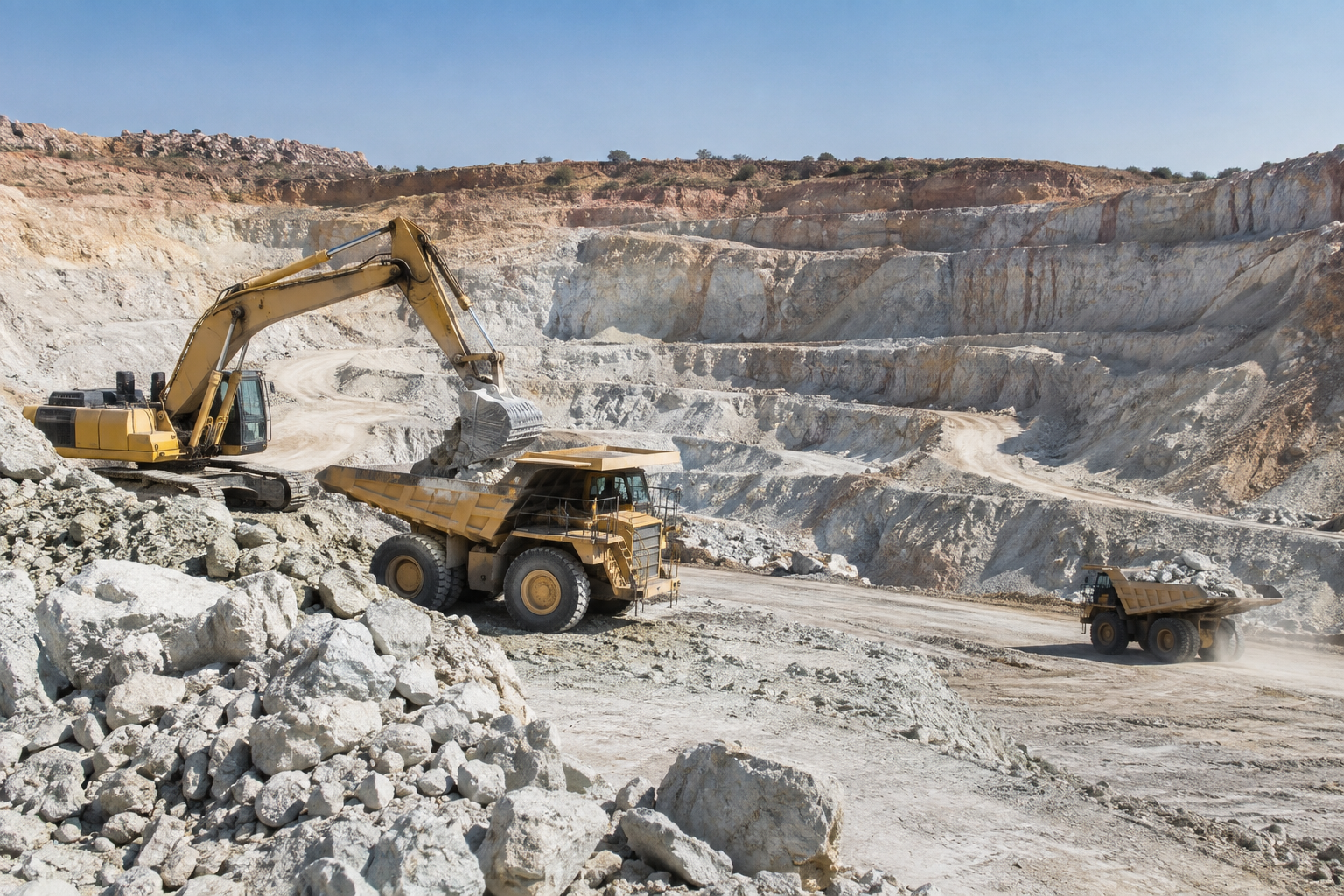
Most bentonite is produced through surface mining because commercially useful deposits are often relatively close to the ground surface. The exact mining method varies with deposit geometry, overburden thickness, local regulations, equipment, and the required production rate.
A simplified mining sequence looks like this:
Before bentonite can be extracted, the material covering the deposit has to be removed. This may include topsoil, weathered rock, sandstone, shale, or other non-commercial layers.
Topsoil is often handled separately because it can be useful for later land reclamation. Other overburden is managed according to the mine's approved operating and environmental plan.
The amount of overburden is an important economic consideration. A thick covering layer increases the amount of material that must be moved before the clay can be recovered.
Once the bentonite layer is exposed, mining becomes a matter of controlling what enters the feed stream. A deposit can contain noticeable changes in color, moisture, mineral content, swelling performance, and other properties over relatively short distances.
Selective mining helps prevent unsuitable material from being mixed into higher-quality clay. Operators may extract different zones separately and send representative samples to the laboratory before deciding how each batch should be processed.
This stage is easy to underestimate. Good processing cannot completely compensate for poor control of the raw material entering the plant.
Mined bentonite is commonly placed in designated stockpiles before processing. Stockpiling gives the producer an opportunity to organize material by grade and manage variations in the mine feed.
Blending can then be used to create a more consistent feedstock. The objective isn't simply to mix everything together. A controlled blend is based on laboratory data and the performance requirements of the final product.
For industrial buyers, this is one reason a producer's raw-material control can matter as much as the equipment inside the processing plant.
Freshly mined bentonite can arrive as large, compact lumps. Reducing the material to a manageable size makes subsequent drying and milling more efficient.
Depending on the material and plant design, crushers, roll crushers, shredders, or similar equipment may be used. Sticky, high-moisture clay requires equipment that can handle its tendency to deform and adhere to surfaces.
The purpose of this stage is not to produce the final powder. It is to prepare the clay for controlled moisture removal and downstream processing.
Drying is one of the most important stages in bentonite processing. Mined clay can contain substantial natural moisture, and the acceptable final moisture level depends on the product specification and application.
Industrial plants commonly use rotary dryers or other controlled drying systems. Heated air transfers energy to the clay as it moves through the dryer, allowing water to evaporate.
Drying must be controlled carefully. Excessive thermal exposure can alter the properties of some clays, while insufficient drying leaves the material difficult to grind and can create handling or storage problems.
The goal is not simply to make the clay as dry as possible. The target is a controlled moisture level that supports the required milling, storage, transportation, and end-use performance.
Moisture affects several parts of the manufacturing process. Wet clay can be difficult to pulverize, can increase energy consumption during grinding, and may cause handling problems during packaging and storage.
On the other hand, processing conditions that expose the mineral to unnecessary heat can affect performance. The appropriate drying conditions therefore depend on the mineral's characteristics, equipment design, residence time, and final product requirements.
Rather than applying one universal moisture target to every bentonite product, producers should use the specification established for the intended application.
Depending on the deposit and product specification, bentonite may undergo additional beneficiation or preparation before final milling. The exact approach varies because bentonite deposits contain different proportions of clay minerals, quartz, feldspar, carbonates, iron-bearing minerals, and other components.
Some products require relatively simple drying and grinding. Others may need more controlled separation, blending, or treatment to achieve the desired performance.
In practical terms, bentonite refining isn't always a single purification operation. It is better understood as a combination of raw-material selection, blending, drying, grinding, classification, and, where appropriate, chemical treatment.
Natural calcium bentonite can sometimes be treated with sodium carbonate, commonly called soda ash, to modify its exchangeable-ion chemistry and increase its swelling and rheological performance.
This process is known as sodium activation.
During activation, sodium ions can exchange with calcium ions associated with the clay. The resulting material may show improved swelling and other performance characteristics compared with the untreated calcium-rich clay.
The treatment is not a guarantee that any calcium bentonite can become equivalent to a premium natural sodium bentonite. The starting mineralogy, dosage, mixing conditions, aging, moisture, and subsequent processing all influence the result.
| Property | Natural Sodium Bentonite | Calcium Bentonite | Sodium-Activated Bentonite |
|---|---|---|---|
| Dominant exchangeable ion | Sodium | Calcium | Increased sodium contribution after treatment |
| Typical swelling behavior | High, depending on grade | Generally lower | Usually higher than untreated calcium bentonite |
| Common applications | Drilling, sealing, civil engineering | Foundry, absorbent, selected processing uses | Selected drilling and sealing applications |
| Processing requirement | Often drying and milling | Drying and milling may be sufficient | Requires controlled chemical treatment |
| Performance consistency | Depends on deposit and grade | Depends on deposit and grade | Depends on raw clay and activation process |
The table is a general comparison, not a product specification. Buyers should always compare actual test data for the grade they intend to purchase.
After drying and any required treatment, the bentonite enters the grinding stage. The target particle size depends heavily on how the product will be used.
Grinding equipment can include roller mills, hammer mills, Raymond-type mills, pulverizers, or other systems selected for the desired throughput and particle-size distribution.
The goal is to create a consistent powder without unnecessarily damaging the material or consuming more energy than required.
Particle size also affects how quickly the powder hydrates and disperses. A drilling-fluid product, for example, needs a particle-size distribution suited to rapid dispersion and the required rheological performance. A foundry binder can have different requirements.
Two bentonite products can have similar chemical compositions but behave differently because their particle-size distributions are different.
Finer particles generally provide greater surface area and can hydrate or disperse differently from coarser particles. However, finer isn't automatically better. The correct distribution is the one that supports the customer's process and specification.
That is why a reliable technical data sheet should provide more than a simple statement such as fine powder or high swelling.
After grinding, an air classifier can separate particles according to aerodynamic behavior and size. Material that meets the target range is collected, while coarser particles can be returned to the grinding circuit.
This closed-loop approach helps control the final particle-size distribution and reduces the amount of oversized material entering the finished product.
Classification becomes particularly important when a customer needs a narrow particle-size range or consistent behavior from batch to batch.
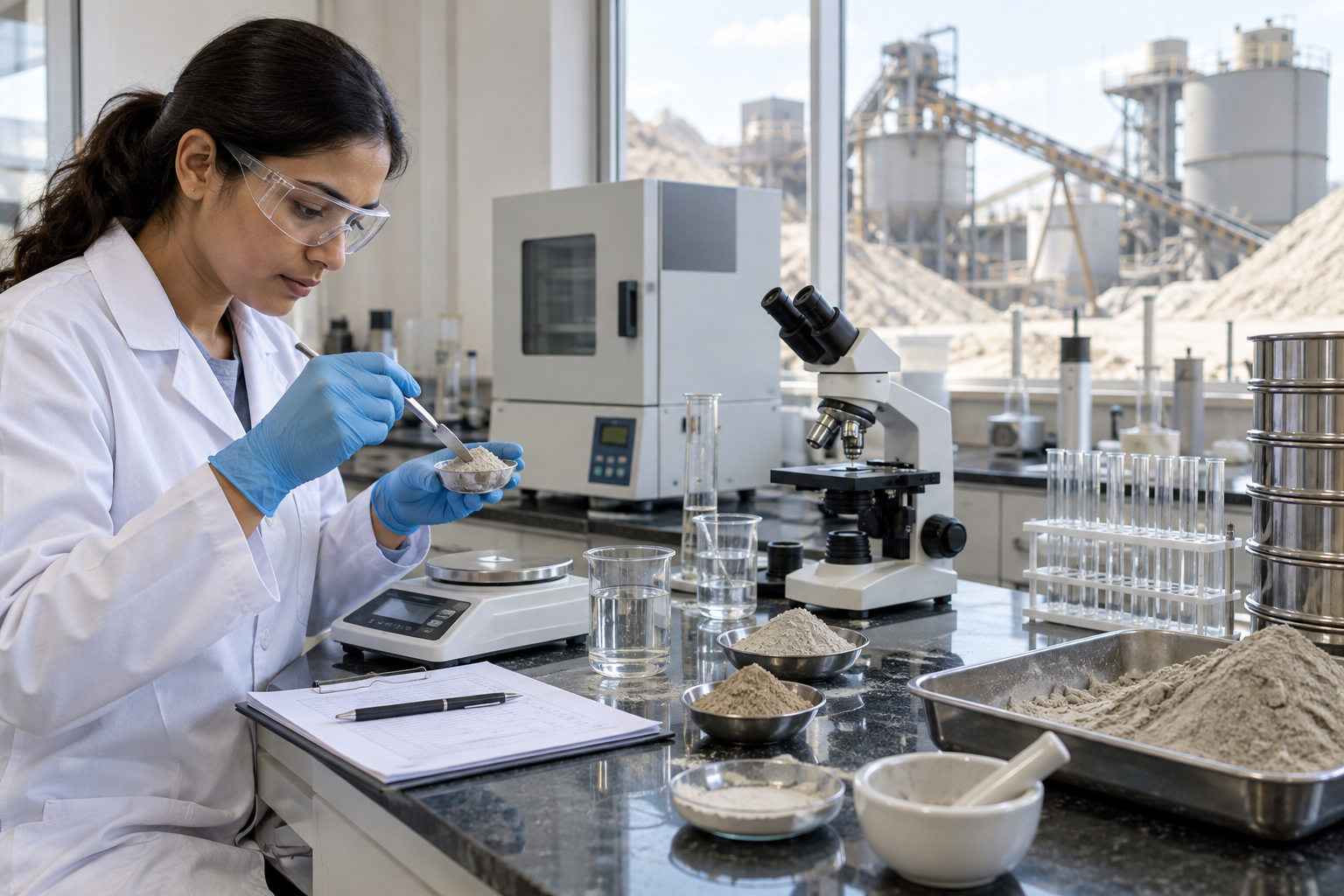
A bentonite processing plant isn't finished when the powder comes out of the mill. Laboratory testing determines whether the product actually meets the specification for its intended application.
The tests used depend on the product and market. Common measurements include moisture, swelling behavior, viscosity, fluid loss, particle-size distribution, methylene blue value, and chemical or mineralogical characteristics.
Swelling tests measure how much a bentonite expands after contact with water under a specified test method. This is particularly important for sodium bentonite products used in sealing and drilling applications.
A swelling result is meaningful only when the test method and conditions are known. Different procedures can produce different values, so buyers should compare results obtained using the same or equivalent method.
Viscosity is especially important for bentonite used in drilling fluids and other applications where the clay must build a controlled suspension.
A product's viscosity depends on more than its bentonite content. Hydration conditions, concentration, particle size, exchangeable ions, water chemistry, mixing energy, and test procedure can all affect the result.
Fluid-loss testing evaluates how readily liquid passes through a filter cake formed by the drilling fluid under specified conditions. Lower fluid loss can be desirable in applications where controlling filtrate invasion is important.
The appropriate target depends on the drilling-fluid formulation and the relevant product or field specification.
Methylene blue testing is commonly used as an indicator related to the amount and activity of certain clay minerals in a sample. It can help assess clay quality and consistency, but it should be interpreted alongside other tests rather than used as the only measure of product performance.
Moisture testing helps verify that the product has been dried to the required specification. Consistent moisture supports stable storage, transportation, milling behavior, and dosing.
For applications with strict performance requirements, producers may also examine chemical composition and mineralogy. Techniques such as X-ray diffraction can help identify mineral phases, while chemical analysis can provide information about major elements and other constituents.
The exact testing program should follow the customer's technical specification and the applicable industry standard.
Once the product passes quality control, it can be prepared for shipment. Packaging depends on the customer's volume, handling system, transport method, and storage requirements.
Common formats include multi-wall bags, woven sacks with liners, flexible intermediate bulk containers, and bulk pneumatic delivery.
Packaging isn't merely a logistics decision. Bentonite is a moisture-sensitive powder, so packaging and storage conditions need to prevent unwanted moisture uptake and contamination.
For bulk users, consistent loading and unloading systems can also reduce dust generation and improve handling efficiency.
The processing route should always be connected to the end use. There is no single bentonite manufacturing process that produces an ideal material for every industry.
Drilling-fluid bentonite generally requires strong hydration, suitable viscosity development, controlled fluid loss, and consistent particle-size characteristics.
Natural sodium bentonite is widely used where its properties fit the application. Sodium-activated calcium bentonite can also be used in selected formulations when the finished product meets the required performance criteria.
A drilling-grade buyer should therefore focus on actual fluid-performance data rather than simply buying the product with the highest swelling number.
Bentonite is used in several civil engineering applications because hydrated clay can create a low-permeability barrier.
Applications include selected geosynthetic clay liners, slurry trench work, drilling-related construction, and sealing systems. The required performance depends on hydraulic conductivity, compatibility with surrounding materials, hydration conditions, and project specifications.
For these applications, the source material and testing method are particularly important because field performance depends on the interaction between bentonite and the surrounding environment.
Bentonite acts as a binder in green sand molding. The clay helps hold sand particles together and contributes to mold strength and workability.
Foundry grades may require a different balance of swelling, bonding performance, moisture response, and particle size than drilling grades. A product designed for drilling fluid should not automatically be assumed to be suitable for a foundry.
Some bentonite products are processed for absorbent applications, including pet litter. Here, factors such as absorption, swelling, granule size, dust level, odor control, and clumping behavior can matter more than drilling-fluid viscosity.
The processing route may therefore include granulation or other product-specific steps rather than simply producing a fine powder.
Bentonite is used in selected agricultural and feed-related applications, including as a binder or functional mineral ingredient where permitted by the applicable regulations and product specification.
These markets require careful attention to purity, contaminants, particle size, and regulatory requirements. Industrial-grade bentonite shouldn't automatically be treated as suitable for feed or agricultural use without the necessary testing and approvals.
Producing consistent bentonite isn't simply a matter of running clay through a crusher and mill. Several problems can reduce product quality if they're not controlled.
A mine can contain clay with very different performance characteristics in adjacent zones. Mixing them without a defined blending plan can produce unpredictable results.
A better approach is to characterize individual material streams and establish blending ratios based on laboratory results.
Excessive heat can affect clay performance, depending on the mineralogy and process conditions. Drying should therefore be designed around the required moisture target and the thermal sensitivity of the product.
Material that is too wet can smear, clog equipment, and reduce milling efficiency. Material that is inadequately conditioned can also produce an inconsistent particle-size distribution.
Good moisture control before milling makes the entire grinding circuit easier to manage.
This is one of the most common purchasing mistakes. Bentonite intended for drilling, foundry work, sealing, absorbents, and other applications can have very different specifications.
The product should be selected according to performance requirements, not just mineral name.
A high swelling value doesn't automatically mean a bentonite will perform well in every application. Viscosity, fluid loss, particle size, moisture, chemical composition, and hydration behavior may also be important.
The right quality-control program uses the measurements that correspond to the customer's process.
For an industrial buyer, supplier evaluation should begin with technical consistency rather than marketing claims.
Ask for a current technical data sheet and, when appropriate, a certificate of analysis for the material being supplied. Confirm the test methods used and check whether the reported values match your process requirements.
Important questions include:
A producer that controls several stages of the supply chain may have better visibility into raw-material variation, although vertical integration alone doesn't guarantee product quality. The deciding factor should be documented performance and consistent delivery against specification.
The bentonite supply chain can involve several distinct stages: geological evaluation, mining, stockpiling, processing, quality control, packaging, warehousing, transportation, and final delivery.
At each stage, consistency can be lost. Poor stockpile management can mix grades. Inadequate drying can create moisture problems. Uncontrolled milling can change particle size. Weak packaging can allow moisture pickup during transport.
For international buyers, logistics add another layer. Export documentation, packaging strength, container loading, port handling, transit time, and storage conditions all influence the delivered product.
A strong supply program therefore involves more than finding the lowest price per metric ton. The delivered cost should be evaluated alongside product consistency, test documentation, lead time, packaging, freight, and the cost of handling or reformulating material that falls outside specification.
Like other surface mining operations, bentonite mining can affect land, drainage, dust levels, traffic, and local ecosystems if it isn't properly managed.
Responsible mine planning includes measures for topsoil management, erosion control, water management, dust reduction, safe equipment operation, and progressive or final land reclamation where required by local regulations.
Mining plans should also consider how extraction will proceed across the deposit and how disturbed areas can be restored after production. The specific requirements vary by jurisdiction, geology, and site conditions.
Processing plants have their own environmental considerations. Drying consumes thermal energy, milling can generate dust, and material handling requires appropriate collection and ventilation systems. Efficient equipment and good process control can help reduce unnecessary energy consumption and emissions.
Consider a producer mining a calcium-rich bentonite deposit intended for a drilling-related product.
The first step is selective extraction. Geological and laboratory information identifies the clay zones most suitable for the target product. The material is stockpiled separately so that higher- and lower-performing batches aren't mixed without a plan.
The clay then goes through primary size reduction before controlled drying. After drying, the producer checks moisture and prepares the material for sodium activation. A controlled quantity of sodium carbonate is incorporated under defined process conditions.
The treated clay is then aged or conditioned as required by the process, followed by grinding and classification. Samples from the finished batch are tested for the properties specified for the drilling application, such as viscosity, fluid loss, moisture, and particle-size distribution.
Only after the batch meets the agreed specification is it released for packaging and shipment.
The important lesson is that the finished product isn't created by one machine. Its performance is the result of decisions made from the mine face through final quality control.
Neither is universally better. The right choice depends on the application and the characteristics required by the customer.
Natural sodium bentonite can be the preferred option when the deposit naturally provides the required swelling and rheological properties. Calcium bentonite can be useful where lower swelling or other mineral characteristics are desirable, while sodium activation can make selected calcium-rich materials suitable for applications requiring greater swelling.
Cost, availability, consistency, and performance should all be considered. A lower-cost raw material isn't necessarily more economical if it requires additional treatment or produces inconsistent results in the customer's process.
The most useful comparison is therefore performance per unit of finished product, not simply the purchase price of raw clay.
Before placing a large industrial order, buyers should establish a written specification. This prevents disagreements later and makes supplier comparisons much easier.
A specification may include:
It is also sensible to test a representative sample in the customer's own process. Laboratory numbers are valuable, but the final question is whether the material performs reliably under actual operating conditions.
Sodium bentonite generally has greater water absorption and swelling because sodium is the dominant exchangeable cation. It is widely used in drilling fluids and sealing applications. Calcium bentonite generally swells less but can offer useful adsorption and binding properties. Actual performance varies with mineralogy and grade, so buyers should compare technical test results rather than relying only on the product name.
Bentonite is commonly extracted through surface mining. The mine operator removes topsoil and overburden to expose the clay-bearing layer, then uses excavators or similar equipment to selectively remove the bentonite. Different material zones may be separated and stockpiled according to quality. The mined clay is then transported to a processing facility for crushing, drying, grinding, testing, and other treatment required for its intended use.
Sodium activation is a treatment used to modify calcium-rich bentonite by adding sodium carbonate, commonly known as soda ash. Sodium ions can exchange with calcium ions associated with the clay, increasing swelling and changing rheological behavior. The result depends on the starting clay, treatment level, mixing, moisture, conditioning, and subsequent processing. Activated material should therefore be evaluated against the required application-specific specification.
Mined bentonite normally contains natural moisture that can make crushing, grinding, screening, storage, and packaging more difficult. Controlled drying reduces this moisture to the level required by the finished product. The correct target varies by grade and application. Drying must also be carefully controlled because unnecessary thermal exposure can affect the performance of some bentonite materials.
Processed bentonite is used across several industries, including oil and gas drilling, civil engineering, foundry molding, sealing and containment, absorbents, pet litter, and selected agricultural applications. The required properties differ considerably between these markets. Drilling grades may focus on viscosity and fluid loss, while foundry or absorbent products can require different combinations of swelling, binding, particle size, absorption, and moisture characteristics.
Industrial bentonite is tested according to its intended application. Common measurements include moisture, swelling behavior, viscosity, fluid loss, particle-size distribution, and methylene blue value. Some products also require chemical or mineralogical analysis. The test method matters because results can change with testing conditions. A good quality program therefore defines both the property being measured and the method used to measure it.
Bentonite mining produces the raw material, but processing determines whether that material can meet a specific industrial requirement.
The main stages are geological evaluation, selective surface mining, stockpiling, blending, crushing, controlled drying, optional beneficiation or sodium activation, grinding, classification, laboratory testing, and packaging.
Natural sodium bentonite is valued for strong swelling and hydration performance, while calcium bentonite provides different properties and can be chemically activated for selected applications. Neither category should be judged without considering the actual grade and its intended use.
For industrial buyers, the safest approach is straightforward: define the application, establish measurable specifications, request representative samples and technical documentation, and evaluate supplier consistency over time.
The quality of the finished bentonite product begins at the mine. Careful extraction and stockpile management provide the foundation; controlled processing and testing turn that raw clay into a material that industry can use with confidence.













Have questions about our products? We're here to help!